Home Blog Page 1871

Government will build new refinery; bidders’ estimates too high: AMLO

0
Energy Secretary Nahle and Pemex boss Romero will build new refinery.
Energy Secretary Nahle and Pemex boss Romero at this morning's press conference.

The federal government has scrapped the bidding process for the new oil refinery in Tabasco on the grounds that the bids were too high and the project would take too long.

Instead, the state oil company and the Secretariat of Energy (Sener) will build the refinery at Dos Bocas, President López Obrador said today.

Speaking at his morning press conference, López Obrador declared that the tendering process for the project was “void.”

Four companies – Bechtel-Techint, WorleyParsons-Jacobs, Technip and KBR – were invited by the government in March to offer bids to build what will be Mexico’s seventh refinery.

The president said their estimates ranged between US $10 billion and $12 billion – the government had estimated US $8 billion – and that none of the companies would commit to completing the project within three years.

“. . . They exceeded US $8 billion and the [requested] construction time and we’re not going to do any project that we can’t finish during the six-year term,” López Obrador said.

“. . . Only one [company] committed to finishing it in 2023 and that doesn’t give us security, another [said] 2025,” he added.

“. . . The refinery will be built with the coordination, management and supervision of Petróleos Mexicanos [Pemex] and the Secretariat of Energy,” López Obrador said.

Energy Secretary Rocío Nahle will be in charge of the project, and it will also be supported by the state-owned Mexican Institute of Petroleum, he explained.

The president said that construction will commence on June 2 to have the refinery ready for operations in May 2022.

Priorities for the government will be to complete the project in three years, stay within the budget of US $8 billion and ensure that the facility complies with international standards for quality and energy efficiency, the secretary explained.

“As president of the Pemex board . . . I have the authority to coordinate and promote the construction project of the Dos Bocas refinery, and also to establish the technical guidelines in the contracting processes and guarantee that time, cost and quality goals are met,” Nahle said.

Pemex CEO Octavio Romero said that about 50 billion pesos (US $2.6 billion) will be invested in the project this year.

The company’s oil production has been declining for years, a factor that has contributed to debt in excess of US $100 billion.

López Obrador says the new refinery will help Mexico reduce its reliance on imported petroleum.

However, an analysis published by the Mexican Institute for Competitiveness (Imco), a think tank, showed that the Tabasco refinery only has a 2% chance of success.

Source: El Financiero (sp), Milenio (sp) 
Tourist spending up 7% in March; Oaxaca’s tourism numbers soar

0
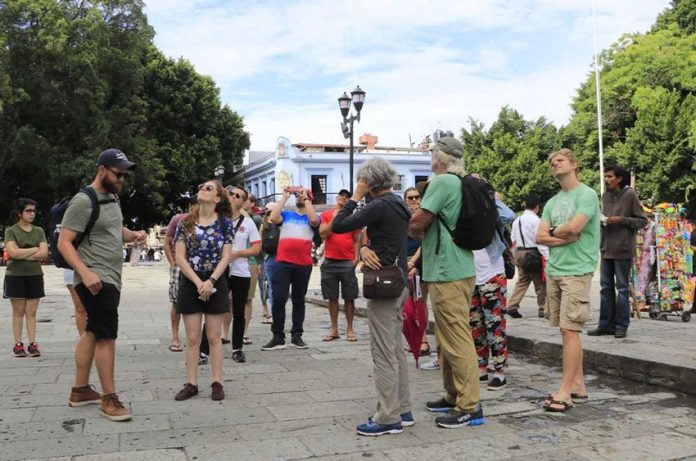
Tourists in Oaxaca city: their numbers were up nearly 50% in March.

International tourist spending increased by more than 7% in March even as overall visitor numbers declined slightly.

Data collected by the National Institute of Statistics and Geography (Inegi) shows that foreign tourists spent US $2.21 billion in Mexico in the third month of the year, 7.3% more than the amount they spent in March 2018.

Visitor numbers in the same month fell by 0.7% to just under 2.36 million.

However, one destination that bucked that trend – and in a big way – was Oaxaca city.

The number of foreigners who flew into the state capital’s airport in March increased by 48.6% to 12,081. The increase in foreign arrivals was higher than that recorded at any other airport in the country.

State Tourism Secretary Juan Carlos Rivera said part of the growth could be attributed to the introduction of 15 new flights to Oaxaca city from different parts of Mexico. There are also connections to six United States cities including Los Angeles, Houston and Dallas.

The numbers of tourists arriving in the state from that country as well as Canada, Europe and Latin America are all on the rise, statistics show.

In March, 83% of tourists who spent at least one night in Mexico arrived by plane, a 1% increase compared to the same month last year, while the number of land arrivals declined by 10.5%.

Although tourist numbers went backwards, the total number of foreigners who came to Mexico in March – including migrants, residents and daytrippers – increased by 5.5%.

Just over 4.2 million foreigners entered the country compared to just under 4 million in March last year.

Almost 1.9 million of them were “border tourists,” meaning that they crossed into Mexico at ports of entry with the United States, Guatemala and Belize and only remained in the country for a short time.

The number is almost 15% higher than that recorded in March last year and they spent 7.7% more while in Mexico.

A record 41.4 million international visitors came to Mexico last year, 5.5% more than in 2017, and they spent just over US $20.3 billion while here.

The government has said that it will increase tourism revenue by focusing more on attracting big spenders such as the Japanese, who spend more in Mexico than any other nationality.

Source: El Economista (sp), NVI Noticias (sp) 

Greater merit and more adrenaline in scaling an active volcano: climber

0
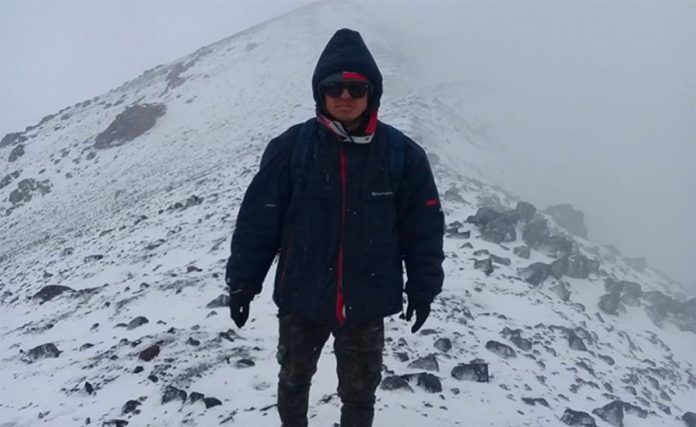
Suazo at the summit of El Popo.
Suazo on El Popo.

There is greater merit and more adrenalin in scaling a volcano while it is active, according to a climber who reached the peak of Popocatépetl last week.

The alert level for the volcano known colloquially as El Popo and Don Goyo was raised to yellow Phase 3 on March 28 due to increased activity and remained at that level for 41 days before it was reduced one notch yesterday.

Iván Suazo, a 31-year-old mountaineer, summited Popocatépetl on May 2 and recorded a video while perched on the lip of the crater of the smoldering volcano.

“It’s a challenge in itself to scale a mountain . . . but it’s more of a challenge to climb a mountain, in this case Popocatépetl, while it’s active. I believe that it has more merit and [there is] more adrenalin at the top,” he told the newspaper El Universal.

Following last week’s ascent, Suazo said that he and his climbing companions were only able to remain on the crater for 10 minutes because of a range of factors, including earth tremors and that “approximately three-quarters of Popocatépetl felt hot underfoot. . . It wasn’t a good sign that we should stay up there long,” he said.

Suazo added that very heavy snow was falling, reducing visibility to almost zero, and that gases were emanating from the volcano.

During the eight-hour ascent, the architect said that he and his fellow mountaineers only took short breaks due to the risk of suffering from hypothermia, explaining that “it was very cold.”

Suazo has now climbed Popocatépetl twice and has also reached the summits of the Iztaccíhuatl and Pico de Orizaba active volcanos, meaning that he has conquered Mexico’s three highest peaks.

He said he was aware of the warnings about increased activity at Don Goyo, adding “we don’t want to disrespect the authorities.”

However, Suazo also said that he would likely climb El Popo again.

“I’m going to wait a while, it won’t be immediately. I don’t have a fixed time to go up again but we probably will . . .”

Suazo and his party are not the only daredevils to have scaled Popocatépetl while it was in a phase of increased activity.

At least three youths climbed to the top of the volcano in March, where they too recorded a video in which the release of gas is visible. Experts agreed that the group of young explorers was fortunate not to have lost their lives.

Ramón Espinasa, deputy director of volcanic risks at the National Disaster Prevention Center (Cenapred), said that it was “reckless” to climb El Popo when it was active.

“If they want to have adventures, go and climb Iztaccíhuatl, Pico de Orizaba or other mountains because [scaling] Popocatépetl . . . is a kind of Russian roulette.”

Source: El Universal (sp) 

Collected artistic traditions of Mexico are under one roof at this city market

0
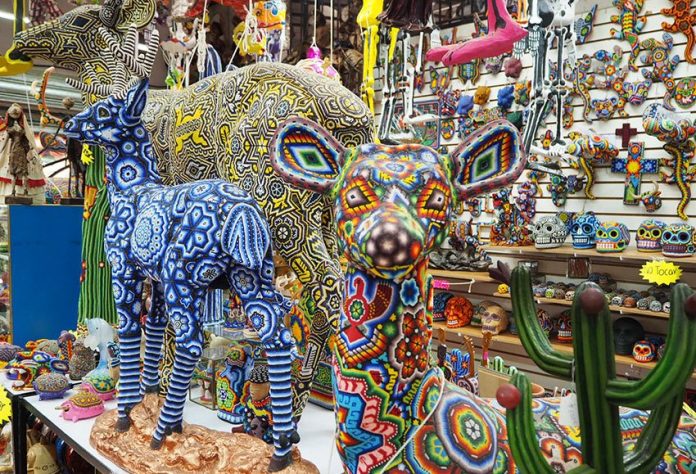
Life-sized, Huichol beaded deer at Artesanías Morett.

In Colonia Centro, Mexico City, across the park from the original Ciudadela where Mexican independence leader José María Morelos was jailed before his execution, and where much of the blood of the “10 Tragic Days” of the revolution was shed a century later, sits a monument to a different kind of Mexican history – the collected handiworks of artisans from Sonora to Yucatán.

At first view when entering on Balderas and Emilio Donde, the Mercado de Artesanías La Ciudadela appears to be the cheeseball tourist entanglement sort of souvenir market, with cartoon Frida t-shirts, tequila magnets and bright green ponchos that scream, “Spring Break!”

But just a few paces in and the true handmade crafts come into focus, many of them created to order, on site.

At Familia García, the doña is busy with a gang of Japanese tourists gobbling up her tiny, exquisitely designed colored glass animals, flowers and cactuses set atop glass swizzle sticks. Her grandson works with a torch at a well-worn table in the corner to create more stock. At only 7.50 to 10 pesos a pop, they’re hard to resist.

The government originally established the Artisan Market as “La Feria de la Ciudadela” on June 1, 1965 in preparation for the 1968 Olympics as a way to display the traditional arts and crafts of the cultures of Mexico to visitors from around the world.

The beautiful glass work at Familia García — only 10 pesos each.

Then, during the 1970 World Cup, the market sold related souvenirs, as well as artisan goods, and it was such a success that it was soon established as a permanent market.

Textiles from Oaxaca, silver from Guerrero, ceramics from Chiapas and beaded art from Nayarit – a tour through the traditions and colors of Mexico under one roof. At Mercado de Artesanías, your wallet is your oyster — you can get a well-made blanket for only 130 pesos (US $7) or a life-sized Huichol bead-coated deer for 120,000 (US $6,280).

Walk into a mind stupor of hundreds of hanging alebrijes – the fantastically bright animal figures, kaleidoscopic in color and form. I was surprised to learn that the story of these famed Oaxacan flying donkeys and eagle-headed lions only goes back to the 1930s, when artist Pedro Linares dreamed them up in a deep fever and created the first alebrijes out of cardboard and papier-mâché.

At La Casa del Alebrije, a man sucking on a toothpick with an earring declaring his love of ska music capably though reluctantly helps through the designs. The papier-mâché varieties are made locally and can go for as little as 400 pesos, while wooden versions come from Oaxaca and can go as high as 6,000.

Inside Escorcia the walls and glass cases reflect a brilliant shine from silver mined from Taxco and obsidian from Teotihuacán.

At Imperart the hand-carved statues of eagles and Aztec and Christian gods shimmer blue, silver and copper from an electrolytic chemical coloring process.

Lost in the alebrije jungle at La Casa del Alebrije.

At Tejidos Típicos, all of their wonderfully colorful textiles are made by hand on wooden looms, as they have been for centuries. They have everything from small table coverings and sarapes to huge rugs and embroidered dresses. Most of the larger pieces come from Tlaxcala, while many of the smaller ones are actually made on the loom inside the shop.

La Ciudadela provides the pleasure of actually seeing artists at work. You feel as if you’re walking through a tiny town, with restaurants and cafés at the palenque center. Abundant light and knowledgeable staff help to properly illuminate the goods.

Many of the larger ateliers are in the back of the market, surrounding the parking lot. In the stained glass studio of Vidrio Diseño Guzmán, Alan Guzmán is happy to show me around. Much of his work is done in the south of the city, but smaller pieces are created in the workshop upstairs.

Colored glass sheets sit on racks for the choosing, and clients can bring their personal drawings or choose from a library of popular designs for between 6,500 and 10,000 a square meter. The glass comes from Guadalajara and most of Guzmán’s handiwork goes into churches or centerpieces on residential entrance doors, he tells me.

Across the way at Decor-Art, Ernesto Bonilla has been pounding and sculpting tin into lamps and mirror frames for nearly 40 years. His work is classically Mexican and some of the most perfectly produced that I’ve seen at the price, many featuring Talavera tiles from Hidalgo – from around 550 pesos for wall mirrors to about 800 for full-size standing ones.

Like a practitioner of the modern nose-to-tail movement, Bonilla says he uses every part of the tin. “I get it in sheets because I’m not a huge producer,” he tells me. “So I use every little scrap – for the hanger or the pieces on the back to hold the mirror into the frame.”

Just like every great artisan, Bonilla learned his craft on the job. “From watching friends,” he says. “We’d get together, have a little drink, hang out. And I saw them working. I asked if they’d loan me some tools. And I started from there.”

Maybe bring a beer or two with you to the artisan market, you could learn something. And there are always group dance classes at Plaza de La Ciudadela across the street, for when the beer kicks in.

• Mercado de Artesanías is located at the intersection of Balderas and Emilio Donde, Colonia Centro, Mexico City, and is open Monday through Friday, 10:00am to 6:00pm.

This is the ninth in a series on the bazaars, flea markets and markets of Mexico City:

Drink a beer, rescue a dog: Apolo beer is for dog-lovers

0
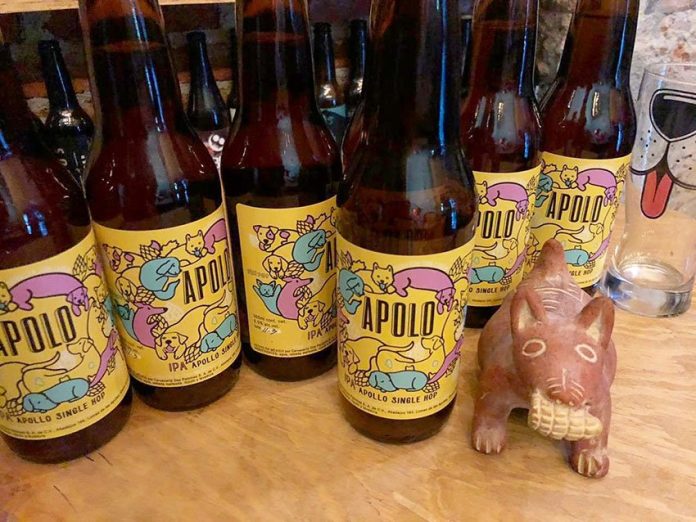
Apolo, made for beer drinkers and dogs.

Drink a beer, rescue a dog could well be the slogan for Apolo, a Mexican craft beer born from the collaboration of an animal rescue organization and a brewer.

The beer is named after Apolo, a dog that had been trained to fight and was later abandoned by its owner. The animal was subsequently rescued by a family.

Part of the price for every bottle of Apolo sold is donated to an initiative organized by Apolo & Friends that rescues street dogs, rehabilitates them and then finds them a home and family.

The brewer, Dos Palomas, is also made up of people “interested in making animal abuse less frequent, dignifying mongrel dogs, promoting respect toward animals and in making adoption an alternative to the purchase of a friend.”

The beer, an India pale ale, is currently only available at several Mexico City and Taxco, Guerrero, establishments that support Apolo’s cause.

Source: El Financiero (sp)

AMLO wants to end Mérida Initiative, direct funds to development instead

0
The Mérida Initiative has supported crime-fighting for a decade.

President López Obrador wants to end the Mexico-United States security cooperation agreement known as the Mérida Initiative, declaring that “it hasn’t worked” and contradicting earlier comments by his secretary of security.

Instead of the crime-fighting agreement, the president hopes to direct U.S. funding to development programs and job creation in Mexico’s south and southeast, as well as in Central America.

“We don’t want the so-called Mérida Initiative,” López Obrador told reporters yesterday at his daily press conference.

“The proposal that we’re putting forward is for a development plan for the southeast [of Mexico] and Central American countries,” he added.

“We don’t want armed helicopters. We don’t want resources for other kinds of military support, what we want is production and work. We’re seeking cooperation for development, not for the military, not for the use of force.”

Launched in 2008, the Mérida Initiative has directed about US $3 billion to Mexico to assist in the fight against drug trafficking and other forms of organized crime. Funding has also helped to train Mexican security forces and supported justice programs.

The United States Congress approved funding of US $145 million in fiscal 2019 under the initiative, according to the U.S. Congressional Research Service. The money is particularly aimed at stopping opioids such as heroin and fentanyl reaching the United States.

The president’s remarks contradicted comments by Public Security Secretary Alfonso Durazo, who told the newspaper Milenio that the government wanted the United States to agree to Mérida Initiative funding to be partially used for the “growth and consolidation of the National Guard.”

With regard to the new security force, however, López Obrador said “we have a way to finance it without needing those funds.”

He also said Mexico doesn’t need assistance from the United States to train the Guard, stating “the army is capable, it has training academies.”

Asked whether the United States government would agree to the redirection of funding to development, the president said, “we’re making progress on that,” noting that the United States recently pledged to invest in development in the region as part of the strategy to curb migration flows.

Some opposition lawmakers called on the president to rethink his proposal to redirect the Mérida funding, warning that it could disappear altogether.

Citizens’ Movement Senator Samuel García said United States President Donald Trump was unlikely to accommodate López Obrador’s “whim,” adding “that’s why I ask for more caution and not to risk [the funding].”

Source: Milenio (sp), Reuters (en) 

Oaxaca buys medications after new federal policy fails to deliver

0
medications

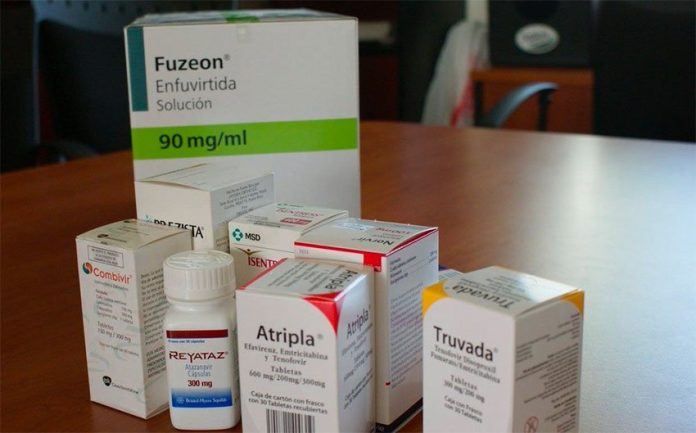
The Oaxaca government has been forced to make emergency purchases of medications after a new federal buying policy failed to deliver, resulting in shortages throughout the state.

Oaxaca Health Secretary Donato Casas said the Oaxaca Health Services (SSO) spent 90 million pesos to guarantee the supply of medications in the state’s 50 hospitals and 300 clinics. He said that close to 50% of the state’s health centers had been affected by the shortages, although a health workers’ union placed the number closer to 70% or 80%.

Casas explained that the crisis followed plans by the federal government to assume responsibility for the purchase of medications beginning in March, a measure that is part of a process to federalize healthcare.

However, due to a lack of funds the federal health secretary informed the SSO that it will not actually cover the purchases until June.

The state health secretary said the government expects the emergency purchases will ensure an adequate supply of medications.

But a health union spokesman warned the state’s healthcare system could collapse within 10 to 15 days if there is not an immediate resolution to the supply problem.

In response, Casas said that the SSO is currently engaged in talks with the federal government to guarantee a full supply of medications to the state’s public hospitals.

Source: Milenio (sp), El Universal (sp)

AMLO’s chief of staff: first-quarter numbers ‘a little slap’ but his boss disagrees

0
romo and amlo
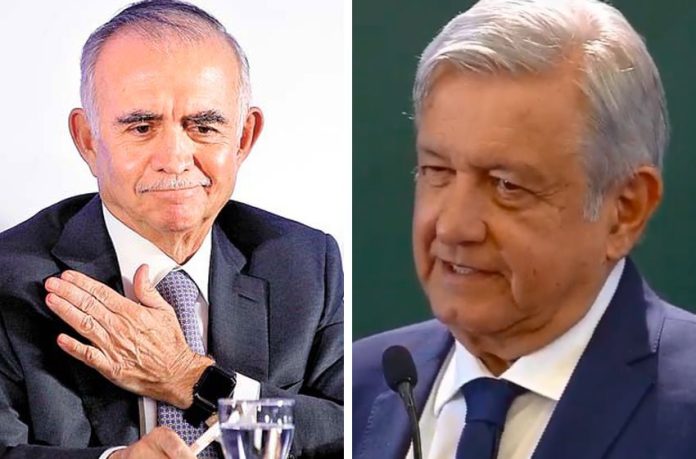
Chief of staff Romo and his boss don't see eye to eye on the first quarter's economic performance.

An economic contraction of 0.2% in the first quarter of this year was nothing more than “a little slap” for the government, according to the president’s chief of staff, who rejected that Mexico is in recession.

Alfonso Romo told reporters yesterday that Mexico had “three complicated months” to start the year, specifically citing delays at the border with the United States in March that cost exporters millions of dollars.

However, he added that the government is “very optimistic” that the economy will pick up because the private sector is strong.

“So, this year, perhaps, we’re going to grow by between 1.6% and 1.7%, it’s very difficult to say now but we’re working on how to change the curve . . .” Romo said.

Asked whether Mexico was in recession as implied by the president of the National Institute of Statistics and Geography (Inegi), President López Obrador’s chief of staff responded: “I don’t see it, I honestly don’t see it in the numbers at all.”

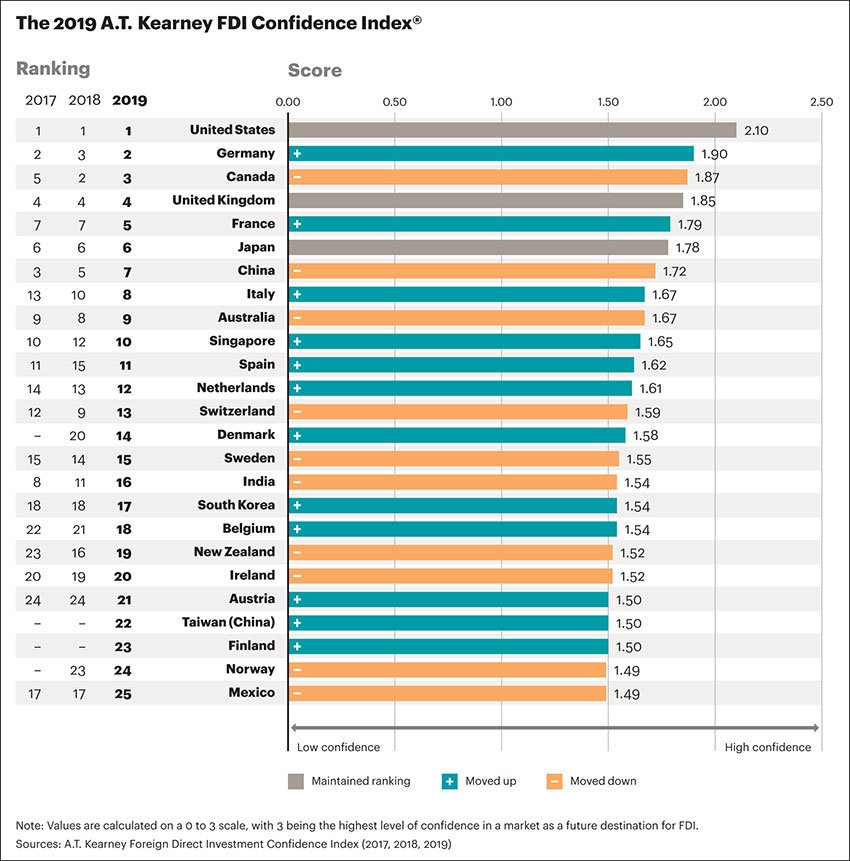
Mexico dropped to No. 25 on the Kearney index.

Romo, a business tycoon and former Olympic equestrian, added: “What’s important is to look at the trend. This first quarter, we were given, what’s it called, a little slap. It’s like when you ride a horse, [if you fall] you get on again to jump better.”

At his morning press conference today, López Obrador said he didn’t agree with Romo’s “little slap” remark.

“I maintain that the economy is very good,” he said, declaring that rather than being slapped, the government is delivering its own backhanders to those involved in corruption.

“. . .We’ve given a slap to the corrupt, that’s right, with a white glove,” the president said.

López Obrador also rejected a new report by global management consulting firm A.T. Kearney, which ranked Mexico 25th in its Foreign Direct Investment (FDI) Confidence Index, a decline of eight places compared to last year.

“Where does this fall in foreign investment come from? How can it be that we fell eight places in five months?” he asked.

In its report, A.T. Kearney explained that even though Mexico lost eight places in its index – which ranks the markets likely to attract the most investment in the next three years – the country’s score actually rose, indicating that it remains attractive to investors.

“The decline, therefore, is more reflective of an increasingly competitive FDI environment rather than a souring of investment intentions for Mexico,” the company said.

However, it noted that the International Monetary Fund (IMF) and the Secretariat of Finance (SHCP) have both recently downgraded Mexico’s growth outlooks for this year and next.

“These growth concerns dovetail with the rhetoric of President Andrés Manuel López Obrador, who has challenged the privatization of key sectors of the Mexican economy, including the crucial energy sector,” A.T. Kearney said.

“Furthermore, in early 2019, the Mexican central bank warned that slowing investment and labor strikes, among other challenges, were weighing on its growth forecast.”

A.T. Kearney also noted that credit rating agencies are downgrading the country’s credit rating outlook.

“Contrary to these headwinds, however, the signing of the USMCA free trade agreement has given investors a sense of greater policy stability in the North America economy,” the company said.

“Mexico has made a concerted effort to expand its trading relationships . . . Such efforts indicate to investors that Mexico will remain open to the global economy and is actively seeking to diversify its trade and investment relationships.”

Source: Milenio (sp), El Financiero (sp) 

Whistled at, taunted, touched and grabbed: a snarky lesson for cat callers

0
March with them: equality is sexy.

During my first 10 or so years in Mexico, I would be grabbed by a strange man, on average, once a year.

All seemed to be crimes of opportunity, and it didnt really stop until I got a big, scary-looking dog, and men would cross the street to avoid me. (Cat calls and whistles are several times a week, forever, until youre a skeleton, I guess).

A few times were downright scary, like when a man ran up to me and reached under my skirt while I was walking early in the morning to the bus stop to go to work. He stopped and stared at me for a few seconds even as I screamed and hit him as if he were deciding what to do next. No one was around.

Another time someone grabbed me in front of my apartment building after having asked for directions, and said, when I protested, What, you dont like it? He genuinely seemed confused.

I was so paranoid about him knowing where I lived that I went inside and barricaded my door and carried my keys points-out for months.

Nowadays I live in a decidedly more chill area, my neighbors know me, and often see me with my husband and daughter (having a child with you seems to reduce ones fair gamerating by about 70%, but is still no guarantee).

Like every woman I know here, foreign and Mexican, Ive been whistled at, taunted, touched, and grabbed by men. It sucks. But what sucks more is that so many men dont seem to realize that its something they seriously shouldnt do, and the contempt it shows for women in general chills my blood. This letter (admittedly snarky) is for them.

Hey there, Cat Callers!

Cute gringa here with your first official class on how to not be creepy toward women. Welcome! I know, this isnt the best introduction to put you at ease, and surely there are some of you out there who feel youre being sexy and daring, but much like you feel the need to get things off your chest immediately when you see a female of our species that you think you might like (to harass?), I feel its best to just jump right in. Shall we?

First, and this is very important: do not, I repeat, DO NOT touch strange women. Or known women, for that matter, if you arent sure how theyre going to take it, and especially if it hasnt even occurred to you that theyd have any emotions about it at all.

Im not talking about handshakes and greetings in social situations, and I know you know what I mean. I dont know a single woman, foreign or national, who hasnt been grabbed on the street by a strange man and had the living daylights scared out of her, and not an insignificant number of women have disappeared and even died after precisely that kind of initial contact.

So take it from me, fellas: unless your end goal is to commit an actual crime, just keep your hands to yourself! If your end goal is to commit a crime, well, tie yourself up somewhere. I dont know.

Second rule: direct and constant eye contact is very creepy, and not charming at all. Judging from the number of men who do this, I think this one might not be quite as obvious. Havent you ever seen those National Geographic documentaries where giant cats crouch, fixated and unblinking, on their prey?

Its not a nice feeling, thinking youre about to get pounced on or are being stalked. And its definitely not sexy. If you like someone, do this instead: glance over, catch the persons eye, smile a bit, then look away again. If she smiles back, maybe do it once or twice more (but dont sustain the look for over two seconds), then walk over and introduce yourself like a normal human being. You can do it!

Third, just do not do that thing where you turn your head a second too early when a woman walks by so that she just knows that you are checking out her behind. Its icky. Its gross. And most of all, its unwelcome. When you do that, any hope that you might just see us as regular people dissipates, and makes us feel like, well, an object: something to be compared and examined, then bought or left to rot on a shelf; and if you truly love women, I dont think this is how you want to make them feel.

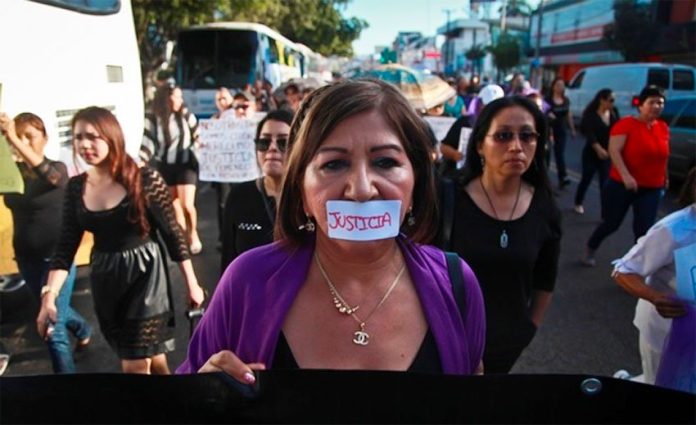
Lastly, and oh-so-importantly: when women protest in the streets because theyre tired of being ridiculed, ignored, abused, kidnapped, raped and killed at numbers so high Mexico might as well be one giant war zone, march with them instead of criticizing their efforts as not the right kind” or too soon or discrediting the entire movement because a couple of people spray-painted some graffiti (if theres one thing we wont abide, its graffiti, amiright?): march with them side by side.

Sexism and machismo hurt all of us, but true equality is sexy.

Sarah DeVries writes from her home in Xalapa, Veracruz.

In 7 years, 10,500 minors were murdered in Mexico: UNICEF report

0
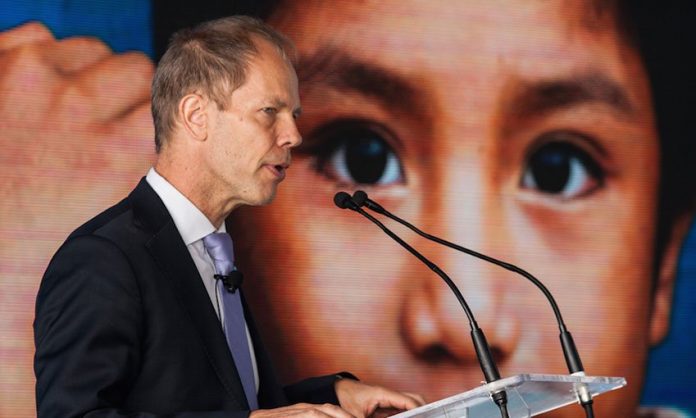
UNICEF México chief Christian Skoog.
UNICEF México chief Christian Skoog at yesterday's presentation.

More than 10,000 minors were murdered in Mexico between 2010 and 2017, according to a new report by the United Nations Children’s Fund (UNICEF).

Just over three-quarters of the 10,547 homicide victims were male — boys and teenagers, UNICEF México said in its 2018 annual report.

Issued yesterday, the report said that violence against minors is on the rise.

“We had an average of three [murders of minors] per day until around five or six years ago. Now, we have about four homicides [per day], according to government statistics, and that is very concerning, it’s serious,” UNICEF said.

Minors aged between 12 and 17 are most vulnerable to deadly violence, the report revealed, accounting for 78% of all homicides in the seven-year period.

UNICEF also said that at the end of 2017 around 20% of missing persons were minors and that girls and teenaged females made up 60% of that figure.

UNICEF representative Christian Skoog told a press conference yesterday that criminal groups prey on children and expose them to risks which in some cases cost them their lives.

“Children are used in illicit activities because they don’t have the same culpability [as adults] . . . That’s why they’re subject to being victims and are attracted by organized crime, because they cannot have the same culpability and that’s dangerous,” he said.

Testimony from a minor included in a report about the prosecution of children published by the National Institute of Statistics and Geography (Inegi) last month provided anecdotal evidence that cartels target children for the reason cited by the UNICEF official.

“They [criminal groups] recruit . . . minors because they get out [of juvenile detention centers] more quickly and they put them to work again,” said the minor, who was identified only as Hugo.

Judges cannot impose prison sentences on children younger than 14, the Inegi report said, and the maximum sentence for minors aged between 14 and 17 is five years’ imprisonment, even in the case of serious crimes such as armed robbery, rape and intentional homicide.

Hugo also said that cartels pay the legal fees for minors in trouble with the law and give money to their families, which acts as an incentive for them to stay within the ranks of organized crime.

Skoog urged authorities to “create opportunities” for vulnerable children – one in two Mexican children live in conditions of poverty, according to UNICEF – so that “they don’t have to join illicit activities and [succumb to] the influence of organized crime.”

However, he also noted that children are also increasingly becoming victims of violence in their own homes.

Statistics for 2019 show that children continue to lose their lives in large numbers as an epidemic of violence sweeps the country.

During the first quarter of this year, 285 minors were murdered, according to a report by the Network for Children’s Rights in Mexico (Redim).

Guanajuato recorded the highest number of homicides of minors, with 35, followed by Veracruz and Nuevo León, with 20 and 18 homicides respectively.

Redim said that for every 100 investigations into the murder of a minor, there is only one conviction.

It urged authorities to implement a strategy to combat violence against children that is supported by the full weight of the law and most importantly, sufficient funding.

Source: Milenio (sp)