Home Blog Page 1882

Magazine’s readers name Mérida world’s best small city

0
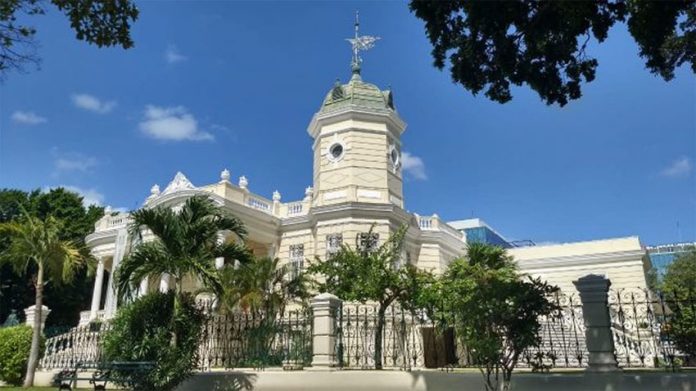
The colonial architecture was one of Mérida's highlights for magazine readers.

The capital of Yucatán, Mexico’s safest state, is the recipient of yet more international recognition: Mérida has been named the world’s best small city by the Condé Nast Traveler Readers’ Choice Awards.

The city’s natural and cultural attractions, the warmth of its people, the quality of its gastronomy and high level of public security added up to make it the top choice among magazine readers.

In making the No. 1 spot, Mérida beat out Dresden, Germany; Québec; Salzburg, Austria; Puerto Vallarta; Bergen, Norway; Florence, Italy; Puebla; Monte Carlo, Monaco; and Cologne, Germany.

The award is another in a long list of recognitions and achievements recently earned by Yucatán’s cosmopolitan capital. In 2018, Mérida topped the United Nations (UN) City Prosperity Index for Mexico, which rates quality of life. This summer, it was Mexico’s third fastest-growing destination for summer vacations.

In early September, Ceoworld magazine named Mérida North America’s second safest city, and later that month it hosted the 17th World Summit of Nobel Peace Laureates.

Previous winners of the Condé Nast award are Istanbul, Turkey; Florence, Italy; Tokyo; and San Miguel de Allende.

“We are very happy to see Yucatán continue to position itself both inside and outside of Mexico,” said Governor Vila Dosal. “This recognition is another result of the publicity strategies we have carried out with the help of various sectors . . . Without a doubt, we trust that together we can make Yucatán the best destination in Mexico and the world.”

One of the elements that played a role in its selection as best city was being an entrance point to the state of Yucatán and the tourist regions of the Yucatán Riviera, the Costa Maya, Pucc and the Mundo Maya.

The city itself is renowned for its colonial architecture, museums, art galleries, theaters, open-air cafes, bars, traditional clothing vendors, parks, hotels and wide range of restaurants.

Other winners in Mexico were the Rosewood in San Miguel De Allende, named best hotel in Mexico, and Esperanza, an Auberge Resort in Cabo San Lucas, named the country’s best resort.

Source: Milenio (sp)

Guerrero town imposes curfew in preparation for a new cartel invasion

0
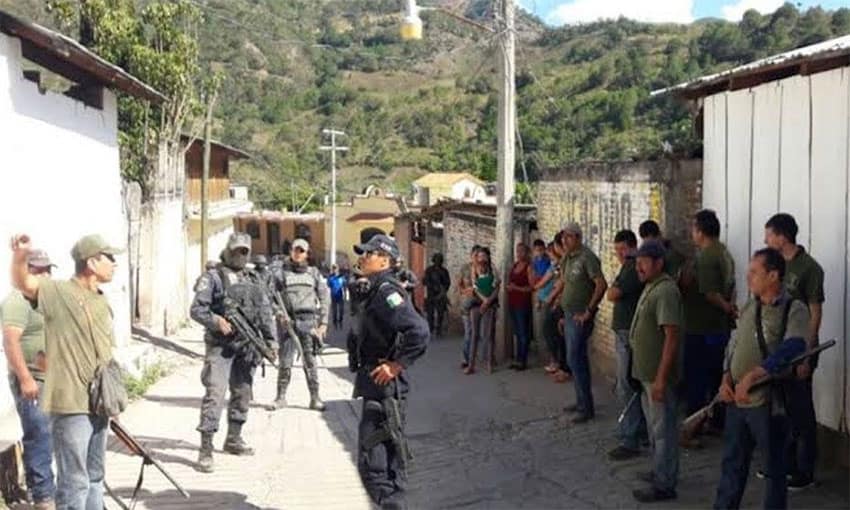
Community police patrol in Apaxtla.

Residents of Apaxtla de Castrejón, Guerrero, took up arms three years ago and succeeded in expelling the Familia Michoacana cartel from their town. But now there’s a new gang threatening to muscle in.

Fearing an invasion by Mexico’s most powerful criminal organization, community police are guarding all entry points to the town and have imposed an 11:00pm curfew.

The implementation of the beefed-up security measures in Apaxtla, a small town and municipal seat located just outside the notoriously violent Tierra Caliente region of Guerrero, follows reports by shopkeepers, farmers and other residents that they have received extortion, kidnapping and even death threats in recent days from members of the Jalisco New Generation Cartel.

“We have a border with Tierra Caliente, with the municipality of Arcelia, the Familia Michoacana rules there but now the Jalisco New Generation Cartel has also arrived and they’re threatening to come to invade us, to subjugate us,” Heliodoro Ocampo, a member of the Apaxtla community police, told the newspaper Milenio.

“[But] we’re not willing [to allow that to happen],” he added.

“And not just [an invasion] by them, by any cartel, whatever its name is; the Guerreros Unidos, the Familia Michoacana, the Jalisco Cartel . . . they’re not going to reach our town because our town is fortified, all the entries and exits are guarded and we won’t allow them to come to try to control us.”

Milenio witnessed the determination of the community police to keep their town safe first hand: a reporter from the newspaper accompanied about 100 of its heavily-armed members as they carried out a late-night patrol last weekend.

During the patrol, Ocampo explained how the curfew will work.

“Here in the town we all know each other, we all know who we are . . . If we see a young couple [outside] at a time they shouldn’t be, they’ll be asked to go to their homes, the patrol vehicle will go by . . . warning that the curfew is already in effect . . .” he said.

“If on the way back, we see that they’re still there we’ll put them before the municipal authorities,” Ocampo added, explaining that fines of up to 500 pesos (US $25) will be issued to those who fail to observe community police instructions to go home.

“We’re going to be measured, it’s not about harming anyone, it’s about getting to the heart of what’s happening in our town and remedying it,” he said.

Citizens are determined to repel the Jalisco cartel.

The community police said the curfew will continue for the next six months. In addition to making it easier to identify outsiders who may pose a threat to security, the measure also seeks to combat drug dealing and prostitution, they said.

In the neighboring municipality of Teloloapan, which is within Tierra Caliente boundaries, members of another self-defense force told Milenio that achieving peace without the intervention of state or federal authorities is possible.

“We can assure neighboring towns that it’s calm here. As citizens, we now enjoy and live in peace, which is very different from other times. Five, eight or 10 years ago we lived with terror, with worry, that one day you’d be abducted or . . . your child would be taken . . . Unlike a few years ago, today we live in peace, the peace that what we’ve always sought,” said a commander of the Teloloapan force who spoke on the condition of anonymity.

Despite the success they have achieved, he explained that the autodefensas would prefer to lay down their weapons and allow federal authorities, such as the newly-formed National Guard or the military, to take over security duties.

“. . . I believe that their work and our responsibility is the same: to safeguard the physical safety of our citizens . . . It would be good for them to approach us . . . to speak to us, the doors of the town are open, this is their humble home as well.”

Source: Milenio (sp) 

Water rationing in 12 states; drought causing low levels at many dams

0
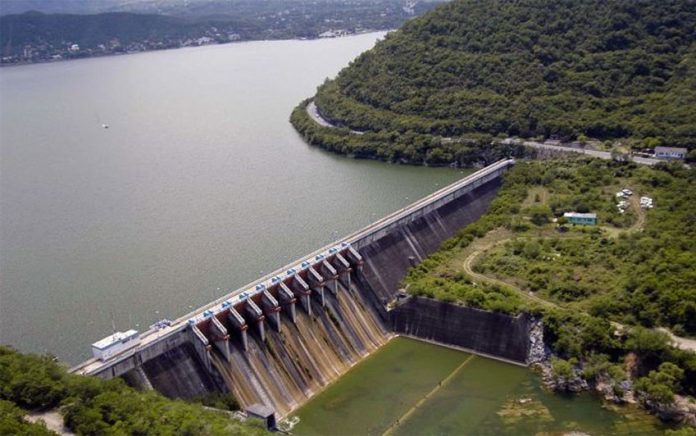
Las Peñitas dam in Chiapas
Las Peñitas dam in Chiapas is among those where water levels are down.

Water is currently being rationed in 12 states due to drought and the resulting low water levels in many of the nation’s biggest dams.

According to a report by the National Water Commission (Conagua), water supply to Mexico City has been reduced from 10,000 liters per second to 9,000 liters because the reservoirs that feed the Cutzamala system are only at 75% of capacity.

In México state, water rationing is in effect in 13 municipalities, while in Tabasco restrictions apply to the amount of water that can be extracted from the Peñitas dam in Chiapas, which has caused shortages in the Tabasco state capital, Villahermosa.

The quantity of water available for irrigation purposes has been reduced in each of Baja California, San Luis Potosí, Nuevo León and Tamaulipas, while general water supply has been limited in parts of Oaxaca, Veracruz, Hidalgo, Querétaro and Chiapas.

Decisions to ration water are taken by state-based councils of Conagua, which reported in September that 66.6% of the country was experiencing drought of varying degrees of severity at the end of August.

Twenty-one of Mexico’s biggest dams were below 50% capacity at the end of September, while 65 others were between 50% and 75% full.

Water experts told the newspaper Reforma that the implementation of water rationing measures in 12 states shows that many parts of the country are not adequately prepared to cope with drought conditions that are expected to worsen in the coming years as a consequence of climate change.

Óscar Monroy Hermosillo, a professor and researcher at the Metropolitan Autonomous University, said it was urgent for municipal and state governments to draw up plans for the development of rainwater harvesting systems and the construction of new reservoirs.

“Our objective has to be to capture rainwater in the entire republic,” he said.

“. . . If we’re not prepared to take advantage of rain when it comes, we’ll constantly be losing it and we can’t think that we’re always going to be able to live from the aquifers or bring water from other catchment areas; that model is already reaching its limit,” Monroy added.

The academic also said that water has to be managed on a local level rather than by state authorities.

Raúl Pacheco, a water management expert at the Mexico City research university CIDE, said that climate change will cause periods of drought to lengthen and that Mexico’s cities have to adapt to that reality.

“It’s important for cities to adapt to the lack of water and to do that they need a plan . . . They must invest money and there must be coordination between environmental agencies and those working on climate change . . .” he said.

“There must be coordination agreements between cities and states in order to have a solid water adaption plan,” Pacheco added.

Elena Burns, a coordinator at the National Autonomous University Sustainability Center, said that Conagua needs to review the concessions that allow large companies to use large quantities of water.

“For example, in the Valley of Mexico, the Modelo brewery and PepsiCo have concessions for large volumes of water and on the other hand, we have zones in the urban area that [only] have water once or twice a week,” she said.

Source: Reforma (sp) 

Taxi drivers’ protest provokes commuter backlash, calls for boycott

0
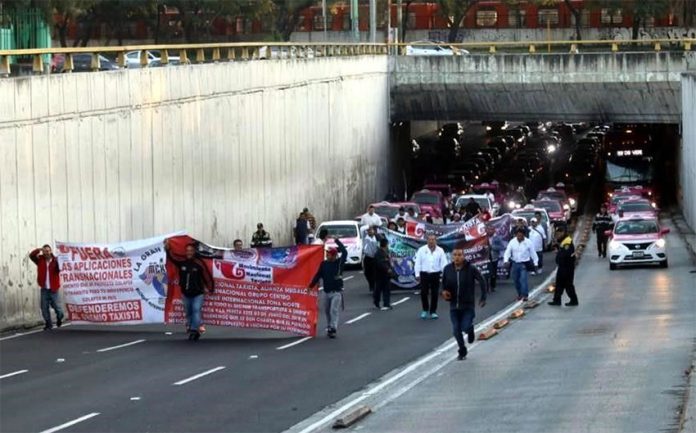
Taxi drivers march in Mexico City on Monday.

Thousands of social media users called for a taxi boycott after Mexico City taxi drivers caused traffic chaos on Monday by setting up blockades to demand stricter regulation of app-based ride-hailing services.

The hashtag #unasemanasintaxis (a week without taxis) has been used more than 35,000 times on Twitter to encourage people to join the cause.

“Join the campaign: for each day that taxi drivers block the city, we the users will stop using taxis for a week. [Then] you’ll see that their damn smiles will be wiped off their faces,” said one flyer that circulated widely on the digital platform.

Twitter user Eva Prianti went a step further, suggesting that a permanent boycott of taxis would be better than one that only lasted a week.

“. . . How can the citizens show solidarity with them [taxi drivers] when they couldn’t care less about the chaos, the [economic] losses and the harm they’re doing to people . . .” she wrote.

José Antonio Lara, another Twitter user who used the hashtag, said the actions of taxi drivers would “generate more distrust” among Mexico City residents rather than “arouse sympathy” for their plight.

A video posted to Twitter that was shared almost 100 times showed a taxi driver giving instructions about how to tamper with the meter in order to charge passengers more.

Mexico City residents held up by a taxi blockade at the Angel of Independence monument on Reforma avenue also expressed anger and frustration at the taxi drivers.

Adriana Zazueda told the newspaper Reforma that drivers are not only losing money because of the increased competition of the ride-hailing services but also because “they offer poor service [and] tamper with the meters.”

Daniela Martinez, an officer worker who said that she would arrive at work two hours late, claimed that “the protest is useless,” adding that “if someone wants to request a taxi now, there aren’t any so they’ll use an app.”

She also said that taxi drivers need to improve the service they offer to their passengers.

It's been six years since Uber arrived in Mexico City,
It’s been six years since Uber arrived in Mexico City, and taxi drivers have been unhappy ever since.

Meanwhile, Mexico City Mayor Claudia Sheinbaum claimed in a video posted to social media on Monday night that just 0.4% of licensed drivers participated in the blockades.

“The fundamental reason why some Mexico City taxi drivers set up these blockades is that they’re angry because the city government has taken a series of actions to put an end to corruption and to guarantee the safety and the quality of [taxi] service,” she said.

By issuing taxi licenses online, two corrupt licensing centers have been put out of business, Sheinbaum said, adding that her administration has developed the mobile app “Mi Taxi,” which allows passengers to rate their driver and to advise family or friends of their location in real time.

“The second phase of this application, which will be ready at the end of this year, will allow . . . a taxi to be requested from a cell phone . . .” she said.

The mayor said that 99.6% of taxi drivers support the government’s efforts to put an end to corruption in the taxi sector and make the service safer for passengers.

“The city [government] is open to dialogue but let it be clear, the fight against corruption is not negotiable,” Sheinbaum said.

Drivers affiliated with the National Movement of Taxi Drivers blocked several major roads in and around the capital starting early Monday morning, including those used to access both terminals of the Mexico City airport.

After causing traffic chaos for almost 12 hours, the taxi drivers agreed to withdraw following the signing of an agreement with the federal government that will see the legality of app-based ride-hailing services examined.

Source: El Universal (sp), Reforma (sp) 

Mexico City bar Licorería Limantour named No. 10 in the world

0
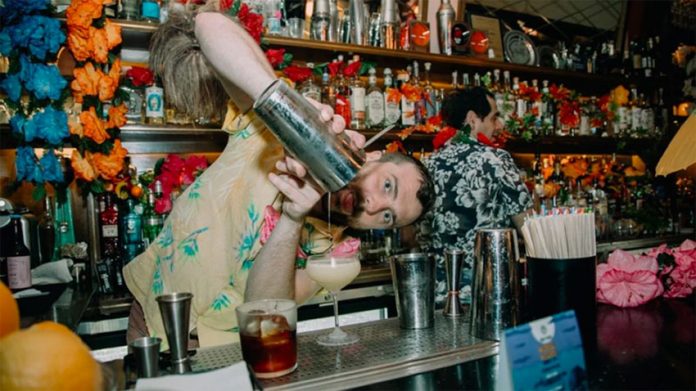
Bartender at work at Limantour, No. 10 in the word.
Bartender at work at Limantour, one of the world's top 50 bars.

Mexico City’s unassuming Licorería Limantour has come in at No. 10 on the World’s 50 Best Bars list.

“The space is always full, always vibrant and, most importantly, always fun — without the gimmicks,” said the judges of the list, prepared annually since 2009.

“We have a good time and we transmit that to people,” said head bartender Pablo Pasti. “There is good chemistry between the drinks and the atmosphere.”

However, Limantour’s charm ultimately lies in the creativity of its drinks menu. Pasti’s team of cocktail creators is constantly thinking up new ways for their beverages to represent the art, music, culture and history of Mexico to its international clientele.

“I’m Argentinian, but I make many cocktails with Mexican flavors,” Pasti said, “and I’m not just talking about chiles or things like that. I look for other aspects to give Limantour identity and in this way ensure that people that visit us from abroad come back here when they return to Mexico.”

Licorería Limantour
Licorería Limantour, a creative drinks menu.

The link to Mexican identity goes further than the flavors in the drinks. Pasti and his fellow barkeeps create thematic menus that they seasonally change.

One such menu was their “Feel the Latin Blend: Mexican Episode,” which was based on Mexican novelists. A big hit on the menu was the Comala, a drink inspired by the iconic novel Pedro Páramo by Juan Rulfo, made with traditional coffee, whiskey, mole bitters and a liqueur made with smoky chile ancho.

Limantour’s current menu takes inspiration from Mexico City’s vibrant and unique markets, from the bustling, verdant Xochimilco market to the maze of folk art at La Ciudadela to Mercado San Juan, known for its exotic products like scorpions, escamole (ant larvae) and lion’s meat.

Next season’s menu will be based on cacao and its relationship with pre-Hispanic Mexican cultures. But Pasti says the menu will stand out precisely because none of the drinks on it will taste like chocolate.

“We will use the shells, or we’ll toast it, there will even be drinks with fermented cacao. The interesting thing will be tasting the drinks and not detecting the common flavor of chocolate,” he said.

Limantour’s history of innovation has put the Roma Norte bar on the World’s 50 Best Bars list since 2013, when it debuted at No. 47. It has been rising in the ranks ever since to finally break the top 10 this year.

The list is compiled with votes from more than 500 drinks experts, including renowned bartenders and consultants, drinks writers and cocktail specialists from around the world. Each voter casts seven votes, based on his or her best bar experiences of the previous 18 months.

The other top-10 bars, beginning with No. 1, are Dante, New York; Connaught Bar, London; Florereia Atlántico, Buenos Aires; The Nomad, New York; American Bar, London; The Clumsies, Athens; Attaboy, New York; Atlas, Singapore; and The Old Man, Hong Kong.

Sources: Infobae (sp)

Chihuahua farmers replace marijuana with avocados

0
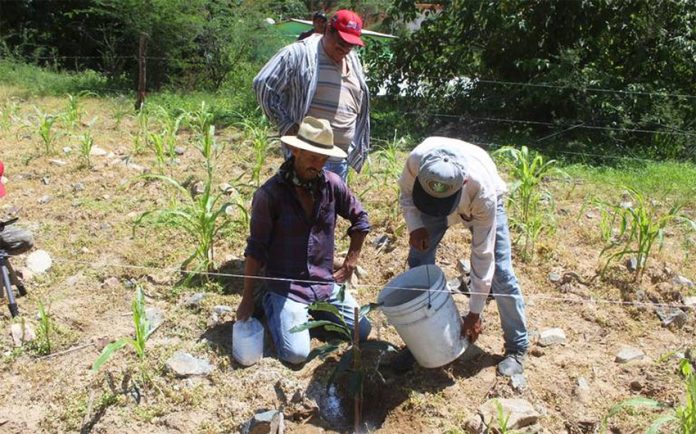
Planting avocado trees in Chihuahua.

Some farmers in Chihuahua are giving up growing marijuana and planting avocados instead, according to the mayor of Guadalupe y Calvo.

Farmers in the municipality, considered part of the notorious Golden Triangle of drug production, harvested 10 tonnes of Hass avocados this year. Now they aim to plant up to 50,000 avocado trees by the end of the year, announced Mayor Noel Chávez, who hopes to create a new economic model in the region.

“People didn’t believe in this, but we said we’d give it a try, and the first results are being seen. This program started three years ago with coordination from all three levels of government, and in another three years we’ll be seeing our production multiply,” said Chávez.

The municipal government believes avocado production can generate up to 90 million pesos (US $4.6 million) annually.

Chávez says he sees motivation among the farmers who themselves see great potential in avocados due to their popularity in markets like China, Japan, the United States and Europe.

He suggests that poverty is to blame for area farmers growing marijuana and other illegal crops, but hopes that education and awareness will show them another way to make a living.

“No one gave them the technical knowledge [before] to switch over to avocados,” he said.

Chávez has envisioned a plan to disassociate communities from illegal crops and increase local consumption of the fruit, with the expectation to become an exporting community within the next three years.

This year’s 10 tonnes is a good start, but Chávez believes his municipality of 70,000 residents can do much better. And he expects Chihuahua to be able to compete with avocado-producing states in southern Mexico.

He recognizes that the project has received its fair share of criticism and that many people were reluctant at first because they thought the avocados wouldn’t take off. Now, however, many are looking to get certified to export.

“Today, Guadalupe y Calvo is . . . about to become the mega-region for avocados . . . said Chávez.

“I’ve been working as a professional forest environmentalist for 25 years, having seen all kinds of ways to take advantage of our ecosystem. It’s now time for us to take advantage of this use of our natural resources,” he added.

Source: El Sol de México (sp)

Athletes, trainers protest salary arrears by sports agency

0
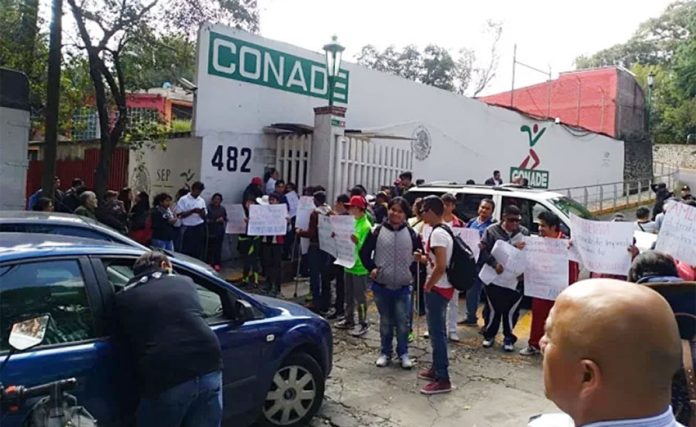
Athletes and trainers protest at Conade on Monday.

About 120 athletes, trainers and sports officials gathered outside the headquarters of the federal sports agency Conade on Monday to protest against delays in salary payments.

Efraín Mora, vice president of the Mexican Paralympic Committee, told the newspaper El Universal that coaches and administrators have not been paid for months.

“There were about 120 of us at the protest,” he said. “It’s been 10 months that trainers and administrators haven’t been paid, and that’s why the presidents of the federations, athletes and family members got together to demand our salaries.”

Mora said the total debt is around 6 or 7 million pesos (US $306,000 to $357,000).

The protest started around 10:00am on Monday, and ran until 1:30pm, when Conade official Israel Benítez agreed to meet with the protesters.

Mora said that Benítez promised the salaries will be paid by October 18.

“If they don’t follow through, we’ll be back at the Conade,” he said. “We’re also thinking of going directly to President López Obrador at the National Palace to explain our case to him.”

Source: El Universal (sp)

Taxis withdraw blockades; legality of ride-hailing services to be examined

0
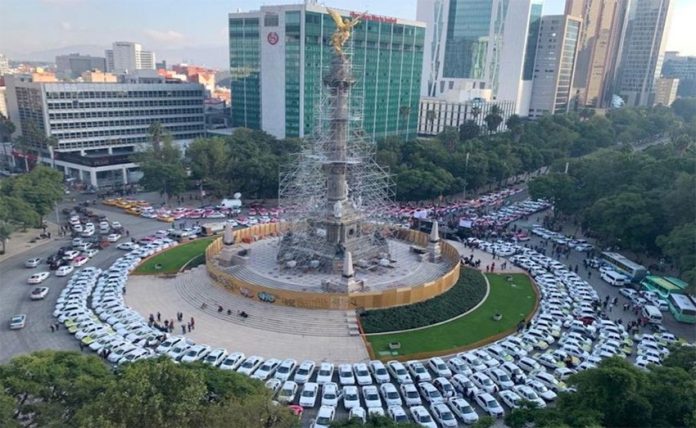
Protesting taxis surround the Ángel de Independencia in Mexico City.
Protesting taxis surround the Ángel de la Independencia in Mexico City.

Taxi drivers withdrew their blockades in Mexico City on Monday afternoon after reaching an agreement with the federal government that will see the legality of app-based ride-hailing services examined.

Interior Secretariat undersecretary Ricardo Peralta told a press conference that the government and the National Movement of Taxi Drivers (MNT) agreed to the formation of a group of legal experts who will analyze whether services such as Uber, Didi and Cabify are operating legally in Mexico.

He said that experts from the secretariats of Communications and Transportation and the Interior as well as the Mexico City and México state governments will participate. Meanwhile, talks between authorities and taxi drivers will continue.

While the legal analysis is taking place, the MNT – which protested across Mexico yesterday to demand stricter regulation of the ride-hailing apps –  pledged to refrain from setting up more blockades, Peralta said.

“There is an agreement that under no circumstances will there be any blockade in any of the cities where there were blockades today,” he said. Blockades were in place for about 12 hours, and their removal began after the agreement was reached at about 5:00pm yesterday.

The undersecretary said that if the legal experts determine that Uber, Didi and the like are operating legally, the MNT will be able to develop its own app to allow its drivers to find fares.

The Mexico City government released an app called “Mi Taxi” in September whose main aim is to improve security for taxi passengers but it said that by November, it will be possible to use it to request to be picked up at a designated location.

The México state government said on Monday that it is analyzing the possibility of developing an app to be used by licensed taxi drivers.

Peralta told reporters that the government is committed to establishing a level-playing field for drivers of both taxis and the ride-hailing services.

The MNT argues that it is unfair that taxi drivers have to pay a range of fees and fulfill requirements that don’t apply to drivers who work for the app-based services.

Appearing alongside Peralta, MNT treasurer Ángel Morales confirmed the pledge not to protest while the legality of the ride-hailing apps is being assessed and said that taxi drivers are committed to improving the service they offer.

Protesting taxi drivers in Mexico City.

Ride-hailing services have become increasingly popular in many Mexican cities not only as a result of their convenience but also because they are widely considered to be safer and more comfortable than taxis.

Morales offered an apology for the traffic chaos caused by the taxi blockades in Mexico City but said they were necessary because three months of negotiations with the government failed to yield any progress.

Taxi drivers affiliated with the MNT blocked several major roads in and around the capital starting early Monday morning, including those used to access both terminals of the Mexico City airport.

They also staged protests and set up blockades in cities in the majority of Mexico’s 31 states.

The arrival of Uber and similar services in cities across the country has triggered countless protests by taxi drivers who argue that the newcomers have been allowed to grow indiscriminately without regulation and that their operation poses a threat to taxi drivers’ livelihoods.

Source: Milenio (sp) 

Decree to protect Chiapas’ Sumidero Canyon park

0
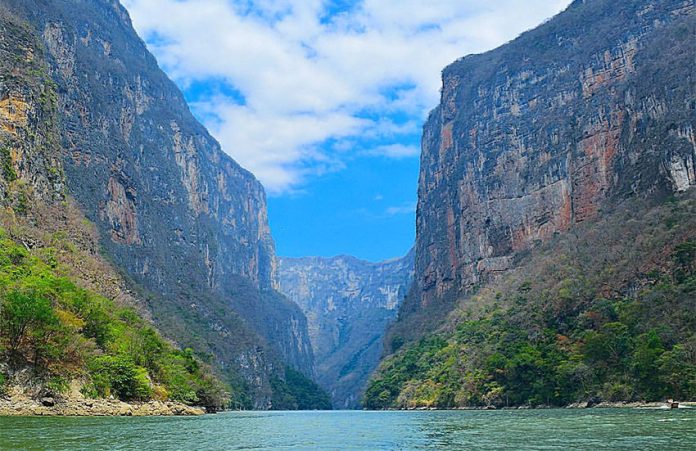
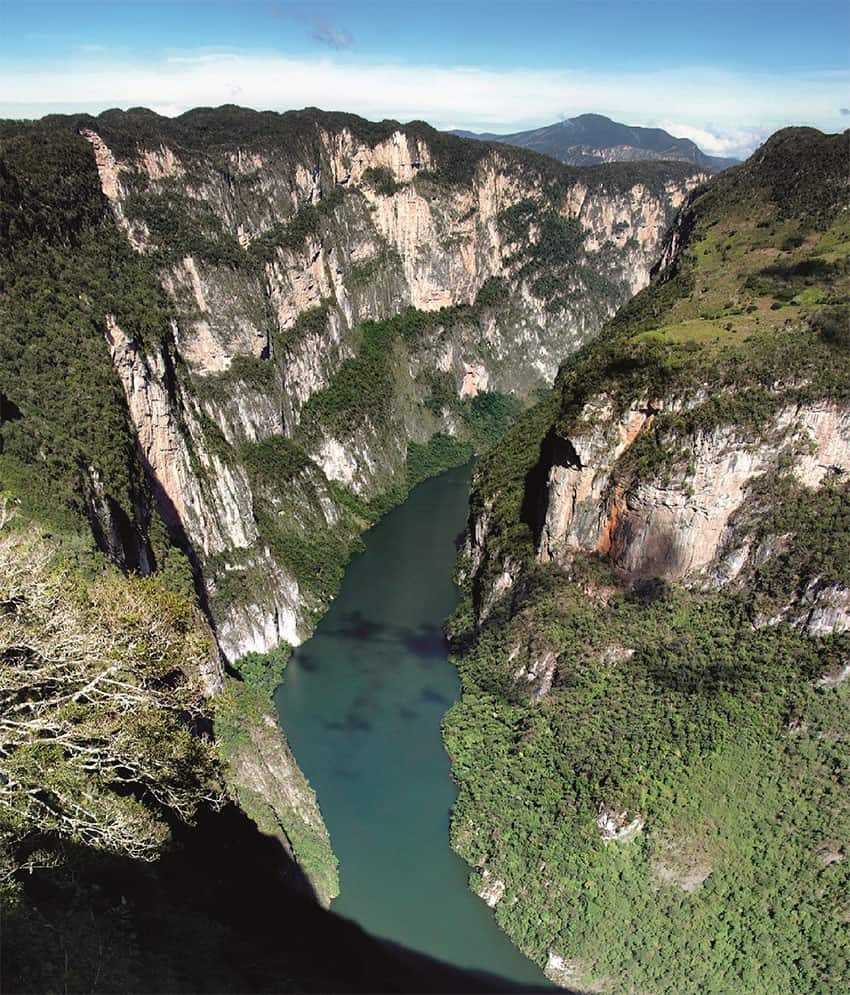
The Sumidero Canyon in Chiapas.

President López Obrador will issue a decree to protect the Sumidero Canyon National Park in Chiapas and increase its territory by more than 3,000 hectares.

The newspaper Milenio reported that the national park will increase in size from 21,789 to 25,100 hectares, a 15% enlargement.

The presidential decree – exactly when it will be issued is unclear – will aim to stop the encroachment of urbanization on the Sumidero Canyon, put an end to the extraction of rock from the national park and prevent the accumulation of trash.

It will also seek to protect the park’s forest, the sheer 1,000-meter-high cliffs that border both sides of the Grijalva river and the habitat of endangered species that call the area home.

Among the species that live in and around the canyon are mushroom-tongued salamanders, cinnamon hummingbirds, crocodiles, spider monkeys and a kind of bream that is endemic to the area.

The Sumidero Canyon, formed by 1,000-meter-high cliffs on either side of the Grijalva river.

One section of cliff in the park is at risk of collapsing due to the nearby operation of an illegal quarry, at which dynamite is used to extract limestone.

Bordering the state capital Tuxtla Gutiérrez, the Sumidero Canyon was first declared a national park in 1980 but for the next 20 years it wasn’t protected as it should have been, Adrian Méndez Barrera, a regional director of the Natural Protected Areas Commission (Conanp), told Milenio.

He said that more than 9,000 hectares of land that were decreed part of the park have been overtaken by urbanization.

Land on which 91 neighborhoods have been built will be excluded from the park’s territory but another section of unprotected land will be added and increase its overall size, Méndez explained.

“. . . We’re going to add a new area to ensure forest cover throughout [the municipalities of] Chiapa de Corzo, Tuxtla Gutiérrez and San Fernando . . .” he said.

Land within the park’s borders has been targeted by illegal loggers in the past.

The Sumidero Canyon is one of Chiapas’ premier tourist destinations. Tens of thousands of visitors admire the canyon and its wildlife from boats that travel up and down a 30-kilometer stretch of the Grijalva river, which runs between the imposing cliffs.

Source: Milenio (sp) 

Citizens, businesses must change behavior, pay more taxes: Herrera

0
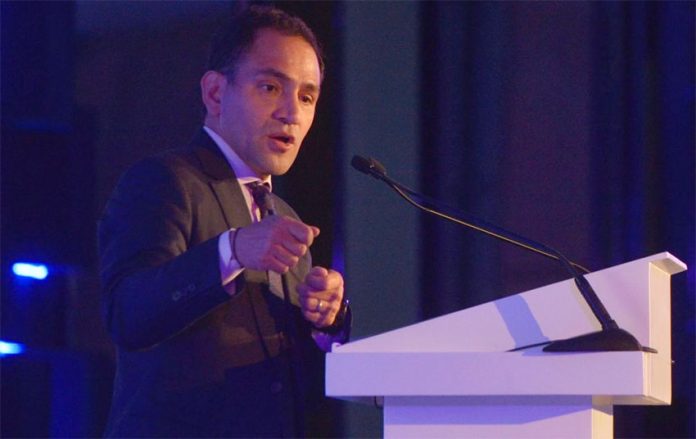
Finance Secretary Herrera.

A behavioral shift is required from individual taxpayers and businesses in order to increase tax revenue, Finance Secretary Arturo Herrera said on Monday.

“We have to recognize that [tax collection] is a problem, that there are quite high levels of evasion and avoidance. We at the Secretariat of Finance [SHCP] have to do what we can to collect the taxes but citizens and businesses will also have to change their behavior,” he said.

Speaking to reporters after addressing a business forum in Mexico City, Herrera said the SHCP has to ensure that it collects all taxes in accordance with current tax laws.

Once the secretariat, of which the Federal Tax Administration is part, has improved its revenue collection practices, there will be a debate about possible changes to Mexico’s tax system, he said.

The aim of any change, Herrera said, is not only to make more resources available to the federal government but also to state and municipal authorities.

“It’s not just the federal government that lacks resources,” he said, adding that all of Mexico’s workforce must pay tax to ensure that there are sufficient funds in public coffers.

During his address to the Forbes Business Forum, Herrera said that Mexico’s tax revenue represents 13% of GDP, whereas the average for Latin America is 17%.

“If we collected about 16% of GDP, which is the level of Central America [but below] Chile, Uruguay, Brazil and Colombia . . . we would have about 750 billion pesos [US $38.3 billion] extra per year . . .” he said, adding that the money could be used to invest in infrastructure projects or to pay off public debt.

Source: El Financiero (sp)