A burning bus forms a roadblock in Reynosa, where murders surged 225%.
The February deployment of 10,200 police and military personnel to the 17 most violent municipalities has been less than successful in 10 of them.
Homicides increased between January and March in five of those municipalities, of which Reynosa, Tamaulipas, was the worst example with a 225% spike.
There were 15% to 50% more homicides in Uriangato, Salamanca and Celaya in Guanajuato; Monterrey, Nuevo León; and Ciudad Juárez, Chihuahua.
Homicide numbers remained unchanged in Manzanillo, Colima, and Tlajomulco de Zúñiga, Jalisco, while they were down in Tijuana, Baja California; Irapuato, Guanajuato; Acapulco and Chilpancingo, Guerrero; Guadalajara, Jalisco; Ecatepec, México state; Cancún, Quintana Roo; Culiacán, Sinaloa; and Nuevo Laredo, Tamaulipas.
When all crimes are taken into account, 10 of the 17 municipalities saw an increase of between 1% and 22%.
The worst hit between January and March were Monterrey, Nuevo Laredo and Chilpancingo, where crime rose by 22%, 19% and 16% respectively.
According to an analysis by the National Public Security System, 35% of all homicides occurred in the 17 municipalities. In an effort to reverse the trend, a 600-strong deployment of federal forces was sent to each of those locations on February 6.
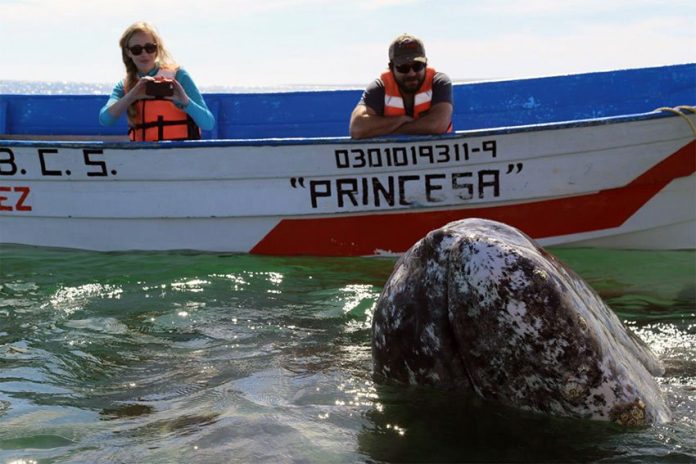
Whale-watching is a popular activity in Baja California Sur.
More than 25,000 gray whales have been born in the lagoons of Baja California Sur in the past 30 years, environmental officials said as the breeding season comes to an end and the whales make their way northward.
Every year, after traveling 8,000 to 11,000 kilometers southward over two to three months, eastern gray whales begin to arrive in the calving lagoons and bays in a biosphere reserve on the west coast of the state in late December to early January. The three most popular are San Ignacio, Magdalena Bay and Laguna Ojo de Liebre.
The death toll among the whales during the 30-year period was 735, mostly due to natural causes. The most to die in one year were 81 in the year 2,000 and the least were five in 1995.
Some researchers have suggested that an elevated death toll can be correlated to the effects of the El Niño and La Niña weather phenomena, which among other effects can cause sea water temperatures to change.
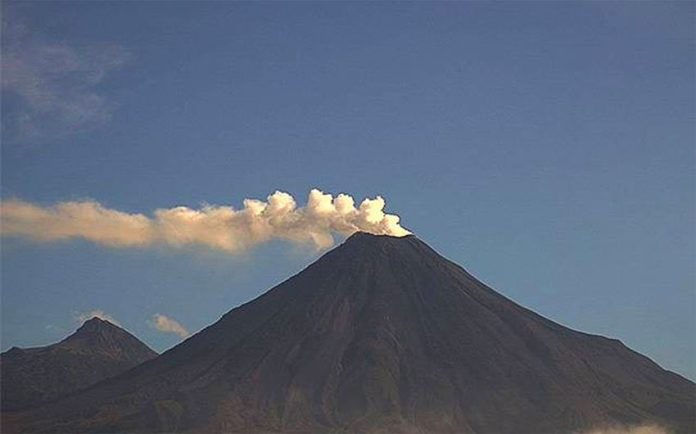
Exclusion zone around the volcano has been increased to eight kilometers.
The alert level at the Colima Volcano has been raised to yellow after increased activity, state officials said, warning area residents to be aware of the procedures for evacuation.
Security officials said a moderate explosion and growth of the crater dome with lava flow is one scenario that could be expected in the short term.
Experts monitoring the active volcano have also detected a significant increase in volcano seismic activity.
The exclusion zone around the volcano has been raised to eight kilometers.
State and federal Civil Protection agencies advised residents to remain calm, respect the exclusion zone and inform themselves about evacuation procedures.
The yellow alert level is three of four used to describe the volcano’s status and denotes “low-magnitude activity.”
Located in the states of Colima and Jalisco, the Volcano of Fire, as it is also known, is one of 16 world volcanoes with a history of large, destructive eruptions and proximity to populated areas.
It lies towards the western end of the Trans-Mexican Volcanic Belt, which covers central-southern Mexico. The Popocatépetl volcano is found on the eastern half of the belt.
Both volcanoes have seen increased activity recently. In the case of Popocatépetl, experts have confirmed that the nature of its explosions has changed since the September 2017 earthquakes. They have forecast that activity over the next few months could be moderate to intense.
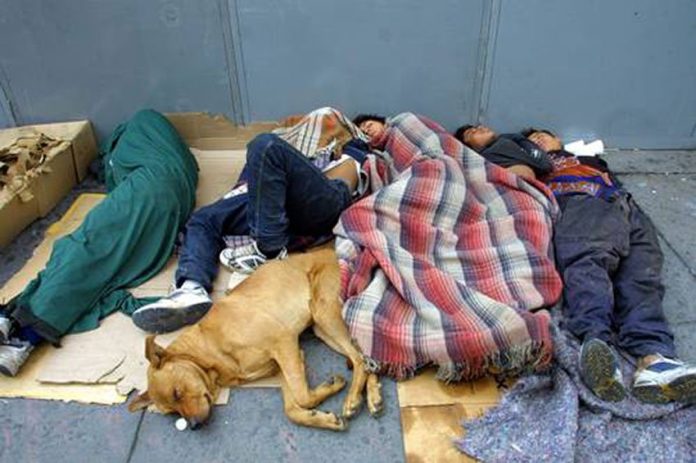
Money, clothes, food and medicine — those are a few of the perks that Jalisco crime cartels offer to lure street kids aged between 8 and 20 to their ranks.
An organization that provides aid to street kids said that the majority of children and adolescents working for the cartels are used to package or sell drugs.
According to the National Institute of Statistics and Geography (Inegi), at least two million minors between 5 and 17 years old held illegal jobs in the state in 2017.
The head of the school of law at the University of Guadalajara said the offer of money, a job and drugs makes it easy for cartels to find recruits among youths living on the street with little to occupy their time and little chance of bettering their condition.
“If one doesn’t have anything to do, he gets sucked into an evil lifestyle, ” said Marco Antonio González Mora.
“The street is a monster with a thousand pincers that can arrive suddenly and without warning from any direction, and even if you’re very careful and don’t want to fall, you fall,” said “O,” a youth who lived on the street as a child and now works for a nonprofit organization that provides assistance to children in the greater Guadalajara metropolitan area.
O said that minors looking for work are the cartels’ preferred victims. “J,” 17, is such a minor. J says that his history with the cartels began because he was looking for work to help his parents with household expenditures.
“What type of job can an underage boy, a minor, get? Maybe washing cars, but there’s no money in that. If he doesn’t have anything to do, he falls into an evil lifestyle.”
J explained the cartels look for their youngest recruits on the streets of municipalities like Tonalá and Tlajomulco. The drug gangs often show them more kindness and consistency than they have been accustomed to up to that point in their lives.
O lived for 13 years on the Cerro del Cuatro in Tlaquepaque, notorious for murder and drug trafficking, and recalled that during her years of work with the cartels they could often be more dependable employers than the government.
“It’s not as if they just pay by the day; no, they pay a weekly salary, and if someone gets sick, they pay for the medicine. I mean, they actually follow through, which is something the government doesn’t do.”
O said she finally decided to leave her life with the cartels and seek rehabilitation when she witnessed the fate of other youths in her situation including that of a couple that once held control of illicit trade in certain neighborhoods, and were violently killed.
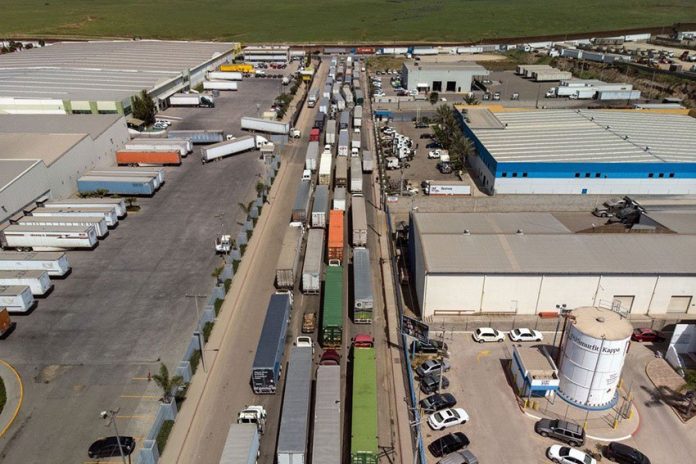
Trucks line up to cross the border at Otay Mesa in Tijuana.
The foreign affairs secretary expressed concern over border delays in a diplomatic note to the United States embassy on Friday.
Marcelo Ebrard urged the U.S. government to hasten the movement of border traffic that has been slowed by measures and threats by President Donald Trump.
Wait times for truck traffic heading north spiked earlier this month when shipping companies began sending more cargo in response to Trump’s threats to close the border.
In addition, the reassignment of border agents to deal with migrants left insufficient personnel at international border crossings, creating bottlenecks.
The diplomatic note, which Ebrard posted to his Twitter account on Saturday, said the delays have generated losses of up to US $170 million in the cities of El Paso, Texas, and Ciudad Juárez, Chihuahua.
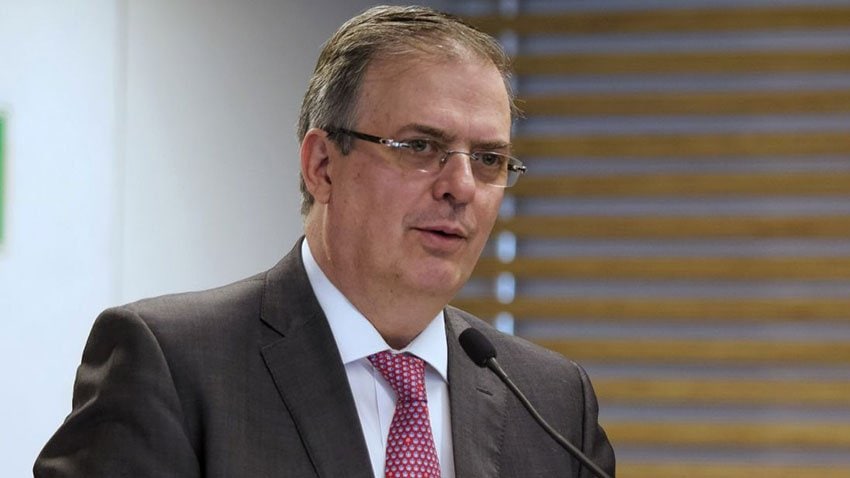
Foreign Affairs Secretary Ebrard.
The note said it was urgent that U.S. authorities accelerate the movement of traffic, while at the same time guaranteeing the efficiency and security of the border.
Trade between Mexico and the U.S. continues to grow. During the first quarter, Mexico became the latter’s biggest trading partner for the first time in history as a result of the U.S.-China trade war.
Goods from Mexico are partially filling the gap left by the absence of Chinese goods that have been affected by the dispute.
Trade in goods between the two countries rose to US $102 billion from January through March, 14.8% of total U.S. trade, and an increase of 5.48% over last year.
An IMSS pharmacy: if medication isn't available, it might have been stolen.
Dozens of boxes of fake prescription forms have been uncovered through an investigation at a Coahuila hospital, revealing a major fraud at the IMSS national health service.
A federal health official said following the discovery of 60,000 fake prescription forms at a general hospital in Torreón that the problem is national. Adalberto Méndez López said further investigations are under way in other parts of the country.
The phony forms are inserted in the IMSS system and sent to doctors while the originals are used to steal medications. As a result, the latter — including medicines for treating diabetes and cancer — don’t get to those who need them.
Instead, they are sold on the black market.
Méndez called it huachicolero — a colloquial term for petroleum theft — of medications.
Every day IMSS doctors issue 650,000 prescriptions for free medications to beneficiaries.
President López Obrador said today the health sector is “infested with corruption,” and called the sale of medications “despicable.”
Pope Francis has donated half a million dollars to assist migrants in Mexico, the Vatican announced today.
The Catholic Church said in a statement that the funds will be distributed to 27 projects in 16 dioceses and among religious congregations that have asked for help to continue providing housing, food and basic necessities to migrants, who are mainly from Central America.
The statement noted that 75,000 migrants entered Mexico in 2018 in six caravans, adding that “all these people were stranded, unable to enter the United States, without a home or livelihood.”
It also said that media coverage of the “emergency” has been decreasing and that aid from governments and private individuals has declined as a result.
“In this context,Pope Francis donated US $500,000 to assist migrants in Mexico.”
The Vatican said that a total of 13 projects have already been approved and that another 14 are being evaluated.
“A regulated and transparent use of the resources, which must be accounted for, is required before the aid is assigned,” the statement said.
The projects that have already been authorized will be undertaken in the dioceses of Cuautitlán, México state; Nogales, Sonora; Mazatlán, Sinaloa; Querétaro, Querétaro; San Andrés Tuxtla, Veracruz; Nuevo Laredo, Tamaulipas; and Tijuana, Baja California.
The Scalabrinians, the congregation of the Sacred Hearts of Jesus and Mary and the Josefinas Sisters have also received funding.
“Thanks to these projects, and thanks toChristian charity and solidarity, the Mexican bishops hope to be able to continue helping our migrant brothers and sisters,” the statement concluded.
Meanwhile, around 600 mainly Cuban migrants who escaped from a detention center in Tapachula, Chiapas, on Thursday remained at large as of last night, immigration authorities said.
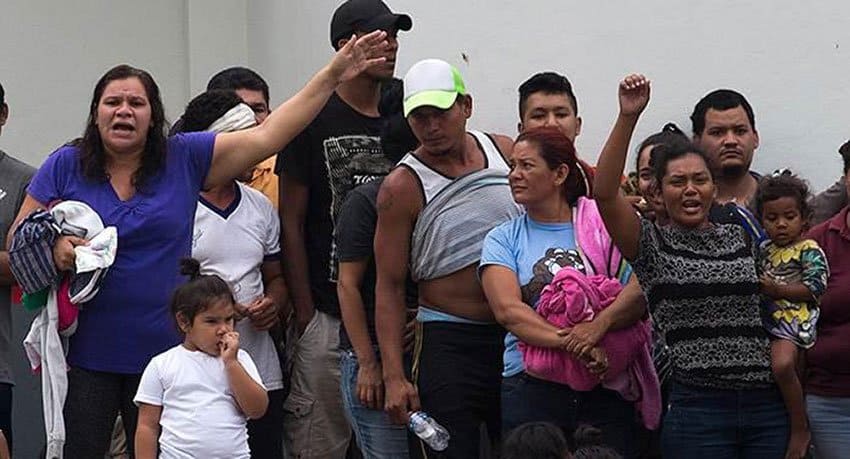
Detained migrants in Tapachula demand food and freedom.
The National Immigration Institute (INM) said in a statement that 645 migrants fled the Siglo XXI migration center, not 1,300 as it initially reported and that 35 have since returned. It didn’t explain why the figures had been reduced.
The center was holding 1,745 people – almost double its capacity – at the time, the INM said.
The agency said the breakout occurred after a group of Cuban men violently broke into a section of the immigration center reserved for women.
The incident caused a commotion and the migrants were able to gain access to other parts of the detention center before reaching its main entrance. INM personnel were unarmed and unable to stop the men from leaving, the statement said.
The escape was the largest from a Mexican immigration center in recent history. According to people with family members in the Siglo XXI center, the breakout occurred after a dispute about food and sleeping space, both of which are at a premium.
Laisel Gómez Cabrera, a Cuban who now lives in Texas, told the Associated Press that he was worried about his wife, Anisleidys Sosa Almeida, who has been detained at the center for weeks.
In Tapachula yesterday, he said that overcrowding in the facility provoked a fight before Thursday’s escape.
“. . . They had to fight among themselves for a place to lie down, to get a little bit of food. They couldn’t put up with it anymore, they rioted and they left,” Gómez Cabrera said.
“All the ones who left are going to get put on a red list. If they catch them again, they are going to be subject to automatic deportation,” he added.
The INM said that most of the 980 Cubans who were held in Tapachula had applied for amparos or injunctions through Tapachula lawyers who provide “false expectations” of obtaining a transit visa that will allow them to travel to the United States border.
However, “it has only delayed their assisted return to Cuba,” the agency said. A group of 148 Cubans was deported from Tapachula last week.
The INM also said that criminal charges will be filed against those who fled the detention center for the damage they caused prior to leaving, and that security measures at the facility have been bolstered.
Unprecedented numbers of migrants have entered Mexico at the southern border since late last year.
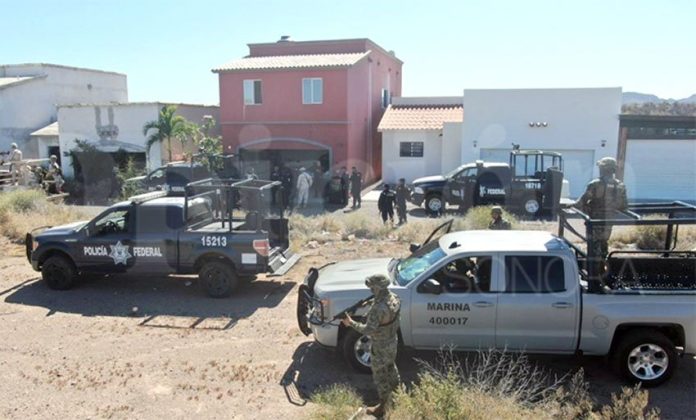
Security forces at the house where kidnapping victim was being held.
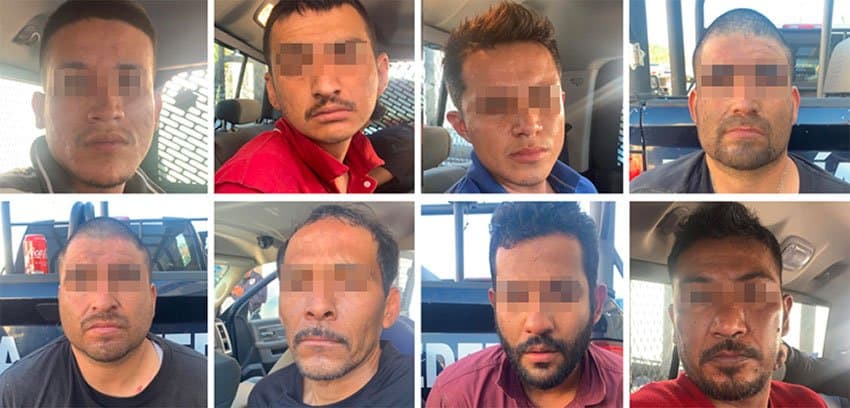
Police have arrested eight men in San Carlos, Sonora, in connection with the kidnapping yesterday morning of an 18-year-old youth.
It was also revealed that municipal police received an anonymous threat shortly after the arrests.
After Leonardo José M.R., was kidnapped at 10:00am Friday, authorities activated a Code Red alert and federal, state and local police initiated a search for him by land and air.
Four hours later, police located a safe house where the kidnappers were keeping their victim. After a firefight and attempted flight, police detained eight suspects, freed the victim and secured several vehicles, assault weapons, bulletproof vests and other equipment and clothing that may have belonged to the navy.
Leonardo José was hospitalized and treated for wounds inflicted with a machete, reported the newspaper Radar Sonora, indicating he had been tortured.
The eight suspects are considered ‘highly dangerous.’
The eight suspects, who were transferred to a municipal detention center operated by National Defense, were described as “highly dangerous” and administrative staff were asked to leave for their own safety before the prisoners arrived.
Last night, police picked up a threat over their internal radio channel: an anonymous voice said three times, “I’m coming for you, you know why.”
An unidentified source said San Carlos police chief Silvestre Armenta reinforced security measures at the police station in light of the threat, although authorities have not ruled out the possibility that the message might have been a joke made in bad taste.
San Carlos is a beachfront community within the city of Guaymas in southwestern Sonora.
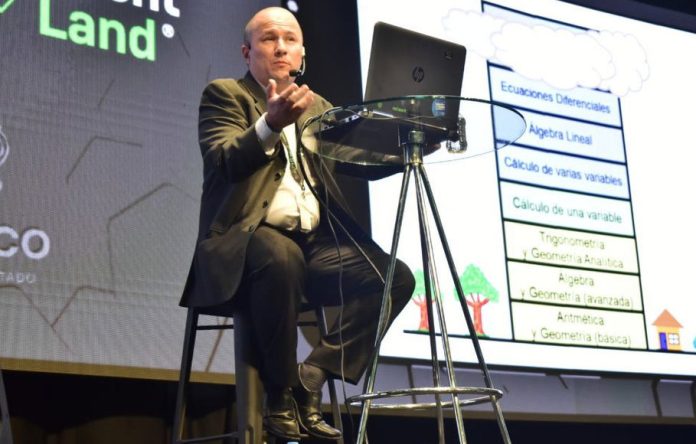
The week-long tech expo Talent Land concluded yesterday in Guadalajara, Jalisco, where Julio Ríos, the Colombian science and mathematics YouTuber known as Julioprofe, attracted more than 5,000 youths for his talk about mathematics and physics.
Ríos was received “like a rockstar,” said the newspaper Milenio to describe his arrival on the conference floor on the second day of the event.
The online math teacher expressed his amazement at the thousands of young people that gather every year for the show, organized around technology, innovation and entrepreneurship.
” . . . The idea of Talent Land is a wise one, an idea that must be commended as it attracts the young and guides them through technology to find solutions and to achieve a better society,” said Ríos.
For the last day of Talent Land, Ríos gave a math class with which he hoped to break a Guinness World Record.
Over 5,000 people attended but 887 were disqualified by a Guinness representative and the attempt to break the record failed.
Ríos and his students were not discouraged, and the class started as scheduled with the ringing of a school bell.
The class lasted just over 40 minutes, with the teacher going over basic arithmetic with his students, including addition, subtraction, multiplication and division. The teacher even used apples, pears and geometric figures in his explanations to solve several operations.
“Is this too hard?” the professor asked his students several times, only to receive a chorus of thousands of voices replying “Nooooo!”
The bell rang again to mark the end of the class, but the teacher surprised his students with a test with which their newly acquired knowledge was tested.
More than 60,000 people of all ages attended Talent Land, now in its second year, and experienced over 1,700 hours of content, from conferences on music, robots, videogames and artificial intelligence to a special Jalisco government initiative to explore the intersection between technology and agroindustry.
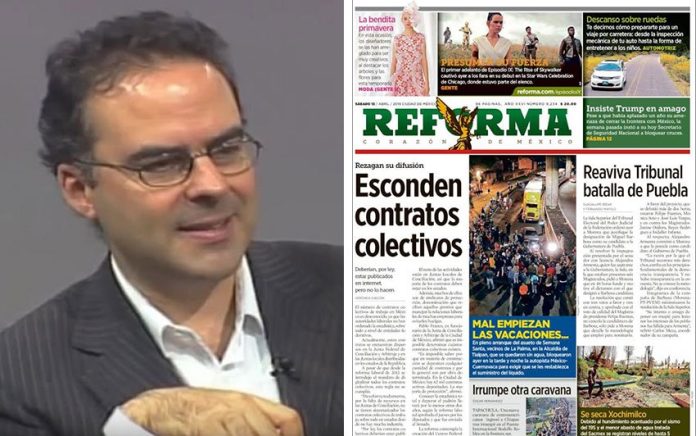
The editor of a major newspaper has received death threats after President López Obrador once again criticized the Mexico City-based broadsheet.
Earlier this week, the newspaper Reforma published a story about the beefing up of security at López Obrador’s home in the southern Mexico City borough of Tlalpan.
The article included the president’s address, an editorial decision that López Obrador condemned at his Tuesday press conference even though he acknowledged that it was already in the public domain.
The president also slammed Reforma for publishing a photograph of a narco banner on which the Guanajuato-based Santa Rosa de Lima fuel theft cartel made a threat against his life. The narcomanta also listed the address where the president lives with his wife and youngest son.
“Other media outlets didn’t do that. Don’t you think that’s bad taste? Where are the ethics? . . . It’s a very peculiar conservatism,” López Obrador said.
The leftist leader has frequently hit back at Reforma when it has published stories that are critical of his government, describing it as prensa fifí (posh or elitist press) and a bearer of conservatism and neoliberalism.
Following his most recent public complaint about the newspaper, the editor of Reforma received a barrage of threats and harassment.
Article 19, a press freedom organization, said in a statement that Juan Pardinas “was a victim of death threats, harassment and attempted doxxing via social networks by unknown subjects.”
After the president’s press conference on Tuesday, the hashtag #NarcoReforma became a trending topic on Twitter, the organization said.
“. . . It was inferred that the dissemination of the president’s address was a sign of collusion between the newspaper and organized crime . . . Under this hashtag, the home address of the general editorial director of the newspaper was asked to be disseminated and setting fire to the premises of the newspaper with Pardinas inside was encouraged,” Article 19 said.
The organization demanded that López Obrador “abstain from generating any act that inhibits the exercise of freedom of expression,” adding “this includes maintaining a stigmatizing discourse” against the media.
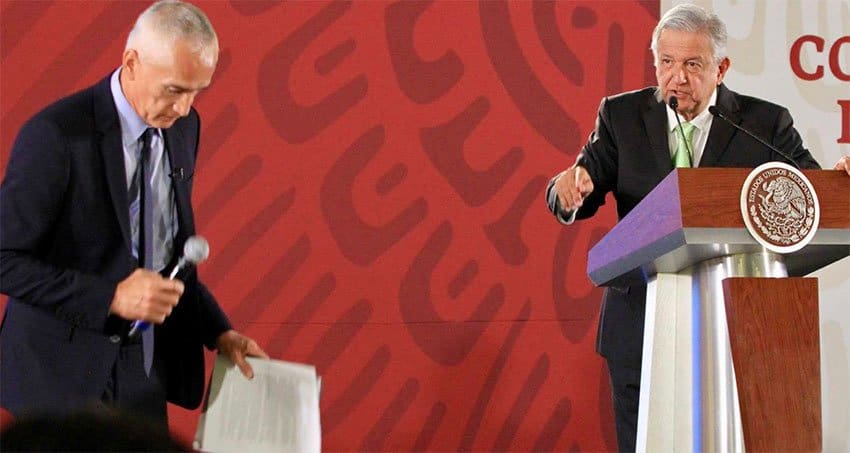
Journalist Ramos, left, with AMLO: unwelcome questions.
In addition, it called on federal authorities to investigate the threats against Pardinas and Reforma and provide protection for the former.
According to press freedom groups, 124 media workers have been murdered since the year 2000, making Mexico one of the most dangerous countries in the world for journalists. Five have been killed since López Obrador took office on December 1.
Some journalists have charged that the language the president uses to attack sections of the media tacitly endorses violence. Reporters who challenge López Obrador at his morning press conferences are quickly criticized on social media and in some cases threatened.
Article 19 said that López Obrador’s “stigmatizing discourse . . . has a direct impact in terms of the . . . risk it can generate for the work of the press because [his remarks] permeate in the discourse of the rest of society and can even generate attacks.”
After receiving an unwelcome question about Mexico’s homicide rate from journalist Jorge Ramos earlier this month, López Obrador told reporters: “If you step out of line, you know what will happen. But it won’t be me, it’s the people.”
However, yesterday he adopted a more conciliatory approach, announcing that protection would be provided for Pardinas and declaring that “media outlets will be untouchable – I absolutely respect their right to manifest ideas, the right to dissent.”