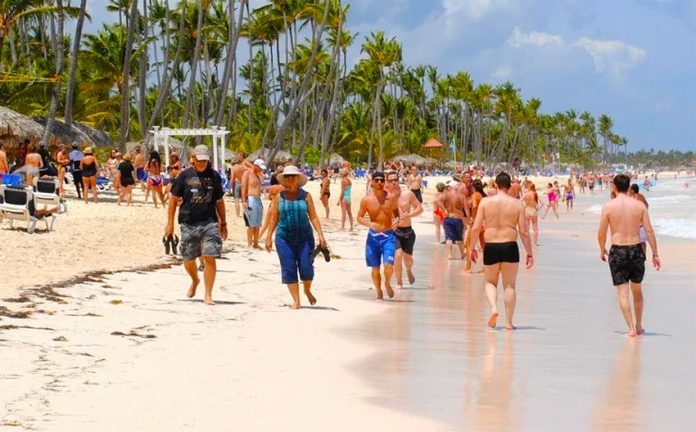
Punta Cana, Dominican Republic, is popular with US and European tourists.
The deaths of at least nine United States tourists in the Dominican Republic over the past year are providing a boost to Mexican tourism.
North Carolina travel agent Heather Di Pietro told the travel site Travel Market Report that she has “definitely seen a slight swing in clients revisiting Mexico as an option” as the result of the Dominican Republic deaths, some of which might have been caused by tainted alcohol.
“We have even had a few clients who booked months ago stating ‘anywhere but Mexico’ during the booking process, that have now switched their vacation to Cancún,” she said.
Travel Market Report said that statistics in its upcoming report 2019 Outlook on Mexico also show that travelers who disregarded the idea of coming to Mexico because of security concerns – or other issues such as sargassum or tainted alcohol – are now looking at the country again.
Just over half of the 800 U.S. travel agencies surveyed by the travel site said that clients who don’t want to visit the Dominican Republic because of news of the tourists’ deaths are now looking at Mexico.
“What’s happening in Punta Cana and the Dominican Republic right now definitely put Mexico back as the frontrunner again. Now, with all the Dominican Republic stuff, I push Mexico more,” said New Jersey travel agent Maria Tilton.
I am getting . . . higher bookings to Mexico because of the DR thing, but it’s not the way you want them.”
Michelle Bouzek, a travel consultant in Austin, Texas, who has been selling vacations to Mexico for 11 years, also said that she is seeing increased interest in traveling to Mexico.
However, Tilton acknowledged that Mexico still isn’t an easy sell because of the pervasiveness of violence in the news.
“Every time something happens in the media, it just sets us back 10 steps,” she said.
The anecdotal evidence that more Americans are looking at visiting Mexico comes the same week as the Visit México tourism promotion platform was relaunched with private sector funding.
The site’s new chief, Marcos Achar, expressed optimism that the updated platform will help to attract more visitors to the country.
Tourism experts said in March that the government’s decision to disband the Tourism Promotion Council will benefit other holiday destinations in the region such as Jamaica and the Dominican Republic.
However, that was before the deaths in the latter country hit the headlines.
Dominican Republic Tourism Minister Javier García told reporters in June that the deaths were not part of a mysterious wave of fatalities but a medically and statistically normal phenomenon that has been lumped together and sensationalized by United States media.
He said that autopsies showed that the tourists died of natural causes.
Magic mushrooms brought thousands of people to Mexico in the 1960s.
The Mexican Psilocybin Society, an advocate for legalization of the active ingredient in magic mushrooms, is sponsoring a march in Mexico City September. John Pint reports that the group hopes to get psilocybin reclassified, opening the door for research into its use in combating anxiety and depression.
August is mushroom month in many parts of Mexico. Recently, while hiking across a meadow in the highlands of Jalisco, I came upon a person crouching in the middle of the trail, examining some small brown mushrooms that had sprouted in droppings left by a passing cow.
“Do you know something about mushrooms?” I asked.
“Well, I know something about this particular toadstool. This is Psilocybe cubensis and it’s world famous.”
At that, I pulled the mini-recorder out of my camera bag and asked if I could record what he was about to tell me.
Psilocybe cubensis grows on cow dung which is “not too wet and not too dry.”
“You can record me,” he said mysteriously, “but you can’t take my picture and you can’t use my name.”
“OK,” I replied, “so what about these toadstools?”
“They are known everywhere as magic mushrooms,” he said. “They contain a chemical called psilocybin that was first analyzed by Albert Hoffman, the Swiss scientist who isolated and studied LSD. These mushrooms are found all over the world . . wherever you find cow or buffalo pies.
“People who consume them say the ‘trip’ doesn’t show you pink elephants, but makes you feel loved and ‘cleans your heart.’ So, this mushroom typically changes people in a good way and there are studies to back this up. Here in Mexico it’s been used for 3,000 years for sacred and medicinal purposes and was called teonanácatl (god fungus) by the Aztecs.
“In the 1960s crowds of young people from the U.S. used to flock to the village of Huautla de Jiménez in Oaxaca’s Sierra Mazateca to see a curandera (healer) named María Sabina who was an expert in the use of these mushrooms. Eventually celebrities like John Lennon, Mick Jagger and Bob Dylan turned up. But all that publicity did its damage and poor María Sabina ended up being thrown out of her own community.
“Curiously, today the village of Huautla is known more for its deep caves than it is for its mushrooms.”
Picking a mushroom: reach for the bottom of the stem; gently twist and pull.
My source went on to tell me that a micro-dose of psilocybin has been found to be very effective in alleviating depression and anxiety.
“These doses are very, very small. They don’t induce a ‘trip’ but nudge the user in a certain, very beneficial direction. They represent an alternative to expensive and addictive anti-anxiety agents such as alprazolam (sold as Xanax and Tafil), for example.”
He told me that people who take these micro-doses gain a sense of what their body needs or does not need. Alcoholics, for example, might start asking why they’re drinking and decide to give it up.
“You start seeing problems from a new perspective, from above. And you no longer feel stressed. If there’s a solution, you use it; if there’s no solution, you forget about it. And your creativity goes sky high.
“. . . a person who feels depressed, who feels that life is not worth living, who doesn’t want to get out of bed, takes a micro-dose and everything changes. This person says, ‘Wow, do you see the colors of those flowers?’ You start to value all the things that are around you; all the things you were taking for granted. So, you start changing and little by little to realize you are leading a better life. And this, in turn, makes life better for the people around you.”
This was a big eye-opener for me. I realized my informant knew a lot about the effects of micro-doses of psilocybin on depression, so I asked if he could share some cases of people who had tried it.
Mushrooms grown at home for micro-dose research.
“Yes, let’s take the case of someone we’ll call ‘Pepe Gonzalez’ . . . he had some issues . . . and decided to give it a try. After about three weeks, he said, ‘I don’t know if I’m going to continue to take this. I don’t feel any change.’ But his wife turned around and told him, ‘You stop taking those pills and I will divorce you on the spot!’”
My mushroom-expert friend continued: “I happened to speak to his son and mentioned that his father was taking psilocybin. ‘Oh ho!’ said the son, who was a very open-minded young man. ‘When did he start taking this? Three weeks ago, right?’ I told him that was exactly when his father had started and asked him how he knew. ‘Because,’ replied the son, ‘I saw a beautiful change in my father, a real transformation, and it started three weeks ago.’“
Psilocybe mushrooms can be found just about everywhere, but they are also classified as illegal just about everywhere. Nevertheless, a great deal of informal experimentation with them has gone on for some time. According to Scientific American, many psilocybin micro-dosers have reported that the mushrooms can increase creativity, calm anxiety, decrease the need for caffeine and reduce depression.
The website Pharmaceutical Technology reports that, in 2018, Compass Pathways, which studies psilocybin in treatment-resistant depression patients, “received the green light from the U.S. Food and Drug Administration for starting a . . . study with 216 patients, the largest clinical study ever done with psilocybin . . . . If successful, Compass will start a . . . trial with a view to file for approval in 2021.”
The report also cites a successful double-blind study at Johns Hopkins showing that some 80% of participants suffering from depression or anxiety enjoyed considerable relief for up to six months from just one dose of psilocybin.
“This,” says Pharmaceutic Technology, “is remarkable news considering that (most) depression medications on the market can take weeks or months to show effects, and sometimes these are modest and come with damaging side effects.”
[soliloquy id="88157"]
After learning about magic mushrooms, I was not at all surprised to read that the Mexican Psilocybin Society is sponsoring a march in Mexico City September 20 promoting legalization of psilocybin. It is now classified as a Type 1 drug — highly addictive and of no medical use. The group hopes to get it reclassified as Type 2, opening the door for research into its use in combating anxiety and depression.
If the society succeeds, raw materials for study will be easy to find. Many a time I have hiked to what I thought was the most inaccessible corner of Mexico and, just when I thought I was the only living creature in that remote spot, I would glance down and discover that I was standing in a cow pie.
The writer has lived near Guadalajara, Jalisco, for more than 30 years and is the author of A Guide to West Mexico’s Guachimontones and Surrounding Area and co-author of Outdoors in Western Mexico. More of his writing can be found on his website.
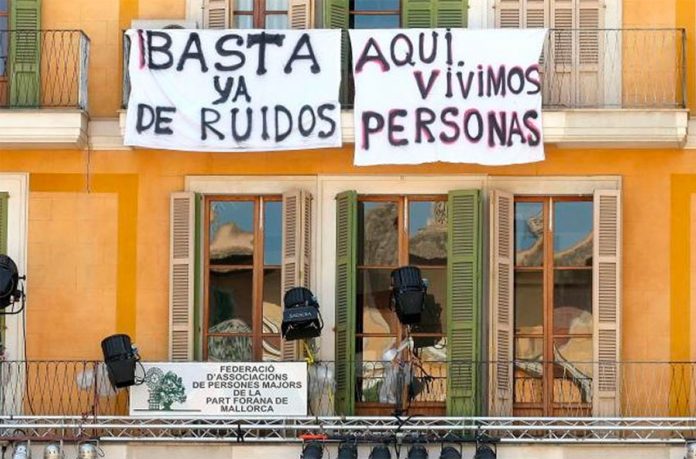
'Enough noise. People live here,' reads a sign in Mexico City.
Complaints about excessive noise are keeping Mexico City’s Environment and Zoning Prosecutor’s Office (PAOT) very busy.
The agency has filed more than 8,000 complaints about excessive noise since 2002 including 549 in the first seven months of this year. Over the past 17 years, noise pollution has been the second most common complaint filed with PAOT after land use violations.
In 2019, there have been 170 complaints about noise in the central borough of Cuauhtémoc, 69 in Benito Juárez, 63 in Miguel Hidalgo, 48 in Coyoacán and 42 in Iztapalapa. Excessive noise complaints in those five boroughs account for more than 70% of all such complaints filed across the capital’s 16 entities.
A PAOT report said that most complaints are about excessive noise emanating from bars, cantinas, restaurants, nightclubs and karaoke parlors.
Rosario Hernández, a resident of Roma Norte, a neighborhood known for hip bars and trendy restaurants, knows firsthand what it’s like to live with constant, excessive noise. She reached a breaking point in June.
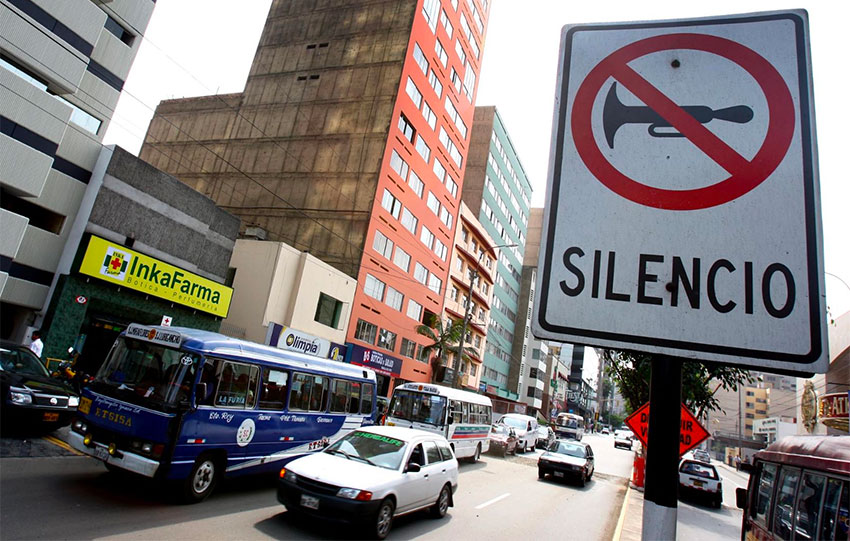
Here’s one noise reduction measure.
Unable to sleep at 3:00am due to loud music emanating from the Bombay Club nightclub on Álvaro Obregón street, Hernández called police but was unhappy with their response and subsequently decided to file a complaint with PAOT.
“I don’t want to confront the owners or the staff of the establishment, I just want them to turn the music down when it’s very late. Every Friday and Saturday, it’s the same. People want to rest and live without noise. I’ve even had to take pills to sleep because of the noisy neighbors,” she said.
It’s not just loud music, however, that is disturbing the peace of Mexico City residents. Complaints about noise from factories, construction sites, traffic, aircraft and street vendors also keep officials busy.
Jimena de Gortari Ludlow, a professor of architecture and urbanism at the Iberoamericana University who has conducted research about noise in the city, said that in parts of the capital, such as the borough of Iztacalco, noise at workshops and factories is often the cause of complaints.
She told the newspaper El Universal that some operate at night and create excessive noise.
Among the ailments suffered by those exposed to constant, excessive noise are sleep disorders, concentration problems, stress and progressive loss of hearing, the academic said.
Traffic is a major source of noise in the city.
De Gortari said that PAOT has generally done a good job acting on the complaints it receives but argued that other government agencies should help to relieve its burden because it is “a small authority in terms of personnel.”
The Social Prosecutor’s Office and the Environment Secretariat should respond to complaints about noise in residential settings and on building sites, she said.
The academic explained that a shortcoming of the complaints system is that in order to impose a sanction against the person or business creating the noise, technicians from PAOT have to take a measurement to determine whether legal decibel limits have been exceeded.
However, when they take the measurement, the noise levels are not necessarily the same as the time to which the complaint referred, de Gortari said. She added that mobile phone recordings or measurements made by the complainants are usually insufficient evidence for authorities to take action.
PAOT chief Mariana Boy said that it is not viable for the agency to create a mobile app to make recordings of excessive noise and file complaints – as de Gortari has called for – “because we don’t have the technology to do it.
“Complaints have grown in recent months . . . but we continue to deal with each complaint that reaches us,” she said.
Boy explained that PAOT is also raising awareness about the harm excessive noise causes through its Bájale al Ruido (Turn Down the Noise) program.
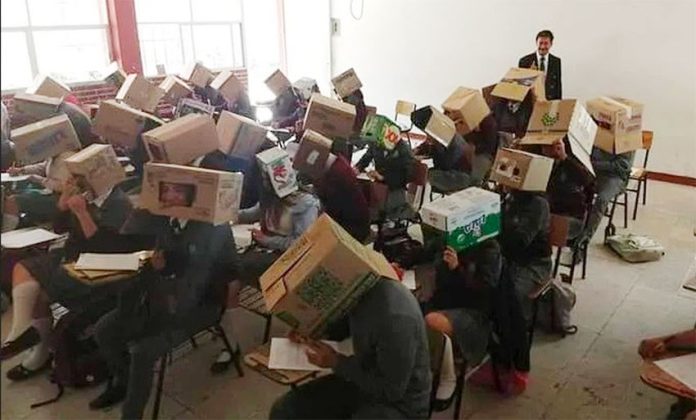
A Tlaxcala teacher found a unique way of clamping down on cheating during exams but parents were not impressed.
They are asking for the school’s principal to be fired after a teacher at the Cobat 1 school in Tlaxcala city put cardboard boxes on students’ heads as part of a strategy to prevent cheating.
They say the exercise violated their children’s rights. “. . . we denounce these acts of indignity, humiliation and physical, emotional and psychological violence to which students were submitted . . .” parents said in a social media post.
In a Facebook message, the school said it respects the human rights of the 1,500 students who study there, and denied that the cardboard box measure violated anyone’s rights.
The post also noted that the principal only participated in the activity as an observer, and that its purpose was not an evaluation, but a leisure activity that took place with the students’ consent and whose goal was developing their motor skills.
The newspaper El Sol de Tlaxcala reported that the same teacher gives a class in ethics and values. Two years ago he was investigated and temporarily suspended after an incident in which one student beat another unconscious while the teacher had stepped out of the classroom.
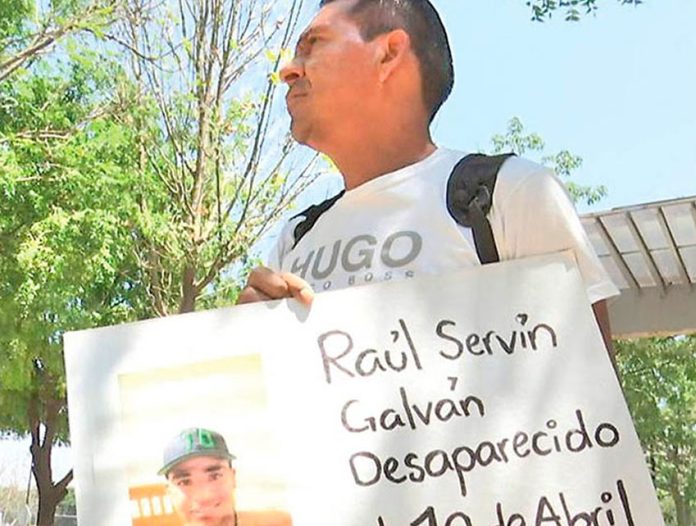
José Raul Servín continues the search for his missing son.
José Raúl Servín García says he will not stop searching for his son Raúl more than a year after his disappearance.
Raúl Servín was last seen on April 10, 2018 in Tlajomulco de Zúñiga, Jalisco.
His father returns every 15 days to his local medical forensic office to ask if they have received a body that could be that of his son.
“I keep searching. Actually, we go to many towns and forensic offices in the country with papers in hand and his DNA. I will not rest until I find him, however I have to do it,” Servín said.
He contends that his son was not a bad person, nor did he run with a bad crowd, as the staff at the Jalisco Attorney General’s Missing Persons Office has made him feel.
“Every time I go to find out something about my son, they are bothered just by seeing me,” he said. “Anything new? I ask. They just turn their angry faces, only because I go and ask.”
Disappearances are on the rise in Jalisco. There are an average of 14.5 cases per day this year, up from 8.9 in 2018.
According to the Center of Justice for Peace and Development (CEPAD), the number of disappeared or missing persons in the state totaled 3,579 in the first five months of 2019 alone.
Esperanza Chávez Cárdenas of the collective Por Amor a Ellos (For Love of Them) has been searching for her brother for five years.
“The authorities have not seen a problem of this magnitude and it has gotten out of their hands in the last eight months,” she said.
Jalisco currently has no laws to deal with forced disappearances. One was supposed to enter into force in July 2018, but the state Congress did not come to an agreement on it.
Chávez thinks legislators don’t deal with the problem because it does not directly affect them.
“I don’t wish what we’re going through on anybody, but they’re the experts in their field, and they don’t put themselves in the other person’s shoes,” she said.
As for José Raúl Servín, he merely asks authorities to do their jobs and “not revictimize us, saying that maybe my son was a bad seed, that he was a drug addict, that he was a thief, this and that. Those are their words.”
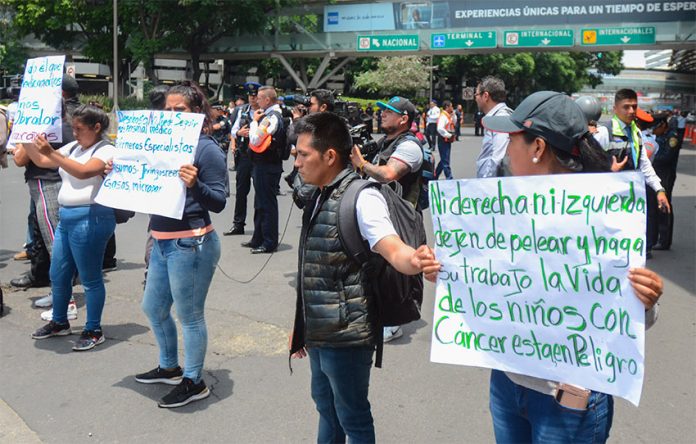
Protesting parents block traffic on Monday at Mexico City airport.
President López Obrador stressed on Friday that there should be no shortage of medications and that if there is, they should be brought in by plane if necessary.
“There is no reason to lack medications. If there aren’t medications, then bring them by plane, this is allowed. For this, yes, but not for going shopping or, like helicopters, for going golfing. But if it’s for going to the United States, to India or wherever to buy medicine, it can be done and in three or four days you’ve got them, if it’s for children’s or others’ lives,” he told reporters at this morning press conference.
(The reference to helicopters is probably with regard to an Institutional Revolutionary Party senator who flew in an armed forces helicopter to a meeting two years ago and later played golf. Another helicopter ride cost a senior official his job. The head of the National Water Commission used an official helicopter to fly himself and his family to the Mexico City airport while en route to a foreign vacation in 2015. David Korenfeld was forced to resign as a result.)
The president’s comments came after the Secretariat of Health faced a shortage of the cancer medicine Metotrexato in the Federico Gómez Children’s Hospital and other health facilities.
However, the situation was remedied on Tuesday, according to Social Security Institute (IMSS) director Zoé Robledo.
López Obrador blamed the problem on “dissident” suppliers.
“There used to be much corruption [in the purchase]. Despite the fact that they were paid 90 billion pesos for medicines and medical supplies, there weren’t medications in the health centers and hospitals. So they are upset, they are rebellious, and it’s a network, like everything, of interests, very strong and very powerful,” he said.
However, the supplier of the cancer drug said a shipment was delayed due to administrative issues with the government regulator.
The shortage of the chemotherapy drug triggered a protest earlier this week by parents of cancer victims, but their protest drew remarks from the health secretary that further angered them.
Jorge Alcocer said on Tuesday there was “a sufficient quantity” of the cancer drug Metrotrexato and that there was no “medical urgency.”
But the Children’s Hospital said there was indeed a shortage of the drug, and had been for 15 days. The head of the oncology department said about 40% of the hospital’s cancer patients were being treated with Metrotrexato.
The hospital administration said the shortage was due to a shipment of the medication not meeting certain federal standards.
The health secretary met with protesting parents on Thursday and apologized for his remarks.
A federal judge has approved the extradition of Los Zetas cartel co-founder Jaime González Durán, who at one time was third in command of the gang after it split off from the Gulf Cartel.
Sixth District Court Judge Juan Mateo Brieba de Castro refused to grant a protection order to González, 47, who had appealed an extradition order issued by the Secretariat of Foreign Affairs (SRE) in March.
He is accused of conspiracy, drug trafficking and distribution and money laundering, among others. He is also believed to be linked to the murder of singer Valentín Elizalde in November 2006.
Brieba noted in his ruling that the SRE met all the requirements of the extradition agreement between Mexico and the United States and provided sufficient evidence to warrant the action.
The resolution pointed out that Foreign Relations Secretary Marcelo Ebrard did not violate González’s constitutional rights.
González was a member of the Special Forces Airmobile Group (Gafes), a former elite unit of National Defense that was in charge of locating and capturing narco-trafficking crime bosses.
In the late 1990s, he and 40 other Gafes soldiers defected and joined the Gulf Cartel, acting as the cartel’s military arm called Los Zetas. The Zetas split from the Gulf Cartel to form a rival cartel in 2010.
González was third in command of the Zetas and the chief crime boss in Reynosa, Tamaulipas, until his arrest by Federal Police in November 2008. He was convicted of organized crime and drug charges and sentenced to 35 years.
He was described by the federal Attorney General’s Office as one of the most dangerous and violent of organized crime members, and one of the most wanted by Mexico and the U.S.
Scientists have issued an alert about a decline in coral spawning in the Caribbean Sea off the Quintana Roo coast but are doing what they can to assist reproduction and ensure the survival of coral reefs.
Scientists from the Institute of Marine Sciences (ICML) at the National Autonomous University and from the University of Guadalajara (UG) have detected that coral spawning in reefs that are part of the Mesoamerican Barrier Reef System has been on the wane since 2018.
The reef system extends from Isla Contoy, located off the northeast coast of Quintana Roo, to the Bay Islands in Honduras.
The arrival of large quantities of sargassum this year also affected the health of the reef, in which large amounts of coral are dying off due to a bleaching phenomenon caused by overly warm water.
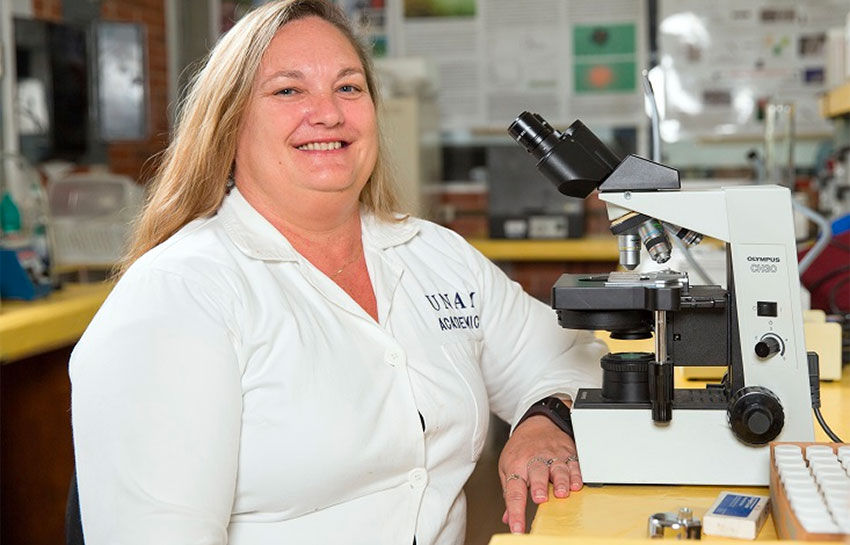
Anastazia Banaszak, head of the ICML reefs unit, told the newspaper El Universal that the exact cause of the decline in coral spawning is unknown but asserted that it is clear that the coral is “sending a message” in response to a range of factors.
Spawning began to decline last year, says UNAM’s Banaszak.
Climate change and rising ocean temperatures cause stress for reefs, she said, explaining that coral grows and lives healthily when water is around 26 or 27 C. However, water temperatures in the Mexican Caribbean now exceed 31 C, Banaszak said.
The suffocation of reefs by large quantities of sargassum and stormy weather that affected the release of coral gametes are among other factors that could explain the downturn in spawning.
The range of pressures left Banaszak with the conclusion that “the future of reefs here is not good.
“In Puerto Morelos, spawning was incredible until 2017 but from 2018 we saw that it declined. This year, there was no spawning in Cancún and we saw less in Cozumel, Puerto Morelos and Punta Venado,” she said.
However, Banaszak and other scientists from the ICML and UG are not letting Mexico’s reefs die without a fight.
Pedro Medina Rosas, a marine biologist at UG, explained that since 2007, scientists have been intervening in the reproduction process of coral.
Once a year, during a full moon in summer, biologists and divers collect coral gametes from the sea with specially-designed nets, he said.
The gametes are then taken to laboratories where they are placed under lights in clean water whose temperature is conducive to the male gametes fertilizing the female ones.
Coral polyps are then born and grow in the lab until they are ready to be replanted in depleted and damaged reefs. The scientists subsequently monitor the lab-grown coral to determine the success of their assisted reproduction program.
Banaszak said that Mexican scientists have taught students from 13 countries about how to intervene in the spawning process and help to replenish sick reefs.
“It was a local project, we considered expanding to the Pacific, but it has exceeded expectations and become international. It’s replicated in the Dominican Republic, Cuba and Belize thanks to our dream team,” she said.
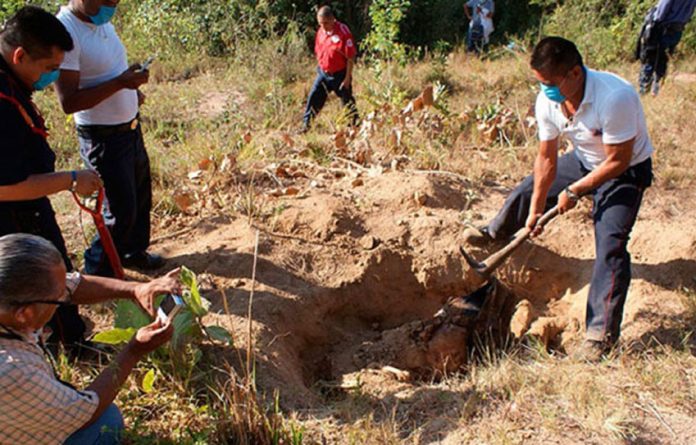
More than 3,000 secret graves containing almost 5,000 bodies have been found since 2006, the national search commissioner said today.
Speaking at the presidential press conference, Karla Quintana Osuna gave the precise figures: 4,874 bodies in 3,024 graves.
“. . . It’s the first time that . . . the federal government has officially recognized the number of clandestine graves [that have been found] . . .” Quintana said.
She said the highest numbers of bodies have been found in Chihuahua, Durango, Guerrero, Jalisco, Nuevo León, Sinaloa and Tamaulipas.
In the nine months since the new government took office, 522 secret graves and 671 bodies have been found, the commissioner said.
Quintana said that 200 bodies have been identified in the same period, adding that the government will do all it can to support people trying to locate their missing family members.
“We reiterate our respect for the families who have been looking for their missing loved ones for a long time. It’s an obligation of the state to search for them,” she said.
The commissioner pointed out that 25 state-based search commissions have been established, while those for Sonora, Baja California Sur, Yucatán, Quintana Roo, Guanajuato, Aguascalientes and Chiapas are in the process of being created.
The government will provide 123 million pesos (US $6.1 million) in funding next month to assist the commissions in their search and identification efforts, Quintana said.
She added that a 90-million-peso center for human identification will be built in Coahuila and three forensic cemeteries will be established for the burial of unclaimed bodies. Two will be located in Zacatecas and the third will be in Durango.
Real estate prices are soaring in southern Quintana Roo as investors seek to secure land near the proposed route of the Maya Train.
Amir Efrén Padilla Espadas, president of the College of Civil Engineers in the south of Quintana Roo, told the newspaper El Economista that after President López Obrador took office in December and the Yucatán peninsula rail project was confirmed, real estate agents began to sell lots adjacent to where the railroad will supposedly run.
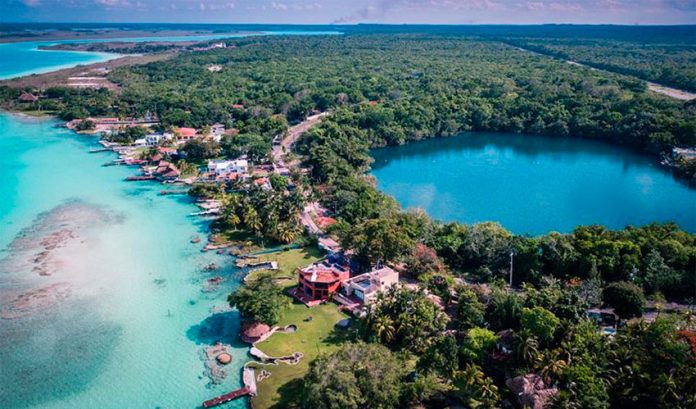
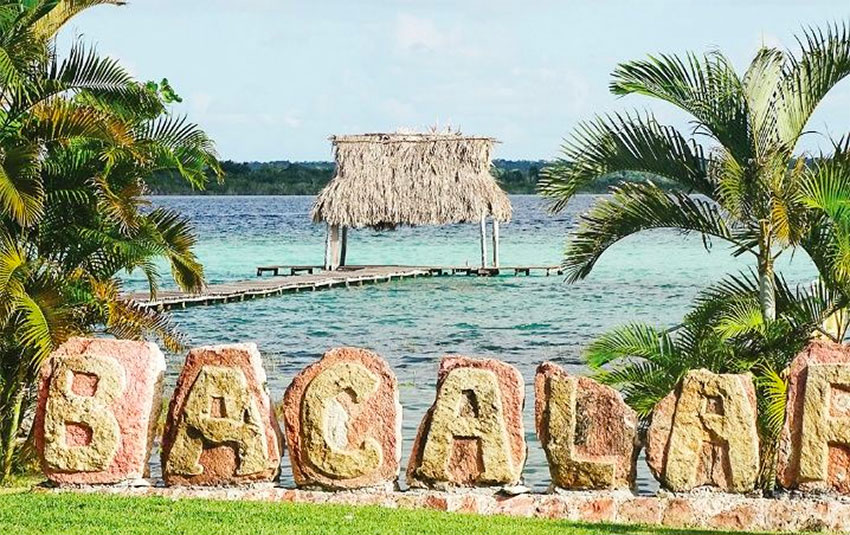
Demand for properties along the route has caused the average cost of land in Bacalar – a municipality popular with tourists because of its lagoon – to increase from 1,000 pesos (US $50) per square meter to 4,500 pesos (US $220), Padilla said.
However, he explained that there is no guarantee that investors will get what they think they are paying for.
“It’s pure speculation because National Tourism Promotion Fund [Fonatur] officials have told us that they have at least three options for the location of the stations. What’s a fact is that there will be maintenance workshops in Chetumal but where they will be built isn’t decided,” Padilla said.
One of the train’s 18 stations will be situated in Bacalar.
“. . . Once the exact route of the railroad and the location of the stations is known it will be inevitable that the speculative phenomenon will intensify as has already started to happen in Bacalar, where the tourism boom and the announcement of a Maya Train station has quadrupled the value of a square meter of land,” he added.
Filiberto Buitrón Hernández, commissioner of the Bacalar ejido (cooperative), said that community landowners have received offers to buy their land from developers who intend to build hotels, theme parks and residential developments near the rail line.
“In the next ejido meeting, another project for Bacalar is going to be presented, we don’t know what it’s about yet but many others have already been offered to us. Some [developers] want to buy from 10 to 100 hectares to build hotels, mainly,” he said.
However, Buitrón said the landowners have rejected the offers they’ve received because they want to be partners in the development of the Maya Train and the infrastructure that will complement it.
To that end, the federal government has set up a trust through which community landowners can benefit from the rail project by offering their land for its construction.
Fonatur chief Rogelio Jiménez Pons said that 98% of ejidos along the proposed route have already granted right of way to the government for construction of the railroad.
In the case of Bacalar, officials from Fonatur, which is managing the project, explicitly asked community landowners not to sell their land, he said.
“. . . It was explained to them that everything will be through the trust. It appears that there was consensus and we will meet with them again to continue moving ahead,” Jiménez said.
The almost 1,500-kilometer-long railroad, which is scheduled to begin operations in 2023, will run through five states: Chiapas, Tabasco, Yucatán, Quintana Roo and Campeche.
It was originally forecast to cost between 120 and 150 billion pesos (US $6 billion to $7.5 billion) but the price tag has fluctuated as the route has been modified.