Home Blog Page 1918

Jalisco New Generation Cartel gaining strength in Veracruz

0
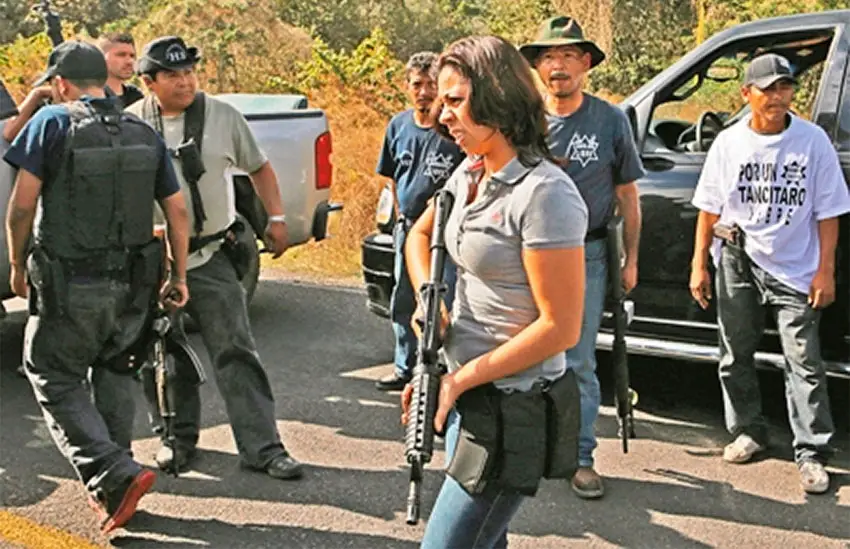
The CJNG has been taking on police in Veracruz.

The Jalisco New Generation Cartel (CJNG) has been on the offensive in Veracruz since the new governor took office late last year, and police are among the victims of their violence.

Four police officers have been murdered in the Gulf coast state since Morena party Governor Cuitláhuac García was sworn in on December 1.

The CJNG is believed to be responsible for the abduction and murder of Yanga municipal police officer Edgar Hernández in December, and last month the cartel ambushed police on the highway between La Tinaja and Cosamaloapan, killing one officer and wounding four more.

There were at least nine incidents of violence perpetrated by the CJNG between March 14 and 16, including attacks on police stations in Coatzacoalcos and Jáltipan.

The cartel also set up fiery blockades on several highways during the three-day period in an attempt to hinder police operations against it.

The offensive followed a successful police operation to dismantle a CJNG cell that was operating in the municipality of Tierra Blanca.

At the time, the governor said the violence was a response to police efforts against the cartel.

“What happened . . . was a propagandistic reaction . . . because we made some important arrests and seizures and they obviously reacted very angrily,” García said.

The CJNG, Mexico’s most powerful criminal organization, has been involved in a turf war in Veracruz with the Los Zetas cartel in recent years.

However, the violence has worsened in the first months of this year and there are fears that the security situation will deteriorate even further.

There were more than 400 intentional homicides in Veracruz during January, February and March, and almost 30% of all kidnappings in Mexico in 2019 have occurred in the state. It also leads in femicides, with 21 in the first two months of the year, up from 12 in the same period last year.

A collective made up of family members of missing persons found a hidden grave in the municipality of Río Blanco last month that contained 12 dismembered bodies.

Narco-banners have also appeared in different parts of the state.

On one narcomanta, the CJNG accused state Public Security Secretary Hugo Gutiérrez of being in cahoots with Los Zetas, while others that have been attributed to the Sinaloa Cartel warned of the return of the “old school” to the state and called for a truce between criminal groups.

“Align yourselves or I’ll align you,” said one banner, allegedly signed by Ismael “El Mayo” Zambada, leader of the Sinaloa Cartel.

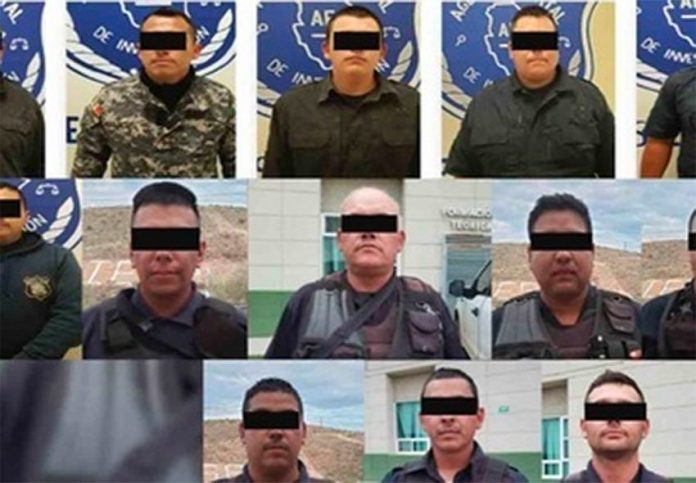
Security chief Gutiérrez arrived in Veracruz from Nuevo León, where he was head of strategic operations in the Attorney General’s Office until he was let go under suspicion of being involved in extortion.

Twenty-eight police officers were also dismissed for the same reason.

The state’s Fuerza Civil, which is under Gutiérrez’s command, is under scrutiny by the Human Rights Commission. It has received three complaints of sexual abuse, forced disappearance and extrajudicial executions. Another 25 complaints accuse officers of excessive use of force.

Source: El Financiero (sp), e-veracruz (sp)

Lowe’s closes its Mexico home improvement stores

0
Lowes exits Mexico.
Lowes exits Mexico.

The United States-based home improvement store Lowe’s announced that its nine-year venture into the Mexican market was coming to an end with the closure of its 13 stores.

Rumors of an impending closure first emerged in November when the firm was reported to be analyzing its options.

Yesterday, the exit was confirmed when Lowe’s México issued a statement declaring that “after several months of analyzing alternatives, [the firm] has decided to permanently shut down its operation in Mexico, effective today.”

An anonymous source told the newspaper Milenio that Lowe’s shutdown in Mexico is the result of the firm having failed to achieve adequate sales, and was unable to compete with competitor Home Depot.

Source: Milenio (sp)

Lawmakers negotiate agreement to lift Oaxaca highway blockade

0
Trucks stranded by the blockade in Oaxaca.

The 10-day blockade  on federal highway No. 185, linking Oaxaca and Veracruz, concluded yesterday after the intervention of state and federal lawmakers.

Some 1,200 citizens of San Juan Mazatlán, a municipality in the Isthmus of Tehuantepec, erected the blockade last week, demanding the delivery of millions of pesos in municipal funds bookmarked for infrastructure projects.

Mayor Macario Eleuterio Jiménez has been accused by some local citizens of corruption and embezzlement.

Oaxaca Interior Secretary Héctor Anuar Mafud Mafud told reporters that several rounds of negotiations between the people of San Juan and government representatives concluded when an agreement was reached, bringing the blockade to an end.

The newspaper Milenio reported earlier this week that the blockade, located near the community of Boca del Monte, had cost businesses millions of pesos in losses.

Source: Milenio (sp)

On the eve of busy Easter vacation, Oaxaca garbage strike settled

0
Piles of garbage were growing in Oaxaca this week.

Garbage began piling up on the streets of Oaxaca city earlier this week as the city’s 279 garbage collectors went on strike to demand better working conditions, just before the busy Easter vacation period.

But yesterday the mayor met with the striking workers and negotiated an end to the walk-out.

The waste collectors’ union said the strike was in response to the municipal government’s failure to repair and modernize the fleet of garbage trucks.

A union representative told the newspaper El Universal that 25 of the department’s 65 trucks were out of service and undergoing repairs, while the remaining trucks “are not in the best condition and require maintenance.”

After Mayor Oswaldo García Jarquín traveled with municipal workers to the open-air garbage dump at El Arenal in San Martín Mexicapam and inspected the garbage trucks he said the workers’ demands would be fulfilled.

He said the municipality would lease rather than purchase 40 new garbage trucks and would work toward the rehabilitation of the dump.

Source: El Universal (sp), La Onda Oaxaca (sp)

Teacher strikes have cost Oaxaca students two years of classes

0
A CNTE protest march, a common sight in Oaxaca.

Teacher strikes have cost students in Oaxaca almost two years of classes during the past 14 years, according to an education advocacy group.

A study conducted by Mexicanos Primero revealed that teacher members of the Oaxaca-based Section 22 of the CNTE teachers’ union stopped work on 380 days between 2005 and 2019. A school year has 200 days.

Around 925,000 students at more than 12,000 preschools, primary schools and secondary schools in Oaxaca have been affected by the strikes.

The work stoppages continued yesterday: a group of CNTE members marched in Mexico City during a 24-hour strike in Oaxaca.

Jennifer O’Donoghue, general director of Mexicanos Primero, said the CNTE union has staged strikes and protests to pressure authorities since its foundation in the late 1970s.

In recent years, the dissident union has protested frequently to demand the repeal of the previous federal government’s 2013 education reform, taking particular umbrage at compulsory evaluations for teachers.

Teachers in Oaxaca stopped work on a total of 161 days during the six-year presidency of Enrique Peña Nieto between 2012 and 2018, compared to 94 days during the administration of his predecessor, Felipe Calderón.

The school year with the highest number of lost days was 2006-2007, when teachers in Oaxaca were engaged in a pay dispute with then-governor Ulises Ruiz. Students had no classes to attend on 72 days.

During the past month, CNTE members have succeeded in shutting down the lower house of federal Congress for several days.

The union is unconvinced that the government’s plan to abolish the education reform will go far enough to meet their demands.

Since President López Obrador took office in December, teachers in Oaxaca have stopped work on eight days, according to Mexicanos Primero.

To maintain pressure on the government to fully repeal the 2013 reform, the CNTE union is planning a 48-hour work stoppage on May 1 and 2 in several states including Oaxaca, Chiapas, Michoacán and Guerrero.

Source: Milenio (sp) 

Cost of violence rose 10% last year to 5 trillion pesos: Mexico Peace Index

0
mexico peace index
Green is good, red is not. mexico peace index

The economic impact of violence in Mexico increased by 10% last year to 5.16 trillion pesos (US $268 billion), according to a global think tank.

The Institute for Economics and Peace (IEP) said in its report Mexico Peace Index 2019 (MPI) that the cost of violence is equivalent to 24% of the country’s GDP.

Homicide was the largest contributor to the economic impact of violence, the IEP said, accounting for 51%, or 2.63 trillion pesos, of the overall cost, a 15% increase from 2017.

There were more than 33,000 murders last year, making 2018 the most violent year on record.

The IEP said that on a per-person basis the economic impact of violence was 41,181 pesos (US $2,200), or more than five times the average monthly salary of a Mexican worker.

The per-capita economic impact was highest in Colima, at 83,167 pesos, and lowest in Yucatán at 10,808 pesos.

If violence and its consequential economic impact were reduced to the level of the five most peaceful states in Mexico, the resulting peace dividend would amount to 10 trillion pesos over a four-year period, the IEP said.

“Violence and the fear of violence create significant economic disruptions,” the report said.

“While violent incidents incur costs in the form of property damage, physical injury or psychological trauma, fear of violence alters economic behavior. It does this primarily by changing investment and consumption patterns as well as diverting public and private resources away from productive activities and towards protective measures.”

The MPI also said that violence decreases productivity and affects the price of goods and services.

In addition to the economic impact findings, the IEP determined that “peacefulness” in Mexico deteriorated by 4.9% last year, the third consecutive year of declines.

mexico peace index
Index reveals the high cost of violence.

The per-capita homicide rate increased by 14%, incidents of gun violence rose to 28.6 per 100,000 people – double the 2015 rate – and there were 850 acts of political violence during the 2018 electoral period. At least 175 candidates or elected officials were murdered.

One in every three adults Mexicans is a victim of crime each year, the MPI said.

Organized crime-related offenses, extortion and retail drug dealing all increased last year but kidnappings and human trafficking declined.

The IEP determined that the least peaceful state in Mexico last year was Baja California followed by Guerrero, Colima, Quintana Roo and Chihuahua. The most peaceful were Yucatán, Campeche, Tlaxcala, Chiapas and Hidalgo.

Baja California Sur, Sinaloa and Sonora made the biggest improvements in terms of security, the report said, noting that the governments in all three states used programs specifically designed to target local challenges.

Guanajuato, where much of the violence is linked to pipeline petroleum theft, saw the worst deterioration of its security situation.

The most violent states in the country don’t necessarily receive higher per-capita funds for domestic security than more peaceful ones, the IEP said.

The think tank said the main finding of its report is that the government is underinvested in the justice system, considering the high level of violence.

“Currently, government spending on police and the justice system is just half of the average for other members of the Organization for Economic Co-operation and Development (OECD), as a percentage of gross domestic product,” the MPI said, adding that the impunity rate in Mexico was 97% in 2017.

The IEP also said that Mexico continues to struggle with high levels of corruption, noting that almost 70% of people believe that judges are corrupt and over 65% of Mexicans think the same about state and federal prosecutors’ offices.

On a more positive note, the report said that Mexico shows strengths in sound business environment, high levels of human capital, acceptance of the rights of others, and good relations with neighbors.

Community cooperation is also improving, with the proportion of Mexicans reporting that their communities organize to solve problems increasing 10% since 2012.

The Institute for Economics and Peace describes itself as the world’s leading think tank dedicated to developing metrics to analyze peace and to quantify its economic value. The 2019 Mexico Peace Index can be downloaded here as a PDF.

Mexico News Daily 

AMLO announces new health care program for those outside existing ones

0
The president introduces new healthcare scheme.

The federal government has announced the creation of a new health care program for people not covered by the IMSS and ISSTE social security schemes.

At an event yesterday to mark World Health Day, President López Obrador said that a new government department to be called the National Institute of Health for Well-Being will provide medical services to more than 60 million Mexicans without insurance.

“We’re going to restructure the whole health system . . .” he declared.

Shortly after he took office in December, López Obrador announced that his government would establish a new integrated federal health system to replace the existing system, which he said wasn’t working.

He also said the Seguro Popular health care program – which currently offers free health care services to people with no other insurance – would be replaced by a new scheme.

The president said yesterday that the government wants to improve all public medical services.

“We want to improve the public health system . . . we have to guarantee the right to healthcare with deeds, in reality, in practice, because it’s provided for in the constitution but in reality, it’s a dead letter because that right doesn’t exist,” López Obrador said.

The president blamed past governments for privatizing parts of the health care system and leaving it “in ruins” as a result.

“In recent times, it went backwards because, like education, they bet on putting healthcare to market as though it were a commodity, so that to gain access to healthcare and education, you had to have economic means,” López Obrador said.

In January, the Morena party leader declared that Mexico will have a health care system comparable to those in Canada, the United Kingdom and Denmark in two years.

Yesterday, López Obrador said “we’re not going to walk away from what the people need” and that universal healthcare will be “a dream come true.”

Source: El Financiero (sp), Notimex (sp) 

Ixtapa-Zihuatanejo mayor seeks to have US travel warning lifted

0
Security in Ixtapa-Zihuatanejo has improved, the mayor says.

Security has improved in the popular Guerrero tourist destination of Ixtapa-Zihuatanejo and the mayor wants the United States to know about it.

Mayor Jorge Sánchez announced that his administration plans to work on having a U.S. travel warning lifted.

He explained that coordinated efforts by the local, state and federal governments have obtained good results in terms of security for the Pacific coast destination.

But the U.S. Department of State classifies Guerrero as a Level 4 destination, which means “do not travel there” due to crime.

“Armed groups operate independently of the government in many areas of Guerrero,” the warning reads. “Members of these groups frequently maintain roadblocks and may use violence towards travelers. U.S. government employees may not travel to the entire state of Guerrero, including Acapulco, Zihuatanejo, Ixtapa and Taxco.”

Sánchez said no expense will be spared in achieving his goal, including arranging meetings with officials at the United States embassy in Mexico City, as well as with their counterparts in the Mexican embassy in Washington.

“We are planning a trip where the federal, state and municipal governments will work hand-in-hand,” said the mayor, adding that while insecurity is a nationwide problem, there is good coordination among security forces in his municipality.

A special security operation is scheduled to start Friday for the two-week-long Easter vacation.

Source: ABC de Zihuatanejo (sp)

Two new options coming for making electronic payments

0
More payment options for smartphones.
New payment options for smartphones.

Bank customers in Mexico will soon have two new options to make electronic transfers and payments using a smartphone.

Santander México has launched a pilot program for a service that will allow its customers to send between 10 and 4,000 pesos using WhatsApp, a messaging service owned by Facebook.

The bank said there will be no charges for sending or receiving money and that the only additional app needed is Santander’s SúperMovil.

The service is available to Santander TAP customers now and will be rolled out to all other customers in May.

To make a transfer, customers simply open WhatsApp, choose the contact to whom they wish to send money, enter the peso amount as well as a unique code generated by the Santander app, and hit send.

Santander is the first bank in Mexico to offer its customers the ability to send money using the popular messaging service, which is used by the vast majority of smartphone users.

Recipients of the transfers will need a Santander account, but the bank has developed a new digital account that can be opened quickly on line to receive the funds.

The process will eliminate the need to input interbank CLABEs or account numbers in order to transfer money.

Another new digital financial service that is currently being tested is CoDi, an app that generates bar codes that customers can use to pay for purchases and transfer funds.

CoDi, short for Cobro Digital (Digital Charge), was developed by the Bank of México in conjunction with financial institutions and the Secretariat of Finance (SHCP) and makes use of the electronic interbank payment system known as the SPEI.

Like Santander’s WhatsApp service, people will not be charged for using CoDi.

Financial consumer protection agency Condusef said the aim of the service is to offer essential banking services to the entire population of Mexico “through the use of new technologies.”

However, some parts of the country suffer from poor internet and mobile coverage, which could limit people’s ability to access CoDi on their phones or other devices.

Source: Notimex (sp) 

Organized crime sold teaching positions in Michoacán: governor

0
La Tuta, drug lord who sold teachers' jobs.

The sale of teaching jobs, a longstanding practice in Mexico’s education system, was a lucrative business for organized crime in Michoacán, the governor revealed this week.

Silvano Aureoles Conejo told an education conference that the head of the Caballeros Templarios (Knights Templar cartel) was involved in the practice.

Servando “La Tuta” Gómez Martínez, a teacher himself who was even on the state payroll until 2011 while running his criminal operations, sold teaching positions for as much as 300,000 pesos (US $16,000), Aureoles said.

Organized crime sold thousands of job in what became a lucrative business, he said.

Gómez’s involvement came to an end when he was arrested in 2015.

Eliminating the practice, and that of inheriting positions of teachers who died, was a key element of the 2013 education reforms.

The focus of the governor’s speech was the state’s education funding crisis, which came to a head earlier this year when protesting teachers shut down the railway system, causing billions of pesos in losses.

He said it began in 2014 when the state’s share of teachers’ salaries shot up from 10% to 40%. Aureoles called the situation unsustainable and said the state’s teachers were justly dissatisfied because they were not always getting paid.

Source: El Universal (sp)