Home Blog Page 1927

‘Hee-hee:’ beware, El Ayuwoki is on the prowl in Sonora and Baja

0
The dreaded late-night visitor called El Ayuwoki.

Internet lore has given birth to scary characters like Slender Man and Momo, and now there’s Al Ayowoki, said to be on the prowl in northern Mexico.

The spread on social media of what some people find a terrifying concept has led police in Baja California Sur and Sonora to issue statements assuring the public that El Ayuwoki is nothing more than a character invented by online culture for laughs and maybe a scare or two.

The Sonora Cyberpolice posted an infographic on Twitter to explain the origin of what it called “an urban legend.”

El Ayuwoki is but the latest creature to emerge from creepypastas, brief horror-related legends or images generated by users that have been copied and pasted around the internet. In order to scare readers, creepypastas include gruesome tales of murder, suicide and otherworldly occurrences.

Ayuwoki is a Spanish-language creepypasta, a creature that resembles Michael Jackson. The lore surrounding the character is that it will appear in one’s bedroom late at night and say, “Hee-hee,” Jackson’s signature vocal riff.

The creature’s name is an intentionally misspelled play on the lyric “Annie, are you okay?” from Jackson’s 1987 hit Smooth Criminal. If one says the last three words, “are you okay,” really fast and with a Spanish accent, it sounds like ayuwoki.

The image that accompanies the meme comes from My Ghoul Jackson, a video of an animatronic character modeled after Jackson’s likeness that was posted to YouTube in 2009.

Source: Milenio (sp)

Another mansion linked to oil theft cartel seized in Santa Rosa de Lima

0
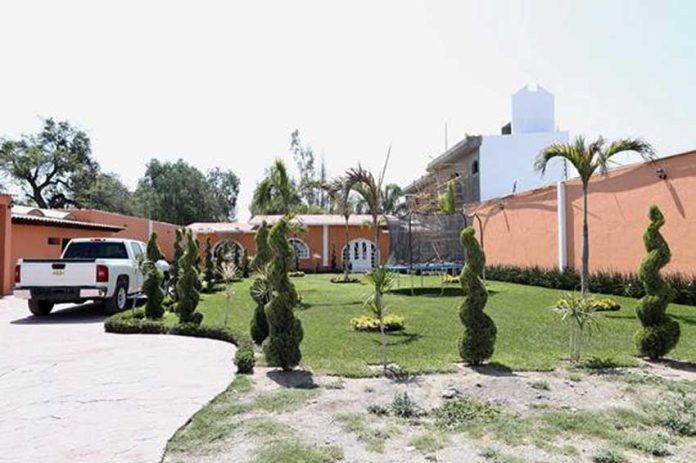
The second mansion to be seized in Santa Rosa de Lima.

Authorities have seized a second luxury home believed to be linked to the Santa Rosa de Lima Cartel.

Located in the center of Santa Rosa de Lima, Guanajuato, the mansion is similar to the home that was seized earlier this week and which allegedly belongs to José Antonio “El Marro” Yépez Ortiz, the suspected leader of the fuel theft gang.

Four luxury vehicles were found inside the property, which is currently under the guard of marines and officers from the Criminal Investigation Agency (AIC).

A local food stall owner told the newspaper El Universal that Santa Rosa de Lima residents believed that the house belonged to “a powerful man.”

The large home is protected by a high wall topped with broken glass, electric fencing and two security cameras.

The property’s large garden and paving are among the similarities with that believed to be owned by Yépez. The home is also painted in a similar shade of orange as the house seized on the outskirts of Santa Rosa de Lima.

Since early Monday morning, federal and state security forces have been carrying out an operation against the Santa Rosa Cartel, which is believed to be behind much of the violence that made Guanajuato Mexico’s most violent state last year.

At least seven people linked to the cartel have been arrested but Yépez remains at large. Federal Security Secretary Alfonso Durazo said yesterday that authorities know where he is and that he will be arrested soon.

He also said a large number of the organization’s bank accounts have been frozen.

Security analyst Alejandro Hope said in a column published in El Universal today that the capture of Yépez “would be a good blow for the new federal administration in its campaign against fuel theft.”

However, Hope pointed out that the efforts to capture “El Marro” appear to contradict President López Obrador’s assertion in January that the government didn’t intend to pursue cartel leaders.

The security analyst contended that the capture of a fuel theft capo would “probably” generate the same situation as that seen when drug lords have been arrested: succession disputes between gang members, a power vacuum that other criminal organizations seek to take advantage of and a short-term spike in the number of homicides.

But Hope wrote that López Obrador has “probably realized that there are good reasons to go after capos.”

One reason is “ethical: a person like Yépez deserves punishment” and another is “strategic: if criminals sense that by reaching a certain level of prominence they are immune from prosecution because their disappearance from the scene would generate destabilizing effects, everyone’s going to want to go beyond that threshold.”

That situation, he added, “could generate much more violence in the long term than that which would be prevented by not decapitating criminal gangs.”

Hope also said that “institutions tend to do what they know how to do,” pointing out that over the past decade, the military and the Federal Police have honed their capacity to cut off the heads of criminal organizations.

In the context of high rates of violence and insecurity, the government “is probably also starting to need quick victories,” he added.

“The capture of a person like El Marro falls into that category.”

Source: El Universal (sp) 

Further retaliation planned against US steel and aluminum tariffs

0
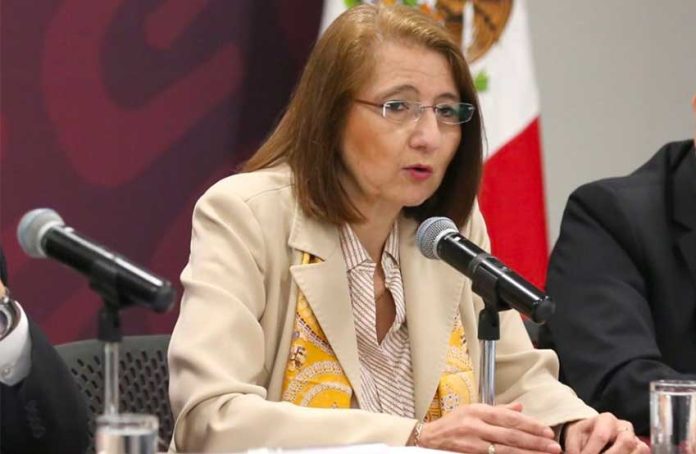
De la Mora: more tariffs on US products coming.

Mexico is planning to impose new tariffs on United States imports in April in order to pressure U.S. lawmakers to remove duties on Mexican steel and aluminum.

Foreign trade undersecretary Luz María de la Mora told the Senate this week that the Secretariat of Economy (SE) is preparing a new list of products to which tariffs of between 7% and 25% will apply.

“We’re carrying out an evaluation of the products that we believe should be on the retaliation list and yes, we believe that we can adjust some products to respond to some of the new representatives who are in the United States Congress,” de la Mora said.

Mexico struck back swiftly after the United States announced last May that it was introducing tariffs of 25% on steel and 10% on aluminum as of June 1 on national security grounds.

Reciprocal duties targeted a range of U.S. products including steel flats, pork, apples, some cheeses and bourbon.

Many of the goods subjected to Mexican tariffs were chosen because they are produced in large quantities in U.S. states that were politically important to President Donald Trump in last November’s midterm elections.

Despite the imposition of tit-for-tat tariffs and the resultant trade tensions, Mexico, the United States and Canada signed a new trilateral trade agreement on November 30 after contentious negotiations that lasted more than a year.

Once ratified by the legislatures of the respective countries, the pact will replace the 25-year-old NAFTA.

The day after the United States-Mexico-Canada Agreement (USMCA) was signed, Andrés Manuel López Obrador was sworn in as president and members of his administration almost immediately began advocating for a tougher response to the United States Section 232 metal tariffs.

“Eliminating [the tariffs] is urgent, in reality it’s very regrettable that we signed [the new trade pact] without them having been removed,” Jesús Seade, foreign affairs undersecretary for North America, said in the new government’s first week in office.

“We should have pushed harder. Now that we have entered [government] we have to push very hard on this matter and I hope that will happen in the first weeks of the new regime . . .”

De la Mora told senators Wednesday that before the USMCA can be considered for ratification by Mexico’s Congress, the metal tariffs “must be eliminated” because they are “contrary to the productive integration” of the North American market.

The statement reiterated earlier statements by de la Mora and other trade officials that the deal won’t be ratified unless the United States withdraws the metal tariffs.

Under the terms of the USMCA, Mexico is required to make changes to its labor laws to improve the rights and conditions of workers.

High-wage zones where automotive sector workers earn at least US $16 per hour will also have to be established in order to comply with stricter rules of origin.

De la Mora said in an interview that the government wants to have a labor reform package approved by Congress by the end of April “so we can reflect the commitments we have made under the new U.S.-Mexico-Canada agreement in domestic legislation.”

However, she stressed that the government would have moved to improve workers’ rights even if the new trade pact didn’t demand it.

“With the agreement or without the agreement, this is something central to President López Obrador – strengthening workers’ rights and strengthening trade deals in Mexico,” de la Mora said.

She indicated that while Mexico agreed to the terms of the USMCA, the government isn’t desperate for it to take effect.

“We hope to have this new agreement in place. But in the absence of the new agreement, we know that NAFTA is good enough,” de la Mora said.

Two ruling party senators expressed similar sentiments earlier this week.

“We are going to approve it, but right now our government is trying to deal with this [the metal tariffs],” said Antares Guadalupe on the sidelines of a conference in Ottawa, Canada.

“We’re not in a rush. Trade right now, it’s working. We have many things to do but we want to take it slowly because it is very important to have it in a very good way for Mexico.”

Asked what would happen if the USMCA is not ratified, the president of the Senate’s foreign affairs committee laughed.

“Life goes on, I assure you,” Héctor Vasconcelos said. “[NAFTA is] good enough and we will try to get it better. That’s what we are going to do. We have to discuss a lot in Mexico.”

Source: El Economista (sp), Aluminium Insider (en) 

25 migrants killed in truck accident in Chiapas

0
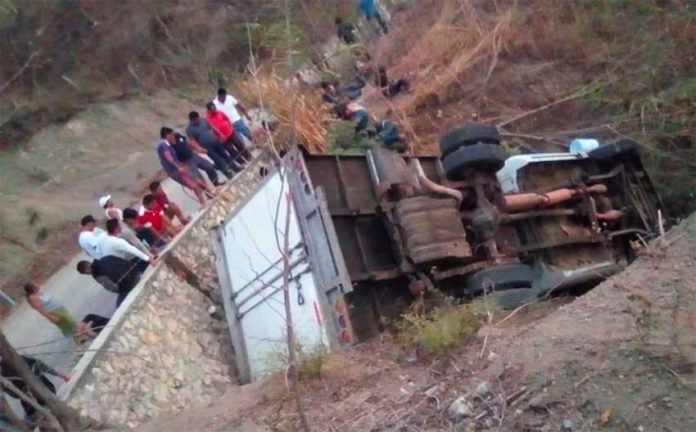
The scene of yesterday's accident in Chiapas.

At least 25 Central American migrants were killed and 30 were seriously injured when the truck in which they were riding went off the road yesterday in central Chiapas.

About 80 people were traveling in the three-tonne cargo truck on a highway near the town of Francisco Sarabia when the vehicle left the road and rolled over, according to local Red Cross director Isidro Hernández.

State police and the military secured the scene of the accident to look for injured migrants who might have fled the area to avoid being caught by authorities. Hernández said it was very likely that many others who had not been hurt in the crash had also escaped.

The attorney general’s office said the migrants, mostly from El Salvador, Guatemala and Honduras, crossed into Mexico from Guatemala near La Mesilla, Chiapas.

From there, they traveled via truck on a route seldom used by migrants to central Chiapas.
Officials said that they had gathered information about the victims in order to contact their families and begin the process of returning their remains to their loved ones.

Though many Central American migrants have been traveling across Mexico in large caravans for safety, many others hire traffickers and are transported in crowded and unsanitary conditions in cargo trucks on their journey north.

Source: Infobae (sp)

Government denounces predecessor’s purchase of fertilizer plant

0
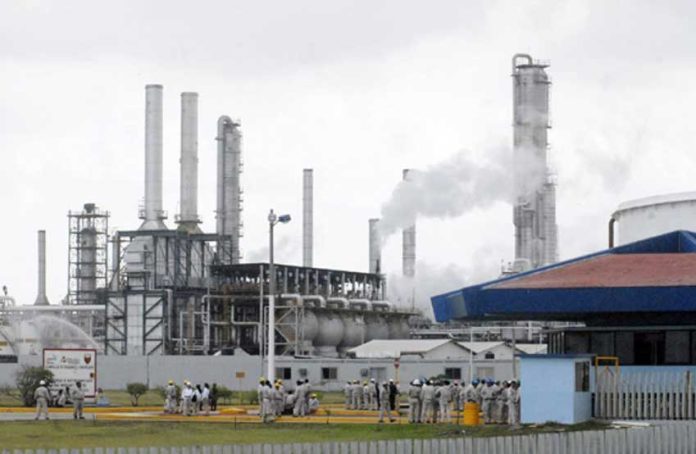
The fertilizer plant in Coatzacoalcos, Veracruz.

The federal government has filed a complaint with the attorney general’s office (FGR) against its predecessor’s purchase of a disused fertilizer plant in Veracruz, President López Obrador said today.

The president said that the previous federal government paid US $500 million for the Coatzacoalcos plant when its value is estimated to be just one-tenth that amount.

López Obrador added that his government won’t take possession of the plant until the FGR has conducted an investigation.

After the probe, public opinion will be sought to determine whether the plant will be rehabilitated or sold, the president said.

“What are we going to do with the plant? . . . There are those who tell me, people who know about these things, that even if you keep putting money into it, it’s not going to work . . . Others tell me that we have to finish it because we can use it to produce fertilizers and because we’re buying the fertilizer we use,” López Obrador said.

Former President Peña Nieto declared in 2014 that his government’s fertilizer strategy would produce enough to replace 70% of what Mexico imports. But Pemex Fertilizers, a subsidiary of the state company that operated the plant, reported only losses and national fertilizer production actually declined.

The Federal Auditor’s Office revealed that the government — through Pemex — had paid $93 million too much, and the facility was little more than scrap metal.

López Obrador claimed that the purchase of the plant is another example of the corruption of past governments.

The president also took aim at the government of Felipe Calderón, who narrowly beat López Obrador in the 2006 presidential election.

During the National Action Party (PAN) administration, López Obrador said, the National Tourism Promotion Fund (Fonatur) purchased a ranch in Mazatlán, Sinaloa, from a former state governor for US $120 million. However, nothing was ever done with the land.

“. . . It turns out that it’s practically abandoned . . . It doesn’t have much viability for tourism development but they didn’t care about that, what they cared about was buying the land because if [their aim] was to boost tourism, they would have developed the Mazatlán airport and Nuevo Mazatlán, which is what we’re thinking could be done if we manage to recover resources from this abandoned plot of land they bought,” he said.

Accusing past governments of corruption has become a popular pastime for the president, especially at his daily morning press conferences.

Last month, López Obrador delivered a scathing attack on five former presidents, accusing them of “pillage” during the “neoliberal period” of the past 30 years.

Source: El Economista (sp) 

CFE cuts Acapulco power for unpaid bills; 600,000 without water

0
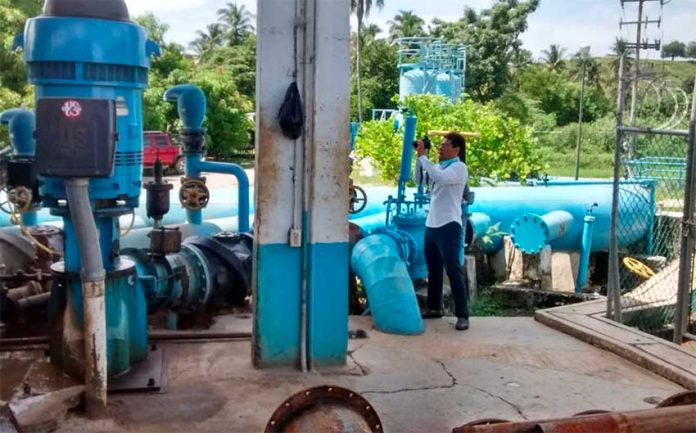
Pumping stations in Acapulco have been idled by a power cut.

For the second time this year the Federal Electricity Commission (CFE) cut electricity service to the Acapulco water and sewer system, a move described by the water utility as “terrorism.”

The electricity was cut off yesterday leaving 600,000 residents without water, according to the municipal water utility, known as Capama.

Officials said cutting off the electricity was a measure intended to put pressure on the agency to pay money it owes but finance director Raúl Isidro Juárez Ponce said the agency had been making daily payments.

Capama chief Leonel Galindo González called the cuts “terrorism” and said the CFE had not considered the basic needs of residents and tourists.

“They cut our lights yesterday without prior notice, when that same day we had already deposited 800,000 pesos, and today we deposited 146,000 pesos. That shows that we’re trying to pay.”

Galindo said that in October the agency’s debt with the CFE soared to 70 million pesos (US $3.5 million), an amount it cannot pay because of what he called illegal and corrupt spending by the previous administration.

He called on the CFE to restore electricity service as soon as possible in order to reestablish water and sewer service and minimize the impact on the public.

The electricity cut follows a previous attempt in January to put pressure on the agency to pay its debt to the CFE.

Source: Milenio (sp), El Heraldo (sp)

Trade surplus with US hit a record high US $347 billion in 2018

0
mexico-us trade
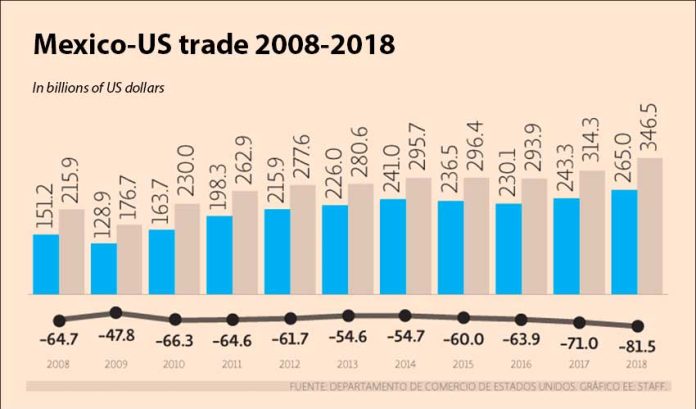
Mexico's exports are indicated in gray, imports in blue. The US trade deficit is shown in black. el economista

Mexico recorded its highest ever annual trade surplus with the United States last year amid uncertainty surrounding the new North American trade agreement and tariff tensions.

Data published yesterday by the United States Department of Commerce shows that Mexican exports to the U.S. increased by 10.3% in 2018 to reach just over US $346.5 billion while Mexico paid $265 billion for imports from north of the border, 8.9% more than in 2017.

The net result: a surplus for Mexico of just over $81.5 billion, 15% higher than the $71 billion surplus of 2017.

It was the fifth consecutive annual surplus increase for Mexico with its northern neighbor, while the United States’ global deficit hit a record $891.3 billion even though U.S. President Donald Trump has pledged to reduce it.

Almost half of the United States’ deficit was generated via a trade imbalance with China while just over 9% is a result of the surplus achieved by Mexico.

The positive result for Mexico came despite the United States government’s tariffs on Mexican steel and aluminum, which were imposed on June 1 last year.

Mexico responded swiftly with a range of “equivalent measures” on some U.S. imports including pork, apples and a range of cheeses.

During most of 2018, there was also uncertainty about whether Mexico, the United States and Canada would reach an updated trade deal to replace the quarter-century-old NAFTA.

Trump repeatedly threatened to pull out of the three-way accord and raised the possibility that the United States would enter into separate bilateral deals with its neighbors.

However, a new deal – the United States-Mexico-Canada Agreement (USMCA) – was eventually signed on November 30, Enrique Peña Nieto’s last day as president.

The agreement, which sets stricter rules of origin for the automotive sector among other modifications to NAFTA, must be ratified by the legislatures of the respective countries before it takes effect.

But trade officials in Mexico have indicated it will not ratify the deal unless the U.S. withdraws the metal tariffs.

Source: El Economista (sp)

Government cancels plan for luxury real estate project on former base

0
Former military base will become a park.

The federal government’s plan to build a luxury real estate development on a former military base in Santa Fe, Mexico City, was cancelled by the president today.

During his daily press conference, Andrés Manuel López Obrador said the land will become a park rather than luxury department buildings. He said a few apartments will be built on the western Mexico City site to serve as housing for National Defense personnel.

Most of the grounds of the former military base will be parkland, forming a fourth section of the Chapultepec park, the president said. “The land will no longer be sold, there will no real estate development, the environment will be given priority.”

The new park will be managed by the city government “for the enjoyment of the people of Santa Fe,” López Obrador said, remarking that the building that housed a military weapons factory, erected in the 1800s, will be preserved due to its historic value.

The plan to develop the former military base first emerged during the previous federal administration, when it was expected that the 125-hectare site could sell for as much as US $1 billion. But the Enrique Peña Nieto government dropped the plan last July.

The López Obrador government announced it would build luxury apartment buildings on the site, whose sale would finance the federal government’s new national guard.

Source: Milenio (sp)

1 person dead after armed civilians attack Colima politician’s home

0
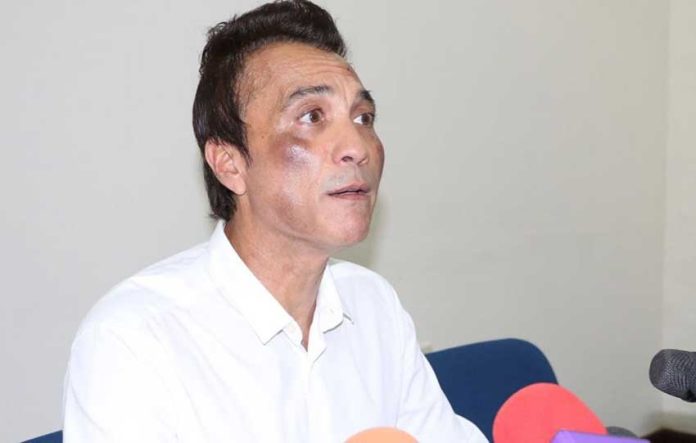
Colima's former tourism secretary addresses a press conference yesterday.

The tourism secretary of Colima resigned yesterday two days after a man was killed in his home during an attack perpetrated by armed civilians.

Efraín Angulo Rodríguez appeared at a press conference with a badly bruised face and said he was leaving his position to concentrate on initiating legal action against those responsible for the crime, and didn’t want the case to be used against the state government.

Angulo said that at about 7:00pm Monday a dozen armed men “looking for money and drugs” entered his Manzanillo home where he was hosting a party for 10 male guests.

“A large number of unknown individuals burst into [my home] with an astonishing quantity of weapons. They tied us up, undressed us, beat us and took multiple photographs and videos of us,” he said.

Angulo added that he and the other guests were tortured for at least three hours and that one of them was taken to a room and strangled to death.

He said he didn’t personally know the man who was killed, explaining that he was a friend of a friend.

“While they were murdering him, two of the guests at my home managed to untie themselves and confront the criminals . . .” the former official said.

One of the armed men shot at the guests, wounding one, before fleeing in a state government vehicle with money and objects of value they removed from Angulo’s home.

Naked photos of the former secretary and his house guests appeared on social media yesterday after which some people claimed that the men were participating in a gay orgy.

Angulo described the “lies” and “homophobic comments” that have surfaced on social media as “regrettable.”

He said that people who made such comments and “insensitive taunts” don’t have any idea of the stress of being a victim of a violent and serious crime.

Angulo also said that he and the other guests had been revictimized by people who said that the crimes committed against them were the result of “their habits, their sexual preferences, their way of dressing and even, now, their friendships.”

He added that it was “categorically false” that the party had been “out of control” because “there was no party.”

Angulo said all of the guests have filed criminal complaints and demanded that the state attorney general’s office locate and arrest those responsible for the attack.

Source: El Universal (sp), Reforma (sp) 

López Obrador rejects senators’ initiative to control ratings agencies

0
ratings agencies

President López Obrador and the Morena party’s leader in the Senate said today there will be no attempt by the government to control the operations of ratings agencies in Mexico.

“We are open to international scrutiny in our politics and our economy. Mexico is a free country and we do not have anything to hide; we are in favor of transparency. What the ratings agencies do is their job and we respect that — we are not going to limit their ability to function.”

Senator Ricardo Monreal also told reporters that the measure would not be presented and that fellow Morena Senator Salomón Jara, who argued in its favor yesterday, had accepted the decision.

However, Jara told reporters later that he was going ahead with it. “We have rights as senators to present our own initiatives, our proposals.”

The initiative would give the National Banking and Securities Commission (CNBV) authority to revoke ratings agencies’ permission to operate “when evaluations or qualifications do not adhere to the principles of independence, objectivity, rigor, authenticity, truth, integrity and transparency or attack in a deliberate manner the financial stability of the markets or a business . . . .”

It was triggered by Standard & Poor’s credit rating outlook downgrade on Monday for Pemex, the Federal Electricity Commission (CFE) and many businesses and financial institutions, and another downgrade of Mexico’s credit outlook last Friday.

The president suggested that the agencies take corruption into account as an important factor in the their ratings.

“I believe it would be a good idea for the ratings to include the corruption levels of governments around the world in their evaluations because it’s a variable that distorts everything. A country could have the best economic model comparatively, but if corruption is allowed to reign unchecked in a country, when everything is said and done the economy will not grow and it will trigger a financial crisis.”

He said he believed that his administration’s anti-corruption measures would generate large savings in the economy over the long term as well as restore confidence for investors, regardless of ratings agencies’ scores.

Source: El Financiero (sp), Publimetro (sp)