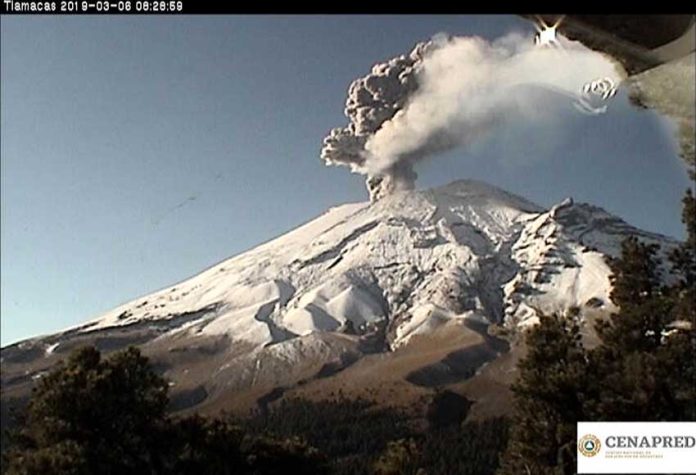
It’s Ash Wednesday but only in southern Mexico City after an explosion at the Popocatépetl volcano early this morning triggered an ash fall alert.
The explosion was recorded at 8:26am, expelling an ash plume that extended 1,200 meters above the volcano. Winds sent the ash to the west of the volcano, covering an area in southern and southeastern Mexico City that encompasses the boroughs of Magdalena Contreras, Tlalpan, Coyoacán, Xochimilco, Milpa Alta, Tláhuac and Iztapalapa.
Authorities advised residents of those areas to cover their mouths and noses with damp handkerchiefs, clean their eyes and throast with water and avoid using contact lenses, as these contribute to eye irritation in the presence of ash.
Drivers are advised to keep their windows closed and to moderate their speed, as the ash can reduce traction. The use of air conditioning is not advised, and drivers should listen to the radio for updates on air quality conditions.
Residents are urged sweep up the ash and deposit it in bags, avoiding the use of water. Mixing water and ash solidifies when it dries and can clog storm drains.
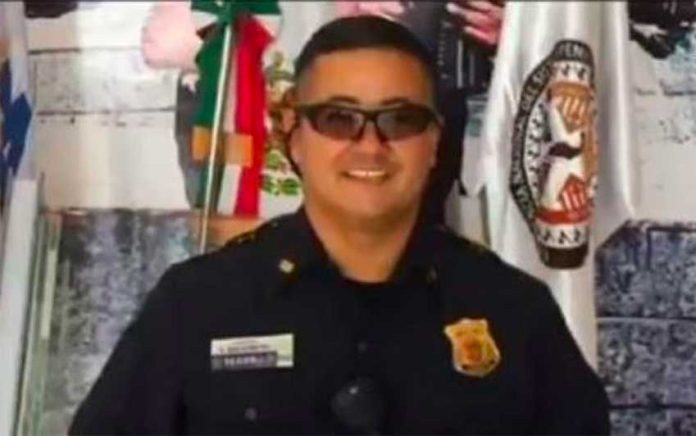
A senior officer in the Ciudad Juárez police department saved his family but lost his life in an ambush near his home in Nuevo Casas Grandes, Chihuahua.
Intelligence chief Adrián Matsumoto Dorame was gunned down on his day off in this city located about 200 kilometers southwest of Juárez.
Matsumoto was returning home with his wife and two young children on Sunday afternoon when he noticed two suspicious vehicles about a block away from his house.
Sensing that he was the main target and knowing that the occupants of the vehicles had not yet seen his family inside the car, Matsumoto got out and walked over to the vehicles.
Minutes later he was dead after several gunmen opened fire. At least 50 shells from high-caliber weapons were later found at the scene. Witnesses say that as soon as the gunmen drove off the officer’s family tried unsuccessfully to resuscitate him.
[wpgmza id=”162″]
According to the Juárez police department, Matsumoto, 33, had a lengthy law enforcement career in Chihuahua, including leadership roles in state and local police.
Matsumoto had received threats and was the target of narco-banners, and had recently killed a presumed member of a criminal organization during a police operation.
He was neither armed nor wearing any protection at the time of his murder.
Despite the crime scene’s proximity to the attorney general’s offices and a Federal Police station, officers were not dispatched to the scene of the shooting or to pursue the killers, according to the newspaper El Universal.
On Monday, the attorney general’s office reported that investigators had raided a safe house belonging to a criminal organization, killing one man and capturing another, and seized several high-caliber weapons.
Attorney General Jorge Nava explained that according to preliminary investigations the two men might be linked to the murder of Matsumoto.
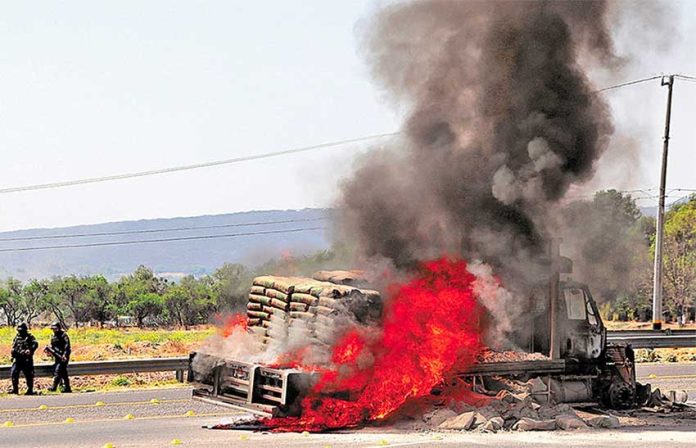
A vehicle burns at a Guanajuato highway blockade yesterday.
An operation against the Santa Rosa de Lima Cartel in Villagrán, Guanajuato, yielded results yesterday: cash allegedly paid to residents to man highway blockades was seized and two people close to the cartel’s suspected leader were arrested.
State police found dozens of envelopes containing 1,500 pesos (US $77) that are believed to have been given to people who participated in blockades that were set up yesterday to repel federal and state security forces at two points on the Celaya-San Miguel de Allende highway, two points on the Salamanca-Querétaro highway and at the entrance to the town of Santa Rosa de Lima, among other locations.
A photograph published in the newspaper Reforma showed an envelope stamped with a message that warned recipients that they “must go out to protest when required.”
Guanajuato Governor Diego Sinhue Rodríguez said the envelopes were evidence that the blockade participants were paid by the Santa Rosa de Lima Cartel, a gang of fuel thieves.
He also said that the joint operation conducted by the military, Federal Police and state police to locate suspected cartel leader José Antonio “El Marro” Yépez Ortiz is continuing.
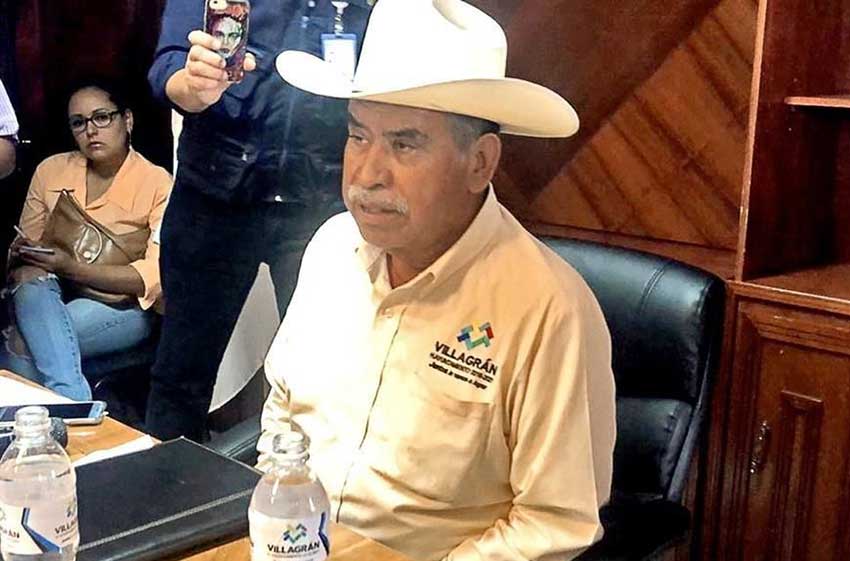
Mayor Lara: cartel doesn’t operate in Villagrán.
“We’re continuing to execute search warrants. The operation hasn’t concluded, it’s going to be permanent and we’re going to be here day and night until we return peace to this area,” Rodríguez said.
Angélica N., sister-in-law of Yépez Ortiz and allegedly a financial operator for the fuel theft organization, was arrested yesterday as was her husband, an active Federal Police officer identified only as Javier N.
Sources told the newspaper Milenio that Angélica N. – the sister of Yépez Ortiz’s wife – was in charge of organizing the blockades aimed at preventing security forces from getting into Santa Rosa de Lima, where El Marro is believed to be in hiding.
Javier N. allegedly provided information to the cartel about the movements of the forces, which enabled it to strategically choose where to set up blockades.
A third person identified as Mariela N., who also allegedly helped to organize the blockades, was also arrested yesterday.
As federal and state security forces continue to search for Yépez Ortiz, the mayor of Villagrán has come under suspicion of protecting the Santa Rosa de Lima Cartel.
Governor Rodríguez and state Attorney General Carlos Zamarripa have both accused Juan Lara Mendoza of refusing to participate in the operation against the cartel and its leader.
But Lara rejects allegations that he and the municipal police force are in cahoots with the Santa Rosa de Lima Cartel and denies knowing El Marro.
“I don’t know him and I haven’t received any payment, we’re not linked to any criminal group,” he told a press conference.
The mayor claimed that residents of Santa Rosa de Lima are opposed to the joint military and police operation – and have set up blockades to hinder it – because they fear that they will be victims of human rights violations and that their properties will be damaged as has happened “on previous dates.”
“I don’t fear anyone, I’ve lived an honorable life, I’ve never committed any crime, I haven’t been in jail even for being drunk so I have no fear,” he said.
Lara also asserted that the municipal police work for the citizens of Villagrán, not organized crime.
In a television interview, he denied having any knowledge that Yépez Ortiz is in the municipality and that his gang of fuel thieves operates there.
“He’s like the devil, we all know he exists but nobody sees him . . . I believe that he doesn’t live here, I’m not aware of that . . . As far as I know, he doesn’t operate in Villagrán.”
Meanwhile, there was gunfire this morning at the federal attorney general’s office in nearby Irapuato. Gunmen aboard two vehicles fired several times at the office shortly after 6:00am, damaging the building and a pickup truck parked outside.
There were no casualties, a security spokeswoman said.
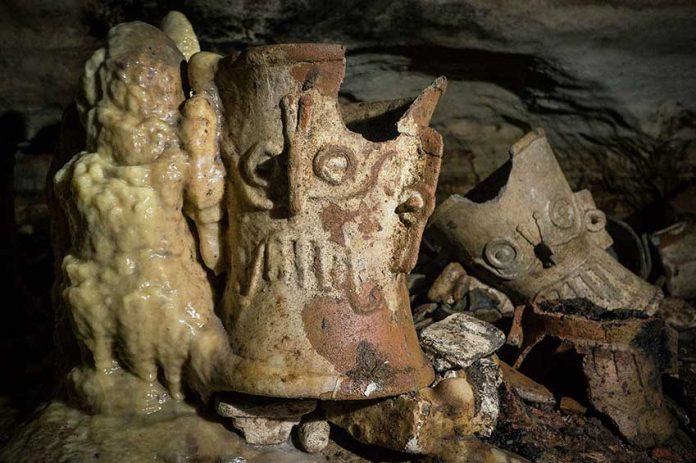
Artifacts found inside the Balakmú cave. Karla Ortega, Proyecto Gran Acuífero Maya
Archaeologists exploring and mapping subterranean water deposits on the Yucatán peninsula have discovered a treasure trove of ritual objects in a cave system beneath the ancient Mayan city of Chichén Itzá.
Pedro Francisco Sánchez Nava, archaeology coordinator at the National Institute of Anthropology and History (INAH), and Guillermo de Anda, director of the Great Mayan Aquifer (GAM) project, told a press conference yesterday that hundreds of artifacts were found last year in the cave system known as Balamkú or “cave of the jaguar god.”
The cave system, located 2.7 kilometers east of the El Castillo pyramid at Chichén Itza, was first discovered in 1966 by ejidatarios, or community landowners, from San Felipe, the archaeologists said.
However, archaeologist Víctor Segovia Pinto, who visited the site and noted the presence of extensive archaeological material in a report, ordered the landowners to seal up the entrance to the cave system and for more than 50 years records of its discovery seemed to vanish.
But last year, 68-year-old Luis Un led members of the GAM team to the cave system he first visited with the ejidatarios when he was a teenager.
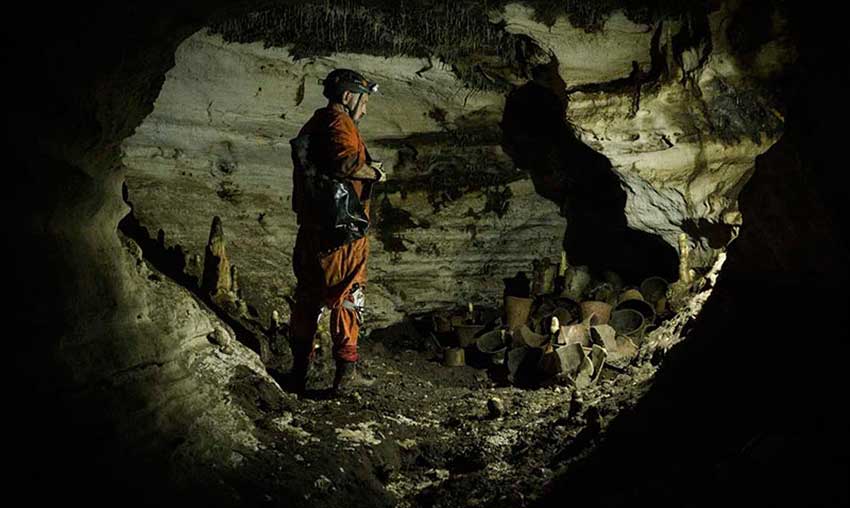
Exploring the Balakmú cave. Karla Ortega, Proyecto Gran Acuífero Maya
De Anda, also a National Geographic Explorer, recalled that he had to pull himself on his stomach through the narrow tunnels of Balamkú for hours before he reached a chamber filled with perfectly preserved ceramic incense burners, pots, vases, decorated plates and other objects.
Many of the 200 incense burners feature representations of the rain god Tláloc while their lids have images of the jaguar, a sacred animal for the Mayan people.
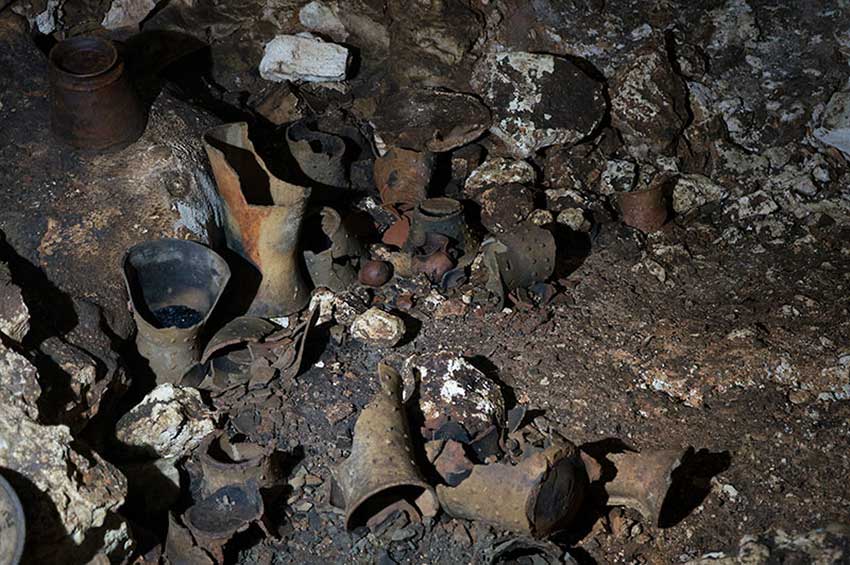
Within the incense burners and pots, archaeologists found burned materials, seeds, jade, shells and bone fragments. Stalagmites had formed around the artifacts, which appear to date back to around 1000 A.D.
“I couldn’t speak, I started to cry. I’ve analyzed human remains in [Chichén Itzá’s] Sacred Cenote [sinkhole] but nothing compares to the sensation I had entering alone, for the first time in that cave,” de Anda said.
“You almost feel the presence of the Mayans who deposited these things in there,” he added.
De Anda and James Brady, a California State University professor and co-director of the GAM project, agree that locating Balamkú is the biggest discovery in the area since the Balamkanché cave was found in the 1950s.
Hundreds of artifacts have been found in the cave. Karla Ortega, Proyecto Gran Acuífero Maya
“Balamkú will help to rewrite the history of Chichén Itzá . . . The hundreds of archaeological artifacts, belonging to seven offerings that have been documented so far, are in an extraordinary state of preservation. Given that the context remained sealed for centuries, it contains invaluable information related to the foundation and fall of the City of the Water Wizards [Chichén Itzá] and about those who were the founders of this iconic place,” de Anda said.
One hypothesis of the GAM team is that between 700 and 1000 AD, there was a severe drought in the north of the Yucatán peninsula that prompted residents to carry out ceremonies in the underground caves to ask their deities to deliver rain.
The GAM team is now working to map and create a 3D model of the cave system, which measures around 1.3 kilometers. Archaeologists plan to leave the artifacts in the places they were found within the cave.
De Anda said that only a preliminary exploration has been carried out to date, explaining that it is possible that more objects and human remains could be found beneath mud and sediment in Balamkú.
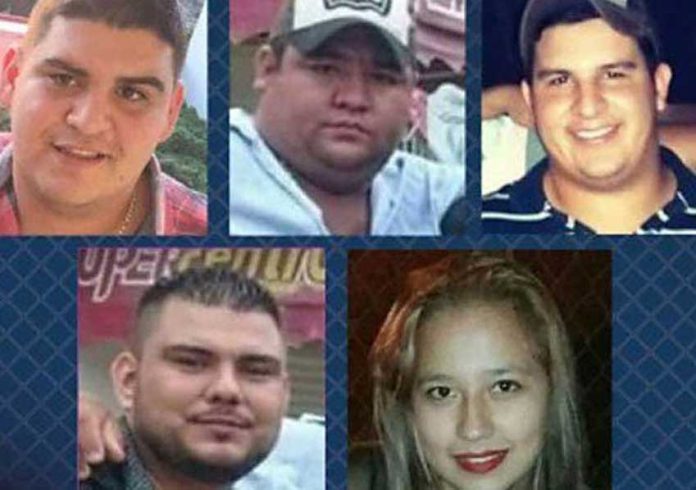
The five youths who disappeared in 2016 in Veracruz.
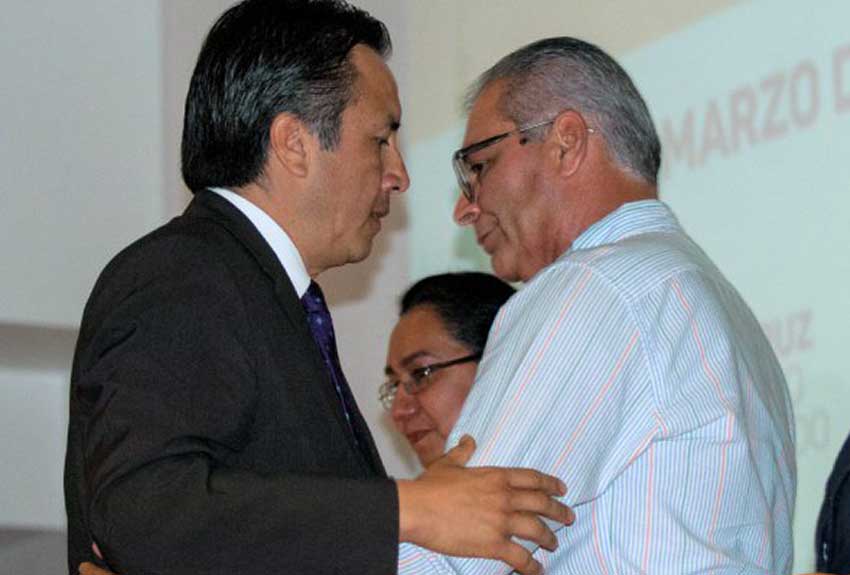
Veracruz Governor Cuitláhuac García issued a public apology to the parents of five youths who were detained by state police three years ago and turned over to the Jalisco New Generation Cartel (CJNG) to be tortured and executed.
In a ceremony yesterday at Mexico City’s Museum for Tolerance and Memory, the governor recognized and condemned the 2016 tragedy in the municipality of Tierra Blanca.
“Today we publicly recognize the state’s responsibility for the actions of state government officials on January 11, 2016 in the forced disappearance, torture and arbitrary execution of five youths, whose rights to liberty, integrity and life were violated.”
“I offer all of you an apology for the actions of the police and the illegal and arbitrary detention of your children as they traveled along a Veracruz highway. I offer this apology because without just cause, the police took them and turned them over to presumed members of a criminal organization.”
The five friends, four men and a teenage girl, were detained while returning home to Playa Vicente from the city of Veracruz and turned over to the CJNG. Their remains were later found on a ranch known as El Limón in the municipality of Tlalixcoyan.
Governor García, left, and parent Benítez embraced during yesterday’s ceremony.
Three of the parents were also among the speakers yesterday.
Businessman Bernardo Benítez told yesterday’s gathering he had intended to speak about justice, but decided he was not the person to do so.
“I have reason not to believe in it. If it existed my son would be alive, working, studying. I do not believe in the justice of the Mexican state.”
It was Benítez who was the first up to make the coffee every morning during the 87 days that parents and supporters camped out in front of the prosecutors’ office in Tierra Blanca. Their protest — to defend the innocence of the five youths — took 1,158 days and lasted through three state governments before authorities recognized that the five were indeed innocent.
Benítez said the parents would “neither forgive nor forget” what happened to their children.
In an interview with the newspaper El Universal, Carmen Garibo Maciel relived the day that her daughter Susana Tabia, 16, went missing. Susana sent a text message that morning to say she and her friends would be on their way home after eating breakfast.
But there was no further communication; calls to the young woman’s cell phone went unanswered.
“And so the hours passed on, thinking and imagining [what might have happened]. We even began to call the hospitals and police stations, but they had no news. I lived in agony from then on, and more so when the Veracruz police told us that our children were criminals and that there were no leads in the investigation.”
Speaking at the ceremony, she begged the governor to expedite the investigation, which has dragged on despite the arrest of 21 suspects, eight of whom were police officers. They have been in custody for as long as three years, awaiting trial.
“The Veracruz police cannot go on working for organized crime. They cannot go on taking our children away from us . . . .We cannot accept their inaction in these cases and for the mothers to have to just bear the pain.”
Federal human rights undersecretary Alejandro Encinas said the federal government will assist family members to get to the bottom of what truly happened.
“With a feeling of great responsibility, I will put all of our resources into attending to this grievance so that the family members of the victims can obtain justice and the guarantee that this will not happen again.”
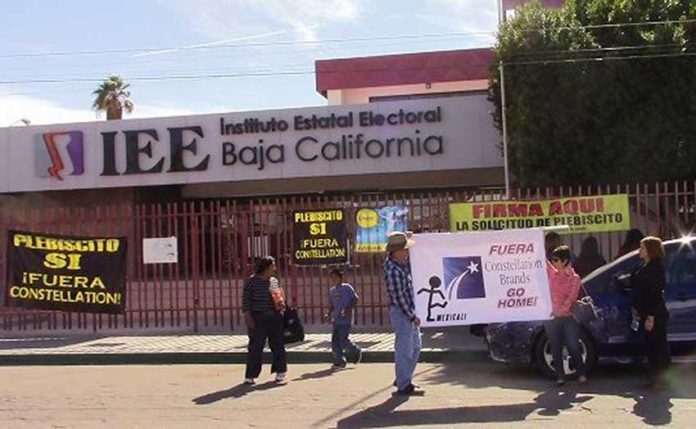
Brewery opponents outside the electoral institute's office.
Electoral authorities in Baja California have reversed a decision to allow a public consultation on a US $1.5-billion brewery in the Mexicali valley.
Late last year, the Baja California Electoral Institute (IEE) received a request supported by more than 18,000 signatures for a plebiscite on the controversial brewery that is being built by international beverage company Constellation Brands.
The IEE approved the request last month but yesterday five of six members of its general council voted against the consultation going ahead.
Clemente Ramos Mendoza, president of the general council, said the IEE is not the authority to which citizens should have turned in order to try to stop the construction of the brewery.
“There are federal tribunals for that . . . administrative courts. They are the relevant authorities . . .” Ramos said, rejecting any claim that he and other councilors were “the bad guys in the movie.”
He also called on the Baja California government to inform the public about the policies it will adopt in order to guarantee water supply in the state.
Farmers and other local residents who claim that the brewery will divert water required for agricultural and household use have protested against the project since 2016 and clashed with authorities on several occasions.
Supporters of the brewery plebiscite yesterday attended the session at which the IEE councilors ruled out the possibility of a vote being held.
They claimed that the council members were pressured into making the decision and suggested that money may have changed hands.
The citizen who presented the plebiscite request, Jesús Filberto Rubio, congratulated Olga Viridiana Maciel Sánchez for being the only councilor not to vote against the consultation, contending that she is the only one who has a brain and didn’t accept money. The other councilors were either bought off or “mentally retarded,” he said.
State politicians and business leaders warned last month that the unprecedented consultation could threaten investment.
Mexican Employers Federation (Coparmex) president Gustavo de Hoyos said that if construction of the brewery is blocked, “it would be an irreversible blow to the reputation of Mexico’s production sector” while Baja California Governor Francisco Vega de Lamadrid said that a referendum would send the wrong message to investors.
Constellation Brands, the third largest beer maker in the United States, has said that the brewery would create around 5,000 jobs and that its use of water – expected to be 1.8 million cubic liters a year – will not affect citizens’ access to water.
The president continues to enjoy strong support. el financiero
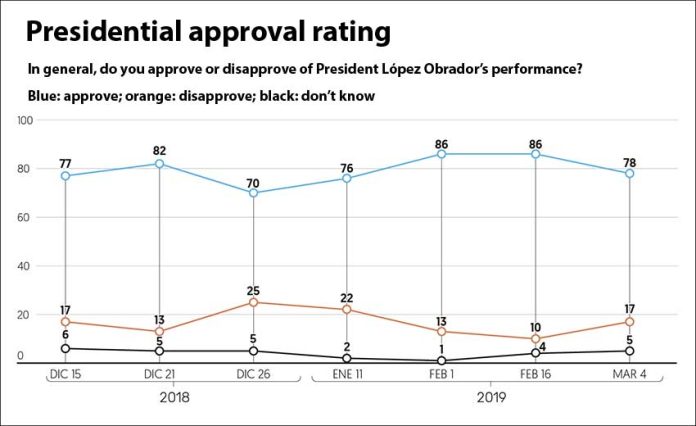
President López Obrador declared that his government is “doing very well” and pledged to put his rule to a vote midway through his six-year term after a new poll showed that he has an approval rating of 78%.
“A poll appeared in the newspaper El Financiero [which shows] we have the support, the backing of the people. That’s very important because we want there to be democracy and that means a government of the people, for the people and with the people . . .” the president said yesterday.
The poll, published a week before the federal government completes its first 100 days in office, also shows that 82% of respondents would support the continuation of López Obrador’s presidency if given the opportunity to revoke his rule.
AMLO, as the president is widely known, said yesterday that a proposal to that end has already been submitted to Congress for consideration.
“Yes, I’m going to subject myself to a revocation of mandate [vote]. If the law isn’t approved, we’ll see how we can do it respectfully and without impinging on the legal framework . . . the consultation is going ahead,” López Obrador said.
The political veteran, who won last year’s presidential election convincingly on his third attempt, explained that his intention is to hold the referendum on his presidency the same day as midterm elections in 2021 in order to avoid costs associated with holding it separately.
“Let there be a ballot asking no more than: ‘Do you want the president to continue or to resign’ . . . because it [should be] the people who install [the president] and the people who remove [the president],” López Obrador said.
He added that a vote on his presidency will ensure that the government doesn’t stop working or think that it is “untouchable.”
López Obrador’s 78% approval rating among 1,000 people surveyed by El Financiero in all 32 federal entities is higher than that achieved by any of his five predecessors at the start of their term.
Vicente Fox, in office between 2000 and 2006, is the only other president in the last 30 years whose approval rating didn’t languish in the 50s in the first months after being sworn in.
However, with 70% support, he was still some way off reaching the level of popularity currently enjoyed by AMLO.
The only president in the last 30 years who reached a higher approval rating than López Obrador’s current 78% was Carlos Salinas, whose popularity hit 80% in the middle of his 1988-1994 term.
Of those who approve of the president’s performance to date, 52% of respondents said their assessment was based on what López Obrador has already done while 47% said that their evaluation was made in consideration of what they expected him to do.
Respect for freedom of speech and transparency and accountability were the most favorably viewed aspects of the government’s performance, with 66% and 59% respectively saying that the López Obrador administration fared very well or well in the areas.
The approach to fighting crime and insecurity along with the initiative to combat corruption were the next most popular aspects, both garnering 58% support, followed by management of the economy, with 53% support.
Asked separately about “government actions,” 79% of respondents said that they supported the move to reduce the salaries of government officials, 73% approved of López Obrador’s daily press conferences and 64% backed the creation of the national guard.
The government’s crackdown on fuel theft was seen as the government’s most successful initiative, with 80% of respondents saying that it was very or somewhat effective.
Just under 60% of respondents said the government has had a lot or some success in its endeavor to sell the presidential plane, while 55% and 50% respectively said that its efforts to reveal the personal assets of public officials and its plan to build the Maya Train project have been successful.
Only 43% and 29% of respondents respectively considered that the government has had success in its plan to convert the Santa Lucía Air Force Base for commercial aviation use and in its investigation into the helicopter crash that killed the governor of Puebla and her husband on Christmas Eve.
Poll respondents were also asked to rate the president’s performance using baseball terminology in recognition of the fact that the sport is López Obrador’s favorite.
Just over a third of those polled – 35% – said that the leftist leader’s performance during the month of January was equivalent to a home run while 33% more said that he had scored a hit.
One in 10 respondents said that López Obrador had struck out and 9% likened his performance to hitting a foul.
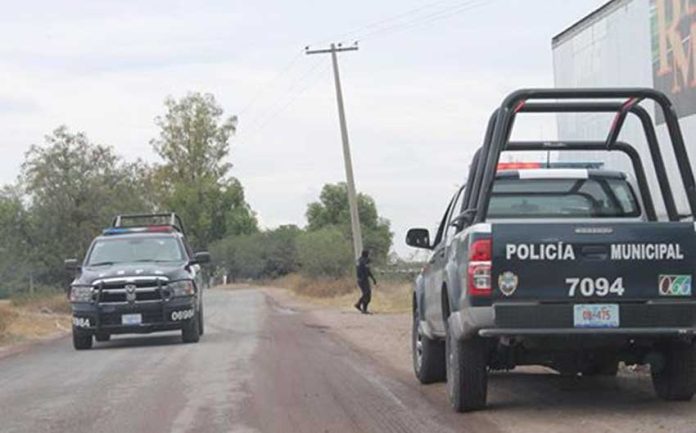
Villagrán municipal police on patrol. They were notably absent yesterday, according to the attorney general.
Local police in the municipality of Villagrán, Guanajuato, are under investigation after failing to assist state and federal forces in an operation Monday against the Santa Rosa de Lima Cartel.
At a press conference later in the day, state Attorney General Carlos Zamarripa Aguirre told reporters that the entire Villagrán police force ignored calls for backup to remove blockades preventing state and federal security forces from entering the community.
“We have opened several investigations to find out why local police were absent during certain calls for backup. More specifically, they did not respond to calls from state and federal forces in the early hours of this morning and . . . they will of course be expected to explain [their absence].”
Zamarripa said the operation, an attempt to capture cartel leader José Antonio “El Marro” Yépez Ortiz, cleared the highway blockades, rescued six people, including a woman, a local police officer and a former officer, who were being held captive near a property owned by the Santa Rosa de Lima Cartel leader.
Several people were detained during the operation, and arms, drugs and a dozen vehicles that had been reported stolen were seized.
The attorney general said federal and state authorities will remain in Santa Rosa de Lima indefinitely until the operation’s objectives have been achieved.
The brewer of Corona beer is set to begin operating its eighth brewery in Mexico.
Grupo Modelo, owned by Belgium-based Anheuser-Busch InBev, has invested 14 billion pesos (US $726 million) in the new plant, located in Apan, Hidalgo.
The plant’s initial production will be as much as 1.2 billion liters of beer but it has the capacity to produce twice that amount, which would make it the second largest brewery in the world in terms of production volume.
AB InBev executive Carlos Lisboa said during an inauguration ceremony on Monday that “the magic begins in the farmland and in our breweries. Starting today, not only will the best barley be harvested in Hidalgo, but the best beer will be produced here.”
Several of the company’s brands will be produced in Apan, including Corona, Stella Artois and Michelob. “I have no doubt that Hidalgo will become the land of beer,” said Lisboa.
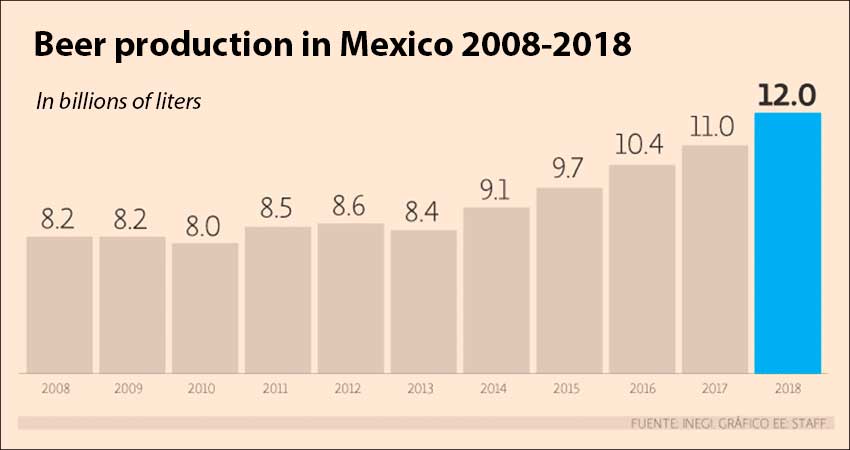
Mexican beer production over the last 10 years. el economista/inegi
Sixty per cent of the barley the firm purchases in the Altiplano region — the large plateau that occupies much of northern and central Mexico — is produced in Hidalgo.
The company also has breweries in Coahuila, Mexico City, Guadalajara, Oaxaca, Sinaloa, Zacatecas and Yucatán.
AB InBev’s investment comes at a time when beer production in Mexico has been steadily growing since 2014. The sector grew by 9.1% in 2018.
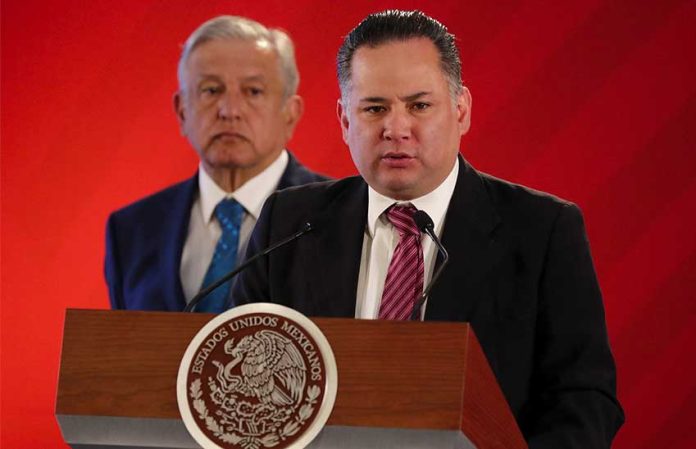
Nieto speaks at President López Obrador's daily press conference.
Federal financial authorities plan to reveal at least 50 cases of health-sector corruption allegedly perpetrated during the administration of former President Enrique Peña Nieto.
The Financial Intelligence Unit (UIF), part of the federal Secretariat of Finance, said the cases are all related to the questionable management of medications and that officials from the previous government were directly involved.
UIF chief Santiago Nieto said the government’s mandate is to file whatever formal complaints are required, regardless of who is involved.
Details will be announced on Monday after President López Obrador presents a report on his first 100 days in office.
Nieto will also announce the federal government’s strategy against tax fraud and how corruption in the health sector is to be handled.
López Obrador has promised that free medications will be guaranteed to all citizens, requiring an overhaul of purchasing and distribution systems.
Nieto said his office has filed 30 formal complaints before the federal Attorney General’s office for money laundering cases linked to fuel theft, political corruption and organized crime” since the government took office December 1.