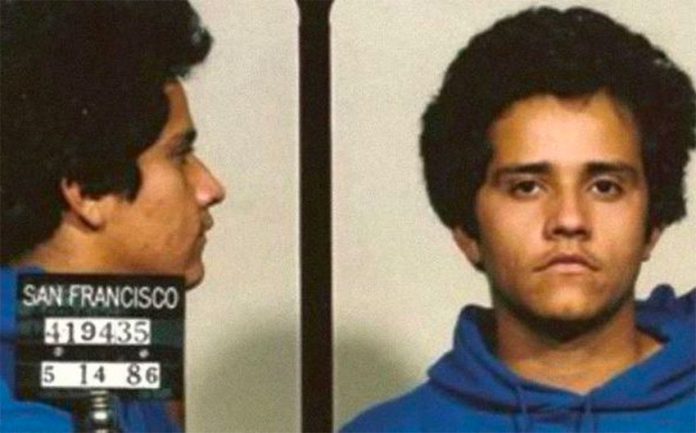
Oseguera in a 1986 mugshot. He did time in the US in the early 1990s.
The leader of one of Mexico’s most powerful drug cartels is staying under the radar and hiding out in the mountains of western Mexico, according to an agent of the United States Drug Enforcement Agency (DEA) who spoke with the broadcaster Univision.
Nemesio “El Mencho” Oseguera Cervantes is the leader of the Jalisco New Generation Cartel (CJNG) and one of the most wanted men on the planet.
According to Kyle Mori, the DEA agent in charge of capturing him, the drug lord has retreated to remote areas controlled by the CJNG.
“He hides in the mountainous areas of Jalisco, Michoacán and Colima. We think he’s not in the cities anymore.”
As to “El Mencho’s” living arrangements, Mori wouldn’t specify whether he’s living a life of luxury, or if he’s hiding out in humble shacks in the mountains.
“I’ll say this: it’s a combination of different things,” he said. “I don’t think he spends a lot of time in one place, or in one type of house. It’s a combination of everything you can imagine, he’s definitely constantly moving.”
Oseguera’s territory includes two ports: Manzanillo, Colima, and Lázaro Cárdenas, Michoacán, as well as the city of Guadalajara. In the rural areas of his territory there are farms used for drug cultivation and secret laboratories.
Mori added that unlike other drug traffickers like Joaquín “El Chapo” Guzmán, Oseguera avoids taking unnecessary risks like visiting cities.
“He doesn’t mind living in the mountains like a rancher,” said Mori. “That complicates capturing him. Where was ‘El Chapo’ captured? It was always in the cities. ‘El Mencho’ wouldn’t do that.”
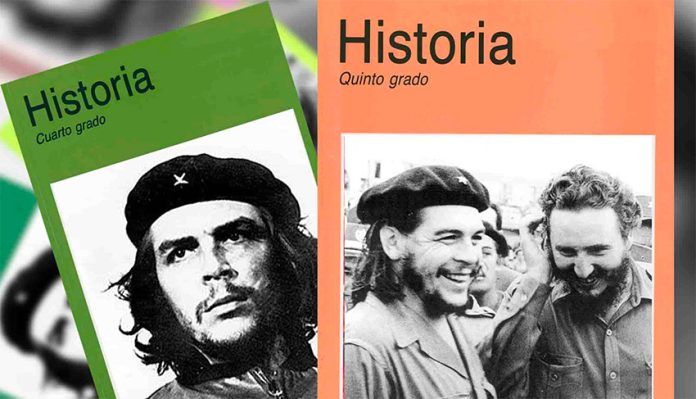
Revolutionary leaders feature prominently in union textbooks.
The Education Secretariat (SEP) has issued a warning against the use of alternative, ideologically loaded textbooks developed by the CNTE teachers’ union.
The SEP said in a statement that the National Commission of Free Textbooks (Conaliteg) has the sole authority to print and distribute textbooks for use in public schools, and no other organization can replace those official materials.
Among the content of the books are critiques of the “neoliberal economic model” implemented in Mexico by past governments and biographies of former Cuban president Fidel Castro and revolutionary hero Che Guevara.
The CNTE plans to distribute texts for the 2019-2020 school year to more than 6,000 public schools in Michoacán that have already adopted the union’s education model.
The books are part of a wider alternative education plan developed by the dissident teachers’ union that it will present to President López Obrador during a meeting scheduled for September 10.
Members of the CNTE, which vehemently opposed the previous government’s educational reform, have expressed their desire to expand the union’s alternative program.
But blocking any attempt to do that will be the conservative National Parents Union (UNPF), which yesterday called on the federal government to put an end to the distribution of CNTE’s alternative textbooks and implementation of its education program.
“We think it’s very dangerous that the CNTE . . . has an indoctrination plan based on concepts that don’t stand up to factual analysis. It doesn’t frighten us that they want to talk about Russia or Marx, it concerns us that they want to lie to students about issues that don’t stand up to critical analysis . . .” said UNPF president Leonardo García Camarena.
“These kinds of proposals must be stopped . . . As parents, we don’t want to be pushed to accepting [education] models on which we haven’t been consulted . . .”
García charged that the federal government has been gradually ceding ground to the CNTE and that President López Obrador has opened the doors of the National Palace to a “tiny, radical and blackmailing group.”
He said the union has already achieved the elimination of teacher evaluation and that the quality of instruction given to students will suffer as a result.
Education specialists and lawmakers also spoke out against the CNTE’s plan to distribute alternative textbooks.
Alma Maldonado, an education researcher at the National Polytechnic Institute, said the distribution of the books threatens children’s rights.
“It jeopardizes the right to receive an education based on books made by the experts at Conaliteg, who are serious people that have the academic foundation to produce educational texts,” she said.
Maldonado argued that the government could set a dangerous precedent if it allows the CNTE books to be distributed and used.
“. . . It will set an example that any school, state or group [can] hand out the textbooks it wishes.”
Juan Carlos Romero Hicks, leader of the National Action Party in the lower house of Congress, told the newspaper El Universal that the CNTE’s distribution of textbooks is illegal.
“It’s flagrant illegality because education decisions correspond to the SEP, to state [education] secretariats. It’s a legal outrage that is part of the [CNTE’s] thoughtless and anarchic activism that doesn’t respect the pupils; it’s part of the miserable anarchy that the CNTE has built since 1979,” he said.
Romero added that there is no space for the CNTE to negotiate with the SEP because “what’s illegal doesn’t go ahead, it’s not a matter of whether ‘I like it or not.’”
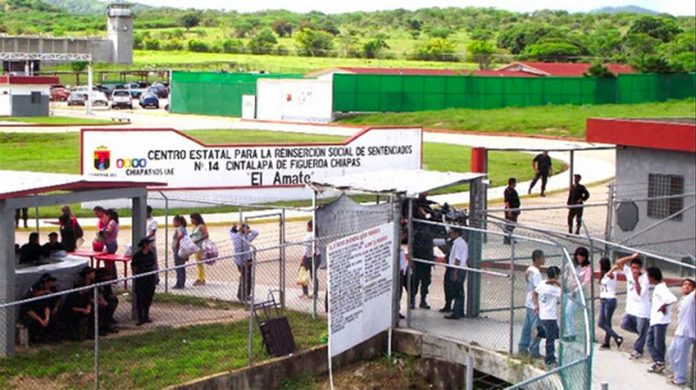
It was party time last week at Amate prison, according to a video.
The warden and deputy warden of a Chiapas jail have been suspended after a video of a party taking place in the jail was circulated on social media.
The 45-second video shows prisoners and visitors drinking alcohol and singing along to a live band. According to the news agency Agencia55.mx, the celebration took place in the Amate state prison in Cintalapa.
Chiapas Security Secretary Gabriela Zepeda Soto announced that the officials have been suspended while the state confirms where and when the video was recorded. If officials are found to have been involved, they will face administrative or criminal sanctions.
The warden and his deputy denied having knowledge of any party in the jail.
The Amate prison has a population of 3,800 prisoners, and a capacity of almost 5,400.
On Friday, state officials said the party was organized by Gehú Ruiz Rincón, also known as “El G-U.” He is serving a 52-year sentence for kidnapping his sister-in-law and burying her alive in his yard in Tuxtla Gutiérrez in 2014, allegedly at the request of his brother.
The National Human Rights Commission (CNDH) performed a survey of conditions at Chiapas prisons in April and found Amate had the best conditions in the state, and gave it a rating of 6.48 points out of 10.
However, the CNDH also found that the prison had problems such as understaffing, human rights violations and criminal activities like extortion and bribery.
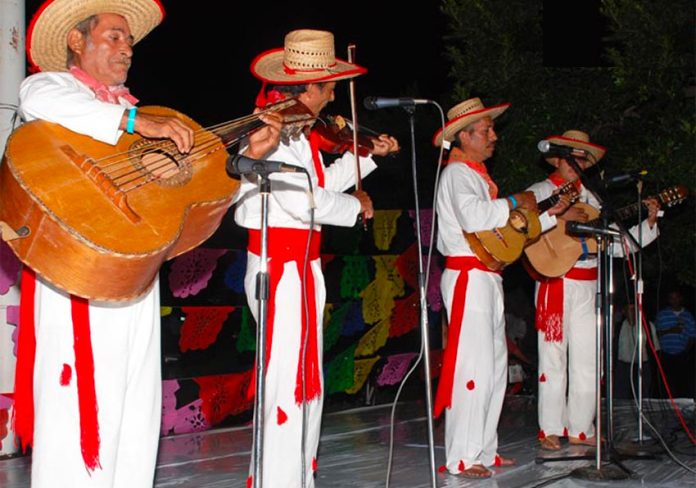
Traditional mariachi bands will play at next week's festival.
An eight-day annual mariachi festival in Jalisco will present performances by 35 groups, workshops and 18 fandangos, but don’t expect to hear renditions of rancheras by José Alfredo Jimenez or Vicente Fernandez played by musicians in silver-studded charro suits.
Instead, the festival is a celebration of older mariachi music and traditions, harking back to a time before ranchera and bolero-singing stars like Javier Solis graced movie screens during Mexico’s golden age of cinema in the 1930s. In earlier times — and to this day in some remote communities — all-string mariachi groups opted for simple white clothing or garments decorated with indigenous patterns. They played sones and jarabes from a large region spanning several states in western Mexico.
This year, a fandango — a public party with mariachis and traditional dancing — will kick off the festivities on August 10 in Guadalajara and many surrounding municipalities, followed on August 11 by a mariachi gala with performances of regional mariachi styles by groups from several states.
In the following days, musicians, academics and enthusiasts will be able to hear a variety of unique performances by groups from all over Mexico and even a few from the United States, as well as participate in music and dance workshops and conferences.
Jalisco Culture Secretary Giovana Jaspersen García said the highlight of the 18th edition of the mariachi gathering will be its many fandangos, which give audiences the unique opportunity to participate in traditions and to publicly honor those who have worked to preserve traditional mariachi forms.
“We have worked hard so that the National Gathering of Traditional Mariachis gets out into the streets and can be heard in public spaces.”
The festival runs until August 17 and all events are free and open to the public.
Scene of the attack on a police station in Valle de Santiago.
Armed civilians attacked a police station in Guanajuato on Friday, killing five prisoners and freeing another.
The commando of at least eight men entered the station in Valle de Santiago around 3:00pm, threatened officers with assault rifles and started shooting at prisoners. They locked up the surviving prisoners, and removed one who had been arrested for a weapons violation on Thursday.
According to police, the prisoner who was rescued is an organized crime leader who goes by the name “El Mano Mocha.” The prisoners who were killed have not been identified.
Witnesses from a nearby hospital saw the aggressors boarding two pickup trucks after the attack, one grey and one black, and driving away towards Yuriria. The hospital was also damaged by gunshots.
State police searched for the attackers on nearby highways for the rest of the evening and night.
The attack came just two days after the deputy police chief of Valle de Santiago was attacked by gunmen while traveling on a highway. Hewas not injured.
A similar attack took place April 18 in the Guanajuato city of Celaya, when armed men broke into a police station, killed a judge and a prisoner and freed another prisoner, who was later killed during a shootout with police.
A new and simplified 10-digit telephone dialing system takes effect in Mexico today but the existing system won’t be phased out completely until August 3, 2020.
All telephone prefixes are eliminated under the new system, which was first announced by the Federal Telecommunications Institute (IFT) in the fall of 2017.
That means that dialing the prefix 01 for national long-distance calls or non-geographical numbers (think 01-800 numbers) is no longer required.
Similarly, the prefixes 044 and 045 don’t need to be dialed to make local and long-distance calls, respectively, to a mobile phone from a landline.
To make a long-distance call from abroad to a mobile number in Mexico the prefix 1 is no longer required after the country code.
While all prefixes are eliminated, two or three-digit area codes are added when making local calls to create a uniform 10-digit system.
In Mexico City, Guadalajara and Monterrey, the corresponding two-digit area code is added to make a call within the city, while across the rest of the country, three-digit area codes are added.
An exception to the 10-digit system is the national emergency number, which remains 911.
The IFT had planned to give telephone users just one month to adjust to the new dialing system before eliminating the existing one.
However, the institute announced last month that people will be able to continue to use the numbers to which they are accustomed for a period of one year from today.
Telecommunications analyst Jorge Bravo said that having a one-year period in which both new and old numbers can be used is normal.
However, he warned that the public will need to be reminded about the new dialing system in the lead-up to the definitive elimination of prefixes on August 3, 2020.
The Conacyt board has not met since the new director was appointed.
The National Council of Science and Technology (Conacyt) is operating illegally under the administration of María Elena Álvarez-Buylla, claims a Mexico City law professor.
Álvarez-Buylla has taken important decisions unilaterally since becoming Conacyt director on December 1 but, according to the law, she must seek approval of the council’s board, said a report today in the newspaper El Universal.
In recent months, the Conacyt chief has implemented budget cuts, modified funding arrangements, developed new programs, named adjunct directors and opened new trust accounts without consulting the board, the newspaper said.
In fact, Álvarez-Buylla has not met with the 13 members of the board at all since she was appointed to her role by President López Obrador.
“She’s flagrantly breaking the law,” said Fausto Kubli-García, a law professor at the National Autonomous University.
Conacyt’s Álvarez-Buylla.
“Doctor Álvarez-Buylla would get a 10 in scientific research but a zero in public administration. The board hasn’t given her the legal backing to act, spend [public resources] or make decisions. By spending public resources without the consent of the [governing] body that must authorize them, she’s already acting autocratically. There is clear evidence . . . that she’s not respecting legality,” he added.
Álvarez-Buylla’s alleged autocracy has included orders to implement austerity measures at 26 scientific research centers. Scientists have warned that the cuts threaten the centers’ ongoing ability to operate.
Kubli-García said that if the rule of law really existed in Mexico, the Conacyt director would face legal repercussions for her actions.
Under the General Law of Administrative Responsibilities, public officials’ use of powers that don’t correspond to them is considered a serious offense.
“. . . The existence of collegial bodies is fundamental in decision-making. The big problem is that the new Conacyt is seeking to leave science policy to one person,” Kubli-García said.
He explained that the situation violates the legal framework of the science council, which was specifically structured to have counterbalances and input from a range of contributing voices “because it’s proven that the concentration of power produces tyranny.”
Condensing authority in the public science sector appears to be exactly what the federal government is aiming for.
A senator for the ruling Morena party presented a proposal to Congress in February that seeks to eliminate as many as 10 scientific advisory bodies and put the vast majority of research funds and science policy responsibilities in the hands of Conacyt.
One of the bodies on the chopping block is the Scientific and Technological Advisory Forum.
President López Obrador confirmed this week that the autonomous government agency will disappear, charging that it’s a waste of money and unnecessary because he gets his advice on science issues from none other than Conacyt.
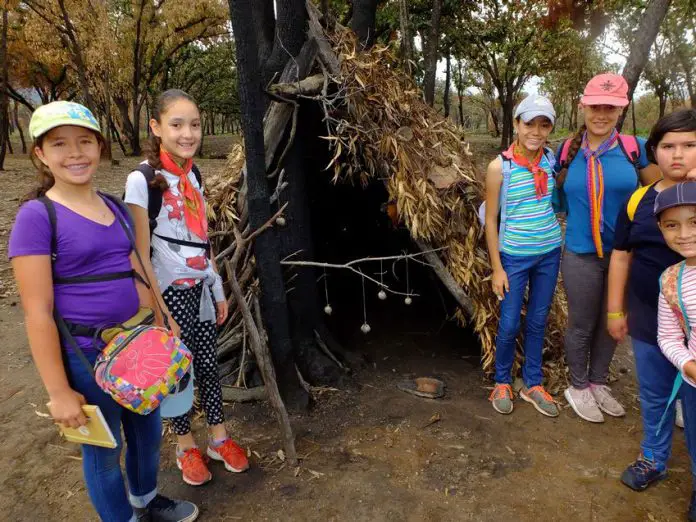
“The best shelter of 2019” and its proud team of builders.
Learning does not take place if teachers simply dictate their knowledge to students. But something marvelous happens when teachers put students into direct contact with what they need to learn.
Fortunately for a goodly number of Guadalajara youngsters, that is exactly what natural science teacher Jesús “Chuy” Moreno has been doing during his summer courses for over three decades.
When Moreno isn’t teaching, he’s a professional nature photographer, forever out in the blue photographing animals, flowers and birds. When I asked him how he had managed to shoot a particularly nice picture of a Clark’s Grebe (Aechmophorus-clarkii), he told me he got it using a technique he’s been practicing for years. He gets up at 4:00am, drives off to his favorite lake and wades in, wearing a wet suit.
He then dunks under the water and inserts his head into a hydrohide, a small, camouflaged floating platform on which his camera is mounted. He then moves to what he thinks is a good spot and waits. He waits, first, for the sun to rise; then he waits for the fog to lift and, after that, he waits for the right bird to appear at the right spot in front of his camera, and finally he takes the picture “exactly at bird’s eye level.”
I suggested that some people might actually prefer being waterboarded to standing up to their neck in a cold lake while crouching under a hydrohide for endless hours — and Moreno admitted he doesn’t know of a single photographer, apart from himself, doing this sort of thing in Mexico at the present time. Think about this the next time you see a great picture of a water bird taken at bird’s eye level!
Morning ritual: Jesús Moreno explains the rules.
Moreno’s summer courses usually take place in July and last for four weeks.
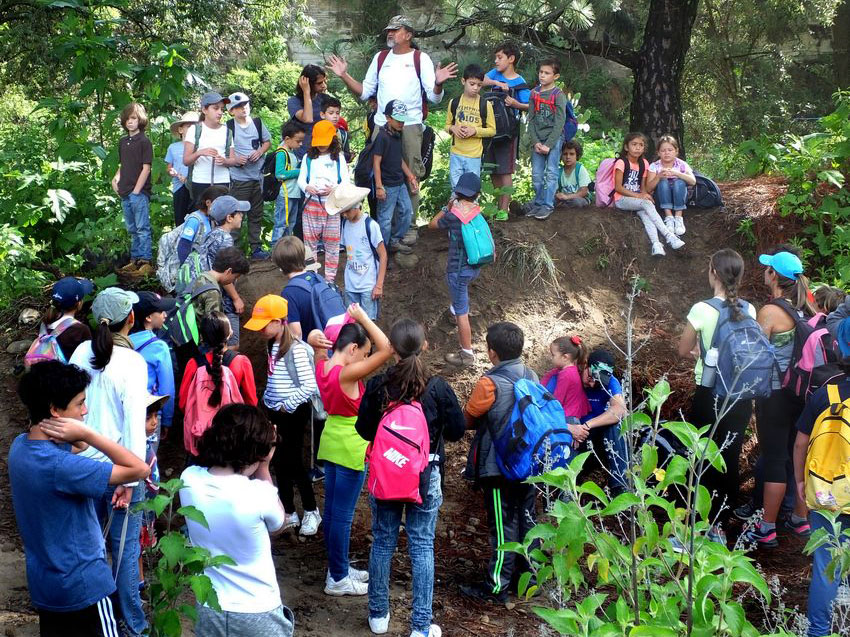
Curious to see this school in the woods, I caught up with Moreno one summer day at a wide, flat clearing in the sprawling Primavera Forest, located due west of Guadalajara. There were over 70 kids sitting out there on a carpet of pine needles, intently concentrated on — well, on the shadows of sticks, which they had pushed into the ground in a standing position.
“What are you doing?” I asked one of the children.
“Chuy showed us how to make sundials,” she told me, “and now we’re in the middle of a competition to see who can make the most accurate sundial, which involves marking the position of the shadow very exactly . . .”
“. . . and we’re also learning how to use our sundials to find north,” chimed in another girl.
“OK, now tell me something else you learned this week,” I asked.
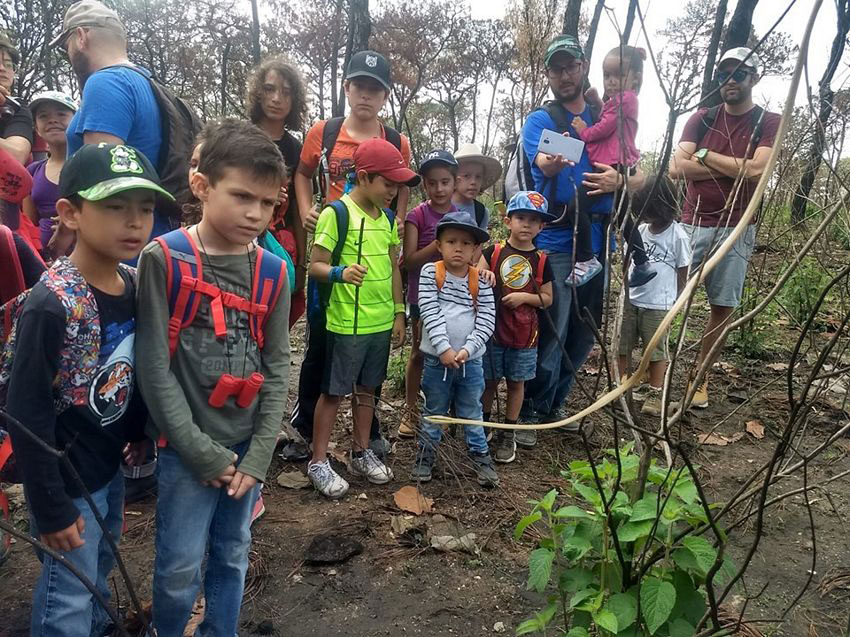
Meeting the Mexican vine snake in its home.
“Well, we learned the names of a lot of plants and we had a contest to see who could build the most resistant shelter out of branches and brush.”
“Last week, we had some big storms,” I replied. Did your shelter protect you from the rain?”
“Bueno, not much.” confessed one girl, “but I didn’t care because the rain was so lovely.”
Next, I struck up a conversation with Andrea Borrayo, one of several adults who were assisting Moreno in managing this school-in-the-woods. She told me she has been attending these courses since she was 10 years old, “and now I am 35,” she said, making her the ideal person to comment on the results of this program.
“This is my story,” she told me. “As a child, I lived in Mexico City and I spent my time watching TV and doing what all city kids do . . . and I didn’t know one single thing about nature. But I moved here to Guadalajara and went out into the woods with Chuy Moreno and we collected butterflies, we crossed deep canyons and we learned a lot about nature and I underwent a radical change in all my tastes!
“As a result, I went off to study agronomy, of all things. When I first came to these courses as a girl, I had no goal in life, and now I’m a biology teacher. So, comparing studying from a book in a classroom to going out into the woods to experience things first hand, I can say for sure: what you do out in nature stays with you; those remain the important things in your life.”
[soliloquy id="85726"]
Borrayo went on to say that the unprogrammed events which occur in the woods often turn out to be the best moments of all. “Yesterday we came upon a lizard and her eggs. The children drew pictures and there was much talk about how best to care for the eggs, because they were in an exposed place.
“Unplanned experiences like this are often the most meaningful, the richest experiences. Many of the kids actually took an egg home, to care for, to observe what would happen and to keep a record of everything they could learn.”
Every morning, under a spreading oak tree, Chuy Moreno goes over the rules for spending a day with him in the woods. Just listening to this talk gives some idea what sort of experience the kids are getting. “Stay on the trail that I’m using,” he says. “After the big forest fire a few months ago, little sprouts and mushrooms are just beginning to appear, so we don’t want to go stomping on them.
“The most dangerous creature in the woods as far as you are concerned is the scorpion, so the No. 1 rule is never put your hands where you can’t see them, for example into a pile of dry leaves. And if you climb a tree, watch where you put your hands because scorpions also enjoy climbing trees.
“As for snakes, we’ve seen a lot of them over the past few days, but so far no rattlers. If we spot a snake today, call me before you touch it. A lot of you are now good at identifying snakes, but sometimes they don’t look quite the same as the picture in the field guide . . .”
While following Moreno and the kids through the woods, I struck up a conversation with one of the adults in the group. I asked him if he was one of Chuy’s assistants.
“No, I’m here as a parent, with one of my daughters, but 20 years ago I was one of these kids and I can tell you it was — and still is — amazing to walk through the woods with Chuy. He tells us all about everything we see, always with a great sense of humor.
“I’m an architect, but I think I learned more from being in the woods with Chuy than I did in the university. In fact, I would say half the students in my class, when I was younger, ended up becoming biologists, all because of Chuy . . over the years I’ve met a lot of other biologists and researchers in the natural sciences who told me they chose their career precisely because of Chuy’s summer courses. So in my opinion, I think the University of Guadalajara should erect a monument to him!
The writer has lived near Guadalajara, Jalisco, for more than 30 years and is the author of A Guide to West Mexico’s Guachimontones and Surrounding Area and co-author of Outdoors in Western Mexico. More of his writing can be found on his website.
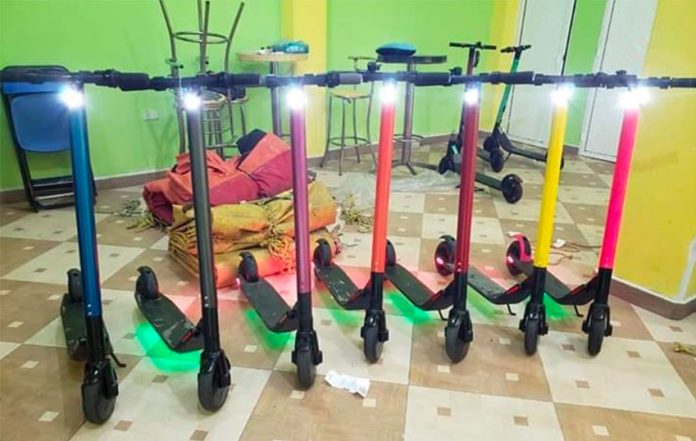
Scooters for sale look a lot like those belonging to Grin.
Ads selling electric scooters stolen in Mexico City have appeared on social media but one scooter rental company warns potential buyers to not waste their money because they won’t work very long.
Scooters owned by Grin, which has been forced to temporarily suspend its rental service due to theft, are being sold on Facebook and other social networks for between 3,000 and 3,500 pesos (US $155 to $180), according to a report published on the technology news website Xataka.
About 350 of Grin’s scooters — 20% of its stock — have been stolen since the Mexican company started operating in the capital 15 months ago. A large number of the thefts occurred in recent weeks.
Describing theft as the greatest challenge to its operations, Grin announced on Tuesday that it had decided to immediately “pause” its services.
Xataka said it contacted three people who were selling Grin scooters on Facebook, including one person who appeared to have at least six of the stolen vehicles.
All have been painted colors other than green to prevent their easy identification as the property of Grin.
One vendor in the eastern borough of Iztapalapa told Xataka that the scooters he was selling come with a guarantee and work without any problems.
Another vendor in Coyoacán said he sold scooters stolen from both Grin and Lime and assured Xataka that their global positioning systems had been removed so they couldn’t be tracked.
He too said they work without any problems, explaining that they had been unblocked and would remain that way.
However, Grin’s communications director told the newspaper El Financiero that buying a stolen scooter was akin to throwing money down the drain.
“. . . You won’t get any guarantee it will work. A specific charger is needed that can’t be [easily] obtained. There’s no guarantee that the scooter will work for more than three or four rides,” Beriana Mendoza said.
“Don’t make the decision to buy one of these scooters because you’ll be throwing your money away,” she warned.
Despite the claim about the difficulty in obtaining chargers, the Coyoacán-based vendor said he supplies original versions with all the scooters he sells.
Mendoza said Grin has located a lot of its stolen scooters via GPS but explained that most won’t be retrieved because they are in dangerous parts of Mexico City and the company refuses to place their employees in risky situations.
Instead Grin is collaborating with local authorities to develop schemes that prevent theft, she said, adding that the company’s scooters are expected to be back on the streets in two to three weeks.
Before their withdrawal, Grin was the only e-scooter company operating in Mexico City with a license.
Grin paid the capital’s Transportation Secretariat 14,000 pesos for each of the 1,750 scooters it placed in certain neighborhoods, meaning that its total outlay for operational permission was 24.5 million pesos (US $1.3 million).
But instead of recouping its costs and building on its profits, it is thieves who are currently benefiting from the company’s decision to enter the Mexico City micro-mobility market.
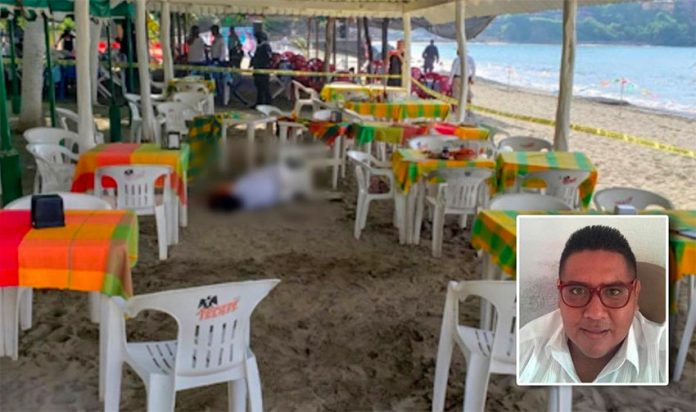
Nava, inset, and the crime scene today in Zihuatanejo.
A Guerrero journalist who was also worked as a local official was murdered Friday in the tourist destination of Zihuatanejo, Guerrero.
Edgar Alberto Nava was the publisher of local media outlet La Verdad de Zihuatanejo, which is active on Facebook and covers crime and politics, and the municipal director of performances and regulations.
Nava was leaving a children’s event organized by the city on the beach near the Costa Grande Museum when he was shot by a lone gunman.