Home Blog Page 1971

Unusual storm buries parts of Guadalajara one meter deep in hail on Sunday

0
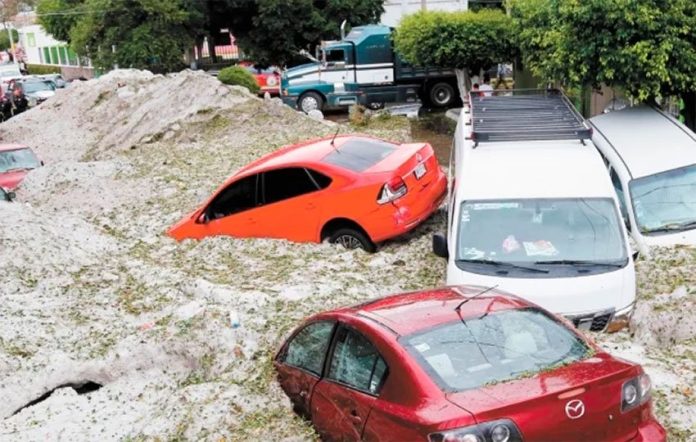
Winter wonderland in Guadalajara Sunday morning.
Winter chaos in Guadalajara Sunday morning.

Parts of Guadalajara were buried in ice more than a meter deep yesterday morning after a heavy hailstorm that damaged at least 450 homes and 60 cars.

The storm began at around 1:30am, blanketing streets in neighborhoods in the southwest of the Jalisco capital such as Rancho Blanco, Álamos Oriente and Álamo Industrial in a thick layer of ice.

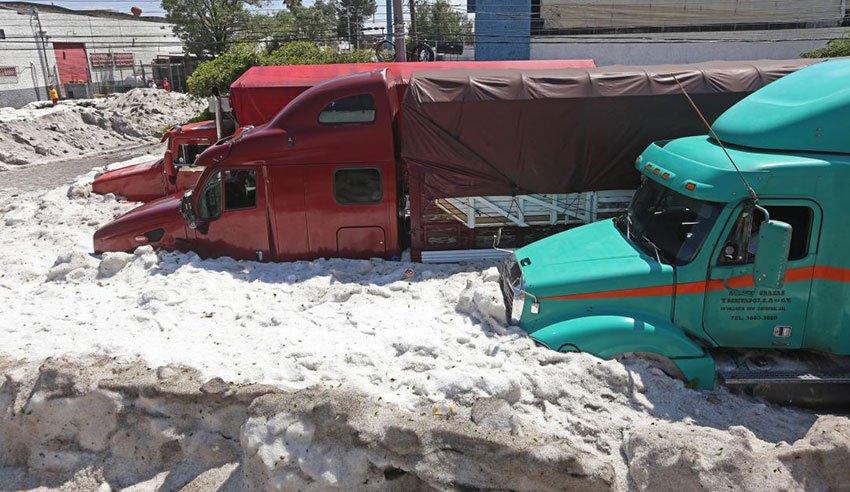
Some cars parked on affected streets were completely buried in the hail, while scores of other vehicles including large trucks were stranded by the freak storm.

The hail also blocked drains, preventing the escape of rainwater, which caused flooding in several areas of the affected neighborhoods.

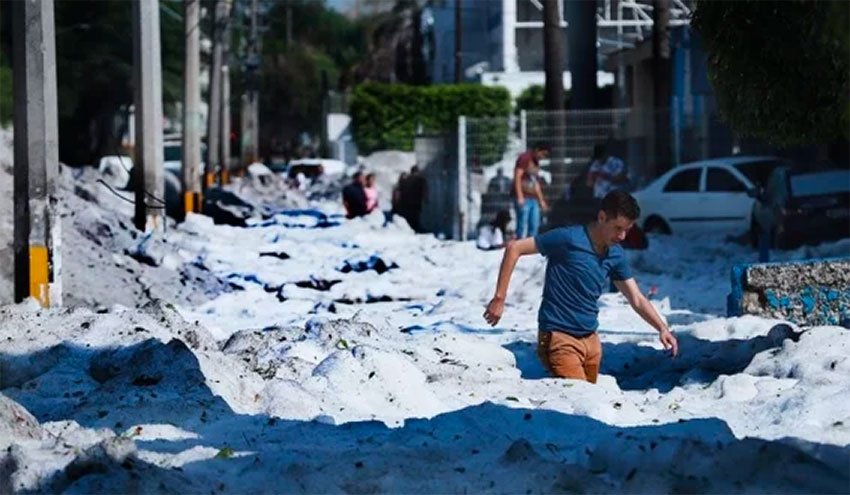
Photographs of the masses of hail and the damage it caused began appearing on social media early yesterday morning. Many people expressed incredulity about the situation in which they awoke. Other images showed children playing in what appeared to be a winter wonderland.

The hail was up to a meter deep in some areas.

Jalisco Governor Enrique Alfaro posted several images to his Twitter account of authorities working to clear the hail from streets using both heavy machinery and shovels.

“In coordination with the Mexican army and the municipal authorities of Guadalajara and Tlaquepaque, the Jalisco government is working on the clean-up and removal of hail from public streets as well as supporting citizens who suffered damage to their homes,” he wrote.

In subsequent posts, the governor blamed the storm on climate change. He said there were no reports of any injuries or deaths, although Civil Protection authorities said later that two people were treated for early signs of hypothermia.

“Very early, before going to Mexico City for the launch of the National Guard, I was on the scene to evaluate the situation and I was witness to scenes that I’d never seen before: hail more than a meter high, and then we wonder if climate change exists,” Alfaro wrote.

CNN meteorologist Michael Guy said that low pressure systems extending south from the Mexico-United States border had been forecast to contribute to storms along the boundary separating different air masses.

“Once these storms developed, all the ingredients came together for there to be this strange hailstorm over Guadalajara,” he said.

Unusual summer morning in Guadalajara.

Guy also said that the city’s location at more than 1,500 meters above sea level contributed to the rapid development of the hailstorm.

“. . . This was a case where atmospheric and topographic ingredients came into play to cause a freakish hail storm,” he said.

Residents of San Miguel de Allende, Guanajuato, awoke to similar scenes this morning.

Heavy hail fell over the city in the early hours, leaving streets blanketed in white while floodwaters almost half a meter deep have been reported in some streets in the downtown area.

Mayor Luis Alberto Villareal said on Twitter this morning that municipal and Civil Protection authorities are responding to the situation to “protect the well-being of all San Miguel de Allende residents.”

There have been no reports of injuries or casualties.

Source: El Universal (sp), Milenio (sp) 

Hail on a highway Monday morning in San Miguel de Allende.

Sargassum-hunting team of engineers, biologists develop tracking software

0
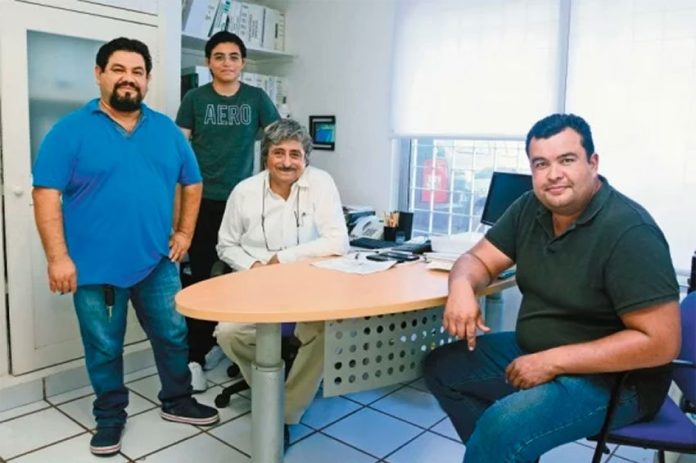
Four members of the team behind the sargassum monitoring network.
Four members of the team behind the network.

The name Cancún sargassum monitoring network is one that is popping up with more frequency in reports on the Quintana Roo sargassum invasion.

But they have no government connection; they are 12 engineers and biologists who have volunteered their time to create a software program that collates information about the seaweed’s location at sea, and predicts what part of the coastline it will affect.

Esteban Amaro, a marine biologist and chief of the monitoring network, told the newspaper El Universal that the software processes both satellite images and data collected during fieldwork.

The team first began working on the project in 2015, he said.

“We’re a team of 12 people, information engineers, electromechanical engineers, biologists, marine biologists, even geologists and an oceanographer. Each person works in their area and at the end we create a complete report with various points of view,” Amaro said.

Information about ocean currents and tides is also entered into the software program, which along with the satellite images and data collected by biologists at sea, allows the formulation of a prediction about where on the coastline sargassum will arrive.

Amaro said the software-generated prediction is accurate 95% of the time and that the forecast comes up to 72 hours before the sargassum arrives. The software is currently in the process of being patented.

Amaro revealed that since the start of the year the sargassum monitoring network has fed information supplied by members of the public into the software program to help improve the accuracy of its predictions.

“In the beginning, we were a closed network . . . [but] at the start of this year we started to operate in an open way, people started to send us photographs of the places where they detected sargassum. We’ve managed to create a very complete database,” he said.

The biologist said the software is also connected to a range of websites that provide information about weather conditions, ocean currents and other factors that affect the movement of sargassum.

The National Meteorological Service, the United States navy, NASA and even Google Earth are among the suppliers of data.

Sargassum monitoring networks at the University of South Florida and in Caribbean countries including Barbados and Jamaica also provide information that assists the seaweed-tracking team.

Once the software generates a prediction, “we send alerts about where the sargassum will arrive so that the authorities can” prepare to combat it, Amaro said.

The 48-year-old biologist explained that the members of his team, all of whom studied at the Metropolitan Autonomous University in Mexico City, are not paid for their work but do it out of altruism.

“We’re like an NGO, we don’t receive a salary so we work according to each person’s [available] time . . .”

Source: El Universal (sp) 

Food company’s contest identifies Mexico’s five best salsas

0
Salsa winners Angelina Ambrosio, left, and Silvia Mendoza.
Salsa contest winners Angelina Ambrosio, left, and Silvia Mendoza.

Mexico’s best salsas have been selected through a competition that invited the participation of salsa makers from all over the country.

“Presume tu salsa” (Show off your salsa) is a contest that was launched in 2017 by the food and beverage company Grupo Herdez to identify the best salsas from five different regions.

The competition was steep. In a first round, hopefuls were required to send a written copy of their recipes to a committee supervised by chef Jonathan Gómez Luna. Next, the committee narrowed down the recipes from over 12,340 to just three from each of the five regions.

For the next step, the authors of the recipes were required to prepare their salsas for a panel of judges that included recognized chefs, who assigned first, second and third place to the selected salsas from each region, each of whom received prize money of 100,000, 50,000 or 25,000 pesos respectively.

Additionally, the first-place winners of the competition have seen their salsas — in many cases treasured family traditions or a cook’s special recipe — bottled and sold in stores throughout the country, and featuring the name of the cook.

The five winning salsas, now on supermarket shelves.

“Mexico is a country with a very important cultural and gastronomic diversity; there are certain recipes that are often very unique to certain regions, and so we gave ourselves the task of looking for the salsas that they make in those places,” said Dafne Maya of Grupo Herdez.

Angelina Ambrosio, winner of the best salsa for the southeastern region, now being sold by Herdez as Salsa La Picante, said she uses her salsa for her food stand in Oaxaca.

“My salsa comes from my ancestors, but I continued to develop it a bit more because previously it wasn’t as spicy as it is now. It’s made from a base of dry chiles along with garlic and other ingredients very easy to find in the market, but Oaxacan traditions give it a very flavorful touch.”

Silvia Mendoza from Guanajuato was the winner of the best salsa for the western region. She describes herself as a traditional cook who endeavors to diffuse old and modern gastronomic traditions from Pénjamo, Guanajuato, including her salsa, which is made from a base of nopal and xoconostle, the fruit of the nopal.

“It’s a very common salsa in this region, but since it is very elaborate [to prepare], it is being lost.”

She added that she was proud to see her salsa on the shelves of supermarkets — where it bears the name Salsa Asada — and that thousands would have the opportunity to try the traditional flavors of her region.

“Wherever there are proud Mexicans, there should also be tortillas and a great salsa.”

Source: sipse.com (sp), Milenio (sp)

Contracts worth 500 million pesos awarded for National Guard uniforms

0
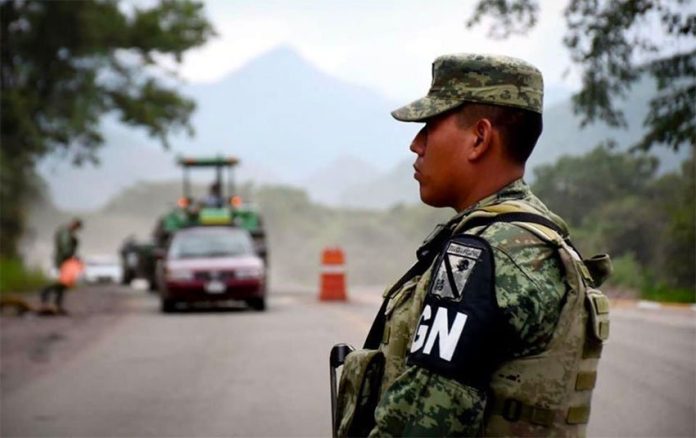
national guardsman
On the waiting list for a uniform.

The National Defense Secretariat (Sedena) has approved contracts for 535.8 million pesos (US $28 million) to buy materials for uniforms for the National Guard.

The cost of uniforms for the first 30,000 guardsmen will be almost 18,000 pesos each.

One of the contracts is a 357-million-peso deal with the company México Montecitos to provide metal plates for over 30,000 bulletproof vests.

Sedena also approved 11 contracts with six different companies that will provide almost 455,000 meters of cloth to make uniforms, at a cost of 38.4 million pesos.

Other businesses were awarded 47 million pesos’ worth of contracts to supply shoelaces, belts, buttons, zippers and thread.

The contracts only cover the purchase of materials; a division of the defense department will make the uniforms.

Guardsmen who who already been deployed can be identified only by an armband with the security force’s initials GN, for Guardia Nacional.

Around 70,000 members of the Guard will be deployed around the country on Sunday.

Source: Reforma (sp)

One officer wounded in attack on Guaymas police station

0
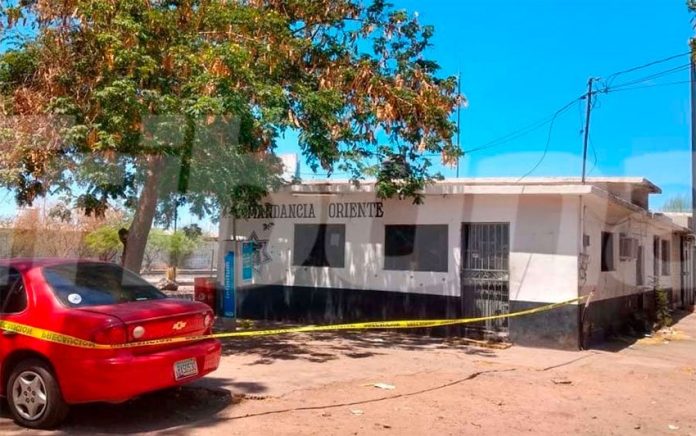
The Guaymas police station that was attacked by gunmen.

It was a violent day yesterday in Guaymas, Sonora, where a police officer was injured and three people were killed in three separate incidents.

A municipal police station in the Punta Arena neighborhood was attacked by armed civilians who fired over 50 shots at the building.

A 38-year-old police officer was wounded.

The attack came eight days after Guaymas comptroller Daniel Morales Pardini — a former police officer — was murdered along with an aide as they were leaving municipal government headquarters.

At about the same time as the Punta Arena attack, a man was murdered in Nacionalización del Golfo.

In the Linda Vista neighborhood, a man and a woman were murdered. The man was shot and killed but the woman was first struck with a bat before being shot in the head.

No arrests were reported.

Source: Reforma (sp)

Forget 4% growth target, says Carlos Slim, urging focus on investment

0
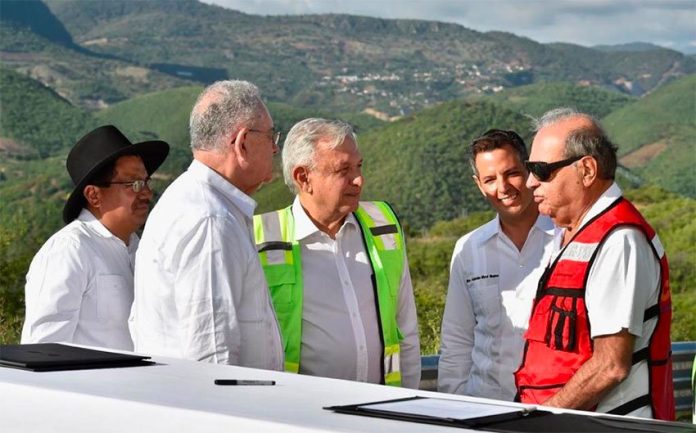
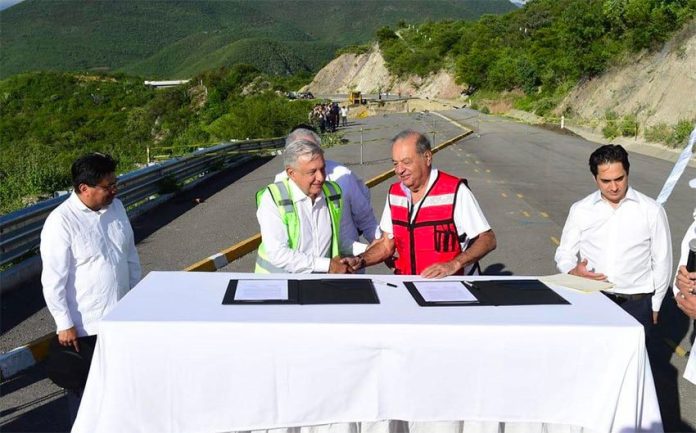
López Obrador, center, chats with Slim, right, while signing a highway construction contract on Friday. Between them is Oaxaca Governor Alejandro Murat.

President López Obrador’s target of 4% growth during the government’s six-year term in office should be forgotten for 2019, according to billionaire businessman Carlos Slim.

However, in an interview with the newspaper Milenio, Slim said that he has confidence in and supports all of the government’s plans, and that the López Obrador administration cannot be blamed for insecurity problems because it inherited them from its predecessors.

The businessman described the president’s plans for the country as very ambitious, adding that as they are directed towards the development of the country they should be supported by all Mexicans.

Some of the plans will take longer to realize than others, Slim said, such as those aimed at boosting economic growth and reducing rates of violent crime.

Asked to offer an opinion about ratings agencies’ low expectations for the Mexican economy – Fitch reduced its growth forecast to 1.6% earlier this year and this month downgraded Mexico’s sovereign debt rating to one notch above junk status – Slim responded:

“I don’t know but we have to forget about growth [targets] in 2019, whether it’s 0.5%, 0.7% or 1.1% is insignificant. The important thing is for there to be a proposal for projects so that the national and international sector invests.

“The advantage is that international investors are interested in investing in Mexican infrastructure projects, the important thing is for there to be investment. If there is investment there is growth . . . if there isn’t [investment] there’s no economic activity, employment or growth.”

Slim, the majority owner and chairman of Grupo Carso, América Móvil and Telmex, said he supported the government’s plans for the south and southeast, which include the Maya Train project on the Yucatán peninsula, construction of a new oil refinery on the Tabasco coast and the establishment of a trade corridor across the Isthmus of Tehuantepec.

“I believe that it is attractive and even the responsibility of everyone for the southeast to grow, a lot [of money] should be invested in the southeast, economic standards in the southeast need to improve, we have to provide a lot of education and employment. They’re the two essential things, a society with knowledge has a lot of opportunities to grow,” he said.

With regard to insecurity, Slim said there is no “magic wand” to reduce the stubbornly high levels of violence but added that to make inroads, the nation’s young people need options that will lead them away from a life of crime.

“They need to have hope, employment, [opportunities] to study, to play sports. That’s essential so what we have to do it create jobs for young people so that those who don’t have anything to eat don’t have to be stealing and doing unfortunate things . . .” he said.

Slim also indicated his support for the government’s austerity measures and crusade against corruption, stating that it is something with which everyone is “fed up.”

“Excessive spending of the federal government and state governments along with corruption stops money getting to those who need it the most, it prevents it from being used for social programs in marginalized areas . . .” he said.

Finally, Mexico’s richest man said it was too soon to judge the government’s performance, suggesting that the president should be given at least a year in office before he is subjected to appraisal.

Source: Milenio (sp) 

Long overdue Oaxaca highways will be completed: AMLO

0
López Obrador and Slim sign a contract on the partially built highway between Mitla and Tehuantepec, Oaxaca.

The six-hour trip from Oaxaca city to the coast on winding rural roads may soon be a thing of the past.

On Friday, President López Obrador announced that work will restart on two Oaxaca highways that had been suspended.

Construction of the Barranca Larga-Ventanilla highway, which will connect the state capital to Puerto Escondido, had begun during the administration of president Felipe Calderón, but work has been carried out in fits and starts since, held up by financial problems among the contractors and accusations by rural landowners on the route that they had not been fully paid for their land.

Politicians have repeatedly promised completion of the highway, with the most recent declaration in March 2018, when authorities gave a completion date of November this year.

The new date, according to President López Obrador, is 2022.

“This is such an important highway, because it goes to the coast, to Puerto Escondido,” he said. “This highway was started 10 years ago, but was interrupted, it was discontinued. And now, we’re making a formal commitment to the people of Oaxaca that this highway will be finished by 2022.”

With an investment of 8.3 billion pesos (US $431 million), the Oaxaca-Coast highway will drastically reduce the travel time from Oaxaca City to Puerto Escondido from six to 2 1/2 hours.

Parts of the highway will be built by the residents of the communities it passes through, and without the use of heavy machinery to generate a greater benefit for the region.

López Obrador also announced that work will restart on the Mitla-Tehuantepec highway, which will better connect the state capital to the Isthmus of Tehuantepec. He said the highway will be completed within 40 months.

The president signed an agreement with businessman Carlos Slim, under which companies owned by Slim will build much of the highway with an investment of 8 billion pesos, while the federal government will invest 3 billion.

In an interview with La Jornada after the agreement was signed, Slim said that highways and other infrastructure projects in southern Mexico are important to improve the standard of living in the region.

“There need to be a lot of projects,” he said. “We need to develop the railroad, the port, the refinery, and it should be financed by public and private money. We need to promote development in this region.”

Slim also spoke positively of López Obrador’s goals to fight poverty and corruption and create economic growth.

“We can’t agree more with those goals,” he said. “I am enthusiastic about them and I think they’re very good.”

Source: El Universal (sp), Milenio (sp), La Jornada (sp)

Migrants accuse immigration agents of extortion at northern border

0
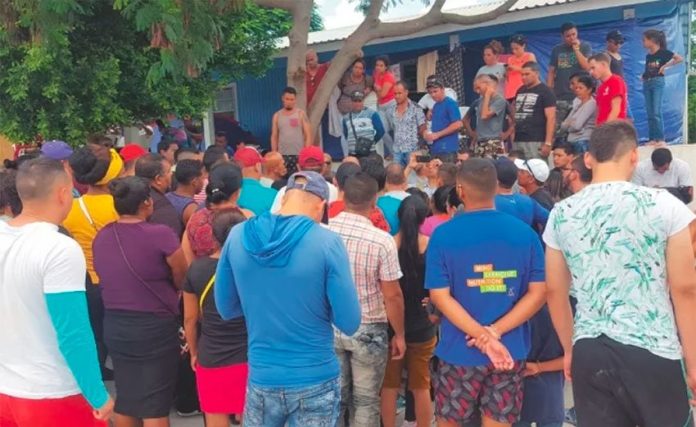
Migrants protest corruption among immigration agents in Tamaulipas.

Migrants waiting at a shelter in Reynosa, Tamaulipas, for an opportunity to apply for asylum in the United States have accused immigration agents of charging up to US $1,500 to expedite the process, a situation they say has left them stranded in the border city with no certainty about when their cases will be heard.

According to the largely Cuban and Venezuelan migrants currently staying at the Casa Senda de Vida (Path of Life House) shelter, National Immigration Institute (INM) agents are not respecting the lists given to them by United States authorities which name the migrants they will process on any given day under the so-called “metering” system.

Migrants told the newspaper El Universal that United States Customs and Border Protection (CBP) used to provide the lists to Casa Senda de Vida director Héctor Silva, who would take those called to the McAllen-Hidalgo-Reynosa International Bridge.

Before they proceeded to the Hidalgo, Texas, port of entry, Silva would take photographs of the migrants, which he then sent to CBP to confirm that the people crossing the border were in fact those who were summoned.

Up to 50 migrants per day were admitted to the U.S. under the system.

However, migrants and volunteers at the shelter said that for the past two months, only INM agents have received the CBP lists on which the would-be asylum applicants staying at Casa Senda de Vida appear.

Mexican immigration agents have taken advantage of the change by excluding some of those named and replacing them with other migrants not staying at the shelter who have paid between US $1,200 and $1,500 for the privilege of having an expedited appointment with United States authorities, they said.

“They come to Senda de Vida and take migrants to the international bridge but on the way, they pick up more people who are also presented to the CBP,” migrants and shelter staff told El Universal.

“We saw that the transfer of people decreased from Monday to Saturday, we began to ask why and discovered that halfway there the agents picked up more people, that’s why the number of people they took from Senda de Vida went down.”

The migrants said the situation has left them feeling desperate and helpless.

Although some are paying agents a hefty fee to present their asylum requests without having to endure a lengthy wait, that doesn’t guarantee that the CBP will hear their cases, a Cuban man said.

“On Monday, 10 women left here [the shelter], my mother-in-law should have left that day but she didn’t go until Tuesday. When they [the 10 women] reached the American side, they were arrested because other people had been picked up that weren’t those the CBP had asked for,” he said.

“After they were arrested, my mother-in-law spoke to two of them and they told her that they were detained because they [the migrants not from Senda de Vida] weren’t on the list . . . I told Héctor Silva what was happening, that [the INM agents] even go to hotels to pick up the migrants. They’re not staying at Senda de Vida and that’s why they’re not on the lists that the CBP sends,” the migrant added.

He said it was possible that migrants staying at the shelter won’t ever have the chance to plead their cases for asylum.

A Venezuelan man who arrived in Reynosa six weeks ago with his wife and two children expressed a similar sentiment, telling El Universal that he feared being stuck in the border city indefinitely.

“We can’t imagine when my family’s turn will arrive because we’ve heard that they’re paying up to US $1,500 . . . It’s time for an investigation about these cases, there are people who have been here longer than me, up to 90 days,” he said.

The INM declined an interview request from El Universal to respond to the corruption claims.

In February, the immigration institute’s delegate in the city was dismissed after being accused of charging migrants US $3,500 not to be deported.

Source: El Universal (sp) 

With a snide voice the GPS said we were at the airport: before us was a landfill

0
landfill
When the GPS said Bodie had arrived at his destination, the airport, it looked more like this.

On the cover of The People’s Guide to Mexico by Carl Franz, Carl proudly displayed his motto, “Wherever you go, there you are.”

For many years I thought this to be hippie babble, the type of phrase born from the colorful contemplation during an altered state. However, it took several years of living in Mexico for the true beauty of this proclamation to awaken my snoozy hamster.

To not feel the need to be anywhere other than where I am is a very Mexican thing as well as a liberating state of mind. But there are times when one should be in a particular place at a particular time, even if one is enjoying the laid-back life in Mexico.

If you happen to be in a Mexican town or city, finding your way around can either be a rewarding cultural excursion which becomes an afternoon of simple joy never to be forgotten, or a mind-wrenching odyssey filled with fear and apprehension.

You will soon discover some streets have no signage with street name or direction of traffic flow. And, I have discovered the hard way, that some street names are used more than once, even quite close to each other, and some streets change names every few kilometers.

However, at the end of the second decade of the 21st century, more and more people depend on the latest gadgetry with a multitude of apps to guide their every step in our modern world. From general information to communication to cartography, the smartphone, with its instantaneous repartee in response to your every caress, has taken even Mexico by storm.

The need to be fully engaged at all times with this handheld device is so obsessive in some people they literally die a violent death while clutching their smartphone. Laws against texting while driving have been adopted by most first world nations, but here in Mexico I don’t think such laws have been passed.

If I’m wrong and even if there are such laws, I would expect that enforcement would be sporadic at best.  I have never seen anyone pulled over for phone use while driving. On the other hand I have countless times seen police using phones while driving or riding.

Having a high-speed encounter with a distracted driver is one of the many dangers people face on a daily basis here.

Another techno development, given the number of similarly named streets everywhere, is becoming hopelessly and helplessly lost while using Google Maps in an urban area. Things can go wrong with this technology anywhere, but in a place with many of the same street names, there are increased opportunities.

Having only used the analog version (printed road maps) to get around in my life beforehand, I was a bit suspicious when the Captured Tourist Woman requested a GPS for the car we rented in Tijuana several years ago.

It was my first brush with GPS. We were headed into southern California for a few days and she assured me that our new digital companion would guide us through the labyrinth of freeways and surface streets much better than a paper map.

My first problem with our GPS device was the rather snide voice it used while issuing its directives, as if it was a burdensome task to communicate with the lowly mortals within the vehicle.

We made our way out of Mexico to and then around San Diego and then into LA just fine, with our TomTom GPS perched on the dash of the rental car. However, as we left LA, heading back to San Diego, a detour shunted us into uncharted territory.

I say uncharted because the GPS became confused and kept trying to get us back to where we just came from. If we had not left a deposit on the damn thing, I would have pitched it out the window. That was my first hint that my disapproval of the equipment might be well based.

After retail therapy and live theater enlightenment, we crossed back into Tijuana and followed the directions dictated by our digital companion. As we were headed back to the car rental place, close to the Tijuana airport, problems really began.

Tijuana is a town of almost one and a half million people, so the road system is extensive, and busy in many places. After 10 minutes of driving, I said to the GPS unit, and to the CTW, “I don’t think this is the way to the airport.” The GPS ignored my remark.

The CTW didn’t. She assured me the device knew the streets of Tijuana far better than I did, and exhorted me to follow the directions. After 30 minutes of driving we crested a hill which gave me a panoramic view of the city in my rear view mirror. We stopped and looked back at the city and could see the airport in the far distance.  A glance at the CTW’s watch confirmed that it was unlikely we’d get to the airport in time now.

I firmly believe our GPS was an evil, vindictive device which sensed I did not care for its haughty manner, and took revenge for my disdain. I know it had been waiting for just the right time to plunge us into a neighborhood of tin and tarpaper shanties, all the while confidently urging us further on with a voice I had learned to loathe before triumphantly announcing, “You have arrived at your destination,” as we looked at what appeared to be the local landfill.

As a mostly rational person, it had never dawned on me there could ever be two or more streets with the same name in any town. But apparently when it comes to naming streets here in the land of mole and mota, rationale has nothing to do with it. Wherever you are in Mexico, where there are streets, you can always find a Revolución, or Benito Juárez, and in big cities maybe two or three of them.

I have wondered from time to time what would have happened if I’d orally confronted TomTom when hearing “Recalculating” or “At the next safe opportunity, do a U-turn” or upon arrival at the landfill.

Would I be told something like “You can’t handle the truth?” Or would it the more Mexican “I’m just telling you what I think you want to hear?”

But the Acme Expat Immersion Therapy and Attitude Modification Program has once again allowed me to rise above what might otherwise be a source of great frustration and inconvenience, and instead allowed me to move into a Zen state, in which I can calmly and capably respond to challenges as they arise, utilizing deep breathing and biofeedback techniques.

Thus I can make my way around these days with GPS instructions echoing, and I still enjoy the drive. Of course I take everything the GPS says with a grain of salt, a bit of lime and a shot of tequila.

And this is the approach I recommend. Always remember, if you don’t know where you are going, you may end up someplace else.

The writer describes himself as a very middle-aged man who lives full-time in Mazatlán with a captured tourist woman and the ghost of a half wild dog. He can be reached at buscardero@yahoo.com.

Representatives of 13 countries meet to deal with sargassum problem

0
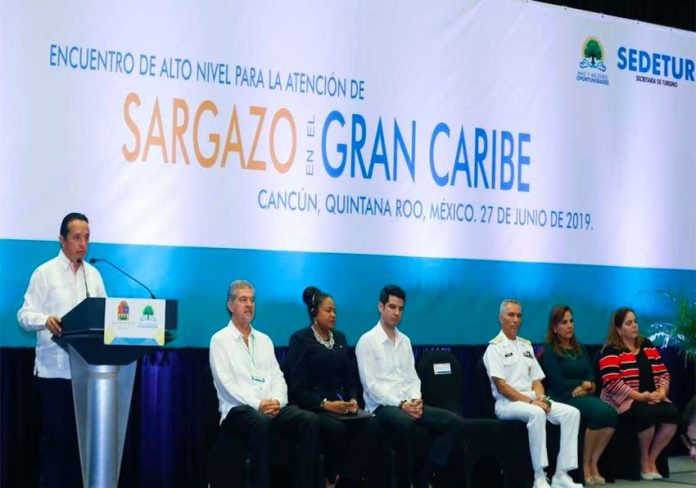
Quintana Roo Governor Joaquín speaks at Caribbean sargassum meeting in Cancún.

Representatives of 13 countries gathered in Cancún this week to discuss a regional strategy to combat sargassum on Caribbean coasts.

Officials from Mexico, Honduras, Nicaragua, the Dominican Republic, Jamaica, Trinidad and Tobago, Haiti, Cuba, Panama, Guadeloupe (a French overseas region), Belize, Guyana and Guatemala attended the event during which they participated in roundtable discussions that also considered the effects of sargassum on tourism and the environment.

Quintana Roo Environment Secretary Alfredo Arellano Guillermo told the news agency Notimex that the aim of the summit was to generate a better understanding of the origin of the sargassum problem, to use that knowledge as the basis for the development of solutions and to identify ways to fund efforts to combat the seaweed’s arrival.

“It’s obvious that this meeting will not solve the problem but it can set the basis for regional coordination and collaboration between the affected countries,” he said.

Among the proposals presented were to provide extra support for research into the sargassum phenomenon and to develop a warning system for the weed similar to that in place for hurricanes.

Beach clean-up at Puerto Morelos.

June Marie Soome, general secretary of the Association of Caribbean States, proposed a revision of the Convention for the Protection and Development of the Marine Environment in the Wider Caribbean Region, a 1983 agreement commonly known as the Cartagena Convention.

“We have to revise it to make sure we have a protocol for invasive species, whether that be the lionfish, sargassum or anything else that is affecting our very diverse region. I believe it is a political decision and political strength is needed in order to be able to deal with this problem” she said.

Soome also said that countries affected by sargassum need to look at different ways to obtain external funding for anti-sargassum strategies given that many of them lack their own resources to stop or mitigate the invasion of the seaweed.

“Our countries are in general small countries with small economies. I represent a lot of small islands, I represent a lot of developing countries in Central America so we need financing to fight against sargassum . . .”

Quintana Roo Governor Carlos Joaquín González stressed that long-term solutions to the problem are needed to stop the negative effects of the seasonal phenomenon on tourism, which is the backbone of most Caribbean countries.

His administration and the federal government expressed conflicting views about the seriousness of the sargassum problem this week.

President López Obrador said Monday that the arrival of sargassum on Caribbean coast beaches is not a serious issue but the Quintana Roo government quickly countered that it is in fact “extremely serious.”

For the federal government, it wasn’t sufficiently serious to send a representative to the Cancún meeting. The only Mexicans present were from Quintana Roo.

Source: Sipse (sp), Notimex (sp)