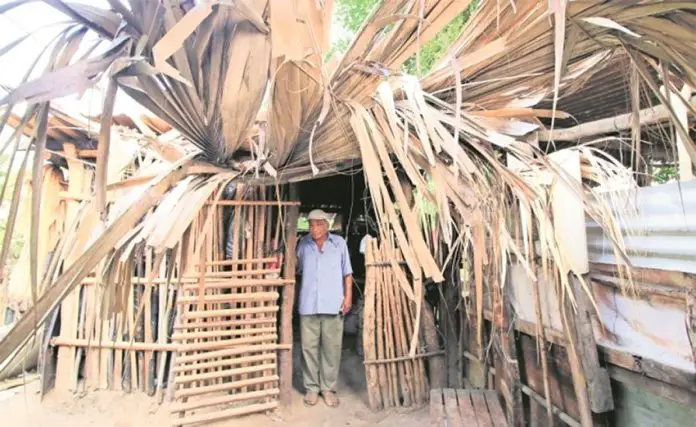
Conditions can be rough in Tabasco, where resistance to paying for electricity continues.
More than half a million residents of Tabasco were told this week that 11 billion pesos (US $573.5 million) they owe to the Federal Electricity Commission (CFE) will be forgiven and that effective June 1 they will be charged the lowest rate in the country.
But the civil resistance movement that led to the accord is not over.
Announced Tuesday by Governor Adán Augusto López Hernández, forgiveness of the debt through an agreement between the state government and the CFE was supposed to represent a new beginning for Tabasco, where 520,000 people joined a resistance movement against the public utility that began in 1995.
But some Tabasco residents maintain that their resistance has not ended and say they will not pay future electricity bills. Others say they won’t pay them unless debt cancelation is extended to small businesses or until members of the government personally explain to them how the new electricity rate will work.
In Buena Vista, an indigenous Chontal town considered the birthplace of the resistance movement – where residents first clashed with the CFE over excessive price rises in 1990 and have even detained utility employees – residents offered reasons why they won’t pay to the newspaper El Universal.
“Take this information to [President] Andrés Manuel. He started the resistance here and we’re holding out . . . Tell him that Buena Vista and [the nearby community of] Tamulté de las Sabanas will continue to resist,” said Primitivo Hernández Hernández.
“There’s no work, where are we going to get money for food, for school for the children, where are we going to get money to pay for electricity, the people here won’t enter [into the new agreement],” he added.
Another resident, José Cruz Hernández, said: “[They have to] explain how this preferential rate deal is going to work. Until a government committee comes and explains . . . everything . . . we won’t enter into it.”
In Tamulté de las Sabanas, a small town around 40 kilometers from the state capital Villahermosa, Ramiro Hernández Valencia said it was unfair that small businesses were excluded from the deal struck between the governor and the CFE.
“. . . I’m not happy, I’m not convinced, resistance will continue here if they don’t give a clean slate and a [cheaper] electricity rate to everyone,” he said.
Local official Saturnino Hernández Hernández said that people are waiting anxiously for the new electricity rate to take effect, adding that López Obrador should visit Tabasco to meet with residents and explain to them exactly how it will work.
People currently receive bimonthly electricity bills of as much as 2,000 pesos (US $104) but many residents, most of whom earn their living from farming or fishing, can’t afford to pay them, he said.
López Obrador arrived in Tabasco today, where he called on residents to be “good citizens” and pay their
CFE bills. The utility, he said, belongs to the people and needs resources to continue providing service.
“. . . it’s not like before when the governors robbed all the money, now there is no corruption . . . [whereas] before those at the top helped themselves with the big spoon, dedicating themselves only to obtaining privileges of all kinds, they didn’t even pay taxes.”
Electricity charges should be seen as “contributions” to the development of the country, he said, rather than “taxes.”
The United States government imposed sanctions today on 11 Mexicans, including a sitting federal judge and a former governor, for their alleged involvement in corruption and links to drug trafficking.
The Department of Treasury said in a statement that Judge Isidro Avelar Gutiérrez was designated under the Foreign Narcotics Kingpin Act because he received bribes from the Jalisco New Generation Cartel (CJNG) and Los Cuinis drug trafficking gang in exchange for providing favorable judicial rulings to their senior members.
It is the first time that a member of Mexico’s federal judiciary has been placed on the kingpin list. Avelar’s access to any financial assets he holds in the United States will be blocked.
Mexico’s Financial Intelligence Unit (UIF) announced earlier this week that they had frozen the Jalisco-based judge’s bank accounts and filed a criminal complaint against him with the federal Attorney General’s Office (FGR).
Treasury said that former Nayarit governor Roberto Sandoval Castañeda was also designated for having engaged in an array of corruption activities such as the misappropriation of state assets and the receipt of bribes from Mexican drug traffickers, including the CJNG.
Sigal Mandelker, undersecretary for terrorism and financial intelligence at the Department of Treasury, said that United States authorities coordinated with their Mexican counterparts to make the new designations.
“Officials such as Isidro Avelar Gutiérrez and Roberto Sandoval Castañeda callously enrich themselves at the expense of their fellow citizens,” she said.
“Whether they are receiving bribes from narcotics trafficking organizations or engaging in a variety of other illicit activities, these and other corrupt officials will face serious consequences including being cut off from the U.S. financial system.”
Treasury said that six other Mexican individuals and six Mexican entities linked to the CJNG or Los Cuinis were designated under the Kingpin Act, while three of Sandoval’s family members and four entities with links to the ex-governor were also named.
Among those designated was Gonzalo Mendoza Gaytan, a senior CJNG member and boss of the Puerto Vallarta plaza who is known as “El Sapo” (The Toad). Treasury said he and his subordinates are responsible for kidnappings and numerous killings.
Mendoza’s wife, Liliana Rosas Camba, was also designated because she “manages business activities and launders drug proceeds on behalf of her husband and CJNG.”
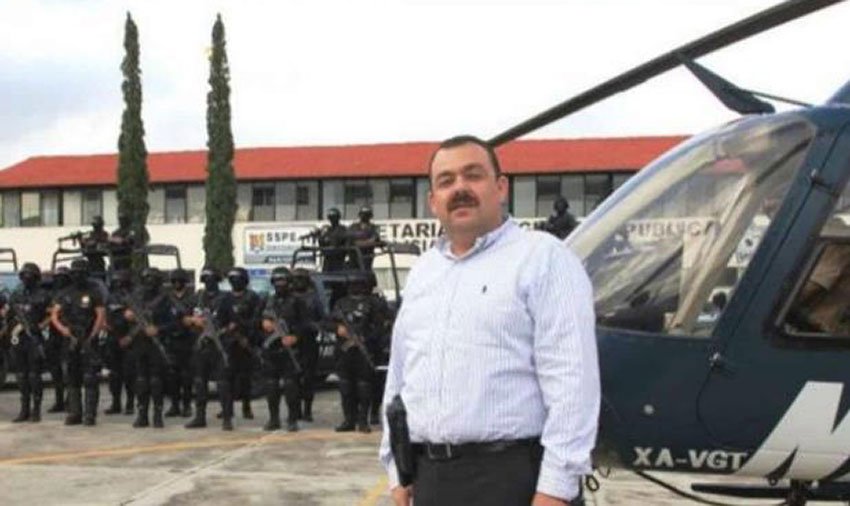
Édgar Veytia was attorney general under Sandoval. He is now in a US prison on drug trafficking charges.
The six designated entities with cartel links are all located in the Guadalajara area. They include three architecture and real estate firms, an organic products company, a women’s clothing store and a restaurant management company.
The wife, adult son and adult daughter of Sandoval, Institutional Revolutionary Party (PRI) governor of Nayarit between 2011 and 2017, were also designated, Treasury said.
“Sandoval Castañeda and his family members continue to enjoy the illicit benefits from his corruption schemes,” the statement said.
The four entities that were designated because they are owned or controlled by Sandoval or a family member were a butcher business, a clothing store, a real estate company and a land-holding foundation.
Treasury said that the access of all designated individuals and entities to any financial assets and property they own in the United States will be blocked.
The designations are not criminal charges but rather administrative actions and don’t guarantee that authorities will seek to prosecute those named.
Sandoval denied today that he had any connection with the Jalisco cartel and said he was innocent of the accusations.
Mexican soccer star Rafael Márquez and singer Julión Álvarez were placed on the United States kingpin list in 2017 but neither faced charges in Mexico.
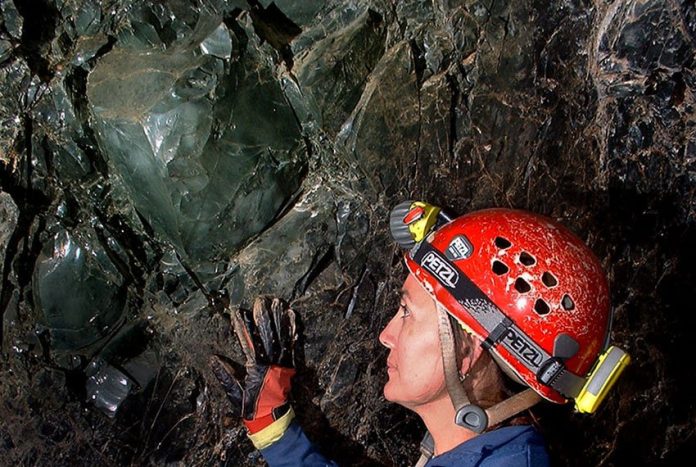
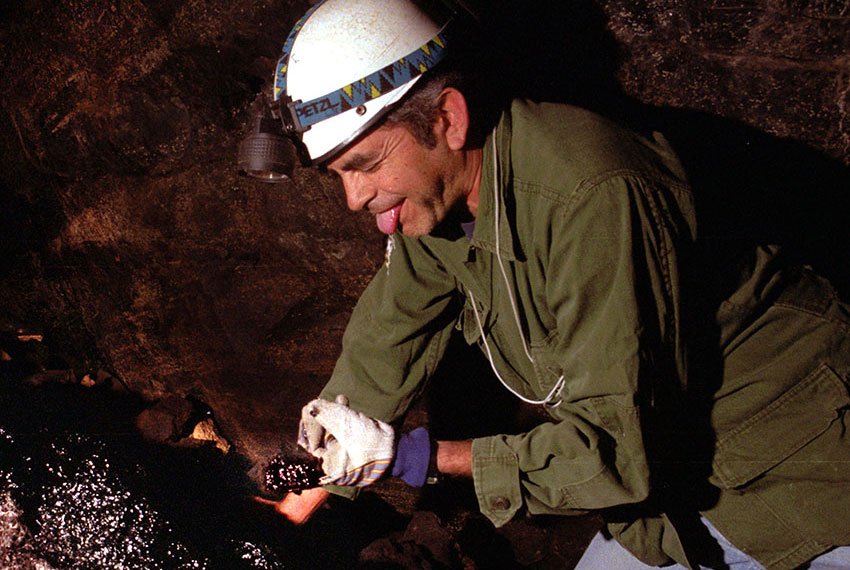
A chunk of green obsidian protrudes from the wall at the end of the mine in San Isidro, Jalisco.
The state of Jalisco hosts the fourth-largest obsidian deposits in the world. In pre-Hispanic times, obsidian was perhaps as valuable as oil is today because from it could be made knives, scrapers and arrowheads, as well as jewelry and mirrors.
Because obsidian was so abundant in western Mexico, a typical mine was nothing more than a hole or trench no deeper than a meter or two and open to the sky.
Today their remains typically resemble shallow depressions, surrounded by the broken bits of tools that didn’t pass muster.
But one day archaeologist Rodrigo Esparza told me about an exception.
“Not far from San Isidro, we found an obsidian mine that’s completely underground and dark as a cave. It’s just the sort of place you would love . . .”
Portrait of Desmodus vampire bat, found in many Mexican caves and mines.
San Isidro Mazatepec is located 13 kilometers west of Guadalajara. Here, members of our Zotz Caving Club found Rodrigo Esparza and Phil Weigand, the legendary discoverer of the Guachimontones, waiting for us next to a beat-up truck.
“This is the first underground obsidian mine we’ve found in Jalisco,” said Weigand, “so it needs to be surveyed and mapped. However, to get inside of it, you have to crawl on your hands and knees through low, narrow passages . . . and we suspect there are plenty of vampire bats inside . . .”
“So you thought of us,” I replied, “but to tell you the truth, it does sound like a place we would love!”
We climbed into the truck bed and the old archaeologist drove us out of town along a dirt road full of ruts. Eventually we passed through a fence on to private land.
“We’ve been riding on an expressway until now,” said Weigand, “but here comes the rough stuff.”
And rough it was. We had to make sure some of us were sitting on two concrete slabs (kept in the truck bed for ballast) so they wouldn’t fly around and land on top of us.
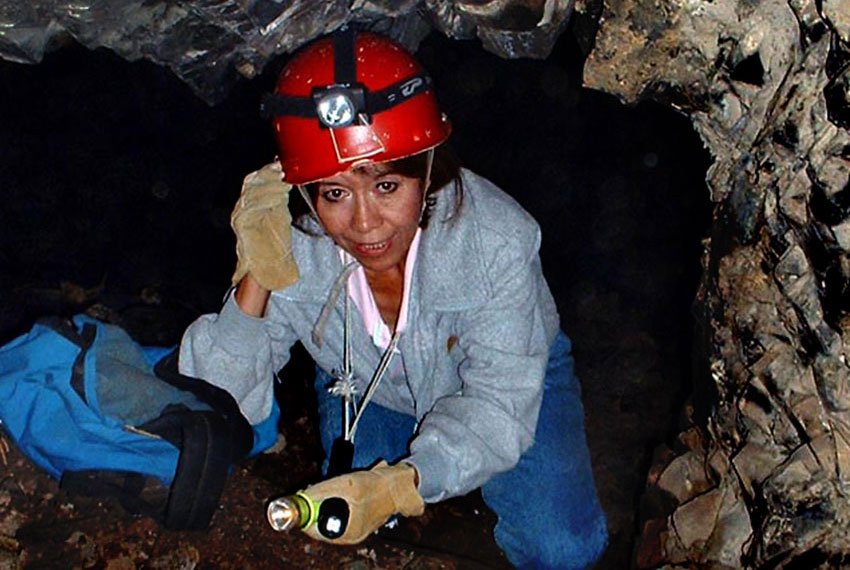
In parts of the mine, the ceiling is less than a meter high.
After half an hour of bouncing and bumping, we pulled to a stop among tall oak trees at the base of a small hill. Pieces of obsidian covered every inch of the ground around us like autumn leaves in New England.
Rubbing our sore bottoms after the hammering they had received on the awful, rocky road, we picked up unfinished arrow and spear heads, knives, flakes, scrapers and other fragments that had obviously been worked on and discarded.
We were standing in the middle of a typical obsidian workshop and it brought home the importance — perhaps unimaginable to us moderns — that obsidian played in the lives of the people living here for most of the last 2,000 years.
Those ancients had no metal tools or weapons but they knew what few people today would believe, that nothing on earth is as sharp as an obsidian blade.
“All other liquids crystallize when they turn solid,” explained Phil Weigand, “except obsidian, which has no crystal structure whatsoever.”
Metal can’t be sharpened less than the size of its smallest crystals, but obsidian has no such limit. In the old days, indigenous Mexicans used to line the edges of their flat wooden sword — called the macahuitl — with obsidian flakes, and it is said it could slice off a man’s leg with one blow.
Several pieces we picked up did indeed have a smoky-green luster and a very shiny surface. “Do you think they made mirrors out of this?” I asked.
“Oh no,” replied Phil. “They only used the blackest obsidian for that because they believed mirrors depict how you will look in the afterlife and black was the color of death.”
Inside the Boudoir of the Vampires.
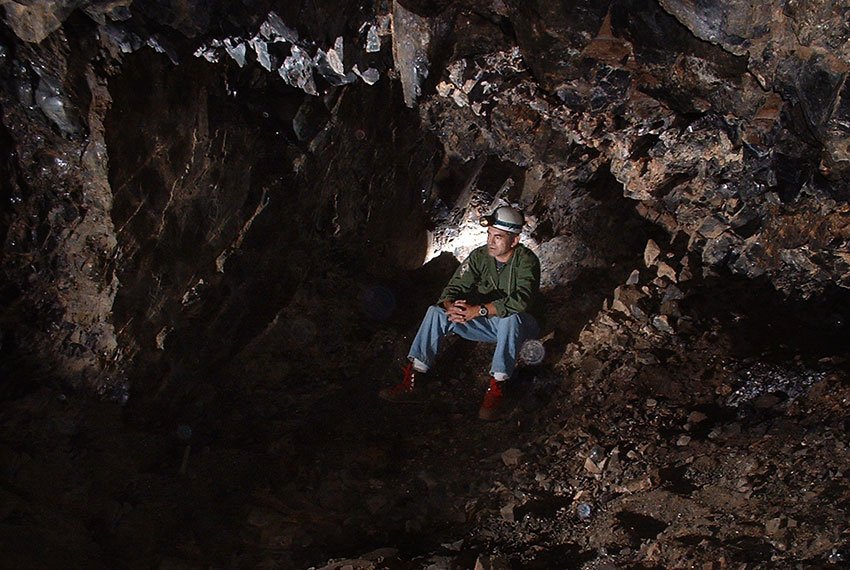
As we discussed death and obsidian, we walked up the hill to the mine. Emanating from the small, triangular entrance hole, barely large enough for a human being to squeeze through, was a light current of air carrying the unmistakable smell of a dead animal inside.
Immediately, it was decided that I would go first into the Smelly Unknown. I wriggled through the small hole and was received by a welcoming committee of little black flies which angrily flew around my head.
As they didn’t bite, I started crawling along until I found myself in a room where the roof was just one meter above the floor. The evil stench was coming from somewhere in here but I couldn’t find the source.
Above me there was a small skylight. A few meters on, in another room where there was almost no daylight, I nearly put my hand into a gooey black puddle that I immediately recognized from so many visits to western Mexico’s caves.
“Yup, we’ve got vampire bats, alright,” I shouted to the others, who were listening at the entrance hole, hoping this would encourage them to rush right in. Of course, the fresh vampire guano added yet another tantalizing odor to the already notable aroma of the mine.
Ten meters from the entrance, I came to a steep down slope. I glanced up at the ceiling and gulped. My headlamp revealed sharply pointed “spears” of obsidian pointing down at me and it looked like any one of them could easily be pulled out — or even fall out by itself — perhaps resulting in the collapse of the entire roof! This was a unique substitute for the stalactites found in limestone caves.
Examination of vampire-bat guano produces a nasty smell.
“Amigos, you have to come in here. This is something you’re never going to see in a cave.”
To my surprise, my compañeros (but not the archaeologists, by the way) did come in, braving the bugs, the decomposing corpse and the slimy vampire guano. By then, I was moving down the slope to total darkness and another, much bigger pool of tar-like vampire goo.
Now, they had told us that this mine was as dark as a cave, but I would say “darker than the darkest cave” because the black obsidian ceiling, walls and floor — with a little help from the vampire guano on the floor — absorbed light even more than the black basalt walls of a lava tube, making it exceedingly difficult indeed to see anything using flashlights and headlamps.
The creatures living in that black room, however, had no problem “seeing” us thanks to their marvelous echolocation skills. All around us we could hear them darting.
Suddenly one would land on the wall near us. In the dim light of our headlamps, we could see it shifting left and right, showing us its fangs, shaking its head menacingly and then flying right at us.
Ah, but we knew about this little trick. It’s all a show and they never actually hit you (much less bite you, which they only do to sleeping or immobile prey).
[soliloquy id="78863"]
One nice thing about this room. which we soon christened “The Boudoir of the Vampires,” was that at last we could stand up and move around easily, truly a blessing as we had been crawling along on the natural equivalent of broken beer bottles: shards of volcanic glass that tinkled every time we moved.
In Stygian blackness we walked down the slope to what turned out to be the end of the mine. And suddenly we were standing at the very last spot where the ancient miners had been at work. This was a perfectly vertical wall.
It was flat, except for a beautiful nodule of creamy-green obsidian — big as a basketball — embedded in the wall and protruding from it.
[wpgmza id=”188″]
What had stopped the ancient miners from prying out this prize? Was it a shout from a fellow worker: “Hey, Mixtli, forget that rock! Some bizarre creatures are coming down the hill, half men and half animals. We have to get out of here — run for it!”
For whatever reason, they left, their job incomplete. We, instead, were able to complete our survey and then we too, left, allowing the old mine to return to its habitual darkness and silence, broken only by the occasional flapping of vampire wings.
The writer has lived near Guadalajara, Jalisco, for more than 30 years and is the author of A Guide to West Mexico’s Guachimontones and Surrounding Area and co-author of Outdoors in Western Mexico. More of his writing can be found on his website.
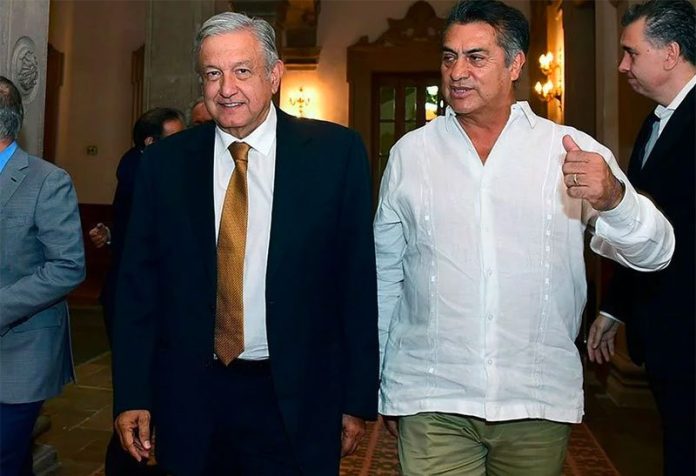
López Obrador and Nuevo León Governor Jaime Rodríguez.
The federal government and the government of the state of Nuevo León signed an agreement on Thursday to improve the state’s transportation system with a suburban train running between the Mariano Escobedo International Airport and the municipality of García.
The agreement allocates 13 billion pesos (US $679 million) for the construction of the new train line, which will include building new tracks as well as establishing right of way agreements with freight trains on existing tracks.
The project will remove from circulation 19 of the 29 freight trains that circulate through the Monterrey metropolitan area.
By 2019, a 62-kilometer passenger route will run from the airport to García crossing five other municipalities in the Monterrey area and stopping at 27 stations.
Communications and Transportation Secretary Javier Jiménez Espriú said the new line will function “under a safe and efficient system of coexistence between public passenger rail and freight.”
According to his department, the suburban train could serve up to 850,000 passengers, including some of the 11 million people who use the Mariano Escobedo airport annually.
In an event to mark the agreement, President López Obrador noted that starting in the early 20th century, passenger rail was important for the development of Mexico.
“At that time, the railroad detonated development in Mexico, and especially in Nuevo León,” he said. “After the revolution, more railroads were built, and all of Mexico was connected by passenger rail.”
The president also lamented the fact that Mexico largely abandoned passenger rail service in recent decades.
“During what we call the neoliberal period, passenger rail disappeared in the blink of an eye, and there are only two lines that remain, both of them for tourists,” he said.
López Obrador added that he hopes projects like the Monterrey suburban train will be replicated across the country.
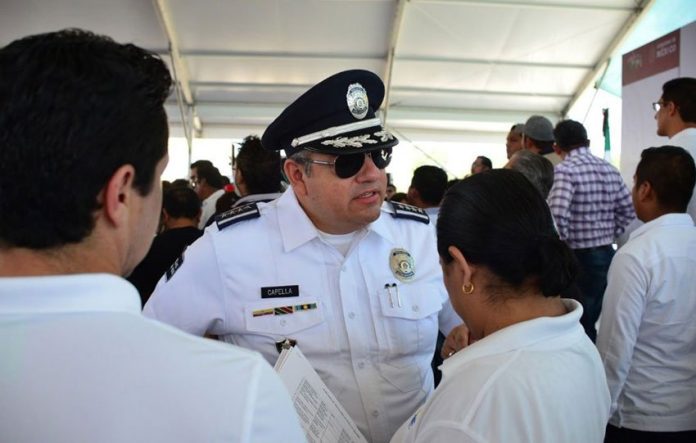
State security chief Capella says Playa del Carmen could be worse than Cancún.
International criminal groups operate alongside powerful Mexican gangs in Playa del Carmen, Quintana Roo, according to the state public security secretary.
To combat the former, Jesús Alberto Capella Ibarra said, authorities will need to work closely with their international counterparts.
He didn’t refer to any foreign criminal groups by name or specify the countries from which international criminals come. But he asserted that they contribute to the high levels of insecurity currently plaguing the Caribbean coast city.
“The situation in Playa del Carmen worries us, it’s a large septic tank with very unfortunate institutional and social decomposition [and] a decades-old criminal presence with criminals who have forced a lot of business owners to make extortion payments,” he said.
In light of a recent spike in violence in the resort city, including an attack on a bar last weekend that killed one person and wounded 11 others, the security chief said that state authorities cannot sit idly and wait for the National Guard to arrive in September or October.
But Capella defended the decision to send in the state’s single-command police force.
“A 200% increase in the number of executions has already been reported. How many more corpses did we have to wait for?” he said.
The secretary demanded that Beristain support the state government initiative, charging that division and conflict between the different levels of government provides “the perfect scenario” for crime to flourish.
“I invite her to leave the quarrel and politics to one side. Let’s concentrate on . . . security. I don’t see any distortion or annoyance among municipal police who, on the contrary, were anxious to feel support and certainty in their jobs and now they have that with me . . .” Capella said.
“In Playa we’re coming in with a significant number of state officers, with a re-engineering of the municipal police, technology and vehicles . . .”
However, the security chief conceded that restoring security to Playa del Carmen “won’t be easy,” stating “it’s a surgical matter of very large proportions, maybe bigger than . . . in Cancún.”
A crime beat reporter in Playa del Carmen, Quintana Roo, was shot and killed yesterday morning.
His body was found at about 7:30am in the parking lot of the bar La Gota. His motorcycle was lying nearby.
Romero was the founder and director of the Facebook news page Ocurrió Aquí (It Happened Here), and worked with several local news outlets.
His work as reporter began four years ago when he witnessed a man steal a water truck and attempt to drive away with it, colliding with several cars as he did so. Romero streamed the incident with his phone, and the clip soon went viral.
The video drew the attention of veteran local journalist Rubén Pat, who sought Romero and together they started the weekly journal Playa News in 2016. Pat was slain last June.
Mayor Beristain of Playa del Carmen.
Romero and Pat’s work put them in the crosshairs of criminal gangs, who threatened them when their faces were broadcast live during an arrest or after they published messages written on narco-banners by rival gangs.
Romero’s recent work covered the police beat and local politics, his friend and colleague Andrés Palafox told the news website Animal Político.
That, he said, led to threats by local municipal authorities, who then arrested him and his collaborators for obstructing police work.
The press freedom organization Article 19 documented at least five acts of aggression against Romero this year, including a March 7 incident in which he was arrested by municipal police while covering a traffic accident.
Two hours later an official told Romero that the message behind his arrest was to “take it easy,” and that it came from Mayor Laura Beristain Navarrete.
The report by Article 19 states that Romero was kidnapped on April 11 by three men who beat him unconscious. In a formal complaint, Romero blamed Beristain of any future aggression.
The reporter continued to receive death threats until his Facebook page was hacked. He was never able to recover it.
Romero was placed in an official protection program that included a panic button and two bodyguards, but they were not with him at the time of his death. One report said he had told them to go home.
Romero was married and the father of a six-year-old boy.
Mayor Beristain has been at the center of a disagreement this week over policing in her municipality. The state government sent in police to assume control, putting the municipal force under single, state command.
The governor said the move was in response to a worsening security situation and accused local officials of being unable to work together. The mayor called it a coup d’etat.
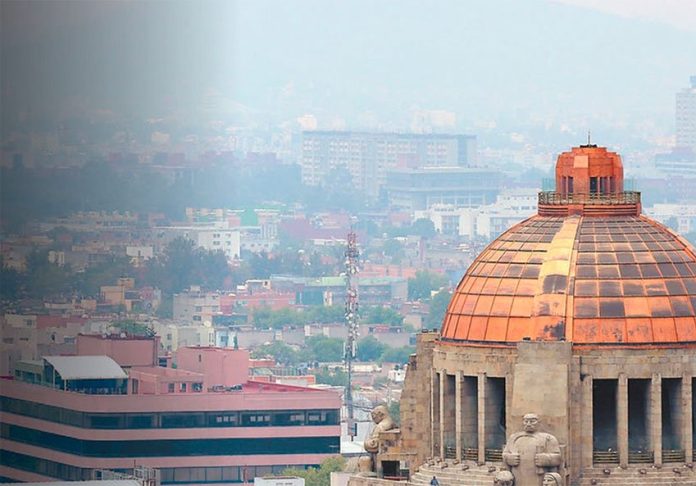
The high pollution levels that have been choking Mexico City for the last week will continue through the weekend, according to an analysis by climate scientists at the National Autonomous University of México (UNAM).
UNAM atmospheric sciences researcher Graciela Lucía Raga told reporters at a press conference yesterday that winds are bringing wildfire smoke to the capital from other parts of the country. But a high-pressure area or anticyclone in the Valley of México is preventing the dispersal of pollutants.
“The anticyclone is a circulation from the Pacific towards the east and north of the city, which generates this cycle that prevents dispersal of pollutants, including PM2.5 and ozone,” she said.
Raga added that even if it rains, air quality will not improve until suspended particles are dispersed.
“There will be a minor change on Saturday, May 18, because of moderate wind,” she said.
Current air quality conditions. Green is good, yellow normal and orange is bad.
To address the situation, the Environmental Commission of the Megalopolis (Came) will extend the Extraordinary Environmental Contingency, which means cancelled classes at schools and universities and strict driving restrictions.
The “Hoy no circula” or “no-drive days” policy prohibits vehicles from being driven on certain days based on their license plates. The emergency measuretakes twice as many vehicles off the road as usual.
Climate scientist and Came advisor Adrián Fernández said that since the environmental contingencies of 2016, Mexico City has had the necessary information to create policies to lower air pollution levels.
But, he said, “There was no political will to make decisions, some of which were going to be unpopular. We need to generate financial mechanisms to invest in measures that will help solve Mexico City’s air pollution problem at its root.”
Mayor Claudia Sheinbaum told El Universal that she will announce a new set of policies next week to improve air quality. She would not say if the new policies will include toughening restrictions on drivers.
“We need to create consensus not only between the governments, but also with the private sector and the automotive sector,” she said.
The body of Humberto Adame Castillo, cattle rancher and brother of former Morelos governor Marco Adame Castillo, was discovered in a hidden grave on Thursday.
Adame was kidnapped on May 8, after which the kidnappers demanded a ransom of 1 million pesos (US $52,200) from the victim’s family.
The state’s attorney general said today the family had negotiated and in the end paid a ransom of 63,000 pesos (US $3,300). But it was evident that the victim was killed immediately after the ransom was paid.
Police have since arrested three suspects who confessed to killing their victim and dumping his body in a hidden grave. After a search by land and air, authorities found Humberto’s body near a highway in the town of Alpuyeca in the municipality of Xochitepec, Morelos.
State authorities revealed that Humberto had been blindfolded and his hands bound during his captivity. Six cellphones were also discovered at the grave site.
Ex-governor Adame expressed his grief on Twitter, demanding earthly justice and divine forgiveness.
“My brother was a great guy — a little grumpy, but a wonderful person. He loved nature, the countryside, rural development and his profession.”
Several key political figures, including ex-president Felipe Calderón, current Morelos Governor Cuauhtémoc Blanco and Senator Lucy Meza expressed their condolences to Humberto’s family and demanded justice for his murder.
Morelos has been the scene of several acts of violence in recent weeks, including one incident in Cuernavaca in which an armed individual fired into a crowd of protesting street vendors killing two, and another in which suspects on a motorcycle shot and killed two gas station workers in the state capital.
Vehicles seized from hackers, clockwise from top left, values in US dollars: McLaren 720S, $390,000; Aston Martin Vantage, $220,000; Lamborghini Urus, $296,000; Ferrari488 Pista, $335,000.
Eight suspected members of a gang of financial hackers that stole hundreds of millions if not billions of pesos from Mexican banks were arrested in León, Guanajuato, this week.
Federal authorities also seized 27 luxury vehicles, motorcycles, more than 20 million pesos (US $1 million) in cash, drugs, weapons, a Federal Police uniform, computers and mobile telephones during raids carried out at 11 properties in the city on Wednesday.
The operation involved the simultaneous execution of multiple search and arrest warrants.
The Federal Attorney General’s Office (FGR) said in a statement that its agents arrested six men and two women without the use of violence and with complete respect for their human rights.
They were transferred to Mexico City where they are in the custody of SEIDO, the organized crime unit of the FGR.
‘Bandido Boss,’ suspected leader of Guanajuato hackers.
Among the people detained was a man identified as Héctor Ortiz Solares, who is believed to be the leader of the hacking group known as Bandidos Revolution Team.
Authorities said that Ortiz – also known as El H-1, El Patrón and El Bandido Boss – was the chief logistics operator of the organization.
He and the other suspected gang members allegedly recruited tech experts to facilitate their criminal activities.
Ortiz’s personal illicit income is estimated to have been between 50 and 100 million pesos (US $2.6 million to $5.2 million) per month, and according to authorities he was planning to buy a professional, third-division soccer team.
The gang boss allegedly employed eight personal bodyguards, each of whom was paid a monthly salary of about 100,000 pesos (US$5,200). It is unclear where they were at the time of his arrest.
A private security company that employs former members of the military was reportedly contracted to guard homes where the criminal gang worked and warehouses where its assets were stored.
During the past five years, the hacking group is alleged to have used malware to infiltrate banks’ electronic interbank payment systems, known in Mexico as the SPEI.
Once inside a bank’s system, the hackers would make unauthorized withdrawals and deposit the funds in the accounts of third parties.
The account holders were paid commissions to withdraw the illegally deposited funds and pass them on to the criminal group, which reportedly opened its own accounts in several Mexican states and invested some of its ill-gotten gains in tax havens including Panama and the Cayman Islands.
Funds were also used to purchase luxury properties in Mexican tourist destinations and in foreign countries, according to a report in the newspaper Milenio.
Infiltrating the banks’ SPEI was not the only modus operandi that the group allegedly used.
The criminals also hacked into systems that controlled bank ATMs after which they would infect them with viruses that allowed them to program large, unauthorized withdrawals from specific machines at a certain time on a designated day. The group is suspected of stealing hundreds of millions of pesos in that way.
In addition, the gang is accused of cloning bank cards that were used to make purchases of items such as home appliances and alcohol, which were subsequently resold at reduced prices.
That money was used to purchase more properties, luxury cars made by Ferrari, Mercedes Benz, Audi, McLaren and Lamborghini, and computer equipment that was used to breach bank systems.
The arrests on Wednesday followed a criminal complaint by the bank BBVA Bancomer of electronic fraud.
Authorities began an investigation that identified the suspected leader and members of the gang and federal agents subsequently began tracking their movements.
Surveillance methods included the use of drones to locate and monitor homes within five exclusive residential estates in the north of León where the criminals lived and worked.
The eight people arrested are not responsible for a cyber-attack last year that cost five financial institutions 300 million pesos (US $15.6 million), federal officials said.
An intimate exhibition featuring an eclectic collection of art by British-born Mexican artist Leonora Carrington opened this week in San Miguel de Allende, Guanajuato.
Called Mundo Recóndito de Leonora Carrington (Secret World of Leonora Carrington), the exhibition was inaugurated at the municipal palace Tuesday by Mayor Luis Alberto Villareal García.
He said the exhibition provides an intimate look into the life of the artist because among the more than 100 pieces on display are a number of very personal works.
Carrington was an acclaimed surrealist painter and multimedia artist who was born in Lancashire, England, but lived most of her adult life in Mexico City before passing away in the capital in 2011, aged 94.
At Tuesday’s inauguration, Carrington’s son, Pablo Weisz, described his mother as one of the most incredible artists on the planet, and San Miguel de Allende – the American Capital of Culture 2019 – as an “extraordinary place” with a “very special energy.”
A sculpture by Leonora Carrington.
Weisz, who is also an artist, added that he was certain that his mother was watching down on the event and would feel “very honored.”
Fermín Llamazares, exhibition curator and president of the Leonora Carrington Council, said it was the first time that such a wide range of Carrington’s art had been displayed in one place.
“For us [the pieces] have a particular importance . . . because none of the works belongs to a collector nor are they part of a cultural institution’s collection. They come directly from the home of Leonora, from her shelves, from her walls, from her drawers, from her studio,” he said.
Sculptures, masks, photographs, drawings, different editions of books Carrington wrote and even jewelry she designed are among the art on display in the exhibition rooms of the San Miguel de Allende municipal palace.