Sunday, March 1, 2026
Home Blog Page 2015

New iPhone sells out in a few hours at Apple store in Mexico City

0
Happy iPhone customer Antonio Hueto.

Despite its hefty price, the most expensive of Apple’s new iPhones sold out in just a few hours after it went on sale yesterday at the Apple store in Santa Fe, Mexico City.

The 512-GB iPhone XS Max retails for 35,499 pesos (just over US $1,880) but the price didn’t stop 100 people from snapping them up and cleaning out the store’s stock.

Among the buyers was Antonio Hueto Gómez, who traveled from the southern Veracruz town of Saltabarranca to be the first in line at the store on Thursday for presales. The phones were available for pickup yesterday morning.

Hueto bought the 256 GB model of the XS Max to use in his work as a photographer, but he’s a big Apple fan. “All my devices are Apple. The only thing I’m missing is the apple tattooed on my forehead!”

The new phones are the XS Max, the XS and the XR, ranging in price from 18,499 to 35,499 pesos (US $980 to $1,880). Only the first two are currently available; the XR is to be released in late October.

Source: El Financiero (sp), Reforma (sp)

Money laundering investigated after Pemex employee assassinated

0
The vehicle in which a Pemex engineer was assassinated on Thursday.
The vehicle in which a Pemex engineer was assassinated on Thursday in Guanajuato.

Money laundering at the state oil company Pemex is being investigated in connection with the murder Thursday of a company engineer in Salamanca, Guanajuato, officials with knowledge of the case told the newspaper Milenio.

The Guanajuato Attorney General’s office is pursuing that line of investigation due to the position the homicide victim held at the Antonio M. Amor refinery in Salamanca, Milenio said.

Gabriel Alejandro Aguilar Mancera worked in the refinery’s department of public works and acquisitions, a position from which he allegedly could have facilitated the laundering of illicitly-gained funds from organized crime groups through the awarding of Pemex contracts.

Aguilar was attacked at 8:00am Thursday by a group of armed men in a pickup truck as he drove his eight-year-old son to school.

In addition to collecting spent bullet casings found at the crime scene in the neighborhood of El Vergel, authorities also recovered evidence allegedly linking the slain official to organized crime, Milenio said.

Aguilar’s son was not shot but received treatment for injuries caused by glass splinters. He is reported to be in stable condition.

The murder is the second of a Pemex employee this year after the oil company’s former chief of security in Salamanca, Tadeo Lineol Alfonzo Rojas, was shot and killed in January. He was also taking his children to school when he was attacked.

In May, the newspaper Reforma reported that Pemex personnel at the Salamanca refinery were under investigation by federal authorities for fuel theft, but the Interior Secretariat said later the same month that the practice had been interrupted.

Guanajuato was Mexico’s most violent state in the first eight months of the year in terms of homicide numbers, with 1,671 victims.

A significant number of the deaths in the state are believed to be related to pipeline petroleum theft and the Jalisco New Generation Cartel (CJNG), considered Mexico’s most dangerous and powerful criminal organization, is reportedly involved in a turf war in Guanajuato with the crime gang known as Santa Rosa de Lima.

Source: Milenio (sp) 

Chiapas journalist assassinated; threats had been made two years ago

0
Chiapas journalist Mario Gómez.

A Chiapas journalist yesterday became the 13th reporter to be assassinated this year in Mexico.

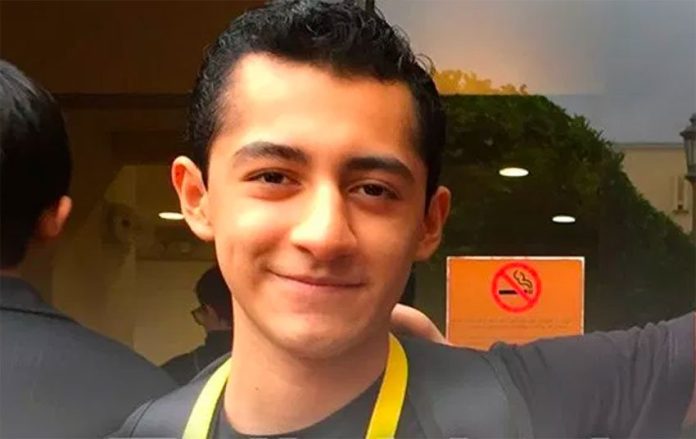
Mario Leonel Gómez Sánchez, 40, was leaving his home in the municipality of Yajalón early yesterday afternoon when two men on a motorcycle approached him and opened fire.

He was taken to a nearby hospital but died soon after.

Gómez had worked at the newspaper El Heraldo de Chiapas for the last eight years, covering politics, justice and social causes in the Lacandon jungle region, and this year had covered the state and federal elections held July 1.

[wpgmza id=”81″]

Local social organizations said Gómez had filed a formal complaint of threats against him in 2016 after he published a story on corruption. Protective measures were provided to him but were later withdrawn.

The state attorney general said Gómez’s family has requested a round-the-clock police presence at their home.

It said in a statement that it was “conscious of the importance of free journalism,” pledging to bring those responsible to justice.

El Heraldo de Chiapas later published an editorial signed by all of its staff, condemning the aggression against their colleague and demanding that authorities punish his assassination.

Source: El Universal (sp), Animal Político (sp)

AMLO: if NAFTA fails Mexico will seek second trade accord with Canada

0
amlo and trump
Happy neighbors.

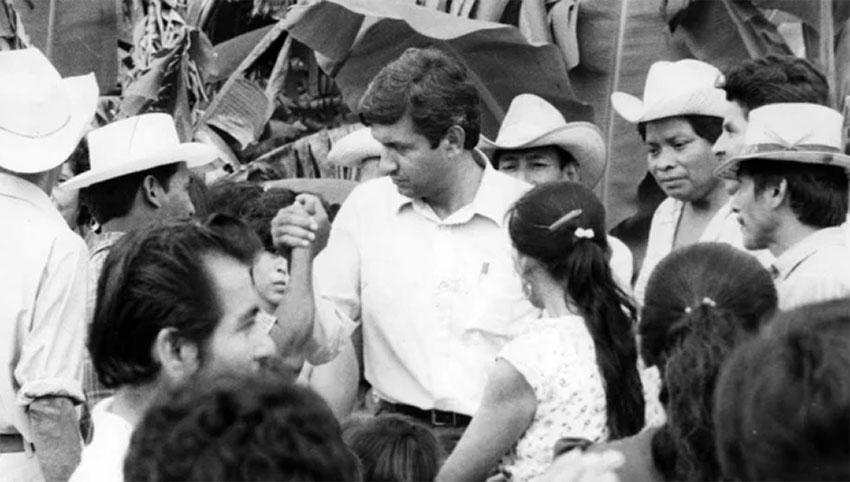
Mexico will seek a bilateral trade agreement with Canada if NAFTA talks fail, president-elect Andrés Manuel López Obrador said yesterday.

Mexico and the United States reached a separate accord late last month but so far negotiations aimed at bringing Canada into the deal have failed amid U.S. threats to impose tariffs on auto imports from its northern neighbor.

“We would like the government of the United States and the government of Canada to come to an agreement so that the treaty can be trilateral, as it was originally signed,” López Obrador told reporters in Sonora.

“But in the event that the governments of the United States and Canada do not come to an agreement . . . we would have to maintain the bilateral deal with the United States and seek a similar deal with Canada,” he added.

“Obviously we can’t cut ties with either.”

The United States and Canada concluded another round of talks in Washington D.C. Thursday without reaching agreement, although Canadian Foreign Minister Chrystia Freeland described the dialogue as “constructive.”

White House economic advisor Kevin Hassett told Fox News yesterday that the United States was “getting very close” to having to advance its separate deal with Mexico, leaving Canada out of the agreement. U.S. President Donald Trump had suggested that was a possibility when he first announced the two-way pact.

A United States-imposed October 1 deadline to publish the text of a deal is closing fast.

Trilateral negotiations began in August last year and were expected to be finished before the end of 2017 but dragged on due to a failure of consensus on a range of issues such as rules of origin for the auto sector and a so-called sunset clause, pushed by the United States, that would have terminated the agreement after five years if it was not renegotiated.

After five weeks of bilateral negotiations in Washington D.C., Mexico and the United States announced August 27 that they had reached a bilateral deal.

López Obrador’s future chief negotiator Jesús Seade participated in the talks and was said to have played a key role in convincing the United States to drop its sunset clause demand and agree instead to a six-year review.

Mexico, in turn, agreed that 40% to 45% of auto content would have to be made in high-wage areas where workers earn at least US $16 per hour.

Some observers said that Mexico betrayed Canada by making a separate deal with the United States, although Economy Secretary Ildefonso Guajardo denied the claim and it was later revealed that Canada had attempted to blindside Mexico by pursuing its own separate deal with its neighbor.

López Obrador, who will be sworn in on December 1, also said yesterday that he has had a good relationship so far with the Trump administration.

“I hope with all my heart it stays that way.”

He told reporters in San Luis Río Colorado, Sonora, he had spoken with Trump by telephone about free trade and immigration “and some agreements are being reached,” observing that the U.S. president had been respectful. “It was a very good conversation.”

“We’re neighbors. We can’t be distant neighbors. We have to achieve a relationship of respect and cooperation.”

Source: AFP (sp) 

Up to 300,000 homes affected by flooding in Sinaloa; Los Mochis hardest hit

0
Storm damage in Sinaloa.

Los Mochis, Sinaloa, is facing a massive clean-up after torrential rain brought on by tropical depression 19-E left much of the city under water.

Sinaloa Civil Protection chief Francisco Vega Meza said that preliminary reports indicate that 70,000 homes in the city were damaged and 230,000 people were affected in the municipality of Ahome, of which Los Mochis is the municipal seat.

“Seventy per cent of people in Los Mochis suffered because water got into their homes. In the area of El Carrizo, several towns were cut off and there are still some that are suffering from high water levels, such as Chihuahuita, the water hasn’t finished receding there yet,” he said.

Across Sinaloa, Civil Protection services estimate that as many as 300,000 homes were affected by flooding including many in the state capital Culiacán.

Flooding also caused damaged to 160 public schools, three highways, 14,000 hectares of agricultural fields and hydro-agricultural infrastructure.

State Agriculture Secretary Jesús Antonio Valdés Palazuelos said the extent of the damage to farm land is being assessed via air and land with a view to providing compensation to farmers through insurance policies held by the Sinaloa government.

The death toll in the state still stands at four while three people are missing.

The state government said that at least 3,504 people had to be evacuated from their homes in six municipalities, mostly in Los Mochis and rural areas of Sinaloa.

An air force helicopter yesterday delivered one and a half tonnes of provisions as well as clothing and air mattresses to affected indigenous communities in the municipality of El Fuerte and cut-off areas of Ahome.

Roberto Ramírez de la Parra, director of the National Water Commission (Conagua), said the priority is to attend to the basic needs of the affected population, adding that the full cost of the damage will be assessed later.

The risk posed by overflowing dams has been controlled, he said.

As much as 359 millimeters of rain fell in parts of Sinaloa in a 24-hour period starting Thursday morning and emergency situations were declared in 11 municipalities.

The heavy rains also caused flooding in parts of Sonora and Chihuahua, and at least three people drowned in flood waters in the latter state.

Source: Reforma (sp), El Universal (sp) 

Suspected gangster freed after judge finds arrest didn’t occur as described

0
Alleged drug and totoaba dealer Parra.

A federal judge today ordered the immediate release from custody of an alleged gangster dubbed the “totoaba tzar,” ruling that his arrest was illegal.

Óscar Parra Aispuro was arrested by state police last week in Baja California, allegedly while traveling on the Mexicali-San Felipe highway with two bodyguards, who were also detained.

But the accused’s defense team presented evidence that the judge said proved his arrest didn’t occur as authorities said.

Federal authorities had identified Parra as the regional leader of a gang dedicated to trafficking drugs and the prized totoaba, an endangered fish whose swim bladder is considered a delicacy in some Asian countries and can fetch prices per kilogram in the thousands of dollars. He is also suspected to be a member of the Sinaloa Cartel.

At a hearing at the Federal Criminal Justice Center in Almoloya, México state, the presiding judge also ordered that Parra’s bodyguards, Alejandro Bastidas González and Carlos Bastidas Moreno, be freed and all three men later left the Altiplano maximum security prison.

According to Baja California authorities, the men were stopped by police at 6:50am on September 13 and detained after officers found seven firearms, 53.6 grams of methamphetamine, radios, cartridges and a bulletproof vest in their two vehicles.

However, the judge said that based on evidence presented by the defense “it was evident that the people were not detained in the terms reported by the state police, given that apparently three hours before they were violently removed from [Parra’s] home.”

That was proven, the judge said, “because it was shown that the property had damage to its doors and entrances as well as footprints from military-style boots in various parts of the house.”

Five witnesses testified that an armed group had entered Parra’s home by breaking down doors, claiming also that the men were beaten.

The wife of one of the men and a baby were allegedly at the address when the arrests occurred. The two vehicles in which state police said the men were traveling when they were arrested were also removed, witnesses said.

Lawyers presented video and audio evidence to substantiate their case.

In footage recorded by a business, the wife of one of the arrested men can be seen carrying her baby and asking the owners to borrow a telephone, allegedly so that she could locate her husband.

Other footage showed a convoy of state police cars chaperoning the two seized vehicles three hours before state police said the men were arrested.

Source: Milenio (sp) 

Almost 3,000 homicides last month made it the worst August in 20 years

0
Scene of a homicide investigation.

There were almost 3,000 homicides last month, making it the most violent August in Mexico in the past two decades.

This year is also on track to surpass 2017 as the most violent year in recent history, with more than 22,000 murders already recorded.

Statistics from the National Public Security System (SNSP) show that there were 2,861 homicide victims in August and 68 victims of femicide — women and girls who were killed on account of their gender.

While it was the most violent August of the past 20 years, the figure is 5% less than the number of murders recorded in July.

The number of homicides for the first eight months of the year, at 22,411, is almost 85% higher than the figure recorded in the same period of 2015 and almost 4,000 more than the number recorded in the same period last year.

This year, there have been on average almost four homicides per hour, adding up to a daily death toll of more than 90 men and women.

Colima, Baja California, Guerrero, Chihuahua and Guanajuato registered, in that order, the highest per-capita murder rates.

However, in sheer numbers Guanajuato has been the most violent state in Mexico this year with 1,671 homicide victims between January and August.

A significant number of the deaths in the state are believed to be related to pipeline petroleum theft.

The Jalisco New Generation Cartel (CJNG), considered Mexico’s most dangerous and powerful criminal organization, is involved in a turf war in Guanajuato with the crime gang known as Santa Rosa de Lima over the illicit fuel trade and to control extortion and kidnapping rackets, the newspaper El Universal said.

The second highest number of homicides in the first eight months of the year was recorded in Guerrero, with 1,507, followed by México state, with 1,472, Chihuahua with 1,293 and Jalisco with 1,216.

The next highest figures were recorded in Veracruz, Michoacán and Mexico City.

Extortion also increased this year by 12.4% compared to the same period last year but kidnapping is down 18%, statistics show.

Last year was the most violent year since the SNSP started keeping comparable statistics in 1997.

In January, the Interior Secretariat reported that there were 29,168 homicides in 2017 but in May, the National Institute of Statistics and Geography (Inegi) said that the real figure was more than 2,000 higher.

The incoming federal government, which will take office on December 1, has indicated that it wishes to change tack on security and has said it will consider legalizing some drugs and adopting an amnesty law for low-level criminals.

However, for the foreseeable future, the military will continue to play a role in carrying out public security duties, president-elect Andrés Manuel López Obrador said last month.

Source: Animal Político (sp), El Universal (sp) 

Winemakers launch new festival to celebrate Mexican wine

0
A display of wines at the festival now running in Mexico City.

The first ever Mexican Wine Festival started on Monday and has activities scheduled until October 14.

The month-long event is hosted by Hacienda de los Morales, a restaurant located in the upscale Polanco district of Mexico City.

Twenty-three wineries and their 80-plus labels are the festival’s guests of honor, representing the states of Aguascalientes, Querétaro, Guanajuato, Coahuila and Baja California.

The Mexican Winemakers’ Council created the festival to promote Mexican wines among domestic consumers, said manager Gabriel Padilla Maya.

Creating strategic alliances with the most emblematic restaurants is important for developing an appreciation for wine and reaching a larger number of consumers, he said.

Meanwhile, the council is developing a guide for the restaurant industry and a consulting platform to help restaurants create Mexican wine lists and maintain a wine cellar.

Hacienda de los Morales manager Fernando del Morán pledged his support for the development of Mexico’s gastronomic and wine cultures.

“We are a restaurant that prides itself on selling mostly Mexican wine. We consider supporting the efforts of the Winemakers’ Council our responsibility and obligation . . .” he said.

The wine festival will also give winemakers the chance to introduce their newest labels, all of which will also be part of the host restaurant’s menu.

The council is also developing online training courses that will instruct restaurateurs and anyone else interested in the history and evolution of wine in Mexico.

Source: Milenio (sp)

43% of Mexico’s municipalities don’t have a bank machine

0
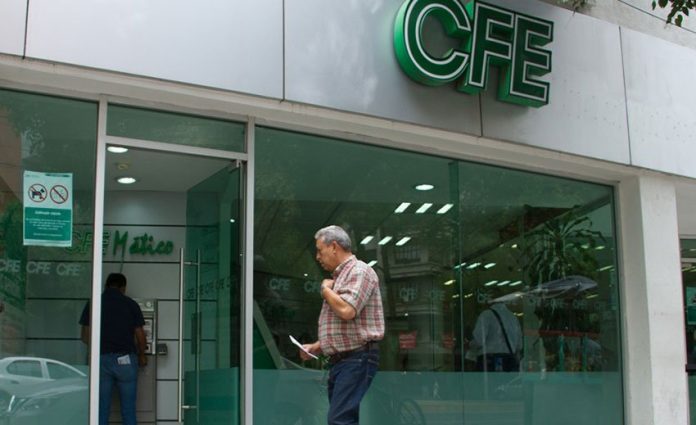
Bank machines are a rarity in many municipalities.

Millions of Mexicans who live in rural areas have few or no options to access basic financial services, a new report from the National Banking and Securities Commission (CNBV) shows.

At the end of June 2017, 43% of Mexico’s 2,457 municipalities didn’t have an ATM, according to the commission’s 2018 National Report on Financial Inclusion.

Oaxaca, with ATMs in just 16% of its 570 municipalities, had by far the lowest coverage of any Mexican state followed by Chiapas with 58% and Guerrero with 62%.

However, across all Mexican municipalities with populations below 50,000, the figure was even lower at 10%.

In contrast, there are ATMs in all 11 municipalities of Quintana Roo and all 16 boroughs of Mexico City.

Many municipalities across the country also lacked other basic financial services at the end of June last year, the report shows.

Residents of only 42.8% of Mexico’s municipalities have access to what the CNBV calls the four financial service channels: bank branches, loan officers, ATMs and point-of-sale terminals.

The imbalance between the availability of the services in urban and rural areas is underscored by the statistic that 90.2% of Mexico’s adult population live in municipalities with all four channels.

Residents of 549 municipalities — 22% of the total number — don’t have access to any of the four channels, while a further 285 municipalities have only one of the four channels and 254, or 10.3%, only have two.

The combined population of the 549 municipalities where none of the basic services exist is just under 1.5 million.

“Mexico has a challenge in terms of technological infrastructure in order to achieve connectivity in the entire country. Sharing resources is necessary not just to achieve connectivity in all communities but also the provision of financial services,” the report said.

Despite the disparity in access to financial services, the number of bank branches actually increased by 2.4% to 16,945 between June 2016 and June 2017.

However, the branches are only located in 51% of municipalities, meaning that residents of the other 49% have to travel to a neighboring municipality — or farther afield — to find a bricks and mortar financial institution.

Source: Milenio (sp) 

Chiapas artisans accuse Spanish retailer of stealing their designs

0
Zara's product, left, and that of a Chiapas artisan.

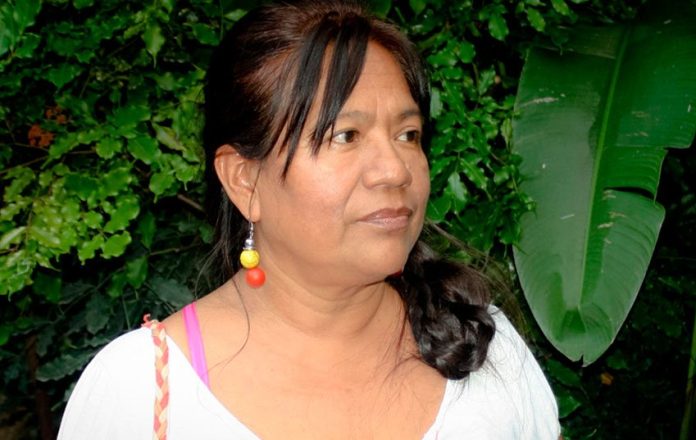
Indigenous artisans in Chiapas have accused a Spanish fashion retailer of stealing their designs, the second time in two years they have done so.

Tzeltal artisans from the town of Aguacatenango in Venustiano Carranza claim that Zara has copied at least one of their embroidery designs.

“It affects us a lot because people don’t buy from us when they can find it in a store . . .” said María, whose embroidery is her livelihood.

She and artisans like her dedicate more than 50 hours to making each embroidered garment, selling them for 200 pesos (US $10). In contrast, Zara manufactures the same garment and sells it at 599 pesos ($32).

The indigenous rights advocacy group Impacto told the newspaper El Dictamen that since 2012 there have been at least eight instances of international brands appropriating original indigenous designs from Oaxaca, Hidalgo and Chiapas.

In none of the cases have the fashion brands acknowledged the creators of the designs or paid compensation.

Intellectual property regulations protect individual creators, said Impacto director Adriana Aguerrebere, but not centuries-old collective heritage.

“Consumers are also to blame,” said Impacto member Andrea Velasco, explaining that buyers demand authenticity but end up paying for copies. “There’s also a contradiction, because they pay high prices at a store but then don’t want to spend in an indigenous community.”

Source: El Dictamen (sp)