Friday, February 27, 2026
Home Blog Page 2042

Mexico, US announce new strategies to fight the drug cartels

0
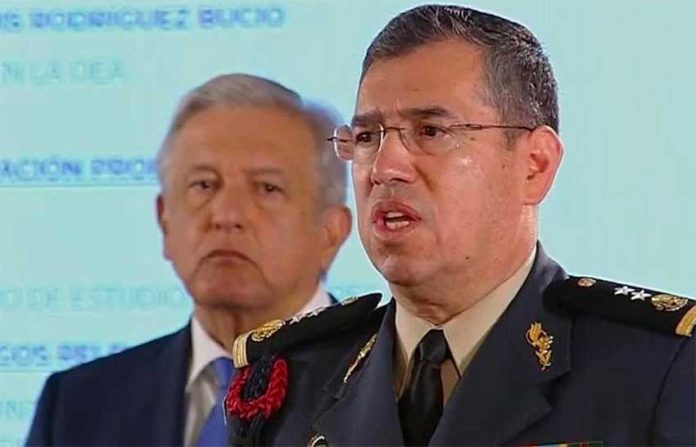
Mexican and US law enforcement officials this week in Chicago.

Mexican and U.S. law enforcement authorities have announced new security strategies including the creation of a joint investigative team that will target the leaders and finances of Mexican cartels that ship drugs into the United States.

The team will be based in Chicago and made up of agents from the federal Attorney General’s office (PGR), the Federal Police, the United States Drug Enforcement Administration (DEA), the Federal Bureau of Investigation (FBI) and other Mexican and U.S. security forces.

At a press conference in Chicago yesterday, members of the Mexican government, military and Federal Police, flanked by DEA officials, said that one priority was the arrest of Nemesio “El Mencho” Oseguera Cervantes, leader of the increasingly powerful Jalisco New Generation Cartel (CJNG).

Mexico and the United States have both raised their rewards for any information that leads to Oseguera’s arrest.

Anthony Williams, chief of operations for the DEA, said that targeting cartels’ finances is crucial to stop the flow of drugs from Mexico into the United States.

“The sole purpose of these entities is one thing and one thing only — money,” he said.

The special agent of the DEA’s Chicago office, Brian McKnight, said the binational team will focus on carrying out international investigations that would go after “high value” targets.

“This is not a national problem. This is an international problem . . . A new era of law enforcement is upon us and we are coming for you,” he said.

McKnight also said that a new local task force will target gangs in Chicago, where Mexican cartels are believed to be partially responsible for high levels of drug-fueled violence on the city’s streets.

“We have a unique gang problem, and with that comes a unique violence problem with the guns associated with that,” said Chicago police Superintendent Eddie Johnson.

“We also know that cartels in Mexico are responsible for much of the illegal drugs that are finding their way to Chicago,” he added.

Felipe de Jesús Muñoz Vázquez, head of the PGR’s federal crimes investigation unit, said the team will seek “to break the value chains of [criminal] organizations such as the market routes for drugs and weapons.”

In a statement, the PGR said the two countries had reached “unprecedented strategic agreements” whose aim is to “weaken all the points of criminal groups, based on more effective and immediate actions.”

Acting Attorney General Alberto Elías Beltran, who also traveled to Chicago, told Fox News that “we have to find a way to debilitate their [cartel’s] financial structures,” charging “that way they won’t have the capabilities to ship the drugs to the United States and they won’t be able to bring guns and money back to Mexico.”

While the new security plans place greater emphasis on attacking cartels’ finances and establish the binational investigative team, the Associated Press reported that they “don’t include major departures from how both countries have gone after cartels for years.”

However, the director of the DEA’s North and Central American Region said Tuesday that the United States also wants to rely more on recent changes made to the Mexican legal system that were designed to make evidence gathering and prosecutions more efficient.

“That’s what we’re really trying to push — the cooperation that we currently have with Mexico to be a little more efficient, a little bit more aggressive,” Matthew G. Donahue said.

In exchange, he said the United States intended to do more to stop the illegal flow of weapons into Mexico, which Interior Secretary Alfonso Navarrete Prida last month said largely fueled the high levels of violence in the country.

The arrest and extradition of former Sinaloa Cartel head Joaquín “El Chapo” Guzmán also “dramatically reshaped the landscape of Mexican organized crime,” according to a 2018 report by the University of San Diego’s Justice in Mexico research initiative, creating a power vacuum that has helped the CJNG to increase its power.

Yesterday’s announcement of the binational team and the “kingpin strategy” targeting high level cartel leaders “didn’t sound that new in terms of the main policy proposals,” according to a security studies professor at Sam Houston State University in Texas.

Nathan Jones told broadcaster NBC that “it seems they were maybe trying to lock in a new way to speed up prosecutions of Mexican nationals and extradite them faster” before new president Andrés Manuel López Obrador is sworn in on December 1.

“I’m interested in the timing,” he said.

The strengthening of the joint security strategy comes at a time when bilateral relations between Mexico and the United States are strained, largely due to U.S. President Donald Trump’s hardline policy positions on immigration and trade and his border wall.

Mexican President Enrique Peña Nieto rebuked Trump in a video posted to social media in April, urging him to vent his frustrations on the United States Congress rather than Mexico.

However, some cartel experts say that the deterioration of the relationship at the presidential level hasn’t undermined cooperation on the fight against drug cartels at the law enforcement level.

In March, the governments of Mexico and the United States also agreed to cooperate on a broad-reaching maritime operation to combat the drug trade.

Both López Obrador and Trump have publicly declared they want to improve two-way ties but the former has also said that he plans to make significant changes to Mexico’s domestic security strategy, including gradually withdrawing the military from public security tasks and possibly legalizing some drugs and implementing an amnesty law.

Alfonso Durazo, tapped to be secretary of public security in the new government, has said that all cooperation pacts with neighbors will be reviewed.

However, today he indicated that the incoming administration will support one aspect of the strategy more than another, stating “it will be more important to go after drug trafficking money than the drug traffickers themselves” because what gives them the capacity to operate are not the cartel leaders but their financial resources.

Source: Milenio (sp), NBC News (en), Associated Press (en)

Abandoned mine tunnel blamed for sinkhole putting houses at risk

0
The growing sinkhole in Pinzán Morado.

A large part of a Guerrero town is at risk of caving in due to the tunnels of an old mine.

The first red flag in Pinzán Morado, located in the municipality of Coyuca de Catalán, was a sinkhole that appeared on July 1. In the rainy month and half since then, it has grown to a diameter of 40 meters and a depth of 100.

Residents of of seven nearby homes have had to evacuate, while 30 more dwellings are at risk. Their occupants have started to move their belongings, fearing the worst.

Resident Cirilo Castro told the newspaper Milenio that the nearby Calentana mine operated for more than 25 years before it was shut down three years ago.

He explained that the sinkhole could well be the result of overexploitation by the gold and silver mine, which left tunnels about 30 meters below the surface.

State Civil Protection officials have cordoned off the area surrounding the sinkhole, and have ordered the evacuation of a preschool.

[wpgmza id=”52″]

“We need help because we’re indeed at risk; the kindergarten has been evacuated, but we don’t have anywhere to send the children instead . . . ” said municipal representative Filiberto García Maldonado, suggesting that the evacuation of a nearby secondary school could soon follow.

Last Friday, the municipality filed a complaint with the public prosecutor against the mining company, whose legal representatives have indicated that land could be purchased to relocate homeowners affected by the sinkhole.

But residents fear the same thing could happen anywhere else in the area due to the old tunnels and are asking the company to conduct a study to confirm the land is safe. They would also like to know whether the town’s remaining 100 homes are also at risk.

Source: Milenio (sp), El Sur (sp)

Police arrest suspected leader of violent La Línea gang

0
'El Sexto,' responsible for Ciudad Juárez violence.
'El Sexto,' blamed for Ciudad Juárez violence.

The suspected leader of La Línea criminal gang, the armed wing of the Juárez Cartel, was arrested in an operation carried out by federal security forces in Ciudad Juárez, Chihuahua, yesterday morning.

Julio César Oliva Torres, also known as “El Sexto” or “El Sixto,” was wanted by both Mexican authorities and the Drug Enforcement Administration (DEA) in the United States.

He is accused of smuggling drugs from Ciudad Juárez into the U.S. and being behind a recent wave of violence in the border city that has left scores of people dead.

Interior Secretary Alfonso Navarrete Prida said Oliva Torres was apprehended in the Quintas del Solar residential estate, from where he allegedly managed his criminal activities.

He also said the operation carried out by the army, Federal Police and the Criminal Investigation Agency of the federal Attorney General’s office (PGR) resulted in the simultaneous arrests of Enrique Elier, second in command of La Línea, and César Marlon Reyes, his financial operator, at another Ciudad Juárez housing estate.

The security forces seized one kilogram of methamphetamine, half a kilogram of cocaine, 250 psychotropic pills, two hand guns, two vehicles and two sets of scales in the operation.

With Oliva Torres’ arrest, 110 of 122 key criminal targets identified by the federal government have now been arrested.

He was the successor to former La Línea leader Carlos Arturo Quintana, “El 80,” who was arrested in Chihuahua in May.

“After the arrest of the main criminal leader [Quintana] of La Línea in Ciudad Juárez, the city was the object of unusual violence that accounted for more than 30 homicides in a single weekend,” Navarrete Prida said.

“Presumably, one of the generators of violence at that time was the person who has been arrested [Oliva Torres], which is great news for Mexican society and for the society of Ciudad Juárez and Chihuahua.”

Source: Milenio (sp)

88-year-old writer to head non-profit publishing group

0
Glantz will run non-profit publishing group.
Glantz will run the Fondo de Cultura Ecónomica.

Reaction has been both positive and negative to the appointment of an acclaimed 88-year-old writer and academic to head up a government-affiliated non-profit publishing group.

Margo Glantz told the newspaper El Universal that she had decided to take on the directorship of the Fondo de Cultura Ecónomica (FCE) after she was offered the role by president-elect Andrés Manuel López Obrador.

“They simply offered me the position and asked me to accept it. I thought that maybe it was too difficult for me as an old woman but on the other hand, I thought that maybe, for a while, I could work,” she said.

“I am an older woman, I’m 88 years old, I’m a productive woman, I’m lucid, I work a lot, I travel, I think that I can do it, I don’t know if all the time but [at least] part of the time I will be able to do it,” Glantz added.

Esteban Moctezuma, López Obrador’s nominee for education secretary, announced her appointment as the new FCE director last week but the writer, who has won several prizes for her novels and other literary and critical work, said her exact role had not yet been defined.

“I don’t yet know how it’s going to work. I’ve just come back from a trip to Peru. I obviously have a general idea about what the Fondo is, I have an idea about what I could maybe do but it’s not all clear yet. It’s a little bit premature to make an estimation when I’m not yet in the job,” Glantz said.

News of her appointment triggered an outbreak of support and criticism on social media but Glantz, an avid user of Twitter herself, said that both positive and negative reactions were to be expected.

She stressed that this won’t be the first time that she has held a public position, highlighting that she worked at the Secretariat of Public Education as the general director of publications and libraries and at the Institute of Fine Arts as the director of literature.

Glantz has also been involved in academic life at the National Autonomous University (UNAM) for 57 years and a member of the Mexican Academy of Language since 1995.

In 2004, she won the National Prize for Arts and Science in the linguistics and literature category.

Glantz said the FCE does a fundamental job not just for Mexico but for all of the Spanish-speaking world, adding that it is important for that work to continue.

Glantz said she will conduct a review of the publisher’s book projects and all its other activities, after which she will have a clearer idea of what direction she will take the FCE in.

Although fully aware that the job will be demanding, she remains determined that she will also find time to continue her own personal projects.

“I have several literary projects, there’s my travel book, but I accepted [the job] and when one accepts something and takes a decision, there are pros and cons. As I go, I will review what the pros and what the cons are and despite everything, I will try to keep writing.”

Source: El Universal (sp)

Great expectations for AMLO: survey reveals strong support

0
Poll results are nothing for AMLO to be unhappy about.

There are high expectations that things will get better under the incoming federal government, according to a new national poll that also shows the president-elect has strong support.

The survey conducted by the newspaper El Universal between August 8 and 12 shows that 69% of those polled believe that Mexico will improve when Andrés Manuel López Obrador is president.

In contrast, just 6.5% of respondents said the country will deteriorate during the new government’s six-year term, while 16% said it would stay the same and 7.8% said they didn’t know what would happen.

The poll also shows that support for López Obrador’s performance as president-elect is very strong, with 64.6% of respondents saying that they totally or somewhat approved of his actions since he won the presidential election.

The figure is 11 points higher than the 53% of votes with which the Morena party leader triumphed on July 1 and more than 40 points higher than the approval rating given to President Enrique Peña Nieto in the same poll.

Only 12.1% of respondents said they totally or somewhat disapproved of López Obrador’s performance as president-elect while 12.7% said that they neither approved nor disapproved.

In the six weeks since millions of Mexicans went to the polls to elect a new president and renew both houses of the federal Congress, AMLO, as the political veteran is commonly known, and his nominees for cabinet positions have begun to outline the plans of the incoming government.

They include building new infrastructure such as the Cancún-Palenque train and a new oil refinery in Tabasco, reestablishing a federal Public Security Secretariat, moving some secretariats to regional cities, cutting salaries and benefits of lawmakers and officials, planting trees, establishing a free zone in the northern border region, increasing the minimum wage and reviewing contracts for the oil sector and finishing the new Mexico City airport.

López Obrador and prospective finance secretary Carlos Urzúa also moved quickly to calm fears surrounding the incoming government’s economic plans, pledging that the nation’s finances will be kept under control and that the independence of the central bank will be respected.

Today, ratings company Standard and Poor’s expressed confidence that the new government would maintain a prudent fiscal policy and would avoid instability, and that even a more active government role in economic terms would not likely be anti-market or populist.

Once he is in office, 64.5% of the 1,200 people polled told El Universal that they believed that the López Obrador-led government would deliver on its campaign promises while 18.5% said that he wouldn’t. A further 16.5% said that they didn’t know.

Almost 30% of respondents predicted that Lopez Obrador’s greatest achievement in office will be to combat poverty while 16.5% said that it would be improving the economy.

Just over 9% anticipated that job creation would be AMLO’s most notable accomplishment and a similar number said that it would be stamping out corruption.

On the other hand, 19.9% of respondents said that government corruption would go down as the incoming administration’s biggest failing, while smaller cohorts said that it would be the relationship with the United States, a failure to combat drug trafficking and other crime, management of the economy and treatment of the structural reforms implemented by the current government.

If the election was held again now, López Obrador would triumph anew with 60.3% of the vote, the poll concluded.

El Universal said that the survey has a confidence level of 95% and a margin of error of +/- 2.9%.

Source: El Universal (sp), La Economista (sp)

Oaxaca to fight expansion of denomination of origin for mezcal

0
A fight is brewing over denomination of origin rules for mezcal.
A fight is brewing over rules for mezcal production.

According to federal regulations the alcoholic beverage mezcal can only be produced in certain locations in Oaxaca and in some areas of the states of Guerrero, Durango, San Luis Potosí and Zacatecas.

But 45 municipalities in four other states were added to the list last week, a move that the governor of Oaxaca is determined to fight.

Alejandro Murat Hinojosa is preparing to contest the ruling by the Mexican Institute of Industrial Property (IMPI), which granted denomination of origin (DO) to mezcals produced in parts of the states of México, Aguascalientes, Morelos and Puebla.

Murat told the newspaper Milenio that the IMPI’s ruling was carried out in a manipulated manner to benefit the additional areas, which he claimed are not producers of the spirit and in recent years have been dedicated only to adulterating it.

The governor said he will collaborate with several mezcal producers’ and defend the previous DO rules by any means, including protests in Mexico City and taking the case to the courts.

“The decision to expand the denomination of origin to other states that are not producers hurts and offends those with a larger tradition, who have for years worked and fought to protect and consolidate the ancestral and artisanal beverage,” said Murat.

The governor added that Oaxaca must launch a legal battle and defend what is its own, especially when it has worked to earn prestige for the beverage, the product of a commitment by maguey producers, indigenous communities, exporters and vendors.

Several mezcal producers’ organizations echoed Murat’s sentiment, warning that IMPI’s resolution puts at risk the prestige earned by the industry over the years.

Mezcal producers in Aguacalientes, on the other hand, celebrated the decision. The state government says there are 334 small producers and 4,600 hectares of maguey under cultivation.

The IMPI said its research had determined that mezcal production in the state dated back to the 18th century.

Source: Milenio (sp)

Environmental agency seizes tarantulas at Mexico City restaurant

0
Tarantula tacos, 500 pesos.

Officials from the federal environmental agency Profepa seized tarantulas in Mexico City yesterday just as they were about to become taco filling.

The red rump tarantulas, a protected species, had been roasted to a crisp and were ready to be served in tarantula tacos for a cool 500 pesos (US $26) each.

Profepa inspectors became aware of the offerings at México en el Paladar through a post it made on Facebook, in which the chef could be seen flambéing (see video below) one of the spiders. Brave and hungry foodies were advised that it was just one of many tarantula preparation methods offered to its customers.

Yesterday, environmental officials visited the restaurant, located in the San Juan Market, and seized four cooked tarantulas after staff failed to produce a document proving their legal origin.

The restaurant has been popular among foodies over the last few months since it began to offer scorpions, escamoles (ant larvae) and chapulines (grasshoppers) on its menu.

The Mexican government currently approves and supports the breeding of tarantulas in captivity, with a yearly production of between 11,000 and 14,000 insects for the lucrative pet market, where a single arachnid can sell for up to 8,000 pesos (just over $415).

Source: El Financiero (sp)

MX, US rewards for New Generation Cartel leader now total US $6.6 million

0
'El Mencho,' wanted in Mexico and the US.

The governments of Mexico and the United States have raised the rewards offered for the leader of the Jalisco New Generation Cartel (CJNG), Nemesio Oseguera Cervantes.

Mexico is offering 30 million pesos (about US $1.6 million) for any information that leads to Oseguera’s arrest, while the United States is offering up to $5 million, Mexican authorities told the newspaper El Financiero.

The rewards are part of a series of actions aimed at securing Oseguera’s arrest and part of a broader binational crackdown on violence and strengthened security on both sides of the border.

A binational security team met yesterday in Illinois and the full extent of the agreements reached are to be announced later today.

Acting Attorney General Alberto Elías Beltrán led the Mexican team, joined by high-ranking officials from the Mexican army and navy.

Oseguera, also known as “El Mencho,” is considered to be the principal instigator of violence in Mexico. The drug lord has been behind the expansion of the CJNG over the last three years, putting the organization in direct confrontation with rival gangs throughout the country, sparking violent turf wars for the control of territory.

The cartel’s confrontations with security forces from the three levels of government have also cost the lives of many officials.

Anyone with information about Oseugera can call (55) 5346 3867 and (55) 5346 0000, extension 3825, in Mexico City, while elsewhere in the country the toll-free number is 01 800 831 3196.

Information can also be provided by email to denunciapgr@pgr.gob.mx.

Source: El Financiero (sp)

First sargassum diversion barrier is now in place near Cancún

0
Sargassum barriers that are being installed in Quintana Roo.

The first section of a floating sargassum barrier has been installed at Punta Nizuc near Cancún, where it is intended to prevent the seaweed from arriving on shore.

Goimar Logística y Servicios reported late yesterday afternoon on the advances made in the barrier project, which will install the system on 27 kilometers of Quintana Roo coastline from Cancún to Chetumal.

The floating barriers are a modification of those used to contain oil spills, and are anchored to the seabed.

Large quantities of sargassum have washed up on Quintana Roo beaches over the past three months, threatening tourism and leading to warnings that the mass arrival of seaweed could trigger a serious environmental disaster and a health crisis.

The Quintana Roo government plans to install a total of seven containment booms off the coast to stop the stinky, brown seaweed from sullying the state’s beaches.

Beaches in tourist hotspots Cancún, Playa del Carmen and Tulum are among those to benefit.

Environment Secretary Alfredo Arellano said the state government has arranged to rent four machines to remove sargassum, which could arrive from Florida as soon as this weekend.

“We’re not going to buy the machines because their cost ranges between 4 and 13 million pesos [US $208,000 to $678,000], they will be rented. It’s estimated that the entire cost of the operation to remove and contain the sargassum will be 240 million pesos [US $12.5 million],” he said.

Other removal vessels are on order but are not expected to arrive until November.

The environment secretary explained that the state government has already spent 62 million pesos (US $3.2 million) that federal authorities made available to combat the sargassum problem.

“. . . We are now operating with 20 million pesos that the state government has provided,” Arellano said, adding that Quintana Roo authorities are seeking further federal resources.

“. . . The state governor has declared the sargassum issue a priority and allocated 240 million pesos [to it] and we’re requesting support of 218 million pesos from the federal government. The combined amount will allow us to do the barrier [project] and also make the sargassum vessel deal.”

Source: Milenio (sp), Noticaribe (sp)

Charcoal plant is first in Mexico to make vegetable-based product

0
The new charcoal plant in Oaxaca.

A new charcoal plant has begun operating in Oaxaca, the first in Mexico to produce vegetable-base charcoal.

The Oaxaca-based company Carbosur built the plant in San Juan Atepec, a community located in the heart of the northern sierra, with financial aid from the state government and the National Forestry Commission, Conafor.

The aid came in the form of a 1-million-peso credit line to help build and equip the facility.

[wpgmza id=”51″]

High-technology ovens will reduce emissions by 100%, according to a report by the newspaper El Financiero: nothing but water vapor is emitted.

The ovens can generate temperatures up to 1200 C and will produce 70 tonnes of charcoal a month, worth 7 million pesos in sales.

The nearby logging communities of San Andrés Yatuni and San Pablo Macuiltianguis will supply the plant’s oak wood, which has received international certification from the Forestry Stewardship Council.

The plant employs more than 10 people and supports an additional 40 indirect jobs.

Source: El Financiero (sp)