Home Blog Page 2044

Almost 3,000 homicides last month made it the worst August in 20 years

0
Scene of a homicide investigation.

There were almost 3,000 homicides last month, making it the most violent August in Mexico in the past two decades.

This year is also on track to surpass 2017 as the most violent year in recent history, with more than 22,000 murders already recorded.

Statistics from the National Public Security System (SNSP) show that there were 2,861 homicide victims in August and 68 victims of femicide — women and girls who were killed on account of their gender.

While it was the most violent August of the past 20 years, the figure is 5% less than the number of murders recorded in July.

The number of homicides for the first eight months of the year, at 22,411, is almost 85% higher than the figure recorded in the same period of 2015 and almost 4,000 more than the number recorded in the same period last year.

This year, there have been on average almost four homicides per hour, adding up to a daily death toll of more than 90 men and women.

Colima, Baja California, Guerrero, Chihuahua and Guanajuato registered, in that order, the highest per-capita murder rates.

However, in sheer numbers Guanajuato has been the most violent state in Mexico this year with 1,671 homicide victims between January and August.

A significant number of the deaths in the state are believed to be related to pipeline petroleum theft.

The Jalisco New Generation Cartel (CJNG), considered Mexico’s most dangerous and powerful criminal organization, is involved in a turf war in Guanajuato with the crime gang known as Santa Rosa de Lima over the illicit fuel trade and to control extortion and kidnapping rackets, the newspaper El Universal said.

The second highest number of homicides in the first eight months of the year was recorded in Guerrero, with 1,507, followed by México state, with 1,472, Chihuahua with 1,293 and Jalisco with 1,216.

The next highest figures were recorded in Veracruz, Michoacán and Mexico City.

Extortion also increased this year by 12.4% compared to the same period last year but kidnapping is down 18%, statistics show.

Last year was the most violent year since the SNSP started keeping comparable statistics in 1997.

In January, the Interior Secretariat reported that there were 29,168 homicides in 2017 but in May, the National Institute of Statistics and Geography (Inegi) said that the real figure was more than 2,000 higher.

The incoming federal government, which will take office on December 1, has indicated that it wishes to change tack on security and has said it will consider legalizing some drugs and adopting an amnesty law for low-level criminals.

However, for the foreseeable future, the military will continue to play a role in carrying out public security duties, president-elect Andrés Manuel López Obrador said last month.

Source: Animal Político (sp), El Universal (sp) 

Winemakers launch new festival to celebrate Mexican wine

0
A display of wines at the festival now running in Mexico City.

The first ever Mexican Wine Festival started on Monday and has activities scheduled until October 14.

The month-long event is hosted by Hacienda de los Morales, a restaurant located in the upscale Polanco district of Mexico City.

Twenty-three wineries and their 80-plus labels are the festival’s guests of honor, representing the states of Aguascalientes, Querétaro, Guanajuato, Coahuila and Baja California.

The Mexican Winemakers’ Council created the festival to promote Mexican wines among domestic consumers, said manager Gabriel Padilla Maya.

Creating strategic alliances with the most emblematic restaurants is important for developing an appreciation for wine and reaching a larger number of consumers, he said.

Meanwhile, the council is developing a guide for the restaurant industry and a consulting platform to help restaurants create Mexican wine lists and maintain a wine cellar.

Hacienda de los Morales manager Fernando del Morán pledged his support for the development of Mexico’s gastronomic and wine cultures.

“We are a restaurant that prides itself on selling mostly Mexican wine. We consider supporting the efforts of the Winemakers’ Council our responsibility and obligation . . .” he said.

The wine festival will also give winemakers the chance to introduce their newest labels, all of which will also be part of the host restaurant’s menu.

The council is also developing online training courses that will instruct restaurateurs and anyone else interested in the history and evolution of wine in Mexico.

Source: Milenio (sp)

43% of Mexico’s municipalities don’t have a bank machine

0
Bank machines are a rarity in many municipalities.

Millions of Mexicans who live in rural areas have few or no options to access basic financial services, a new report from the National Banking and Securities Commission (CNBV) shows.

At the end of June 2017, 43% of Mexico’s 2,457 municipalities didn’t have an ATM, according to the commission’s 2018 National Report on Financial Inclusion.

Oaxaca, with ATMs in just 16% of its 570 municipalities, had by far the lowest coverage of any Mexican state followed by Chiapas with 58% and Guerrero with 62%.

However, across all Mexican municipalities with populations below 50,000, the figure was even lower at 10%.

In contrast, there are ATMs in all 11 municipalities of Quintana Roo and all 16 boroughs of Mexico City.

Many municipalities across the country also lacked other basic financial services at the end of June last year, the report shows.

Residents of only 42.8% of Mexico’s municipalities have access to what the CNBV calls the four financial service channels: bank branches, loan officers, ATMs and point-of-sale terminals.

The imbalance between the availability of the services in urban and rural areas is underscored by the statistic that 90.2% of Mexico’s adult population live in municipalities with all four channels.

Residents of 549 municipalities — 22% of the total number — don’t have access to any of the four channels, while a further 285 municipalities have only one of the four channels and 254, or 10.3%, only have two.

The combined population of the 549 municipalities where none of the basic services exist is just under 1.5 million.

“Mexico has a challenge in terms of technological infrastructure in order to achieve connectivity in the entire country. Sharing resources is necessary not just to achieve connectivity in all communities but also the provision of financial services,” the report said.

Despite the disparity in access to financial services, the number of bank branches actually increased by 2.4% to 16,945 between June 2016 and June 2017.

However, the branches are only located in 51% of municipalities, meaning that residents of the other 49% have to travel to a neighboring municipality — or farther afield — to find a bricks and mortar financial institution.

Source: Milenio (sp) 

Chiapas artisans accuse Spanish retailer of stealing their designs

0
Zara's product, left, and that of a Chiapas artisan.

Indigenous artisans in Chiapas have accused a Spanish fashion retailer of stealing their designs, the second time in two years they have done so.

Tzeltal artisans from the town of Aguacatenango in Venustiano Carranza claim that Zara has copied at least one of their embroidery designs.

“It affects us a lot because people don’t buy from us when they can find it in a store . . .” said María, whose embroidery is her livelihood.

She and artisans like her dedicate more than 50 hours to making each embroidered garment, selling them for 200 pesos (US $10). In contrast, Zara manufactures the same garment and sells it at 599 pesos ($32).

The indigenous rights advocacy group Impacto told the newspaper El Dictamen that since 2012 there have been at least eight instances of international brands appropriating original indigenous designs from Oaxaca, Hidalgo and Chiapas.

In none of the cases have the fashion brands acknowledged the creators of the designs or paid compensation.

Intellectual property regulations protect individual creators, said Impacto director Adriana Aguerrebere, but not centuries-old collective heritage.

“Consumers are also to blame,” said Impacto member Andrea Velasco, explaining that buyers demand authenticity but end up paying for copies. “There’s also a contradiction, because they pay high prices at a store but then don’t want to spend in an indigenous community.”

Source: El Dictamen (sp)

Heavy rain in Sinaloa, Chihuahua leaves at least seven people dead

0
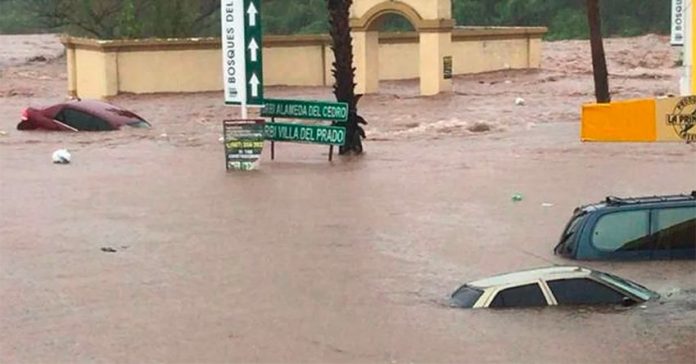
Flooded streets yesterday in Sinaloa.

At least seven people have died due to flooding caused by torrential rain in the states of Sinaloa and Chihuahua, authorities reported.

Sinaloa Civil Protection chief Juan Francisco Vega Meza said that at least four people had died in that state following heavy rains brought on by tropical depression 19-E.

Three deaths occurred in the state capital Culiacán, where three people are missing.

Another person died in the municipality of Ahome, where as much as 359 millimeters of rain have fallen over the past 24 hours.

Streets of the municipal seat of Los Mochis were inundated and access to parts of the neighboring municipality of El Fuerte have been cut off.

“It has been a complex situation because we were presented with an atypical phenomenon; we hadn’t received a quantity of rain like this before. In just one day, [the rain that fell in] Los Mochis represented 40% of the rain it has received in the whole year and in Culiacán, it was 30%,” Sinaloa Governor Quirino Ordaz said in a television interview.

Three deaths occurred in two municipalities in Chihuahua.

“A man and a woman drowned after being dragged by the current of a stream, located 500 meters from the Plata Real mine on the San José del Sitio ejido [community land] in the municipality of Satevó,” the state Attorney General’s office said.

The victims were identified as Tomás Castro Vargas, 51, and Carolina Blancas Luviano, 45, both residents of Tlapehuala in the state of Guerrero. Their bodies were recovered by a rescue team made up of mine employees.

In Namiquipa, authorities recovered the body of a man who tried to cross a swollen stream in his vehicle. The 45-year-old man, identified only as Wilbert E., was a resident of the neighboring municipality of Matachí.

In Ciudad Juárez, a woman and her eight-year-old daughter had to be rescued after they ran into trouble trying to cross a flooded overpass while dozens of families in the municipality of Chínipas were forced to evacuate their homes due to flooding.

At least 13 municipalities in Sonora, including Guaymas, Hermosillo and Huatambampo, have also been affected by heavy rains.

Federal Civil Protection director Ricardo de la Cruz Musalem said this morning that 11 Sinaloa municipalities remain in a state of emergency while the number of people affected by the heavy rains and flooding is estimated to be in the hundreds of thousands.

The army, navy, municipal, state and federal police forces, firefighters, the Red Cross and Civil Protection services are all contributing to rescue and evacuation efforts.

Shelters have been set up in several areas to receive those forced to leave their homes and many educational facilities in the affected states have suspended classes. The Red Cross is sending 30 tonnes of humanitarian aid to Sinaloa today.

Sinkholes have appeared on many roads and a bridge on Federal Highway 15 between Los Mochis and El Carrizo has been damaged. The same highway was also closed in both directions yesterday at San Miguel Zapotitlán after a drainage system collapsed.

The National Meteorological Service (SMN) is forecasting more heavy rains for both Sinaloa and Chihuahua today and intermittent heavy showers in Sonora.

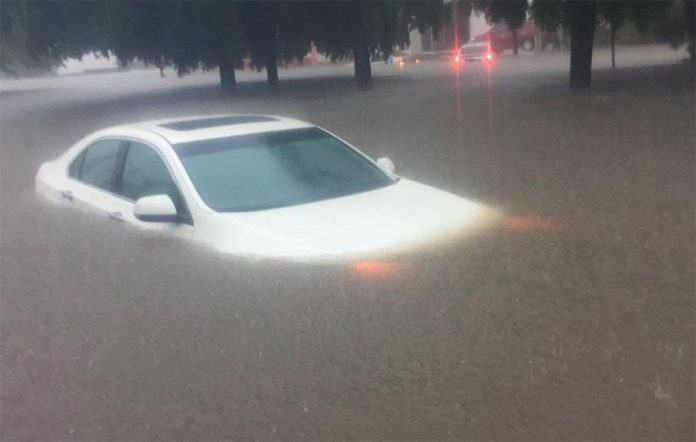
Flooding yesterday in Culiacán.


Source: Milenio (sp), El Universal (sp) 

AMLO promises 10 billion pesos more for earthquake recovery

0
Feeling the AMLOve yesterday in Juchitán.

President-elect Andrés Manuel López Obrador yesterday pledged an additional 10 billion pesos (US $531.2 million) for earthquake recovery and criticized the outgoing government’s response to last September’s twin disasters.

The funds, destined for repair and rebuilding of homes, schools, hospitals and cultural heritage, will be made available through the National Reconstruction Program and complement resources provided by the Natural Disaster Fund (Fonden).

López Obrador announced the federally-funded reconstruction program during a visit to Ixtepec, Oaxaca, where he was met at the airport by protesters who claimed that the earthquake aid money they were promised has been withdrawn.

Speaking in the town’s central square, the future president also proposed creating an inter-ministerial reconstruction commission that would be overseen by powerful federal delegates and in which all three levels of government would participate.

The future president also visited Juchitán, the commercial hub of the Isthmus of Tehuantepec region, which bore the brunt of the destructive 8.2-magnitude earthquake that struck just before midnight on September 7 last year.

While critical of the current government’s response to the two earthquakes, which together damaged thousands of buildings and left almost 500 people dead, López Obrador said that he was determined to look to the future.

“What’s already been done by those on the way out, well, there was already a public trial,” he said, referring to the Institutional Revolutionary Party’s crushing defeat in the July 1 elections.

“We’re going to do what corresponds to us and we’re going to look forward and get Mexico out of the backlog, the crisis, it finds itself in . . .”

President Enrique Peña Nieto’s sixth and final government report revealed that both Oaxaca and Chiapas have completed less than 40% of the reconstruction and repair work required and distributed less than 40% of the federal money they have received.

Thousands of people in the two southern states and parts of central Mexico including Mexico City are still waiting for their homes to be repaired or rebuilt a year after the two quakes struck.

Source: El Universal (sp) 

Ceboruco: roadrunners, pumas and glorious views from a smoldering crater

0
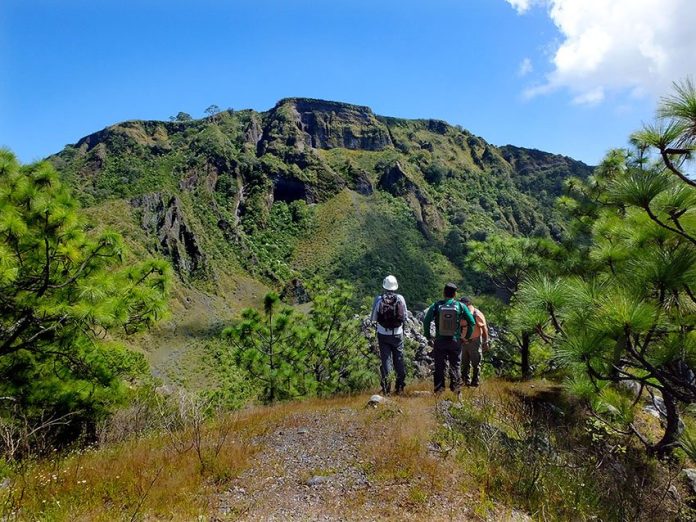
First glimpse of the crater wall after a one-hour hike.

Ceboruco is a stratovolcano located in the state of Nayarit at a spot 60 kilometers southeast of Tepic, where three tectonic plates come together.

According to the Smithsonian’s Global Volcanism Program, it is the only historically active volcano in the northwest part of the Mexican Volcanic Belt and last erupted around 1875.

This massive, mysterious volcano was first brought to my attention by a friendly oldtimer guarding the archaeological ruins at nearby Ixtlán.

“If you’re looking for a place to camp around here, señor, all I can say is that the most beautiful sight I have ever seen is the view from the top of Ceboruco Volcano. There are no mala gente [bad guys] there, no gente at all, in fact, and the camino that takes you up is in great condition.”

We thanked the old gentleman and drove up the road to the sleepy town of Jala, famous for its honey (available in November). Exiting Jala, we found ourselves face to face with Ceboruco, which loomed above us, hogging the entire horizon.

As we followed the twists and turns of the narrow but well maintained brick and cobblestone road, we witnessed dramatic changes both in temperature and in vegetation. At first there were clusters of beehives nestled among low, thorny shrubs on the roadside. It was hot and dry, and three times we were surprised by roadrunners dashing in front of us.

Then we found ourselves in the shade of the mountain and it was suddenly cool and green. As we drove higher, the trees grew taller until finally we were surrounded by a beautiful pine forest. It was time to put on sweaters and jackets.

As we took one of the last bends at the top of the mountain, we came upon an enormous, sheer cliff where the road appeared to simply vanish. Below us was a deep chasm. Cautiously, we drove along at a snail’s pace and were amazed to discover it wasn’t washed out at all. It was, in fact, perfectly safe, and after passing through several hidden recesses, we left the perimeter of the volcano and headed for the top.

At the beginning of a beautiful long meadow below us and to our right we spotted white wisps rising from holes at the base of the valley wall. We pulled off the road and went to investigate these fumaroles which bathe the hillside in live steam day and night.

Although this meadow becomes — on rare occasions — the venue for local soccer matches, most days of the year it makes a great place to camp. The valley, with its dramatically steep walls, is gorgeous and imparts a safe, peaceful feeling. The steam whooshing out of the earth is also very impressive and comes without the usual strong sulphur smell associated with many fumaroles.

The altitude of the microwave station at the top is 2,280 meters. Just before it lie the abandoned shells of a recreational area and museum where I have camped on numerous occasions. This flat spot is surrounded by enormous chunks of rugged lava, a frozen sea of violent passion.

Over the dark, jagged wall above, all kinds of weather can come at you with incredible swiftness. One evening my nephew and I were first soaked with heavy rain, then battered by resounding hailstones. Suddenly, the sky cleared and the stars came out!

We went for a walk and watched as off in the far distance heavy black clouds rolled over the valleys below. Lightning bolts began shooting up from the ground and down from the clouds simultaneously, in the most spectacular fireworks display we had ever seen. Moments later, thick fog rolled in, swirling through our campsite until visibility was limited to about one meter.

On this mountain you can get a good dousing even in the dry season. And in case you doubt that Tlaloc the rain god himself is running the show, ask French geologist Henri de St. Pierre. At 2:00am he staggered out of his tent with a ravaging case of Montezuma’s revenge (thanks to the salsa in a country restaurant).

At that very moment, the rain god decided to start dumping torrents upon our little bailiwick. Even today, Henri keeps his Parisian friends in stitches while describing the longest and wettest night of his life, during which he had to repeatedly crawl out of his tent to let nature take its course, while at the same time trying to hold a roll of toilet paper, an umbrella and a flashlight in only two hands.

Yes, camping on Ceboruco is like sleeping on the back of an angry giant.

From the former rec center a path, 2.8 kilometers long, leads southwest towards the smoldering crater which you can reach in about an hour. As we followed the path, we kept discovering beautiful, perfectly flat meadows covered with rich carpets of short grass. These are bordered by walls of lava, and here and there in the distance you see tall hills, some green with vegetation, others stark and sterile.

Rumor has it that pumas live among the pine trees and yuccas and, in fact, we saw plenty of large cat tracks crisscrossing the trail, which often consists of fine, black ash. If you happen to be hiking here at the right time of the year and the birds haven’t beaten you to the punch, you could have a chance to pick ripe “Mexican cherries” from a lichen-covered capulín tree.

Finally we reached the crater, which has the shape of a round, green valley with an outcrop of broken lava in its center. Here we were greeted by blasts of steam reeking of sulphur. From here we walked only 200 meters to a spectacular lookout point from which we could see kilometers of black lava stretching across a vast plain below us, broken only by a thin line on which tiny ants seemed to be crawling.

Or so it appeared until we used our binoculars and discovered that the line was the toll road to Tepic and the “ants” were trucks and buses.

The last time I visited Ceboruco we camped in the picturesque meadow beneath the fumaroles. We fell asleep to the incredibly beautiful flute-like song of the clarín jilguero or brown-back solitaire.

Halfway through the night, when the temperature was only 7 C, I was awakened by footsteps right outside my tent. It didn’t sound like a cow or a bull, so I decided it must have been one of my companions on his way either to relieve himself or to warm up next to the fumaroles a few meters above my tent. But the next morning all my friends swore they hadn’t gone anywhere in the night.

[wpgmza id=”80″]

After breakfast, one of my compañeros announced, “John, I think I found your mystery visitor.” He pointed to a very narrow animal path, only 15 centimeters wide, leading off into the brush. We followed it quite a long distance and came to some huge animal droppings. I suspect we may have discovered the haunt of one of Ceboruco’s famed pumas. If you decide to camp beneath those fumaroles, keep your camera handy in the middle of the night!

To visit this impressive volcano, look for “Ceboruco Volcano, Jala, Nayarit” using Google Maps. To reach the crater, follow the map in Chapter 29 of Outdoors in Western Mexico or download Ceboruco Crater Trail to your Wikiloc app. This shows you the entire driving and walking route from the toll road to the lookout point on the crater rim.

The writer has lived near Guadalajara, Jalisco, for more than 30 years and is the author of A Guide to West Mexico’s Guachimontones and Surrounding Area and co-author of Outdoors in Western Mexico. More of his writing can be found on his website.

[soliloquy id="61444"]

‘The people know everything,’ AMLO says in response to criticism

0
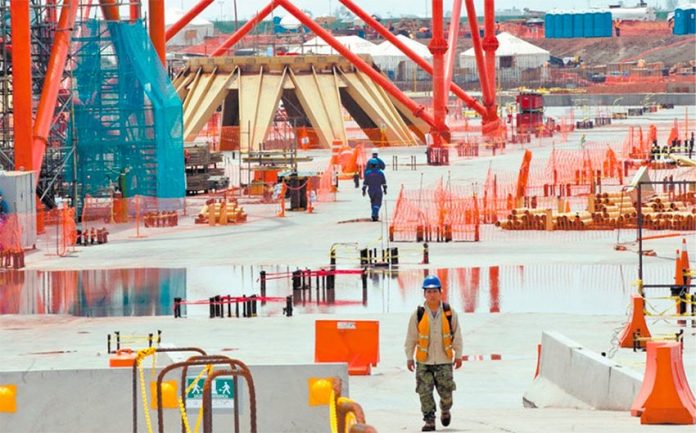
Construction proceeds at new airport.

The president-elect has hit back at investment bank JP Morgan’s assessment that consulting the public on large infrastructure decisions creates uncertainty, declaring that “the people know everything.”

Andrés Manuel López Obrador told reporters in Mexico City this morning that “I respect their point of view, it’s just that we think and maintain that in a democracy it’s the people who are in charge, it’s the people who decide and Mexicans want to be consulted, they want to be asked and the best way to avoid mistakes is to ask.”

The Morena party leader has said that he intends to hold a public consultation late next month to decide the fate of the new Mexico City International Airport project.

However, in the Mexico 101 Study in its 2018 Country Handbook, JP Morgan said that López Obrador’s “transition team is adding uncertainty about what could happen in the next six years with the frequent use of consultations and/or referendums to decide [the future of] high-impact projects.”

The investment bank warned that the Morena-led coalition could adopt a “radical left” position in Congress and use its legislative majority to legalize public consultation mechanisms such as referendums, which are not formally described in Mexico’s constitution.

“López Obrador said that the result of the consultation would be binding although the constitution could not validate the result in its current framework,” JP Morgan said.

It also said that “according to a recent survey, more than 50% favor the current [airport] project while less than 30% think that the project should be modified.”

López Obrador has said that the Santa Lucía Air Base could be adapted for commercial use to relieve pressure at the current airport although there are doubts about the feasibility of the two facilities operating simultaneously.

JP Morgan also warned that reviewing oil contracts “could slow down the implementation of the until now successful energy reform.”

The incoming government has said that it intends to look at contracts signed by private and foreign companies but finance secretary nominee Carlos Urzúa said shortly after López Obrador’s election win that if no irregularities are detected they will be honored.

JP Morgan was also critical of the incoming administration’s plans to scrap the educational reform and the austerity measures it has outlined.

“It’s not clear if the savings will be sufficient to finance the new projects given the specifications and complexities of the [austerity] plan, that won’t be implemented in a realistic way in the first year,” the bank said.

At Mexico City Airport to catch a flight to Tijuana less than 10 hours after returning from Huatulco, the president-elect appeared unfazed by JP Morgan’s views.

Pushed by a reporter about whether the public really had the technical knowledge to make an informed decision about the new airport project, López Obrador said “the people know everything, the people are wise, those who don’t know are the corrupt.”

Source: Milenio (sp) 

Heavy rains pummel northern Sinaloa; families evacuated in Los Mochis

0
Flooding today in Sinaloa.

The governor of Sinaloa has asked for a declaration of emergency in the municipalities of El Fuerte and Ahome due to heavy rains brought on by tropical depression 19-E.

As of early this afternoon as many as 2,500 families had been evacuated from their homes in Los Mochis, where 90 millimeters of rain fell in just four hours this morning. As much as 180 milliliters has been recorded in some areas.

And more is on the way. The forecast is for intense to torrential rains with accumulations of 155 to 250 milliliters over the next three days.

Many streets, homes and businesses were flooded in the city this morning, but there have been no casualties.

Federal Police closed the Nogales-Mexico City highway in both directions at San Miguel Zapotitlán after drainage system collapsed.

Source: Milenio (sp), Río Doce (sp)

Sugar plant first to automate 100% of its processes

0
Sucroliq's Irapuato plant.
Sucroliq's fully automated plant.

The first and only fully-automated sugar processing plant in the world is up and running in Irapuato, Guanajuato.

By implementing automation and data exchange in manufacturing technologies created by the German company Siemens, the Mexican firm Sucroliq is able to produce 150,000 liters of liquid sugar per day at the plant which opened last fall.

A leader in the domestic sugar industry, the Irapuato Sucroliq plant is located inside an industrial park run by Danone, which is considered to be one of the French multinational food products corporation’s most efficient in the world.

“[Automation technologies] installed by Siemens offer levels of efficiency and process control that no other sugar plant in the country has,” said Sucroliq president Enrique Bojórquez Valenzuela. “It is the most modern of its type in the world, with the highest levels of automatization and control of all of its process areas.”

The plant’s processes are so streamlined, he continued, that its 10 areas can be monitored from a smartphone.

Sucroliq went with full automation because the food industry “demands the highest quality standards.” Liquid sugar processed in the Irapuato plant is sent directly to the production line of companies like Danone.

Source: Milenio (sp)