Home Blog Page 2064

Singer off narco black list in Mexico but still on US kingpin list

0
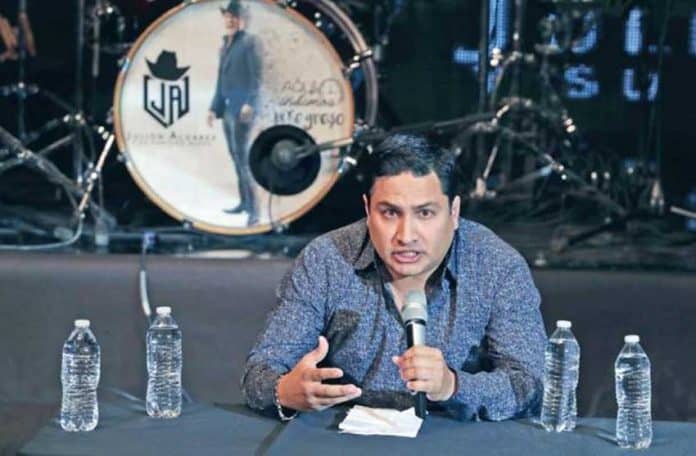
Álvarez speaks at Saturday's press conference.

Grammy-nominated singer Julión Álvarez said Saturday that he has been taken off a black list in Mexico for alleged links to organized crime, but he remains on the United States’ kingpin list.

“I feel satisfied and happy that today I can say that Julión Álvarez Montelongo has been removed from that list . . .” the singer told a press conference before a concert in Los Mochis, Sinaloa.

The financial intelligence unit of the Secretariat of Finance (SHCP) blocked Álvarez’s bank accounts earlier this year due to his alleged involvement in drug trafficking, while the United States Department of Treasury placed him on that country’s kingpin list last August.

In a statement issued at the time of the kingpin designation, the Treasury Department said that Álvarez and 20 other Mexican nationals, including soccer player Rafael Márquez and 42 entities in Mexico had provided “support to the narcotics trafficking activities of Raúl Flores Hernández,” a capo known as “the least known drug lord” and “El Tío” (The Uncle).

For Álvarez, the designation meant the immediate cancelation of his U.S. visa, the freezing of any assets he held in the United States and a prohibition against any U.S. company from conducting business with him.

The banda singer has denied the allegation, and Álvarez said he initiated legal action as soon as the SHCP included him on its list.

“Since we were incriminated, my team and I decided to start proceedings here in Mexico to be excluded from the list of blocked persons,” he said.

“We supplied all the information that we were asked to. We submitted bank accounts, documents and everything that was needed to show where I obtained my assets, everything that was needed so that we were removed from the list.”

Álvarez explained that he regained access to his bank accounts on July 10 but added that the legal battle isn’t over because companies he owns are still on the SHCP black list. However, he’s hopeful that they too will soon be removed.

“We are confident that in the coming days, everything will be fixed . . .” Álvarez said.

Mexican and U.S. law enforcement authorities announced earlier this month that they would strengthen cooperation in the fight against drug cartels and organized crime but Álvarez’s case is one on which the two countries appear to be on different pages.

Source: El Universal (sp)
Benito Juárez, gray whale grace new 500-peso banknote

0
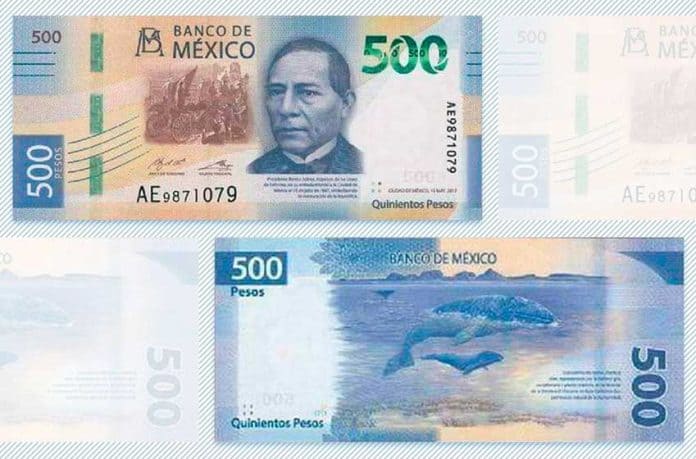
The new bill that entered circulation today.

Images of former president Benito Juárez and a gray whale replace those of artists Frida Kahlo and Diego Rivera on the new 500-peso bill which entered circulation today.

The Bank of México (Banxico) officially launched the new blue-colored note at an event in Mexico City, where it was announced that it is the “first in a new family of bills that pay homage to our historical identity and natural heritage.”

The central bank said in a video that “the ecosystem of coasts, seas, islands and the gray whale” and “the historic process of La Reforma [a 19th-century liberal reform] and the restoration of the republic” feature together on the new 500-peso bill.

Juárez, a Zapotec lawyer from Oaxaca who served as president between 1858 and 1872, now appears on two bank notes as his likeness is already featured on the 20-peso bill.

Although both notes are blue and feature Juárez, Banxico pointed out that the 500-peso bill is larger than the 20 and that the former is made of cotton paper whereas the latter is plastic.

Bank of México governor Alejandro Díaz de León said the decision to change the 500-peso note was made because it is the most widely circulated and most counterfeited denomination.

The new bill features a range of security features including fluorescent ink, a dynamic thread, embossing perceptible by touch, a watermark and a multicolor denomination.

A new 200-peso bill, featuring independence heroes Miguel Costilla y Hidalgo and José María Morelos on one side and the El Pinacate desert biosphere reserve on the other, will enter into circulation next year, while a new 1,000-peso note will be issued in 2020.

The latter will pay homage to the Mexican Revolution, with images of Francisco I. Madero, Carmen Serdán and Hermila Galindo on one side. The opposite side will feature Campeche’s Calakmul Biosphere Reserve.

The 500-peso bill was first issued in 1994 and featured an image of army general Ignacio Zaragoza.

The Frida and Diego bill appeared in 2010 but will now be gradually withdrawn from circulation.

Source: El Financiero (sp)

Tijuana, state to provide land to 160 families displaced by slides

0
Houses destroyed by a Tijuana landslide.

State and municipal authorities will provide land to 160 families displaced by landslides in various parts of Tijuana, Baja California.

Seven pieces of land valued at 72.8 million pesos (US$ 3.9 million) will be donated to the victims of landslides in the neighborhoods of Lomas de Rubí, Camino Verde and Sánchez Taboada.

Governor Francisco Arturo Vega de la Madrid said his administration will hand over four pieces of land — with room for 92 houses — worth 32.2 million pesos, including public services and utilities that will be provided.

Mayor Juan Manuel Gastélum Buenrostro explained that the municipality will donate three more pieces of land, worth 36.7 million pesos, on which 68 houses can be erected. He added that the local government would also invest 3.9 million pesos in installing water and other utilities.

“These pieces of land will have running water, sewers and electricity provided free of charge, and are located close to schools and public transportation routes,” said Gastélum, adding that the first titles will soon be handed over to the new homeowners after several formalities are met.

Vega said his administration had already donated 104 pieces of land for those affected by earlier landslides in the División del Norte and Sánchez Taboada neighborhoods.

Source: Milenio (sp)

Armed forces confiscate 4 narco-labs, 26 tonnes of meth in Sinaloa

0
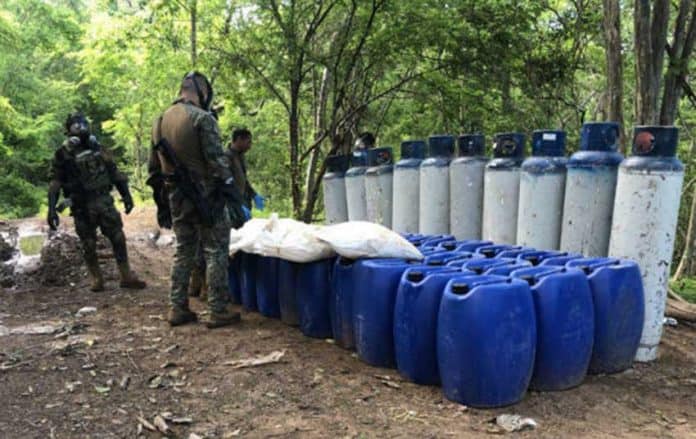
Marines at a narco-lab in Sinaloa.

Navy marines have located and destroyed four illegal narcotics laboratories and a shipping point in Sinaloa, along with 26 tonnes of crystal methamphetamine and 4,200 liters of the drug in liquid form.

The armed forces made incursions into remote locations in the municipalities of Culiacán and Cosalá yesterday, following reports of the existence of the narco-labs.

Two of the laboratories and the shipping point were located in northeastern Culiacán, along with five tonnes of solid methamphetamine and 4,200 liters of the liquid drug.

The two other narco-labs were located in Cosalá, where the federal forces found another 21 tonnes.

The fully-equipped laboratories were incinerated on site along with the drugs and other supplies.

The area is under the control of elements of the Sinaloa Cartel led by the sons of drug lord Joaquín “El Chapo” Guzmán.

Another seizure took place in Baja California, where army soldiers confiscated four tonnes of crystal meth near the community of La Rumorosa in Tecate. Equipment and supplies used in the drug’s manufacture were also seized.

There were no arrests in either case.

Another operation by marines in Sinaloa, also near Culiacán, turned up 50 tonnes of meth on August 16. With an estimated value of US $5 billion, it was one of the largest synthetic drug seizures ever made in Mexico.

Source: El Universal (sp), Reforma (sp)

Police, private security will protect shipments of fish

0
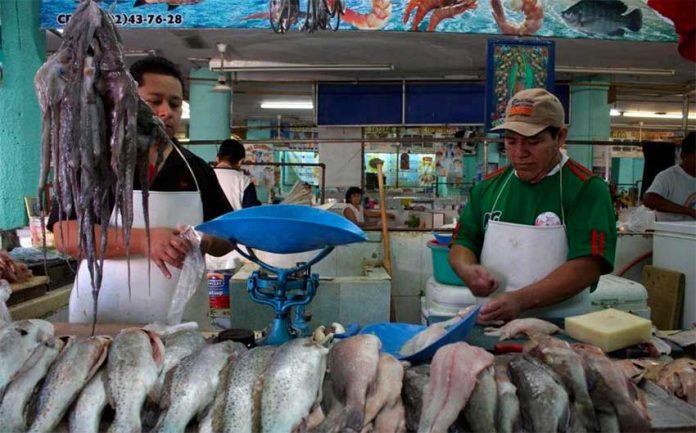
Thieves have been targeting shipments of fish from Yucatán.

Refrigerated freight trucks transporting seafood from Yucatán to central Mexico, like many other cargo transporters, have become the target of thieves.

But starting today, private and public security forces will monitor and guard the trucks to combat the robberies.

The ever increasing number of armed thefts of the fresh cargo — and the millions of pesos in losses — led industrial fishing companies and cooperatives to request the intervention of federal forces.

In response to the insecurity, insurance companies raised the freight companies’ deductibility percentages by 25 to 40%, which resulted in higher costs.

On Saturday their plea for help was heeded when authorities announced that the Federal Police and a private security company will safeguard shipments.

The state Public Security Secretariat will also participate, guarding the trucks all the way to the border with the state of Campeche.

Freight companies have reported that the largest number of thefts occur on the Veracruz-Mexico City highway, and that the product most affected are octopus shipments destined for the capital and Monterrey, Nuevo León.

While fishermen are paid less than 120 pesos (US $6.40) for a kilogram of their fresh octopus, the same quantity can get prices of US $14 to $21 on the international market.

Source: Milenio (sp)

Michoacán priest who disappeared last week found dead

0
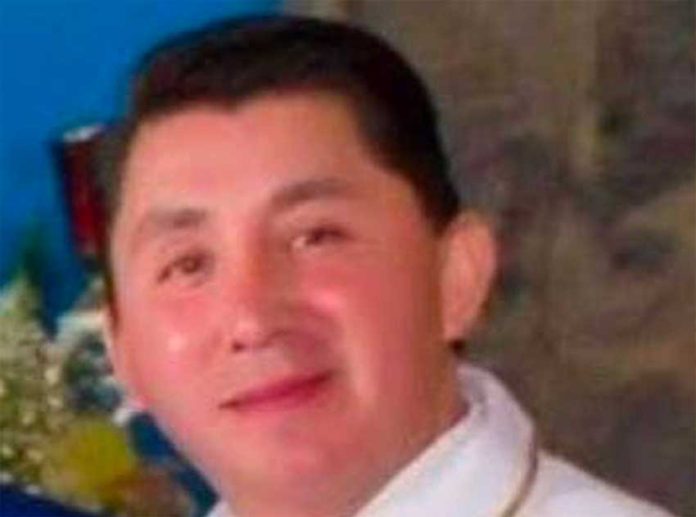
Flores, whose body was found Saturday.

The body of a Catholic priest who disappeared August 18 in Michoacán was found Saturday.

Miguel Gerardo Flores was last seen after celebrating mass in the village of Matanguarán in the municipality of Uruapan. His body was found some 70 kilometers away in Múgica, the state Attorney General’s office said.

Originally from Zacatecas, Flores was ordained in 2007 and was parish priest of Santa Catarina de Alejandría in Jucutacato, where he also directed a family center for youth. He belonged to the Missionaries of the Sacred Heart.

The Catholic church says it had recorded 22 assassinations of priests between December 2012 and last April, making Mexico one of the most dangerous countries in Latin America for priests.

According to unofficial sources, Flores’ hands and feet were bound and there were signs he had been tortured but authorities have said little about the case.

Church officials in Michoacán yesterday ruled out the possibility of involvement by organized crime, suggesting the motive might have been robbery because Flores’ vehicle had not been recovered.

Source: Animal Político (sp), El Heraldo (sp)

Mexico-US reach new trade deal although one issue still outstanding

0
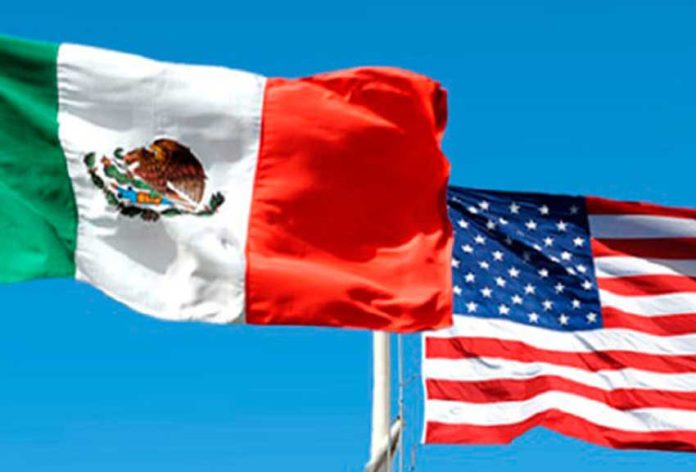
mexico us flags
One flag short at the moment.

Mexico and the United States have reached a new trade agreement that could exclude Canada, U.S. President Donald Trump said today, but Mexican President Enrique Peña Nieto stressed his wish for the deal to remain trilateral.

“They used to call it NAFTA. We’re going to call it the United States-Mexico trade agreement. We’ll get rid of the name NAFTA,” Trump told reporters, charging that the name has a “bad connotation because the United States was hurt very badly by NAFTA for many years.”

The U.S. president hailed the agreement as “a big day for trade” and described it as “an incredible deal for both parties.”

Mexican and United States officials, who have engaged in talks in Washington D.C. for the last five weeks, have maintained that once outstanding issues between the two countries were resolved, Canada would rejoin the talks in order to renew NAFTA as a three-way accord.

But today Trump cast some doubt on that eventuality, stating “we could have a separate deal [with Canada] or we could put it into this deal.”

Nevertheless, the U.S. president said he would speak with Canadian Prime Minister Justin Trudeau “in a little while” and that he hoped to begin negotiations with him “almost immediately.”

However, he also threatened that it would be easier to put tariffs on Canadian cars rather than to include Canada in the pact with Mexico.

Some analysts suggested that adopting a “we’ll see” attitude on whether Canada will join the agreement is a strategy designed to pressure its northern neighbor in future negotiations.

In a telephone call this morning, Peña Nieto told Trump through a translator that Mexico wanted to maintain a trilateral deal.

“It is our wish, Mr. President, that now Canada will also be able to be incorporated in all this. I assume that they are going to carry out negotiations of the sensitive bilateral issues between Canada and the United States,” he said.

In a post to Twitter earlier today, Peña Nieto wrote that he had spoken with Trudeau about the progress made by Mexico and the United States on NAFTA, adding “I expressed to him the importance of his reinstatement in the process, with the aim of concluding a trilateral renegotiation this week.”

According to one U.S. trade official, the agreement between Mexico and the United States would require 75% of auto content to be made in the NAFTA region to qualify for tariff-free status, while another official said that 40% to 45% of content would have to be made by workers earning at least US $16 per hour.

The so-called sunset clause that would see the trade pact automatically expire if it is not renegotiated every five years will not be part of the new deal, replaced instead with a “review” every six years, while United States Trade Representative Robert Lighthizer said the agreement with Mexico would last 16 years but could be extended with a new 16-year deadline every six years.

He also said the agreement would soften but not eliminate dispute mechanism rules.

Ahead of Trump’s remarks, the Mexican peso rose while stocks in Mexico, the United States and Canada all made gains in anticipation of of the new deal.

The announcement of the accord between Mexico and the United States is the biggest development in renegotiation talks that have dragged on for more than a year amid repeated threats by Trump to terminate the deal.

Other issues, including the imposition of metal tariffs on both U.S. neighbors and Trump’s often aggressive rhetoric towards Mexico, also complicated the renegotiation process.

This morning, Economy Secretary Ildefonso Guajardo said there is still one difference to iron out but declined to identify it.

Trump is expected to send formal notice to the United States Congress of his intention to sign the new deal within 90 days, which would give Peña Nieto enough time to sign the agreement before he leaves office at the end of November.

It is unclear how soon trilateral meetings could be held if the United States agrees to pursue a three-way accord, with Canada’s foreign minister and chief NAFTA negotiator Chrystia Freeland in Europe this week.

But in another Twitter post today Peña Nieto again stressed his desire to “achieve a successful trilateral negotiation of NAFTA this very week.”

Source: El Financiero (sp), Bloomberg (en), Reuters (en)

Mexico must look to the south, says nominee for foreign affairs chief

0
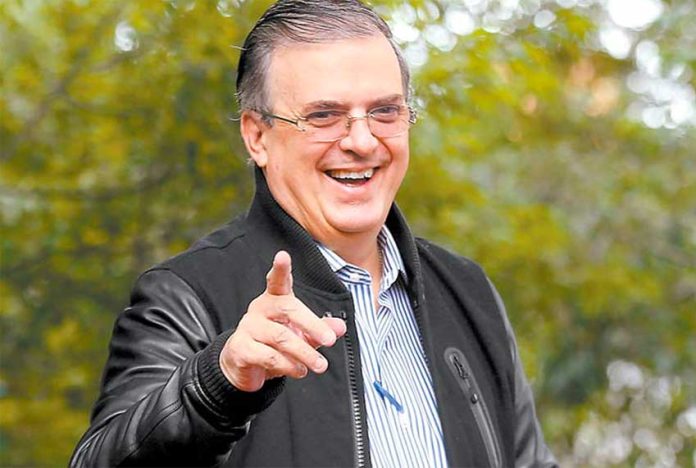
Ebrard: looking south.

Mexico will seek to increase its presence in Central America during the administration of the new federal government, says the nominee for foreign affairs secretary.

“For economic reasons, Mexico has been too concentrated on a single relationship, which is with the United States and to a lesser extent with Canada . . .  Just as we have to look to the north, we [also] have the south and [we must] increase the presence of the country in Central America,” Marcelo Ebrard told a press conference yesterday.

The goal will be on the agenda tomorrow when the president-elect meets with Guatemalan President Jimmy Morales in Tuxtla Gutiérrez, Chiapas.

It will be the first time that Andrés Manuel López Obrador has met with a foreign head of state since his landslide victory on July 1.

“We’re going to raise the ideas we have, which are projects in two senses: one, for immediate employment and the other for development, which has a longer maturation period . . .” Ebrard said.

The future foreign affairs chief also said he would seek to persuade the United States to participate in the projects and to increase its allocation of funds to the region, although he stressed that “other possible sources of support,” such as the European Union, will also be sought.

“[There has been] an increase in problems, both in insecurity as well as migratory and economic flows and the United States’ investment [in Central America] has been quite limited, a much greater effort could be made,” Ebrard said.

In a letter sent to United States President Donald Trump last month, López Obrador proposed that Mexico, the U.S. and each Central American nation contribute resources according to the size of its economy and that 75% of the collective funds be allocated to finance projects that create jobs and combat poverty, while the other 25% would go to border control and security.

“. . . Every government from Panama to the Rio Grande would work to make the migration of its citizens economically unnecessary and take care of their borders to avoid the illegal transit of merchandise, weapons and drugs . . .” the president-elect wrote.

Ebrard said yesterday that López Obrador and the ambassadors of Central and South America will hold a meeting in Mexico City Wednesday, at which regional cooperation will also be the core focus.

“We’re going to try to have these kinds of dialogues periodically. It’s not just a political greeting, we want to come up with a working agenda. We deliberately convened everyone together because we’re firm believers that, despite the differences there are, we should all work together,” he said.

Turning to the security arrangement in place with the United States to combat drug trafficking, Ebrard flagged that the new government will seek to depart from the status quo.

“Yes, we aspire to a real change in the strategy that has been followed because if we keep doing the same thing, we’re going to have the same results, both us and them,” he said.

“Changes have to be made. I don’t believe that the intention to cooperate will be modified, what’s going to change is the content of what is being carried out because in the end it’s the same strategy as 20 years ago.”

Mexican and U.S. law enforcement authorities announced new security strategies earlier this month including the creation of a joint investigative team that will target the leaders and finances of Mexican cartels that ship drugs into the United States.

Following the announcement, López Obrador’s nominee for secretary of public security, Alfonso Durazo, said the new government will focus more on the latter rather than the former, charging that what gives cartels the capacity to operate are their financial resources rather than their leaders.

But Ebrard stressed that the incoming government has not yet discussed binational security arrangements with U.S. officials as it is still refining the domestic security strategy it will implement.

“We’re not going to stop cooperating with the United States, but what matters is what strategy we’re going to follow, what is the route.” he said.

Source: Milenio (sp)

Conflict continues between 2 Oaxaca municipalities over access to water

0
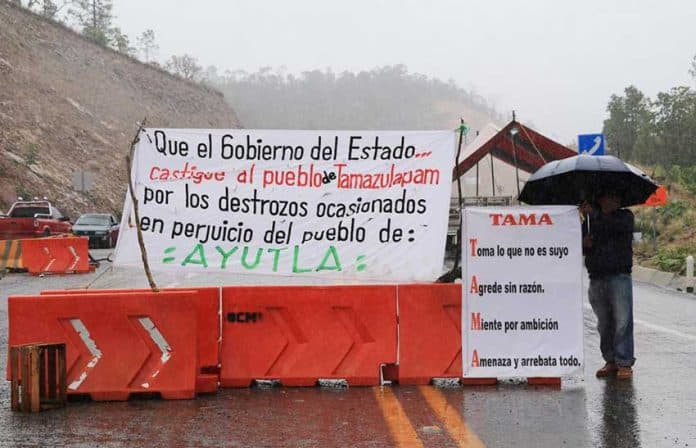
A highway blockade by Ayutla residents protests the water situation.

Land disputes in Oaxaca are common but a current conflict between residents of two municipalities is over access to drinking water.

A year and a half ago, authorities in San Pedro y San Pablo Ayutla, a municipality in the state’s Mixe region about 100 kilometers southeast of Oaxaca city, connected to the water supply of the neighboring municipality of Tamazulápam del Espíritu Santo when their own supply ran dry.

However, before doing so they failed to ask for permission, according to reports, triggering a conflict between comuneros (community landowners) in the two municipalities.

On May 17, 2017, a violent clash broke out between the two opposing groups, with both guns and sticks used in an ugly confrontation.

One person died, two people were kidnapped, dozens were injured and scores of houses were destroyed.

Tamazulápam councilor Román Rodríguez told the newspaper Milenio that an attempt by Ayutla residents to direct all the water to that municipality led to the violence.

“On that occasion, they blocked the passage [of water] to our pipes and dynamited our catchment system, they wanted all the water for themselves,” he said.

Ayutla Mayor Yolanda Pacheco described the clash as “a horrible encounter.”

Ever since, water supply to Ayutla has been cut off, forcing residents to find an alternative source or look to the sky for relief.

Since this year’s rainy season began three months ago, Ayutla resident Hermelinda Hernández and her children go out with buckets whenever the heavens open to collect rainwater for their everyday needs.

Hernández’s neighbors, one of whom is her brother, do the same.

[wpgmza id=”63″]

But things are more difficult when there is no rain.

“Before the rainy season, we had to go to a well that’s four kilometers down the mountain and fill our five-liter containers . . .” said Bernardo Hernández.

“The problem isn’t going down but rather having to walk [back up] for 40 minutes in the forest with the container on your shoulders or with a rope around your forehead,” he explained.

The Ayutla mayor said the lack of clean water is taking a heavy toll on the municipality’s residents.

“In Ayutla alone there are 5,686 citizens and those who have been affected the most are the elderly. There are already people who are sick and the outbreaks of gastrointestinal infections are becoming more frequent. Our children bathe every third day and us adults, once a week,” Pacheco said.

State authorities say they have tried to solve the problem by holding 17 meetings aimed at reaching an agreement between the two municipalities so that together they can install a new water capture and storage system to supply both.

However, a resolution has not yet been reached.

Residents of both municipalities are instead insisting that the National Water Commission (Conagua) and the state government install the new system in order to avoid further confrontations in the future.

Lack of a reliable water supply and water scarcity are major problems in several parts of Mexico.

Almost nine million Mexicans don’t have access to drinking water, according to Conagua, while a further 13 million rely on deliveries from water tankers or obtain their water from contaminated wells.

One solution is to install specially designed rainwater harvesting systems, which Mexico City organization Isla Urbana is doing in some of the capital’s most marginalized neighborhoods.

Source: Milenio (sp)

Tijuana council passes prohibition on plastic bags

0
plastic bags
No more of these in Tijuana.

The municipal council of Tijuana, Baja California, has unanimously approved a prohibition on plastic bags.

Convenience stores and supermarkets will have 180 days to phase out the ubiquitous plastic bags in favor of environmentally-friendly alternatives.

The municipality will also implement strategic solid waste management programs and a campaign that will inform the public and raise awareness about the harmful effects of the bags.

The measure is a direct result of Tijuana being the first city in Mexico to join the global Clean Seas campaign in June last year.

The campaign against plastic pollution was launched in the spring of 2017 by the United Nations Environment Program.

The ban on bags has the support of the local service industry, the Tijuana chapter of Canacintra, the National Chamber for Industrial Transformation and the non-governmental organization Economía Verde Aplicada.

The president of the municipal commission for the environment, sustainable development and health, Mónica Vega, explained that the measure puts Tijuana at the national forefront of sustainable cities by implementing an environmentally-aware public policy.

According to data compiled by the federal Secretariat of the Environment, Mexico generates close to 103,000 tonnes of trash every day, 10.9% of which are plastics which are often washed away by rain and end up in the ocean.

Tijuana is at least the second municipality to outlaw the bags in the last month. Querétaro appears to have been the first to do so. Ensenada, Baja California, recently followed suit.

Source: Milenio (sp), Excélsior (sp)