Wednesday, February 25, 2026
Home Blog Page 2066

Environmental group prepares criminal complaint over Tijuana sewage

0
Waters off Tijuana are polluted by a sewage treatment plant.

A binational environmental group is preparing a criminal complaint against the Baja California state government for negligence in the discharge of sewage from a Tijuana treatment plant that pollutes waters off the coasts of both Mexico and the United States.

Paloma Aguirre, coastal and marine director for Wildcoast, told the newspaper Reforma that the complaint will be made collectively in the names of Baja California residents and that separate legal action will also be initiated across the border.

Aguirre charged that the Tijuana wastewater treatment plant, known as San Antonio de los Buenos, or Punta Bandera, is dumping 1,750 liters of untreated sewage into the Pacific Ocean per second.

She said that in addition to causing environmental damage, the pollution also poses a risk to human health.

A recent study by the organization Proyecto Fronterizo de Educación Ambiental (Border Project for Environmental Education) found that the wastewater discharged by the Punta Bandera plant exceeds permitted fecal coliform levels by as much as 12,000%, or 120 times the legal level.

In March, the Californian cities of Chula Vista, Imperial Beach and San Diego jointly filed their own lawsuit against the United States section of the International Boundary and Water Commission (IBWC) and its contractor, Veolia Water North America, charging that they repeatedly failed to take measures to address “devastating pollution discharges” in violation of U.S. law.

A San Diego border patrol agents’ union has also said that it will file a complaint over Tijuana’s pollution.

More than 50 border agents fell ill last year due to exposure to contaminants while working in the vicinity of the border.

For its part, the Tijuana office of the state Public Services Commission (Cespt), which operates the treatment plant, said in a statement that it is lobbying the federal government and organizations including the United States Environmental Protection Agency and the IBWC to obtain funding that would allow it to increase capacity.

An investment of around 1.5 billion pesos (US$79.7 million) is needed to upgrade the plant and four pumping stations, Cespt director Germán Lizola Márquez said.

However, he added, a study must first determine exactly what needs to be done, adding that the first stage of the 10-million-peso analysis is slated to be completed in October.

Sewage from the Punta Bandera plant has been contaminating ocean waters and beaches on both sides of the border for years.

Pollution in the Tijuana river, including viral pathogens, toxic waste and chemicals, also runs into the ocean, further angering politicians and residents of southern California.

Imperial Beach Mayor and Wild Coast executive director Serge Dedina has been particularly critical of Mexican authorities for failing to stem the tide of sewage and other contaminants flowing across the border.

Source: Reforma (sp)

There were more soldiers on the streets than ever last year

0
Military on patrol.
Military on patrol.

The federal government deployed 52,807 soldiers to fight Mexico’s notorious drug cartels last year, the highest number in the 12-year war on drugs, statistics show.

The record deployment was spread across several states in various regions of the country.

The Secretariat of Defense sent more than 6,000 soldiers to Guerrero, where criminal groups such as the Guerreros Unidos, Los Ardillos and Los Rojos operate. The southern state is one of Mexico’s poorest and most violent and is also a large opium poppy producer.

In Jalisco, the main target of a deployment made up of 5,535 soldiers was the Jalisco New Generation Cartel (CJNG), which was allegedly responsible for torturing and killing three film students near Guadalajara in March of this year.

The same cartel was blamed for an attack in May on Luis Carlos Nájera, the former attorney general of Jalisco who is now the state’s labor secretary.

In 2017, the army was also sent to carry out public security duties in Tamaulipas, Nuevo León and San Luis Potosí among other states.

Former president Felipe Calderón launched the military-based crime-fighting strategy shortly after he took office in December 2006 by sending 6,500 troops into his home state of Michoacán.

During 2007 — his first full year in office — 45,000 soldiers were deployed across the country.

The size of the deployment was increased to 48,650 in 2009 as the number of soldiers, marines and Federal Police losing their lives in confrontations with organized crime continued to grow.

That number was maintained until the end of Calderón’s six-year term in 2012.

The highest concentration of troops during the National Action Party (PAN) administration was in the northern border city of Ciudad Juárez, Chihuahua, which had been considered the most dangerous city in the world.

During 2013 — current President Enrique Peña Nieto’s first full year in office — the number of deployed troops shrank to just over 34,500 but the number grew by more than 50% over the following years to reach the 2017 figure.

With more than 29,000 homicides, 2017 was also the most violent year in at least two decades while more than 200,000 people have been murdered in the 12 years since the crackdown on cartels began, leading many observers to conclude that the war on drugs strategy has failed.

In addition, more than 30,000 people are missing and federal security forces, including the army and navy, have been suspected of being involved in enforced disappearances and other human rights abuses.

The disappearance of 43 students in Guerrero in 2014, a massacre that left 22 civilians dead in Tlatlaya, México state, the same year and the abduction this year of 23 people in Tamaulipas are among the cases in which the role of the military has been called into question.

The incoming Andrés Manuel López Obrador government has said that it plans to gradually withdraw the military from public security duties on the nation’s streets.

The next government’s strategy — which also proposes better training, pay and conditions for police — was applauded by a security collective earlier this month, which said that the measures are in accordance with what national and international organizations have recommended.

Source: Milenio (sp)

There will be no more spying on opponents, president-elect declares

0
López Obrador and his wife, Beatriz Gutiérrez: they were trailed by federal spies.

There will be no more internal spying on opposition politicians, incoming president Andrés Manuel López Obrador said on Saturday, recalling that he was tailed for years by federally-employed spies.

There will be no more Center for Investigation and National Security (Cisen) either, following its dissolution as part of the new government’s austerity measures.

The newly-appointed public security secretary, Alfonso Durazo Montaño, announced the move on Saturday.

“Cisen disappears because it has been discredited due to the political use that was made of it,” Durazo said.

The incoming secretary said a new organization, the National Intelligence Agency, will replace it.

López Obrador told reporters that the new agency will not perform espionage operations.

“There will be no more spying on the opposition . . . what we suffered for years, when I was opposition. When I was in Tabasco . . . there was a car parked in front of my house, day and night, watching. If I went to the market with my wife, there they were behind me; if we went to the movies, there they were, watching the movie too,” he said.

The new president explained that Cisen employees will be transferred to other areas where they will continue investigations against organized crime.

López Obrador added that he personally has known many Cisen agents for years: “Imagine, 30 years [as the opposition], many of them are ready to retire.”

Of the new intelligence agency, he affirmed that phone tapping would come to an end and that the private lives of everyone will be respected.

“[The National Intelligence Agency] will be tasked with looking after national security and providing information about criminal organizations; it will no longer use government resources to spy.”

Source: El Universal (sp)

Senator named to human rights post will conduct Ayotzinapa probe

0
Encinas: will conduct investigation into the 43 missing Ayotzinapa students.

México state senator and longtime leftist politician Alejandro Encinas will head up a probe into the Ayotzinapa case as the new undersecretary of human rights at the Interior Secretariat, or Segob.

“We are committed to investigating and finding out what really happened to the youths from Ayotzinapa . . .” López Obrador said on Saturday.

The probe will be conducted in collaboration with international organizations, he said. Among them will be the Inter-American Commission on Human Rights.

“The doors of the country will be open . . . there are going to be zero obstacles, the truth in the Ayotzinapa case will be known and justice will be served.”

Forty-three students of the Ayotzinapa teacher training college in Guerrero disappeared during a night of violence in Iguala, Guerrero, in September 2014. It remains unclear what happened, but evidence shows that municipal officials and police were involved. The students would have graduated last Friday.

López Obrador also announced that a series of forums intended to curb surging violence will begin August 7 in Ciudad Juárez, Chihuahua.

The meetings will take place throughout the country between August and October, and will include the participation of international organizations.

“We want to invite not only [non-governmental] organizations and religions, but authorities too,” the president-elect said. The secretaries of National Defense and the Navy will participate, as well as relatives of victims of crime.

“We can’t go on like this, there’s too much suffering. We are going to listen to everyone. There are no limits, nothing will be ruled out. There are no boundaries. Everything will be discussed.”

López Obrador said he has asked for help from the United Nations with regard to human rights and accountability in the fight against corruption.

Source: Milenio (sp), Sin Embargo (sp)

Mexico trade supports 566,000 jobs in California: study

0
The mega-region known as Cali Baja.

Trade with Mexico supports more than 566,000 jobs and US $26.8 billion in foreign exports in California, according to a new study.

Carried out by the World Trade Center San Diego and the University of California’s Center for U.S.-Mexican Studies, the study found that Mexico is California’s largest export market.

Since the North American Free Trade Agreement went into effect in 1994, those exports have grown 311%.

The Cali Baja mega-region, a binational economic zone which takes in the Baja California municipalities of Tijuana, Tecate and Mexicali and the counties of San Diego and Imperial in California, has a manufacturing sector that directly employs 418,300 workers who make medical devices, semiconductors, aerospace parts and audio and video equipment.

Fifty-one per cent of trade in the region is in services, including computer system design, scientific research, software publishing and data publishing.

“It is clear that the cross border economic relationship plays a critical role in the Cali Baja mega-region in spurring economic growth, advancing technology and enhancing lives on many levels,” said Melissa Floca, associate director of the Center for U.S.-Mexican Studies.

World Trade Center executive director Nikia Clarke said that for every 10 jobs a U.S. multinational creates in Mexico it creates 25 in the U.S.

Source: CNS (en)

Geological fault thought to have caused collapse of 4 houses in Tijuana

0
One of the Tijuana houses that collapsed on Saturday.

A geological fault in Tijuana appears to have caused the collapse of four houses on Saturday, and damage to several others.

Residents of the Reforma neighborhood of the border city first noticed cracks in the walls of their homes two weeks ago. On Friday, when the cracks started to grow larger, they notified municipal authorities, who ordered the evacuation of 11 homes after an inspection revealed there was a high risk they would collapse.

By Saturday, a total of 22 homes had been identified as being at risk and their occupants evacuated. Later in the day, four of the dwellings collapsed.

The municipality issued a statement saying a natural geological fault was responsible.

The area has been cordoned off by local officials to avoid casualties and prevent looting and electrical and water services have been suspended.

Source: Milenio (sp), El Universal (sp)

CDMX borough chief issues plea for help from federal forces as insecurity worsens

0
Borough chief González.

A Mexico City borough chief has requested assistance from the army and the navy to combat insecurity in the capital’s historic center and inner suburbs.

In a letter sent to an army commander on June 19, Cuauhtémoc borough chief Rodolfo González said insecurity was a growing problem in the capital’s central core, specifically citing the occurrence of “extrajudicial killings, extortion, drug trafficking, people trafficking and kidnapping” among other crimes.

González said that the local Cuauhtémoc government “lacks the command and security forces to effectively confront the situations of insecurity that have arisen in recent days and weeks.”

He added that it was ready to work with the Mexico City government and security authorities of the federal government “to guarantee basic security conditions to the almost five million people who travel through, work in, visit or live in the borough of Cuauhtémoc.”

The newspaper Milenio reported today that residents and shopkeepers in the north of Mexico City’s historic center lobbied borough authorities to seek the assistance of federal security forces.

“For us the citizens, it is very complicated to report [a crime] at the Attorney General’s office because [by doing so] we become the objects of revenge from those we identify as our aggressors. Publicly reporting [a crime] puts us at a double risk. That’s why we ask for your support . . . and that security is provided to us. We are afraid,” their plea said.

In an April 13 letter sent to a navy vice-admiral, González referred to the interest expressed by “a group of shopkeepers” that the navy collaborate with local authorities in the “monitoring, surveillance and containment” of crime in Mexico City’s historic center.

“Today, we reiterate and formalize that proposal,” the letter said.

González also said that if the navy, in carrying out intelligence and operational work, detects “infiltration, collusion or links” of Cuauhtémoc government personnel with criminal groups, they should immediately be referred to the relevant authorities.

The borough chief pointed out that a lot of buildings of national importance — such as the National Palace, Supreme Court, Metropolitan Cathedral and Senate — are located in Cuauhtémoc, underscoring the need to ensure that it is not overrun with crime.

Beyond the historic center, González said that the neighborhoods of Morelos, Roma and Condesa also require special attention to combat the presence of organized crime and curb the incidence of muggings.

Mexico City recorded its most violent first four-month period of any year of the past two decades with 382 intentional homicides between January 1 and the end of April while a report released last year said that there are 20,000 places where drugs are bought and sold in the capital.

In an interview earlier this month, González stressed that all three levels of government needed to collaborate to combat crime in the capital and charged that the organized crime groups that operate in Mexico City are transnational.

The borough chief also urged Mexico City mayor-elect Claudia Sheinbaum to consider the proposal to seek federal security assistance in order to regain control of the capital.

Source: Milenio (sp), El Financiero (sp), El Heraldo de México (sp)

López Obrador was elected to ‘transform’ Mexico. Can he do it?

0
López Obrador: ambitious agenda.

Over 30 million Mexicans voted for Andrés Manuel López Obrador in the country’s July 1 presidential election, handing the former Mexico City mayor a landslide victory over three opponents with 53% of the vote.

López Obrador’s agenda – to root out corruption, reduce violence, rethink Mexico’s gas and energy policy, welcome migrants and spur growth in impoverished areas – is ambitious in this traditionally conservative Latin American nation.

López Obrador has run for president twice on a similar platform, in 2006 and 2012. He lost both times.

To win this year, López Obrador’s young Morena party joined forces with several smaller parties from both right and left to build a triumphant but strange electoral coalition called “Juntos Haremos Historia,” or Together We’ll Make History.

The people now charged with turning López Obrador’s promises into policy when he takes office in December will come from wildly disparate backgrounds, including social progressives, pragmatic business tycoons, evangelical Christians and committed Marxists.

The coalition even made room for high-level defectors from all three mainstream Mexican political parties, including the Institutional Revolutionary Party of the outgoing current president, Enrique Peña Nieto.

López Obrador has promised to “transform” Mexico.

With such a wildly varied team behind him, can he actually deliver?

Mexican voters punished Peña Nieto and his party, called el PRI for its Spanish acronym, for promoting corruption, allowing deep inequality to fester and turning a blind eye to the country’s ferocious violence. PRI candidate José Antonio Meade received just 16% of votes on July 1.

But, as a political analyst born and raised in Mexico, it’s hard not to notice that López Obrador’s new ideologically muddled Morena party looks an awful lot like the old PRI.

Until the disastrous presidency of Peña Nieto, who is finishing out his six-year term with a 21% approval rate, the PRI was an extraordinarily powerful, adaptable and resilient political machine. It ruled Mexico almost uncontested for nearly a century.

The PRI emerged from the unrest that followed the Mexican Revolution, which ended in 1920. Ten years of civil war left Mexico with a devastated countryside and perhaps 2 million dead. For years afterward, dozens of powerful militia-backed strongmen, or “caudillos,” vied for power.

To stabilize the country, President Plutarco Elías Calles in 1929 created a political party, the National Revolutionary Party, with the explicit aim of distributing power among the surviving revolutionary caudillos. It would later rebrand as the Partido Revolucionario Institucional, or PRI.

Calles wanted his party to be ideologically indeterminate, because he thought a broad-based political organization would discipline and unify the caudillos without threatening their personal political interests.

So he instructed aides drafting the new party’s platform and bylaws to synthesize fascism, communism and the ideological principles behind the American, English and French political systems.

Calles particularly admired how Benito Mussolini organized Italian workers and business owners into state-sponsored labor collectives to prevent class conflict and quash social unrest.

This model allowed Calles to establish a versatile, hybrid governance system.

The PRI successfully incorporated, moderated and controlled different interest groups. The PRI was the party of workers and peasants, of professionals and bureaucrats.

When political conflicts occurred, such as two party members vying to lead the same state, party leaders would mandate internal arbitration. The “losing” party was rewarded for his loyalty with hard cash or a political favor. Backroom negotiations and corruption became the governing style of Mexico.

It was a winning strategy. The PRI ran Mexico uncontested from 1929 until 2000.

Political scientist Giovanni Sartori called the PRI a “pragmatic-hegemonic party” – a regime that dominates by being practical and operative. Its only ideology was power.

The PRI was also authoritarian, sometimes brutally so. During its nearly 80-year reign, dissidents “disappeared” and student protesters were gunned down. Journalists were bought off.

In 2000, Vicente Fox, of the center-right National Action Party, became modern Mexico’s first non-PRI president. The PRI soon returned to power, putting Peña Nieto in office in 2012.

Superficially, López Obrador’s Morena party looks nothing like the PRI.

Morena nominally has a clear ideology. According to party literature, it is a “left-wing political organization.” The president-elect’s promises to govern “for the poor” and to respect human rights are classically leftist.

So it made sense when López Obrador recruited the Mexican Labor Party, a collection of Maoist activists who revere the Chinese Communist Party, to join his electoral coalition earlier this year.

More difficult to understand was his decision to appoint as advisers high-level defectors from Fox’s conservative National Action Party and from the PRI itself.

Those who thought of López Obrador as a leftist were most troubled by Morena’s alliance with another party, the Social Encounter Party.

This fundamentalist evangelical party opposes legalizing same-sex marriage and abortion in Mexico – both issues López Obrador says he supports.

When questioned about his alliances, López Obrador simply responds that Morena welcomes all “women and men of goodwill” who want to “transform” Mexico.

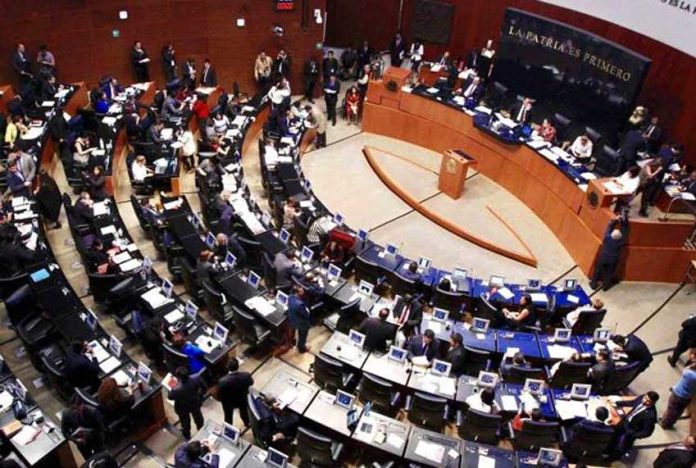
Together, the parties in López Obrador’s coalition won 69 of 128 Senate seats, giving it a narrow majority. Seven of those seats belong to the Social Encounter Party.

Morena-affiliated candidates won 307 of 500 seats in Mexico’s lower house, the Chamber of Deputies. Of those, 55 went to the Social Encounter Party.

The Morena candidates for mayor of Mexico City and four state governors were also elected. Morena now dominates most state legislatures.

Constitutionally, López Obrador will have the power to replace up to two justices on Mexico’s Supreme Court and to pass constitutional amendments almost unopposed.

Recently, aides to López Obrador suggested that truly transforming Mexico might require rewriting its Constitution. That requires a two-thirds legislative majority, which López Obrador could attain by winning over just a handful of deputies and senators outside his coalition.

Critics fear that López Obrador might seek to abolish the single six-year presidential term limit established in Mexico’s constitution – a suggestion the president-elect denies.

But most Mexicans seem more excited than concerned about López Obrador’s strange bedfellows and substantial powers.

Back in April, 89% of Mexicans believed the country was on the wrong track, according to IPSOS polling. Post-election, a survey by the newspaper El Financiero found, 65% feel optimistic about Mexico’s future.

The president-elect ran as a political outsider, but he is a career politician.

Like most Mexican politicians of a certain age, López Obrador was once a member of the PRI, from 1976 to 1983. He ran for president as a candidate of another party, the Democratic Revolution Party.

He understands exactly how the PRI dominated Mexican politics for so long.

Like PRI founder Calles before him, López Obrador has built a hybrid political machine designed to unite powerful political elites regardless of ideology.

According to Morena’s declaration of principles, the party is “an open, plural and inclusive space for the participation of Mexicans from all social classes and diverse thought currents, religions and cultures.”

The only requirement for joining Morena, notes Mexican political theorist Jesús Silva-Herzog, is to obey López Obrador’s leadership.

The ConversationWhere will that leadership take Mexico?

Luis Gómez Romero is a senior lecturer in human rights, constitutional law and legal theory at the University of Wollongong.This article was originally published on The Conversation.

4 beaches lose White Flag designation, 2 others join the list

0
El Verde Camacho, a White Flag beach in Mazatlán.

Four Mexican beaches lost their White Flag certification this year, while two were awarded the designation for the first time.

The National Water Commission (Conagua) said that Lengüeta Arenosa in Ensenada, Baja California, the beach at the Excellence Group resort on Isla Mujeres, Quintana Roo, and the Costa Capomo and Borrego beaches — both in Nayarit — were all stripped of the certification that is awarded to beaches in recognition of their high standards of cleanliness and water quality.

Meanwhile, Isla Las Ánimas — an island in the Gulf of California also known as El Maviri — and tourist hotspot Cancún, Quintana Roo, were added to the White Flag certification list that is reviewed every two years.

In total, there are 36 White Flag beaches across nine of the 17 Mexican states that have Pacific Ocean, Gulf of California, Gulf of Mexico or Caribbean Sea coastlines.

The small Pacific coast state of Nayarit has the highest number of White Flag beaches, with 10.

Federal Environment Secretary Rafael Pacchiano said earlier this month that the number of beaches with White Flag certification has increased by 72% over the past six years due to clean-up and conservation work carried out by federal, state and municipal authorities in conjunction with citizens’ groups. A further 22 Mexican beaches have been designated as “sustainable clean beaches.”

Source: El Universal (sp)

Former leaders meet to decide PRI rescue strategy after punishing vote

0
Former PRI leaders look for a rescue plan.

In the wake of the crushing defeat suffered by the ruling Institutional Revolutionary Party (PRI) in the July 1 elections, 10 former party leaders met with current high-ranking officials yesterday to start devising a rescue strategy.

César Camacho, one of the former National Executive Committee (CEN) presidents who attended the meeting, told the newspaper Milenio that all participants agreed that what the party needs is unity, cohesion, a frank exchange of viewpoints and orderly reflection.

However, wholesale change of the party’s leadership — as called for by a group made up of hundreds of PRI members — does not appear to be part of the plan for renewal.

Camacho asserted that the former party leaders had expressed their support for current national president René Juárez, general secretary Claudia Ruiz Massieu and organizational secretary Rubén Moreira, all of whom also attended the gathering.

The former party president, who is also an ex-governor of México state and a current member of the federal Congress, said the PRI must now find a way to win back the support of the millions of Mexicans who abandoned it on election day.

“Once what happened [on July 1] has been determined in broad brushstrokes, the challenge is [to identify] what must happen to make [the PRI] a socially attractive and politically effective party that recovers the strength of its organization and its membership and one that is capable of attracting the support of a demanding society . . .” Camacho said.

As part of the process to achieve that, the ex-leader said, the party’s leadership will convene PRI lawmakers, including mayors and state governors, to meetings at which a common political strategy will be established.

Camacho highlighted that the PRI will celebrate its 90th anniversary next March, which he said provides further incentive for its members to regroup and show that the party is capable of the change required to reestablish itself as a force to be reckoned with in Mexican politics.

He added that party unity was particularly important and said that all the members who attended yesterday’s meeting agreed that the party shouldn’t attempt to “cling to the past” but rather “look ahead” to the future.

For his part, CEN president Juárez said the PRI had stopped representing the interests of the people and consequently paid a price at the ballot box.

Voters deserted the party en masse on July 1, punishing it for the corruption scandals in which it became embroiled during President Enrique Peña Nieto’s six-year term.

Rising levels of insecurity and sluggish economic growth also contributed to its demise as did a desire for long-awaited change.

By selling itself as the only force that could bring that change, the Andrés Manuel López Obrador-led Morena party announced itself as Mexico’s new dominant political force on July 1.

A Morena-led three-party coalition won not only the presidency but also majorities in both houses of federal Congress, the governorships in four states and Mexico City and countless other state and municipal positions.

López Obrador will be sworn in as president on December 1, breaking a duopoly that the PRI and the conservative National Action Party (PAN) have held on the presidency since 1929.

Source: Milenio (sp)