Home Blog Page 2074

First monarch butterflies reach sanctuaries in Michoacán, México state

0
Monarch butterflies en route from the US and Canada.

The first monarch butterflies of the annual winter migration from the United States and Canada have arrived in the forest sanctuaries of central Mexico.

The Natural Protected Areas Commission (Conanp) said in a statement that the butterflies were “crossing the sky above the . . . Chincua and El Rosario sanctuaries in Michoacán and the Cerro Pelón and Piedra Herada sanctuaries in México state” yesterday.

“. . . They are exploring the territory to determine the best places to establish their colonies during the winter,” the commission explained, adding that it will announce soon when sanctuaries will be opened to visitors.

If weather conditions are favorable, Conanp said, most butterflies should reach the sanctuaries during the next two weeks but it won’t be until the end of November that the entire migratory cohort has arrived.

It added that the arrival of the first monarch butterflies was delayed due to the weather conditions on their route through the United States and Mexico that limited the distance they could fly each day.

Those conditions forced the butterflies to take shelter in different parts of the Sierra Madre Occidental to wait for better weather, Conanp said.

The monarchs started their approximately 4,500-kilometer journey in the south of Canada in August.

Scientists have discovered that the black and gold insects use a kind of internal solar compass to guide them on their journey, during which four or five generations of butterflies are born and die.

During late October and the first week of this month thousands of the species have been observed in Mexico by volunteer butterfly spotters participating in the Correo Real (Royal Mail) program.

The spotters record and report the location of the butterflies to Conanp.

A new digital app called MonarcaMX enables citizens to record a variety of data about the butterflies they see including location, date, time and what they were doing when they were spotted — flying, feeding or resting.

Thanks to citizen reports, it was established that the first group of monarchs crossed the United States-Mexico border on October 20.

However, due to rain and cold, it was another 10 days before they were observed flying over the Sierra de Arteaga in Coahuila and the municipality of Linares in Nuevo León.

During the first days of November, thousands of monarchs were seen flying over Ciudad Victoria, Tamaulipas, according to state authorities, while yet more reached states farther south including San Luis Potosí and Guanajuato.

More than 1,000 volunteer spotters in Guanajuato are hoping to observe at least 3,000 monarch butterflies flying across the state this year.

In Tamaulipas, the state’s Parks and Biodiversity Commission has implemented a conservation program for the monarch butterfly to ensure that its food sources are protected.

By providing incentives to farmers, the program seeks to ensure that tithonia plants, a sunflower native to Mexico, are not removed from cornfields.

“[The flower] is a very important food source during the monarch butterfly migration . . . its nectar is very rich in nutrients for the butterfly,” said commission director Carlos Garza.

Other initiatives aimed at helping the butterflies reach their final destination, such as the planting of 67 gardens in México state where the insects can rest and feed, have also been implemented in recent years.

Yet the number of monarchs that traveled to Mexico last year for the winter declined for the second consecutive season, according to a report released earlier this year.

Extreme weather and the increased use of herbicides in the United States, which reduces the amount of milkweed — a food source for the monarch butterflies, were cited as possible reasons for the decrease in arrivals.

Source: Milenio (sp) 
Search for the birthplace of tequila leads to impressive 18-century distillery

0
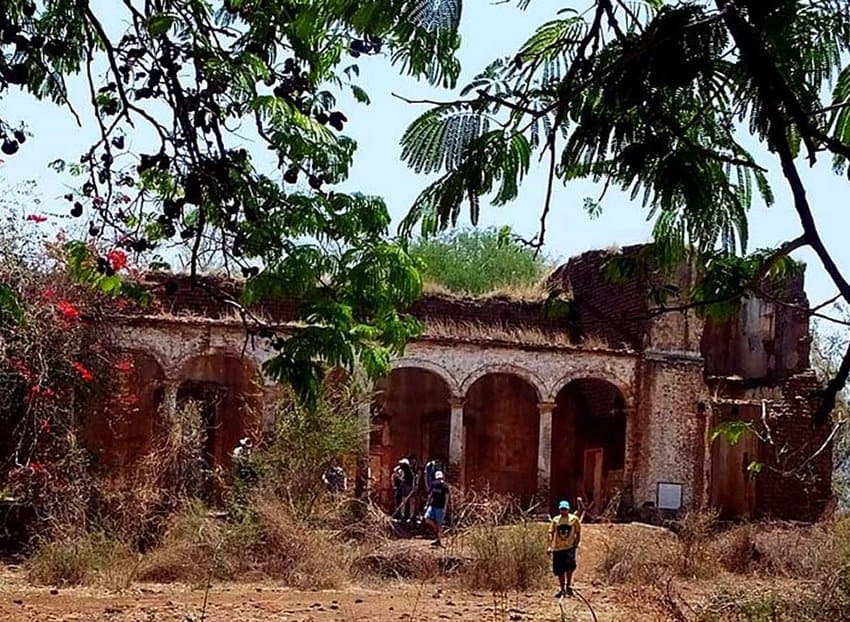
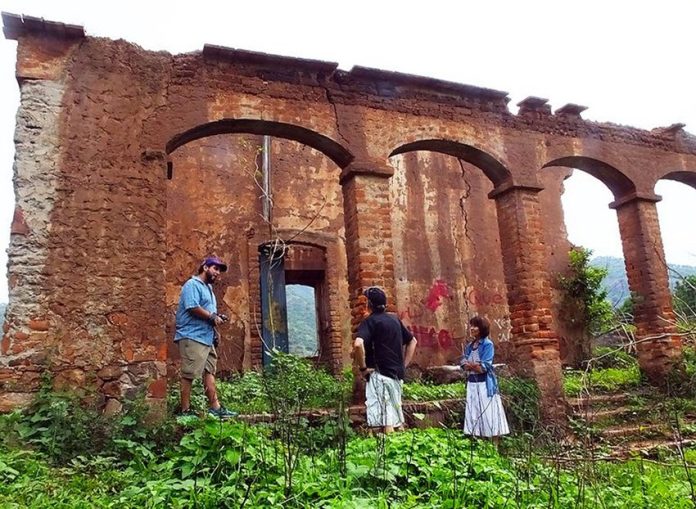
Ruins of Ardillero distillery near Chimulco Restaurant.

Some years ago while visiting the pueblo of Amatitán, which is located 33 kilometers northwest of Guadalajara, I came upon a large map proudly displayed in the town square.

It showed the location of several tabernas or distilleries in the vicinity, claiming that Amatitán — and not that other town just down the road — is the true birthplace of tequila. This I found most interesting, and I made it my goal to visit as many of these sites as possible if I could manage to find them.

The most conveniently located of those tabernas was a place called Rancho de la Cofradía del Puente, a very impressive but now crumbling structure situated just beside a paved road. Here I found a plaque both in English and Spanish explaining that this was once a hacienda that was producing tequila as early as 1800, using primitive production systems.

The writing style and high-quality English told me that this information had been written by the late, great archaeologist Phil Weigand. “The Big House,” he says, “located in the middle of the extensive agave fields, is made up of a double corridor with three apartments that were connected by an arcade made up of nine arches held up by Tuscan pillars that today lack a roof . . . . The housing units have formal elements of the neoclassic style common in rural Jalisco in the 19th century.

“The unfortunate overall condition of the site is testimony to the lack of vision in the manner of executing land redistribution in the 1940s; the process benefited landless peasants while abandoning numerous buildings of architectural value. A restoration project for this ex-hacienda could still restore its functional and historic qualities.”

Hacienda la Cofradía produced tequila in the early 1800s.

Sad to say, no such restoration has taken place, but the ruins are well worth a visit. I appreciated the interesting techniques used to make columns (employing curved bricks) and admired the aesthetic adobe blocks, which apparently contained agave fibers instead of straw, but I must confess I could not get a clear idea of how or where they were making tequila.

So I drove another 3.5 kilometers east along the same road to another site shown on that map in the Amatitán plaza: La Taberna de los Tepetates. However, standing at the appointed spot, all I could see was a sort of jungle stretching off into the distance. I was almost ready to give up my quest when, looking very carefully, I spotted a tall chimney (which I now know is called a chacuaco in these parts) 250 meters from the road, rising up through the bush.

Actually reaching that chimney turned out to be far more difficult than spotting it, but what did I find attached to its base but another one of those bilingual plaques. It said, “This old distillery found near the small village of Los Tepetates is difficult to access and is well hidden from view. It is easy to imagine that the location of this rustic facility was selected to secretively produce mezcal wine without having to report it to the revenue agents.”

Difficult to access and well hidden: so true! The reference to revenue agents reminded me of Tony Burton’s comment in Western Mexico, a Traveler’s Treasury that the Spanish authorities outlawed liquor production in Mexico because it threatened to compete with Spanish brandy.

“This suppression,” says Burton, “led to the establishment of illicit distilling in many remote areas, including parts of Colima and Jalisco.”

Once again, I could not get a clear picture of how the spirits were produced at this site, but all that changed when I located the oldest taberna in the region, nestled at the bottom of El Tecuane Canyon, five kilometers north of Amatitán.

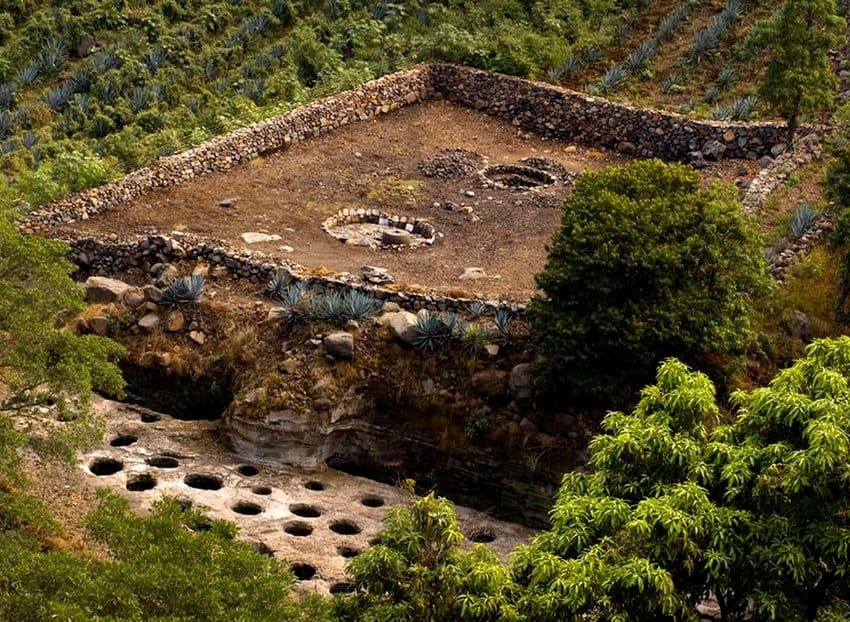
Bird’s-eye view of gravity-assisted El Tecuane Taberna
Bird’s-eye view of gravity-assisted El Tecuane Taberna.

The cobblestone road leading to El Tecuane is identified only by a primitive sign announcing “Balneario.” We drove along this camino about a kilometer and suddenly found ourselves overlooking a huge canyon we had never seen before. The view was absolutely staggering.

Unfortunately, we were seeing it from a single-lane road with a terrifying, sheer drop of hundreds of meters on one side. I could just imagine what would happen if we met someone coming the other way and we quickly continued on two more kilometers to the site of old El Tecuane Taberna.

We found the place fenced and locked up, but luckily located the man with the key, Don Rosario Villagrana, at the huge, modern Santa Rita distillery, located just above the old workings. “That old taberna,” said Don Rosario, “was in operation in the early 1700s and cleverly utilized gravity to move the product from one stage to another.”

Here, at last, I could clearly observe exactly how they were making tequila in those days. On a wide, flat spot we found the kind of oven which had been used by the Indians to cook agave hearts before the Spaniards arrived. This was not a roofed structure heated from below as I had seen in so many other distilleries. Instead, we peered down into a deep pit lined with volcanic rocks.

In the old days, what they did was throw a mixture of agaves and red-hot rocks into the pit and cover it up. The cooked mezcal was then ground up using a people-powered millstone, which we found right next to the primitive oven. The sweet juice then trickled downhill to a lower mesa in which 44 fermentation pots were carved into the living rock. Each of these held about 3,000 liters.

This must have been a big operation indeed! The resulting alcoholic brew was then carried farther downhill in buckets to several stills, cooled by cold water channeled from a nearby spring.

[soliloquy id="64937"]

Most sources say the technique of distillation was brought to the new world by the Spaniards, but Don Rosario insisted the Indians had their own stills, in which the steam condensed inside cloths hanging above a pot of boiling alcohol. “They wrung out these cloths and distilled that alcohol a second time,” he claimed. According to Don Rosario, one taste of this potent “vino mezcal,” as it was first known, was, supposedly, what got the Spaniards into the tequila business.

This claim is backed up by the owner of Santa Rita, tequila historian Miguel Claudio Jiménez Vizcarra, who quotes from Domingo Lázaro de Arregui’s 1621 Description of New Galicia:

[wpgmza id=”105″]

“The mexcales are much like the maguey. Their root and the base of their spikes are roasted and eaten. In addition, when they are pressed, they exude a must, from which a liquor is distilled, clearer than water, stronger than aguardiente and of such good taste.”

Whether pre-Hispanic people had developed their own stills I can’t say, but standing in the middle of 44 huge old fermentation pots carved out of rock, I was definitely convinced that those Amatitán pioneers were no amateurs when it came to alcoholic beverages.

The writer has lived near Guadalajara, Jalisco, for more than 30 years and is the author of A Guide to West Mexico’s Guachimontones and Surrounding Area and co-author of Outdoors in Western Mexico. More of his writing can be found on his website.

Taxi driver attacks passengers who asked him not to use phone

0
This accident occurred in July in Salina Cruz, Oaxaca. The driver admitted he had been texting.

There are no statistics to back up the claim, but personal observation by this correspondent has led to the conclusion that taxi drivers are among the worst drivers in Mexico.

Not only are they ill-trained but habits such as texting and speaking on cell phones while driving — some even watch videos on dash-mounted screens — put many people at risk.

But complaining doesn’t necessarily accomplish anything, as a couple of passengers in Puerto Escondido, Oaxaca, discovered this week. When they asked the driver to stop using his phone and focus on driving instead, he didn’t take the request calmly.

Instead, he physically assaulted them. The passengers got out of the vehicle with the aid of passersby and their attacker fled the scene.

The unidentified driver and his cab — number 02-968 — are being sought by state traffic police in the resort destination after a formal complaint was filed.

Traffic regulations forbid the use of mobile phones while driving except when the driver is using hands-free devices or a speakerphone.

Source: Quadratín (sp)

Avocado strike in Michoacán costing 85 million pesos a day

0
An avocado packing plant in Uruapan halted by the strike.

Strike action by avocado growers in Michoacán is costing the industry 85 million pesos (US $4.3 million) a day, according to a producers’ industry association.

More than 1,000 producers stopped work and set up checkpoints on highways in 11 municipalities last week to stop avocados from other parts of Mexico coming in to Michoacán to be exported later to the United States under their exclusive export agreement.

They claim that the practice of sending avocados from other parts of the country into Michoacán to be passed off as a locally-grown product was driving down the cost of their genuine aguacates michoacanos.

Ramón Paz, spokesman for the Mexican Association of Avocado Producers and Packers, said Mexico normally sends 3,000 tonnes of avocados to the United States every day but due to the work stoppage the amount is falling short and revenue is being lost.

The striking producers are asking that a minimum price of 35 pesos (US $1.75) per kilo be set because for the past two months the best price they have received is just 20 pesos, which has led to economic losses and employee layoffs.

However, prices can’t be fixed, Paz explained, because competition laws in both Mexico and the United States allow for free trade between individuals.

He said the growers’ demand for a higher price is not justified because even at 20 pesos per kilo they are making profits of eight to nine pesos a kilo.

If the disgruntled producers don’t end their strike, which has affected more than 24,000 workers in the sector, petitions will be made to state and federal authorities to intervene and reestablish the rule of law, Paz said.

In addition to monetary losses, he said, the strike in Michoacán had led to advertising contracts in the United States being canceled.

The Mexican avocado promotional campaign shown during the Super Bowl, which has generated massive revenue for the industry, is also at a risk of being canceled, Paz said.

More than two million tonnes of avocados were produced in Mexico last year, of which 80% were grown in Michoacán.

The United States is by far the industry’s biggest export market but Mexican avocados are shipped to 45 countries around the world including China, where the product is rapidly gaining popularity.

Source: El Universal (sp) 

‘Drunk’ cops threatened with lynching for firing on family

0
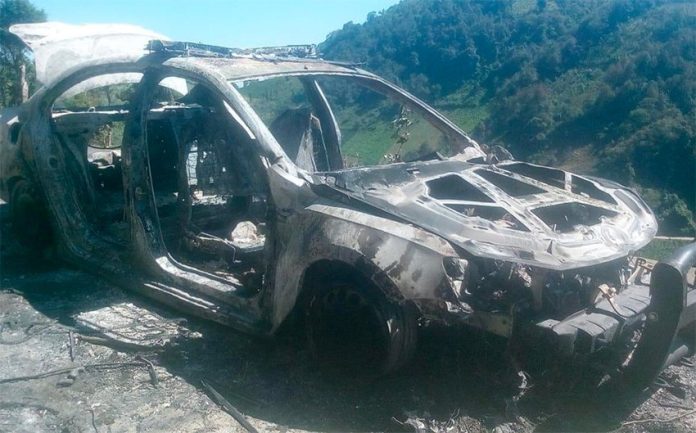
Patrol car burned by angry residents in Puebla.

Three state police officers were nearly lynched in Puebla for allegedly being under the influence of alcohol and firing their weapons at a local family.

The family was preparing to leave their home in San Lorenzo, Chiconcuautla, early yesterday when the police, riding in a patrol vehicle, opened fire. No one was hurt.

Neighbors said the officers traveled some 500 meters and then stopped. At that point a group of residents apprehended them.

They accused the police of being drunk, threatened to lynch them for firing on the nearby residents and set the patrol car on fire.

The neighbors also complained about insecurity in the region and what they called a “power vacuum” created after the arrival of the new mayor, Artemio Hernández Garrido.

The three officers were rescued after two attempts and a request for backup from colleagues and officials from the state Attorney General’s office (FGJE).

The three are under investigation by the force’s internal affairs department for overstepping their authority and being under the influence of alcohol.

Residents of San Lorenzo also filed a formal complaint against the trio before the public prosecutor.

State Security Secretary Jesús Morales Rodríguez stated that “the [state] will not allow or cover up our staff’s undue conduct. No one is above the law.”

Source: Milenio (sp)

Guerrero bishop seeks Christmas truce through dialogue with feuding narcos

0
Bishop Rangel of Guerrero.

A bishop in Guerrero is aiming to broker a Christmas truce between feuding cartels in the state’s Sierra region.

Salvador Rangel, bishop of the Chilapa-Chilpancingo diocese, said he is seeking to hold talks with cartel leaders to that end.

“If wars stop at Christmas even at the world level, why not in Guerrero? Let’s make that period, the most beautiful of the year, one in which we can live in peace,” he said in an interview after attending the first day of a peace forum held this week.

Warring cartels previously agreed to a truce during the electoral process leading up to the July 1 elections, Rangel said.

Guerrero, one of Mexico’s largest opium-poppy producing states, is plagued by violent crime largely caused by territorial disputes between criminal gangs.

The bishop said that as a result of his almost-constant dialogue with its leaders, he convinced the Sierra Cartel to allow traffic to pass freely on the highway between Filo de Caballos, in the municipality of Leonardo Bravo, and the state capital Chilpancingo.

Schools and medical services in the lower part of the Sierra region are also operating normally, he said.

However, Rangel said that he hadn’t yet managed to meet with the leaders of feuding criminal groups operating in Tlacotepec, a city located on the other side of the Sierra region in the municipality of Heliodoro Castillo.

He said there are two “violent groups” there that have made traveling to Chilpancingo impossible, adding that he was hopeful that he could meet with leaders of the two groups at the same time.

“It’s difficult to get everyone together because each group has its own interests . . . that would be ideal but for now the meetings will be separate,” Rangel said.

Speaking earlier at the peace forum, the bishop told attendees that he has frequently traveled to Sierra communities to hold talks with narco leaders aimed at achieving peace and reconciliation.

Rangel charged that politicians and government institutions have failed to bring about peace because they are corrupt.

He has long urged authorities to follow his lead and engage in dialogue with criminal gangs as a means to achieve peace.

Last year, the bishop created controversy when he said that crime gangs are part of the social fabric of remote Guerrero communities that cultivate drugs and their presence is accepted and welcomed by inhabitants.

Source: Reforma (sp) 

Businesses will turn off lights in protest against electrical tariffs

0
cfe

At least 1,000 business in Yucatán are expected to turn off the electricity for an hour on November 13 in protest against the increase in electrical tariffs.

Business leader Juan Manuel Díaz Ponce told a press conference that the hour-long “mega-blackout” has been scheduled despite an announcement that tariffs would drop between 12% and 17% this month and next. The head of the state chapter of the Business Coordinating Council said some businesses have been hit with rate hikes as high as 300%.

He accused the Energy Regulatory Commission of doing nothing to resolve the issue.

Díaz and other business leaders also blamed President Peña Nieto and president-elect López Obrador for a lack of political will to find a solution.

Díaz quoted figures from the Mexican Institute of Finance Executives that showed the tariff increases have had a negative impact on local firms’ finances and investment and caused the loss of more than 7,500 jobs throughout Yucatán.

“We will not stop paying [our power bills], but we are studying other protest measures to fight the high rates,” said Díaz.

One measure will be a complaint before Profeco, the consumer protection agency. He said the collective complaint by some 1,000 businesses will be made once the documentation has been prepared, likely in two weeks.

Next Tuesday’s protest will take place between 7:00pm and 8:00pm.

Source: Milenio (sp), El Universal (sp)

Mexico City water is back on but today will be the worst for supply

0
Workers carry out maintenance on Mexico City's water system.

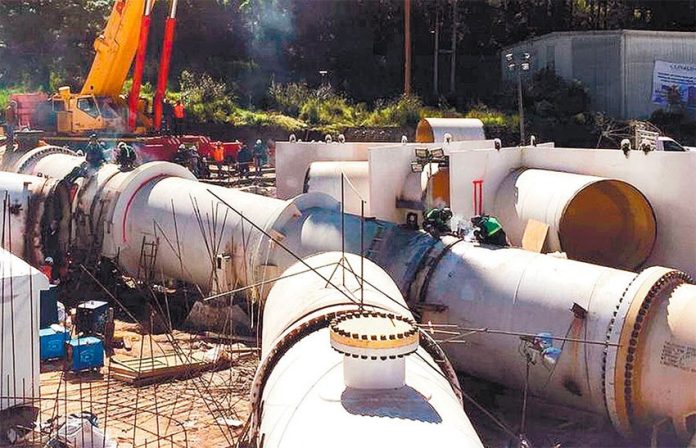
After 156 hours of maintenance work – 84 more than scheduled – Mexico City’s main water system was finally reactivated late yesterday but millions of residents remain without running water as they wait for it to arrive.

The National Water Commission (Conagua) announced the reopening of the Cutzamala system via a post to its Twitter account.

“At 6:45, the protocol to open the Cutzamala system began with the filling of the line through the opening of the clear water tank. In the next few minutes, it will reach the [required] level and the first pump will be turned on to give it the pressure it needs,” it said.

The first of four pumps was turned on at 7:40pm and the second 10 minutes later, sending 8,000 liters of water per second towards the Valley of Mexico. The two other pumps were eventually activated as well but behind schedule.

Conagua spokesman José Luis Alcudia explained today that the city’s water storage tanks are located 76 kilometers from the pumping station and therefore it will take time for the water to reach them.

Boroughs in the west of the city will begin receiving water today while others affected by the suspension, including central Cuauhtémoc, will have to wait until tomorrow.

Supply is expected to return to normal over the weekend, Alcudia said.

Reactivation of the water system was originally scheduled for 8:00am Saturday, 72 hours after maintenance work began, but was delayed because one massive piece of the system, known as “inverted K,” shifted during installation.

The piece has not yet been positioned correctly but Conagua decided to reactivate the system regardless.

Víctor Alcocer, a deputy technical director for the commission, said that “inverted K” will be put into place once the system’s second line is in operation so that water supply is not suspended again.

Suspension of water service has affected almost four million residents in the capital and surrounding municipalities in México state.

The chief of Sacmex, the Mexico City water utility, predicted this morning that the lack of running water will be felt more acutely today than any other day of the “mega-cut.”

“The water will arrive at 10:00am and we will begin to fill the tanks. The good news is that the water is already on its way, the bad news is that it arrived late . . . the water hasn’t arrived yet and that means that [today] will be the worst day because people who stored water have already run out,” Ramón Aguirre said.

He added that demand for deliveries from water tankers had increased in recent days and was expected to spike further today.

“. . . This is the longest [water] cut in history. The previous suspension was 90 hours and this one is 155 or more. The water hasn’t arrived but we have certainty that it is coming. You have to give it time . . .” Aguirre said.

Source: Milenio (sp), El Financiero (sp), Noticieros Televisa (sp) 

Jalisco fuel shortages due to hurricane, tropical storm, pipeline taps

0
Pemex hasn't been able to supply enough fuel in Jalisco.

A fuel shortage in Jalisco is the result of damage caused by Hurricane Willa and Tropical Storm Vicente as well as the closure of a major pipeline due to illegal taps, according to a petroleum industry union leader.

Around 500 of 934 gas stations in the state have been affected.

Pablo González Córdova, president of the Mexican Association of Gas Station Owners (Amegas), explained that the two storms had affected the states of Colima and Veracruz, both of which supply fuel to Jalisco.

Officials from the state oil company Pemex said last week that poor weather conditions brought by Willa and Vicente made it impossible to unload fuel from ships at some ports, including Manzanillo and Tuxpan.

The closure of the main pipeline that transports fuel to the capital city of Guadalajara from the refinery in Salamanca, Guanajuato, is another factor contributing to the fuel shortage, González said.

“In Jalisco, we receive fuel from the Salamanca refinery but for some time that [method] hasn’t been working. [The refinery] sends us the product through the 16-inch Salamanca-Guadalajara pipeline . . . That pipeline isn’t working because of illegal taps,” he said.

Petroleum pipeline theft, perpetrated by gangs of thieves known as huachicoleros, costs Pemex 30 billion pesos a year, company CEO Carlos Treviño said earlier this year.

González said that fuel tankers from Manzanillo, Colima, had made deliveries to Jalisco to offset the shortage but they were not sufficient to meet demand as many Guadalajara residents sought to take advantage of the Day of the Dead holiday to travel.

Fuel supply should return to normal by tomorrow, he explained, because Pemex is currently sending additional tanker trucks to the state.

Source: El Economista (sp) 

Unique Yucatán church to celebrate 220 years

0
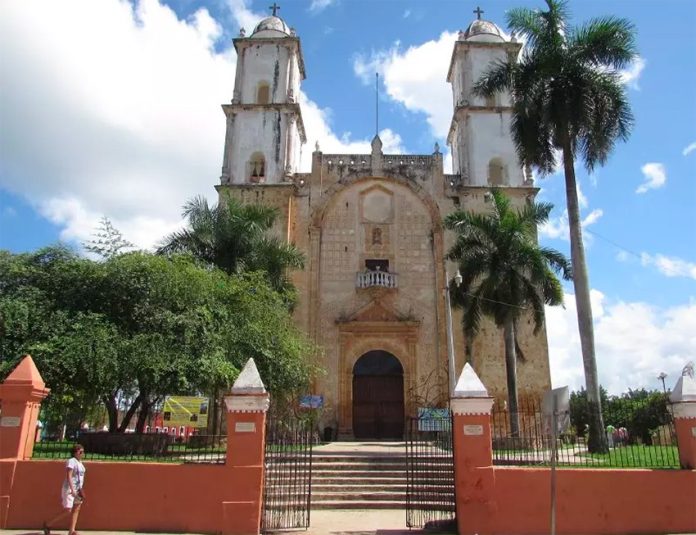
The unique church in Peto, Yucatán.

A church in Peto, Yucatán, that is described as architecturally unique by a local historian will soon celebrate its 220th anniversary.

Construction at the church of Our Lady of Assumption concluded on January 1, 1799, the same day that the people of the colonial town celebrated their patron saint, the Virgin Mary, explained Peto chronicler Arturo Rodríguez Sabido.

Celebrations next January 1 will be twofold — feting the local patron saint and one more anniversary of the erection of the church.

Rodríguez said the latter is a “one-of-a-kind architectural building” that attracts many visitors.

“The finishing touches it has are unique in their kind, and that makes it an extraordinary architectural work and the most significant emblem of this town.”

He also remarked that the only church in the state that can be compared to it is located in Valladolid. “They share a certain similarity.”

“This church has a lot of history worth knowing, especially by the newer generations, who can learn the true value of this parish and what it represents for the Catholic people of this town,” Rodríguez said.

Source: Diario de Yucatán (sp)