Home Blog Page 2090

United States doubles reward for Jalisco cartel boss to US $10 million

0
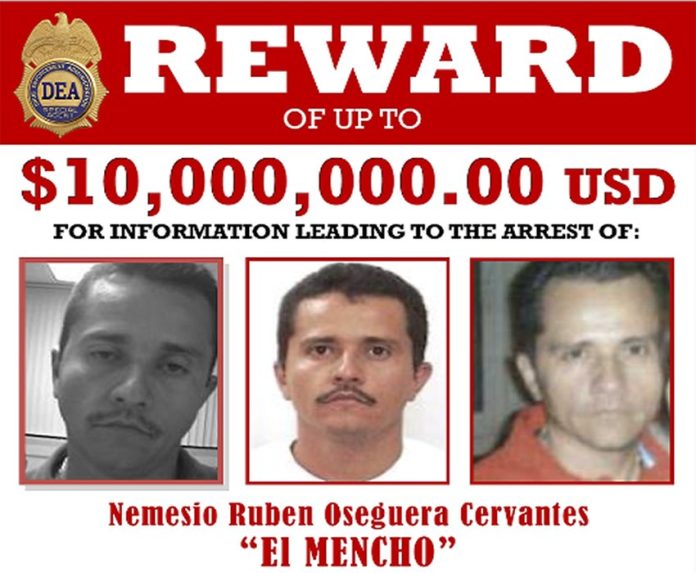
The reward poster for the Jalisco cartel leader.

The United States government has doubled the reward being offered for the leader of the Jalisco New Generation Cartel (CJNG).

The attorney general announced yesterday that the State Department would pay up to US $10 million for information leading to the arrest and/or conviction of Nemesio Rubén Oseguera Cervantes, also known as “El Mencho.”

It is one of the highest rewards offered by the department’s Narcotics Rewards Program.

Mexico has offered a 30-million-peso reward (US $1.6 million) for Oseguera.

Attorney General Jeff Sessions told a news conference that the CJNG is “one of the five most dangerous criminal organizations on the face of the earth,” delivering at least four and a half tonnes of cocaine and an equal amount of methamphetamine to the U.S. every month.

Rewards of $5 million are being offered for information about other high-ranking cartel members.

U.S. officials also announced it had unsealed 15 indictments against cartel members accused of conspiring to import drugs into the U.S. and laundering more than $100 million.

“More investigations are ongoing and I expect that there will be many more indictments. We will be relentless against this organization and their affiliates,” Sessions told reporters.

“They are in our crosshairs. This cartel is a top priority.”

Source: Milenio (sp), Reuters (en)

New airport one year behind schedule, may (or may not) open in 2021

0
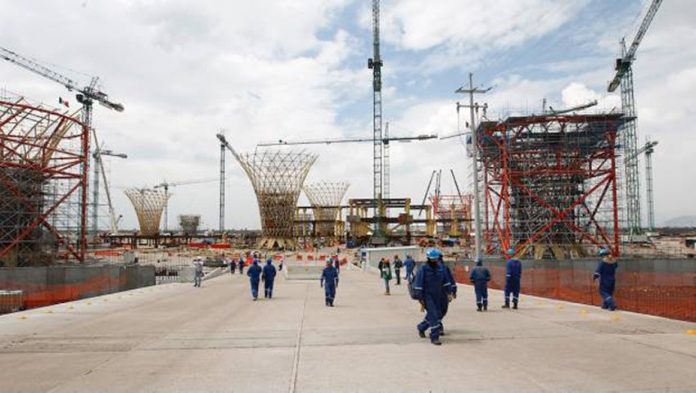
Work continues on Mexico City's new airport even though it remains unknown whether the project will be canceled.

Construction of the new Mexico City International Airport is only one year behind schedule and not two, says the project’s infrastructure director.

Raúl González Apaolaza told broadcaster Televisa today that the airport will commence operations in 2021 instead of October 2020 as originally scheduled.

González’s view contrasts with information provided by Parsons Corporation, which has provided program management services for the project since 2014.

In a document seen by the news agency Bloomberg, the consultancy says that the airport won’t be ready until the second half of 2022.

One element of the project that is behind schedule is the x-shaped terminal building, which is expected to be finished in August 2021.

But regardless of the status of construction, whether the new airport ever opens remains in doubt as president-elect López Obrador and his transition team push ahead with plans to put the project up for a popular vote.

Jesús Ramírez, spokesman for the incoming government, yesterday revealed the question that citizens will be asked in the public consultation scheduled to take place between October 25 and 28.

“Given the saturation of the Mexico City International Airport, which option do you think is better for the country?

“A) Recondition the Mexico City and Toluca airports and build two runways at the Santa Lucía Air Force Base or;

“B) Continue with the construction of the new airport in Texcoco and cease using the current Mexico City International Airport.”

On the reverse side of the ballot, a summary of the pros and cons of both proposals will be printed.

Option B appears the most likely winner, according to a recent poll conducted by the newspaper El Financiero, which showed that 62% of respondents were in favor of the project continuing while just 27% wanted it to be canceled.

Ramírez said the cost of the consultation, to be held in 538 municipalities across the country, will be about 1.5 million pesos (US $80,000) and that the money would come from voluntary contributions from members of Congress.

Infrastructure director González urged that documents indicating the operational safety of both the new airport project and the Santa Lucía option be made available to the public before the consultation takes place.

The suitability of the Texcoco site has been questioned due to its location on an ancient lake bed while some aviation experts have said that the existing airport is too close to the México state air force base for both to operate commercial flights.

But civil aviation consultant Víctor Hernández believes that the two facilities can operate simultaneously.

“. . . Santa Lucía is compatible . . . There is a study that determined that it could be used for commercial purposes, it is feasible,” he said.

However, option A would come at a considerable cost.

Future transportation secretary Javier Jiménez Espriú said in August that canceling the new airport and adapting the Santa Lucía base for commercial aviation instead would cost 170 billion pesos (US $9 billion).

Source: El Financiero (sp), Milenio (sp) 

Top cop is in Chiapas as Mexico prepares for arrival of Honduran migrants’ caravan

0
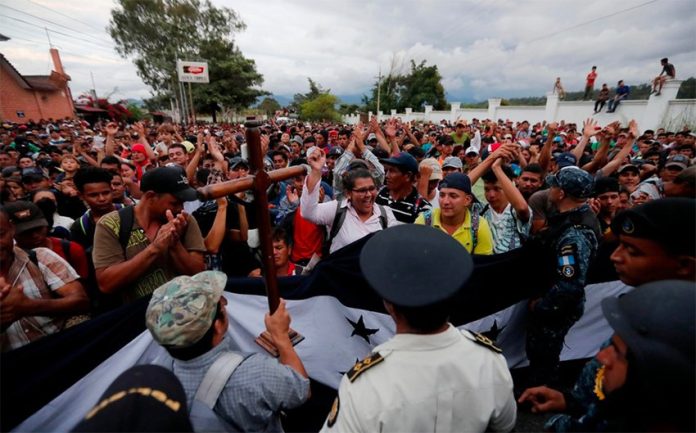
The caravan of migrants from Honduras, en route to the US via Mexico.

The chief of the Federal Police traveled to Tapachula, Chiapas, yesterday as a huge caravan of migrants from Hondurans makes its way north through Guatemala to the Mexican border. Final destination: the United States of America.

The National Security Commission said police chief Manelich Castilla will help the National Immigration Institute (INM) bolster security in the border region.

The caravan was made up of about 160 people when it left San Pedro Sula, Honduras, Friday but its numbers have now swollen to an estimated 2,000 people.

The migrants crossed into Guatemala yesterday, overwhelming attempts by security forces to stop them. They spent the night in the town of Esquipulas before some restarted their journey towards Mexico today.

“In Honduras, there are no jobs and the jobs that do exist aren’t enough to live on,” 32-year-old José Francisco Hernández told The Washington Post.

“We can’t go to the city because it is full of gang members, and that is hurting us. We decided to migrate from the country to see if we can find a better life.”

News of the caravan raised the ire of U.S. President Trump, who has made strong border security a hallmark of his administration.

“The United States has strongly informed the President of Honduras that if the large Caravan of people heading to the U.S. is not stopped and brought back to Honduras, no more money or aid will be given to Honduras, effective immediately!” Trump wrote on Twitter this morning.

However, given that the migrants have already left Honduras, the ability of authorities in that country to do anything to halt their onward march appears limited.

The next border crossing will take the caravan into Chiapas, about 500 kilometers from Esquipulas, but getting across might be a difficult proposition for many.

The INM said in a statement yesterday that it will deny entry to any members of the caravan that don’t have a visa to enter Mexico.

“The INM reiterates to the members of the ‘migrant walk’ that . . . upon arriving at entry points on Mexico’s southern border, immigration personnel must review compliance with the requirements established by the law and those who don’t comply will not be allowed to enter,” it said.

The INM added that while Mexico has a range of international measures in place to protect the rights of migrants, “the law does not provide for any permission to enter the country without complying with the [visa] requirements.”

A large migrant caravan crossed Mexico earlier this year before reaching the United States border in late April.

As they traveled through the country, authorities registered hundreds of the migrants, providing them with letters of safe passage which protected them from deportation for up to a month.

It is unclear whether authorities will grant the same protection to migrants who enter the country without official permission.

Amnesty International’s Mexico office called on authorities today to offer asylum to the Hondurans, warning that turning them away would represent a violation of international law. It prohibits returning people to situations in which they face the risk of persecution or human rights violations.

Source: Milenio (sp), El Universal (sp), The Washington Post (en) 

Sinaloa Cartel infighting has displaced nearly 300 families

0
Cartel country.
Cartel country.

Territorial disputes in the mountains of Sinaloa between relatives of infamous drug lord Joaquín “El Chapo” Guzmán and other suspected criminals has displaced at least 295 families since July.

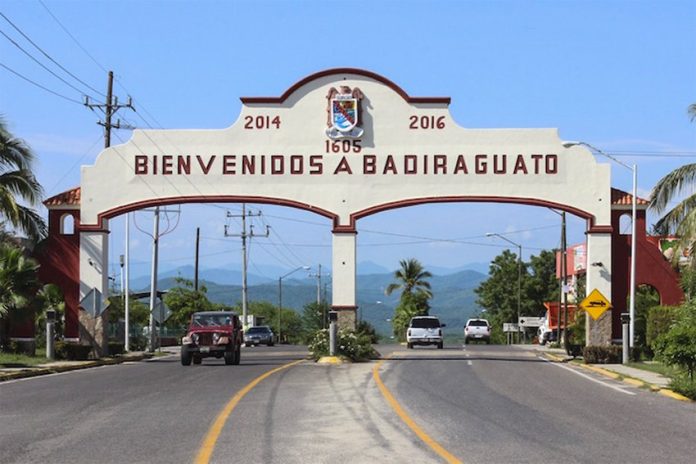
According to the Sinaloa Secretariat of Social Development, the affected families lived in seven different towns in Badiraguato, a municipality located about 80 kilometers north of the state capital Culiacán.

El Chapo’s brother Aureliano Guzmán and sons Jesús and Iván Guzmán are involved in a dispute for control of the region, the newspaper Reforma reported.

Residents of three of the towns, San Javier, San Javier de Arriba and Potrerillos, said the fighting began last year with an attack by the three men against Héctor Román.

Román, also known as “El Pinto,” was independently involved in the cultivation and trafficking of marijuana and opium poppies in an area of Badiraguato near the border with Chihuahua, Reforma said.

He fled the municipality, triggering an exodus of families amid threats, disappearances and murders.

“The residents didn’t participate in the dispute but they’re all in the middle of it and they’re better off leaving because up there they don’t let them work,” one displaced person said.

The three Guzmán men have also clashed with other armed groups that are also vying for control of Badiraguato, part of the broader drug producing region known as the Golden Triangle.

Eleven deaths were reported in one confrontation in November 2017.

The Sinaloa Secretariat of Social Development said the displaced families, who are now living in Culiacán, have been supported in their transition to residence in the state capital with food aid, educational assistance and access to temporary employment.

El Chapo’s most recent arrest in 2016 led to an increase in violence in several parts of Mexico due to infighting in the Sinaloa Cartel and the ambition of other criminal organizations to fill the power vacuum.

He was extradited to the United States in January 2017 and is scheduled to face trial next month.

Source: Reforma (sp)

US maintains metal tariffs, wants quotas on Mexican steel

0
Metal tariffs remain in place.

The United States government is seeking to impose quotas on Mexican steel exports in exchange for removing metal tariffs, the incoming government’s chief trade negotiator said yesterday.

The Trump administration imposed tariffs on Mexican and Canadian steel and aluminum in June, citing national security grounds.

Although the three countries reached an updated trilateral trade agreement last month, the protectionist measures remain in place. After completion of the NAFTA negotiations there was optimism among government officials and in the business community that the tariffs would be removed.

But the U.S. indicated two weeks ago that it might impose quotas rather than withdraw the tariffs.

Economy Secretary Ildefonso Guajardo later indicated that an agreement on their removal was required before the new trade agreement could be signed, a stand that was echoed by Foreign Affairs Secretary Luis Videgaray.

Guajardo questioned how the trade deal could be signed if there was no indication of a willingness “to eliminate tariff hostilities.”

Jesús Seade, who participated in the tail end of the trade negotiations as president-elect López Obrador’s representative, told the news agency Reuters that the current government is leading the metal negotiations but added that he had spoken to United States Trade Representative Robert Lighthizer about the possibility of removing the tariffs.

“I have had a couple of calls with Lighthizer, and it’s along those lines, to manage volumes etc. with Mexico and Canada,” he said.

Seade declined to give further details about the discussion but said that the tariffs issue had to be resolved before the new administration takes office on December 1.

“There is a month and a half left, so it needs to be resolved now,” he said.

Mexico exported US $2.5 billion of iron and steel to its northern neighbor last year, according to the U.S. Census Bureau.

However, it imported quantities of the same metals from the United States that were worth even more.

The U.S. reached a deal with South Korea in March to end steel tariffs in which the latter country agreed to cut its exports of the metal by 30% compared to averages over the past three years.

During negotiations to reach the new North American accord, a source told Reuters that United States officials informed their Canadian counterparts that they wanted a similar agreement for steel and aluminum imports.

However, Canada rejected the demand, specifying that any cap on metal imports to its neighbor would have to be higher than current levels to allow shipments to increase.

Source: Reuters (sp) 

1 person missing, vehicles stranded after heavy rainfall in Querétaro

0
Flooding in Querétaro stranded a bus carrying students.

One person is missing and two communities are cut off after heavy rainfall in Querétaro.

The missing person was swept away by floodwaters in the municipality of El Marqués, where the communities of Atongo and Presa de Rayas are inaccessible.

Fifteen students aboard a bus had to be rescued after it was stranded in water that left the vehicle more than half submerged.

There was also flooding in the western part of the municipality of San Juan del Río where at least 40 vehicles were stranded in floodwaters after storm drains were unable to keep up with the volume of water.

Lower temperatures and rain are being recorded in a large part of the country due to cold front no. 6. Rain is forecast in nearly all 32 states but intense conditions are predicted in Veracruz, Tabasco, Oaxaca and Chiapas.

Source: Milenio (sp)

Health program irregularities: audit reveals 16 billion pesos missing

0
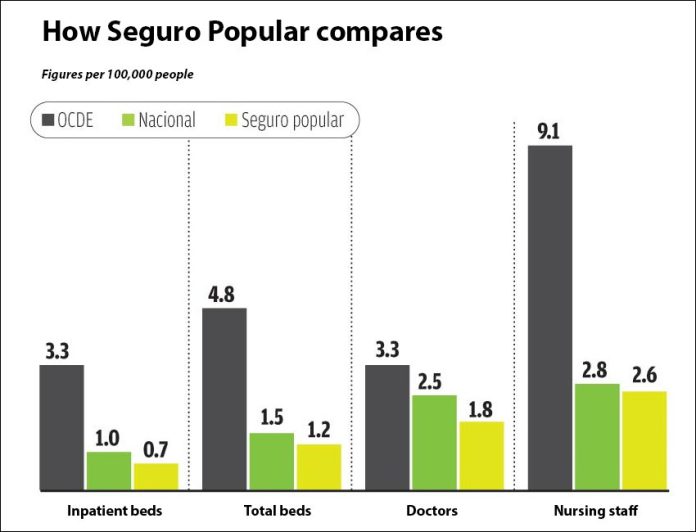
OECD figures in black, Mexico as a whole in green and Seguro Popular in yellow.
OECD figures in black, Mexico as a whole in green and Seguro Popular in yellow. milenio

More than 16 billion pesos (US $852 million) in federal health care funding that was transferred to state governments between 2013 and 2017 is unaccounted for, audits show.

The newspaper Milenio reviewed audits conducted by the Federal Auditor’s Office (ASF) and found a range of irregularities in the use of funds allocated to the Seguro Popular health care program.

They include overpayments for medications, payments for which no records exist, unauthorized transfers of funds and the inclusion of phantom employees on payrolls.

In 174 investigations into the use of Seguro Popular funds, six alone — in just four states — represented diversions totaling 53.3% of the total.

The Veracruz state government was by far the worst offender, allegedly illegally diverting almost 4.1 billion pesos (US $217 million).

Former governor Javier Duarte, who was sentenced last month to nine years in prison for money laundering and criminal association, was in office from 2010 to 2016.

Investigations uncovered a range of medical irregularities during his administration including that of a state-run cancer clinic that gave distilled water instead of chemotherapy medication to several children.

The next biggest alleged embezzlements occurred in Michoacán, Jalisco and Oaxaca, where a combined total of around 3.6 billion pesos (US $192 million) is unaccounted for.

According to the ASF, law enforcement authorities have identified those believed to be responsible for 3 billion pesos of the missing money and have begun processes to attempt to recover it.

However, none of those resources have yet been recovered and those responsible for the diversion of the other 13 billion pesos have not been identified.

Since the current federal government took office in December 2012, it has managed to recover 782.4 million pesos (US $41.7 million) in Seguro Popular funds detected as missing while the use of 5.2 billion pesos — on top of the 13-billion-peso amount — whose use had been questioned has now been accounted for.

But the magnitude of the alleged corruption that has taken place within the Seguro Popular health care program remains enormous.

The public system provides medical coverage for 55 million Mexicans who have no other health insurance, including 22 million people who earn less than twice the minimum wage (176 pesos or around US $9 per day): in other words, the nation’s poorest people.

Statistics show that the number of doctors, nurses and other medical personnel working in the Seguro Popular system is below both OECD levels and those for Mexico as a whole, while medicine shortages have occurred in several states.

Corruption is suspected of being a significant factor behind the system’s shortcomings and there is evidence that its consequences can be fatal.

Catarino Escobar, a 65-year-old Guanajuato resident who didn’t have a job in the formal economy, was one of the millions of Mexicans who depend on Seguro Popular for their health care needs.

In June, Escobar suffered his third heart attack and was taken to the Dolores Hidalgo General Hospital, which treats Seguro Popular patients. But soon after his arrival it became apparent that the hospital was not equipped to treat him.

“Take your dad [to another hospital], we don’t have the medication or the catheter that he needs,” the treating physician told Escobar’s son Antonio.

However, the family didn’t have the financial means to pay for his treatment elsewhere and a few days later, having never received the treatment or medication he needed, he died.

“Here, that well-known phrase applies,” Antonio said. “Corruption kills.”

Source: Milenio (sp) 

Colorful triangles mark new diagonal crosswalk in Mexico City

0
The city's colorful new crosswalk.

Pedestrian crossings in Mexico City have become a one-sided race between cars and people, but a move has been made to shift the odds.

A new diagonal crosswalk has been installed on the busiest crossing in all of Latin America, located in the capital’s historic center.

The Latino crossing is where Madero and Eje Central streets meet and was the site chosen by two non-governmental organizations determined to make pedestrians the principal actors in terms of urban mobility.

The traditional white-bar crossing has been decorated with 300 colorful triangles that not only gave it a new look but expanded the area designated for pedestrians.

Traffic signals are set to provide a crossing time exclusively for pedestrians, stopping all vehicle traffic from entering the intersection and allowing people to walk straight across the street or diagonally, saving time and effort.

The two NGOs, Camina and Espacio Vital MX, explained that large gatherings of people like those on the Latino crossing are easy prey for muggers. Giving pedestrians the extra space guarantees that there’s more distance between them, discouraging the crime.

The project was carried out in collaboration with the city and the paint manufacturer Comex.

Espacio Vital MX said the triangle shape was chosen as a representation of the joint work of civil society and authorities in favor of pedestrians.

“The design emerged from a triangle-based framework; each of its sides represents the strength of the citizens, the government and the private sector, all pillars of the development of cities,” said the NGO.

The success of the temporary project has led organizers and authorities to analyze the possibility of implementing the modified Latino crossing permanently.

Source: Milenio (sp)

Under Carlos Slim, Sears México is far from bankruptcy

0
Sears México is opening new stores.

The Sears department store chain filed for bankruptcy in the United States today but its almost wholly Mexican-owned counterpart appears to be in no danger of following suit.

Owned by Carlos Slim, the nation’s richest man, Sears México is in fact opening new stores, renovating existing ones and beefing up its online presence.

“Sears in Mexico has no relationship with the United States and its finances are so healthy that three new stores were opened this year and six were refurbished,” Grupo Carso management told the newspaper Milenio.

Carlos Hermosillo, an analyst with the financial services company Actinver, told the news agency Notimex that Sears México is far from facing the critical situation the company reached in the United States, although he added that it isn’t doing as well as its rivals Liverpool and Palacio de Hierro.

In the second quarter of 2018, Sears sales declined 0.9%, according to the company’s financial report, whereas Liverpool’s sales went up by 7.4% in the same period.

Nevertheless, Hermosillo explained that the chain generates around 50% of all income for Grupo Sanborns, one of several subsidiaries under the Slim-owned Grupo Carso umbrella.

The former has invested around 2.3 billion pesos (US $122 million) this year and by the end of this year is expected to have opened a fourth new Sears store.

In an attempt to boost sales and better compete with its rivals, Sears México is also updating its image by increasing promotion of its fashion lines rather than home appliances, furniture and hardware as it has traditionally done.

“The commercial strategy has changed a lot over the past two or three years, above all in the last 18 months . . . Today, [Sears] is moving towards doing something similar to Liverpool because it’s getting much more into fashion, especially clothes and shoes,” Hermosillo said.

Grupo Sanborns CEO Patrick Slim Domit said recently that improving the company’s e-commerce offerings is a priority.

Grupo Sanborns purchased an additional 14% of Sears México in 2016 from the Chicago-based Sears Holdings, increasing its overall ownership to 99%.

The 95 Sears México stores achieved sales of 25.4 billion pesos (US $1.35 billion) in 2017.

Source: Notimex (sp), Milenio (sp) 

56 children among those rescued from human traffickers

0
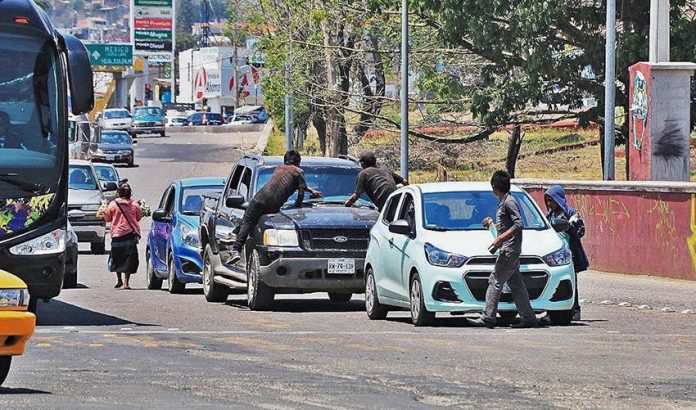
The children rescued were forced to work at city intersections to earn cash.

A raid in the Oaxaca municipality of Santa María Atzompa rescued 61 people on the weekend — including 56 youngsters — from forced labor and abuse.

Earlier complaints were dispelled when the captors claimed they all belonged to the same family, but the state Attorney General’s office continued to investigate.

Saturday’s raid found that rather than being one happy family there were 61 people being held as forced laborers: seven women, 27 girls and 29 boys, along with six babies younger than two years.

Originally from the Chiapas town of San Miguel Miotiqui, the victims were found living in crowded conditions in a space that also served as a warehouse. The captives’ only bed was made of pieces of cardboard; there was no bathroom on the property.

The youngsters were transported to busy intersections in nearby Oaxaca city where they sought money from motorists by juggling, selling various products or begging for 12 hours or more per day.

The investigation found that the adult women were sexually assaulted by their captors and forced to give birth in the building where they were kept.

Police arrested the presumed leader of the gang of human traffickers and 10 others.

Their captives were placed in the care of the DIF family services agency.

Source: Milenio (sp), El Financiero (sp), NVI Noticias (sp)