Home Blog Page 2107

Ex-governor’s properties seized in historic zone of Parral, Chihuahua

0
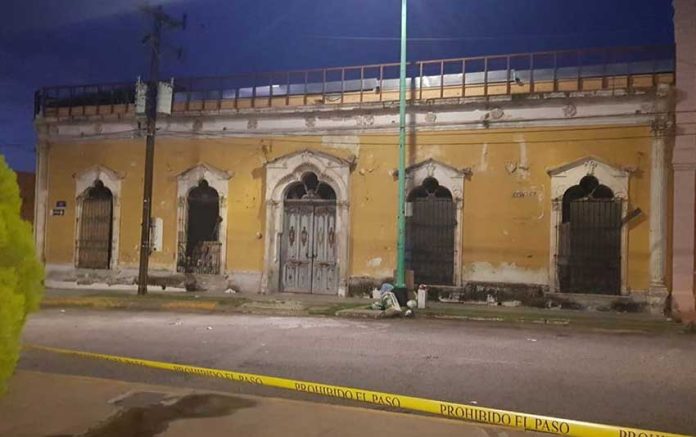
ne of the houses seized in Parral.
One of the houses owned by ex-governor Duarte.

The Chihuahua Attorney General’s office has seized five of former governor César Duarte Jáquez’s properties in the historic center of the city of Parral.

One of the houses is located some 50 meters from the site of the assassination of Francisco “Pancho” Villa, a general in the 1910 Mexican Revolution.

The five houses have been abandoned for 20 years or more. Neighbors told the newspaper El Universal that the former governor planned to take advantage of the economic spillover created by visitors to the area by opening a commercial center.

Every year on July 20 thousands of tourists gather on the street to witness a reenactment of Villa’s assassination, which took place on that spot and date in 1923.

Duarte had also planned to build what was to be the tallest equestrian statue in the world.

The monument was to be dedicated to Pancho Villa but federal authorities ordered the suspension of the work two years ago because the governor had ordered the demolition of a 19th-century heritage home.

Duarte was the governor of Chihuahua between 2010 and 2016 and is currently a fugitive, facing charges of corruption. Investigations into his alleged wrongdoings have resulted in the confiscation of close to 28 properties in his name.

Source: El Universal (sp)

Election institute will consider 197-million-peso fine against Morena

0
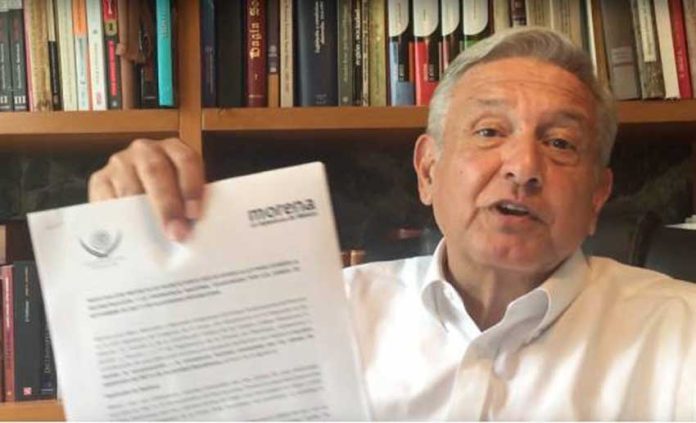
López Obrador announced the creation of the trust last September.

The party led by president-elect Andrés Manuel López Obrador could be issued with a 197-million-peso fine for violating campaign finance rules, the National Electoral Institute (INE) said yesterday.

The announcement came just three days after López Obrador won Sunday’s presidential election in a landslide.

According to the INE, the National Regeneration Movement, Morena for short, created a trust in which it deposited around 78.8 million pesos (US $4.1 million), mainly in cash but also through checks and bank transfers. But the trust was not officially reported.

“The party actively participated in forming this financial instrument to collect resources as a financing method contrary to the rules,” the INE said in a statement.

The institute will vote whether to impose the fine, which is equivalent to almost US $10.3 million, on July 18.

If the penalty is enforced, it will be the largest related to campaign financing in the recently-concluded electoral process.

The INE said that the possible imposition of the fine was based on omissions in Morena’s fiscal reports and because the party had exceeded established limits for cash donations and received funds from undisclosed persons and prohibited entities.

Two sources with knowledge of the matter told the news agency Reuters that the trust under investigation was called “For the Others” and was set up by Morena to help victims of last September’s two devastating earthquakes.

The INE — which began its investigation after the ruling Institutional Revolutionary Party (PRI) filed a complaint against Morena for not reporting the fund — said that around 64.4 million pesos (US $3.35 million) were withdrawn from the trust and distributed to party members via checks that were later cashed and used to finance the campaigns of Morena candidates.

The coalition the party heads also won a majority in both houses of federal Congress and the governorships of five states in Sunday’s elections.

In response to the announcement of the INE investigation, López Obrador today rejected that the trust had been used improperly.

“No, not at all,” the president-elect said, adding that the matter would “go to court because [the allegation] has no foundation.”

The 64-year-old leftist political veteran made ending corruption the central tenet of his pitch to the electorate, meaning that even a whiff of wrongdoing has the potential to trigger claims of hypocrisy from critics.

During a visit to the Isthmus of Tehuantepec region of Oaxaca, which bore the brunt of the powerful September 7 earthquake, the then-candidate gave an assurance that half of the public funds authorized by the INE for campaign financing was being allocated to victims.

The size of the potential fine Morena could face almost matches the 207.5 million pesos it was allotted as part of record public funding approved by the INE last year for this year’s elections.

The electoral institute said it is also considering fining the PRI 36.5 million pesos (US $1.9 million) for deducting money from government employees in 2015 for the party’s treasury in Chihuahua, while the National Action Party (PAN) could be slapped with a 3-million-peso (US $156,000) penalty for accepting donations from prohibited entities in the lead-up last Sunday’s vote.

Source: Reuters (en), Milenio (sp)

Another oil leak after vessel strikes wharf at Oaxaca refinery

0
Oil in the water this week at the Pemex refinery in Salina Cruz.

More oil is leaking into the waters surrounding the Oaxaca port of Salina Cruz after a ship collided with a wharf in a sudden squall on Monday.

The oil tanker Fedro Majuro was loading at the Antonio Dovalí Jaime oil refinery when a sudden gust of wind pushed the vessel into the wharf.

The tanker and parts of the onshore infrastructure were damaged as well as underwater pipelines, from which the oil leaked.

An “immense black stain” extends along a stretch of coast at the town of Salinas del Marqués, reported the newspaper Noticias.

Local fishermen said they were worried because they felt the state-run oil company had not fully addressed the oil spill.

Yesterday, a collective of indigenous towns demanded the intervention of the federal Agency for Energy Security and the Environment (ASEA).

Pemex said its personnel responded immediately to retrieve the spilled oil but has offered no information regarding the amount of fuel that leaked into the waters of the Isthmus of Tehuantepec.

Inspectors from the Navy and the environmental agency Profepa visited the area on Tuesday, but have not reported on the extent of the environmental damage.

Residents of the towns adjacent to the refinery have accused Pemex of damaging the region’s environment. Two other spills were reported to have occurred over the last two weeks.

On June 19, Pemex personnel started to clean up oil spilled a year ago but containers in which it was being stored began to leak, reaching a nearby lagoon and the town of Boca del Río, according to the newspaper Despertar de la Costa.

The Salina Cruz refinery was damaged in June last year during Tropical Storm Calvin, which caused flooding, an explosion and the spilling of fuel.

Source: NVI Noticias, Milenio (sp), Despertar de Oaxaca (sp)

19 killed by gunpowder explosions in Mexico’s fireworks capital

0
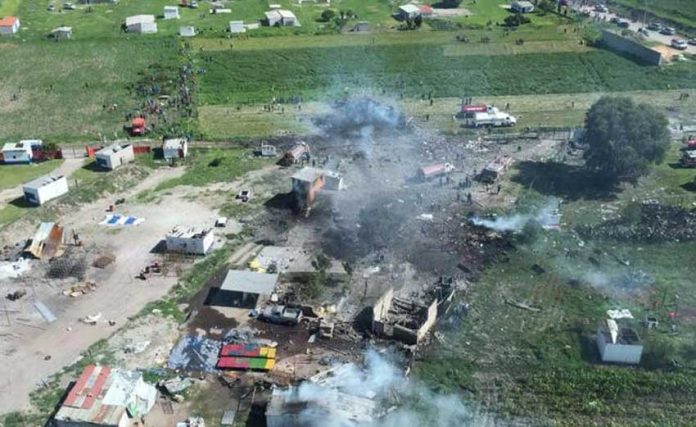
Scene of this morning's explosions in Tultepec.

Two gunpowder explosions in the fireworks manufacturing community of Tultepec, México state, have killed 19 people.

State security officials said at least 40 people were injured.

The first blast occurred at a fireworks workshop about 9:30 this morning in an area known as La Saucera.

It was followed by a second explosion in another workshop nearby that killed four firefighters and two police officers who had arrived on the scene after the first blast.

Hundreds of emergency personnel swarmed to the area along with three rescue helicopters. The wounded were being transferred to various hospitals in Toluca, Cuautitlán and Ecatepec.

Fireworks explosions are common in the municipality, known as the fireworks capital of Mexico. Seven people were killed a month ago. In December 2016, 42 people were killed by an explosion that destroyed the local fireworks market.

Local officials have complained that the majority of the fireworks workshops operate without the required permits from the Secretariat of Defense and are seeking to obtain local control over the issuing of the permits.

Source: Milenio (sp), Excélsior (sp)

Election authority calls for calm after post-vote violence in Puebla

0
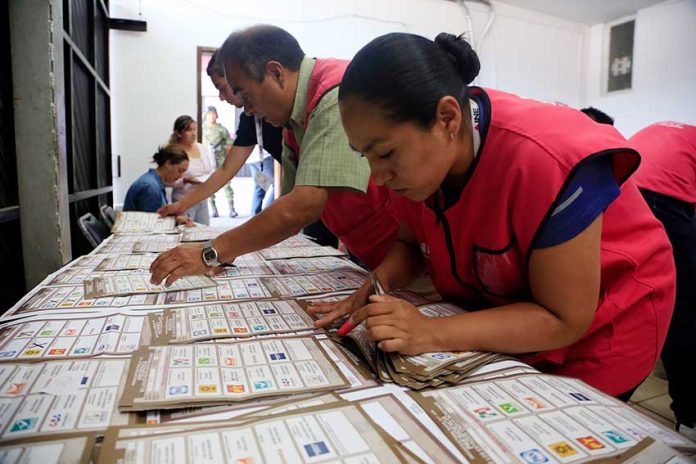
Election workers with ballots in Puebla.

The president of the National Electoral Institute (INE) has called for calm after a violent incident in Puebla following a close gubernatorial race.

“I call on the political actors to rise up to the level of the celebration of democracy we have had. It’s not fair that the [electoral] process be marred by any political actor no matter what their interests are. The legal channels are there, they should exercise them,” Lorenzo Córdova said yesterday

The official’s comments came after a confrontation Tuesday between members of the National Action Party (PAN) and Morena party at a hotel in the state capital.

The candidate for the coalition led by the former party, Martha Ericka Alonso, appears to have won the election for governor with 38% of the vote, four points ahead of Morena candidate Luis Barbosa Huerta.

But Morena party members and supporters accused the PAN of electoral fraud by manipulating ballots in favor of Alonso and entered the hotel where they alleged the crime was taking place.

Several people were injured in the ensuing clash, according to a report in the newspaper El Financiero, while 62 people, including two successful Morena party candidates, were arrested although all have now been released.

In light of the allegations of fraud, the national president of Morena called for a total recount.

“If they believed, because of . . . the overwhelming triumph of Andrés Manuel López Obrador, they would be able to steal other elections, under no circumstance are we going to allow it . . . We want a recount vote by vote, polling station by polling station,” Yeidckol Polevnsky said.

She also told a press conference that Barbosa had been a victim of a dirty and fraudulent campaign in which former Puebla governor Rafael Moreno Valle sought to perpetuate his own power through Alonso, his wife.

Polevnsky charged that Morena supporters were witnesses to a flagrant crime but a spokesman for the PAN rejected the allegation, holding that the documents in the party’s possession were copies of results from each polling station to which they are entitled.

The electoral crimes division (Fepade) of the federal Attorney General’s office (PGR) said it was investigating the case and requested the cooperation of the INE and the Puebla Electoral Institute (IEEP) to determine the origin of the documents.

The IEEP said it had rejected a request from the Morena party-led coalition for the INE to take over responsibility for counting votes and the institute’s president said there would only be a partial recount of votes.

Of 7,548 electoral packets, 1,337 will be reviewed but only 486 contain ballots for the governor’s race, or 5.9% of the total cast.

During the course of election day in Puebla there were reports of voters being threatened at polling stations by groups of armed civilians. In addition, at least 70 packets of ballots were reportedly stolen and ballots were burned in some municipalities.

The citizens’ organization Sumamos issued a statement saying that “the use of firearms to steal from ballot boxes and intimidate voters is doubly reprehensible.”

It also said that vote-buying had occurred in the lead-up to and during Sunday’s elections.

Source: Milenio (sp), El Financiero (sp), Animal Político (sp), e-consulta (sp)

Guanajuato’s new governor promises change of course on security

0
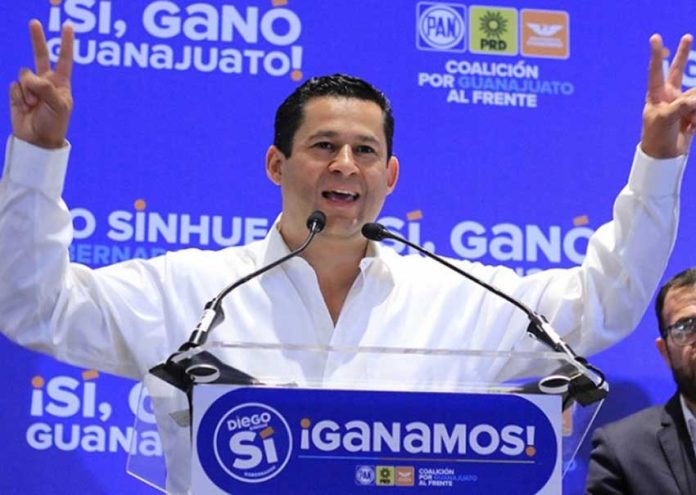
Guanajuato governor-elect Rodríguez: change of course.

The governor-elect of Guanajuato has pledged to change course in fighting crime by adopting a new security strategy that includes strengthening municipal police forces and creating a financial intelligence agency to track flows of money related to petroleum theft.

Diego Sinhué Rodríguez Vallejo, who easily retained the governorship for the National Action Party (PAN) by winning almost 50% of the vote, told the newspaper El Universal that on the first day of his new government a state security council will be installed.

That, he said, will be the legal vehicle that will tighten the screws on both the state’s institutions and mayors in order to transform Guanajuato’s municipal police forces by offering better salaries, training and equipment to officers.

Violent crime has surged in Guanajuato this year, turning what was once a largely peaceful state into one of the country’s most violent.

A large proportion of homicides are believed to be connected with petroleum theft from state-owned pipelines and refineries.

Gangs of thieves known as huachicoleros sometimes collude with municipal police and other corrupt officials including Pemex employees to commit the crime.

Rodríguez told El Universal that the state oil company must be held accountable because a lot of fuel theft is linked to criminal collusion with Pemex workers.

The solution to combating the black market for stolen fuel is to clean up the Salamanca refinery, he charged, “because theft isn’t just from pipelines, it’s also from tankers that leave [the refinery] filled [with fuel but] without invoices.”

Rodríguez added that the financial intelligence agency he plans to establish will help track illicit financial flows back to criminal organizations, meaning that it will be easier to prosecute them.        

He also said he believed that federal authorities “have erred on the issue of centralization of commands and the militarization of the country.”

In contrast, he said, the new strategy “will bet again on municipal police forces” and enforcing the law.

The number of employees at the state’s Attorney General’s office will more than quadruple to 1,000 from 237 as part of the fight against impunity, Rodríguez said.

The governor-elect said that his challenge was to return peace and prosperity to the state and combat corruption, adding that he expected he would have a good relationship with incoming president Andrés Manuel López Obrador.

“I will be a governor of results, transparent and honest,” Rodríguez said.

Source: El Universal (sp) 

Why Mexico’s historic elections may bring about big change

0
Thousands pack Mexico City’s main square as Andrés Manuel López Obrador delivers his victory speech on July 1.
Thousands pack Mexico City’s main square as Andrés Manuel López Obrador delivers his victory speech on July 1. AP Photo/Moises Castillo

The election of a leftist party in Mexico for the first time in decades has the potential to transform the country as it dislodges its ruling elite, challenges the economic consensus and promises to eradicate violence and corruption.

In a country marked by extreme levels of violence and deep social polarization, the July 1 elections were remarkable.

With the second-highest voter turnout level in recent memory (63%), no allegations of fraud or any reported incidents of violence, the leaders of the two parties (the right-of-center National Action Party and the pragmatic ruling Institutional Revolutionary Party) that have dominated the country’s politics and economy for the last 40 years conceded defeat by 8:30 p.m. to the leftist candidate, Andrés Manuel López Obrador (widely known as AMLO), even before official results were announced.

The prompt concessions attest to the magnitude of López Obrador’s landslide victory on his third attempt at reaching the presidency: early returns gave the folksy southerner 53% of the vote, the highest for a presidential candidate in democratic Mexico, and projections on election night showed his coalition winning a congressional majority.

López Obrador was thus elected with ample political capital and the institutional levers required to transform the country.

Despite strong opposition from the country’s elite, for a plurality of Mexicans López Obrador represented the best choice to tackle the country’s problems. Polling leading up to the election showed that he was considered by 43% of Mexicans to be the best candidate to reduce corruption; by 41% to improve the country’s economy; by 37% to deal with public insecurity; and by 36% to combat drug cartels and organized crime. These were numbers twice as high as any of his rivals’.

Polling also showed, however, that among his contenders he was seen as the most likely to destabilize the country if elected.

The desire for change was such that Mexicans appear to have taken a gamble at the ballot box by voting for the riskier choice.

Yet despite his portrayal as a leftist firebrand and the risk some see in his election, the more likely outcome is a gradual shift to a more redistributive economic model. Here are some highlights:

1. NAFTA

While a frequent critic of NAFTA, López Obrador is unlikely to seek major changes to the agreement, let alone try to annul it. During his victory speech he repeated his idea that boosting economic growth, reducing poverty and preventing illegal migration to the United States required self-sufficiency in agricultural production.

Agricultural policy is therefore likely to be central to his administration and — Mexico’s surplus with the U.S. and Canada in agriculture notwithstanding — he is likely to deepen discussions on farm subsidies should a renegotiated NAFTA not happen soon.

But a radical approach to the agreement is unlikely. Indeed, his point man on renegotiations, a former International Monetary Fund official, has suggested that López Obrador’s team agrees with the “central positions” of the country’s negotiating team.

2. The economy

López Obrador seeks to maintain macroeconomic stability with a focus on socioeconomic redistribution. In a short speech on election night, which came across as non-socialist manifesto, he explicitly mentioned that his government will not become authoritarian (overtly or covertly), guaranteed the continued independence of the central bank and declared that private property would be respected and that any nationalization was completely off the table.

On the important energy sector, which was recently liberalized, he assured investors that all agreements made by the state would be respected, unless investigations unveiled signs of corruption in their making.

3. Taxation, poverty and corruption

The left’s stunning election is largely explained by persistent poverty and the unequal distribution of the benefits of economic liberalization. Mexico is among a handful of countries in Latin America that has not seen a reduction in poverty despite the commodities boom of the 2000s (its rate has stubbornly sat at around 53%) and has seen a continued loss of purchasing power.

In effect, some studies point to a decrease of a staggering 80% of Mexicans’ purchasing power over the last 30 years.

To reduce poverty, López Obrador has vowed to overhaul current taxation levels and to increase social spending through the resources saved by clamping down on the country’s grotesque corruption. This is an area in which we are likely to see the most significant change should he succeed at taming corruption.

4. The drug cartels and insecurity

López Obrador has called for a new approach to fighting the drug cartels, although details are scant. Violence has reached unprecedented levels: 116,000 people have been murdered since 2012. Invoking a process of national reconciliation, his proposals involve some amnesty to lower-level criminals whom he views as victims of structural poverty.

The most important change, however, is likely to be in the role the military plays in national security: There are indications that his team intends to centralize the country’s police forces and withdraw the military from fighting organized crime.

The ConversationLópez Obrador has been a polarizing figure and portrayed as either a dangerous populist or a Bonapartist saviour. What we’re likely to see instead from López Obrador is transformative yet stable change in Mexico.

Jordi Díez is a professor at the University of Guelph, Ontario. This article was originally published on The Conversation.

No security for Mexico’s next president: ‘The people will protect me’

0
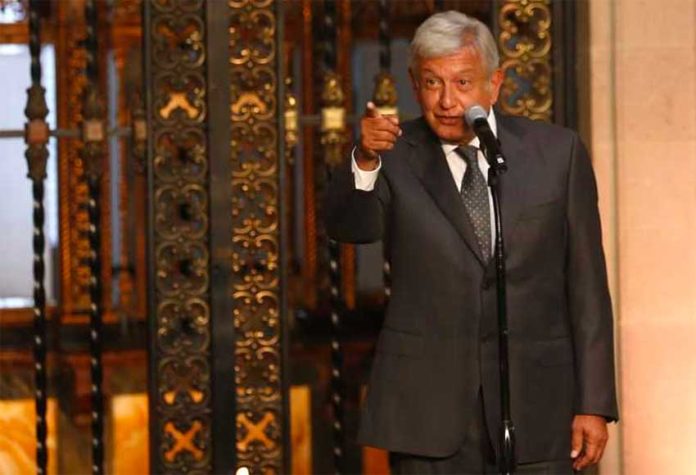
AMLO takes questions from reporters yesterday at the National Palace.

Forgoing security is just one of several personal austerity measures that Andrés Manuel López Obrador says he will adopt when he is Mexico’s next president.

The 64-year-old leftist — who won last Sunday’s presidential election in a landslide — already eschews bodyguards and after meeting with President Enrique Peña Nieto yesterday, said he didn’t need personal security.

“The people will protect me . . . He who fights for justice has nothing to fear,” López Obrador told reporters at the National Palace.

“You’ll all be watching out for me,” he added during an interactive 35-minute press conference that contrasted sharply with Peña Nieto’s tightly controlled media appearances.

“We’re just reporters,” one journalist called out, according to a report published yesterday by the news agency Reuters, while another asked the president-elect if he would reconsider his security approach.

“This is the institution of the presidency of the republic, this isn’t just one person,” the reporter said.

Although López Obrador is adamant on the issue at present, a professor of public administration at the Colegio de la Frontera Norte in Tijuana believes that as president — and in the transition period — López Obrador may be forced to compromise.

“He should understand the risk, and that once he’s elected, he doesn’t owe it to himself but to the country,” Vicente Sánchez said.

“He has too much desire to go down in history as an austere figure, close to the people.”

But López Obrador, or AMLO as he is best known, said yesterday that Peña Nieto had offered him federal protection but he declined.

He also said that when he becomes president, the institution charged with protecting the president of Mexico — the Estado Mayor Presidencial — will be “completely” incorporated into the Secretariat of National Defense and “will not be responsible for guarding the president.”

During the campaign period and throughout his long political career, which has included runs at the presidency in 2006 and 2012, López Obrador has traveled the length and breadth of the country, venturing into drug cartel strongholds such as Chilapa, Guerrero, and Reynosa, Tamaulipas, where many other federal politicians, including the president, seem loath to go.

Despite not having bodyguards, he has also had no qualms about getting up close and personal with the people he sought to — and now will — represent.

In keeping with the “common man” image that he has cultivated for years — whether by driving himself to work in his Nissan Tsuru while mayor of Mexico City, refusing to fly first class or eating in humble fondas — AMLO has also pledged to live modestly as president and oversee an honest and responsible government.

Among the other austere and populist promises López Obrador has made is not to live in the president’s official residence, known as Los Pinos.

“I won’t live in a mansion of any kind,” he told supporters at a rally before the election in a hardscrabble neighborhood on the outskirts of Mexico City.

Yesterday, he reiterated that position and pledged to convert the residence into “a space for the arts and culture of the people of Mexico.”

AMLO has also committed to selling the presidential plane and before he was elected he often joked that he would sell it to United States President Donald Trump.

“I’m not going to travel in government airplanes, nor in helicopters. When I have to travel, I’ll do it as I always have, on commercial airlines,” he said.

López Obrador has also said that top officials in his government will be banned from traveling first class or in private aircraft.

“All this is going to end . . . we cannot have a rich government and a poor people.”

In addition, the president-elect has committed to slashing the presidential salary, drastically reducing pensions for past presidents and cutting the wages of officials who work in what he has called the burocracia dorada (golden bureaucracy).

“I’m going to earn half what Peña Nieto earns . . . and we are going to reduce the salaries of those who are on top so we can raise the salaries of those at the bottom,” López Obrador promised.

“The teachers will earn more, the nurses, the doctors, the cleaners, the police, the soldiers, the marines . . .  the campesinos.”

Source: Reuters (en), Milenio (sp), EFE (sp), The Guardian (en)

AMLO, business leader agree on apprenticeship program

0
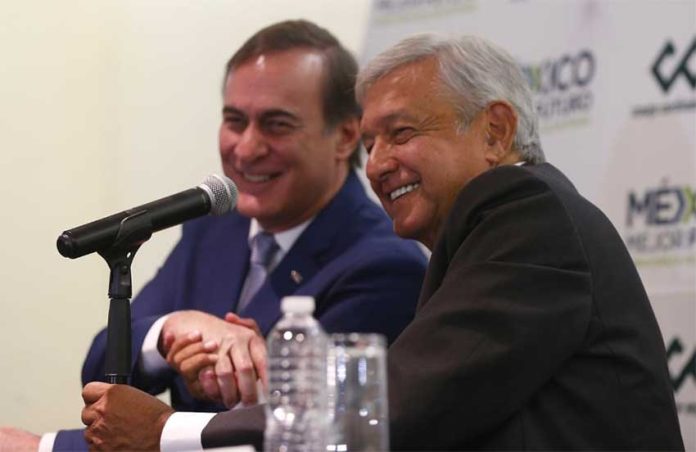
Castañon, left, and López Obrador shake on new agreement.

President-elect Andrés Manuel López Obrador met today with the influential Business Coordinating Council (CCE) and won its support for a new apprenticeship program.

López has proposed paid apprenticeships for young people called “Youths building the future.”

The program is intended to guarantee access to education and employment opportunities. “[Youths] will be hired as apprentices and will be working for businesses . . . and will be paid a salary,” said López.

The program is to be coordinated with business owners who will assume the role of mentors and be in charge of the youths’ training.

“Through a simple mechanism, the government will transfer funds to cover the youths’ salaries,” explained the president-elect.

López has estimated that some 110 billion pesos (US $5.7 billion) is needed to guarantee access to public or private universities, as well as to pay for the apprenticeship program.

Today, CCE president Juan Pablo Castañón agreed with the plan, which both parties will sign once election authorities officially ratify the election results.

A 2016 study by the World Bank identified youths who neither studied nor worked (ninis, in Spanish, for ni estudian, ni trabajan) as a growing problem in Mexico, particularly among young men. It is a problem throughout Latin America and youths aged 19 to 24 are those who are most affected.

They leave school to go to work but find few job opportunities. So they are recruited by organized crime, said the report, entitled Ninis in Latin America: 20 Million Youths Searching for Opportunities.

Source: Milenio (sp)

Ex-transparency institute chief assassinated in Guerrero

0
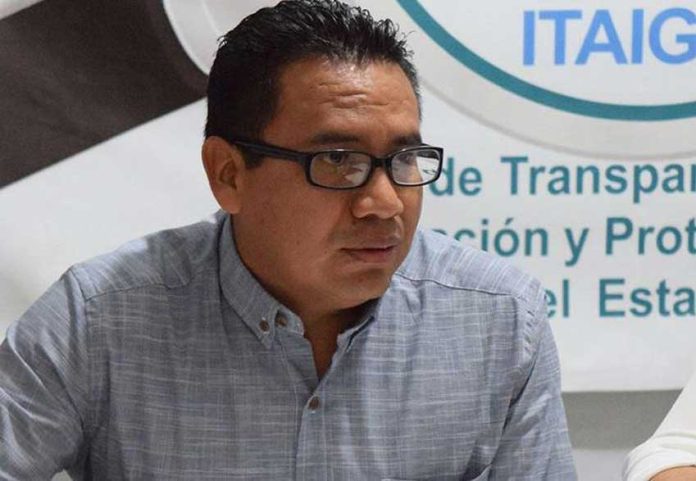
Morales was assassinated in Tlapa.

A former transparency institute chief in Guerrero was assassinated early yesterday morning while he slept.

Armed civilians broke into the Tlapa home of Joaquín Morales Sánchez, went straight to his bedroom and fired at him four times. One of the shots struck him in the head, killing him instantly. The attackers’ focus on their target gave Morales’ wife time to scramble behind an armoire and survive.

She gave a formal statement later, declaring that the gunmen were dressed in black and had their faces covered. She said a second group of individuals entered her husband’s office and removed two laptops and two smartphones.

Morales was president of Itaigro, the Guerrero transparency institute, from February 2016 until last March, when he began practicing law in Tlapa.

He left Itaigro amid accusations of wrongdoing, and had demanded a severance payment of 365,000 pesos. The new president, Pedro Arzeta Delfino, has accused former commissioners of financial irregularities.

One of those Elizabeth Osorio Patrón, has demanded he supply proof of the alleged irregularities or she will file a formal complaint against him.

Source: Reforma (sp), Sipse (sp)