Home Blog Page 2122

Unions, officials that receive public funds will have to reveal their assets

0
New law is part of anti-corruption efforts.

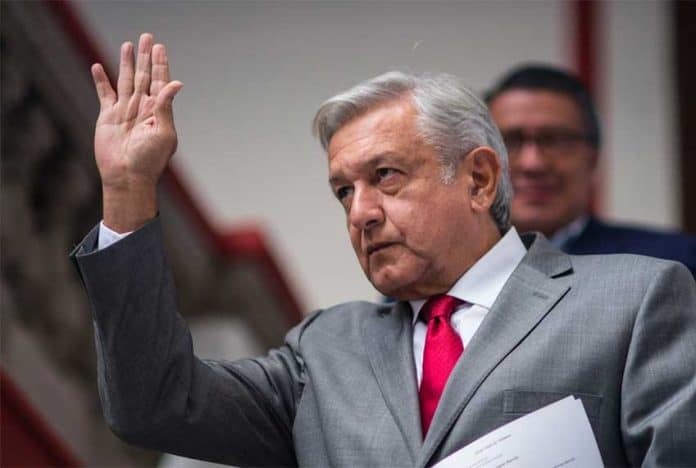
Union leaders, judges and all other officials who receive or manage public money will be required to publicly declare their assets under a new scheme proposed by the incoming federal government.

The aim of the so-called universal declaration system, put forward by president-elect Andrés Manuel López Obrador, is to avoid conflicts of interest and thus help stamp out corruption in the public sector.

Its implementation would require a reform to the General Law of Administrative Responsibilities.

According to López Obrador’s proposal, “all public officials, popularly elected representatives, judges, magistrates, members and officials of political parties and unions, members of civil associations and any other person who uses, collects, holds or manages [public] money or who assumes public duties of a pecuniary nature in the name of the government of the republic will participate, without any exceptions.”

The initiative also proposes the establishment of special criminal offenses for failing to disclose assets or providing false information on declarations, and aims to strengthen the punitive provisions for conflict of interest offenses as established in existing legislation.

“It would be necessary to complement this sophisticated regime of penalties with a new institutional design that allows them to be effective. The terrible institutional design for accountability has guaranteed total impunity for all public officials who offend in this respect,” the proposal states.

Anyone who occupies any public or judicial position would have to legally discharge himself or herself of any economic interests that could directly affect the exercise of their public responsibilities.

The proposal also stipulates that it would be “strictly prohibited for any public official or his or her family members . . . to use their public position to establish any kind of private business with national or international contractors, investors or business people.”

The proposal is critical of the fact that government departments that have the power to penalize public officials, such as the Secretariat of Public Administration (SFP) and the federal Attorney General’s office (PGR), are not independent from the Mexican president.

In addition, bodies that are independent — such as the Federal Auditor’s Office (ASF) and the federal Congress — have limited powers to investigate and punish officials, the document charges.

By eliminating conflicts of interest, the incoming administration estimates that it can save more than 764 million pesos (US $40.3 million) of public money.

The measures have received a positive reaction from union leaders.

Marco Antonio García Ayala, head of the National Syndicate of Health Secretariat Workers, said the system would help to avoid corruption.

“Without a doubt, it will be a measure to strengthen transparency and accountability in the management and use of public resources, which must be looked after. We’re in favor of the initiative in the terms proposed,” he said.

Fernando Salgado, political action secretary of the Confederation of Mexican Workers (CTM), also threw his support behind the proposal.

“The use of public resources must be transparent because when a union organization receives a donation, an allocation of funds or a subsidy . . . it must be used for the purposes for which it was intended, not go into someone’s pocket or bank account.”

Source: El Universal (sp)
Ex-Federal Police officer, ex-mayor sent to jail for organized crime

0
Former Michoacán mayor got 15 years.

An ex-cop and an ex-mayor got lengthy prison sentences this week for their links to organized crime.

In Mexico City, former Federal Police officer Germán Posadas Rico was sent to jail for 30 years for protecting cocaine shipments as they passed through the Mexico City airport, where he was stationed.

The drugs were being shipped from Colombia to Reynosa, Tamaulipas, before they were sent on to the United States.

Posadas was arrested in December 2014.

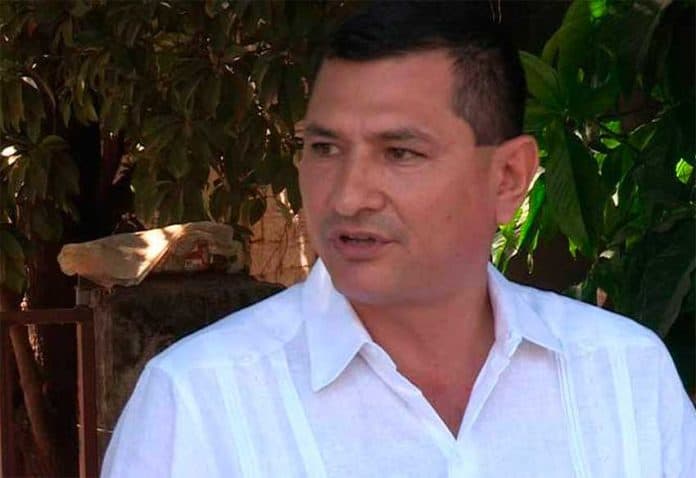
In Michoacán, the former mayor of Aguililla was sentenced to 15 years for engaging in organized crime.

Jesús Cruz Valencia was one of three mayors removed from office by self-defense forces in 2013 on suspicion of links to the Knights Templar cartel, or Caballeros Templarios. After he was expelled as mayor, he disappeared from the municipality.

When he showed up a year later at municipal headquarters, he was arrested by Federal Police.

Authorities say Cruz is a cousin of the Knights Templar’s ex-plaza chief in Aguililla, Tepacaltepec, Buenavista Tomatlán, Apaztingán and La Ruana.

Source: Milenio (sp)

López Obrador thanks Trump for refraining from ‘offensive comments’

0
López Obrador
López Obrador: 'There has been respect.'

Mexico’s incoming president expressed his appreciation yesterday to United States President Donald Trump for refraining from making “offensive comments” about Mexicans.

Andrés Manuel López Obrador remarked that Trump had been “very prudent” for some time in his references to Mexicans, which he felt ought to be acknowledged. “Up until now things are going well. There has been respect.”

He also said that talks to update the North American Free Trade Agreement (NAFTA) “are on the right track.”

But the winner of the July 1 presidential election, who has had baseball on his mind this week, paraphrased the legendary baseball player Yogi Berra with the caution: “It’s ain’t over till it’s over.”

Trump himself had a comment this week about López Obrador: “I think he’s going to be terrific.”

He also expressed optimism about the NAFTA talks with a tweet this morning that a deal was imminent.

“Our relationship with Mexico is getting closer by the hour. Some really good people within both the new and old government, and all working closely together,” Trump wrote. “A big Trade Agreement with Mexico could be happening soon!”

Source: El Financiero (sp), Reuters (en)

Police are not functioning properly at state or municipal level: López Obrador

0
federal police
They're not ready to replace the military.

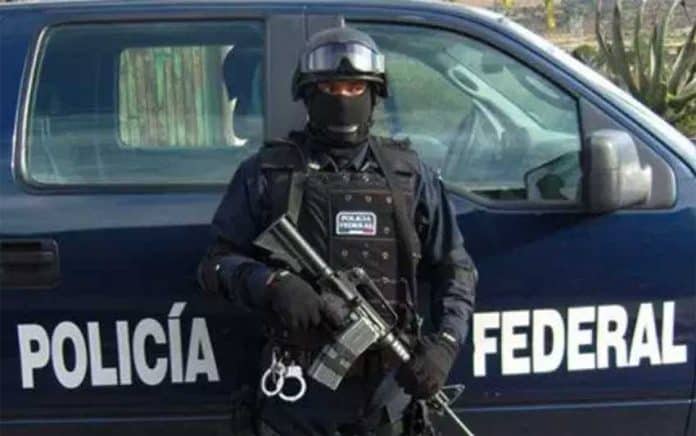
Neither state nor municipal police are functioning properly in the fight against violence and crime in Mexico was the blunt assessment offered today by president-elect Andrés Manuel López Obrador.

“In my travels around the country, there is an almost generalized opinion that the state and municipal police forces are not working, to say it diplomatically, they’re not fulfilling their responsibility. There are honorable exceptions but that’s the bitter truth,” he told a press conference.

López Obrador also said that military forces will continue to carry out public security duties on the nation’s streets for the foreseeable future because the Federal Police are not ready to replace them.

“In the current circumstances, we couldn’t stop using the army and the navy to respond to the problem of insecurity and violence. The Federal Police are not prepared to replace what soldiers and marines currently do. Being realistic, it hasn’t been possible to strengthen the Federal Police, no progress was made,” he said.

The president-elect’s remarks follow meetings he attended with National Defense Secretary Salvador Cienfuegos Wednesday and Navy Secretary Vidal Soberón today.

“The situation of the Federal Police is regrettable, they don’t even have barracks. They send them to the states without support. They have to camp, live in hotels . . . really regrettable situations. The [right] conditions were not created . . . In the face of organized crime, you can’t work with a disorganized government,” López Obrador said.

Alfonso Durazo, López Obrador’s nominee for secretary of public security, said last month that the incoming government would gradually withdraw the military from public security duties, suggesting that “training police [and] improving their socio-economic conditions” is a better path towards peace.

Statistics show that the federal government deployed 52,807 soldiers to fight Mexico’s notorious drug cartels last year, the highest number in the 12-year war on drugs.

Yet, with more than 31,000 homicides, 2017 was the most the most violent year in at least two decades.

López Obrador has pledged to “attend to the root causes of violence” and his government could adopt a security strategy that includes an amnesty law for low-level criminals and the legalization of some drugs.

Today, the president-elect said there will be 248 territorial coordination groups that will act jointly with the federal government “to guarantee peace and tranquility” and stressed that he would personally analyze the security situation on a daily basis.

López Obrador also said that he will nominate the next chiefs of the army and navy “well before” he is sworn in on December 1, explaining that the new military leaders would be chosen from among the generals and admirals already in active service.

Source: El Financiero (sp)

NAFTA talks continue with sticking points, old and new

0
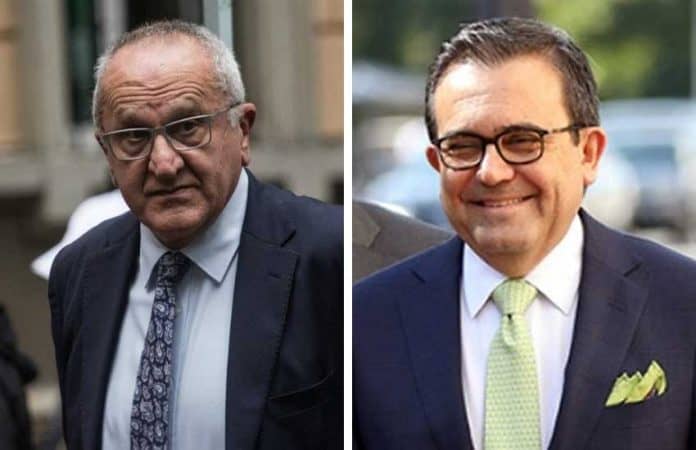
Seade, left, and Guajardo: more talks.

Talks between Mexico and the United States aimed at reaching agreement on contentious issues to pave the way for a new NAFTA deal are set to continue next week, with old and new sticking points still to be resolved.

“We’re on a path that can take us into the weekend and next week,” Economy Secretary Ildefonso Guajardo told reporters on his way into talks yesterday afternoon with U.S. Trade Representative Robert Lighthizer.

“. . . The negotiations are highly complex, we’re trying to have all the solutions that are required. We are well advanced [but] not there yet . . .” he said.

Officials from Mexico and the U.S. have been meeting in Washington D.C. for the past five weeks to try to craft new auto industry rules, especially those relating to the amount of regional content a vehicle must have in order to be given tariff-free status.

The United States has barely moved from the demand for a vehicle to have 75% regional content in order to be exempt from duties, according to auto industry officials.

Mexican and U.S. negotiators have also focused on resolving differences over United States President Donald Trump’s complaint that NAFTA has benefited Mexico to the detriment of U.S workers and that country’s manufacturing industry.

Trump has also repeatedly railed against the United States’ large trade deficit with Mexico, blaming the 24-year-old agreement for the perceived inequity and describing the pact as “the worst trade deal maybe ever signed anywhere.”

On several occasions, he has threatened to withdraw the United States from the deal and more recently has said that the U.S. could seek separate deals with its two North American neighbors.

Auto industry sources say the Trump administration wants to be able to impose national security tariffs on future Mexican output from new auto assembly and parts plants.

One anonymous source told the news agency Reuters that the demand has been a source of friction in recent talks.

The United States has also been pushing for 40% of the content of cars and 45% of the content of pickup trucks to be made by workers who are paid at least US $16 per hour. Mexico publicly accepted the proposal for the first time late last month.

Today, Guajardo said that Mexico has come “very far” in working through the outstanding issues with the United States.

However, he qualified his remark by saying that “unfortunately, even if you are extremely engaged there’s always a last-moment thing that can come between you and your goals.”

Asked whether any progress had been made on the so-called sunset clause that would see the trilateral trade pact automatically expire if it is not renegotiated every five years, Guajardo said that the issue would be dealt with once Canada rejoins the talks.

“There are trilateral issues that have to be solved in a trilateral context,” he said.

However, president-elect Andrés Manuel López Obrador’s nominee to be his chief trade representative believes that the proposal, pushed by the United States, will be discarded.

Jesús Seade, who has accompanied Guajardo and Foreign Affairs Secretary Luis Videgaray during some of the discussions in Washington, said he hadn’t personally been part of talks about the sunset clause but was adamant that “it’s going out.”

Guajardo didn’t comment on Seade’s remarks but a senior Canadian official told the news agency AFP yesterday that there had been “no indication of flexibility from the U.S. on the issue.”

Today, Bloomberg reported that according to two people familiar with the negotiations the incoming federal government’s split with the current administration over private and foreign investment in the energy sector is “emerging as a key hurdle for a bilateral agreement over NAFTA.”

Bloomberg’s sources said that Seade has asked the Trump administration to address concerns that language proposed by the United States in a new deal would place too many restrictions on how Mexico can treat foreign companies seeking to explore and drill for oil in national waters.

Lighthizer has pushed back against the request and Seade has traveled back and forth between the U.S. and Mexican capitals to “try to smooth out the issues,” the sources said.

“It’s not about touching the energy reform, but it’s touching it in the right way,” Seade told reporters in Mexico City last night.

“The U.S. has had this drafted up to the last comma for some time, so if you change a single comma, then it needs to be discussed. But we’re discussing it, and this is going to come out OK.”

Guajardo declined to comment on energy sector negotiations when asked about the issue this morning.

Mexican negotiators are aiming to reach a deal before President Enrique Peña Nieto leaves office at the end of November but any new deal will also need López Obrador’s support because it will have to pass a Senate that from September 1 will be controlled by the coalition of parties he represented in the July 1 elections.

Both Mexican and United States officials say they will push for a deal that will allow Canada to return to the talks.

Canadian Foreign Minister Chrystia Freeland told reporters yesterday that “Canada clearly has an interest in how [auto] rules are updated and we clearly will need to look at and agree to any final conclusion.”

Canadian Prime Minister Justin Trudeau later said that Ottawa had maintained regular contact with its NAFTA partners and that he was encouraged by the optimism that has been expressed.

“We’re working to achieve a good deal, not just any deal,” he said.

Source: Reuters (en), El Financiero (sp), Milenio (sp), Bloomberg (en), AFP (en)

Slow internet? Here’s how cities rank for 4G speeds

0
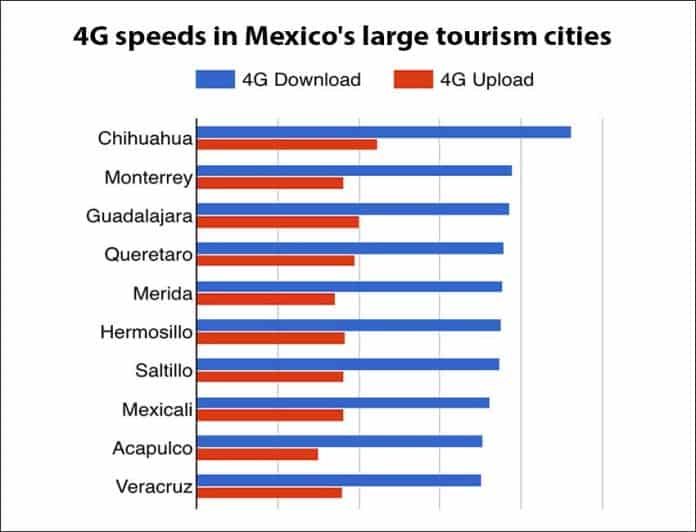
Wireless speeds in 10 Mexican cities.
Wireless speeds in 10 Mexican cities. opensignal

The worst-ranked cities in Mexico for wireless broadband are getting download speeds of about 19 megabits per second (Mbps), while the top-ranked cities see speeds as high as nearly 28.

Wireless coverage mapping specialist OpenSignal tested 17 large cities that are also popular tourist destinations to determine where the best 4G LTE mobile coverage is readily available for tourists.

The company looked at average 4G download and upload speeds and the extent of 4G coverage in each of the cities over a 90-day period between May and July.

Mexico City was one of those near the bottom of the list.

“While the capital’s speeds are not slow, they definitely seem to fall behind other large cities, which might seem odd considering the level of 4G investment in the country’s economic and political center,” said the study.

Mexico City has powerful LTE networks, it said, but it also has a huge number of users all vying for capacity on those networks, which could cause slower speeds.

The capital had an average download speed of 19.9 Mbps and ranked as the fifth worst destination. Also at the bottom were Cancún (which tied with Mexico City) and Toluca, Aguascalientes and Puebla, with speeds ranging from 19.2 Mbps down to 18.8.

Fastest download speeds were recorded in Chihuahua, which scored 27.8. Monterrey and Guadalajara were second and third with 23.3 and 23.2 respectively.

OpenSignal also scored 4G availability, in which Mexicali emerged at the top with 86.5%. Querétaro was a close second with 85.9% followed by Hermosillo and Chihuahua.

In contrast, Mexico City dropped to the bottom of the list with 80.8%, just below the beach resorts of Cancún and Acapulco.

The firm remarked that “all 17 cities we analyzed had 4G availability scores above 80%, indicative of excellent LTE reach in metro areas nationwide.”

Mexico News Daily

Downtime for the president-elect means a bit of baseball

0
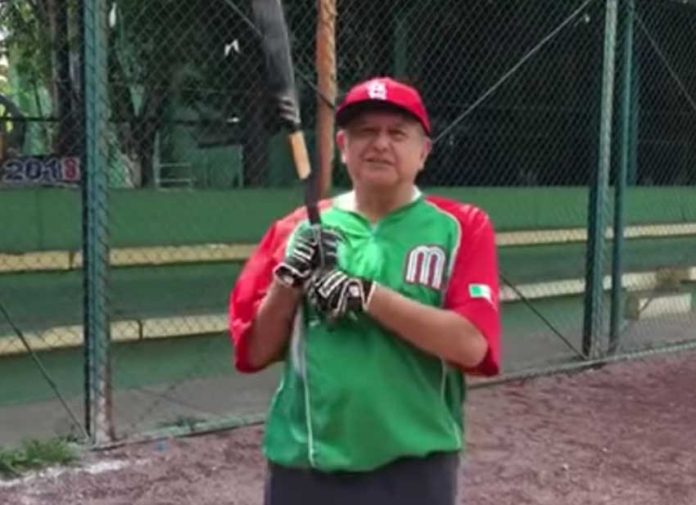
AMLO up to bat: president-elect López Obrador slips away for some baseball.

The president-elect may be “under severe pressure” but that doesn’t mean he can’t take some time off to practice his favorite sport.

Andrés Manuel López Obrador shared a short clip on Twitter yesterday where he wrote: “I escaped, for a little while, to practice baseball.”

He told his followers that “I may be under severe pressure, but I take time for myself and come here to bat, to practice baseball. It relaxes me.”

López Obrador might have been away from his desk, but government policy was still on his mind. He explained that his administration will promote sports and recreational activities.

He described his plan to create baseball schools in all the regions of the country where students can train to be professional players, and perhaps some will go on to play in Major League Baseball in the United States.

The curriculum will also include a formal education in physical education “for those that don’t make the cut.”

He said that despite his predilection for baseball, all sports will be promoted by his administration.

The president-elect’s plan for all things sports will be spearheaded by retired track and field athlete and Senator Ana Gabriela Guevara Espinoza, who will head the National Sports Commission, Conade.

Sporting a St. Louis Cardinals baseball hat in the video, López Obrador commended the team for its recent victory over the Los Angeles Dodgers, as well as Major League Baseball’s recent decision to stage three games in Monterrey, Nuevo León.

These events, he said, are important to promote the sport in Mexico.

Source: Milenio (sp), El Financiero (sp)

30,000 turtle eggs seized but conservationist says thefts are down

0

There was a massive seizure of turtle eggs in Oaxaca on Sunday but a conservation group says poaching the eggs has actually declined.

Federal agents arrested five men after a routine inspection on the Huatulco-Salina Cruz highway revealed they were carrying 30,000 olive ridley sea turtle eggs.

The men said they were on their way to the port city of Salina Cruz, where they hoped to sell their illegal cargo.

The olive ridley turtle, known in Mexico as tortuga golfina, is a protected species that arrives in the thousands every year to lay eggs on the beaches of the Pacific coast.

Although poachers steal the eggs from the nests every year, conservation and anti-poaching efforts have been successful in the eyes of a member of the Escobilla sea turtle sanctuary cooperative.

Pedro Ramírez told Dolores Barrientos Alemán, Mexico representative of the United Nations Environment Program, that there are fewer buyers of the eggs in local markets.

“Before, a single buyer could go and sell 700,000 eggs but not now,” said Ramírez. As demand for the illegal delicacy has dropped, he explained, poachers take only 1,000 or 2,000 eggs when the turtles begin to arrive.

Poaching is often suspended after the first night because they still have eggs at home that they were unable to sell.

Ramírez also told the UN representative that he has seen an increase in the numbers of turtles arriving to lay their eggs.

He claimed that Escobilla beach had become the most important spawning area in the world, receiving up to 100,000 specimens of ridley, green and leatherback sea turtles per night.

“It is the No. 1 beach. Before it was in Costa Rica, but this beach has gone up over the last six years.”

Source: Azteca Noticias (sp), Noticias de Oaxaca (sp)

Durango-Mazatlán highway repair costs are typical ‘budget blowouts’

0
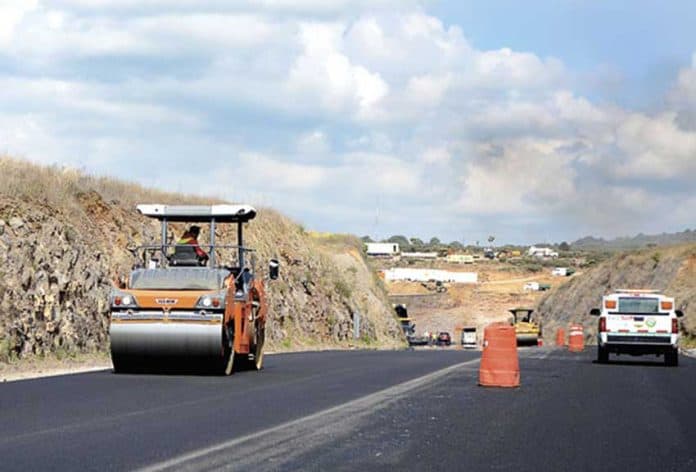
New asphalt is laid on the Durango-Mazatlán highway, an expensive one to maintain.

The Durango-Mazatlán highway was not only costly to build but is now proving to be costly to maintain as well.

The federal government has spent almost 2.5 billion pesos (US $132.7 million) to maintain the highway since it opened in October 2013, public records show.

The 230-kilometer-road, described as the largest public works project in the history of Mexican highways, cost 28 billion pesos (US $1.5 billion at today’s exchange rate) to build, an amount that exceeded the original budget by almost 20 billion pesos.

But it wasn’t long before the highway was beset with problems including landslides, potholes, blocked tunnels and quickly-deteriorating asphalt, all of which contributed to frequent closures.

In the almost five years since the highway opened, the government has been forced to pay out 2.46 billion pesos to carry out repairs, inspections, studies, grading and other work.

Diódoro Ramírez, a Durango builder and member of the Mexican Chamber of the Construction Industry (CMIC), told the newspaper El Universal that the highway is reflective of a common phenomenon in infrastructure projects across the country: budget blowouts.

Among the biggest costs detected by El Universal through a review of the federal government’s transparency portal and documents provided following freedom of information requests was the expenditure of 890 million pesos (US $47 million) for one contract signed in 2014 and another four in 2016.

All five contracts were for “road surface rehabilitation” and paid for by the Secretariat of Communications and Transportation (SCT) and the Federal Highways and Bridges Agency (Capufe).

Between 2014 and 2017, the federal government also spent 383.5 million pesos (US $20.2 million) on seven contracts for work including the filling of potholes, highway re-leveling and the laying of new asphalt.

But according to Ramírez, the problems the repair work was supposed to address still remain.

“It wasn’t an investment, the money was thrown away,” he said.

“There are many structural problems on the road’s surface. They are correcting and correcting [the road] and hundreds of millions of pesos later, it’s still not fixed,” Ramírez added.

CMIC Durango president Miguel Reveles said that a lot of the road’s problems are in his state, which is higher and wetter than neighboring Sinaloa.

He added that two of the highway’s signature structures — El Sinaloense tunnel and El Baluarte bridge — have both had problems mainly due to water run-off from adjacent embankments. The latter partially collapsed in 2016.

Reveles said that 75% to 80% of the road’s problems are related to drainage issues and the failure to opportunely deal with excess run-off.

Records show that the federal government has also spent 92.2 million pesos (US $4.9 million) on 11 contracts for inspections and evaluations of structures including tunnels and bridges and the road’s surface.

The highway, which cuts travel time between the two cities from six hours to around two and a half, was built by Omega Corp. in partnership with Grupo Aldesa.

The latter company also built the Cuernavaca Paso Express, on which a sinkhole appeared in July last year just three months after it opened, trapping a car and killing both occupants. In that case, too, poor drainage was blamed. An old culvert that should have been replaced was unable to keep up with the volume of run-off.

Source: El Universal (sp)

Court upholds Mexico City’s position on medical marijuana

0
marijuana
OK for medical use.

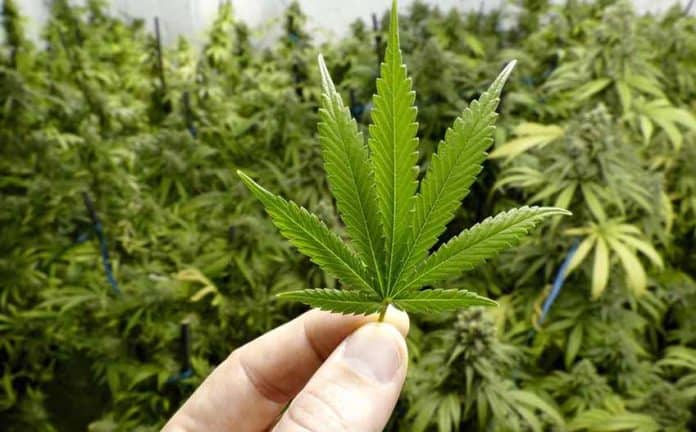
The Supreme Court has endorsed the right of Mexico City residents to use marijuana for medicinal purposes as established by the city’s constitution.

Eight of 11 judges ruled yesterday that the Constitutional Assembly of Mexico City, a body formed to create a new constitution for the capital, had not encroached on federal jurisdiction by including an article enshrining the right to use medicinal marijuana.

The ruling came in response to a challenge filed by the federal Attorney General’s office (PGR), which argued that the Mexico City government doesn’t have the power to regulate the drug.

However, the text of the constitution states that the right to use marijuana for medicinal purposes must be exercised in accordance with the General Health Law, meaning that it does not seek to legislate independently or override any federal laws, the court determined.

President Enrique Peña Nieto signed a decree in June 2017 that legalized medical marijuana, while the Mexico City constitution went into effect in September 2016.

The Supreme Court also endorsed a range of other articles in the city’s constitution against which challenges had been filed, including the right to die with dignity, the right of access to water, the right to sexuality, the right for the local government to enter into agreements with international entities and the right for migrants not to be criminalized while in the capital regardless of their legal status.

With regard to the dignified death provision, the PGR argued that it effectively allowed for euthanasia and assisted suicide, which are prohibited under federal law and whose regulation is the exclusive domain of the federal government.

However, the Supreme Court took a different view.

“The challenged norm does not regulate a specific institution, rule, principle or policy but rather recognizes the right to a dignified death as part of the right to live with dignity . . .” said Judge Javier Laynez Potisek.

“It doesn’t necessarily involve a quick, accelerated or anticipated death but one with the use of all means available in order to preserve the dignity of the [dying] person, respecting individual values and avoiding excesses that produce harm and pain,” he added.

The court did not reach conclusions on three other constitutional provisions, which are also facing challenges and relate to science and technology, labor rights and criminal proceedings.

The Mexico City constitution was created in the wake of a 2016 political reform that converted the capital into a federal entity akin to a state.

Source: El Financiero (sp), El Universal (sp), El Economista (sp)