Home Blog Page 2130

First sargassum diversion barrier is now in place near Cancún

0
Sargassum barriers that are being installed in Quintana Roo.

The first section of a floating sargassum barrier has been installed at Punta Nizuc near Cancún, where it is intended to prevent the seaweed from arriving on shore.

Goimar Logística y Servicios reported late yesterday afternoon on the advances made in the barrier project, which will install the system on 27 kilometers of Quintana Roo coastline from Cancún to Chetumal.

The floating barriers are a modification of those used to contain oil spills, and are anchored to the seabed.

Large quantities of sargassum have washed up on Quintana Roo beaches over the past three months, threatening tourism and leading to warnings that the mass arrival of seaweed could trigger a serious environmental disaster and a health crisis.

The Quintana Roo government plans to install a total of seven containment booms off the coast to stop the stinky, brown seaweed from sullying the state’s beaches.

Beaches in tourist hotspots Cancún, Playa del Carmen and Tulum are among those to benefit.

Environment Secretary Alfredo Arellano said the state government has arranged to rent four machines to remove sargassum, which could arrive from Florida as soon as this weekend.

“We’re not going to buy the machines because their cost ranges between 4 and 13 million pesos [US $208,000 to $678,000], they will be rented. It’s estimated that the entire cost of the operation to remove and contain the sargassum will be 240 million pesos [US $12.5 million],” he said.

Other removal vessels are on order but are not expected to arrive until November.

The environment secretary explained that the state government has already spent 62 million pesos (US $3.2 million) that federal authorities made available to combat the sargassum problem.

“. . . We are now operating with 20 million pesos that the state government has provided,” Arellano said, adding that Quintana Roo authorities are seeking further federal resources.

“. . . The state governor has declared the sargassum issue a priority and allocated 240 million pesos [to it] and we’re requesting support of 218 million pesos from the federal government. The combined amount will allow us to do the barrier [project] and also make the sargassum vessel deal.”

Source: Milenio (sp), Noticaribe (sp)
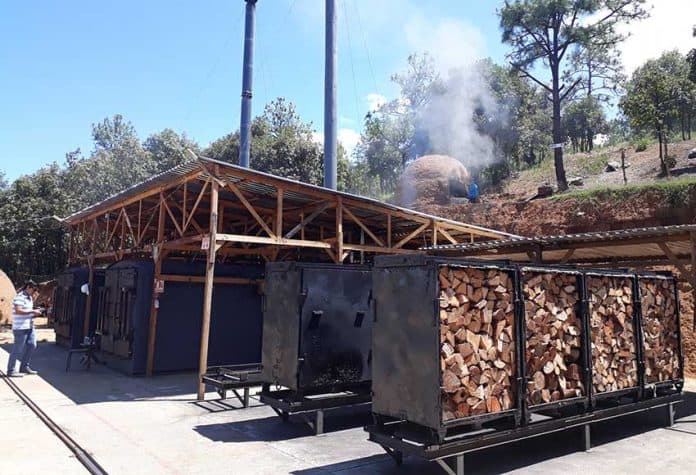
Charcoal plant is first in Mexico to make vegetable-based product

0
The new charcoal plant in Oaxaca.

A new charcoal plant has begun operating in Oaxaca, the first in Mexico to produce vegetable-base charcoal.

The Oaxaca-based company Carbosur built the plant in San Juan Atepec, a community located in the heart of the northern sierra, with financial aid from the state government and the National Forestry Commission, Conafor.

The aid came in the form of a 1-million-peso credit line to help build and equip the facility.

[wpgmza id=”51″]

High-technology ovens will reduce emissions by 100%, according to a report by the newspaper El Financiero: nothing but water vapor is emitted.

The ovens can generate temperatures up to 1200 C and will produce 70 tonnes of charcoal a month, worth 7 million pesos in sales.

The nearby logging communities of San Andrés Yatuni and San Pablo Macuiltianguis will supply the plant’s oak wood, which has received international certification from the Forestry Stewardship Council.

The plant employs more than 10 people and supports an additional 40 indirect jobs.

Source: El Financiero (sp)

New administration’s austerity plan will mean a big hit for Metlife

0
Insurance cancellation could be costly for MetLife.

The incoming federal government’s plan to eliminate private medical insurance for employees will deal a heavy blow to global insurance company MetLife, reinsurance broking firm THB México predicted yesterday.

Around 695,000 federal employees are currently covered by three-year medical insurance policies, for which the government pays the Mexican subsidiary of the New York-based company a combined premium of 6.5 billion pesos (US $339.5 million).

MetLife acquired state-owned insurance company Hidalgo in 2002, which gave it a long-term contract with the government.

THB Méxics CEO Octavio Careaga told a press conference that the government’s contract with MetLife is the largest single insurance agreement in the country and that its cancellation would have a significant impact on the company.

Under the new scenario, MetLife and other insurers will compete to provide personal medical coverage to employees, he added.

“Damage due to the loss of the premiums has not yet been calculated because insurance companies are taking measures [to combat it] such as the creation of products that could give continuity to the coverage of medical expenses,” Careaga said.

“But half of [Metlife’s] premium could be lost, close to 3.25 billion pesos [US $169.2 million] in the first year although it’s not a certain fact because you have to consider salaries and [staff] cuts,” he added.

Cancelling government-paid private medical insurance policies for federal officials is one of several austerity measures president-elect Andrés Manuel López Obrador has said his government intends to adopt.

Large wage cuts for lawmakers and officials, a slashing of the bureaucracy, the cancelation of existing life insurance policies and the elimination of pensions for past presidents are among other cost-cutting measures on the agenda.

Careaga said insurance companies will look to lure government employees by offering individual medical insurance policies that maintain their accumulated benefits.

“What’s going to happen is that the federal government will cancel Policy II, as the [private medical insurance policy] was known and . . . federal government employees will have to purchase a personal policy if they don’t want to be attended to at ISSSTE [a clinic or hospital operated by the State Workers’ Social Security Institute],” he said.

“It’s going to be an opportunity for the rest of the insurance companies . . . to sell en masse a competitive product that [government] employees are interested in buying . . . A massive opportunity will open up for the sale of these [medical] insurance policies and they will no longer be concentrated with just one insurance company.”

However, Careaga said that in an optimistic scenario only half of all officials currently covered would buy personal medical insurance due to high long-term costs.

He explained that the government is currently paying less than 4,000 pesos (US $207) annually for an employee’s medical insurance, adding that while insurers could maintain that price for one year, they would have to raise premiums for their policies to be financially viable.

Source: El Financiero (sp)

Armed with machetes, Atenco residents call for meeting with López Obrador

0
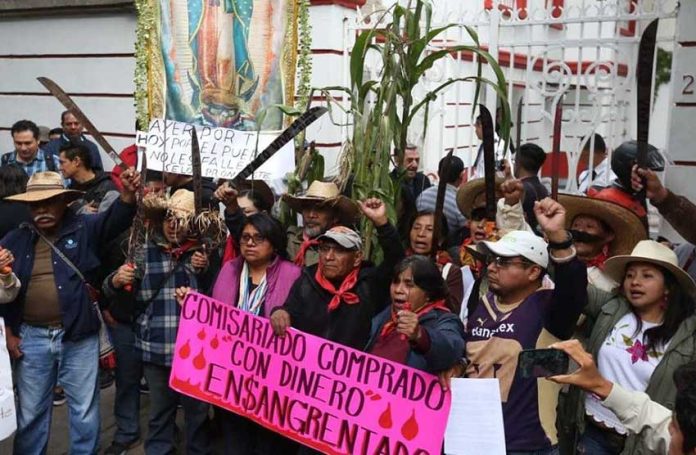
Airport protesters raise their machetes in defiance against the project.

More petitioners turned up yesterday at the transition headquarters of Mexico’s new government in Mexico City, but on this occasion they were armed with machetes.

Opponents of the new Mexico City airport joined the usual crowd of people seeking aid from president-elect Andrés Manuel López Obrador at his offices in La Roma.

Bearing machetes and a technical study, residents of Atenco demanded the new administration meet with them to review and discuss the options.

“La decision está tomada,” they chanted, “el aeropuerto a la chingada,” or “the decision has been made, to hell with the airport.”

Spokesman América del Valle said they want López Obrador to meet with them, just as he met with the organization building the new facility and with businessman Carlos Slim, who defended the project after López Obrador spoke out against it.

Del Valle said they want to see the project — “the airport of death” — cancelled.

He said his organization had scientific and technical evidence showing that the project was neither viable nor sustainable, and that “it is devastating the entire Mexico Valley watershed.”

López Obrador was a vocal opponent of the airport during his election campaign for president, but has since softened his stand.

Machete-wielding protesters successfully shut down an earlier attempt to build a new airport in the capital. Then-president Vicente Fox cancelled the project in 2002 following violent protests by communal landowners. They too were from Atenco.

Source: El Universal (sp)

Mexico needs another 255,000 nurses to meet health guidelines

0
Nurses at work: Mexico needs 255,000 more.

Mexico needs another 255,000 nurses to adequately meet the medical needs of all its citizens, according to World Health Organization (WHO) guidelines.

The United Nations agency recommends six nurses for every 100,000 inhabitants but Mexico currently only has 3.9 nurses per 100,000 people, a total of 475,295 nurses, according to 2015 data from the National Institute of Statistics and Geography (Inegi).

With 731,223 nurses to attend to a population of approximately 130 million citizens, Mexico would be able to eliminate barriers to access to health care by increasing medical services, the WHO said.

Currently, only Mexico City and Tamaulipas meet the WHO recommendation while Puebla, Querétaro, Veracruz and Michoacán all have fewer than three nurses per 100,000 inhabitants.

The president of the National Nursing Academy said the shortage is not due to a lack of people choosing to pursue a nursing career but rather because there is a lack of positions available in both the public and private health sectors.

“The reality is that there are young people who are interested in studying nursing, there are 700 registered schools . . . What’s happening is that they are not being offered jobs so they can work,” María Alberta García Jiménez said.

She charged that any per-capita nurse-to-population ratio recommendations should be accompanied by petitions to the government to increase the health budget in order to create more nursing positions.

For many nurses who are in employment, the work and pay conditions they face leave a lot to be desired.

A year after graduating as an obstetrics nurse from the School of Nursing and Obstetrics at the National Autonomous University (UNAM), Karen Díaz works six days a week at a private hospital and is, on average, involved in 20 medical procedures per day. Yet she doesn’t receive any employment benefits.

“. . . Salaries are very low. They go from 9,000 pesos to 15,000 pesos [US $475 to $800] a month but you have to accept working six days a week and being on probation for at least two months,” Díaz said.

She explained that she hoped to get a job at a Mexican Social Security Institute (IMSS) hospital, where benefits and better conditions are offered to nurses.

Source: Excelsiór (sp)

Defense force founder attends peace forum but won’t forgive his son’s killer

0
Hipólito Mora: no forgiveness.

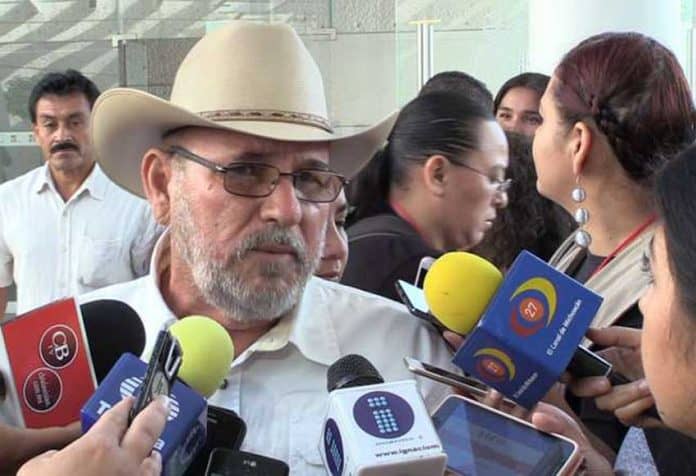
A former self-defense leader from Michoacán agreed to attend today’s peace forum in the state capital of Morelia but said he would not forgive his son’s killers.

Hipólito Mora’s comment came in response to the president-elect’s suggestion at last week’s first peace forum in Ciudad Juárez, Chihuahua, that victims of violence should embrace forgiveness.

“I respect the people who say don’t forgive or forget. I say forgive but don’t forget,” Andrés Manuel López Obrador said.

But Mora, who founded the La Ruana self-defense group in 2013, told broadcaster Grupo Fórmula today that it was not up to him to decide whether forgiveness was in order.

“It’s easy to tell somebody to ‘forgive’ but we have to be careful and know who we are going to say it to. I don’t forgive them [my son’s killers] . . . I leave that work to God. God decides who to forgive and who not to forgive,” he said.

Mora’s 32-year-old son was one of 11 people killed in a gun battle between rival self-defense groups in the municipality of Buenavista, Michoacán, in December 2014.

The ex-self-defense force leader added that he has recently chosen to keep quiet about his son’s death because the current federal government hasn’t made any effort to investigate the case.

However, with a new government taking office in December, Mora said, he will once again seek to exert pressure on authorities in his quest for justice.

For that reason, he decided to go to today’s peace forum, which was also attended by victims of violence, academics, security experts and members of the future government.

“I didn’t want to participate in this forum . . . but I decided to go because I have many things to say that I couldn’t say to the government of President [Enrique] Peña Nieto,” he said.

Mora praised the incoming government’s decision to hold a series of peace forums to refine its security strategy and also said the plan to reestablish a federal Secretariat of Public Security (SSP) was a good idea.

“What [former interior secretary Miguel Ángel] Osorio Chong and his collaborators did, didn’t work because the country was painted red [with blood],” he said.

One person who did not speak at today’s forum, the third of 18, was Michoacán Security Secretary Juan Bernardo Corono, though not for lack of trying. He was there on behalf of the state governor but got no farther than “We are sensitive to your pain” before he was forced to withdraw in the face of shouts and jeers of “Assassin!” “Get out!” and “There is no justice!”

Alfonso Durazo, López Obrador’s nominee to head up the new SSP, took his place and stressed that the new government will not be able to resolve Mexico’s security problems if it doesn’t listen to and learn from citizens, especially victims of crime.

The proposals and demands of those who attend the forums will guide the security and justice policies the next government adopts, he said.

Another founder of the state’s self-defense movement was also there, but he left early, unimpressed. José Manuel Mireles called the forums “a circus” and complained there were no social leaders at the head table.

Source: El Financiero (sp), Notimex (sp), Milenio (sp)

Navy shipyards have built 14 military vessels in the last six years

0
Isla María Madre was built at the Navy shipyard in Guaymas, Sonora.

The Mexican navy said today it has built 14 new military vessels during the last six years and collaborated with state oil company Pemex to update its fleet of tugboats and supply ships.

The Secretariat of the Navy (Semar) said in a statement that strengthening the navy’s capacity during the current federal administration has included the construction of eight new coastal patrol boats, two offshore patrol vessels, two interceptor patrol vessels and two logistics support vessels.

All of the coastal patrol boats were built at the Semar Shipyard No. 1 in Tampico, Tamaulipas, and are named after Mexican archaeological sites.

ARM Palenque and Mitla were built in 2014; Uxmal and Tajín in 2015; Tulum and Monte Albán in 2016; Bonampak in 2017; and Chichén Itza this year.

Two offshore patrol vessels — ARM Chiapas and Hidalgo — were also completed in Tampico this year while two more are under construction, one at the same shipyard and another at the Semar Shipyard No. 20 in Salina Cruz, Oaxaca.

The navy said that “with the construction of the offshore patrol vessels, the Secretariat of the Mexican Navy will increase the efficiency of its surveillance tasks in territorial waters and the exclusive economic zone.”

Both interceptors — ARM Circini and Gienah — were built at the Navy Shipyard No. 3 in Coatzacoalcos, Veracruz, and completed in 2015.

Semar said the main characteristics of the vessels, which are used for surveillance, security and rescue work, are their “high speed, high maneuverability and versatility.”

The two logistics vessels — ARM Libertador and Isla María Madre — were built at the No. 6 Semar Shipyard in Guaymas, Sonora, and delivered in 2012.

One is equipped to provide support to the civilian population in case of emergency situations or natural disasters and also protects Mexico’s maritime interests, while the other is mainly involved in supporting economic activities in the Islas Marías archipelago, located off the coast of Nayarit.

Semar also said it has built and repaired other public and private sector vessels at its shipyards on the country’s Pacific and Gulf of Mexico coasts.

One of the beneficiaries is the state oil company Pemex, which has worked with Semar to build new tugboats, supply ships and freighters for its fleet.

All of the 16 new 50 to 60-tonne tugboats — eight of which have already been completed — bear the names of indigenous groups including Tarahumara, Huichol, Mixteco, Triqui and Maya.

Two 450-tonne supply ships are still under construction in Guaymas and are scheduled to be completed and delivered before the end of the year, Semar said.

Another supply vessel currently being built in Tampico is more than 99% complete.

The navy said its design, construction and repair of a range of vessels served to “strengthen the naval industry [and] generate quality jobs, with permanent training and the use of cutting-edge technology.”

Mexico News Daily 

Artists and hot dogs give Mexico 3 new Guinness records in a single day

0
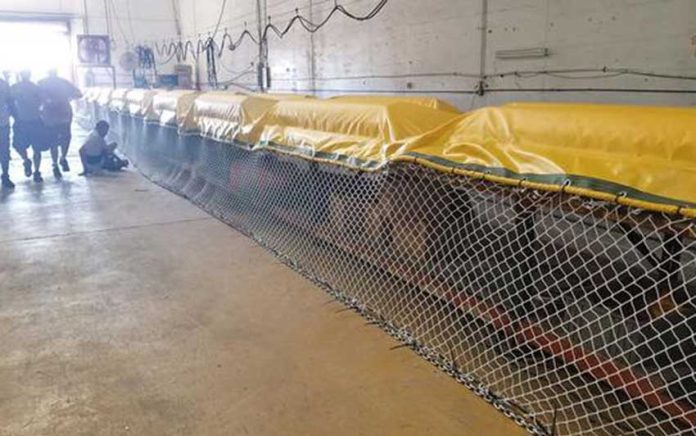
This is what a 1,417-meter-long line of hot dogs looks like.

Three new Guinness World Records were added Sunday to Mexico’s ever-growing list, two involving drawings and the third a very large number of hot dogs.

Artist Alejandro Rivera Cañas succeeded in creating the largest drawing in the world made by a single person, a piece measuring 289.08 square meters.

Wanting to create something that identified Mexico and would have an impact around the world, he chose the Monument to the Revolution, a Mexico City landmark that commemorates the Mexican Revolution, to be the theme of the piece.

It consists of 17 individual canvases that were created in eight to 20-hour sessions over two months.

Along with the iconic monument, the artist added “elements that attract children’s attention . . . and waves that represent nature, space, the marine world and imagination itself, among others.”

Surrealist themes like a flying bull, a unicorn, a UFO and a dragon join the waves of creation and imagination in Rivera’s work.

The Monument, and the extensive Plaza de la República where it stands, was chosen as the venue to showcase the monumental drawing, where Guinness World Records representative Carlos Tapia Rojas certified Rivera’s win.

The second record was awarded for the largest number of people participating in a color-by-numbers drawing. It was set by 1,119 people.

The hot dog record was set in Zapopan, Jalisco, where the 1,417-meter line of hot dogs won the record for the longest such line in the world, outdoing Japan’s 2016 record of just 325 meters.

A team of 100 people prepared the 10,000 hot dogs required, garnishing them with 100 kilograms of tomato sauce, 100 kilos of mayonnaise and 75 kilos of mustard as 2,000 hot dog-lovers watched — and presumably ate five apiece at the conclusion.

Guinness judge Raquel Asís explained that each hot dog must contain one sausage, at least two garnishes and the size of each one must not exceed 18 centimeters.

An organizer said a full year of planning went into the event, which was undertaken because “we know that people in Jalisco like hot dogs.”

Source: Notimex (sp)

Powerful federal delegates to ensure state funding goes where it’s intended

0
Delegates who will oversee federal spending at the state level met on Saturday with the president-elect.

A new, centralized resource distribution scheme to be introduced during Andrés Manuel López Obrador’s presidency is intended to deny opportunities for Mexico’s governors and other state officials to dip their hands in the cookie jar.

Powerful federally-employed delegates will directly manage the resources allocated to states to ensure that funding goes where it is intended, the incoming government has announced.

A total of 32 state delegates and 264 regional ones will be employed to distribute social program funds directly to the intended beneficiaries and avoid state governments appointing favored contractors to carry out infrastructure projects with federal money.

They will replace a large number of officials that each federal secretariat currently employs to distribute government funds and liaise with state authorities.

The delegates will be coordinated by Gabriel García Hernández, a Morena party senator-elect and longtime political confidante of López Obrador.

After meeting with the president-elect Saturday, some of the nominated delegates told the newspaper Reforma that the aim of the scheme is to avoid public funds going into “governor’s pockets.”

Several state governors have been accused of embezzlement and other corrupt practices in recent years including Javier Duarte in Veracruz, César Duarte in Chihuahua and Roberto Borge in Quintana Roo.

The delegates will have a direct line of communication to López Obrador and coordinate with federal government secretariats.

“What the president asked for is that we hold meetings with the people so that the resources can be used in a participatory budget scheme in which no [state] deputy, mayor or governor can intervene to try to install a construction company [of their choice], determine the project and receive a kickback,” one of the proposed delegates said.

Olga Sánchez Cordero, tapped by the president-elect to be secretary of the interior, said the delegates will manage resources that the federal government, through departments such as the Secretariat of Social Development (Sedesol), has always managed.

However, she explained that the difference will be that “the resources will flow down through a single delegate.”

The prospective officials have been instructed to avoid allowing state government executives to touch the money.

“All the funds for federal projects are not going to be handed over to the states because they usually keep 10% or 20% of the money . . .” another prospective delegate told Reforma.

“. . . We’re not plenipotentiary but the resources are going to go directly to the people,” an unidentified member of the future government said.

López Obrador also directed the future delegates to coordinate with the military and other federal security forces and to review registries containing the names of the beneficiaries of different federal programs.

Social program audits have previously found that federal money has been squandered because it went were it shouldn’t have gone, such as dead people.

The Federal Auditor’s Office (ASF) found that Sedesol made support payments to more than 17,000 deceased people in 2016, costing taxpayers almost 66 million pesos, while the federal Agricultural Secretariat (Sagarpa) paid out millions of pesos in farm subsidies the same year to ineligible beneficiaries, including people who had died and civil servants.

López Obrador, who won the July 1 presidential election in a landslide, campaigned heavily on the promise that he would stamp out endemic government corruption.

The incoming government has also announced that it will implement a centralized purchasing system to avoid corruption, while there are also plans to slash the wages of politicians and government officials.

López Obrador and his cabinet will be sworn in on December 1.

Source: Reforma (sp)

Coahuila farm owner accused of exploiting field workers

0
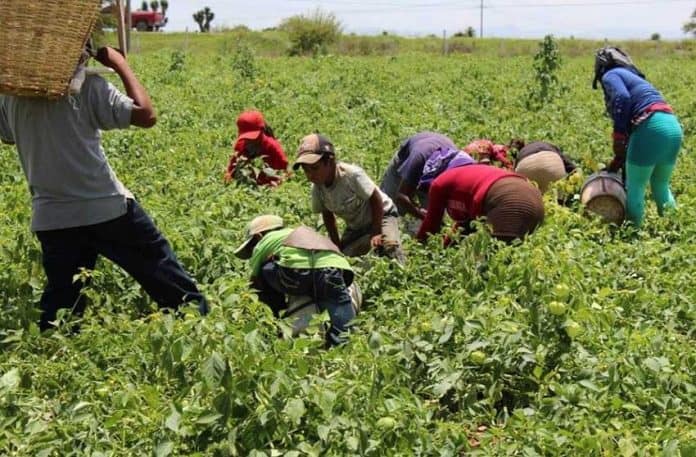
Farmworkers are often required to work under less than ideal conditions.

Twenty-five farm laborers including nine minors have been removed from a Coahuila farm where authorities said they were being exploited and required to work and live under inhumane conditions.

Originally from Veracruz, the farmworkers had been hired to work for two months, sowing and harvesting several crops. They began on July 19 and were to finish September 17.

But once they arrived in Coahuila they found their living quarters consisted of a barn without beds, running water, toilets, showers or kitchen. They were required to work seven days a week, from 9:00am to 5:00pm.

Three of the workers filed a formal complaint before local labor officials.

An official inspection at the farm, located in the municipality of General Cepeda, found the workers also lacked social security and there wasn’t a doctor available should they require medical treatment.

The Labor Secretary filed a formal complaint against the owners of the ranch for violations to the workers’ labor rights.

The minors have been placed in the care of a special prosecutor’s office for children and families while the adults are receiving counseling in obtaining a severance package and preparing to return to their homes.

Source: El Universal (sp)