Home Blog Page 2158

Mexico-Queretaro train back on drawing board in new transport plan

0
How the Mexico City-Querétaro train might have looked when it was first proposed.

Mexico’s next transportation secretary has breathed new life into the suspended Mexico City-Querétaro train project, declaring that it forms part of the incoming government’s plan for a new national railroad network.

Javier Jiménez Espriú told the newspaper El Financiero that the transportation plan also includes building a new railroad between Cancún and Palenque, modernizing the existing line between Coatzacoalcos and Salina Cruz and starting the construction of Guadalajara-Tijuana and Querétaro-Nuevo Laredo routes.

The current federal administration awarded a US $3.75-billion contract to a Chinese-led consortium in 2014 to build a high-speed rail line between Mexico City and Querétaro but the project was later postponed as part of budget cuts announced in January 2015 and it hasn’t been revived since.

But following Andrés Manuel López Obrador’s landslide victory in the July 1 presidential election, it would appear that the project is back on the agenda.

“Our idea is to establish a national railroad network; the network has different important sections and within those we will determine which sections [deserve] the most urgent attention based on the impact they will have at both a social and economic level, because the [different] sections will trigger regional development projects,” Jiménez said.

In a separate interview with the newspaper Milenio, Jiménez said that the next federal government will continue practically all the infrastructure projects that have already been started but added that the development of the Isthmus of Tehuantepec region in Oaxaca and the Maya area of Calakmul in Campeche would be priorities.

In the former region, the future cabinet secretary said, in addition to modernizing the train line between Coatzacoalcos, Veracruz, and Salina Cruz, Oaxaca, work will also be undertaken to improve the highway network.

In addition, the ports in the respective cities and the airport at Ixtepec, Oaxaca, will be modernized, Jiménez said.

There are also plans to establish an extensive fiber optic network in the Isthmus region and López Obrador said yesterday that the possibility of establishing a free zone with a lower value-added tax rate is also being analyzed.

The projects planned for the region, which took the brunt of the powerful September 7 earthquake, will complement the Special Economic Zones (SEZs) in Coatzacoalcos and Salina Cruz that were established by the current government.

“The other big project is the passenger train from Cancún to Bacalar and Palenque to develop the Maya area, mainly Calakmul . . .” Jiménez said.

He added that during its six-year term, the López Obrador-led administration would prioritize the construction of paved roads in 250 municipalities that currently only have dirt-road access to their main towns.

The projects will create employment in rural areas and prevent communities from being cut off due to heavy rains that can make the dirt roads impassable, Jiménez said.

He also said that by the end of the next government’s term, the aim is for all Mexicans to have access to broadband internet services.

With regard to the new Mexico City International Airport project, the future communications and transportation secretary said the López Obrador transition team would first analyze its technical aspects — such as the suitability of the ground it is being built on — as well as environmental considerations to determine whether it is feasible in an operational sense.

The president-elect has previously threatened to scrap the project, charging that it is too expensive, corrupt, not needed and unfeasible due to its construction on an ancient lakebed.

Jiménez said that if it is determined that the project is technically feasible, the incoming administration would turn its attention to analyzing whether the contracts are in order and if it adds up financially.

If it doesn’t, “there is the solution of the other airport,” he added, referring to the proposal to adapt an existing air force base in México state for commercial use.

He also said the public consultation process that López Obrador floated at a rally in Texcoco, México state — the municipality where the new airport is being built — would take place after the incoming government has completed its analysis.

Whether the new government decides to continue with the current project or instead develop the Santa Lucía air base — located about 50 kilometers northeast of the capital — Jiménez said that a new airport must be ready by 2023 to alleviate pressure on the existing facility.

Source: El Financiero (sp), Milenio (sp)
Leonora Carrington Museum is a surreal location for surrealist art

0
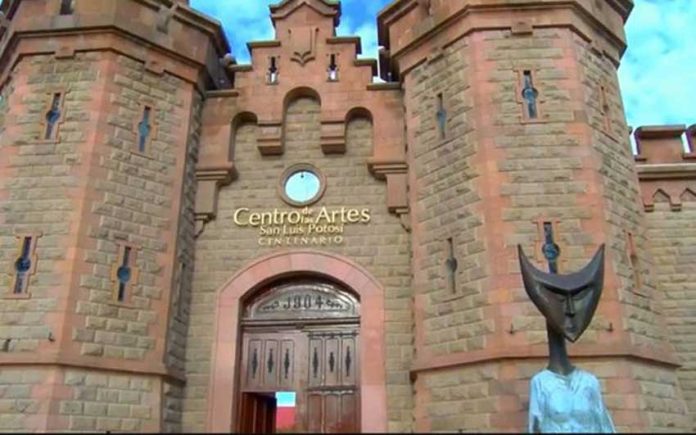
The new museum in San Luis Potosí.
The new museum, located in the Centro de las Artes in San Luis Potosí.

The prisons cells of an old state penitentiary seem an unlikely place for museum exhibition rooms but that is exactly where you will find the recently opened Leonora Carrington museum in the city of San Luis Potosí.

This very surreal setting makes the perfect backdrop for the British-Mexican artist’s work, which drew upon Celtic, Irish and, later, some Mexican folkloric influence to produce fantastical figures and surrealist scenes.

Carrington, who would have turned 100 last year, has seen a recent surge in international notoriety with a number of books about her life being published in the United Kingdom and beyond. Her bronze sculptures adorned Mexico City’s Paseo de la Reforma in 2017 and the Museum of Modern Art inaugurated the exhibition of her work, Cuentos Mágicos, on April 21 to bustling crowds hoping to get the first look.

The Leonora Carrington opened in late March and has seen close to 45,000 visitors already. There is no doubt that the museum is helping to put San Luis Potosí on the map as a tourist destination.

Born in rural England, Carrington came to Mexico in 1942, where she lived and worked until her death in 2011 at the age of 94. Carrington’s early life was spent in rebellion from her upper-class family.

'Mother Is Always Right:' bronze sculpture by Carrington.
‘Mother Is Always Right:’ bronze sculpture by Carrington.

Her love for art started young and she moved to London to study at the Ozefant Academy. In London she met and fell in love with the German painter, Max Ernst, who was married and 26 years her senior, but despite the seemingly large obstacles she ran off with him to Paris when she was just 20 years old. Here she met and socialized with many of the well-known surrealists of the time and her love for the art form was solidified.

While seemingly the ideal muse for the many men of the surrealist movement, she vehemently rejected this position, holding her own and forging ahead with becoming an artist in her own right.

“I didn’t have time to be anyone’s muse,” Carrington is quoted as saying. “I was too busy rebelling against my family and learning to be an artist.” When the Second World War broke out, Carrington’s beloved Max Ernst was captured and taken to a Nazi prison camp and Carrington’s deep distress at this led her to be institutionalized.

She escaped by marrying Mexican diplomat Renato Leduc (Ernst, at this point, was free and had married Peggy Guggenheim) and moving via New York to Mexico City, where she divorced Leduc and later married Emerico (Chiki) Weisz, with whom she had two sons.

Her son, Pablo Weisz, was involved in curating the Leonora Carrington museum, and some of his own artwork, which appears to draw heavily from his mother’s influence, is also exhibited there.

Leonora is said to have missed England and continued to drink English tea, served with biscuits, throughout her life in her house in the bohemian Roma neighborhood of Mexico City, where she befriended Spanish artist Remedios Varo and other well-known Europeans. Plans are in place to turn her house into a museum, but opening dates are still unknown.

Carrington at work.
Carrington at work.

Arriving at the museum in San Luis Potosi, the thick walls and castle-like turrets are the first sign that this museum might be a little unusual. The entrance is via a stunning open courtyard, with bright pink walls that are offset by San Luis Potosi’s impressive skies.

A few of Carrington’s sculptures sit around the courtyard to entice visitors to explore the museum, which is housed in one section of the Centro de las Artes. Once inside, the exhibits are set within old prison cells that now act as exhibition rooms, the Mexican pink walls belaying the fact that this was once the state penitentiary.

Many cell doors have been removed while others have been adorned with Carrington’s fairy-tale-like drawings. The metal staircases serve as a reminder of the building’s prior function and as a result the visitor never quite forgets.

The fact that Carrington’s work is pure escapism seems to sit both in complete contrast and in total harmony with the surroundings.

Carrington was a multimedia artist, something that is made clear when visiting this museum. There are rooms that contain her bronze sculptures in various sizes and others that display her paintings and drawings. Every room is dotted with beautifully lit quotes by the artist that demonstrate her strong character and illustrate just how much her art and the surrealist world that she created were entwined with her very being.

“The world that I paint, I don’t know if I invented it, rather I think it invented me,” one rather telling quote explains.

In addition to her sculptures and paintings, there are two small rooms that hold her silver work behind glass, and include elaborately surrealistic tequila bottles and fantastical figurines. The museum has gone further than just displaying the artist’s work, however, and director Antonio Garcia Acosta and his team got wonderfully creative in collaborating with other visual and sound artists to bring Carrington’s work to life.

'Camaleón:' another bronze.
‘Camaleón:’ another bronze.

The Hall of Mirrors enchants with an animated version of the first part of Carrington’s book, White Rabbits. The animation of the story set on the imaginary Pest Street, directed by Luis Cabrera, illustrated by Richard Zela and dramatized by Beatriz Cecilia, sees ghost-like figures and insects floating from mirror to mirror and is as eerie as it is delightful.

Carrington was also a rather surrealist cook, famously cooking up omelets made with her own hair. The museum has yet to open a café although it is in the plans, but hopefully this kind of culinary masterpiece will not be on the menu.

While it is unknown if Carrington spent much time in the city of San Luis Potosi, she certainly traveled to the state to visit her fellow countryman Edward James. Another surrealist artist and poet, he is best known for his construction of the surrealist garden, Las Pozas, near Xilitla in the tropical Huasteca region. James was a friend and patron of Carrington’s work and Carrington visited Las Pozas often.

It is, therefore, rather fitting that another Carrington museum is due to open in the town of Xilitla within the next few months. The two museums as well as Las Pozas and the ghost town of Real de Catorce will only combine to put San Luis Potosi well and truly on the map as Mexico’s most surrealist state.

Leonora Carrington Museum, San Luis Potosi

  • Location: Calzada de Guadalupe 705
  • Opening hours: Tuesday-Sunday 10:00am- 6:00pm
  • Entrance fee: 50 pesos (free entry on Wednesdays)

Cuentos Mágicos, Museo de Arte Moderno, Mexico City

  • Location: Paseo de la Reforma , Bosque de Chapultepec I Secc, 11560 Miguel Hidalgo, CDMX
  • Opening hours: Tuesday-Sunday 10:15am- 5:30pm (until September 23)
  • Entrance fee: 65 pesos (free entry on Sundays)

Susannah Rigg is a freelance writer and Mexico specialist based in Mexico City. Her work has been published by BBC Travel, Condé Nast Traveler, CNN Travel and The Independent UK among others. Find out more about Susannah on her website.

Artificial wetland in Sonora desert to help replace those that have been lost

0
Artificial wetland in Sonora helps make up for what has been lost.
The Cucapá artificial wetland.

An estimated 70 migratory bird species travel every year to the wetlands of the Colorado River delta but the wetlands are running out.

The delta is considered one of the most important migration regions in the world due to the number of species but an estimated 80% of the original delta wetlands have been lost.

Now, government officials and environmentalists are hoping to give migratory birds from Central and South America a second chance with the Cucapá artificial wetland in Sonora.

“A big majority of birds that will benefit are aquatic, and northern shoveler ducks are the most numerous,” said the biological monitoring director at the northwest chapter of Pronatura, the largest environmental conservation group in Mexico.

Alejandra Calvo added that the peregrine falcon will also find a suitable habitat in the artificial wetland.

The project lies on the sands of the Gran Desierto de Altar, one of the major sub-ecoregions of the Sonoran Desert. Extending over 25 hectares, the wetland adjoins a municipal water treatment plant, source of the water that naturally infiltrates an underlying water table.

The manager of the plant, Raúl Campuzano, explained that the system used to replenish the aquifer is unique in Latin America.

The artificial wetland was officially dedicated by the municipal government of San Luís Río Colorado and Pronatura in March, and specialists affirm that its positive environmental impact can already be gauged.

Source: Reforma (sp)

Oaxaca makes history: there will be more women than men in Congress

0
Oaxaca's Congress: the PRI has held the majority of seats, but now it will be Morena.
Oaxaca's Congress: most of these seats have been filled by the PRI. Now they will belong to Morena's coalition.

In the state of Oaxaca, where women are still struggling for equal rights in many municipal elections, women will outnumber the men in the state Congress.

The number of female deputies has nearly tripled in eight years, from nine in 2010 to 23 following the July 1 election. It is the first time in Oaxaca’s history that there will be more women than men in the 42-seat state legislature.

The change comes as a consequence of affirmative action within political parties.

For years, local politicians and activists have been pushing for gender parity regulations that have translated into electoral law. As a result, most political parties have assigned the top options for proportional representation congressional seats to women.

Local electoral advisor Nayma Enríquez Estrada says the results of the July 1 elections are a “collective conquest,” and that women in Congress have now to “make theirs a legislative agenda with a feminist perspective that focuses on human rights and interculturalism.”

Anabel López Sánchez, a member of the Collective for Women’s Citizenship, observed that parity must be reflected not only in the number of seats occupied by women, but in their election as members of congressional commissions, where the real decision-making takes place.

“We hope that [female Congress members] are not only assigned to conventional commissions, but that they can be part of budgetary, government [and] justice commissions; only then will we be able to talk about equality in representation,” she said.

Pending issues that must be addressed by the incoming legislature include the decriminalization of abortion, addressing obstetrical violence and allocating more funding to the prevention and sanction of gender violence, continued López.

Laws are needed, she added, so that vulnerable sectors of the society of Oaxaca — including women breadwinners and the indigenous and Afro-descendant population — can access employment and social security.

López said that once the 64th legislature is sworn in later this year, the collective will present a common agenda to the female lawmakers, one in favor of women’s rights.

The Oaxaca Congress will be made up of 32 deputies from the Together We Will Make History coalition led by the Morena party. The Institutional Revolutionary Party (PRI), which has been the majority party, will have six members, while the National Action, Democratic Revolution, New Alliance and Ecologist Green parties will each hold a single seat.

Source: NVI Noticias (sp), Proceso (sp)

Heavy rains create havoc in Morelia; at least 50 homes damaged

0
Flood damage in Morelia.

Heavy overnight rain caused flooding and damage to at least 50 houses in Morelia, Michoacán, according to state Civil Protection officials.

Neighborhoods in the north of the city, especially those located close to the foothills of Cerro del Quinceo — including Ciudad Jardin, Solidaridad and Presa de los Reyes — bore the brunt of the damage.

There were reports of water reaching levels of between 20 and 50 centimeters inside affected homes, while in some parts of the state capital, floodwaters rose to as high as one meter. Authorities said that at least 16 streets were completely inundated.

Almost 30 cars were also damaged after either being swept away in floodwaters or hit by fallen trees or rocks. There were people inside at least three of the affected vehicles.

In the neighborhood of Infonavit Quinceo, a landslide caused significant damage to several homes.

There were no reports of fatalities but one woman reportedly suffered an injury to her leg after being hit by a fallen gate at her home. Four children and their parents had to be rescued from rising floodwaters.

[soliloquy id="56167"]

Municipal authorities set up a temporary shelter at the Servando Chávez Auditorium in the neighborhood of Mariano Escobedo to receive people who were forced to abandon their homes.

Authorities also activated the city’s contingency plan and municipal, state and federal emergency services contributed to efforts to remove water, mud and rocks from affected homes.

Morelia police and firefighters with Michoacán Civil Protection, the Red Cross and the army all helped to coordinate the response.

Source: Reforma (sp), Contramuro (sp)

Lluvia Sorprende a Morelia, Michoacán...🔘✔

Hospital orderly did well selling job placements and body organs

0
The alleged suspect with two of his luxury vehicles.

As an orderly at a Chihuahua hospital run by the Mexican Social Security Institute (IMSS), Jorge Alberto earned a modest salary that would have allowed him to live a comfortable life.

But Jorge Alberto wasn’t an ordinary orderly.

In addition to carrying out his day-to-day duties in the wards of the state capital’s Morelos General Hospital, Jorge — whose last name was not disclosed in a report published today by the newspaper El Universal — also had a lucrative side gig selling job placements to health care workers and body organs to prospective patients.

The racket was so profitable that the portly medical employee was able to buy 10 luxury sports cars. But it was also a scheme that led him to allegedly commit the even more serious crime of homicide, and not just once.

Among other IMSS employees, it was common knowledge that Jorge had contacts in high places within the social security workers’ union.

It was also well known that for a large sum of money the unscrupulous orderly could arrange for an IMSS employee to be appointed to a higher-paying, more-senior role in the agency.

That possibility proved to be too tempting for several IMSS employees including Laura Soto, an administrative assistant at a small medical clinic.

After watching several of her colleagues win promotions at record speed, Soto contacted Jorge and later handed over 80,000 pesos (US $4,200) to him, an amount that would supposedly ensure her appointment to a more senior role in the IMSS central offices.

Several weeks went by and the promised promotion didn’t materialize but Soto finally received a call from Jorge in December last year.

Soto was told that everything had been organized so she agreed to meet Jorge the next day to complete the necessary paperwork in order to obtain the new position.

On the morning of December 7, the young administrative assistant waited near the city’s municipal offices but instead of meeting with Jorge to sign some documents, Soto met her own death: she was shot at close range by someone in a passing vehicle.

According to today’s report in El Universal, “Jorge had tired of being bothered” by Soto, who had grown impatient when the promotion she paid for didn’t come through as quickly as she expected.

According to the Chihuahua Attorney General’s office, colleagues of Soto at the same small IMSS clinic paid Jorge Alberto a combined total of 600,000 pesos (US $31,600) in order to be installed in more lucrative jobs.

In some cases, the orderly kept his word and arranged for his “clients” to be given the promised roles but in other cases, he didn’t.

In addition, the orderly is suspected of murdering a male IMSS employee in January this year in a case with similar circumstances to that of Laura Soto.

IMSS employees are not the only people who have allegedly been deceived and ultimately met a gruesome fate at the hands of Jorge Alberto.

Daniel Gregorio Romero’s quality of life was rapidly deteriorating when his family contacted the IMSS orderly in a last-ditch attempt to secure an organ transplant.

Romero, who suffered from diabetes, had been waiting for months to undergo surgery to receive a new kidney but still remained near the bottom of the list.

However, Jorge — who was allegedly colluding with an unidentified doctor — promised Romero that he could get him a new kidney quickly and that the operation could be carried out at the hospital in which he worked, even though the latter didn’t have the required insurance to receive treatment at an IMSS facility.

Jorge, of course, wasn’t acting out of the goodness of his heart. The service he offered came with a hefty price tag of half a million pesos (US $26,400).

In an act of desperation the family made the payment but as in the case of Laura Soto, Jorge Alberto again failed to fulfill his promise.

On June 30, the Romero family arranged to meet with Jorge at their home to find out what was happening with the deal they had reached.

What happened next, according to authorities who have seen evidence in the form of security video footage, is that a man proceeded to murder five members of the family before stopping short of taking the life of a two-year-old infant who was also present.

While the name of the suspect has not been revealed publicly, El Universal said that “unofficially it is known that the man [who committed the homicides] was Jorge.”

The orderly has since been arrested and remains in custody.

Last weekend, state prosecutors told a judge that Jorge Alberto’s wife had also participated in the crimes that her husband allegedly committed. Her whereabouts, however, are unknown.

Meanwhile, the state branch of the IMSS said it has revoked Jorge Alberto’s employment contract and is carrying out an internal investigation to determine if any other employees are or have been involved in the sale of job placements.

Authorities are also seeking to arrest an IMSS human resources employee who allegedly received payments from Jorge Alberto and helped facilitate the placement of workers in the higher-ranked positions they paid to obtain.

Source: El Universal (sp)

Navy seizes 250 kilos of cocaine off coast of Guerrero

0
The smugglers' boat, foreground, with its cargo of cocaine and fuel.

Navy personnel seized 250 kilograms of cocaine and apprehended two men aboard a small boat traveling off the coast of Guerrero yesterday.

Routine aerial surveillance spotted the vessel some 370 kilometers south of Acapulco.

A joint aerial and maritime operation resulted in the arrest of the two men found on board a “go-fast” boat, popular for smuggling drugs.

The boat was carrying 71 plastic canisters, 10 of which contained small packets of cocaine amounting to a total of 250 kilograms. The other 61 containers held 3,000 liters of fuel.

Another report today said the navy had detected fuel storage facilities in three states that are used to supply small boats running drugs up the coast. Mexican cartels ferry the fuel out to the smugglers, enabling them to remain outside the 200-kilometer limit. The fuel is delivered mixed with oil and ready to use in the vessels’ two-stroke engines.

It is either purchased legally or obtain from petroleum thieves.

Last week the navy detained three people aboard a small boat carrying 3,000 liters of fuel off the port of Lázaro Cárdenas, Michoacán.

Between January and May the navy seized 6.7 tonnes of cocaine off the Pacific coast, the largest amount in any five-month period.

Source: Digital Guerrero (sp), El Universal (sp)

Armed gang attacks, robs tourists on Chiapas highway

0
The highway where Sunday's robbery took place.
The highway on which Sunday's robbery took place.

Highway robbers attacked tourists traveling in Chiapas Sunday after they had visited the Palenque archaeological site.

The tourists were traveling in two vehicles on the highway between Ocosingo and Palenque when they encountered a roadblock near the town of Xanil in the municipality of Chilón.

At least 18 men armed with assault rifles approached the two vehicles and proceeded to take their belongings. When one driver tried to resist he was struck in the head and subdued by one of the attackers.

The thieves took suitcases, photographic equipment, jewelry, phones wallets and any other valuables the tourists were carrying before fleeing in a truck toward Palenque.

One of the vehicles carried a family from México state while the other was a tour company van carrying 15 Mexicans and three foreigners, one from the United Kingdom and two from South Korea.

One driver said the incident lasted about eight minutes and that the thieves were presumably indigenous, having used a local language to communicate among themselves.

The newspaper El Universal reported that robberies are continuous on the roads traversing the Altos, Norte and Frontera regions of Chiapas, and that thieves target the tourist circuits of San Cristóbal de las Casas, Toniná, Cascadas de Agua Azul, Misol Há and Palenque.

Source: SDP Noticias (sp), El Universal (sp)

Fuel prices to move with inflation and then come down in three years: AMLO

0
fuel prices will come down: AMLO.
Prices will come down: AMLO.

Fuel prices will come down in three years, president-elect Andrés Manuel López Obrador said yesterday.

Speaking at a press conference following a meeting with members of the Confederation of Industrial Chambers (Concamin), Mexico’s next president also said that there would be no steep fuel price increases, or gasolinazos, under the administration he leads.

“Not only will there not be gasolinazos but gas and diesel won’t go up by more than inflation for three years and after three years, when we have production of gasoline in Mexico, we’ll lower prices, imports will come down,” López Obrador said.

“We’re going to rescue the energy sector . . . production is falling and if we don’t intervene with a new plan, it could produce a crisis of greater intensity . . .” he added.

The leftist leader, who won the July 1 presidential election in a landslide, also spoke of the need to reactivate the economy given that growth in Mexico, at around 2%, continues to lag behind the global rate.

“We have to get out of economic stagnation and that’s achieved with a joint effort. We need the participation of the public, private and social sectors,” López Obrador said.

The president-elect, who will be sworn in on December 1, predicted annual growth of 4% during his six-year term which, if achieved, would beat the rates recorded during all of Mexico’s past five federal administrations.

López Obrador reiterated his proposal to reduce the value-added tax (IVA) and income tax in the northern border region, adding that his team was analyzing the possibility of implementing the same scheme in the Isthmus of Tehuantepec region of Oaxaca.

He also said he planned to move federal secretariats and other government dependencies to different regions of the country in order to achieve more equitable growth.

“There are regions like the Bajío, the Riviera Maya, some border cities and some regions in the center of the country that have growth of 5% to 8% but other places instead of growing, they decline,” López Obrador said.

“It’s not fair or advisable that public and private investment be concentrated only in some areas of the country.”

The first departments to be shifted will be the Secretariat of Tourism to Chetumal, Quintana Roo, and the Secretariat of the Environment to Mérida, Yucatán, López Obrador said.

He had already announced that the Secretariat of Economy headquarters would move from Mexico City to Monterrey, Nuevo León.

The president-elect added that he had agreed to meet every three months with the Concamin members as part of a strategy to “govern together and to have development with justice in our country.”

During the campaign period, López Obrador made a concerted effort to persuade the electorate and the private sector that he is not anti-business as his critics have long attempted to portray him.

While he has continued to rail against the nation’s political and business elite, whom he collectively dubs “the mafia of power,” AMLO — as he is commonly known — has also showed his willingness to cooperate with the private sector, as demonstrated by his announcement last week of an apprenticeship program backed by the influential Business Coordinating Council (CCE).

The president-elect and members of his prospective cabinet also sought last week to ease concerns about the next government’s economic plans, a strategy that analysts say contributed to the peso recording its greatest single-week gain in more than six years.

Source: El Financiero (sp)

30 seconds for Mexico: 15 passionate youths sought for course

0
The selected students will travel to the Dalai Lama Center at MIT in Boston.

Fifteen young Mexicans will get a chance to attend a course at the Dalai Lama Center for Ethics and Transformative Values in Boston, Massachusetts, to develop a technologically-based social or environmental-entrepreneurship project.

Telecommunications company AT&T México, business accelerator New Ventures and the Dalai Lama Center, located at the Massachusetts Institute of Technology (MIT), are the joint sponsors of the 30 Segundos por México (30 Seconds for Mexico) competition that launched today.

It is looking for “passionate young people who through the use of technology and innovation have a proposal to positively impact our country.”

The competition is divided into three stages.

Those interested in participating first have to go to the 30 Segundos por México website and upload a 30-second video in which they briefly outline their technology-based idea to overcome a social or environmental problem faced by a community in Mexico.

Participants also have to fill in a questionnaire to give more details about the project they wish to pursue.

From the videos that are uploaded, 50 young people will be selected to take part in workshops in several Mexican cities in October at which they will receive tips on how to improve their projects from the New Ventures team and a range of entrepreneurs.

Following the so-called boot camps, 15 would-be social entrepreneurs will be chosen to travel to the United States to undertake a course offered by the Dalai Lama Center at MIT in Boston, where they will have the opportunity to work with experts to identify the tools needed to further develop their projects.

30 Segundos por México is a project that really excites us. It will allow us to find passionate young people who want to have a positive impact on our country using technology and innovation . . . Thanks to the alliance between AT&T in Mexico and The Center at MIT, the proposals of these young people could become reality,” said Armando Laborde, a partner at New Ventures.

Alejandra Menache, a senior manager at AT&T México, said the objectives of the competition are reflective of the company’s own values.

“. . . We’re looking for agents of change . . . We want to promote entrepreneurship in Mexico and social innovation through technology. Our social responsibility strategy is based on five pillars through which we want to generate a positive impact in the country,” she said.

Those five pillars — health and wellbeing, education, business acceleration, environment and security — will be taken into account when judging the competition entries.

The 30 Segundos por México registration period opened today and will close on August 31.

The basic requirements to be eligible to enter are to be of Mexican nationality, aged between 18 and 29, to have a passport and visa to enter the United States that are valid until May 2019 and be able to speak English at an intermediate level.

Source: El Universal (sp)

CORRECTION: This story has been edited to make it clear that the course the students will take is offered by the Dalai Lama Center at MIT and not MIT itself.