Home Blog Page 2211

López Obrador, Peña Nieto have ‘cordial, friendly’ meeting to discuss transition

0
Peña Nieto and López Obrador today in the National Palace.

Andrés Manuel López Obrador met today with the man he will replace to become Mexico’s 58th president after he is sworn in on December 1.

Following an hour-long meeting at the National Palace in Mexico City’s historic center, the Morena party leader told a press conference that his encounter with President Enrique Peña Nieto was cordial and friendly and that the pair had agreed to work towards achieving an orderly and peaceful transition.

López Obrador, who swept to victory in a landslide Sunday with 53% of the vote, said that he and Peña Nieto discussed the North American Free Trade Agreement (NAFTA), the construction of the new Mexico City International Airport, the 2013 energy reform, the budget and security.

“The president had an open attitude,” the veteran leftist said, adding that Peña Nieto had offered that a meeting take place between the current finance secretary and his successor so that they could discuss the 2019 budget.

AMLO, as he is known by supporters and detractors alike, said that next year’s budget will include the pledges he made on the campaign trail, such as those to increase pensions for the elderly, offer more educational scholarships and work opportunities to the young and cut the salaries of high-ranking government officials.

López Obrador reaffirmed his commitment to work with the NAFTA negotiating team that is already in place and said he would continue to support Peña Nieto until the end of his six-year term.

With regard to the new airport, AMLO said that once he is formally the president-elect, joint teams will be formed to carry out an analysis of the US $13-billion project to determine “what is best for the general interest.”

The former Mexico City mayor has previously said that he would scrap the project, charging that it is corrupt, too expensive and not needed. An existing air base in México state could be used for commercial flights, López Obrador has proposed.

AMLO said today he had accepted Peña Nieto’s invitation to attend a Pacific Alliance meeting in Puerto Vallarta later this month.

He also said the government he leads will be “respectful of the autonomy of the Bank of México” and that “a macro-economic policy with fiscal balances” will be maintained.

López Obrador thanked Peña Nieto for not interfering in the electoral process, which he described as clean and fair. The president in turn pledged that the federal government would contribute to an orderly and efficient transition.

The “virtual” president-elect also said that as a result of his telephone conversation with United States President Donald Trump yesterday, it was agreed that U.S. Secretary of State Mike Pompeo would visit Mexico to meet with him.

Mexican and U.S. officials announced shortly after that Pompeo will travel to Mexico on July 13 to meet with Peña Nieto and López Obrador. He will also meet with Foreign Affairs Secretary Luis Videgaray Caso.

“Secretary Pompeo will reaffirm the partnership with Mexico to combat transnational criminal organizations and also the opioid epidemic,” State Department spokeswoman Heather Nauert said. “He will also discuss efforts to enhance trade, curb irregular migration and manage our shared border.”

Source: Milenio (sp), The Hill (en)

Mexicans swim Japan’s Tsugaru Strait in Oceans Seven marathon

0
Swimmers Toledano, left, and Hawley.

Mexican swimmers Mariel Hawley and Nora Toledano swam across Japan’s Tsugaru Strait in record time Sunday as part of the Oceans Seven marathon swimming challenge.

It was their fifth completed swim in the seven-strait marathon.

It took the two swimmers 6 hours and 20 minutes to reach the island of Hokkaido, after wading into the waters off the coast of the island of Honshu.

“I swam with Nora Toledano and we made good time . . .,” Hawley told the newspaper Marca. “We started swimming at one in the morning, and we never stopped. I was never cold, [and] the water was between 15 and 17 C. We reached Hokkaido despite the rain and fog.”

The duo’s time broke all records set by women in the past, and was also the second best overall.

After successfully crossing Tsugaru, Hawley and Toledano are well on their way to completing the Oceans Seven challenge, which also includes the North Channel between Ireland and Scotland, Cook Strait between New Zealand’s North and South islands, the Molokai Channel in Hawaii, the English Channel between England and France, the Catalina Channel between Santa Catalina Island and Los Angeles and the Strait of Gibraltar between Spain and Morocco.

The Tsugaru crossing was Hawley’s second attempt at tackling the strait that connects the Sea of Japan with the Pacific Ocean. On that occasion, climate conditions severely hampered her progress. “After five hours of swimming I had advanced very little.”

Hawley described the contrasting conditions that led to this year’s success: “The night was spectacular, and by dawn the sea was flat. My daughter was my team, and she was supporting me all the time, encouraging me. I am very proud.”

Hawley’s and Toledano’s is the second successful crossing of the Tsugaru Strait by a Mexican. Antonio Argüelles crossed it last year as part of his successful completion of the challenge.

Source: Marca (sp)

AMLO announced his cabinet in December; this is who they are

0
The new federal cabinet takes office in December.

Long before he won Sunday’s presidential election in a landslide, Andrés Manuel López Obrador took the unusual step of naming the would-be members of his cabinet should he become the next president of Mexico.

With that being a reality now, here is a look at the backgrounds of the cabinet secretaries who will be charged with helping López Obrador, or AMLO, to implement his political agenda.

The 16-member cabinet, which AMLO announced in December, features an equal number of men and women, many of whom have had previous careers in academia and studied abroad.

Secretary of the Interior:

For the position usually considered the second-most powerful in Mexico’s federal government, López Obrador’s pick is 71-year-old Olga María del Carmen Sánchez Cordero Dávila.

Sánchez is a former Supreme Court judge who has seven honorary doctorates. She will be the first woman to hold the interior secretary role.

During the five-month transition period, Sánchez and AMLO’s campaign manager, Tania Clouthier, will manage the new administration’s internal political affairs.

Foreign Affairs:

The new government’s chief diplomat will be Héctor Vasconcelos, son of renowned former secretary of education José Vasconcelos.

The former political science professor has a doctorate from Oxford University and previously served as Mexico’s ambassador to Denmark, Norway and Iceland and consul general in Boston, Massachusetts.

Along with former Mexico City mayor Marcelo Ebrard, Vasconcelos will head up AMLO’s foreign affairs team in the transition period.

At a time of strained relations with the United States, his role in the new administration will be pivotal.

Economy:

Graciela Márquez Colín, an academic with a history doctorate from Harvard, will be Mexico’s next economy secretary.

The former visiting professor to the University of Chicago has authored articles about trade policy and economic development during her long academic career.

She will replace outgoing Economy Secretary Ildefonso Guajardo, who has been Mexico’s chief negotiator in the talks to reach an updated North American Free Trade Agreement (NAFTA).

Finance:

Set to be Mexico’s next finance secretary is Carlos Manuel Urzúa Macías.

Urzúa previously served in the same position in the Mexico City government and has a doctorate in economics from the University of Wisconsin.

He has also acted as a consultant on several occasions to the World Bank and is the founding director of the Graduate School of Public Administration at the Mexico City campus of Tec. de Monterrey.

Energy:

Norma Rocío Nahle García, a petrochemical engineer by profession, is López Obrador’s pick to head up the energy secretariat.

The portfolio will take on extra significance given that the Morena party leader has committed to reviewing contracts awarded to foreign and private companies in the sector.

Nahle is currently a federal deputy for Morena representing Veracruz and is the party’s leader in Congress.

Agriculture:   

AMLO has committed to keeping the best interests of the nation’s farmers at heart and to make that promise a reality he has chosen Víctor Villalobos to be his agriculture secretary.

Villalobos is a director of the Inter-American Institute for Cooperation on Agriculture and has a doctorate from the University of Alberta in Canada.

He has previously served as an undersecretary in both the agriculture and environment secretariats.

Labor and Social Welfare:

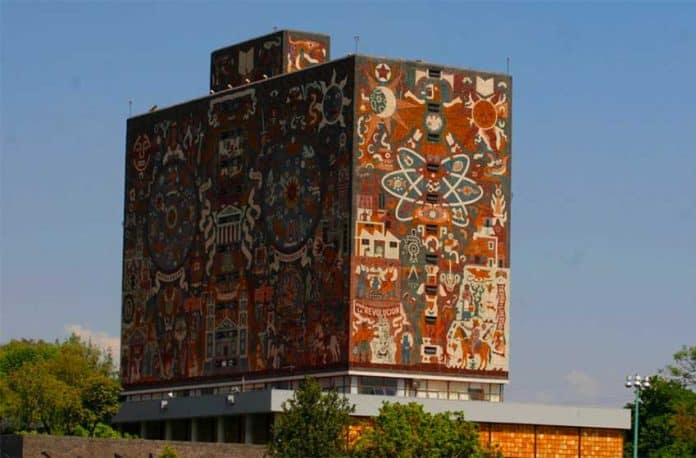
Luisa María Alcalde Luján, who has a law degree from Mexico’s largest and most prestigious university, UNAM, is AMLO’s pick in this key secretariat.

Alcalde was a federal deputy between 2012 and 2015 and also worked as a research assistant at her alma mater.

She is currently a professor of law and has published several articles advocating for higher wages in Mexico.

At 30 years of age, Alcalde Luján will be the youngest member of López Obrador’s cabinet.

Education:

Esteban Moctezuma Barragán will become Mexico’s next education secretary.

López Obrador has pledged to restore cordial relations with the nation’s teachers after years of protests against the current administration’s education reform, which forced teachers to undergo compulsory evaluations.

Moctezuma, who has a masters in political economy from Cambridge University, will be tasked with developing a new plan that both protects teachers’ labor rights and improves educational standards.

He is a former member of the Institutional Revolutionary Party (PRI) and served as secretary of the interior and secretary of social development during the presidency of Ernesto Zedillo from 1994 to 2000.

Culture:  

The current general director of the Guerrero Institute of Culture, Alejandra Frausto Guerrero, will step into a federal role in the same area in AMLO’s administration.

Frausto holds a law degree from UNAM and previously served as a cultural director at the Claustro de Sor Juana University in Mexico City.

Communications and Transportation:

Former Pemex deputy director Javier Jiménez Espriú will take on the role of secretary of communications and transportation.

Jiménez has previously headed up the Faculty of Engineering at UNAM and was a professor at the university for more than 30 years.

He has also made significant contributions to Mexico’s cultural life by founding a music school, a symphony orchestra and the international book fair at Mexico City’s Palace of Mining.

Jiménez is also a board member of the Mexican Institute of Petroleum.

Environment and Natural Resources:

Josefa González Blanco Ortiz Mena is AMLO’s pick to head up the environmental secretariat.

Blanco holds a law degree from Anahuac University and has previously worked on conservation projects in Chiapas.

Among her experiences is helping to reintroduce endangered species back into the wild.

Tourism:

The former chancellor of Mexico City’s University of Tourism and Administrative Sciences, Miguel Torruco Marqués, will become the new federal tourism secretary.

Tourism is a key driver of Mexico’s economy, meaning that Torruco will have a key role in López Obrador’s administration.

He previously served as tourism secretary in Mexico City during the administration of former mayor Miguel Ángel Mancera.

Public Administration:

Irma Eréndira Sandoval Ballesteros, a UNAM researcher with a doctorate in political science from the University of California, will become the next secretary of public administration.

Health: 

Overseeing Mexico’s public hospitals and health system will be Jorge Alcocer Varela, who has a doctorate in medical science from UNAM.

Alcocer was formerly a researcher at the National Institute of Medical Sciences and Nutrition.

Social Development:

In an AMLO-led government that looks set to focus on investing heavily on social programs, this key position will be occupied by María Luisa Albores González.

An agronomist by profession, Albores has more than 10 years of experience working for an indigenous organization in the mountain regions of Puebla, where she has focused on the development of organic farming, ecotourism and education.

Agrarian Development: 

Román Guillermo Meyer Falcón has been designated to fill the position of secretary of agrarian development.

Meyer is a qualified architect and has a masters in urban management. He has taught urbanism and urban development courses at the Ibero-American University.

López Obrador and his cabinet will be sworn in on December 1.

The president-elect has also said that the chief of his office will be Alfonso Romo, who acted as a link between López Obrador and the private sector during the presidential campaign period.

Source: El Financiero (sp)

May’s record-high remittances clear US $3-billion mark

0
Remittance numbers took a big jump.

Remittances sent by Mexicans working abroad — mostly in the United States — hit a record-high US $3.09 billion in May, up 19.8% over May last year.

The amount was 17% higher than the previous record of $2.6 billion that was set last October.

The average remittance was $323, and there were almost 9.6 million operations over the fifth month of the year.

It was the first time monthly remittances have surpassed the $3-billion mark since the Bank of México started keeping records in 1995.

One financial analyst expects remittance levels will remain “solid” in the short term, given the healthy growth of employment in the United States.

“We expect that the growth of remittances . . . will stabilize at about 5% to 7% per year,” said Alberto Ramos of Goldman Sachs, noting that families with the lowest incomes have benefited most from the flow of cash from abroad.

When the peso’s 3.6% loss in value since May is taken into consideration, the real increase in the value of remittances is 24.3% on an annual basis, he said.

Remittances between January and May amounted to almost $12.9 billion, another record and a figure that represents yearly growth of 11.5%, the largest since 2006.

Fear over U.S. immigration policy and a greater number of jobs in the U.S. are seen as the principal reasons for growth in remittance money.

Remittances reached a historic level last year, coming in at over $28.7 billion. If the growth rate seen so far this year continues, 2018 could break that record.

According to a study carried out by the Center for Latin American Monetary Studies (Cemla), Mexico could receive between $30.2 and $30.5 billion during 2018, an increase of 5% to 6% over 2017.

Source: El Financiero (sp)

Tourist numbers continue to rise in Quintana Roo

0
Beaches help maintain tourism growth in Quintana Roo.

The jewel in Mexico’s tourism crown continues to be the Caribbean state of Quintana Roo, popular with both domestic and foreign travelers.

The number of arrivals continues to rise, according to state tourism authorities, fueling high expectations by the industry for the coming summer vacation period.

The Quintana Roo Secretariat of Tourism (Sedetur) said passenger volumes on the three main domestic routes landing in Cancún were up during May. The biggest increase was in arrivals from Guadalajara, up by 25%. Flights from Monterrey and Mexico City were next, increasing by 16% and 5.9% respectively.

A similar story was reported on the international level: the number of passengers arriving from Toronto, Canada, rose by 14.5%, while those from the United States cities of Houston and Chicago were up by 3.8% and 1.9%.

Civil aviation authorities said that overall the number of domestic passenger arrivals increased by 13% in the first four months of the year, while international passengers rose by almost 3%.

Visitors from the United States, Canada, Argentina, the United Kingdom and Brazil continue to favor the Mexican Caribbean and the nearly 101,000 hotel rooms available in Quintana Roo’s 1,067 hotels.

Tourism Secretary Marisol Vanegas Pérez acknowledged that an outstanding issue for the state tourism industry is to bridge the inequality gap between the northern and southern parts of the state, and deliver the benefits of the state’s main economic activity to the areas that need it.

Tourism, she added, must help in raising the quality of life of residents.

Source: Milenio (sp)

‘We are not going to fight,’ AMLO says after phone call from Trump

0
AMLO and Trump spoke for half an hour yesterday.

A day after his historic landslide victory, president-elect Andrés Manuel López Obrador spoke to United States President Donald Trump yesterday in a conversation that touched on border security, migration and NAFTA.

“I received a call from Donald Trump and we spoke for half an hour,” the 64-year-old political veteran tweeted about 12 hours after he had addressed thousands of supporters in Mexico City’s central square.

“I proposed that we explore an integral agreement of development projects, which generate jobs in Mexico and that reduce migration and improve security. There was respectful treatment and our representatives will speak more,” López Obrador wrote.

In a later interview with broadcaster Televisa, the president-elect emphasized the close ties between the two North American nations and said he was committed to developing a strong and cooperative relationship.

“We are conscious of the need to maintain good relations with the United States. We have a border of more than 3,000 kilometers, more than 12 million Mexicans live in the United States. It is our main economic-commercial partner,” he said.

“We are not going to fight. We are always going to seek agreement . . . We are going to extend our frank hand to seek a relationship of friendship, I repeat, of cooperation with the United States.”

At the White House, Trump also spoke positively about the conversation with AMLO, as he is commonly known.

“I think he’s going to try and help us with the border,” the U.S. president told reporters.

“We had a great conversation . . . We talked about border security, we talked about trade, we talked about NAFTA, we talked about a separate deal, just Mexico and the United States,” Trump said.

“. . . I think the relationship will be a very good one, we’ll see what happens but I really do believe it’s going to be a very good one. He had a very excellent election, I would say even better than anticipated. I told him a number of years ago when I saw him campaigning for a different race . . . I said someday he’s going to be the president of Mexico so he remembered that and it turned out to be correct.”

Later in the day, López Obrador’s pick to be his foreign affairs secretary said the two men — both of whom have been described as populists and nationalists although they are on opposite sides of the political spectrum — had also agreed to meet in the near future.

Héctor Vasconcelos, whose father was secretary of education in the first elected government after the Mexican revolution, said he thought Trump and López Obrador had got on well and said the call was successful because it was “characterized by absolute mutual respect” and that there was an “atmosphere of cordiality” between the two leaders.

The seemingly positive start to their personal relationship contrasts with the currently strained bilateral relationship between Mexico and the United States that has worsened considerably since Trump took office. It has deteriorated to such an extent that many observers believe ties are at their lowest point in living memory.

Trump has frequently railed against Mexico, hitting out at the country on issues such as trade, drug trafficking and migration and repeatedly stressing that his long-proposed border wall is urgently needed.

Within that context, AMLO told supporters at a rally to launch his campaign in Ciudad Juárez earlier this year that “neither Mexico nor its people will be the piñata of any foreign government.”

He also said at a campaign rally in Oaxaca that “if Trump sends out an offensive tweet, I will take charge and answer him.”

But for now, at least, the two leaders seem intent on getting the relationship off to a good start.

Roberta Jacobson, the United States’ former ambassador to Mexico who only left the role in May, believes that López Obrador’s election could lead to improved bilateral relations between the two neighbors.

In an interview with United States broadcaster CBS as Mexicans went to the polls, Jacobson said that both López Obrador and his advisors had emphasized the importance of the Mexico-U.S. relationship to her and said that it needed to be positive.

“They’re going to work hard on that, which does not mean it’s going to be easier than it has been with the current Mexican government. I think there a number of issues on which it’s going to be difficult and maybe harder,” she said.

However, Jacobson added that AMLO “has been at pains to reassure people that he takes this relationship seriously” and that it shouldn’t “descend into insults.”

From the United States’ perspective, the former ambassador said “the most important thing that’s at stake is whether we continue to cooperate and work with Mexico as partners, whether you’re talking about economically or on trade or on migration or on security or whether that partnership we built over the last 30 years begins to deteriorate.”

During Trump’s administration, diplomacy between the United States and Mexico has increasingly been routed directly through the White House, especially via Trump’s son-in-law Jared Kushner, who has developed a close relationship with Mexican Foreign Secretary Luis Videgaray.

Jacobson said it remained to be seen how López Obrador would approach diplomatic relations with the U.S., but suggested that a return to “foreign secretary to foreign secretary” would be “much more probable.”

Source: El Universal (sp), Milenio (sp), CBS News (en)

Gunman assassinate mayor of Jalisco town where Italians disappeared

0
Díaz: shot more than 30 times.

The mayor of Tecalitlán, Jalisco, was assassinated yesterday by armed civilians who fired at least 30 times, killing Víctor Guadalupe Díaz Contreras and wounding a municipal employee.

Jalisco Attorney General Fausto Mancilla said the 28-year-old mayor had not reported threats or any type of aggression against him, although the windows of a vehicle belonging to his brother had been smashed on Sunday night.

Mancilla described the attack on the Institutional Revolutionary Party mayor as “cunning and vile.

[wpgmza id=”32″]

Tecalitlán is the town where three Italians disappeared in January. At the time Díaz insisted that their disappearance was an isolated incident and that municipal police were not involved.

Four local police were later arrested and charged. The Italians are believed to have been turned over by police to the Jalisco New Generation Cartel.

The police chief and another officer remain at large.

Source: El Universal (sp), Milenio (sp)

In voting for AMLO, Mexicans were voting for long-awaited change

0
Thousands were feeling the AMLOve last night in Mexico City.

Mexicans were clearly ready for a change. More than 50% of voters turned to a populist firebrand to elect the first leftist president in more than 30 years, a candidate they had rejected on two previous occasions.

Voters were also ready for a change 18 years ago when they ended the 70-year reign of the Institutional Revolutionary Party (PRI) and installed Vicente Fox of the National Action Party (PAN).

But little actually changed. The country went with the PAN a second time six years later with Felipe Calderón, but in many respects things got worse.

Then in 2012 the voters gave up on the PAN and turned back to the PRI, hopeful once again that the party’s grand plans would lead Mexico into economic prosperity while curbing the deeply entrenched corruption.

Again, little actually changed except that the violence became worse.

The disappearance of 43 teaching students in Guerrero in 2014 and a subsequent investigation that was widely seen as flawed and marred by cover-ups was particularly damning for the current administration.

So too was the revelation later the same year that President Enrique Peña Nieto’s wife had acquired a multi-million-dollar mansion that was built by a favored government contractor.

Peña Nieto finally apologized for the scandal in July 2016 and admitted that he had made a mistake but few considered his apology credible and soon after his approval rating hit a new low.

Andrés Manuel López Obrador, who has finally got his longstanding wish to be president, ran in both the last two elections and came second. Election fraud likely played a part in his defeat both times but the voters were not quite ready either.

This time round they were; they were well and truly fed up. Promises to curb corruption had not been met and economic reforms to fire up the economy failed to deliver.

Corruption scandals severely damaged the credibility of the ruling PRI, for which its candidate, José Antonio Meade, didn’t stand a chance.

Whiffs of corruption involving a land deal also hurt the chances of the PAN’s Ricardo Anaya, candidate for an unlikely coalition with the left-wing Democratic Revolution Party, previously AMLO’s political home.

Anaya also made internal enemies with his maneuvers to win the coalition candidacy. Party stalwart Margarita Zavala quit after questioning the party leadership’s honesty and ethics and campaigned as an independent before withdrawing from the race in May.

Had she become the PAN’s presidential candidate, as she had wished, things might be quite different today. It could have been a much closer race for AMLO.

But did voters actually choose the Morena party leader, or did they vote for change?

“There is so much wrong. I think some people voted for López Obrador, but the majority voted for a change that we need,” said 23-year-old publicity agent Fernando Torre in a report by The Washington Post.

That feeling of being fed up with the political status quo, referred to in Mexico as hartazgo, is emphasized by the use of the combined acronym PRIAN.

Many Mexicans believe that not only are the PRI and the PAN as bad as each other but that they are in cahoots to perpetuate their influence and power.

López Obrador repeatedly sought to tap into that sentiment by referring to the country’s political and business elite as “the mafia of power.”

While the “it’s time” factor likely played a role in his election, AMLO didn’t leave anything to chance, criss-crossing the country during the campaign period, often visiting isolated, rural communities where voters feel even more neglected by federal governments than most.

He also appeared to make a greater effort than other candidates to connect with voters on a personal level and continued to paint himself, as he has long done, as a common man of the people with humble roots who shuns luxuries such as first-class travel.

While pundits, political scientists and opposition parties will no doubt continue to analyze the reasons behind AMLO’s overwhelming victory, millions of Mexicans, expats and observers around the world, will wait eagerly — or otherwise — to see exactly what kind of change Andrés Manuel López Obrador brings to Mexico.

Mexico News Daily

Morena-led coalition wins 5 of 9 gubernatorial races, including Mexico City

0
Claudia Sheinbaum, the first woman to serve as mayor of Mexico City.
Claudia Sheinbaum, the first woman to serve as mayor of Mexico City. (Archive)

The mostly leftist coalition led by president-elect Andrés Manuel López Obrador was the big winner in gubernatorial races yesterday, winning five of nine elections.

The Together We Will Make History coalition — led by López Obrador’s Morena party but also including the Labor Party (PT) and the conservative Social Encounter Party (PS) — was successful in Mexico City and four other states, all located to the south of the capital.

Tellingly, the ruling Institutional Revolutionary Party (PRI), which has been plagued by corruption scandals at both federal and state levels, didn’t win any of the nine states and appears to have lost the two it held.

In Mexico City, former Tlalpan borough chief Claudia Sheinbaum won almost 47% of the vote to easily beat runner-up Alejandra Barrales, who represented a right-left coalition made up of the National Action Party (PAN), the Democratic Revolutionary Party (PRD) and the Citizens’ Movement Party (MC).

It is the first time that Mexico City has elected a female mayor. The Morena-led coalition also won mayoral races in 11 of 16 boroughs in the capital.

To Mexico City’s immediate south, the state of Morelos is set to be governed by former soccer star and current mayor of Cuernavaca, Cuauhtémoc Blanco.

Blanco won over 52% of the vote or four times that of his nearest rival, Víctor Manuel Caballero Solano, who represented an alliance made up of the PAN and the MC.

Blanco has frequently clashed with current Governor Graco Ramírez and says that after he takes office, he will investigate him for corruption.

In Veracruz, Morena candidate Cuitláhuac García Jiménez won almost 45% of the vote to defeat PAN candidate Miguel Ángel Yunes Márquez — the son of current Governor Miguel Ángel Yunes — by a narrower margin of around 5%.

In AMLO’s home state of Tabasco, Adan Augusto López Hernández won a commanding victory with 61% support. He was the only gubernatorial candidate who fared better at the polls than López Obrador, who won 53% in the presidential race. 

In the southern state of Chiapas, Morena’s Rutilio Escandón Cadenas won almost 40% of the vote to practically double the support received by both the Institutional Revolutionary Party candidate and the Green Party candidate, who won 20% and 21% respectively.

Puebla was one of the four states where the Together We Will Make History coalition didn’t win but the race was close.

The candidate for the right-left coalition For Puebla In Front, Martha Ericka Alonso Hidalgo, won almost 38% of the vote to edge out Morena’s Luis Barbosa Huerta, who won 34%. Alonso’s husband, Rafael Moreno Valle, served as governor from 2011 to 2017.

In Guanajuato — which has been plagued by a sharp increase in violent crime this year — the Together We Will Make History candidate was resoundingly beaten by Diego Sinhue Rodríguez Vallejo, who won almost 50% of the vote to retain the governorship for the PAN.

For the first time in Mexico’s history, a state will be led by a governor representing the Citizens’ Movement Party (MC), which is perhaps best-known for its catchy political anthem sung by a nine-year-old boy.

Enrique Alfaro Ramírez won 39% of the vote in Jalisco, while the Together We Will Make History candidate finished second with 24%.

Finally, PAN/MC alliance candidate Mauricio Vila Dosal appears to have edged out PRI-led coalition candidate Mauricio Sahui Rivero in a tight race in Yucatán.

With just over 80% of the vote counted, the former has won 39% compared to the latter’s 36%.

Mexico News Daily 

López Obrador’s coalition en route to winning a majority in Congress

0
López Obrador in Mexico City last night.

Andrés Manuel López Obrador not only won yesterday’s presidential election in a landslide but the coalition he leads also looks set to win a majority in both houses of Congress.

Preliminary results suggest that the three parties that make up the Together We Will Make History coalition — Morena, the Labor Party (PT) and the Social Encounter Party (PES) — would win at least 260 of 500 seats in the lower Chamber of Deputies and around 65 of 128 seats in the Senate.

That result would give AMLO, as the president-elect is commonly known, a clear mandate to implement new policies and repeal current ones.

The Morena party leader won 53% in the presidential race, more than 30 points ahead of second-place candidate Ricardo Anaya.

The National Action Party-led For Mexico in Front coalition that Anaya heads will probably form the main opposition to the incoming López Obrador-led government in Congress, although it appears likely that it will win less than half the number of seats compared to those the government will control.

The vote for the ruling Institutional Revolutionary Party (PRI) collapsed yesterday and the political force that held power for much of the 20th century will have severely diminished representation in both houses of Congress.

Its presidential candidate, José Antonio Meade, was unable to free himself from the shackles of a corruption-plagued administration and won just 16% of the vote, with the electorate sending a clear message of discontent with the government.

The peso weakened today on news of López Obrador’s victory, losing about 1.5% of its value. Earlier today, the currency was trading at 20.18 pesos to the US dollar.

López Obrador indicated last night that he intended to review contracts awarded to foreign and private companies in the energy sector that were made possible due to a 2013 reform promulgated by the current administration.

But in a speech late last night, AMLO also sought to quell concerns about the country’s economy, saying that he would not increase taxes or the public debt and pledging an orderly transition “so that economic and financial stability is maintained.”

However, he committed to increase spending by doubling the old-age pension and increasing the number of scholarships for students.

AMLO has repeatedly said that eradicating government corruption will free up resources to spend on social programs.

The 2013 educational reform, which forced teachers to undergo compulsory evaluations and sparked countless protests, also looks certain to at least be reviewed if not repealed. AMLO said yesterday he will start to work on a new plan with teachers so that “their labor rights are not damaged” and the quality of education is improved.

At a scheduled meeting with incumbent President Enrique Peña Nieto tomorrow, López Obrador said he would raise the North American Free Trade Agreement (NAFTA) but added that he would respect the government team that has represented Mexico to date in the drawn-out and contentious negotiations.

“We’re going to support [the team] so that it can sign the agreement, so that a good negotiation that benefits Mexico is achieved,” he said.

United States President Donald Trump, who has long railed against NAFTA, congratulated López Obrador via Twitter yesterday, writing that “there is much to be done that will benefit both the United States and Mexico!”

AMLO also said that he would seek to meet with the three candidates he defeated in yesterday’s election in order to “exchange points of view.”

López Obrador will be sworn in as president on December 1 while the new Chamber of Deputies and Senate will first sit on September 1.

Source: El Universal (sp), Expansión (sp), The Washington Post (en), Milenio (sp)