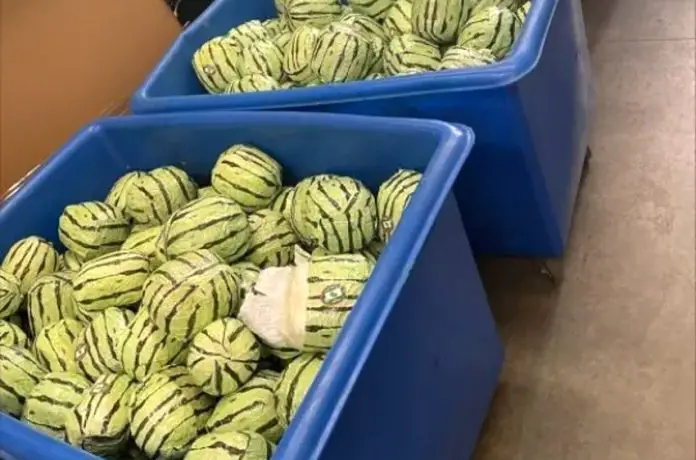
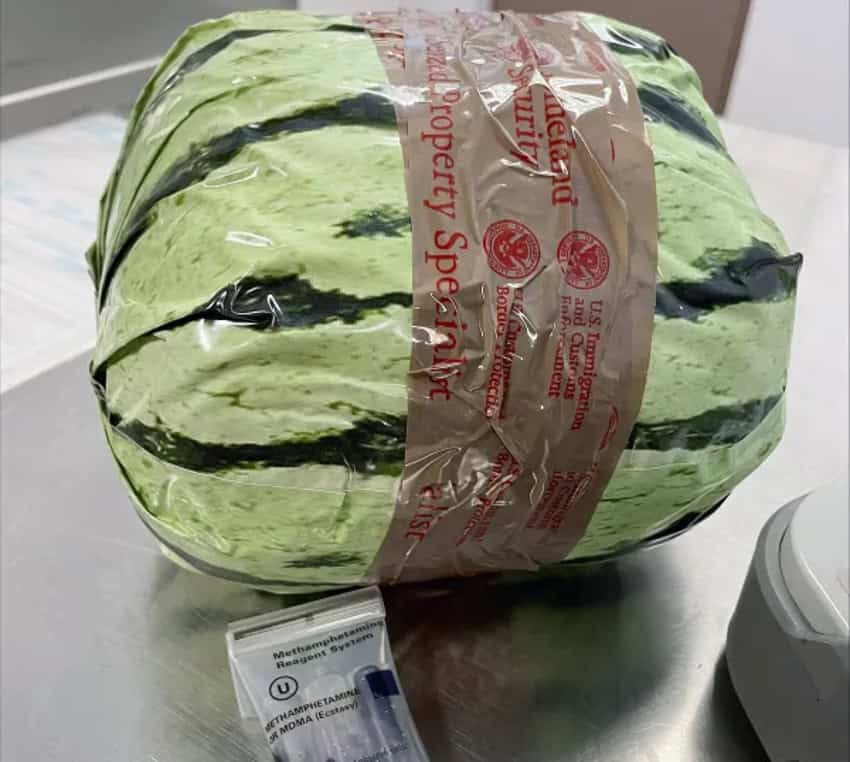
The agents discovered nearly 5,000 pounds of methamphetamine disguised as watermelons. (U.S. CBP)
United States Customs and Border Protection (CBP) recently encountered what it described as a “seedy situation” at the Mexico-U.S. border: phony, meth-filled fake watermelons hidden among a shipment of bona fide watermelons.
The CBP said in a statement that officers at the Otay Mesa port of entry between San Diego and Tijuana seized more than US $5 million worth of methamphetamine “disguised and concealed within a shipment of watermelons.”
The incident occurred last Friday when a 29-year-old man arrived at the Otay Mesa Commercial Facility in a tractor trailer. The driver was “seeking entry into the United States from Mexico, hauling a shipment manifested for watermelons,” CBP said.
The man and his cargo were sent to a secondary inspection area, where the watermelon shipment was offloaded for further examination.
“Upon careful inspection, officers uncovered 1,220 packages wrapped in paper, disguised as watermelons within the shipment,” CBP said.
“The contents of the packages were tested and identified as methamphetamine, with a total weight of 4,587 pounds [2,080 kg]. The estimated street value of the drugs exceeds $5 million dollars,” the agency said.
The U.S. Customs and Border Patrol reported on an unusual drug bust of US $5 million worth of methamphetamine disguised as watermelons. (U.S. CBP)
CBP officers seized the meth and the tractor-trailer, while the driver “was turned over to the custody of Homeland Security Investigations for further investigation,” CBP said.
Rosa E. Hernandez, Port Director at Otay Mesa, said she was “incredibly proud of our team for their exceptional work over the past few weeks in uncovering sophisticated and diverse smuggling methods.”
“As drug cartels continue to evolve their smuggling techniques, we will continue finding new and better ways to prevent these dangerous drugs and other contraband from entering the country,” she said.
Mexican cartels manufacture methamphetamine and other synthetic drugs in clandestine labs.
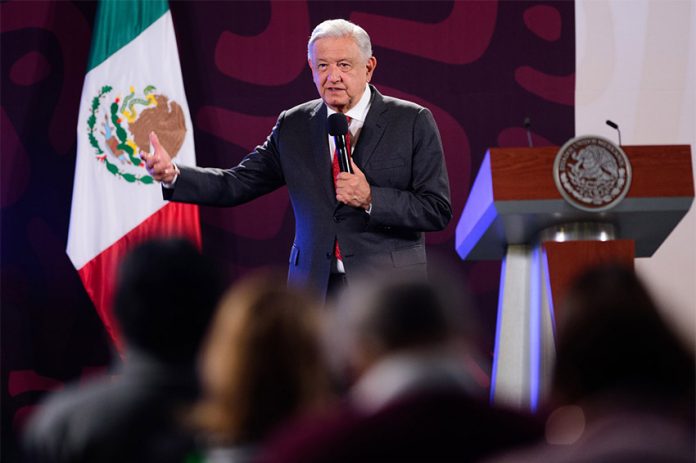
The president characterized Salazar's criticism of his judicial reform proposal as "imprudent" and disrespectful. (Lopezobrador.org.mx)
President Andrés Manuel López Obrador rebuked United States Ambassador to Mexico Ken Salazar on Friday, asserting that the diplomat’s statement on the federal government’s judicial reform proposal was “unfortunate, imprudent” and demonstrated a “lack of respect.”
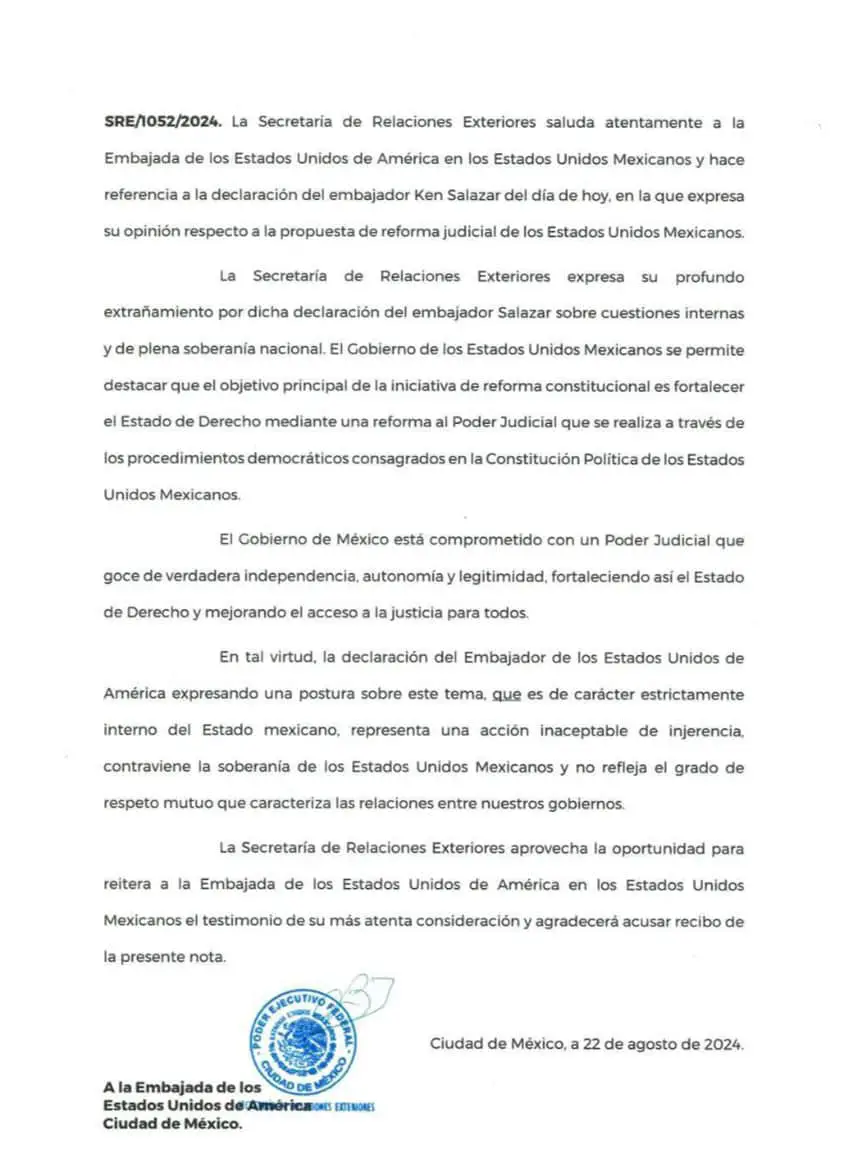
At his morning press conference, López Obrador also read out a “note of protest” sent to the United States Embassy in Mexico over what the government called Salazar’s “meddlesome declaration.”
In a statement on Thursday, the ambassador declared that the proposed judicial reform — which seeks to allow citizens to directly elect judges — poses a threat to democracy in Mexico and the U.S.-Mexico trade relationship. He also said it would benefit drug cartels.
“I believe popular direct election of judges is a major risk to the functioning of Mexico’s democracy,” Salazar said.
“… I also think the debate over the direct election of judges … as well as the fierce politics if the elections for judges in 2025 and 2027 were to be approved, will threaten the historic trade relationship we have built, which relies on investors’ confidence in Mexico’s legal framework,” he added.
“Direct elections would also make it easier for cartels and other bad actors to take advantage of politically motivated and inexperienced judges,” Salazar said.
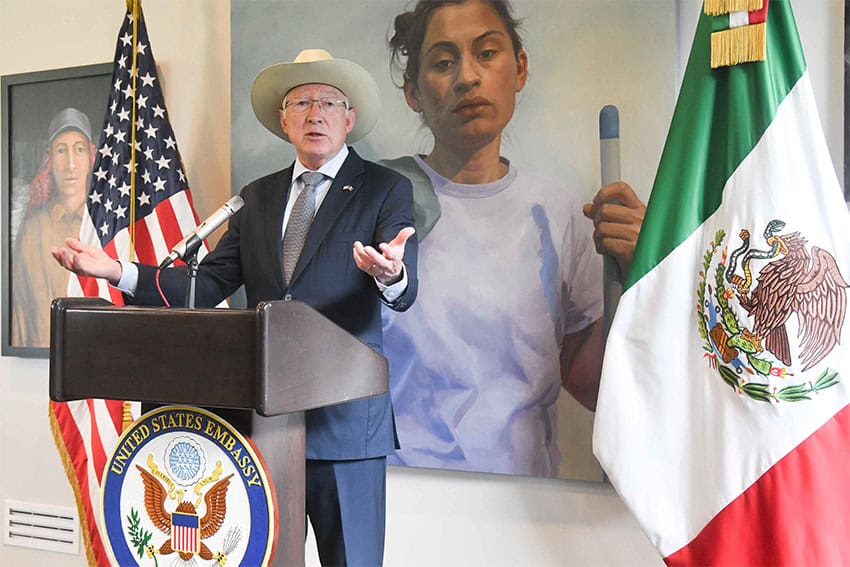
Ken Salazar said Thursday that the direct election of judges would put Mexico’s democracy at risk. (Mario Jasso/Cuartoscuro)
Asked about the statement, López Obrador told reporters that the federal government doesn’t accept “interference” in Mexico’s internal affairs.
“We don’t accept any representative of foreign governments intervening in matters that are solely up to us to resolve,” he said.
In the “note of protest,” or diplomatic note, the Ministry of Foreign Affairs (SRE) expressed its “profound disapproval” over Salazar’s remarks about “internal matters,” and declared that his statement is “an unacceptable act of interference” and a violation of Mexican sovereignty.
“It doesn’t reflect the degree of respect that characterizes relations between our governments,” the SRE added.
López Obrador said that the government would also send a diplomatic note to the government of Canada after Ambassador Graeme Clarke said in an an interview that Canadian investors are concerned about the judicial reform proposal.
AMLO noted that he, as president, has the authority to send reform proposals to Congress, and that the legislature has the power to approve them.
He sent the judicial reform proposal to Congress in February, and the ruling Morena party submitted a modified version of the bill to a lower house committee last Friday. It could be approved as soon as next month, when Morena and its allies will have a supermajority in the lower house of Congress and a strong majority in the Senate.
The Mexican government issued an official note of protest in response to Salazar’s comments. (Gobierno de México)
Opponents of the bill say that the direct election of judges from candidates nominated by the sitting president, the Congress and the judiciary itself threatens the independence of Mexico’s justice system. Judicial elections, in some cases, would coincide with political elections, a situation that critics believe could lead to politicization of the judiciary.
The SRE’s diplomatic note sought to dispel concerns about the reform proposal, affirming that “the government of Mexico is committed to a judicial power that enjoys true independence, autonomy and legitimacy” and can thus strengthen the rule of law and improve access to justice for everyone.
López Obrador explained the government’s motivation for overhauling the judiciary.
“Why are we proposing this reform? Because the judicial power is plagued by corruption. It’s full of corruption; it’s hijacked … and at the service of a greedy minority, those who previously felt they were the owners of Mexico,” he said.
“And never in recent times, in modern history, has the judicial power delivered justice for Mexicans. Rather it has become an instrument at the service of a minority,” said López Obrador, who has been irked by court decisions against his government’s policies and infrastructure projects.
On Friday afternoon, Salazar sought to reframe his remarks on the judicial reform.
On X, he said that “the concerns” he expressed about the direct election of judges were made in the “spirit of collaboration.”
“As partners we seek honest and open dialogue to continue with the great democratic and economic progress we have achieved,” Salazar wrote.
The United States and Mexico have “created an unprecedented relationship as partners and equals,” he said, adding that “communication is crucial” especially when “our common goals and our trade relation” are at stake.
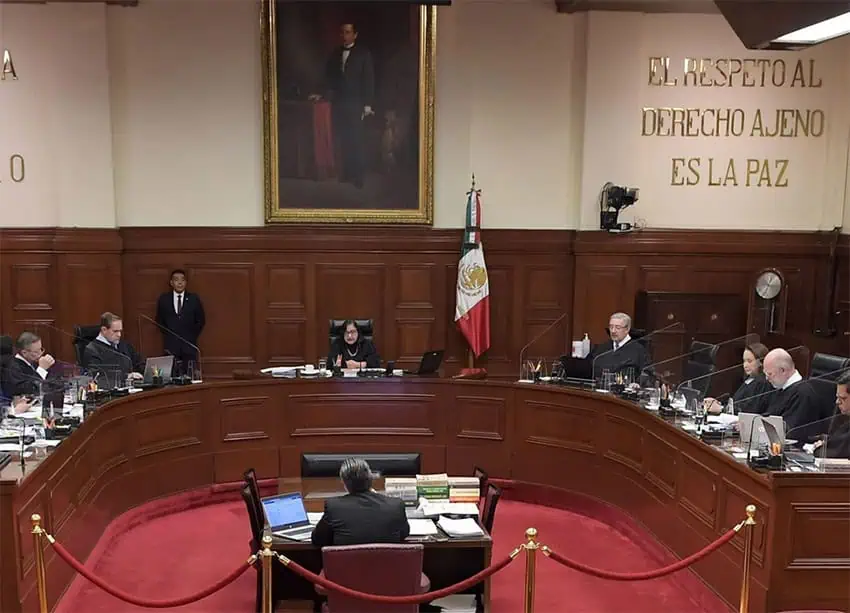
Under the proposal, federal judges — including Supreme Court justices — would be elected from a candidate pool chosen by the sitting president, Congress and the judiciary. (CDMX Servicio de Medios Públicos)
The ambassador also said he is willing to speak with “the leadership of Mexico about the direct election of judges and exchange opinions about different models.”
Sheinbaum: The US elects judges by popular vote
Around seven hours after Salazar issued his statement on Thursday, President-elect Sheinbaum took to social media to provide what she described as “very relevant information.”
“In 43 of the 50 states of the United States of America judges are elected by popular vote,” she wrote.
In June, Dr. Michael Kang, a professor at Northwestern University Pritzker School of Law, said that “judicial elections are very, very common in the United States” and noted “that’s kind of unusual internationally speaking.”
Mexico doesn’t currently hold judicial elections, with many judges appointed by the Federal Judiciary Council.
Speaking at a U.S. Department of State event, Kang highlighted that “judicial elections occur at the state level” in the United States, while “at the federal level, the judges, the justices of the Supreme Court, are selected by the president.”
“They’re appointed by the president, and they are approved by the Senate, with the advice and consent of the Senate. … It’s not an election system,” he said.
Información muy relevante: en 43 de los 50 estados de los Estados Unidos de América se eligen los jueces por voto popular.
Under the Mexican government’s proposal, citizens would elect federal judges, including Supreme Court justices.
If the reform is approved, all 11 Supreme Court justices — who are appointed for 15 years — could be replaced in elections in 2025. López Obrador has been critical of Chief Justice Norma Piña and other justices who have handed down rulings against the government.
Sheinbaum told a press conference on Thursday that the judicial reform proposal includes “rules” to prevent the president of the day from directly appointing a judge or interfering in judicial elections.
She also said that the process to select candidates would be “very transparent” and that prospective judges would have the required experience to do the job.
Under the proposal, Sheinbaum asserted, the sitting president will have less of a say in the appointment of Supreme Court justices, not more, as critics of the bill argue.
“The president will no longer have a hand in appointing justices,” she said.
“… It’s a very complete process,” Sheinbaum said, referring to both candidate selection and judicial elections.
“It’s new, but it has nothing to do with this idea … that [judges] are now going to be more aligned to the president. … It’s a complete proposal that guarantees autonomy [for the judiciary],” she said.
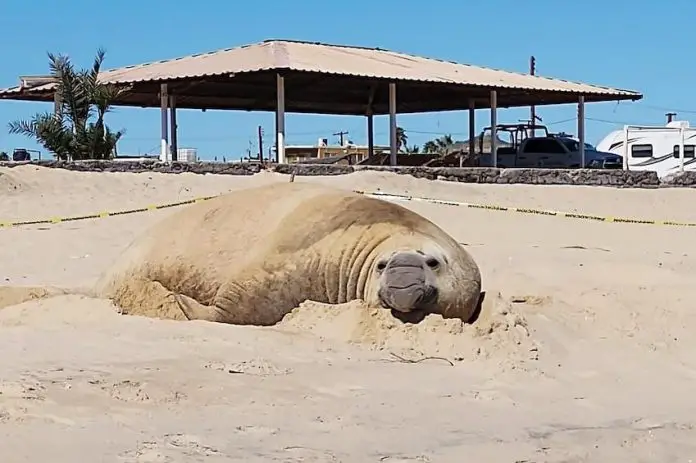
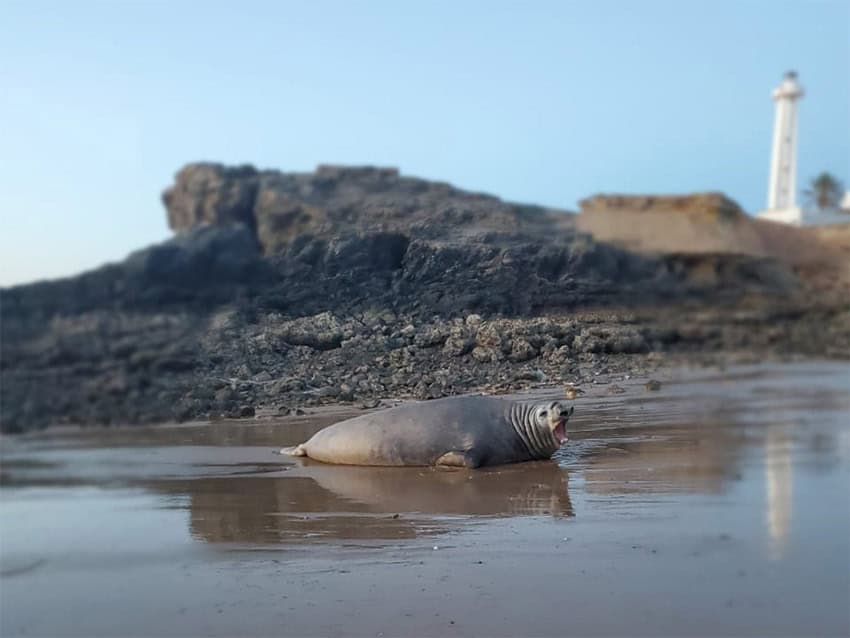
Panchito, who is recognizable thanks to his distinctive beard marks, is back in Mexico for the summer. (Pesca ABC)
Panchito the elephant seal is back!
For the past five years, the young elephant seal from South American waters has been making the long trek north and spending his summers on Mexican beaches.
And this year is no exception.
For nearly a month, Panchito has been hanging out on a beach in the fishing town of San Felipe, Baja California — where he has become a local celebrity and the focus of a community-wide effort to protect and monitor him.
Moreover, his presence has turned San Felipe into a hub for marine conversation.
— Cetacean Action Treasury (@CetaceanAction) July 27, 2024
Upon his arrival a few weeks ago, specialists from the organization Cetaceans, Action and Transformation (CAT) quickly stepped in, establishing a perimeter around the seal to ensure his safety.
Having traveled some 8,000 km from his home waters, he was in need of a rest, so surveillance brigades were formed to protect him 24/7, with the community playing a crucial role in the initiative.
Following his 2020 visit, Panchito — whose full name is Panchito El Cortés, according to CAT — has since been spotted annually in Mexico, from La Paz near the southern tip of Baja California Sur to the Upper Gulf of California (in the Gulf of Santa Clara in Sonora, to be exact).
His repeated visits have allowed researchers to identify him by a distinctive mark on his beard.
“Panchito’s visit is an extraordinary event for Mexican waters,” marine ecologist Georgina Castro Proal told the online news outlet Animal Politico. “Seeing him here is quite rare.”
In a two-minute video, CAT’s María Tejada claims Panchito is “the first [southern] elephant seal observed in our country.” Panchito, she adds, “can be distinguished from the northern variant [of his breed] that can be seen regularly in some Baja islands and which has an attack stance similar to that of a cobra.”
Northern elephant seals (Mirounga angustirostris), found from California to Alaska, typically breed and give birth on offshore islands or remote mainland beaches, often in Baja California.
Local nonprofits requested that beachgoers who see Panchito give him space to rest and avoid taking pictures near him, which could frighten the young elephant seal. (Cetacean Action Treasury/X)
They’ve emphasized the need for distance, urging people not to feed or interact with him, as these actions could be harmful. Many people are observing him from the boardwalk, others from behind the barrier.
“Everyone wants a photo, but they’ve learned to respect his space,” Tejada said.
In the video, she says he is a “sub-adult” around 10 years old who weighs almost 500 kilos (1,100 pounds). Southern elephant seals typically live between 20 and 30 years, although males tend to have shorter lifespans due to intense competition for breeding territories.
CAT has been collaborating with the Federal Attorney’s Office for Environmental Protection (Profepa) and the National Commission for Protected Natural Areas (Conanp) to ensure Panchito’s well-being.
Surveillance will be maintained until he decides to return to the colder waters of Patagonia.
“This experience has brought the community together and highlighted the importance of protecting our coastal ecosystems,” Castro Proal said.
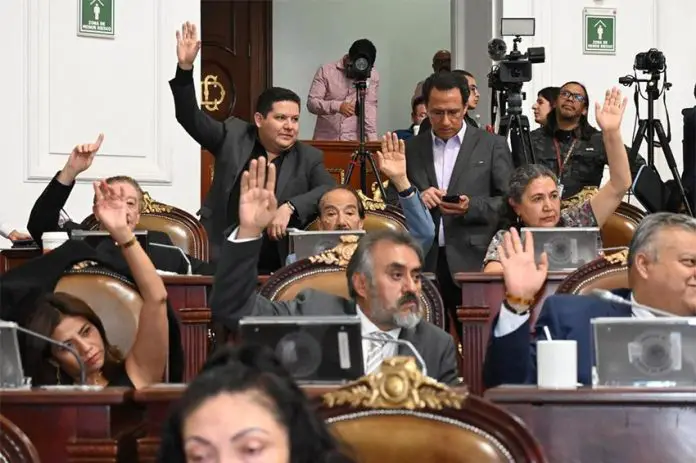
The Mexico City legislature voted unanimously to approve a rent control bill proposed by Mayor Martí Batres. (Martí Batres/X)
The Mexico City Congress on Thursday approved a rent control bill pegging residential rent increases in CDMX to inflation. It replaces regulations that allowed landlords to hike rents as much as 10% annually.
The most recent data from national statistics agency INEGI reported an annual inflation rate of 5.57%.
The bill passed by a near perfect 57-0 vote. Three lawmakers were absent, having taken leave ahead of their Sept. 1 inauguration as federal congressmen.
In just three-and-a-half weeks, the Congress called a Special Session and moved the rental reform legislation through committee and onto the floor for the final vote with little debate.
Deliberation included neither public forums nor consultations with realtors or private housing agencies.
The rent control law comes on the heels of new laws regulating Airbnb and other short-term rentals and an affordable housing pilot program. (Andreas Davis/Unsplash)
“Housing is not a luxury, it is a right that we must guarantee,” said PRD congresswoman Polimnia Romana Sierra during floor debate ahead of the vote. “By relieving the undue burden of [high] rents, we are making the city more just, allowing everybody to have a place to call home.”
Housing has been of particular interest to Batres since he stepped in for now-President-elect Claudia Sheinbaum in June 2023.
The new rent control law obligates the CDMX government to establish a digital registry of all rental contracts. All property owners — personal and corporate — must register new rental contracts within 30 days of signing, and all existing contracts must be registered within 90 days of the law’s enactment.
The rental contracts will not be made public except via judicial resolution. Penalties were also established for misuse of the registry.
The reform bill also amended the city’s Housing Law to guarantee the construction of affordable public housing for low-income residents, specifically favoring the poor, the working class, single mothers and people between the ages of 18-35.
Thursday’s agenda also featured the passage of several other reforms proposed by Mayor Batres:
Constitutional changes related to neighborhood improvement activities
Respect for private, public and social property was written into the city Constitution, bringing it into agreement with Article 27 of the federal Constitution
A new regulation requires that magistrates and judges prioritize the principle of restorative justice in their decisions
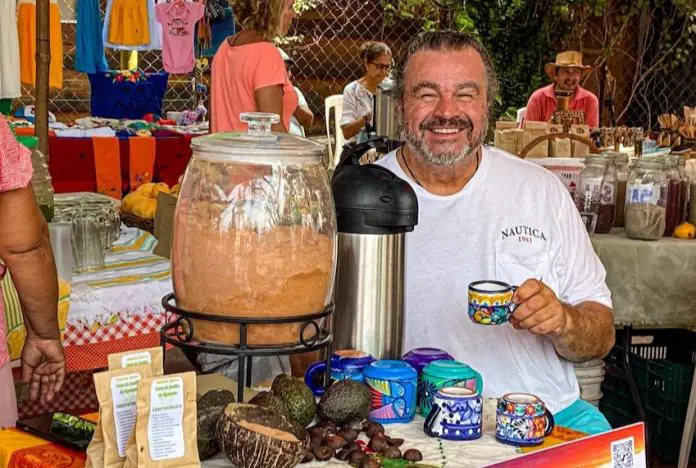
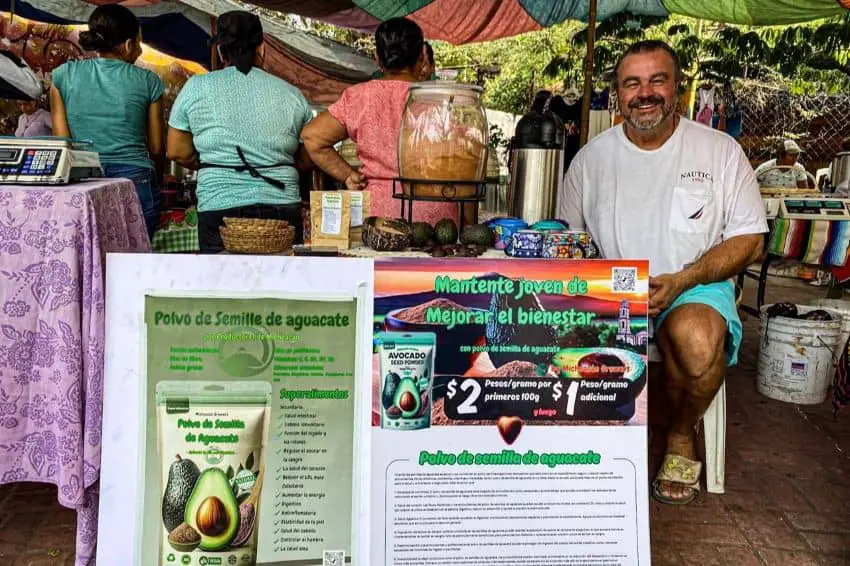
John Goloni wanted a new life in Mexico, but he found something even more valuable. (Elisabeth Ashe)
When Canadian businessman and entrepreneur John Goloni first came to Mexico in October 2020, his life in his home country was rewarding. Goloni and his son had started a healthcare charity that supplied CAD $15 million (US $11.1 million) of hearing aids to underprivileged people in Canada. Still, when the Canadian government discontinued the program after several successful years, Goloni was forced to abandon the project.
At the same time, his health was suffering, and his weight stood at over 300 pounds. Goloni knew it was time to concentrate on his health issues and decided to move to Mexico. He chose the beautiful beach towns of Ixtapa-Zihuatanejo in the state of Guererro.
Peaceful Zihuatanejo has been attracting expats for decades. (Rubén Ramírez/Unsplash)
“The change in my life’s circumstances caused me to reevaluate everything about my life in Canada. Weighing all the pros and cons was a no-brainer for me. I felt there was a much richer life and more beautiful people in Mexico. I love everything about Mexico. I feel free here,” he says.
With a background in research and a sincere desire to change, Goloni stumbled across a YouTube video extolling the benefits of adding avocado seeds to one’s diet. Although avocados are well known as a superfood for their fat content, Goloni’s interest was piqued when he learned that the fruit’s seed packs its biggest health punch. He decided to try it and started by going to several pozole restaurants in the area, gathering leftover pits, and grinding them into a powder. When he started taking the product, Goloni began experiencing benefits such as improved digestion, a boosted immune system and reduced inflammation.
“The changes were incredible,” he says, “and I experienced remarkable health benefits: My back pain and numbness in my right leg disappeared. My energy levels soared, and my tiredness vanished. All my blood markers improved significantly, and I even avoided taking prescribed statins and metformin. My overall health improved naturally. My blood markers were better than ever during my last visit to the doctor in Canada. I’ve lost over 70 pounds since I got here.”
Goloni’s journey led him to a profound realization: “While avocados are recognized for their nutritional value, the seed is a hidden gem, packed with health benefits that are yet to be fully explored.”
Goloni selling his avocado pits at the market. (Elisabeth Ashe)
Turning avocado seeds into powder is a process in itself. After cleaning the seeds, they must be dried in the sun at up to 45 F for four hours. Although his method is primitive now, Goloni plans on installing solar beds and using solar dehydrators in the future, which will be faster and more efficient. The third step is to peel the husk and split the seed before placing it in the sun or dehydrator for eight to 12 hours.
“The husk in itself is very nutritious,” Goloni says. Researchers at the University of California are testing it now as a cancer-fighting agent.”
The final step before shipping out through a logistics company he is currently in talks with is to pulverize the seeds, sift and clean them and package them.
“I am selling out at the local eco-tianguis market and a small cafe in another local market,” says Goloni, who does all the processing in his kitchen. “Building a facility in Michoacán to handle the expansion will create jobs, and it will take time to fix the bugs, but it is definitely in the plans. But this will take time. For now, I’m a one-man show.”
The new 160,000 square-meter facility will be located in Ciénega de Flores, about 30 kilometers northeast of the state capital of Monterrey. (@VolvoGroupNA)
On Friday, Swedish car manufacturer Volvo announced that it had selected the state of Nuevo León as the site for its new North American heavy-duty truck factory, with an estimated investment of US $700 million.
The new 160,000 square-meter facility will be located in Ciénega de Flores, about 30 kilometers northeast of the state capital of Monterrey. Volvo plans for operations to begin in 2026 and expects the site to create 2,500 jobs.
Esta empresa se suma al boom económico de Nuevo León con una inversión de 700 MILLONES DE DÓLARES para construir su NUEVA PLANTA, que será la MÁS GRANDE DEL MUNDO.
Sin duda, Nuevo León es el mejor lugar para invertir y hacer negocios… Y VAMOS POR MÁS. pic.twitter.com/BySrOjWmY0
Volvo, which has targeted growth in North America as a strategic priority, says the new manufacturing plant will support production in the United States, supplying Volvo Trucks and Mack Trucks for the U.S. and Canadian markets. The factory will also produce Mack Trucks for the Mexican and Latin American markets.
“Monterrey provides significant logistical efficiencies for supporting sales to the southwestern and western regions of the U.S., and to Mexico and Latin America,” Volvo said in a statement issued from its headquarters in Gothenburg, Sweden.
“Welcome to the best state for investment, which is Nuevo León,” he said. “This will be among the biggest investments of [my term in office].”
Nuevo León was also chosen as the site for a new multi-billion dollar Tesla “gigafactory,” announced in March 2023, but which CEO Elon Musk recently said is on hold pending the outcome of the U.S. elections in November.
Manuel Montoya Ortega, local director of the automotive industry association Clúster Automotriz, told the newspaper Milenio that the arrival of Volvo will attract European automotive suppliers to the state.
“This will stimulate job growth for local businesses,” Montoya said, pointing out that the region is also home to the two biggest truck manufacturing plants in North America — Navistar is based in the Monterrey suburb of Escobedo and Freightliner is located in Madero, in the neighboring state of Coahuila.
The Ciénega de Flores site was chosen after months of deliberation, with Volvo considering various locations in Nuevo León and Coahuila, according to the newspaper Reforma.
Volvo also operates a smaller factory in Tultitlán, México state, where the company has been manufacturing buses for 26 years.
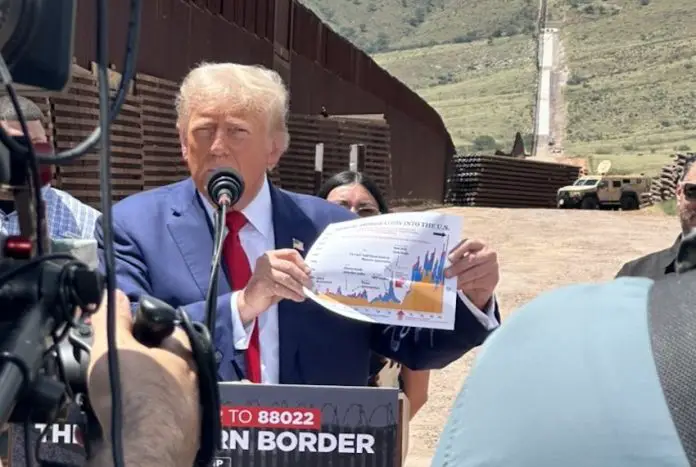
Trump was accompanied by mothers of children killed during the Biden administration in cases where the suspects are illegal immigrants. (@RLJnews/X)
Former United States president Donald Trump pledged to “seal” the Mexico-U.S. border and “stop the invasion” of migrants to the U.S. during a visit to a section of border wall in Arizona on Thursday.
During a press conference in Cochise County on the border between Arizona and Sonora, the Republican Party presidential nominee also promised to impose the death penalty on large-scale drug traffickers if he is elected on Nov. 5.
🚨Trump unveils new border crime policies
-10 year mandatory minimum sentence for anyone guilty of human smuggling
-Mandatory life sentence for anyone guilty of child trafficking
-Death penalty for anyone guilty of sex trafficking
Speaking just hours before Vice President Kamala Harris accepted the Democratic Party’s presidential nomination at the Democratic National Convention in Chicago, Trump took aim at his opponent, accusing her of failing in her position as “border czar” and asserting that she wants to have an “open border.”
“When we win this November we will end the Kamala Harris border nightmare once and for all,” he said.
“… With your vote we will seal the border, stop the invasion and launch the largest deportation effort in American history,” said Trump, who was accompanied by mothers of children killed during the Biden administration in cases where the suspects are illegal immigrants.
He claimed that Harris would allow “more than 100 million illegal aliens into our country” if elected president. He also asserted that the United States would be “overrun” by migrants “and essentially won’t be a country.”
If reelected — eight years after defeating Hillary Clinton in the 2016 presidential election — Trump said his government “will impose tough new sentences on illegal alien criminals.”
“These include 10-year mandatory minimum sentences for anyone guilty of human smuggling, a guaranteed life sentence for anyone guilty of child trafficking and a death penalty for anyone guilty of child or women sex trafficking,” he said.
“We’ll also impose the death penalty on major drug dealers and traffickers,” Trump added.
If his rhetoric were to become reality, Mexicans facing drug charges in the United States, such as alleged Sinaloa Cartel leader Ismael “El Mayo” Zambada, could be subject to capital punishment.
The situation at the border
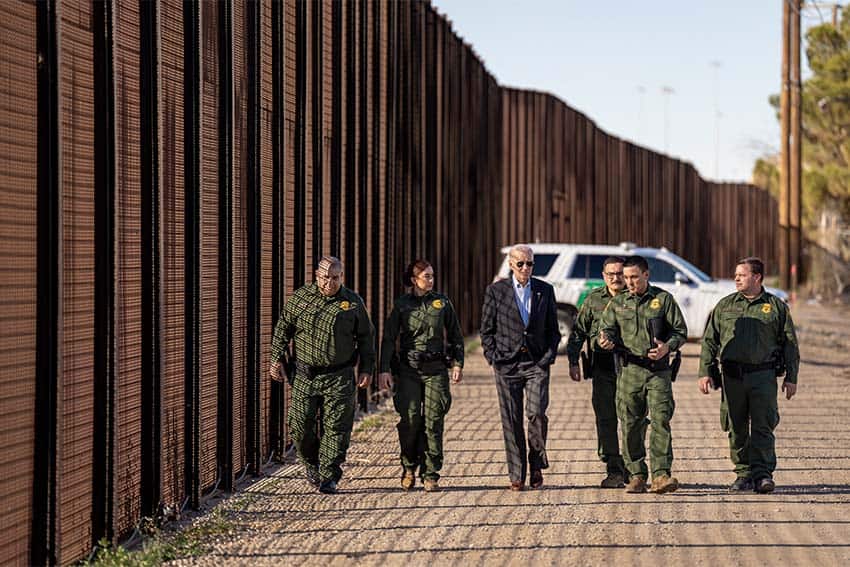
During Joe Biden’s presidency, new records have been set for migrant arrivals at the border and illegal crossings into the United States, but numbers have trended down this year.
An executive order issued by Biden on June 4 instituted new measures to curb illegal migration to the U.S., including closing the border to most asylum seekers unless migrant flow daily averages are under 1,500 for seven consecutive days.
Data shows that illegal crossings into the U.S. from Mexico declined during five consecutive months between March and July, but the biggest drops came after Biden issued an executive order in early June that prevents migrants from making asylum claims at the U.S.-Mexico border at times when crossings between legal ports of entry surge.
In July, the number of illegal crossings detected by U.S. authorities declined 32.5% from June to reach the lowest level since September 2020.
Biden’s executive order — described by The New York Times as “the most restrictive border policy instituted by Mr. Biden, or any other modern Democrat” — has clearly contributed to the decline in illegal crossings in recent months. Still, enforcement against migrants in Mexico has also helped to reduce the number of people arriving at the country’s northern border.
Hundreds of thousands of foreigners detected traveling in Mexico without entry authorization have been taken to immigration detention centers this year, while others have been rounded up in different parts of the country and transported back to cities in southern Mexico, including Tapachula, Chiapas. That city is located just north of the border with Guatemala, where many migrants first enter Mexico.
Data from the National Immigration Institute shows that Venezuelans made up the largest cohort of irregular migrants in Mexico in the first five months of the year, followed by Guatemalans, Hondurans, Ecuadorians and Haitians.
Harris: “I fought against the cartels who traffic in guns and drugs and human beings”
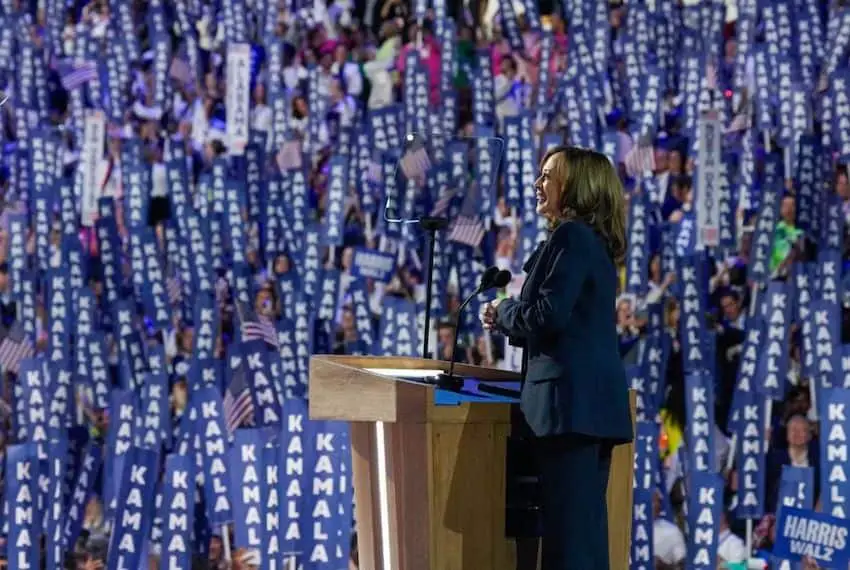
During her National Democratic Convention speech on Thursday night, Kamala Harris highlighted her experience as a prosecutor and pledged to “bring back the bipartisan border security bill” that Donald Trump “killed.”
“I fought against the cartels who traffic in guns and drugs and human beings — [the cartels] who threaten the security of our border and the safety of our communities,” the vice president said while recalling her work as a young courtroom prosecutor in Oakland, California.
On Thursday night at the DNC, Kamala Harris pledged to “bring back the bipartisan border security bill” that Donald Trump “killed.” (@KamalaHarris/X)
“And I will tell you, these fights were not easy,” Harris said.
Later in her address, she said that she and Biden “brought together Democrats and conservative Republicans to write the strongest border bill in decades.”
“The border patrol endorsed it. But Donald Trump believes a border deal would hurt his campaign, so he ordered his allies in Congress to kill the deal,” Harris said.
“Well, I refuse to play politics with our security, and here is my pledge to you. As president, I will bring back the bipartisan border security bill that he killed, and I will sign it into law,” said the Democratic Party nominee.
“I know we can live up to our proud heritage as a nation of immigrants and reform our broken immigration system. We can create an earned pathway to citizenship and secure our border,” Harris said.
“The agreement would provide critical resources at the border and significant policy changes,” the White House said, highlighting Border Patrol and asylum reforms, among others.
If you have a pregunta, póngala en el chat please! (Brooke Cagle/Unsplash)
In today’s world, virtual meetings have become a part of our day-to-day life, and knowing some key phrases in Spanish for these situations can be incredibly helpful. Here are several useful Spanish phrases that can facilitate smooth and professional interactions during virtual work meetings or conversations, along with examples on how to use them.
Before starting a presentation or sharing documents, you might want to confirm that all participants can see what you are presenting. Believe me, I once attended a business meeting where the speaker spent the entire hour thinking we were all seeing his screen. Nobody had seen anything. So asking if everyone can see your screen is definitely a must.
¿Pueden prender sus micrófonos/cámaras? (Headway/Unsplash)
¿Pueden ver mi pantalla?
Translation: “Can you see my screen?”
Example: “Voy a empezar la presentación, ¿pueden ver mi pantalla?” (I’m going to start the presentation, can you all see my screen?)
¿Me escuchan?
Translation: “Can you all hear me?”
Example: “Hola a todos, ¿me escuchan bien?” (Hi everyone, can you all hear me?)
Se está trabando
Translation: “You’re breaking up.”
Example: “No te escucho, se está trabando.” (I can’t hear you, you’re breaking up).
The fact that we use an impersonal verb to express the phrase — “se está” — means we’re referring to the computer, as in “the computer is breaking up.”
Translation: “Could you please turn on your mics/cameras?”
Example: “Prendan su micrófono si tienen alguna pregunta.” (Turn on your mics if you have any questions).
“Pueden prender sus cámaras si se sienten cómodos.” (Turn your cameras on if you feel comfortable).
Cualquier pregunta póngala en el chat
Translation: “If you have any questions please put them in the chat.”
Example: “Siéntanse libres de preguntar, pero cualquier pregunta ponganla en el chat.” (Feel free to ask, but if you have any questions please put them in the chat.)
Se me fue el internet
Translation: “I lost my internet connection.”
Example: “Perdón! Se me fue el internet.” (Sorry! My internet went out.) Last but not least is a technical issue that I am sure has happened to all of us during a Zoom, Meet or Teams call. All of a sudden we are no longer on the call because our internet is not working properly. Whenever we can finally jump back into the meeting again and it’s our turn to speak, we’ll want to use this phrase.
These phrases will help you have more efficient and professional meetings. Integrating them can enhance clarity and foster better communication for your future calls.
Paulina Gerez is a translator-interpreter, content creator, and founder of Crack The Code, a series of online courses focused on languages. Through her social media, she helps people see learning a language from another perspective through her fun experiences. Instagram: paulinagerezm / Tiktok: paugerez3 / YT: paulina gerez
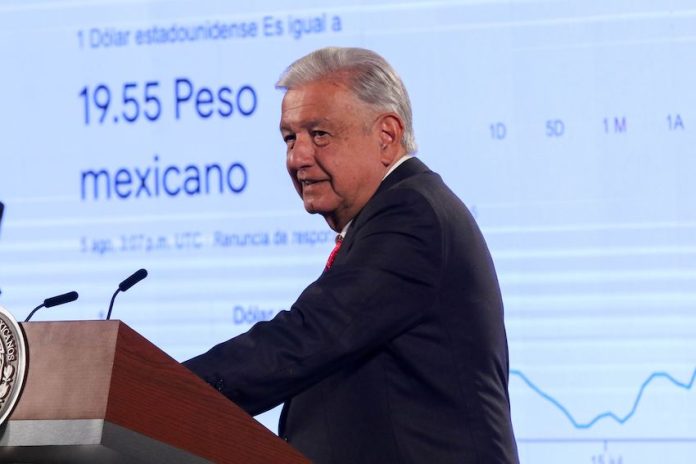
It's the third time this month that the peso has spiked above 19.5 to the dollar. (Moisés Pablo/Cuartoscuro)
The Mexican peso broke through the 19.50 to the US dollar barrier on Thursday, depreciating for a fourth consecutive day as the government’s judicial reform proposal continues to weigh on the currency.
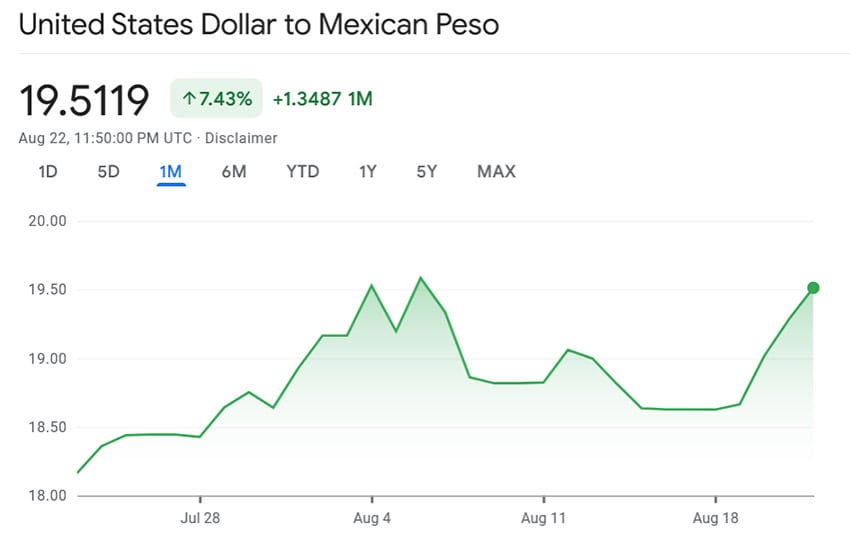
The peso closed at 19.28 to the dollar on Wednesday, but sank to as low as 19.52 to the greenback Thursday morning, according to Bloomberg data.
It’s been a volatile month for the dollar-peso exchange rate. (Google)
The currency subsequently regained some of the ground it lost, but by late afternoon the USD:MXN exchange rate was back at 19.52.
That rate represents a depreciation of 4.5% for the peso compared to its closing position of 18.64 to the US dollar last Friday. The last time the peso was weaker was in late 2022.
The government’s proposed judicial reform — which seeks to allow citizens to directly elect judges — has contributed to the weakening of the peso this week.
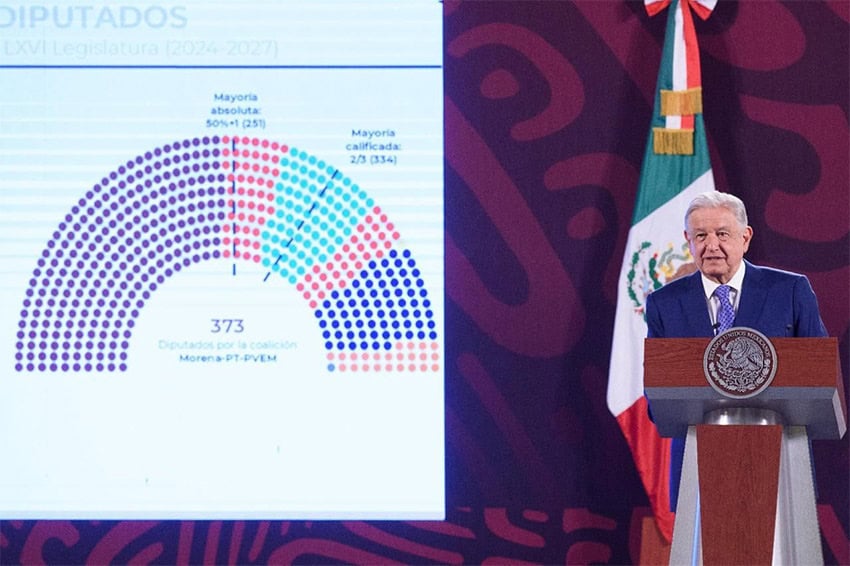
With Morena’s coalition supermajority in the Chamber of Deputies, the reform is expected to sail through the lower house of Congress. (Presidencia/Cuartoscuro)
If approved, citizens will be able to elect Supreme Court justices and other judges from candidates put forward by the sitting president, Congress and the judiciary itself. The first judicial elections are slated to be held next year.
The decline in inflation as well as data showing that quarter-over-quarter economic growth slowed to just 0.2% between April and June increased the likelihood that the Bank of Mexico (Banxico) will make a second successive cut to interest rates after its board’s monetary policy meeting on Sept. 26.
The wide gap between Banxico’s key rate — currently 10.75% — and that of the United States Federal Reserve (5.25%-5.5%) supported the peso for a long period, but an unwinding of global carry trades and political developments in Mexico have hurt the currency in recent weeks.
Kimberley Sperrfechter, emerging markets economist at Capital Economics, said that the decline in inflation to 5.16% in the first half of August, along with weak economic data for June and “the Fed’s confirmation that it will kick off its loosening cycle next month means that we expect Banxico to lower its policy rate by another 25bp, to 10.50%.”
“Based on my lifelong experience supporting the rule of law, I believe popular direct election of judges is a major risk to the functioning of Mexico’s democracy,” he said.
“Any judicial reform should have the right kinds of safeguards that will ensure the judicial branch will be strengthened and not subject to the corruption of politics,” Salazar added.
U.S. Ambassador Salazar cautioned against the proposed judicial reform. (Mario Jasso/Cuartoscuro)
The ambassador also said he believes that “the debate over the direct election of judges … as well as the fierce politics if the elections for judges in 2025 and 2027 were to be approved, will threaten the historic trade relationship we have built, which relies on investors’ confidence in Mexico’s legal framework.”
“Direct elections would also make it easier for cartels and other bad actors to take advantage of politically motivated and inexperienced judges,” Salazar said.
“… We understand the importance of Mexico’s fight against judicial corruption. But direct political election of judges, in my view, would not address judicial corruption nor would it strengthen the judicial branch of government. It would also weaken the efforts to make North American economic integration a reality and would create turbulence as the debate over direct election will continue over the next several years.”
Analyst: Approval of reform could ‘rapidly deteriorate’ business environment
Gabriela Siller, director of economic analysis at Banco Base, wrote on X that the approval of the judicial reform proposal “could rapidly deteriorate the environment to do business” in Mexico.
Siller asserted that the reform will have a negative impact on economic growth by slowing down new inflows of foreign direct investment as well as reinvestment of profits by companies that already have a presence in Mexico.
“Given that the reform to the judicial power would weaken Mexico’s legal framework, the administration of justice and the application of USMCA rules in the country, it places the trade relationship with the United States at risk and would inhibit new investments from that country,” she wrote.
Siller said earlier this week that approval of the reform would “move Mexico away from the nearshoring opportunity.”
La reforma al Poder Judicial podría tener un impacto sobre México de al menos 1.9% del PIB, por el freno en la llegada de nuevas inversiones y el freno de reinversión de utilidades de las empresas extranjeras que están en México.
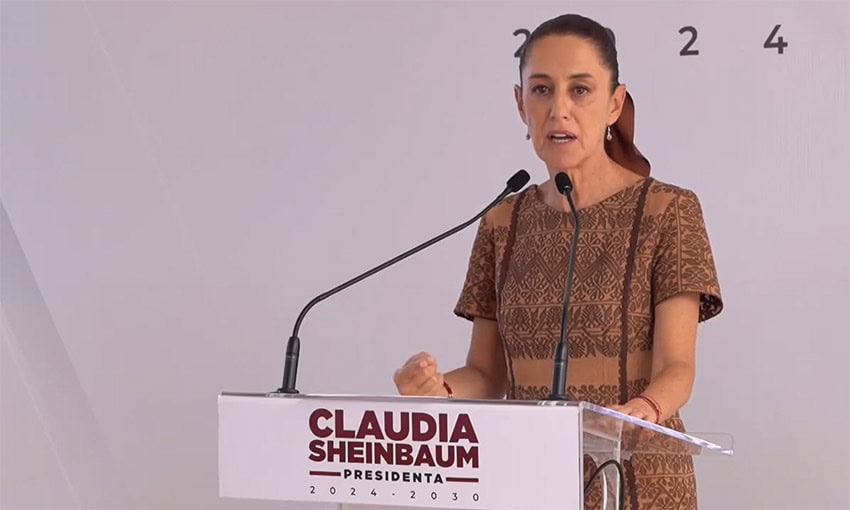
President-elect Claudia Sheinbaum asserted Wednesday that both Morgan Stanley and the Bank of America are “misinformed” because the approval of the judicial reform will lead to “a better justice system in Mexico.”
The banks and other foreign companies and individuals with investments in Mexico have nothing to worry about, said Sheinbaum, repeating a view she has expressed previously.
President-elect Sheinbaum criticized U.S. banks’ negative outlook on the judicial reform proposal on Wednesday. (Claudia Sheinbaum/X)
She also rejected claims that the reform poses a threat to the USMCA, the North American free trade pact that superseded NAFTA in 2020.
Sheinbaum will take office Oct. 1, while recently elected lawmakers will assume their positions in the Chamber of Deputies and the Senate a month earlier.
The coalition led by Morena will be able to approve the judicial reform proposal and other constitutional bills without the support of opposition lawmakers in the lower house as it will have a two-thirds majority. It will require the votes of three opposition senators to get such initiatives through the Senate.
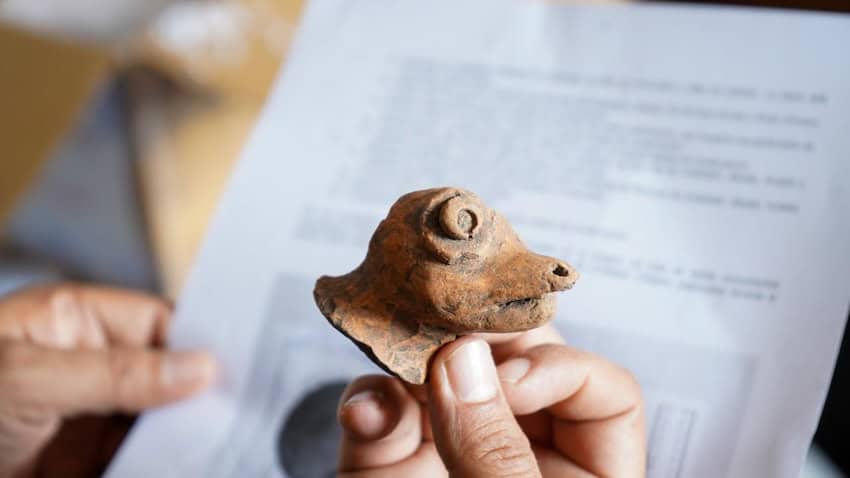
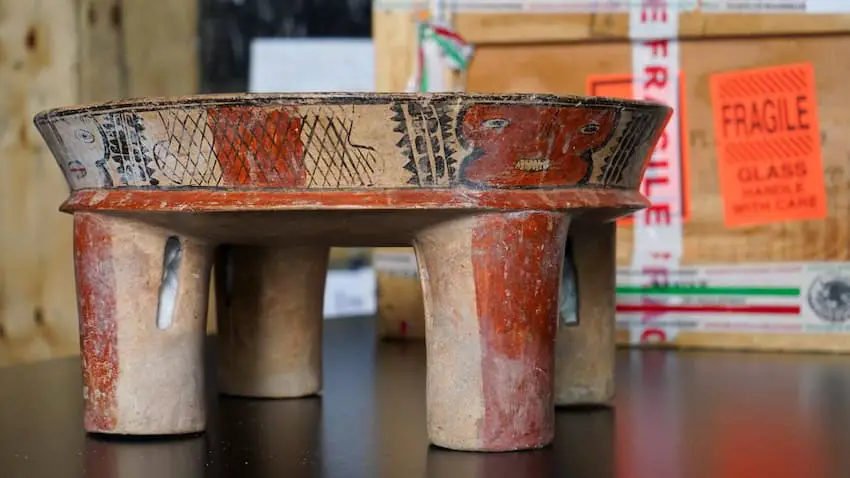
A further 279 historical artifacts have been recovered by the Mexican government, as part of a campaign to return the country's vast patrimony to Mexico. (Gobierno de Mexico)
With the recent return of 279 Mexican archaeological artifacts from Europe, South America and the United States, roughly 14,000 pieces have been recovered since Dec. 1, 2018.
Last weekend, the Foreign Relations Ministry (SRE) announced it had handed over the recovered artifacts to the National Institute of Archaeology and History (INAH) which has confirmed they are indeed part of Mexico’s cultural patrimony.
Mexico repatriated the artifacts via its embassies in Germany, Spain, Argentina and other countries. (Gobierno de Mexico)
Mexico’s historically significant artifacts are protected by the federal Archaeological, Artistic and Historic Monuments Law which aims to preserve, conserve and protect Mexico’s cultural patrimony.
The repatriated items ranged from human remains to elaborately carved jade and ceramic pieces, dating from 2500 B.C. to A.D. 1521.
Some of the pieces may be more than 4,000 years old. (Gobierno de Mexico)
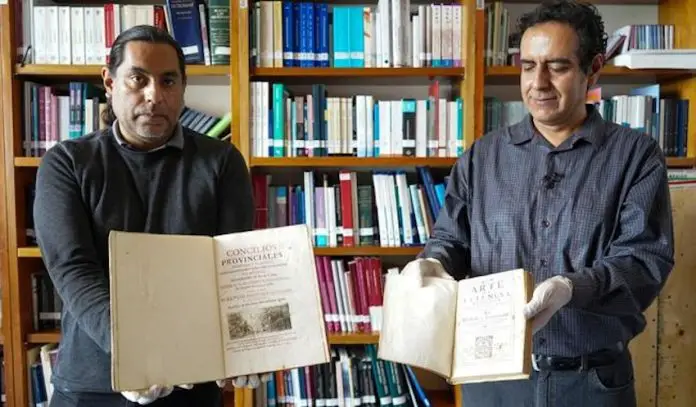
They include bones from an infant dating to 800-500 B.C., returned from Montreal. From Germany came a stone tripod mortar that could be more than 4,000 years old. Mexican consulates recovered a delicately carved jade mask from the Classic period (A.D. 250-900) from Los Angeles, and from Las Vegas, a clay pot dating from the years 200-800.
Other Mexican artifacts recovered include a double-edged knife from the Altiplano Central found in Tucson, Arizona, and 19 artifacts dating from 1200-1521 that had been removed to the United Kingdom.
Since taking office in 2018, President Andrés Manuel López Obrador has lobbied strenuously for the preservation of and return of historical artifacts. In addition to the #MiPatrimonioNoSeVende campaign, he has established new protocols and legal strategies to repatriate items illegally removed from Mexico.
Much of the recovery work is thanks to a federal government task force created in 2023. The task force has worked with local authorities abroad to seek juridical redress and to halt auctions in New York, Paris and Rome. It also negotiates with academic institutions and museums to recover archaeological artifacts.