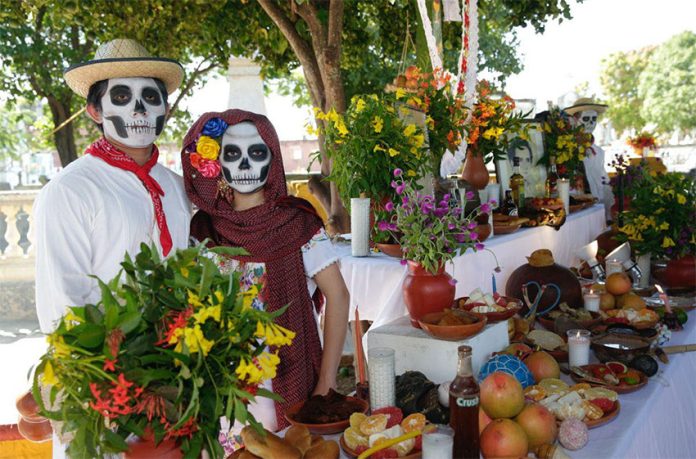
Festival participants dressed as a catrina and a catrín pose with an altar. Facebook / Festival de las Ánimas, Mérida, Yucatán
For the first time since 2019, Mérida is hosting in-person festivities to celebrate Hanal Pixán, a Maya tradition to commemorate the dead. The Festival de las Ánimas, or Festival of Souls, started on Monday and will run through Nov. 2.
Hanal Pixán, which means “food for the souls,” is an ancient Maya tradition celebrated only in the Yucatán peninsula. Participants offer traditional foods to the deceased, who are believed to visit their loved ones from Oct. 31 to Nov. 2. The first day is dedicated to honoring children who have passed away, while the second day is dedicated to adults. On the third day, a mass is traditionally held for all the deceased.
Activities for the 2022 festival range from displays of altars to parades, exhibitions, and culinary samples. The famous Paseo de las Ánimas (Parade of the Souls), in which adults, youth, and children dress up as deceased in the typical Yucatecan costume, is set to happen on Friday, starting at the General Cemetery and finishing at the Arch of San Juan.
A parade of catrinas, José Guadalupe Posada’s famous figure which has come to characterize Día de los Muertos, will take place on Saturday night. And the fifth edition of the Mucbipollo Festival, dedicated to the Maya dish also known as pibipollo, will take place the following day from 8 a.m. to 8 p.m. at the softball court in the neighborhood of San Sebastián.
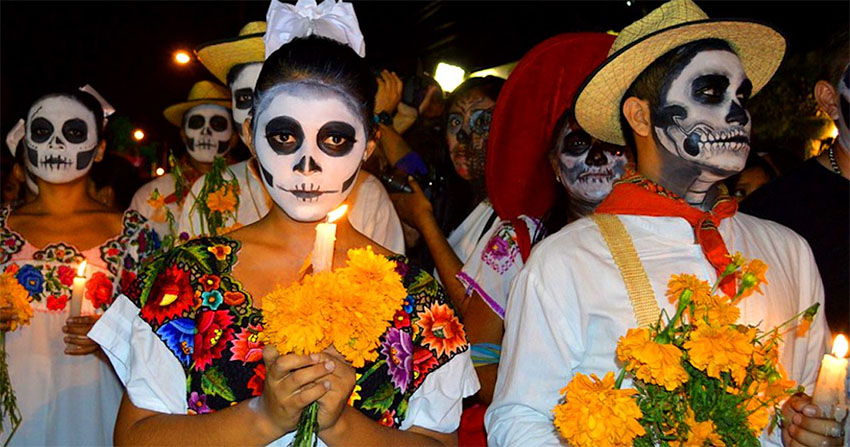
Catrinas on parade in Mérida. Facebook / Festival de las Ánimas, Mérida, Yucatán
The first edition of Pixan Peek will also be held at the festival. Announced by the local government on Oct. 19, the event will be held in honor of deceased dogs. A showing of altars, a dog training exhibition, and a costume parade will be held on Friday evening to promote adoption and humane treatment of animals.
Finally, a giant altar will be set up in Plaza Grande, Mérida’s main square, to honor local authorities who have passed away.
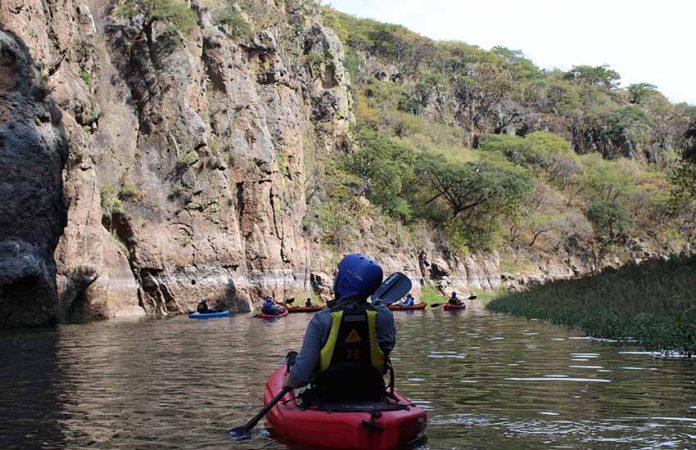
On her adventure tour, Lydia Carey got to see extinct volcanos, enormous craters, and this canyon as tall as a skyscraper.
The sun is rising over fields of late fall wildflowers in Guanajuato. Most of us are city slickers and not fully prepared for the chill of 8 a.m. in Tarandacuao, a town in the state’s southern lowlands, close to its border with Michoacán. Our flimsy jackets have us shivering over Blanca Estela’s oat atole, pozole soup and cafe de olla. Papel picado flags rustle in the cool breeze as we sit in the open dining room, fueling up for a day of kayaking with the Taranda Rafting company.
We are a group of travel agents and media folks, here to see what the state has to offer visitors, and while I lived in Guanajuato for almost five years when I first arrived in Mexico, this is a part of the country that I am completely ignorant of and eager to explore.
Our guide Pedro had planned for us to go river rafting today, but the water levels are too low, so we will be kayaking down a lower section of the Río Lerma instead.
We’re divided up among those who can swim and those who can’t with the most hesitant kayakers placed in inflatable double kayaks that are almost impossible to flip.
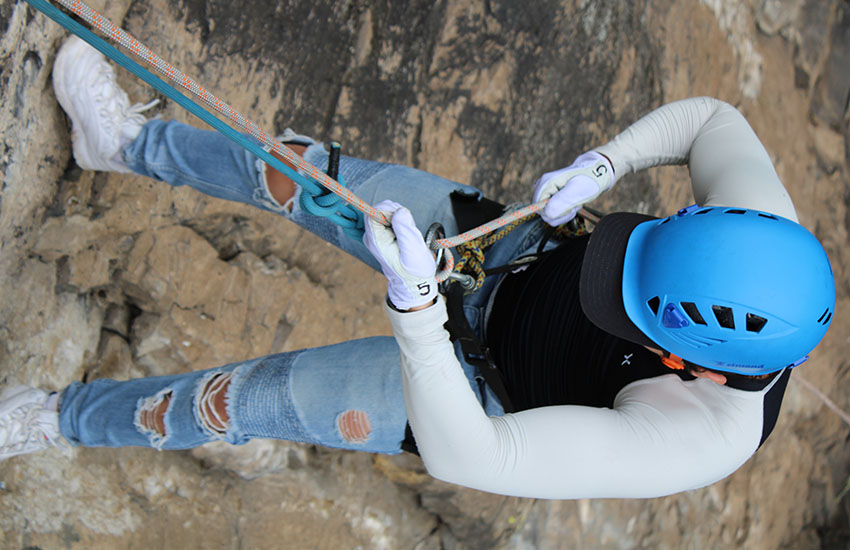
Rappelling into the Hoya de Álvarez crater. The writer says the view was “absolutely breathless and worth every minute that I thought I might die.”
We take off, expecting wild (or at least quick) rapids, attacks from tree branches and impossible currents but instead find ourselves lazily floating past farmers with their cows out for a morning graze. Migratory birds are flying away faster than the currents that swirl around us.
By mid-trip, helmets have found their way into the bottoms of boats and shoes are optional.
The Río Lerma is the longest river in Mexico, stretching from México state all the way to Lake Chapala in Jalisco. It’s one of Mexico’s most important bodies of water, generating electricity and providing drinkable water to Mexico City and other metropolitan areas. In the past few years, the river has been a cause of concern for many environmentalists and farmers that depend on it, in that it is often the recipient of illegal dumping by the industries that surround it.
Still, it remains a favorite location for water sports, and our guides assure us that this part is very clean.
After about four hours, we are wet and sunburnt, watching from the shore of the Presa Solís (Solis Dam) as the final kayak makes its way across the water with two of our more cautious paddlers. We make bets on which is slowing the other down.
That night, we salute a day of “wild” rapids and chow down on grilled arrachera steak and Spanish sausage at the Parilla del Vaquero, a local hangout with families and groups of friends settled around outdoor tables and caguama beers. A trio of musicians plays to a table of very drunk men, one of them with his head in his hands, undoubtedly thinking about lost love and regret.
The following day, we are back on Presa Solís, our goal for the day being to reach the 150-meter-high canyon on the presa’s other side, then paddle in for several kilometers.
Our slow paddlers have now been separated, so we are about to see which of the two is the lead anchor, and as one sets out on his own, easily keeping up with the group, it’s pretty clear.
Our guide Rodrigo tells us that normally, we’d be able to float 6 or 7 kilometers into the canyon. But the water is extremely low because farmers are watering their crops at this time of year. It seems probable Mexico’s nationwide drought this year also has something to do with it.
Along the canyon walls and high on the trunks of the bald, white trees that sit in the water, the normal water line was 3 to 4 meters higher than it is now. The canyon shivers with the legs of spiders weaving massive webs along the rocky crags, butterflies chasing each other in the sun and the subtle dance of the lenteja aquatic plants shifting around our boats.
It’s a place that silences everything – everything that is but the two older ladies in our group that chatter on about the prices of an Uber in Cleveland and their favorite restaurants in Denver. Everyone else paddles past their incessant conversation marveling at the otherworldly ambiance of the tree graveyard that we are floating through, shifting from hot to cold under the canyon walls’ shadows.
It’s obvious that most everyone is reluctant to return to shore, and the trip back is a long haul in the blazing sun against the current. Still, the wide-open landscape is breathtaking, and the sky a cool, cloudless blue.
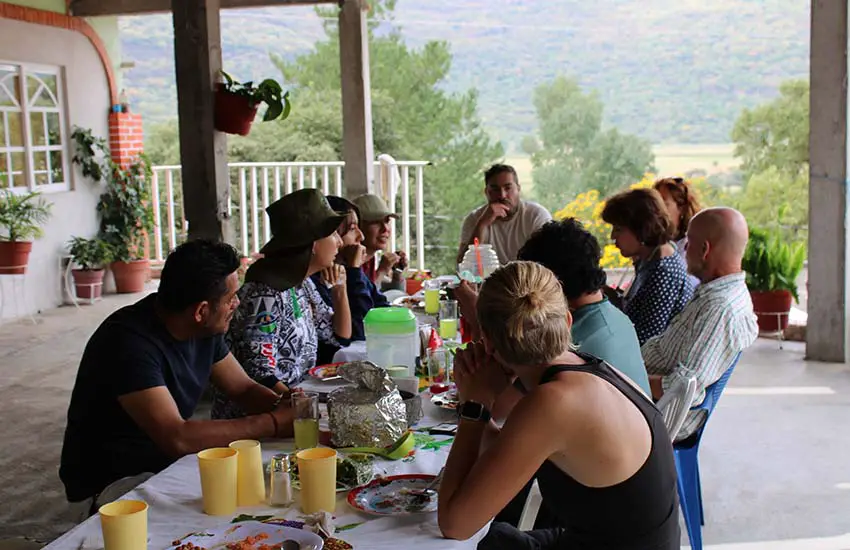
After each day of adventures, participants celebrated with a family-style meal provided by a local restaurant or, in this case, in a local home.
That evening, we land in Valle de Santiago, one of Guanajuato’s larger towns. Our guide from EcoValle Tours tells us that its gorgeous cathedral is second in height only to the cathedral in San Miguel de Allende. The area’s famous seven extinct volcanoes, called the Siete Luminarias, are said to hold mystic and spiritual powers. Devotees arrive each year to perform rituals and meditate in these monster holes left in the landscape.
We get a quick spin around town and then off to a pulque tasting at the Pulquería Tallacua, set inside a 19th-century home. Awaiting us is a beautiful al fresco table laden with pumpkins, purslane and other bounty common to this region.
Julio César Aquilar, the master pulquero, explains to the group how pulque — a fermented drink made from agave sap — is made and processed at their pulqueria. He passes around various versions of the drink, from its least alcoholic version to its most (not many pulques reach over 8% or 9% alcohol) and asks the group to notice the subtle flavors within this ancient elixir — indigenous peoples were making it before the Spanish arrived.
Extremely knowledgeable and informative, Aquilar is not fond of questions that distract from his one-man show. It’s better to sit quietly, sip your pulque and enjoy the fresh quesadillas hot off the grill.
The following day, we head out to visit two of the seven craters.
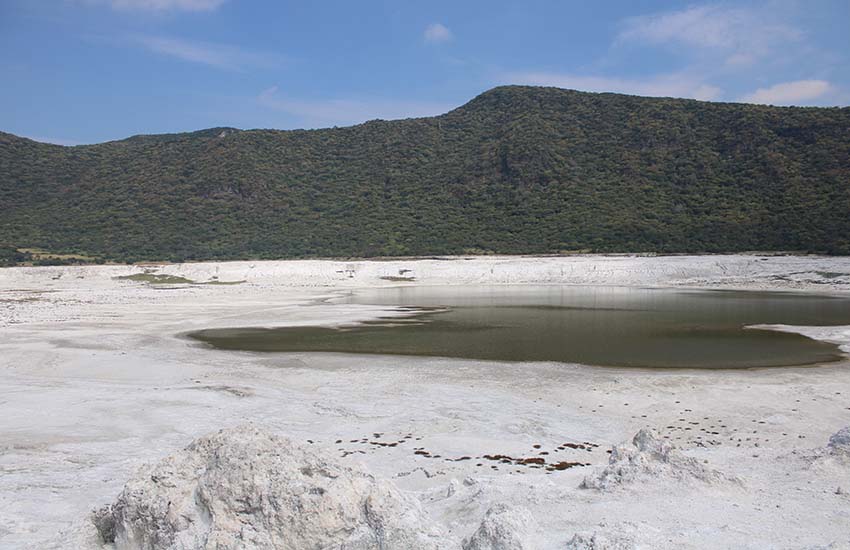
The first, Rincón de Paranguero, is accessible through a tunnel that was dynamited by local miners in the 1900s. The crater is a massive swath of white, bleached by the salt and other minerals that lay at its depths. Our guide tells us that, according to researchers from Mexico’s Autonomous University (UNAM), the crater’s bottom is home to stromatolites, believed to be Earth’s oldest life-forms. The next crater: the Hoya de Álvarez, is the exact opposite: its 1.2-kilometer floor is covered in bright-yellow-tasseled corn and gray-green agave plants.
The community here is made up of only about 30 families, and they are in many ways isolated from the outside world. With no public transportation and most of the men gone to work in the United States, the community’s women are a force to be reckoned with, maintaining the local school and supporting their families with tourism to the area. Several cabins sit on the edge of town to house the hikers and climbers that take advantage of the high crater walls.
Exactly what we are doing today, most of us for the first time — rappelling down a 30-meter rock face.
While it looks benign from below, once we are at the top and strapped in to our various lines, my stomach drops to the bottom of the valley floor. Felipe, the rappel master, assures us that in all his years doing this, he has never lost a single person, but hovering over the 30-meter drop it feels less than reassuring.
The actual rappelling part is only about 10 meters, and then you are basically lowered to the ground in slow motion as you gently twist on the line. Once I stop panicking, the view over the crater valley is absolutely breathless and worth every minute that I thought I might die.
When everyone is safely on the ground, we have lunch at a local home with a terrace that overlooks that same beautiful valley, tasting regional salsa and fried pork in chile guajillo ancho sauce with yellow Mexican rice and slippery paddles of grilled nopal cactus. In love, I turn to a friend on the trip and say I could stay here forever; she responds with a raised eyebrow, as if to say, “you’d likely last a week.”
As we head to Guanajuato city for the end of our trip, I am left with the sensation that there is a lot more to Guanajuato that I had realized in my years in the high desert, in the central part of the state. That there could be canyons and craters and wild(ish) rivers here was not something I was expecting.
The desolate Rincón de Paranguero crater, one of two the writer explored on her tour.
Like a previous year’s trip to Chiapas, where I was struck by pristine beaches in a place never considered a beachgoers’ paradise, I was reminded that even after 15 years in Mexico, there is still so much to discover.
I made a mental note to come back.
Lydia Carey is a freelance writer and translator based out of Mexico City. She has been published widely both online and in print, writing about Mexico for over a decade. She lives a double life as a local tour guide and is the author of Mexico City Streets: La Roma. Follow her urban adventures on Instagram and see more of her work at www.mexicocitystreets.com.
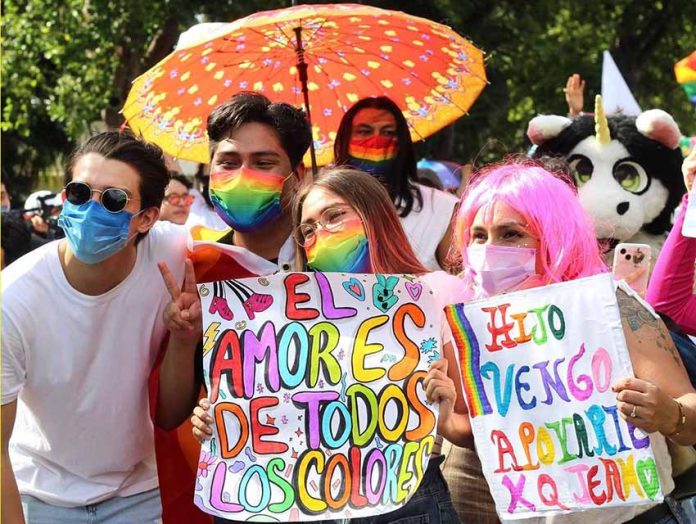
Tamaulipas was the last holdout in a string of legislative votes this year to approve same-sex unions in seven other states. Fos Feminista
Tamaulipas legalized gay marriage on Wednesday, becoming the 32nd and final federal entity to allow same-sex couples to marry.
Marriage between two people of the same gender is now legal everywhere in Mexico.
Twenty-three of 36 lawmakers voted in favor of recognizing such unions. The vote in the northern border state came a day after Guerrero legalized same-sex marriage.
Nancy Ruíz Martínez, a deputy with the National Action Party, presented the proposal to the state Congress and said that its approval ended one form of discrimination against gay people. There are no longer first and second-class citizens when it comes to the right to get married, she said.
“All people must enjoy that right,” Ruíz said. “Whenever there is a just cause to fight for, know that you have an unconditional ally in me.”
Tamaulipas is the eighth state to legalize same-sex marriage this year after Guerrero, Durango, Jalisco, Yucatán, Veracruz, México state and Tabasco. Several other states, including Guanajuato, Querétaro and Zacatecas, approved marriage equality in 2021.
Krebs recommended that the government strengthen cybersecurity, invest in modern technology and work with the private sector to better protect its IT systems. Depositphotos
Mexico needs to do more to protect itself from cyberattacks that could be perpetrated by countries such as China and Russia, according to the former director of the United States Cybersecurity and Infrastructure Security Agency.
Christopher Krebs, fired by former United States president Donald Trump shortly after the 2020 presidential election in that country, believes that infrastructure built in Mexico by foreign companies poses the greatest risk to the country’s cybersecurity.
There are growing numbers of Chinese and Russian companies in Mexico and intelligence agencies from those countries could take advantage of their facilities to launch attacks on critical IT systems in Mexico with the aim of obtaining strategic information, he said in an interview with the El Universal newspaper.
Krebs said that the government needs to strengthen cybersecurity, invest in modern technology, work with the private sector to better protect its IT systems and collaborate with U.S. authorities to better understand the threats it faces.
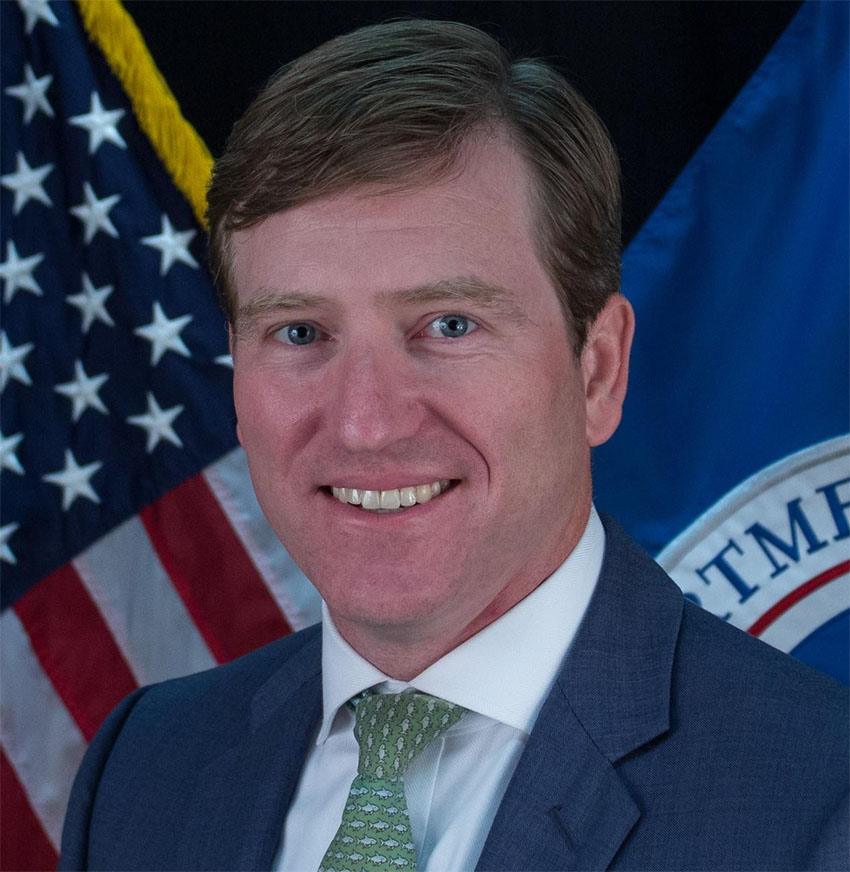
Christopher Krebs, former director of the United States Cybersecurity and Infrastructure Security Agency. U.S. DHS
Speaking to El Universal during a professional visit to Mexico, the cybersecurity expert said that as the trade relationship between Mexico and the United States grows so too does China and Russia’s interest in having their intelligence agencies operate here.
Air Force General Glen VanHerck, commander of the United States Northern Command, claimed earlier this year that Russia has more intelligence agents in Mexico than any other country.
As the Mexico-U.S. trade relationship grows, Krebs said, foreign intelligence services will increasingly seek to infiltrate IT systems in Mexico to extract and exploit sensitive information.
His warnings and advice are especially pertinent given that the Ministry of National Defense (Sedena) and the Ministry of Infrastructure, Communications and Transport (SICT) have both been recent victims of cyberattacks. The Guacamaya “hacktivist” group infiltrated Sedena’s servers and stole millions of emails and documents while unidentified hackers breached the security of 110 SICT computers and installed ransomware.
Krebs said he was surprised that the hackers were able to get into the army’s IT system given that armed forces around the world normally guard classified information “very jealously.”
“I have a hard time believing that wasn’t the case [in Mexico], that high level intelligence information could be exposed,” he said.
Although Sedena was unable to adequately protect its own IT system, Mexico has made some progress in improving cybersecurity, Krebs said without citing any specific advances.
“Mexico is working, it’s a critical partner for the United States and I see that it’s taken steps to protect … [its IT systems],” he said.
However, around the world there is a “very clear lack of talent on the side of companies and governments to protect themselves” from growing threats to cybersecurity, Krebs said.
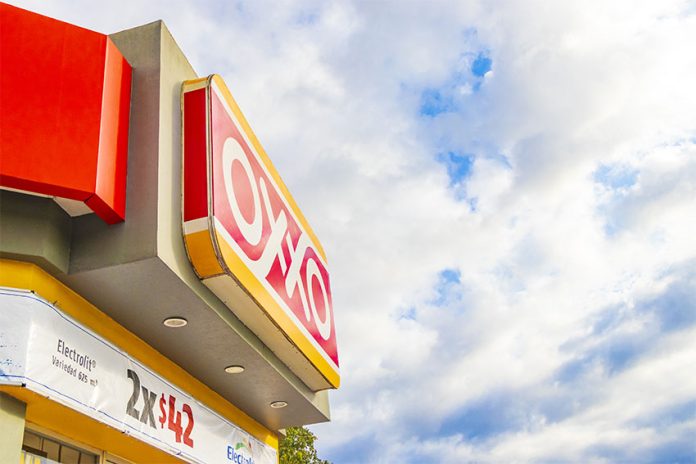
The conglomerate, best known for ownership of convenience store chain Oxxo, has taken further steps into the fintech sector with this acquisition.(Depositphotos)
Oxxo, the ubiquitous convenience store chain owned by Coca-Cola bottler FEMSA, is not just a retailer of products such as beer, soda, chips and cigarettes but also a major player in Mexico’s burgeoning fintech sector.
Spin by Oxxo, an app launched last November that can be used to send and receive money, currently has 4 million users, but that number is predicted to grow quickly over the next 12 months.
Asensio Carrión, Spin by Oxxo’s general director, told the news agency Reuters that the fintech product — which also comes with a Visa debit card — is set to reach 10 million users next year.
“The porosity we have allows us to reach more distant places and offer services where there are none,” he told Reuters. “We are in every Mexican state.”
As of this month, Spin by Oxxo is now licensed to operate as a financial technology institution, meaning that users will be able to receive remittances from abroad. Spin by Oxxo
According to the Spin by Oxxo website, users can send money to other Spin accounts, regular bank accounts and to people without bank accounts. In the latter case, the recipient can withdraw the money at one of Oxxo’s more than 20,000 stores across Mexico.
The website says that users can deposit money to their own Spin account via the app, a bank account or in Oxxo stores.
Oxxo charges commissions for some, but not all, transactions. It costs five pesos to make a cash deposit at a store, for example, and 12 pesos to withdraw money at the same location. A debit card costs 50 pesos.
Reuters reported that 60-65% of Spin’s users are active, meaning they’ve made a transaction or received money in the past 56 days.
The service, which FEMSA financed itself, has more customers than Latin America’s largest fintech bank — Brazil’s Nubank, and Mexico’s Stori. However, Banorte, a traditional Mexican bank, has more digital clients, reporting 6.7 million earlier this year. Banorte was recently granted approval to operate a 100% online bank, a development the bank says will help it strengthen its position as a digital leader in the Mexican banking market.
Spin by Oxxo was granted a new license to operate as a financial technology institution earlier this month, Reuters reported, adding that users will now be able to receive remittances from abroad.
The news agency also said that FEMSA is seeking permits that would allow Spin users to deposit larger sums of money and receive their wages. Carrión said that Spin could be rolled out in other countries in the future.
Fewer than 50% of Mexican adults have a bank account, official data shows, although the government is seeking to increase that number by building large numbers of state-owned “well-being” banks, including branches in isolated communities where there are no traditional banks.
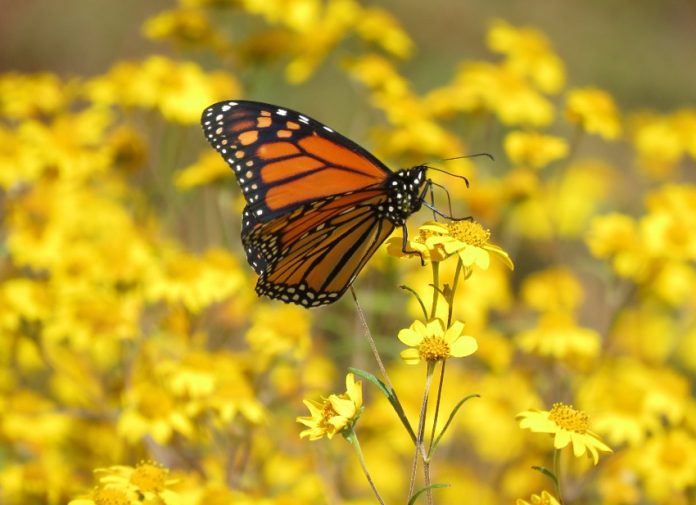
Monarch butterfly are considered a "poster species," and efforts to conserve them also benefit less glamorous pollinators as well. (CorreoRealMX/X)
Monarch butterflies have started to arrive in Mexico as part of their annual migration from Canada and the U.S., reported the organization Protection of Mexican Fauna (Profauna), based on observations made in the northern states of Mexico.
Each year, the monarchs embark on a 4,000 km journey to migrate from their breeding grounds in the U.S. and Canada, to overwinter in the warmer forests of the Monarch Butterfly Biosphere Reserve in central Mexico.
These sanctuaries are critical for monarch butterfly hibernation since 87% of the total population of butterflies converge here each season. There are four reserves open to tourism in the states of México and Michoacán.
Profauna encouraged the population living in the northern states of Coahuila, Nuevo León and Tamaulipas, to report their sightings, and citizens began reporting times, weather conditions and GPS locations of observed butterflies.
The monarch butterfly is a species with “special protection” under Mexican law. Due to the destruction of its habitat and to climate change, the migratory species was also added to the endangered species list of the International Union Conservation of Nature (IUCN) this year owing to a decrease in its population over the last decade.
However, in the 2020-2021 hibernation season, the WWF Mexico reported that the butterflies’ presence in and around the biosphere,grew from 2.10 hectares to 7.02 hectares – a “fragile” but positive improvement that represents an increase of 35% compared to the previous season.
“The growth in the monarch population is good news and indicates that we must continue working to maintain and strengthen conservation measures in Mexico, the United States, and Canada,” said Jorge Rickards, Director General of WWF Mexico, in a statement.
The butterflies are estimated to begin arriving at the biosphere no later than Nov. 1, coinciding withDay of the Dead celebrations. However, Rocío Treviño, the program’s coordinator, anticipated that the highest migration peak will not be recorded until the third seasonal cold front.
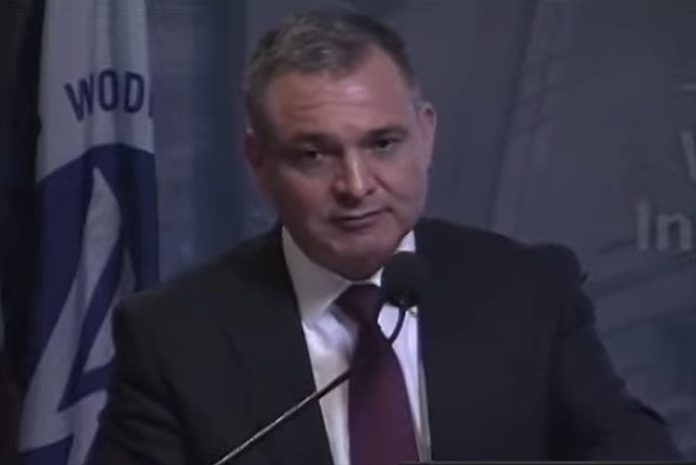
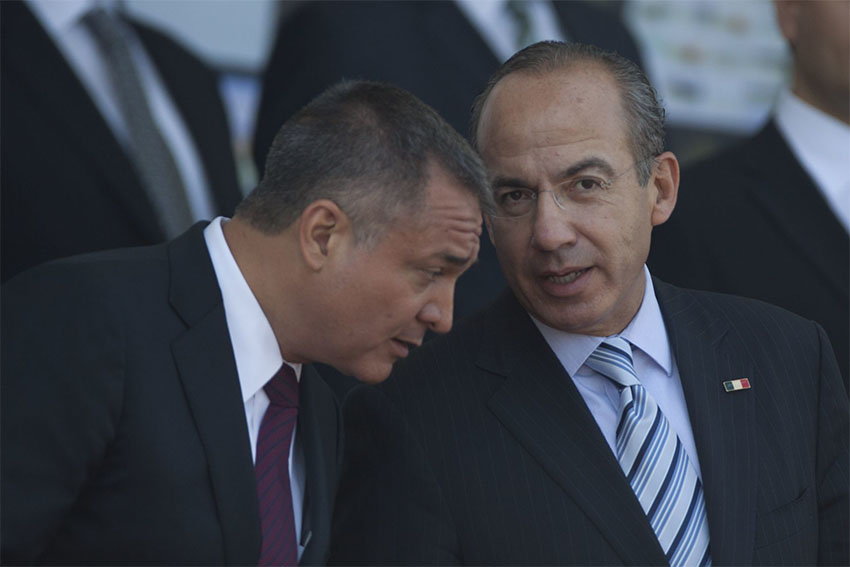
Genaro García Luna shortly before his arrest. YouTube screenshot
Prosecutors in the United States have gathered more evidence against Genaro García Luna, a former federal security minister who was arrested in Texas in 2019 on charges he colluded with the Sinaloa Cartel.
García Luna — security minister in the 2006-12 government led by former president Felipe Calderón and director of the now-defunct Federal Investigation Agency before that — used shell companies to ship drugs to the United States, U.S. Department of Justice (DOJ) prosecutors allege. They also allege that the ex-security official was involved in the trafficking of drugs that were seized in New York just after he was detained in Dallas in December 2019.
The allegations are detailed in a letter sent to García Luna’s lawyer and in a submission to a United States federal court in Brooklyn, New York, where the accused is scheduled to go on trial in January.
The newspaper Milenio obtained a copy of the DOJ letter sent to lawyer César de Castro in which prosecutors said they have “records related to the shipment of narcotics into the United States through shell companies.”
Garcá Luna speaks with then-president Felipe Calderón. Archive / Cuartoscuro.com
The prosecutors said they have other evidence against García Luna including pay stubs from his time as a government official and “records related to a co-conspirator and the seizure of narcotics in Queens, New York, on December 18, 2019.”
The prosecutors also said that six cell phones have been seized from co-conspirators of the former security minister and that a Drug Enforcement Administration digital forensic investigator will present related testimony in court.
All told, the DOJ has submitted over 1 million pages of documents detailing evidence against García Luna to the Brooklyn court as well as thousands of photos and financial records and hundreds of video tapes.
The ex-security minister and two former high-ranking officials who worked under him are accused by U.S. authorities of allowing the Sinaloa Cartel to operate with impunity in Mexico in exchange for multimillion-dollar bribes.
Negotiations between prosecutors and the defense with a view to García Luna pleading guilty to trafficking and cartel collusion charges and cooperating with prosecutors in exchange for a more lenient sentence are ongoing.
President López Obrador has claimed that the charges faced by the former security minister prove that Mexico was a “narco-state” during the presidency of Calderón, who narrowly defeated AMLO at the 2006 election. Calderón categorically rejected the claim and has asserted he had no knowledge that his security minister was involved in criminal dealings with the Sinaloa Cartel, which was formerly led by convicted drug lord Joaquín “El Chapo” Guzmán.
Pérez's car flashes past the camera at an exhibition show run in Jalisco on Tuesday. Fernando Carranza García / Cuartoscuro.com
Formula 1 racing roars into Mexico City this weekend and more than 110,000 people are expected to pack the racetrack on Sunday for the Mexican Grand Prix — with most of them rooting for Mexican Sergio “Checo” Pérez as he tries to make history.
After finishing third last year at the Hermanos Rodríguez Autodrome, and becoming the first Mexican driver to get onto the podium there, the 32-year-old native of Guadalajara is hoping to take it to the next level this week and finish first on his home soil.
With the crown in this year’s F1 championship series already secured by Pérez’s Red Bull teammate Max Verstappen, Pérez just might have a clear path to crossing the finish line first, but he doesn’t want anything handed to him.
“I don’t need to be given anything,” Pérez told ESPN this week. “I have achieved everything without any gift for so many years, [so] it is not necessary. In the end, I don’t think about it. I think about my work, about being perfect this weekend and looking for that victory.”
Checo Pérez celebrates with the Red Bull team after winning the Monaco Grand Prix in May. Getty Images / Red Bull Content Pool
However, there is a motive for Verstappen allowing Pérez to take the checkered flag: It could give Red Bull a one-two finish in the season standings. Pérez is currently in third place behind Monte Carlo-based driver Charles Leclerc, and a win in Mexico City could put him one spot behind Verstappen.
“I give everything on behalf of the whole team,” Pérez said.
The race covering 305.4 kilometers (189.7 miles) on Sunday will be the centerpiece of a busy weekend that will include practice sessions at 1 p.m. and 4 p.m. Friday and 12 p.m. Saturday that are free and open to the public. Qualifying is scheduled for 3 to 4 p.m. Saturday, with Sunday’s racing activity scheduled to begin at 12 p.m. with a drivers’ parade, followed by a show on the main straight, vehicle inspections, an opening ceremony and then green flag dropping to start the race at 3 p.m.
Last year’s Mexican Grand Prix was won by Verstappen, a Belgian-born Dutch driver, followed by Brit Lewis Hamilton and Pérez. Verstappen, who has now won two straight F1 season titles, started in the third position last year; Pérez was in the fourth position.
This year’s Sunday race will consist of 71 laps around the 4.3-kilometer track at the Hermanos Rodríguez Autodrome, which has hosted the F1 Mexican Grand Prix since 2015. The facility is named for Ricardo Rodríguez and his brother, Pedro, Mexican race car drivers in the 1960s who died in separate crashes eight years apart.
For the entire weekend, more than 300,000 people are expected to pass through the turnstiles, and that’s a conservative estimate, considering last year’s total attendance was 371,000. With upwards of 1 million people predicted to attend Saturday’s Day of the Dead parade in central Mexico City, it’s going to be a busy weekend in the capital.
The autodrome is located in the Iztacalco neighborhood in Mexico City, east of downtown, next to Alfredo Harp Helú Stadium where the Mexico City Diablos play.
One other side story in this year’s race concerns 37-year-old British driver Lewis Hamilton, an all-time great whose streak of 15 seasons with at least one victory is in peril. After Sunday’s race, there will be only two more races in the 2022 season: in São Paulo on Nov. 13 and the following week in Abu Dhabi.
Checo Pérez, right, with his Red Bull teammate Max Verstappen. Formula 1
In an interview with the newspaper El Heraldo de México, Pérez was asked about being “the most famous person in Mexico right now” and what he likes (and doesn’t like) about that.
“I think that the dedication that Mexicans have is unmatched. There is no rider in the world who has more fans than me at the moment, without a doubt,” he replied. “Perhaps what I don’t like is that when I’m eating [at a restaurant], or when I’m having a moment with my children, they don’t respect that moment. Not all of them, but there are those who can’t respect the fact that I’m eating. But I also understand them. Many times they don’t know that I come from taking more than 300 photos a day.”
Pérez has made 232 starts in Formula 1 in his career, and he has four wins and 24 top-three finishes. His most recent win was in this year’s Singapore Grand Prix on Oct. 2, and he’s been on the podium four times this season.
In this year’s world championship standings, Canadians Lance Stroll (13th) and Nicholas Latifi (20th) are doing well, but no U.S. drivers are in the top 22.
Formula 1 is the highest class of international racing, and the cars, often described as “sexy,” are open-wheel single-seaters.
The race on Sunday will be broadcast around the world on various networks, including ESPN in the United States, TSN in Canada and over the air in Mexico on Channel 5.
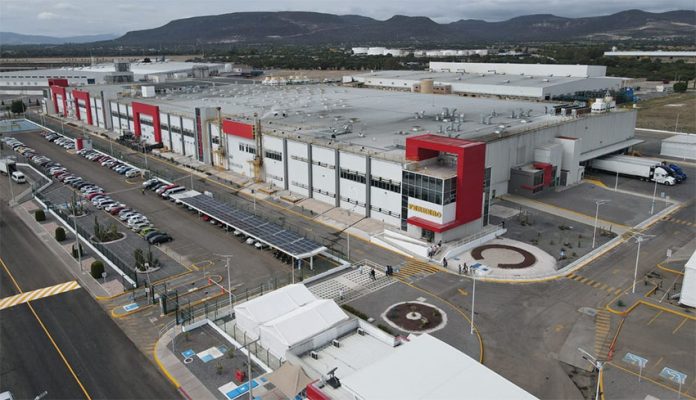
The candy manufacturer and distributor Grupo Ferrero announced that they planned to invest US $50 million to expand their industrial operations in Guanajuato, on the Bajío states. Gobierno de Guanajuato
Construction and development of new industrial space in the region known as el Bajío — which includes Aguascalientes, Guanajuato, Querétaro, and San Luis Potosí — is booming, pushed in large part by nearshoring in the car manufacturing industry. As of the end of September, 455,000 square meters of industrial space was reportedly under construction, an increase of 36% compared to the same period of 2021.
Rodrigo Folgueras, regional head of the real estate consulting firm CBRE in the Bajío region, said that the expansion of logistics companies which settled in the region during the COVID-19 pandemic is expected to continue as industrial construction recovers. Folgueras expects to see strong growth from Querétaro-based companies in particular, he said. He also noted that much of the growth in the Bajío region has been driven by the expansion of companies already in the area.
Folgueras said that the demand from automotive and light manufacturing industries will continue thanks to the region’s advantages in location, labor force, and infrastructure. He added that “nearshoring,” which is currently happening at the Mexico-U.S. border, will also occur in the Bajío region.
“It is foreseen that nearshoring, which has attracted investments in the Mexico-U.S. border industrial markets, will also happen in the Bajío, particularly from companies within the automotive sector, which constitute an important cluster in the region,” said Folgueras.
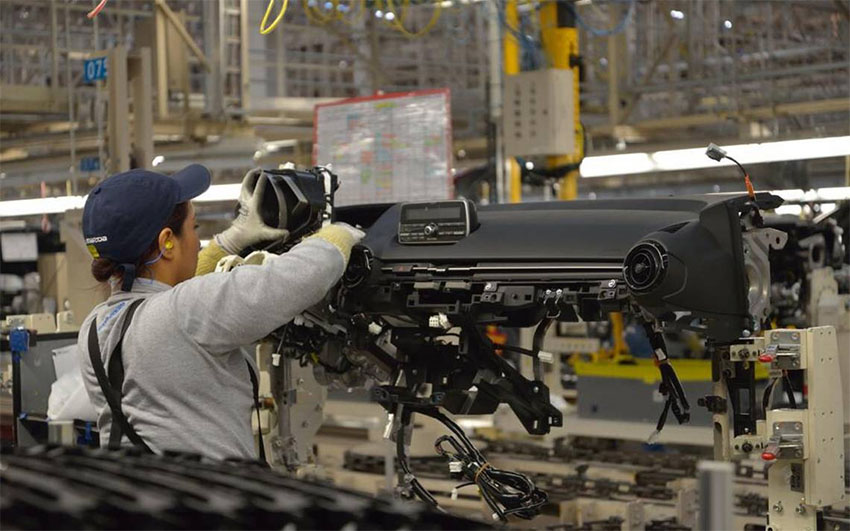
A woman assembles a car dashboard at a manufacturing plant in Guanajuato. Gobierno de Guanajuato
Aby Lijtszain, CEO of Traxión, a transports and logistics Mexican company, said during a press conference that nearshoring in Mexico is directly related to merchandise transportation between Mexico and the U.S., and that it constitutes 25% of Traxión’s revenue.
According to Forbes México Magazine, companies in developed countries are betting on nearshoring to increase efficiency and reduce costs. Companies looking to transfer their operations closer to their main destination markets in response to continued supply chain disruptions — such as the Russia-Ukraine war and COVID-19 policies in China — are turning to Mexico.
Héctor Guerrera Herrera, Deputy Minister of Trade and Industry in the Economy Ministry celebrated the recognition Mexico has obtained from companies already established in Mexico owing to nearshoring in comments at the 2022 Annual Meeting of Industrialists. “Relocation of companies has mainly happened in the north and the Bajío area,” he said.
According to CBRE, the Bajío is one of the top areas in the country in terms of land availability for building industrial warehouses — almost as much as northeastern industrial powerhouses like Monterrey, Nuevo León, and Saltillo, Coahuila.
Folgueras also said that Guanajuato and Querétaro are the most sought-after states for industrial space, a trend driven mainly by manufacturing companies over the last three quarters.
At the end of the third quarter, both amounted to 80% of the net absorption , or net change in the supply of commercial space available. That 80% represents 200,000 square meters that are mainly occupied by companies in the automotive, aerospace, warehousing, transportation, and food and beverage industries.
During the fourth trimester of 2021, the industrial corridor with the largest construction area was León, Guanajuato, with more than 55,000 square meters to be delivered by the end of 2022.
According to the Economy Ministry, the Bajío region, which includes 19% of all industrial space in the country, totaled US $2.7 billion of foreign direct investment (FDI) in the first semester of the year, surpassing by 9% the amount collected in the same period of 2021.
While the influx of foreign direct investment has increased, the gross investment amount is close to that of 2019 when the region received $2.1 billion, but still lower than 2018 when the gross amount reached $4.7 billion.
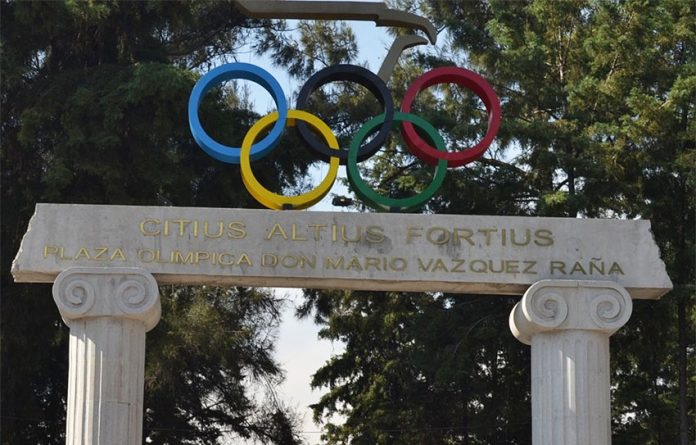
Mario Vázquez Raña Olympic Plaza at the national Olympic sports center in Mexico City.
Mexico is officially vying to host the Summer Olympic Games for a second time in 2036.
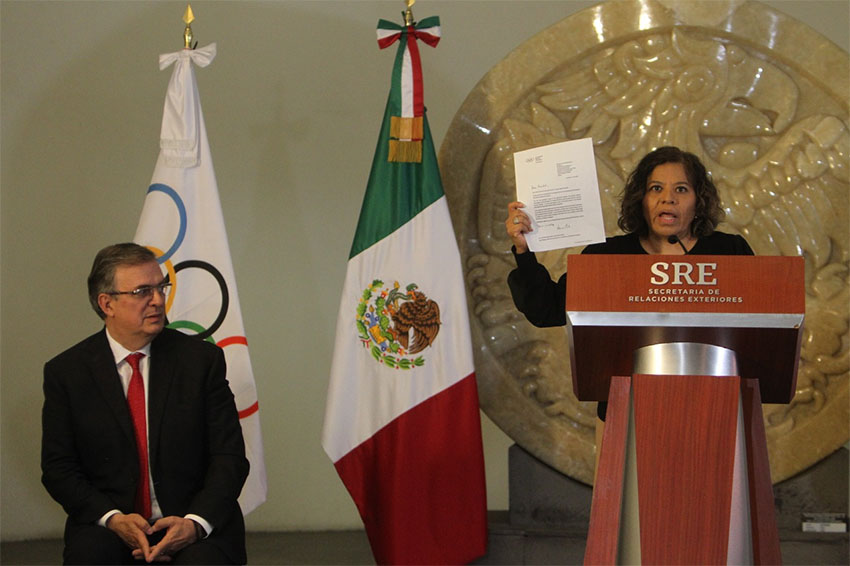
Foreign Affairs Minister Marcelo Ebrard and Mexican Olympic Committee president María José Alcalá Izguerra announced Wednesday that Mexico was bidding to host the Games in the former year but would set its sights on 2040 if unsuccessful.
“Our goal is to bring the Olympic Games to Mexico in 2036, or if not [that year] 2040 because that’s the way the system works,” Ebrard told a press conference.
“You nominate for one year and … you can compete again [to host the following Olympics] if you’re not chosen by the International Olympic Committee. Of course we know that there are other cities [that will compete to host the Games], it’s a competition,” he said.
The foreign minister didn’t nominate a potential host city, but Mexico City – which in 1968 became the first Latin American city to host the Olympics – would appear to be the most likely candidate.
Ebrard asserted that Mexico is a strong contender to host the quadrennial sporting event, the next edition of which will be held in Paris in 2024. “We see ourselves as a winning, successful, ambitious country that is respectful of international norms,” he said.
“… Mexico is a sporting power and a vigorous country with a strong democracy, solid institutions and an economy that is today one of the best in the world,” said Ebrard, who could be in a position to oversee Mexico’s preparations to host the Olympics if he achieves his goal of securing the ruling Morena party’s nomination and winning the 2024 presidential election.
He also noted that in 2026 Mexico will become the only country to have hosted three FIFA World Cups.
Foreign Affairs Minister Marcelo Ebrard and Mexican Olympic Committee president María José Alcalá Izguerra announced Mexico’s goal to once again host the Olympics at a Wednesday press conference. Secretaría de Relaciones Exteriores
Alcalá said that Mexico has been considered a viable candidate to host a future Olympics since July, when International Olympic Committee president Thomas Bach sent a letter expressing his support for a bid.
Ana Gabriela Guevara, an Olympic medalist and current director of the National Commission for Physical Culture and Sport, asserted before Wednesday’s press conference that it was economically unfeasible for Mexico to host the Games.
But Ebrard said that the way in which Olympics are financed has changed and that the federal government would cover just 10% of the total cost. He also said that Mexico already has infrastructure that could host events at an Olympic Games next decade.
The foreign minister said that Mexico will undertake the studies requested by the International Olympic Committee (IOC) while taking into account “the changes that have taken place in the Olympic Games financing.”
“… Cities shouldn’t adapt to the Olympic Games, the Olympic Games have to adjust to the [host] cities,” he said. “We would have 15 years, enough time to organize [the event]. If Mexico proposes something, it is to achieve it.”
Other countries where officials have expressed some interest in hosting the 2036 Games include the United Kingdom, South Korea, Egypt and Germany. The IOC is expected to decide on the host city sometime in the second half of this decade.
An Olympic Games here would be just the third in Latin America after Mexico City 1968 and Rio 2016. Mexico City’s hosting of the international event 54 years ago was marred by the Tlatelolco massacre in which hundreds of protesting students were killed by the army just 10 days before the opening ceremony.