Home Blog Page 946

New political alliance calls for opposition parties to back common candidate in 2024

0
Si por Mexico
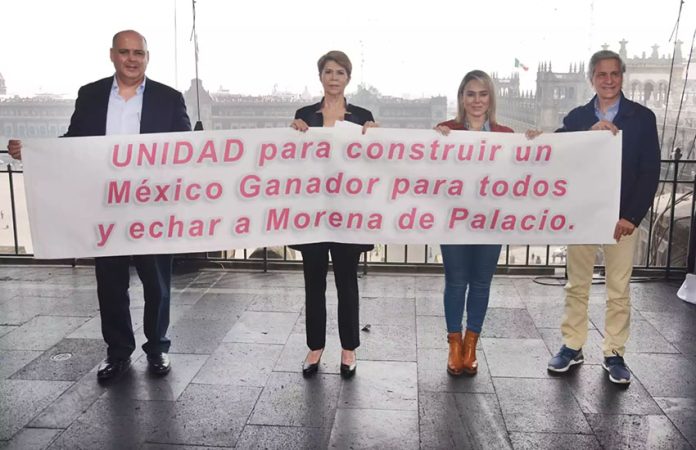
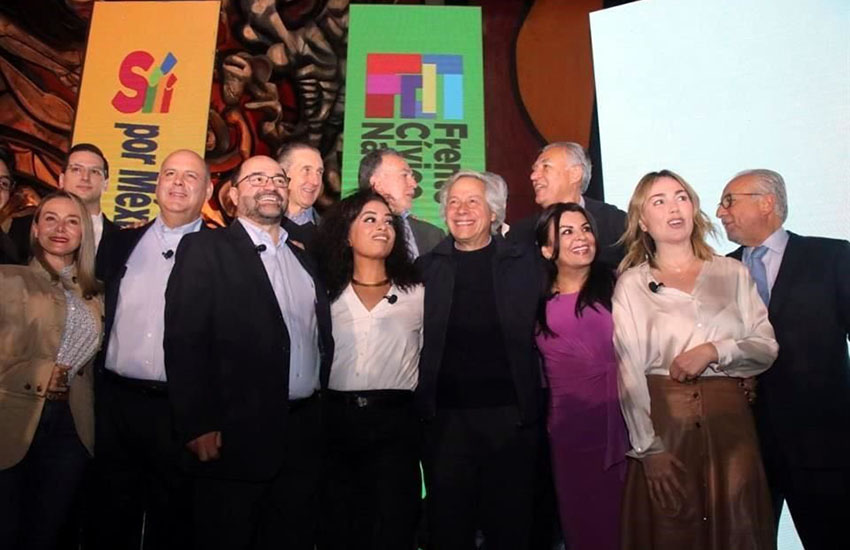
The Unid@s alliance officially launched in Mexico City on Tuesday. It includes members of six civil society organizations, including Sí por México and the National Civil Front, members of which are shown here by their respective banners. Unid@s/Twitter

Six civil society organizations have joined forces to create a new alliance opposed to the government of President López Obrador.

Made up of groups including Sí por México (Yes for Mexico) and Frente Cívico Nacional (National Civic Front), the Unid@s alliance was officially launched in Mexico City on Tuesday.

The @ symbol in Mexican Spanish has been used in recent years in place of the gendered “a” or “o” at the end of words to indicate gender neutrality.

Leaders of the six groups are calling on the main opposition political parties – the National Action Party (PAN), the Institutional Revolutionary Party (PRI), the Democratic Revolution Party (PRD) and the Citizens Movement party (MC) – to back a common candidate at the 2024 presidential election.
Launch event Unidos
Sí por México, which is a member of Unid@s, was founded in 2020 by Gustavo de Hoyos, left, and Claudio X. González, right. Sí por México

The first three political parties have already been allied in a coalition called Va por México (Go for Mexico) since December 2020, but cracks in the pact began to appear last month after PRI deputies supported a bill proposing authorization of the use of the military for public security tasks until 2028. A modified version of the bill passed the Senate last week.

The Unid@s backers, among whom are businessman Claudio X. González and former Mexican Employers Federation chief Gustavo de Hoyos, want the Va por México parties to put their differences aside and refocus on their electoral opposition to the ruling Morena party and its allies.

They believe that the MC should join forces with the PAN, PRI and PRD to form one cohesive political bloc that nominates a single candidate in 2024 because the presence of two or more opposition hopefuls will only split the anti-Morena vote.

The Unid@s representatives said that dialogue between the opposition parties to decide on a mutually agreeable candidate selection process is urgent, according to a Reforma newspaper report on Tuesday’s launch event. 

Such a candidate would likely face either Foreign Affairs Minister Marcelo Ebrard or Mexico City Mayor Claudia Sheinbaum at the 2024 election. Both Ebrard and Sheinbaum are openly campaigning for the Morena nomination.

Members of the Unid@s alliance also believe that the opposition parties should field common candidates in future congressional, gubernatorial and municipal elections.

“There is an opportunity to turn the page and build unity,” said de Hoyos, a leader of Sí por México, which was founded in 2020 shortly before Va Por México by de Hoyos, Claudio X González and others.

“The alliance is alive, the opposition is standing up to fight,” de Hoyos said. “…There are grievances that have to be repaired, trust that has to be earned again, but the call from citizens is to build a united opposition.”

González, an outspoken government critic and founder of the nongovernmental organization Mexicans Against Corruption and Impunity, said on Twitter before Tuesday’s launch event that all “defenders of freedom, democracy and institutions are welcome” to join Unid@s.

Promoting the new alliance on Twitter, de Hoyos wrote that “regardless of your origin, occupation, religion, gender, interests or preferences, … we have something in common: we’re Mexicans.”

“And that’s enough to be #Unidos [united]. We’re going to build a new arrangement between citizens and politics. This October 11, a new era begins,” he added.

At his regular news conference on Tuesday morning, López Obrador was dismissive of the new alliance, which also includes Poder Ciudadano, Sociedad Civil México, UNE México and Unidos por México.

“Claudio X. González is calling for a new alliance that is called … Unid@s. It’s the UFC, in other words – unidos fuerzas conservadoras [united conservative forces],” he said, using a label – “conservative” – with which he frequently disparages previous governments and his current political opponents.

With reports from Reforma, Proceso and El Universal 
Mexico should get around to legalizing marijuana, already

0
Vicente Fox
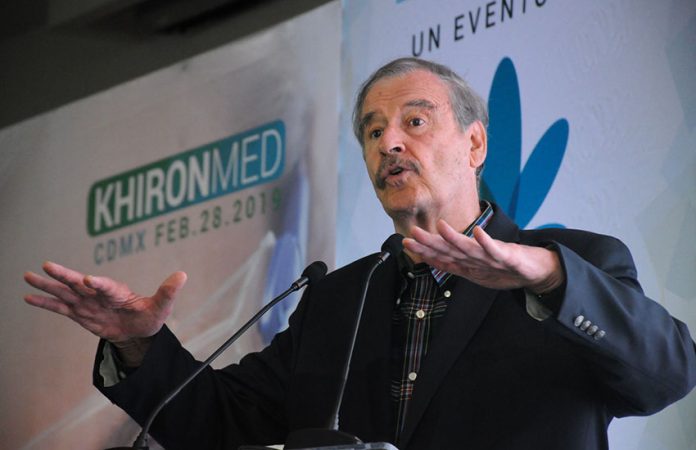
Former president of Mexico Vicente Fox at the first annual Medical Symposium for Medicinal Cannabis in 2019

It’s funny to think about how improbable some things are:  the popularity of shows like Duck Dynasty, the return of “mom jeans” worn unironically by 18-year-olds, the cult-like following of a crass reality-TV star with a long string of bankruptcies behind him and his subsequent election to the U.S. presidency.

It’s a crazy world, and literally anything can happen. That includes Vicente Fox, former president of Mexico (2000–2006) becoming the corporate face and principal advocate for legalized marijuana in Mexico.

Fox has always been a little goofy and prone to antics that have made his fellow citizens all over the world close their eyes and shake their heads slowly. 

But if you ask me, he’s found his true post-presidential calling in comedy; did y’all see those videos he made addressing then-President Trump about the border wall? 

His own vision for his current career, however, is in marijuana

Already the owner of a multitude of stores in Mexico that cater to a public demanding cannabis products, he seems to be feeling a bit impatient with Mexico’s tardiness in formally legalizing marijuana so that the industry can actually be regulated. So far, the Supreme Court has simply said that a ban on marijuana is unconstitutional, but we’re still lacking any laws telling us who can produce it, sell it, how it can be taxed, etc.

To be fair, the guy’s 80 years old. I’d be pretty impatient too.

Fox is obviously interested in the business side of it. Imagine the profit he stands to make once all his stores start selling actual, smokable weed and edibles! Though there are plenty of drugs to choose from out there, marijuana is always a popular choice, and a relatively benign one for most people. It’s a great business.

And by selling franchises of his store, others can then make handsome profits and create (hopefully well-paying) jobs up and down the production line. It’s a very proper goal for a member of Mexico’s party of free enterprise.

He also argues forcefully that formally legalizing marijuana will loosen the grip of power currently held by narcos in the country. Their income — and by extension their power —  will presumably be reduced as a result. 

On this point, I have my doubts.

While I would love to believe that that’s exactly what would happen, I think the cartels have shown us that they’ve got a lot more irons in the fire than the one that deals in marijuana. 

Taking that industry away (if we can even do so peacefully) would be like telling all the OXXO stores they can’t sell packages of popcorn anymore: it might hurt their bottom line a bit, but it would by no means put them out of business. And since the cartels have been known to take over perfectly legal industries as well, it’s hard to imagine that we’d really succeed in taking away that portion of their business unless they expressly decided to let us. 

Maybe they will? Maybe kind of, halfway? Maybe it will depend on the region and the presence, or lack of presence, of the protection of “good guys with guns” (ha) in uniform who may or may not be working with them? Time will tell.

But I’m with him on several points, including a perplexity about why legalization laws have yet to be passed. What are we waiting for? Is it just not a legislative priority? 

I’m personally about as excited about the prospect of being able to buy weed openly as I would be if a new kind of paper towel came onto the market. The few times I’ve tried it I’ve 100% hated the way it made me feel. But most people seem to really enjoy it, and its beneficial medicinal use alone is enough to turn me into a full-fledged legalization advocate. 

In the meantime, I think a good use of resources around here would be ensuring the rule of law in all of Mexico’s territories in a way that would protect citizens and legitimate businesses, no matter how small or lacking in influence. 

For this economy to grow, people need to actually feel safe enough to start something … especially if the last people to run that kind of something were members of organized crime groups.

Hopefully a strengthening of our justice system will go hand in hand with new opportunities for Mexicans to start and grow profitable, legitimate businesses in any area they wish. 

Besides, there are a lot of stressful things going on in this world right now, and I think we could all use a little easy relaxation. The least we could do for people is to let them find the strain of their choice and toke up. 

I’ll sit with y’all, but I’ll just be having a beer.

Sarah DeVries is a writer and translator based in Xalapa, Veracruz. She can be reached through her website, sdevrieswritingandtranslating.com

México state congress approves same-sex marriage

0
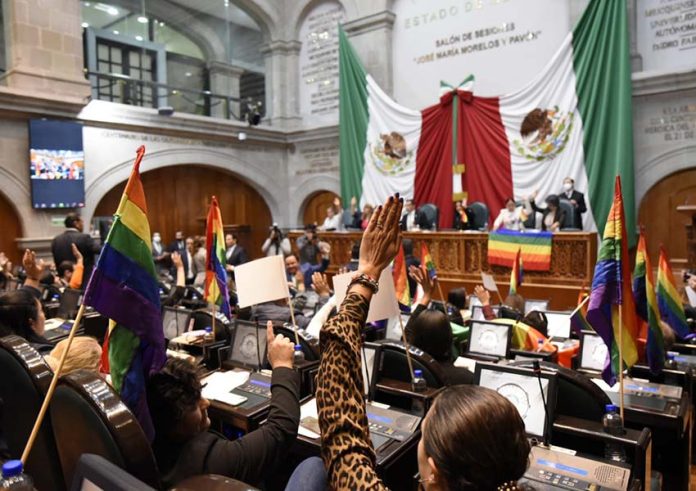
Legislators voting
Amid many shows of support, México state legislators voted Tuesday to make same-sex marriage legal in the state.

The Congress of México state legalized gay marriage Tuesday, leaving only three states without laws permitting matrimony between same-sex couples.

Fifty of 75 lawmakers in the unicameral Congress voted in favor of legalization, seven National Action deputies abstained and 16 Institutional Revolutionary Party representatives opposed the bill. Two other deputies were absent. 

Same-sex couples will be able to marry in Mexico’s most populous state once Governor Alfredo del Mazo Maza promulgates the law via publication of a decree in the state government’s official gazette.

México state, which almost completely surrounds Mexico City, is the 29th federal entity to legalize gay marriage, and one of the last: Tamaulipas, Tabasco and Guerrero are now the only states where such laws don’t exist.

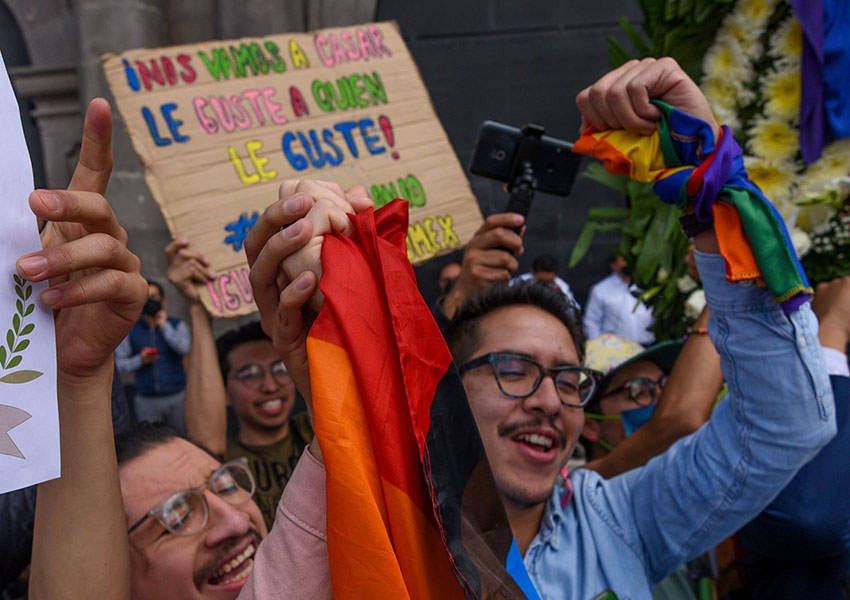
People celebrate approval
Exuberant members of the LGBT community gathered outside the state’s congress building to celebrate the affirmative vote. Crisanta Espinosa Aguilar/Cuartoscuro

Morena party Deputy Anais Burgos, a leading proponent of the reform to state marriage laws, said that the Congress was legislating in favor of “a sector of the population that has been humiliated for years.”

The rights of gay people in México state have been ignored, their dignity has been insulted, their identity has been denied and their freedom has been repressed, she said.

“With the approval of this bill the opportunities and rights of mexiquenses will increase,” asserted Burgos, using the Spanish language demonym for residents of México state. 

“This victory doesn’t belong to us as deputies, it belongs to hundreds of collectives; it’s your victory,” she added.

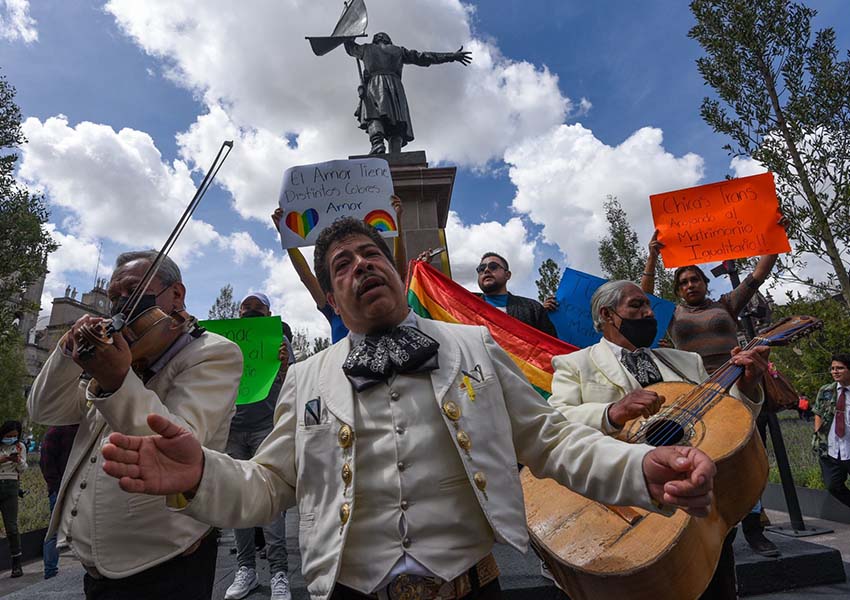
Mariachis
Even mariachis turned out to celebrate the vote. Crisanta Espinosa Aguilar/Cuartoscuro

Daniel Sibaja González, another Morena deputy, apologized to the LGBT community for the discrimination, aggression, ill-treatment and hate crimes they have long suffered.

Members of that community gathered outside the state Congress in Toluca on Tuesday and celebrated the approval of the marriage equality bill.  

The reform also formally recognizes relationships between unmarried same-sex couples who live together and gives them the same rights as those enjoyed by married couples.  

México state is the fifth state to legalize gay marriage this year after Durango, Jalisco,Yucatán and Veracruz. Several other states, including Guanajuato, Querétaro and Zacatecas, approved marriage equality in 2021. 

With reports from El Financiero and Milenio

Zacatecas-US security agreement illegal and invalid, AMLO says

0
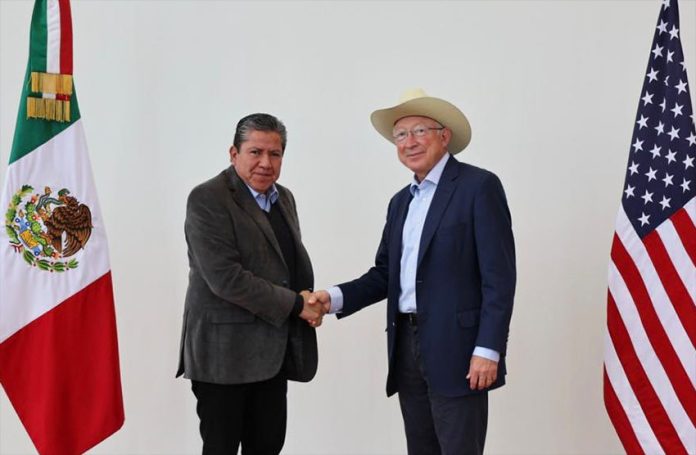
Zacatecas Governor David Monreal and U.S. Ambassador Ken Salazar
Zacatecas Governor David Monreal and U.S. Ambassador Ken Salazar shake on the new security deal. Twitter @USAmbMex

A new security agreement between the state of Zacatecas and the United States government is illegal and invalid, President López Obrador said Monday.

Citing a provision in the Mexican constitution, López Obrador said it’s “expressly prohibited” for state governments to enter into agreements with foreign governments.

However, he told reporters at his regular news conference that the federal government wouldn’t “make a fuss” because the pact announced by Zacatecas Governor David Monreal and United States Ambassador Ken Salazar last Thursday is only a verbal agreement. Monreal also clarified later on Monday that “there is no signed accord or agreement between the government of Zacatecas and the U.S. government.”

The announcement of the agreement came after what Salazar described as a “historic meeting on security in Zacatecas” involving personnel from various U.S. agencies including the Federal Bureau of Investigation, the Drug Enforcement Administration, the Bureau of International Narcotics and Law Enforcement Affairs and the United States Agency for International Development.

Salazar shared a graphic on Twitter highlighting how the U.S. government is collaborating with the state of Zacatecas on security issues.

“We reinforced our whole-of-government commitment to collaborating with Mexican local, state, and federal authorities, with full respect for sovereignty, to support efforts to improve security in Zacatecas,” the ambassador wrote on Twitter.

Under the agreement that he and Monreal announced, the U.S. agencies are slated to donate equipment and software to aid operations and investigations against criminal organizations that operate in Zacatecas, one of Mexico’s most violent states. They also committed to assisting the training of police and other law enforcement officials.

In a statement, Salazar stressed that “with security there is prosperity, investment arrives and trust in institutions grows.”

“We’re optimistic that we’ll achieve … [security] but maintaining coordinated, continuous and permanent work is necessary,” he said, adding that “the people of Zacatecas can count on the United States in this challenge.”

“… Our governments have the Bicentennial Framework and the High Level Security Dialogue, which will allow us to continue deepening our cooperation in Zacatecas and the entire country,” Salazar said.

His visit to Zacatecas late last week came almost two months after the U.S. State Department added the northern state to its “do not travel” list due to crime and kidnapping.

In response to reporters’ questions, López Obrador said Monday that the agreement between Zacatecas and the U.S. government is both illegal and invalid, but added that his government “has confidence in Ken Salazar.”

“He’s visiting the states and there’s a good relationship,” he said, adding that “there’s no need to do anything big” in response to the announcement of the agreement because it’s just a “statement” and “there’s nothing written down.”

The president also said he had no interest in arguing with the U.S. government. “We have to act judiciously and not fight each other [but rather] seek good relations,” López Obrador said.

“So much so that members of Mexico’s security cabinet are going to participate [in a meeting] in Washington on Thursday with their counterparts from the United States government to deal with matters of cooperation in security,” he said.

With reports from Aristegui Noticias, Reforma and El Universal 

Mexico was most popular destination in 2021 for US citizens moving abroad

0
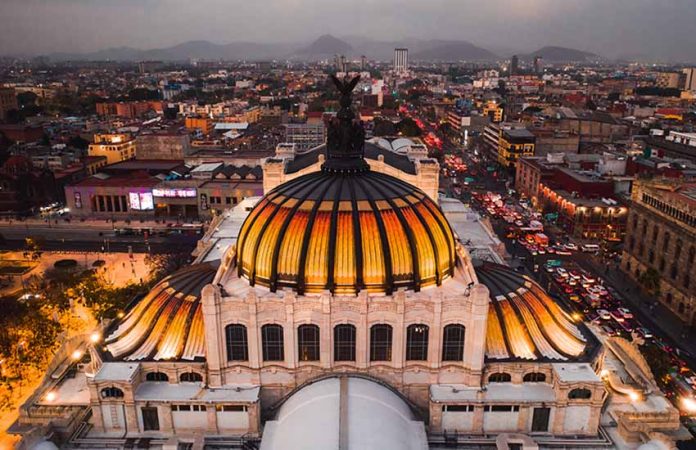
Palacio de Bellas Artes
The HireAHelper company cited recent high-profile Supreme Court decisions, a spike in the cost of living, and unaffordable housing as contributing to “a persistent global perception that the United States is a less desirable place to live” among U.S. residents. deposit photos

Mexico was the most popular landing spot for United States citizens who moved abroad last year, according to data compiled by moving service provider HireAHelper.

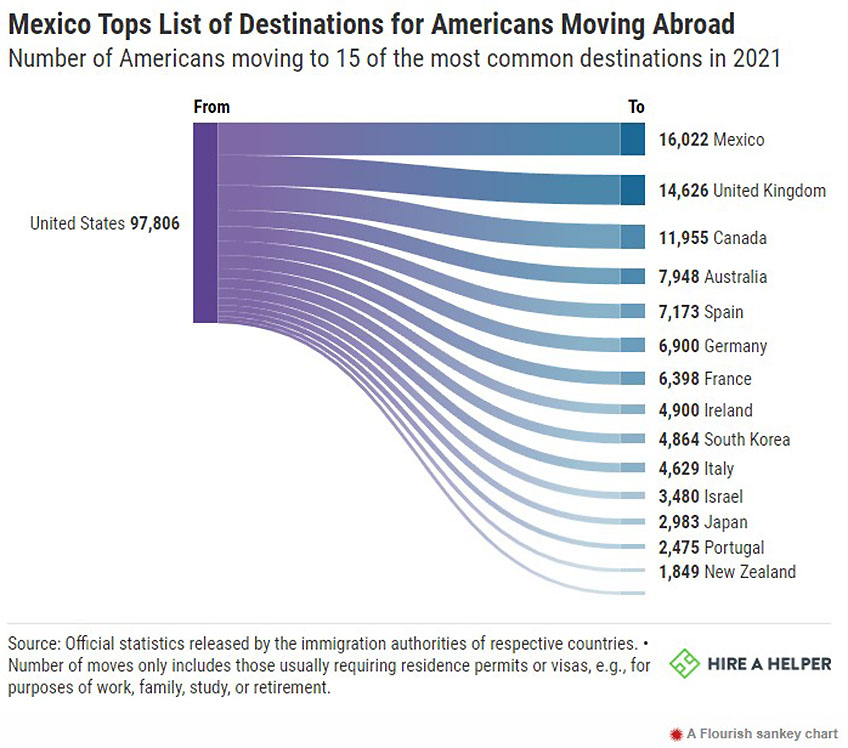
The Oceanside, California, company said in a blog post that 16,022 U.S. citizens “moved to Mexico as temporary or permanent residents in 2021.”

The figure was 38% higher than in 2019, when the coronavirus pandemic had not yet had an impact on people’s decisions about where they wanted to – and where they were able to – live.

“… Moves to Mexico outnumber those to the United Kingdom (14,626), and Canada (11,955), which are the second and third most popular destinations. The fourth most popular destination is Australia, where an estimated 7,948 Americans relocated in 2021,” said HireAHelper, which compiled data from authorities in 15 countries to which U.S. citizens commonly move.

Chart
Nearly 100,000 people from the U.S. left the country in 2021 to live in other countries

The company also said that 10,594 Americans moved to Mexico in the first seven months of this year. “If migration to Mexico continues at its current pace, the country will receive over 18,000 U.S. citizens as new residents [in 2022],a new five-year high,” HireAHelper said.

Chet Kittleson, the CEO of a new Seattle startup that advertises properties for sale in Mexico to people in the U.S, said that his company Far Homes recorded a notable increase in online searches for homes in Mexico in recent months as many U.S. companies announced work-from-home policies. The real estate company Point2Homes said in September that the number of searches for homes in Mexico has seen a 60% rise.

Among the major issues contributing to “a persistent global perception that the United States is a less desirable place to live” and thus possibly leading to more moves south of the borderare “recent high-profile Supreme Court decisions, a spike in the cost of living and chronically unaffordable housing,” in the U.S., HireAHelper said.

It added that “it’s hard to pinpoint the exact reasons pushing Americans to move abroad,” but did note that a recent article in Entrepreneur suggests that “the recent strengthening of the dollar and the rise of remote work play a part.”

“… The truth is it’s still too early to definitively tell whether recent political events in the U.S. will shape immigration. However, what we do know is there continues to be an increasing number of reports of young Americans and people of color leaving the country in search of a safer and more equitable place to live,” HireAHelper said.

The overall cost of living is lower in Mexico than in the United States, but inflation is also high here, and locally paid salaries are generally much lower than those north of the border.

However, foreigners who work remotely in Mexico and earn in currencies such as the U.S. dollar often find that they can afford much more here than they could at home.

Among the U.S. citizens who have recently moved to Mexico – most of whom don’t show up in the statistics cited by HireAHelper because they live here while on tourist visas – are digital nomads, many of whom have settled in hip Mexico City neighborhoods such as Roma and Condesa as well as coastal destinations such as Playa del Carmen.

According to InterNations, an organization that describes itself as the largest global community for expats, foreigners “find it extremely easy to get settled in Mexico and are happy with their personal finances” while living in the country.

The organization’s 2022 Expat Insider survey found that Mexico is “the world’s best country for expats” with a “happiness level” of 91%.

InterNations said that more than three-quarters of Mexico-based expats are happy with their financial situation, and 70% find housing to be affordable. It also said that 90% of expats in Mexico describe the local residents as friendly, and 75% find it easy to make friends among them.

Mexico News Daily

Face masks no longer required in airports and on flights

0
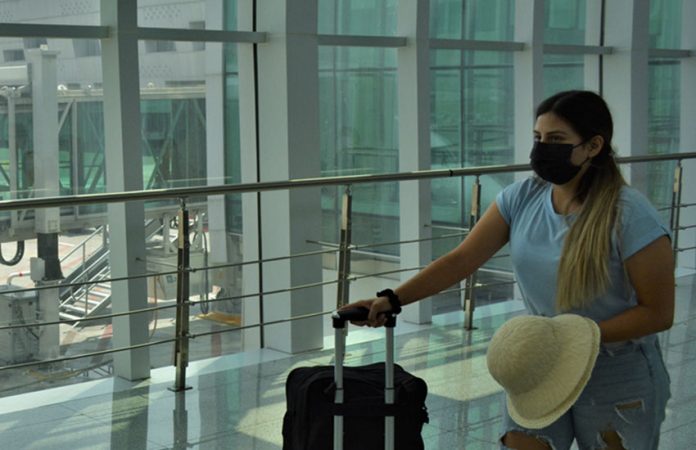
Traveler at Mexico City's Benito Juárez International Airport.

More than 2 1/2 years into the coronavirus pandemic, airline passengers in Mexico can finally take their face masks off.

The federal government announced Tuesday that the use of masks is no longer mandatory in airports and airplanes.

The Federal Civil Aviation Agency (AFAC) made the announcement in a statement after noting that the government had issued new COVID guidelines advising that the use of masks should no longer be obligatory in outdoor and indoor spaces.

The agency acknowledged that the government recommends the ongoing use of masks in enclosed spaces with little or no ventilation, but asserted that airports are made up of “large and sufficiently ventilated spaces,” while planes have High-Efficiency Particulate Air filters that “eliminate 99.9% of macro-particles, bacterias and viruses.”

“For that reason, we inform that from this date, and while health authorities don’t change health protocols relevant to the use of face masks, the use of masks will not be compulsory in airport facilities or aircraft passenger cabins,” said AFAC, which is part of the Ministry of Infrastructure, Communications and Transport.

However, airline and airport staff should direct anyone with symptoms of COVID or other respiratory diseases to use a face mask to prevent contagion to others, the agency said, adding that aforementioned personnel should always have a “sufficient quantity of masks” to distribute to passengers “if necessary.”

Mexico News Daily

Mexico issues updated COVID-19 guidelines; face masks no longer required

0
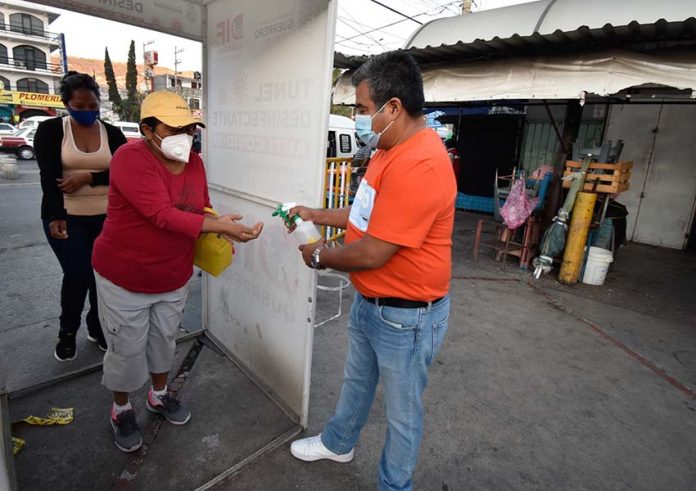
COVID checkpoint
COVID-19 checkpoints like this one in Guerrero are no longer necessary, says Mexico’s public health officials. Dassaev Téllez Adame/Cuartoscuro

The federal government has published new COVID-19 guidelines advising that the use of face masks shouldn’t be obligatory in outdoor and indoor spaces.

The Mexican Social Security Institute (IMSS) drew up the Guidelines for the Healthy Continuation of Economic Activities in the face of COVID-19, and the document was reviewed and authorized by the government’s “New Normal Committee,” made up of IMSS officials and the Health, Economy and Labor ministries.

The government advises that the use of face masks shouldn’t be obligatory in open spaces where people can maintain a “healthy distance” from each other but recommends wearing one outdoors if social distancing isn’t possible. It offers the same advice for enclosed spaces.

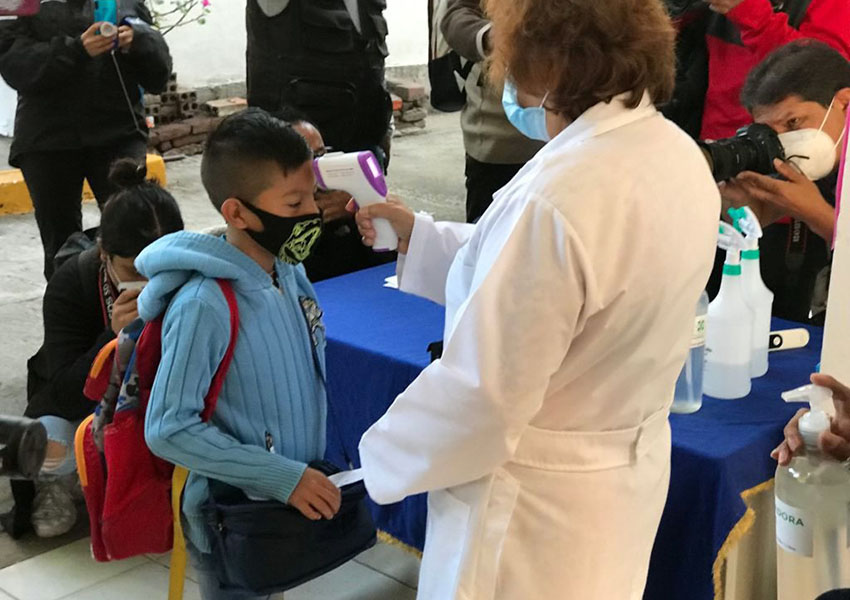
The government also recommends the elimination of the use of tapetes sanitizantes – “sanitizing mats” placed at the entrance to shops, restaurants and other businesses – and filtros sanitarios, health checkpoints where people are screened for COVID, usually via temperature checks.

Temperature check
The new IMSS guidelines also has implications for procedures in schools, which have enforced mask rules and other sanitary protocols. SEP

“It’s important to mention that there’s no evidence that disinfectant mats work so their use is being withdrawn. They shouldn’t be used!” the new document states.

It also says that employers can’t force employees to take COVID-19 tests or prevent them from working – dismiss them, in other words – if they are not vaccinated against the disease.

“Workplaces may carry out tests … with the consent of workers … [but] in no case should the taking of a test be mandatory in order to return to work,” the document says.

While the government recommends vaccination against COVID, it states that a person’s vaccination status “mustn’t be a determining factor [used to] stop people from carrying out their work activities.”

Also among the new guidelines are a range of “general measures” to mitigate the spread of COVID, such as washing hands frequently and covering one’s mouth and nose when coughing or sneezing.

The government says that the guidelines in its new document should be applied “at a national level in all workplaces.”

Their objective is to “establish specific measures … for the continuation of work activities in a safe and responsible way.”

Publication of the new guidelines comes over two and a half years after the coronavirus pandemic began in Mexico. The government initially decreed a national social distancing initiative – a quasi lockdown that wasn’t enforced – to combat COVID, but the disease nevertheless quickly took hold across the country in the first half of 2020.

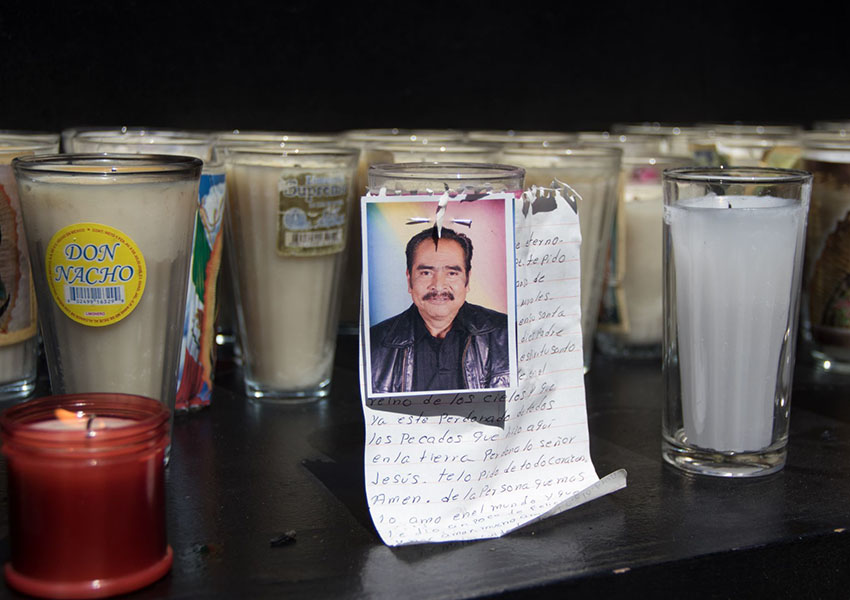
Remembrance wall
Memorial to lost loved one lost left at the Guadalupe Basilica’s remembrance wall for COVID victims in Mexico City. The nation ranks fifth for total COVID deaths and 32nd for per capita deaths, with 258 fatalities per 100,000 people, according to John Hopkins University. Victoria Valtierra Ruvalcaba/Cuartoscuro

After five waves of the disease, Mexico has now recorded more than 7 million confirmed cases and over 330,000 COVID-related deaths, figures that are considered significant undercounts, mainly due to a lack of testing. There are currently just over 5,500 active cases, according to Health Ministry estimates.

The country ranks fifth for total COVID deaths after the United States, Brazil, India and Russia, and 32nd for per capita deaths with 258 fatalities per 100,000 people, according to data compiled by John Hopkins University.

Mexico News Daily

Unauthorized ‘Art of Banksy’ exhibit comes to Mexico City

0
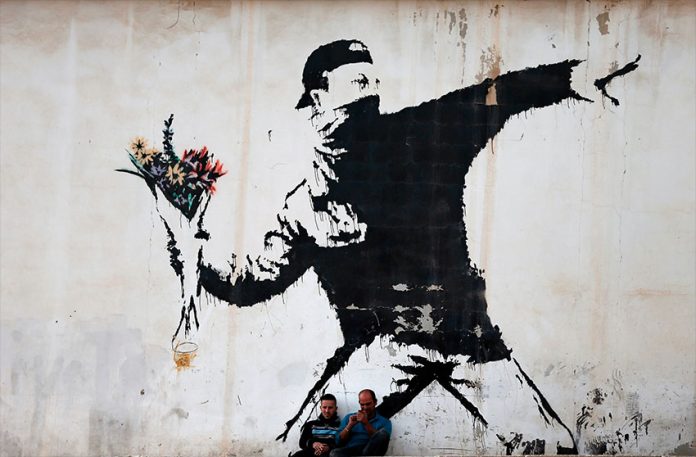
“Love is in the Air,” a 2003 stencil mural in the West Bank, territory that is claimed by both Israel and Palestine.
“Love is in the Air,” a 2003 stencil mural in the West Bank, territory that is claimed by both Israel and Palestine. Sotheby’s

An exhibition featuring more than 150 works by enigmatic street artist Banksy will commence in Mexico City this week.

The Art of Banksy “Without Limits” exhibition – which is not authorized by the artist – will start Saturday at the Antiguo Hotel Reforma in the inner-city neighborhood of Tabacalera. The exhibition has previously been shown in several countries including the United States, Australia, Chile, South Korea, Germany and Turkey.

According to the exhibition website, original works, prints on different kinds of materials, photos, sculptures, murals and  installations will be on show. Tickets, which cost between 250 and 350 pesos (US $12-17), are available on Ticketmaster.

The identity of Banksy, who is known for his whimsical and political street art, has never been confirmed. Numerous media reports describe the United Kingdom-based artists as “elusive,” although he has a website and an Instagram account with over 11 million followers.

A visitor at an unauthorized Banksy exhibit takes a photo of a piece from the “Girl with Balloon” series.
A visitor at an unauthorized Banksy exhibit takes a photo of a piece from the “Girl with Balloon” series. Depositphotos

He is perhaps best known for his “Girl with Balloon” series of stencil murals, which appeared in London 20 years ago.

The artist says on his website that “members of the public should be aware there has been a recent spate of Banksy exhibitions, none of which are consensual.”

“They‘ve been organized entirely without the artist’s knowledge or involvement. Please treat them accordingly,” he adds.

Despite his lack of endorsement, the exhibitions have been popular, attracting over 1.3 million people around the world, according to the Art of Banksy website.

With reports from El Financiero 

Banorte wins approval for new all-digital bank

0
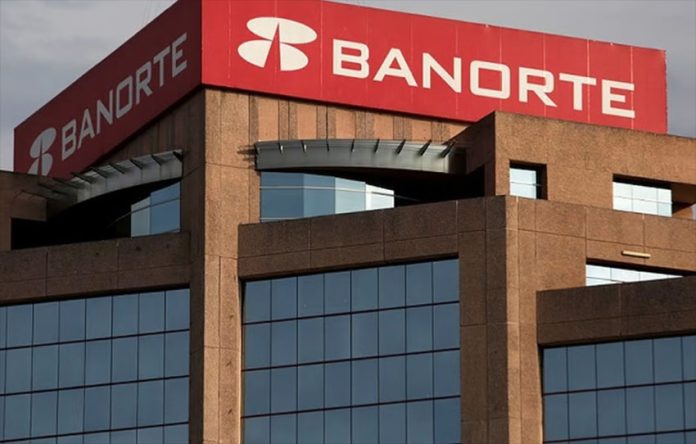
Banorte
Banorte’s digital bank Bineo will be the 51st bank operating in the Mexican market. Banorte

Banorte has won approval to operate a 100% online bank, a development the bank says will help it strengthen its position as a digital leader in the Mexican banking market.

The bank last week advised the Mexican Stock Exchange that the National Banking and Securities Commission (CNBV) had authorized the creation of Bineo, as the digital bank will be called.

The authorization is an “important step in the development of our digital bank,” Banorte told investors, adding that it will “allow us to move closer to the consolidation of our medium term corporate strategy and of our position of digital leadership in the Mexican market.”

The newspaper El Universal reported that Bineo will become the 51st bank operating in the Mexican market. Banorte is the first established bank in Mexico to receive authorization to operate a stand-alone, fully digital bank.

Santander is seeking CNBV authorization to bring its online bank Openbank to Mexico, while Banregio is awaiting approval that will allow its Hey Banco digital bank to operate independently.

Online banking is growing in popularity in Mexico. CNBV data shows that there were over 68.2 million digital transactions in the first six months of the year, a 20% increase compared to the same period of 2021.

Banorte general director Marcos Ramírez said last week that the objective of the “digital transformation” is to “create an [online banking] experience without friction, … [and] improve [waiting] times for a vast number of processes.”

With reports from El Universal and El Economista 

Leaked reports show how soldiers passed military-grade weapons to cartels

0
Soldier with a weapon
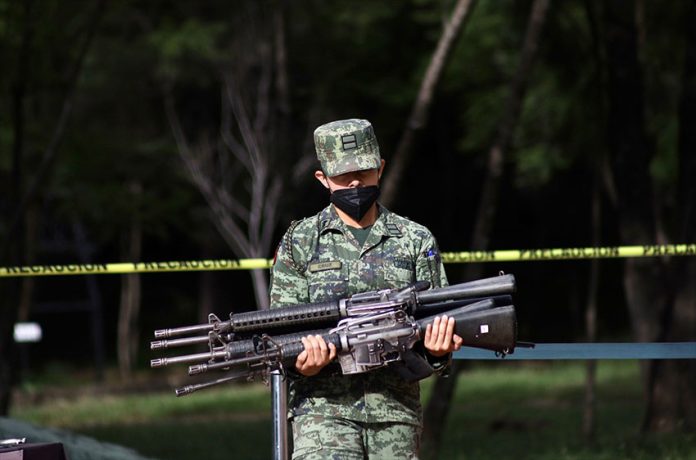
An army official carries high-caliber weapons collected at an event for the voluntary surrender of firearms in Oaxaca last month. Such weapons are nearly impossible to obtain legally. Cuartoscuro.com

Members of the The Mexican army sold weapons to a México state-based drug cartel, according to a report leaked by Guacamaya, a hacking group that infiltrated the IT system of the Ministry of National Defense (Sedena).

In a 2019 intelligence report obtained by the non-governmental organization Mexicans Against Corruption and Impunity (MCCI), Sedena said it was aware that a soldier offered weapons and tactical gear to a crime group in May of that year. The soldier also provided information about military movements and operations to the Tejupilco-based cartel, the report said.

The soldier offered 70 fragmentation grenades to “operators of the crime group” at a cost of 26,000 pesos (US $1,300 at today’s exchange rate) each on May 31, 2019, the report said. The unnamed cartel bought at least eight grenades, which were delivered in Atlacomulco, México state, it added.

Via an analysis of the metadata of the soldier’s cell phone, authorities determined that he was based in Almoloya de Juárez, a México state municipality that is part of the metropolitan area of state capital Toluca. The supplier of the weapons and tactical gear to that soldier was another presumed soldier who was believed to be based at an army facility in Mexico City, according to the Sedena report.

The cartel members referred to the supplier as “antiguo” (oldie), but neither he nor the vendor were formally identified in the Sedena report.

MCCI said that Sedena intercepted calls in which a criminal leader sought to buy from the army 2,000 rounds of AK-47 ammunition, 5,000 rounds of AR-15 ammunition and 50 magazines for each of those firearms. It was unclear whether that request was fulfilled.

The anti-graft group also said that the Almoloya de Juárez-based soldier, apparently a bodyguard for a colonel, offered to tip criminals off as to the whereabouts of a regional prosecutor in Amecameca – a México state municipality 60 kilometers southeast of central Mexico City – as they allegedly planned to murder him.

Guacamaya, a Latin American hacktivist group, recently stole 6 terabytes of data from Sedena servers. Among the information that has been leaked are details about President López Obrador’s poor health and plans for an army-operated commercial airline.

Mexico News Daily