Home Blog Page 958

8,000 year-old human skeleton discovered by cave divers near Tulum

0
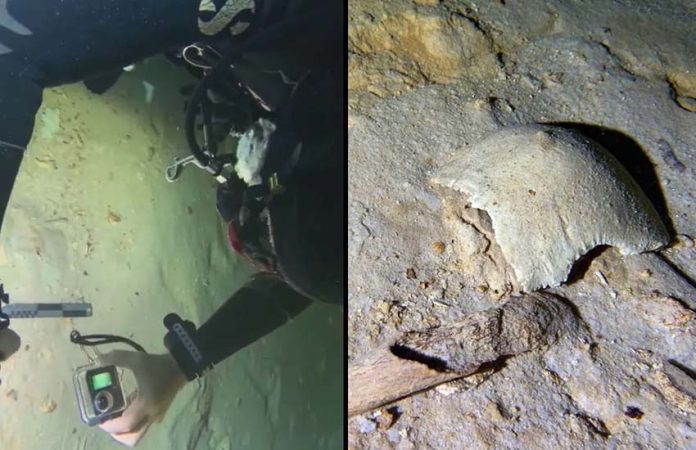
Skeleton pieces found in Tulum cave
The skeleton was found in pieces by a diver in a cave in the Tulum area. Based on its location, it's likely to be between 8,000 and nearly 14,000 years old. Screen capture/social media

A human skeleton that is believed to be over 8,000 years old has been found in an underwater cave, or cenote, near the proposed Playa del Carmen-Tulum section of the Maya Train railroad.

Speleologist and archaeologist Octavio del Río said that he and diver Peter Broger saw the skeleton under sediment in a cave system that was flooded at the end of the last ice age 8,000 years ago. The skeleton, including the skull, is broken into small pieces, del Río said.

Broger led the archaeologist to the skeleton last weekend after discovering it during a prior diving expedition.

Del Río – who has collaborated with the underwater archeology division of the National Institute of Anthropology and History (INAH) for almost three decades – told the Associated Press that the remains are at a depth of about eight meters some 500 meters from the entrance to the cave system.

“Because of where it was found [and] the depth, it could only have arrived there when the cave was dry. This was at least 8,000 years ago,” del Río said.

He said it was unclear whether the body was deposited in the cave after death or whether the person died where the skeleton was found. In an interview with the Reforma newspaper, del Río said that the gender of the person is also unknown.

“We don’t yet know the sex or the size [of the person], how much he or she weighed, whether the person had a disease. We don’t know how he or she died,” he said.

Del Río said that laboratory analysis would determine such details after the remains have been removed from the cave. “A long study that could last months or years starts now,” he said.

The archaeologist hasn’t revealed the exact location of the cave where the skeleton was found but said in a post to his personal Facebook account that it’s in the Tulum area. He noted that it was the 11th discovery of ancient human remains in the area.

“They date from the origin of man in America, with a chronology that ranges from 13,700 years ago to 8,000 years ago,” del Río wrote. “The caves were their homes in life and their tombs in death.”

The archaeologist was involved in the discovery and cataloguing of the skeleton of Eve of Naharon, which was found in an underwater cave near Tulum about 20 years ago and has been carbon-dated to 13,600 years ago.

Del Río told AP that he notified INAH of the most recent discovery and was told by INAH archaeologist Carmen Rojas that the site was registered and would be investigated by the institute’s Quintana Roo division.

Del Río warned that construction of the Maya Train could collapse, contaminate or close off the cave system where the skeleton is located.

The #SelvameDelTren (Save me from the Train/Save the Jungle from the Train) collective, an outspoken critic of construction of the controversial Playa del Carmen-Tulum section (Tramo 5 Sur) of the Maya Train, said that the discovery emphasized the importance of protecting caves in the area.

The cave where the ancient skeleton was found and other archaeological and paleontological relics “could be affected by the train work,” the collective said in a statement. It called for Tramo 5 Sur to be built parallel to Federal Highway 307, as was originally planned, in order to “protect the history of our country.”

The federal government decided to move the route inland earlier this year after the Playa del Carmen business community complained that the construction of the railroad parallel to the highway would effectively divide the city in two. Large swaths of the Mayan Jungle have been cut down to create a passage for the rerouted section.

Del Río said that “the train will go through a 60-kilometer area that is a unique archaeological site” if construction of Tramo 5 Sur continues as planned.

“What we want is for them to change to route at this spot, because of the archaeological finds that have been made there, and their importance,” he told AP.

“They should take the train away from there and put it where they said they were going to build before, on the highway, … an area that has already been affected.”

With reports from AP, Reforma and 24 Horas 

Immigration authorities rescue 35 migrants in Nuevo León and arrest 7 presumed traffickers

0
migrants in Nuevo Leon taken into custody by Mexican authorities
Mexican immigration authorities took the 35 undocumented migrants found in Galeana, Nuevo León. The alleged smugglers were turned over to federal authorities. INM

Federal authorities detained 35 migrants and seven presumed people smugglers in Nuevo León on Monday, the second such incident in less than a week.

The National Guard and the National Immigration Institute (INM) said in a joint statement that its personnel “rescued” – a euphemism for detained – the migrants and arrested seven Mexican nationals on the Linares-Entronque San Roberto highway in the municipality of Galeana.

They also said that five vehicles in which the migrants were traveling were seized. The joint statement said that the migrants “presumably came from Cuba, Ecuador and Nicaragua” and were unable to show that they were in Mexico legally.

They were taken to a detention center where they were to receive consular assistance and have their legal situation assessed. The National Guard and INM indicated that the migrants would be deported if unable to prove that they entered the country legally.

The seven suspected smugglers were turned over to the federal Attorney General’s Office, which was to conduct an investigation.

The detention of the migrants and presumed smugglers came six days after 266 mainly Central American migrants were detected in three trucks traveling on the same highway in Galeana. Twenty unaccompanied minors – 19 boys and one girl – were among the migrants found traveling in crowded conditions.

In that incident, the INM said that the Guatemalan, Nicaraguan, Salvadoran, Cuban, Honduran, Ecuadorian and Dominican nationals were taken to the Galeana municipal auditorium for assessment. The drivers of the trucks transporting them were arrested.

Some migrants attempting to reach the United States who enter southern Mexico illegally use the services of people smugglers, who often use trucks to transport them to the northern border. The consequences of that choice can be deadly for undocumented foreigners.

Fifty-six migrants were killed last December when a tractor-trailer transporting more than 150 mainly Central Americans overturned on the Chiapa de Corzo-Tuxtla Gutiérrez highway in Chiapas, while more than 53 migrants, including 27 Mexicans, died in June after being trapped in stifling conditions in a tractor-trailer found abandoned in San Antonio, Texas.

Migration was one of the issues discussed at Monday’s U.S-Mexico High-Level Economic Dialogue in Mexico City. In a joint statement issued after the talks, the two countries noted that their development agencies last December “launched a new collaborative framework called “Sowing Opportunities” (Sembrando Oportunidades) to increase technical cooperation and address the root causes of irregular migration in northern Central America.”

Still, United States Customs and Border Protection agents have completed over 1.8 million “enforcement actions” – apprehensions and expulsions – against migrants since the commencement of U.S. fiscal year (FY) 2022 last October. The figure, which doesn’t include data for August or September, is already about 10% higher than that for all of FY 2021 and 350% higher than that for FY 2020.

In Mexico, the refugee agency COMAR received a record high of over 131,000 asylum requests last year, more than 50,000 of which were filed by Haitians. However, the overburdened agency only resolved 38,054 applications last year, 72% of which were approved, the newspaper Milenio reported in July.

With reports from Sin Embargo and EFE

SEP to challenge ruling to restore extended school hours program

0
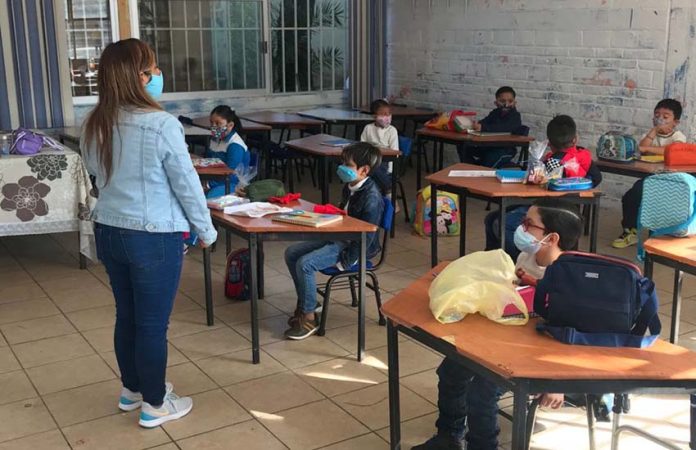
Children in Mexico City school
The program, which extended the hours kids stayed in school each day, was eliminated earlier this year. Education Ministry

The Ministry of Public Education (SEP) announced Monday that it would challenge a court ruling ordering it to restore a program that extended school hours for students at more than 25,000 schools and thus gave their parents – especially mothers – more time to work to support their families.

The federal government abolished the Full-Time Schools Program (PETC) – which also provided meals to students – earlier this year. Delfina Gómez, who was education minister until the end of last month, said in March that the government wanted to prioritize education sector resources the the improvement of basic school infrastructure such as classrooms and washrooms.

Mexicanos Primero, an education-focused nongovernmental organization, filed a legal challenge against the elimination of the PETC, and a Mexico City administrative court judge ruled last Wednesday that the government must restore it.

However, Judge Yadira Medina Alcántara added a qualification to her ruling, saying that if the PETC can’t be restored, SEP must modify the La Escuela es Nuestra (The School is Ours) program so that if offers the same benefits. In abolishing the PETC, she said, the government ignored the situations of working mothers, who were previously able to leave their kids at school for longer, giving them more time to work.

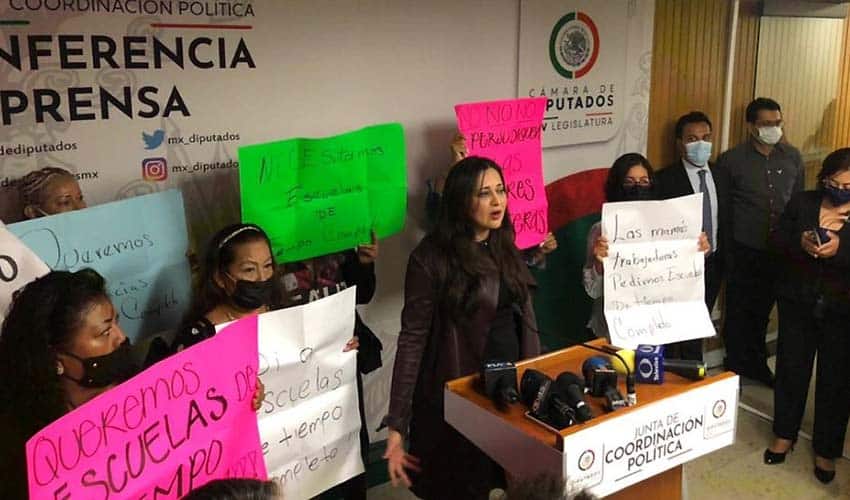
mothers in CDMX protest for restoration of extended school hours
In April, PRI federal Deputy Cinthya López Castro led a protest by mothers who said it was impossible to work without the canceled program.

Former president Felipe Calderón, whose government created the PETC, said on Twitter after SEP announced the program’s termination in March that “when creating #FullTimeSchools we sought to improve the education of children, provide comprehensive nutrition to them and allow the incorporation of more women into the labor market.”

“Mom could work full time while her child learned, ate better and was safe,” he added in a post that included a tweet from a person who asserted that President López Obrador decided to do away with the PETC partially because it was created during the government led by Calderón, an arch adversary of the president.

Testing showed that students benefited academically from spending more time at school, and the national social development agency Coneval concluded in 2018 that the PETC was one of the country’s most important education programs.

In a statement, SEP asserted that the La Escuela es Nuestra (LEEN) program is similar to the PETC, given that it also allows students to stay at school outside regular hours and provides meals to them.

As La Escuela es Nuestra already provides those “services,” SEP will appeal the judge’s ruling with a view to it being revoked, the statement said.

The Ministry of Public Education also said that it announced in April that the extended school hours and meals offered by the PETC would be incorporated into La Escuela es Nuestra. In addition, it said that a study it conducted found that “almost 20,000 schools, … 73% of those attended to [by the PETC] in the 2021–21 school year, are not located in places with high levels of marginalization.”

SEP stressed that children and adolescents who benefited from the PETC have not been left without financial support, noting that they receive educational scholarships worth 840 pesos (US $42) per month, whereas they previously got just 300 pesos. It also said it intends to offer LEN in 113,000 schools next year, which it said would benefit almost 9 million students.

The LEEN program currently benefits 3.6 million students in 27,000 schools.

As part of LEEN’s extended hours program, teachers will “plan and organize activities with pedagogic intentions and use the extracurricular time in a more efficient way,” SEP said.

With reports from Reforma, Proceso and Aristegui Noticias

US encourages Mexico to join semiconductor industry investments

0
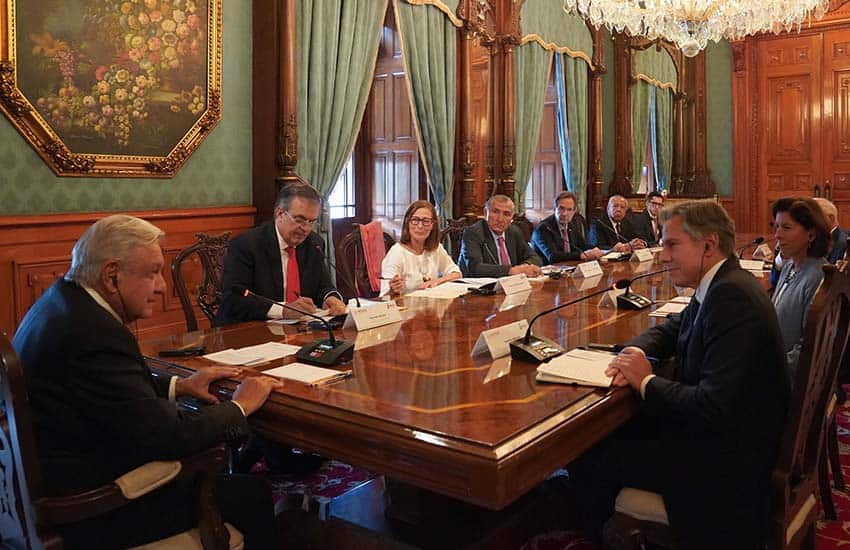
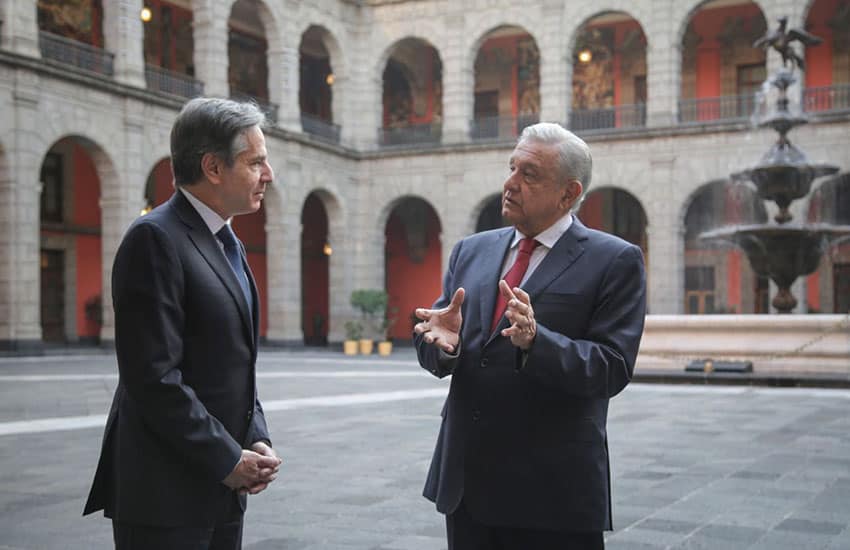
President Lopez Obrador, US Sec. of State Antony Blinken, US Sec. of Commerce Gina Raimondo
U.S. Secretary of State Antony Blinken and U.S. Secretary of Commerce Gina Raimindo met with President López Obrador Monday at the High-Level Economic Dialogue in Mexico City. (Presidencia)

The United States has invited Mexico to take advantage of massive U.S. investment in the semiconductor industry, Foreign Minister Marcelo Ebrard said Monday after talks between high-ranking officials from the two countries.

United States Secretary of State Antony Blinken and Secretary of Commerce Gina Raimondo met with Mexican officials including President López Obrador, Ebrard and Economy Minister Tatiana Clouthier in Mexico City for the U.S-Mexico High-Level Economic Dialogue (HLED).

The foreign minister told reporters that the U.S. officials “came to invite us to boost [the production of] semiconductors,” electrical components also known as chips.

“They already authorized an approximately US$50 billion [semiconductors] program and they’re inviting us to participate,” Ebrard said.

HLED talks in Mexico City September 2022
“Major elements of the semiconductor supply chains are already well-established in Mexico, with U.S.-based companies like Intel and Skyworks,” Blinken said. “The CHIPS Act will incentivize more of this type of work.” Marcelo Ebrard/Twitter

“… What we have is an invitation that is received perhaps once in a lifetime, so we’re going to accept it, and thank you very much for thinking of Mexico,” he told the U.S. officials at a press conference.

The U.S. Department of Commerce released its strategy last week, outlining how it would implement US $50 billion from the CHIPS and Science Act of 2022, an executive order that U.S. President Joe Biden signed in August.

A statement from the department said that the four primary goals of the act were to establish and expand domestic production of leading-edge semiconductors in the U.S.; build a sufficient and stable supply of mature node semiconductors; invest in research and development to ensure that next-generation semiconductor technology is developed and produced in the U.S.; and create tens of thousands of well-paying manufacturing jobs and more than 100,000 construction jobs.

While those objectives are for the United States, the Mexican and U.S. governments said in a joint statement following Monday’s HLED that “the passage of the CHIPS and Science Act … provides unprecedented opportunities to enhance our already dynamic supply chains.”

Secretary Raimondo told a press conference in Mexico City that “while the law’s funding will supercharge the U.S. semiconductor industry, it will also create significant opportunities for Mexico.”

“It’s a chance for our two countries to work together to build a robust semiconductor ecosystem on both sides of the border,” she said.

For his part, Blinken said that the CHIPS and Science Act will “provide funds to develop resilient semiconductor supply chains in North America.”

“Major elements of the semiconductor supply chains are already well-established in Mexico, with U.S.-based companies like Intel and Skyworks conducting research and development, design, assembly and test manufacturing in parts of Mexico,” he added. “The CHIPS Act will incentivize more of this type of work.  It will ensure that we can build these and other components that we need for the 21st century right here in North America.”

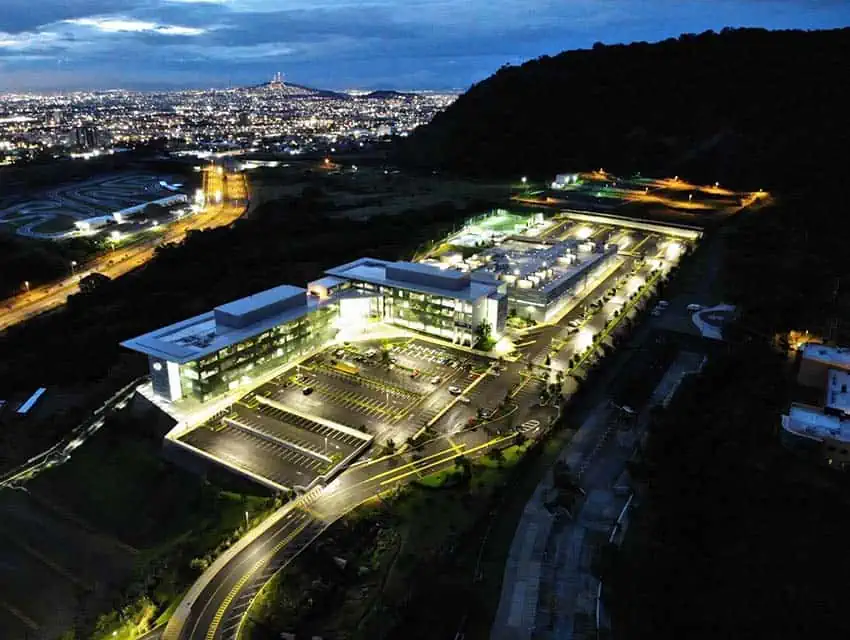
Intel Guadalajara Design Center in Guadalajara, Jalisco
Intel’s semiconductor research and development facility, the Intel Guadalajara Design Center. Intel Latin America

Blinken also said that the United States and Mexico are collaborating to “boost competitiveness, to create good-paying jobs [and] to accelerate North America’s transition to clean energy.”

Ebrard said that López Obrador told the U.S. secretary of state and secretary of commerce about his plan to make Sonora a leader in the production of lithium, solar energy and electric vehicles. There are large potential reserves of lithium – a key component of electric vehicle batteries – in the northern border state.

Congress has already nationalized lithium, passing a reform to the federal Mining Law that declares that the metal “is an asset of the nation and its exploration, exploitation, extraction and use is reserved in favor of the people of Mexico.”

Blinken noted that the U.S. Inflation Reduction Act “provides among other things tax incentives for electric vehicles and battery components manufactured in North America.”

“It’s a smart investment in a shared future – a way to create more jobs for our people, combat the global climate crisis, strengthen our energy security.  And this is something we discussed with President López Obrador today,” he said.

Ebrard said that the opportunities stemming from the relationship with the United States could allow the Mexican economy to grow at double the current rate, enabling authorities to “reduce poverty much more quickly” and build more infrastructure.

“What is being built today from these initiatives of President Biden and López is … certainty,” he added.

Asia currently makes far more semiconductors and lithium batteries than North America, but the U.S. investment and Mexico’s efforts to exploit lithium deposits could help this region catch up.

According to a New York Times report, the CHIPS act specifies that companies that accept funding cannot make new, high-tech investments in China or other “countries of concern” for at least a decade unless they are producing lower-tech “legacy chips” destined to serve only the local market.

The joint Mexico-U.S. statement said that the CHIPS and Science Act and the Inflation Reduction Act “will increase investment into the North American manufacturing sector, lower energy costs for families and businesses, bolster our supply chains and shore up our collective energy security.”

“It will also create jobs in both countries and position North America as a leader in clean energy,” it added.

With reports from El Financiero, Milenio, La Jornada, Aristegui Noticias, AP and The New York Times

Interpol issues red notice for owners and operator of coal mine in Coahuila

0
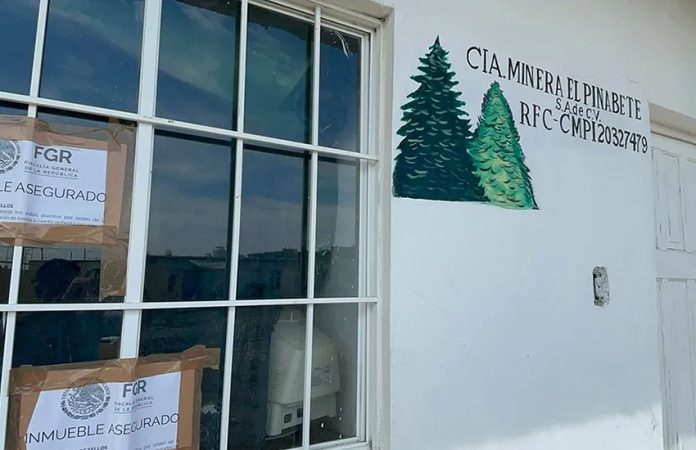
El Pinabete Mining Company building in Coahuila
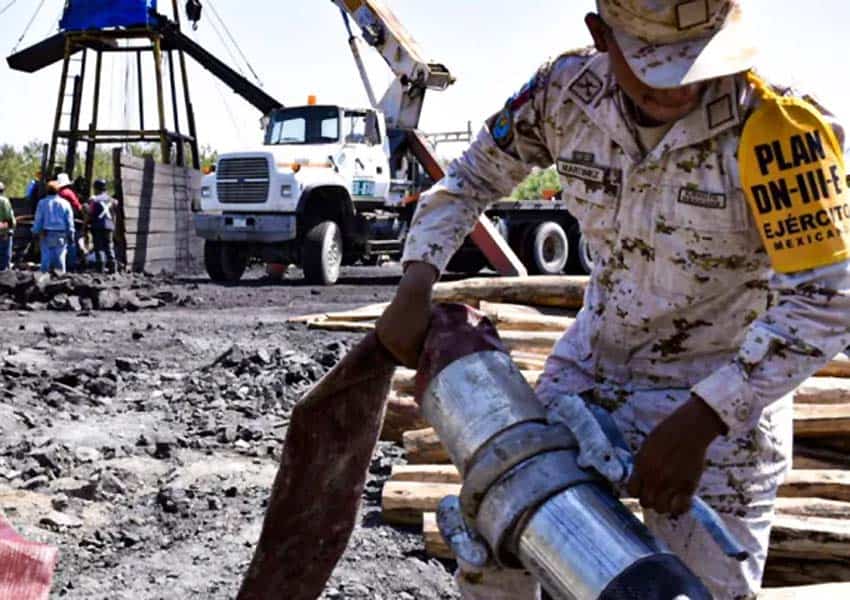
The El Pinabete Mining Company remains closed as the federal Attorney General's Office and Interpol look for its owners and the operator of a mine in Sabinas, Coahuila that flooded on August 3, trapping 10 workers.

Interpol has issued a Red Notice for the owners and operator of a Coahuila coal mine where 10 miners became trapped on August 3.

Authorities have not yet been able to recover the bodies of the presumably deceased miners, who were trapped in the El Pinabete mine when excavation work caused a tunnel wall to collapse, allowing water to flow in from abandoned adjacent mines.

The federal Attorney General’s Office (FGR) said Monday that Interpol had issued a Red Notice for two owners of the company El Pinabete and the operator of the mine, located in the municipality of Sabinas. The three men are accused of “illicit exploitation of an asset that belongs to the nation” and the FGR has obtained warrants for their arrest.

According to Interpol, a Red Notice is “a request to law enforcement worldwide to locate and provisionally arrest a person pending extradition, surrender or similar legal action.”

El Pinabete mine rescue efforts in Coahuila, Mexico
Authorities continue efforts to recover the presumed dead bodies of the 10 men who became trapped in the flooded mine on August 3. Sedena

Media reports have identified the mine owners as Luis Rafael García Luna Acuña and Arnulfo Garza Cárdenas and the operator as Cristian Solís Arriaga. Solís is registered with the Mexican Social Security Institute as the employer of the miners, the Labor Ministry (STPS) said Monday.

The FGR said in a statement that it began a criminal investigation into the mine disaster shortly after it occurred, noting that it has interviewed other miners – including some that managed to escape the mine on the day it was flooded – and “persons considered as probable culprits.”

Miners have denounced the poor safety conditions under which they worked at the mine, which opened earlier this year. The FGR also said that the El Pinabete offices were searched and that documents and computers were seized.

“Once all the evidence was gathered a hearing was requested to formulate an accusation against Cristian “S”, the person that was operating the asset and Arnulfo “G” y Luis “G,” who are the owners of the mining company El Pinabete,” the FGR said.

It said that none of the three men showed up at the hearing and that the prosecutors subsequently obtained warrants for their arrest. In addition to the Interpol Red Notice for the three men, the FGR noted there is a “migration alert” with the National Immigration Institute, a measure aimed at preventing their departure from Mexico.

The FGR also noted that Solís, the mine operator, filed a request for protection against arrest and that a judge ruled that a security amount of 500,000 pesos (about US $25,000) must be paid in order for the requested court order to be issued. However, the money hasn’t been paid, and the warrant for his arrest therefore remains valid, the Attorney General’s Office said.

The mine owners and operator face prison sentences of up to 12 years if convicted of exploiting a national asset – the coal mine – without having obtained prior authorization or without having signed a contract with the relevant authority. The FGR said in a September 4 statement that it had been confirmed that the owners “illegally permitted” the exploitation of the El Pinabete coal mine.

According to the STPS, the company Río Sabinas was granted a concession to operate the mine and it was later transferred to the El Pinabete company. However, the ministry also said that the mine was operating without all the required federal and municipal permits.

With reports from El País and Reforma 

The ancient city of Cacaxtla ruled supreme until a volcano erupted

0
Edificio de la Espiral
The Edificio de la Espiral (The Spiral Building). Photos by Joseph Sorrentino

At the southern end of Tlaxcala lies the ruins of a city you may not be familiar with — Cacaxtla, which exerted military and economic control over much, if not most, of the Puebla-Tlaxcala Valley and regions as far away as the Gulf Coast and the Mexican basin.

That is, until the Popocatépetl volcano erupted in A.D. 1000 and it was abandoned.

Actually, its decline, according to historians, began about 100 years earlier. But during its peak, between A.D. 650 and A.D. 900, it was a powerful city, united for about 300 years with another city a short distance away by the name of Xochitécatl.

All that can be seen of Cacaxtla today is a large pyramid called El Gran Basamento (Great Platform) and some surrounding smaller pyramids. Elites and priests — almost certainly all men — ruled over and had exclusive use of Cacaxtla. Women were the ones who held fertility rituals at Xochitécatl, rituals in which everyone could take part.

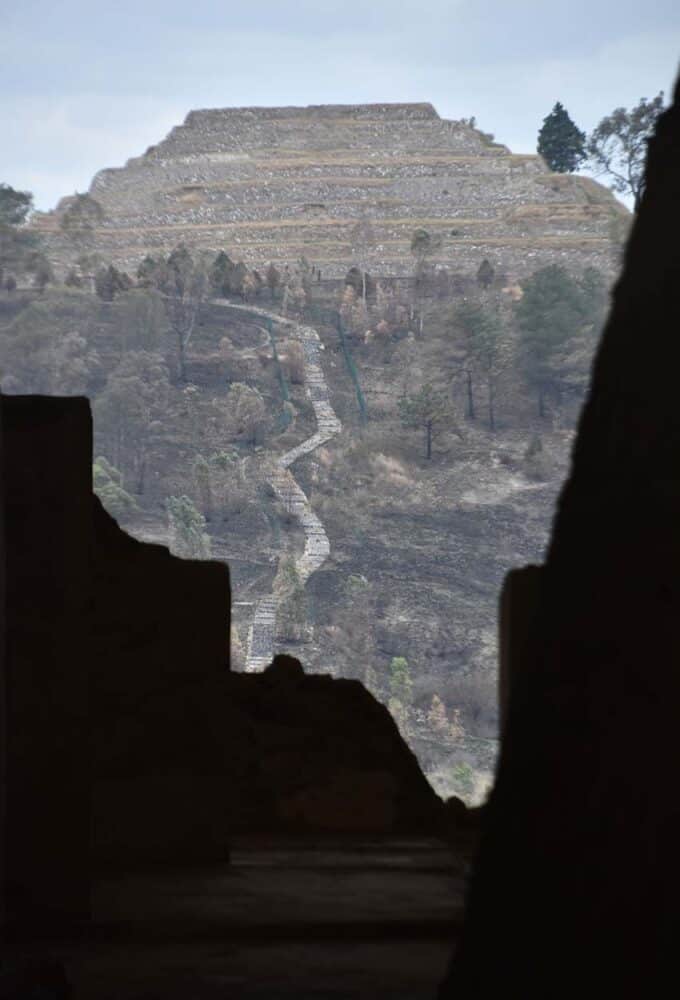
Cacaxtla site
The Pyramid of the Flowers shot through a corridor in El Gran Basamento, showing the path that leads from Cacaxtla to Xochitépetl, a nearby ancient city with which Cacaxtla had an alliance.

Like Cacaxtla, Xochitécatl was abandoned when Popocatépetl erupted in A.D. 1000.

Although Cacaxtla had been described by Diego Muñoz Camargo, a 16th-century historian, it nevertheless remained unknown in modern times until it was accidentally rediscovered by maintenance workers in 1975. Shortly afterward, archeologists began excavating the site for the next six years.

Cacaxtla, the capital city in an area occupied by a group known as the Olmeca-Xicalancas, was first settled 2,500 years ago, although it’s not clear who the first inhabitants were. Its name means “Place of the Cacaxtles,” which were boxes that were used to carry a variety of products.

The city’s rise as a regional power came after the fall of the ancient city of Cholula in Puebla sometime between A.D. 650 and A.D. 750 and the collapse of the city of Teotihuacán around 750 A.D.

El Gran Basamento, the only building on the site that can be entered, contained the main religious and civic buildings, along with buildings that housed the priests and ruling class. Under one of the courtyards of the Palacio (Palace), where the ruling class lived, remains of two hundred sacrificed children were found.

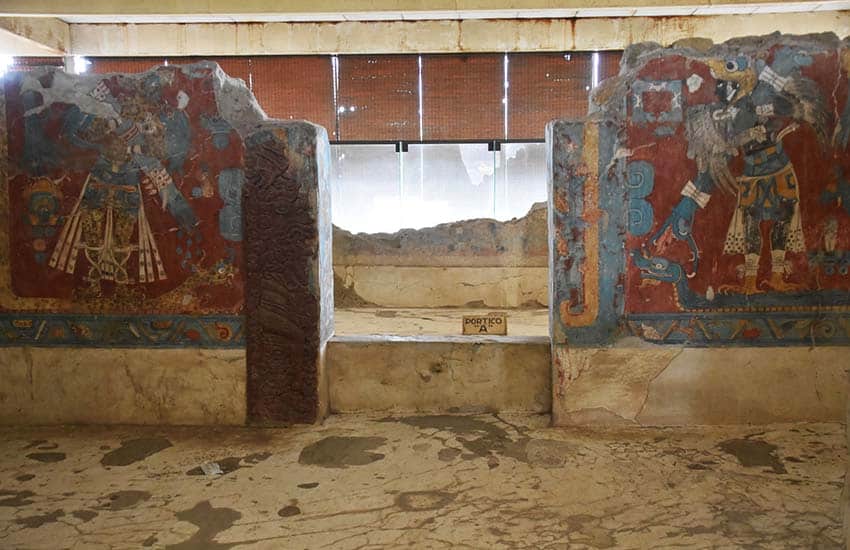
The building is now covered with a huge roof to protect the brilliantly colored murals, which were done in a style typical of Mayan paintings and murals.

On opposite sides of an entrance to one large room are the murals known as Hombre Ave (Bird Man) and Hombre Felino (Feline Man), both probably depicting the city’s priests or rulers.

Hombre Ave is a painting of a man dressed in elaborate feathers. Surrounding the figure are drawings of marine animals and he stands atop a plumed serpent. Hombre Ave and the plumed serpent are all depictions of Quetzalcoatl, one of the most powerful gods in the Mesoamerican pantheon. This god was revered throughout Central Mexico and as far south as Guatemala. Among other things, he was worshipped as the creator of humans and the world.

Hombre Felino holds the skin of a jaguar in one hand, from which drops of blood fall; these were drawn to mimic raindrops falling. The figure of Hombre Felino is associated with rain. Because of that and some other drawings alongside the figure, it’s believed that this mural was made to honor Tláloc, the god of rain. Tláloc is often associated with Quetzalcoatl.

It’s believed that these figures served to demonstrate or reinforce the power the priests and rulers held over the city. Other murals are found in the structure known as Templo de Venus (Venus Temple) and the Templo Rojo (Red Temple).

The mural in the Templo Rojo lines a staircase. There’s a figure of a man known as the Comerciante (Merchant or Trader) who’s carrying a cacaxtli (a basket) on his back. Surrounding him are corn, cocoa beans and marine animals, which may have been items that were traded.

The most impressive mural is the Mural de la Batalla (The Battle Mural). It’s almost 26 meters (80 feet) long and shows a battle between two ethnic groups. The defeated group, whose soldiers have deformed heads, has been identified as Maya. This mural is behind Plexiglas and, because of its exposure to the sun, is more faded than the other murals. Interestingly, the buildings in which this mural, as well as Hombre Ave and Hombre Felino, were housed were partially demolished at some point to make room for new buildings. The murals were covered, which helped to preserve them.

Cacaxtla
Hombre Felino, left, and Hombre Ave, right, are depicted in these murals.

A path links Cacaxtla to Xochitécatl.

Xochitécatl, whose name translates to “Place of the Lineage of Flowers,” was first occupied almost 3,000 years ago. It sits on top of an extinct volcano and it’s believed that the site was chosen because it’s surrounded by Popocatépetl and La Malinche, both active volcanoes, and Iztacchihuátl, an extinct one. Indigenous groups worshipped volcanoes as gods.

Xochitécatl was abandoned in A.D. 200 after Popocatépetl erupted and then reoccupied about 500 years later, when it united with Cacaxtla.

It was here, in Xochitécatl, that women performed fertility rites. These rites included sacrifices and the remains of sacrificed women have been found throughout the site.

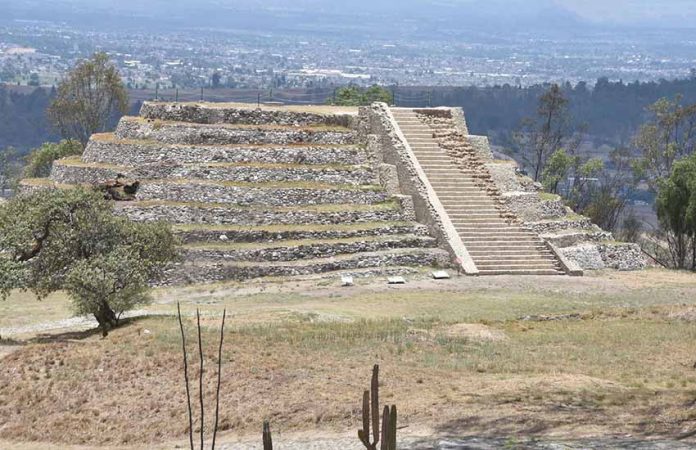
Today, four structures may be seen: the Piramide de las Flores (Pyramid of the Flowers), Edificio de la Espiral (Spiral Building), Edificio de la Serpiente (Serpent Building) and Basamento de los Volcanoes (Platform of the Volcanoes).

Piramide de las Flores is the largest building in Xochitécatl, standing 37 meters (about 122 feet) tall. Stone columns, part of a portico, are all that remain of the temple that once stood on top of the pyramid. Through these columns, La Malinche can be seen in the distance. The remains of female sacrificial victims have been excavated under the stairs leading up the pyramid.

Across from Piramide de las Flores is Edificio de la Espiral, which was built when the site was first settled. It’s believed to represent Popocatépetl. Residents of nearby San Rafael Tenanyecac still hold ceremonies on top of this building, placing a wooden cross on top.

Fertility was associated with water, and there are several structures called monolith fonts at Xochitécatl that may have been used for fertility rituals and also to collect water. One of them, a huge bowl-shaped object, sits in front of the Edificio de la Serpiente, the oldest building on the site; its construction started 2,500 years ago. It’s been hypothesized that women may have bathed in these structures during rituals.

Basamento de los Volacanoes was built between 600 and 900 AD, when Xochitécatl and Cacaxtla were at their peak. The low walls of the platform slope and their stones were precisely cut to fit tightly together.

Hundreds of small female figures, some depicting a pregnant woman, some with a woman holding a baby, have been found at the site and can be seen in the museum located there.

My first attempt to visit Cacaxtla and Xochitécatl was thwarted when I was told that visitors had to provide proof of being vaccinated for Covid. No such proof was required on the second trip but it might not be a bad idea to call to make sure. Phone numbers: 246 462 9375 and 246 462 9031.

Joseph Sorrentino, a writer, photographer and author of the book San Gregorio Atlapulco: Cosmvisiones and of Stinky Island Tales: Some Stories from an Italian-American Childhood, is a regular contributor to Mexico News Daily. More examples of his photographs and links to other articles may be found at www.sorrentinophotography.com He currently lives in Chipilo, Puebla.

Feds challenge ruling to grant house arrest to Guadalajara Cartel founder Félix Gallardo

0
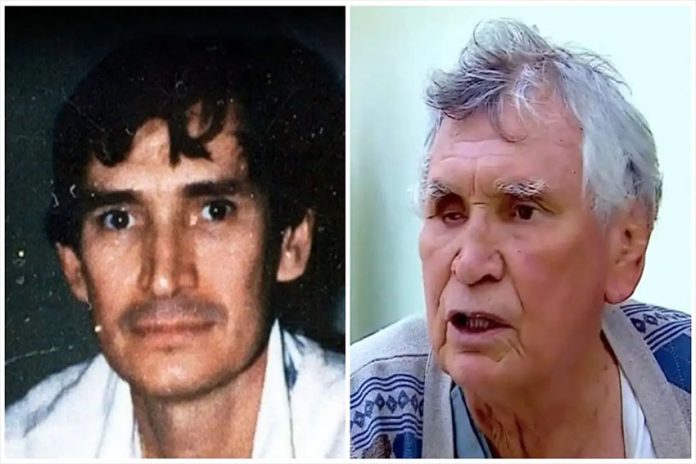
Guadalajara Cartel founder Miguel Ángel Félix Gallardo.
Guadalajara Cartel founder Miguel Ángel Félix Gallardo. Historical (left), video still (right)

A cartel founder and convicted murderer known as “The Godfather” and “The Boss of Bosses” will remain in prison despite a judge ruling that he could complete one of his sentences under house arrest.

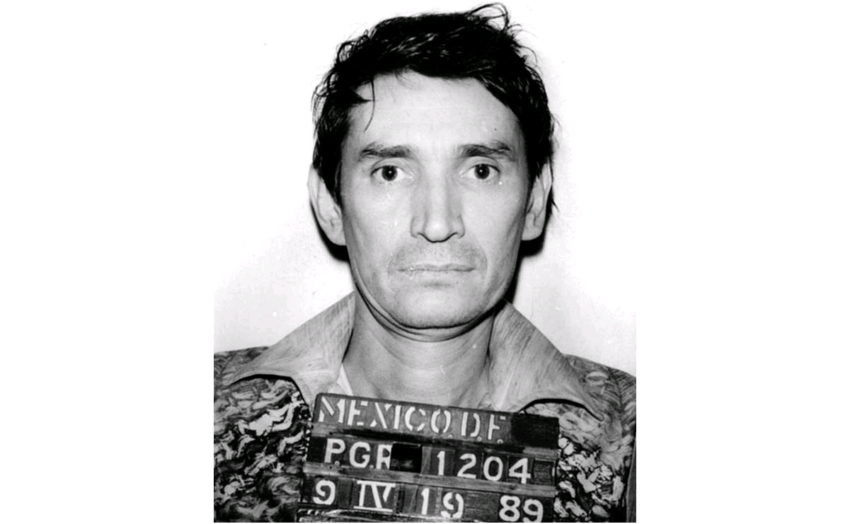
Miguel Ángel Félix Gallardo, who founded the Guadalajara Cartel in the 1970s, was arrested in 1989. He gained wider recognition in the English-speaking world after he was portrayed as a main character in Narcos: Mexico, starting in 2018.

Taking Miguel Ángel Félix Gallardo’s advanced age and poor health into account, a Mexico City-based federal judge ruled late last week that he could complete his 40-year sentence for cocaine trafficking, weapons possession and bribery at a residence in Zapopan, Jalisco.

However, the federal Attorney General’s Office (FGR) has challenged the ruling, preventing the release of the 76-year-old co-founder of the now-defunct Guadalajara Cartel. Félix Gallardo has been in prison since his arrest in the Jalisco capital in 1989.

Mugshot of Miguel Ángel Félix Gallardo
Mugshot of Miguel Ángel Félix Gallardo from 1989

The newspaper El Financiero said that the convicted narco was expected to leave Jalisco’s Puente Grande prison on Tuesday, but several other reports – published before the FGR’s challenge became known – didn’t cite a specific date and noted that his 37-year prison sentence for the 1985 murders of U.S. Drug Enforcement Administration agent Enrique “Kiki” Camarena Salazar and Mexican pilot Alfredo Zavala still stood.

Félix Gallardo – who has always denied involvement in the murder of Camarena – has a range of health problems and was hospitalized in July. In addition, he’s deaf in one ear, blind in one eye and has cataracts in the other.

In a 2021 interview, Félix Gallardo described his health as “terrible” and indicated that he expected to die soon, saying that his family was preparing “a hole” in which to bury him.

“I’m a corpse who doesn’t aspire to anything more than being buried … [beneath] a tree,” he said.

Another Guadalajara Cartel co-founder who is also behind bars is Rafael Caro Quintero, who was arrested in northern Mexico in July.

Caro Quintero – who spent 28 years in jail for the murder of Camarena before his 40-year sentence was cut short in 2013 after it was ruled that he was improperly tried in a federal court when the case should have been heard at the state level – is imprisoned at the El Altiplano federal prison in México state.

Shortly after his arrest, a Jalisco court granted him an injunction against extradition to the United States before a formal extradition was held. A México state court subsequently validated the ruling, and its decision was upheld late last month after the FGR filed a challenge against it.

With reports from Aristegui Noticias, Animal Político, Reforma, El Financiero and Infobae 

Mexico City prepares to host UNESCO Mondiacult 2022 conference

0
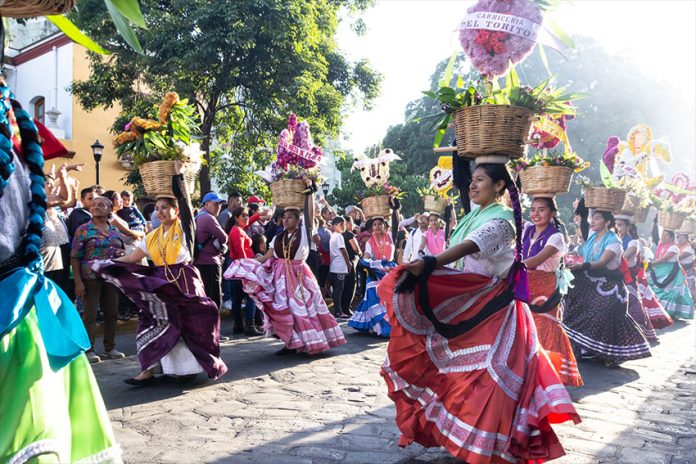
Traditional dancers celebrate the festival Guelaguetza in Oaxaca city.
Traditional dancers celebrate the festival Guelaguetza in Oaxaca city. DepositPhotos

The UNESCO World Conference on Cultural Policies and Sustainable Development — Mondiacult 2022 — will be held Sept. 28 to 30 in Mexico City.

The event comes 40 years after the first Mondiacult conference was held in the capital in 1982 and 24 years after the UNESCO World Conference on Cultural Policies for Development held in Stockholm in 1998. The global conference will look at the cultural sector worldwide and seek to find ways to better incorporate the needs of culture and its promotion into policy-making, as well as map current cultural trends, including the repercussions of the COVID-19 pandemic for arts and culture.

The conference will also look at how culture can assist nations in reaching the United Nation’s Sustainable Development Goals, announced in 2015 and adopted by United Nations member states as a universal call to action to end poverty, protect the planet, and ensure that by 2030 all people enjoy peace and prosperity. There are many global challenges faced by the cultural sector worldwide — climate change, job precarity, and freedom and diversity of expression just to name a few. The conference will look at ideas on how culture and the governmental policies that surround it can help to support artists, communities, and organizations involved in cultural promotion.

Ernesto Ottone, assistant director of culture at UNESCO, says that Mexico’s real goal at Mondiacult 2022 is not just to host a successful conference but also help to produce successful results:

“The challenge is that Mexico, with a long and renowned tradition of diplomacy, is able to create consensus around the agenda of the future…. From two and a half years ago when the planning process for this event began, it was understood that Mexico has a role to play in working toward future policies that will go beyond the tools that already exist on an international level.”

The conference will bring together representatives from 193 countries including ministries of culture, members of civil society, non-profit organizations, and other organizations worldwide. The hope is that participants can help to solidify culture as a global public good, and promote its value and importance for the future of society.

With reports from UNESCO, Gobierno de México and El Pais

US Secretary of State Blinken visits Mexico to discuss cooperation on immigration, economic policy, security

0
High Level Economic Dialogue in Mexico City, Sept. 2022
Foreign Affairs Minister Marcelo Ebrard, left center meets with U.S. Secretary of State Antony Blinken, right center. Foreign Affairs Ministry

Cooperation between Mexico and the United States on economic issues, security and immigration appear to be the talking points during discussions Monday afternoon between high-ranking Mexican and U.S. officials in Mexico City, headed on the Mexico side by President López Obrador and on the United States’ side by Secretary of State Antony Blinken.

President López Obrador had stressed beforehand that there was no predefined agenda for his meeting with Blinken during the U.S-Mexico High-Level Economic Dialogue (HLED), which involved Blinken, Secretary of Commerce Gina Raimondo and other officials on the U.S. side and President López Obrador, Economy Minister Tatiana Clouthier and Foreign Affairs Minister Marcelo Ebrard on the Mexican side. President Lopez Obrador had not issued any statements on the meeting as of 4 p.m.

But topics that did come up, according to Foreign Affairs Minister Marcelo Ebrard’s post on Twitter around 3 p.m., were not surprises.

In a tweet on the Foreign Affairs Ministry’s account celebrating his meeting with Blinken, Ebrard mentioned the three major talking points, adding that in the security discussion, a special emphasis was placed on bilateral cooperation on controlling arms trafficking. Ebrard also said that multilateralism, in the lead-up to the upcoming United Nations General Assembly session in New York City, which opens on Wednesday, was also discussed.

U.S. Secretary of State Antony Blinken and President Lopez Obrador of Mexico
No set topics were planned for the meeting between U.S. Secretary of State Antony Blinken and President López Obrador today, the president said beforehand. File photo

President Lopez Obrador had predicted in the days before the meeting that Mexico’s nationalistic energy policies, which are being challenged under the United States-Mexico-Canada Agreement (USMCA) by both the U.S. and Canada – would be raised and suggested that he might bring up the case of Wikileaks founder Julian Assange. It’s not clear if either of those topics are being discussed between López Obrador and Blinken.

AMLO had said that he would advocate for Assange’s freedom – the 51-year-old Australian faces espionage charges in the United States – if there was an opportunity to do so. The president added that Blinken will likely raise security issues.

“There is a high-level meeting to attend to [USMCA] and bilateral issues between Mexico and the United States,” López Obrador said before the meeting. “… [In my meeting with Blinken] there isn’t a defined agenda, … a special agenda, but we will attend to matters of interest for the two nations and the two peoples,” he said.

Ebrard said last week that he would “probably” speak to the secretary of state about the United States’ travel alerts for Mexico. The U.S. State Department is currently advising U.S. citizens not to travel to six states – Colima, Guerrero, Michoacán, Sinaloa, Tamaulipas and Zacatecas – due to crime, and to reconsider travel to seven others.

“We’ve never agreed with the alerts because they’re unilateral,” Ebrard said.

Despite warnings against travel to almost half of Mexico’s 32 states, the U.S. alerts haven’t had a significant impact on tourism, the foreign minister said.

During a tour of Jalisco on the weekend, López Obrador had also predicted that “the migration issue” would also be raised. The United States has long sought Mexico’s assistance to stem the flow of migrants to its southern border, while Mexico is interested in the fair treatment of Mexicans who live in the U.S.

“Our migrant compatriots shouldn’t be mistreated,” López Obrador said.

In a statement published last Thursday, U.S. State Department spokesman Ned Price said that the central goal of the HLED – which was relaunched last year – is to foster economic development and growth, job creation, global competitiveness and the reduction of poverty and inequality. He also noted that the dialogue is built on “four central pillars”: Building Back Together, Promoting Sustainable Economic and Social Development in Southern Mexico and Central America, Securing the Tools for Future Prosperity, and Investing in Our People.

Writing in the Milenio newspaper, Economy Minister Clouthier said that Monday’s talks will provide an opportunity to “take stock of the advances, achievements, challenges and prospects” in the bilateral economic relationship.

“… Mexico and the United States are partners, allies and friends,” she wrote. “… At the Economy Ministry we’re convinced that the HLED is an effective cooperation mechanism.”

With reports from Aristegui Noticias, El Economista, Sin Embargo and Latinus

Revenue from international tourism in Mexico increased 64.6% compared to 2021

0
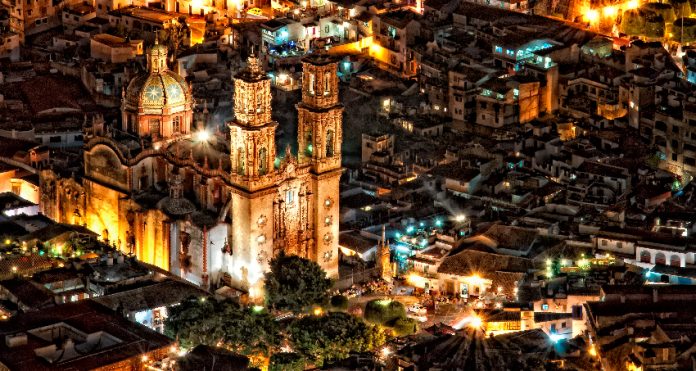
Taxco, Guerrero
Taxco, a popular tourist destination in Mexico Comisión Mexicana de Filmaciones from México D. F., México, CC BY-SA 2.0

International tourists and visitors spent almost US $16.5 billion in Mexico between January and July, an increase of nearly 65% compared to the same period of 2021, Tourism Minister Miguel Torruco reported Sunday.

Data from the national statistics agency INEGI show that just over 36.8 million tourists and visitors (day trippers and cruise ship passengers, for example) spent $16.48 billion here in the first seven months of the year.

The monetary figure is 64.6% higher than that for the same period of last year and 8.3% above that for 2019, when the tourism sector hadn’t yet been affected by the coronavirus pandemic. Foreigners’ expenditure last month totaled $2.67 billion, a 21% increase compared to July 2021.

In a statement, Torruco also said that just under 21.7 million international tourists came to Mexico between January and July, a 25.5% increase compared to the same period of last year, but a 17.3% decline compared to 2019.

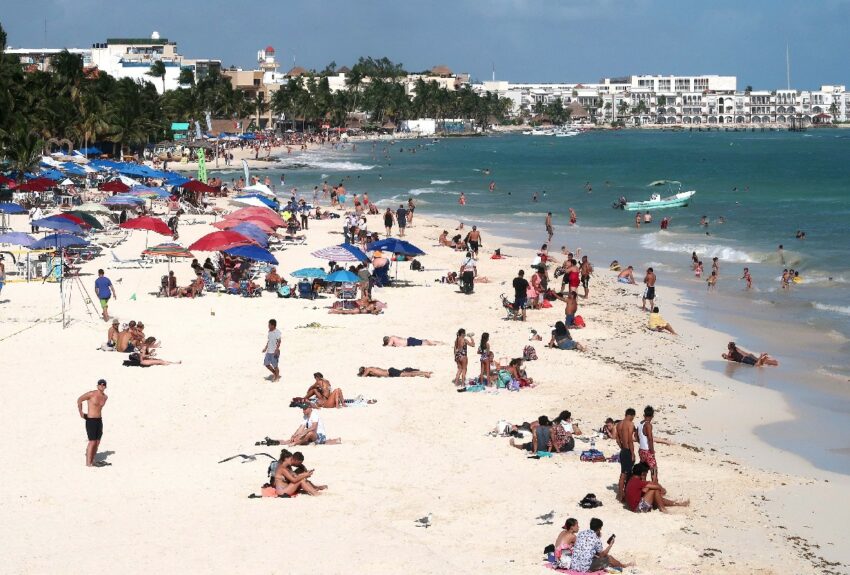
Beach in Mexico
Tourists on a Mexican beach/Twitter

They spent an average of $719 each while in the country, an increase of 32.9% compared to last year. Those who arrived by air – just over 12.5 million people – spent $1,131 on average, a 3.4% spike compared to 2021.

In a Twitter post on Sunday, Torruco highlighted the increase in tourism revenue, declaring that it showed that Mexico is on a “good path.”

In another post on Monday, the tourism minister predicted that more than 2 million Mexicans will travel within the country this upcoming Independence Day long weekend, injecting an anticipated 29.6 billion pesos (US $1.5 billion) into local economies.

Hotel occupancy of 60% or higher is expected in several destinations including Acapulco, Mexico City, Cancún, Puerto Vallarta and Los Cabos.

Passenger numbers at airports in the last three cities exceeded 2019 levels in July, providing evidence that the tourism sector is recovering from the pandemic-induced downturn.

Mexico News Daily