Home Blog Page 961

The indigenous motorcycle gang plaguing Chiapas

0
Members of the Motonetos detain two police officers in Chiapas
Members of the Motonetos detain two police officers in Chiapas a year ago.

The southern state of Chiapas has been plagued by violence in recent months, carried out by a type of criminal group not usually associated with Mexico: a motorcycle gang.

On June 14, videos circulated on social media of clashes between heavily-armed men in San Cristóbal de las Casas, a major city in the southern state. Two groups exchanged fire as they reportedly sought to control a local market, which has also turned into a distribution point for “illegal merchandise,” according to the local news organization Chiapas Paralelo.

At least one person was reported to have been killed during the shootout, which lasted several hours and forced residents to seek shelter in their homes and shops. Several roads were blocked and a number of cars were burned. The police and National Guard allegedly only arrived on the scene after the gangs had left, according to local media reports.

Several vendors in the market, according to an investigation by El País, named the group behind the violence as the Motonetos (Scooters). One expert stated that the group’s members largely came from the indigenous Tzotzil community. “Those who call themselves the Motonetos are children of … displaced Tzotzil [living] in the poorest outskirts of the city,” Marina Page, coordinator of Sipaz, a human rights non-profit working in Chiapas, told El País.

This was not the only recent incident attributed to the Motonetos. On June 17, a group of hooded gunmen opened fire on police and overturned a trailer along a main road in the town of Oxchuc, 50 kilometers east of San Cristóbal. Local media reports alleged this was carried out by the same gang.

InSight Crime analysis

The Motonetos are a unique type of criminal group in Mexico, allegedly recruiting heavily from local indigenous communities, profiting from local criminal economies and acting as a link to larger criminal players.

The group obtained its name through its members’ mode of transportation, traveling by motorcycle and scooter with armed passengers riding behind the drivers. The Motonetos have been blamed for a slew of crimes, including kidnapping and murder, among others.

However, according to Carlos Rafael Coutiñ, a local journalist, the Motonetos mainly draw their income from local drug trafficking, control of prostitution and the production and sale of what has become known as “ethno-pornography.” This type of pornography, according to a BBC report, exclusively features people from indigenous communities and is often created via coercion and blackmail.

Coutiñ told InSight Crime that the violence in San Cristóbal de las Casas was due to a split between two Motonetos leaders, who were fighting for control of the market to sell this pornographic material, as well as drugs.

Coutiñ added that the Motonetos came from the Tzotzil community in San Juan Chamula, just north of San Cristóbal. He stated that they had also in the past been referred to as the San Juan Chamula Cartel.

Chiapas consistently ranks as the poorest state in Mexico, with its indigenous communities having been particularly disadvantaged due to a long history of marginalization.

However, Coutiñ dismissed the idea that the Motonetos were simply a motorcycle gang made up of impoverished youths with nothing to do. According to him, while the group has no formal alliances to larger cartels, they have regularly been recruited by groups such as the Jalisco New Generation Cartel to aid in drug trafficking operations.

Additionally, he warned that the Motonetos wielded large influence in local politics. The shootout in San Cristóbal de las Casas was “nothing out of the ordinary.”

“This is an everyday occurrence,” he said.

Reprinted from InSight Crime. Peter Appleby is a writer with InSight Crime, a foundation dedicated to the study of organized crime.

Rescue of buried 16th-century chapel proceeds in Puebla

0
Volunteers at work in the chapel.
Volunteers at work in the chapel. Yo Restauro Patrimonio

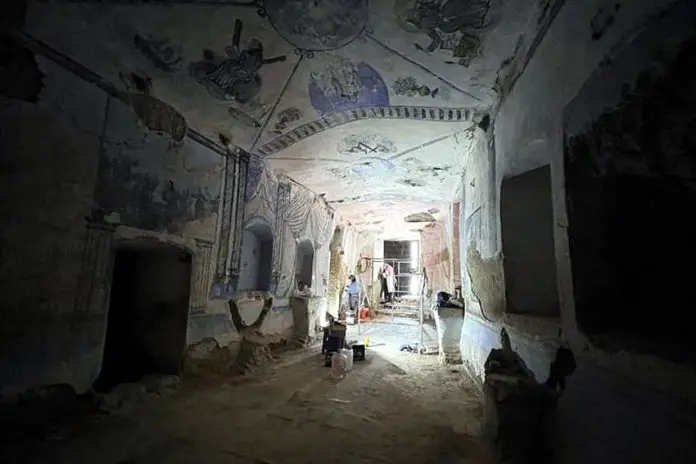
Restoring a 16th century chapel in southern Puebla that partially collapsed in an earthquake is the goal of a team of volunteers that that has been working on the project for the past month.

The vault and arches of the so-called Capilla Enterrada (Buried Chapel) collapsed during an earthquake in the 1970s. It has remained closed ever since.

But in late May a team of archaeologists, restorers, architects, historians and others began the arduous task of restoring the chapel to its former glory – and the first stage of the project has now concluded.

Located within the Tehuacán-Cuicatlán Biosphere Reserve – a UNESCO World Heritage site – in the municipality of Zapotitlán, the Capilla Enterrada is now in a much better state than it was a month ago, although there is still plenty more work to do.

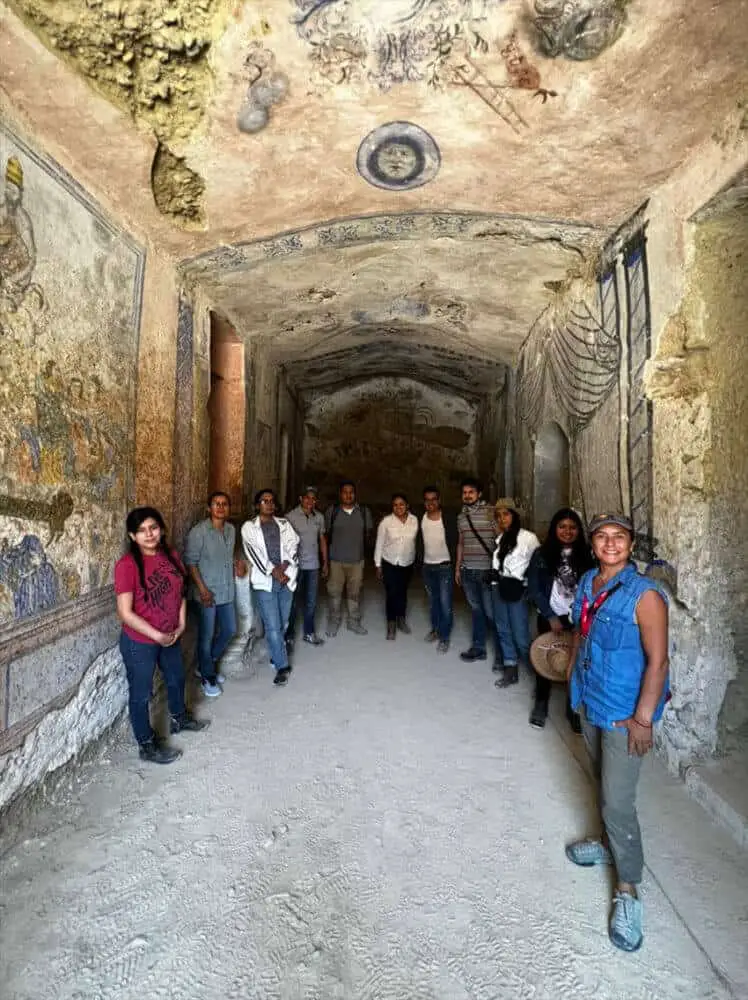
Volunteers inside the Capilla Enterrada.
Volunteers inside the Capilla Enterrada. Facebook / Capilla Enterada Restauración

Led by the restorer Norma García, the volunteer team has removed rubble from the chapel, disinfected it and carried out work to strengthen the structure. It has also begun the restoration of the murals on the chapel’s walls and installed mesh to prevent birds and bats entering via a previously-installed provisional door that was removed.

The second stage of the project, which will entail additional reinforcement work, will begin at a later, as yet unspecified date. Members of the specialist team are looking at historical images of the chapel that will help them restore elements of the structure that have been lost, the newspaper Reforma reported.

García – founder of Yo Restauro Patrimonio (I Restore Heritage), a civil society association dedicated to raising funds for restoration projects – said the chapel’s function as a religious location will be recovered once the restoration work concludes. Before its partial collapse, the chapel – located about eight kilometers northeast of the town of Zapotitlán Salinas – was frequented by people participating in religious processions, especially during Holy Week. Centuries ago, it gave shelter to people traversing a colonial area trade route.

After it was built in the 16th century, the structure was initially used as a storehouse for salt, which continues to be mined in the area. It subsequently became a chapel replete with murals that were painted in the 16th century on the instructions of a Spaniard who owned the land on which it was built. It was repainted with new religious scenes in the 19th and 20th centuries, said Jesús Joel Peña, a historian who carried out an iconographic analysis of the murals.

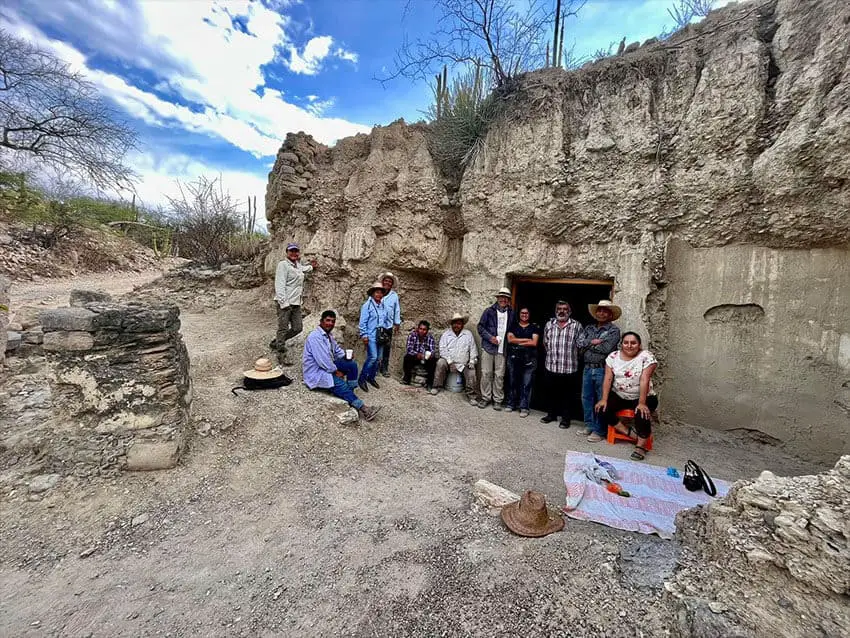
Project leaders pose outside the entrance of the chapel.
Project leaders pose outside the entrance of the chapel. Facebook / Capilla Enterada Restauración

While the members of the expert team are donating their time, the restoration project – which is endorsed by the National Institute of Anthropology and History (INAH) – has received financial and material support from private companies including Oxical, a supplier of restoration and conservation materials.

Local authorities have also supported the project, but Yo Restauro Patrimonio is nevertheless seeking additional donations of money and materials as well as more volunteers. García told Reforma that the project could be finished within three years if all the required support is found. Allowing the local community to use the chapel is crucial to ensuring its long-term survival once the current conservation efforts have concluded, she added.

“It will be hard to maintain a building that has been restored if it doesn’t have a function within the community – it doesn’t matter if you’ve invested millions of pesos,” García said. “In this case, the [local] people really value it and once some of its religious functions resume, [there will be] all the more reason for it to be preserved,” she said.

With reports from Reforma and La Jornada 

Cocaine, meth and pot-laced snacks found in suitcase full of candy in Jalisco

0
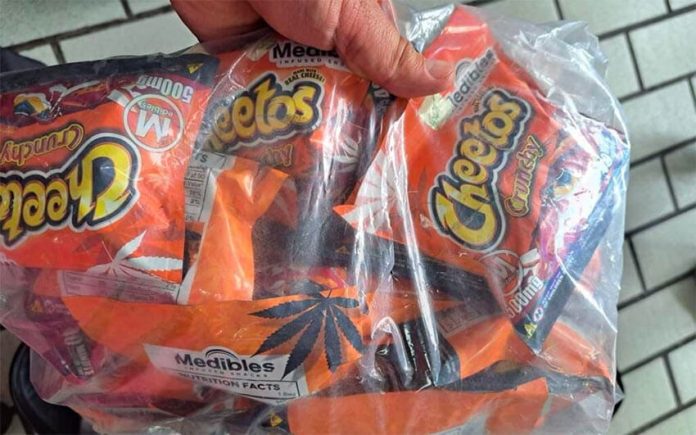
Some of the drug-laced goodies that were found in a suitcase.

A suitcase crammed with cannabis-laced cookies, gummies and Cheetos —  along with more than 100 doses of cocaine and methamphetamine was discovered last week in Atoyac, Jalisco.

The Attorney General’s Office in Jalisco announced the seizure, which occurred on June 23 when Mexican army soldiers were conducting a surveillance operation at an intersection in the municipality.

The suitcase apparently belonged to the Jalisco New Generation Cartel (CJNG) because some of the packaging included the criminal group’s insignia and the letters “CJNG,” according to media reports.

The plastic packages inside a suitcase included 1.24 kilograms of cannabis cookies, 3.65 kilograms of cannabis gummies, 700 grams of Cheetos Crunchy with a cannabis derivative, 290 grams of candy that contained marijuana, an indefinite number of marijuana joints, and 137 doses of cocaine and meth. Also found was 3.74 kilograms of narcotics in packages with labels such as Medicated Rice Krispies Bar, Weed Tarts, Gello gelatin, Original Skittles, Froot Loops Krispie Bar, Purple Punch and Green Crack.

The contraband will remain in the hands of drug specialists in the Attorney General’s Office while they analyze the content and chemical composition of the products.

No arrests were made, officials said shortly after the “narco suitcase” was found, but an investigation has been started. There was concern because the labels and packaging found normally go on products that are consumed by children and teens.

The municipality of Atoyac, Jalisco, is on the shores of the Laguna de Sayula about 25 kilometers from Lake Chapala and 155 kilometers south of Guadalajara. 

With reports from Debate and Noticias PV

Urban artists’ murals change the face of Durango

0
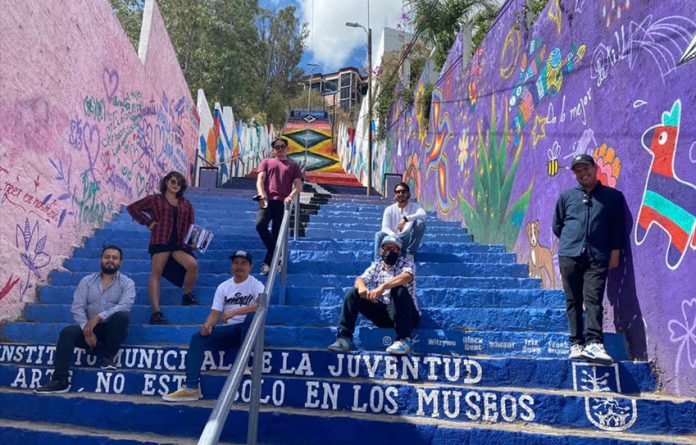
Participating artists pose on the stairs up Remedios Hill.
Participating artists pose on the stairs up Remedios Hill. Facebook / IMJ Durango

Durango city has been given a makeover after urban artists painted murals in a competition backed by the municipal government. The City Graff competition saw murals painted on the stairs of one of the city’s main viewing points, Remedios Hill, among other locations, and was organized by the city’s Municipal Youth Institute (IMJ).

There were 100,000 pesos’ (US $5,000) worth of prizes split between five artists, whose works were judged for their originality, detail, realism and accuracy. Artist Mario Luna took the first prize. On one part of the vibrantly painted stairs of Remedios Hill, an artist left a message in large white capitalized letters: “Art isn’t just in museums.”

The municipal government has long supported street art: 288 new works have been painted on the walls of the city across 4,669 square meters during the current administration, Mayor Jorge Salum del Palacio said.

“With the rescue of emblematic places such as these stairs, we also give a space to artists to channel their concerns with proactive messages,” Salum said from the stairs of Remedios Hill during the awards ceremony.

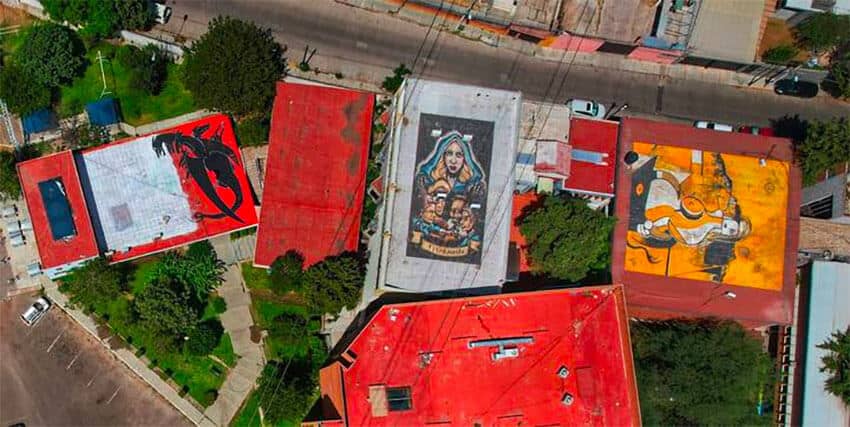
Durango's new 'aerial museum,'
Durango’s new ‘aerial museum,’ visible from city’s cable car system.

The director of the Durango IMJ, Rosina García, said that street art is a positive way for young people to avoid antisocial behavior and to maintain their mental health, which she added was particularly important due to the damaging effects of the COVID-19 pandemic.

The mayor visited another project promoting urban art in the city on Sunday. Salum took the city’s cable car to see the project “Cielos de Leyenda,” or Skies of Legend, from above. The project, being described as an “aerial museum,” will present 10 large scale visual representations of local myths and legends on the roofs of buildings. The fourth work has now been completed which tells the story of “The First Man,” a myth in which a diminutive figure fights against the sun to stop mankind’s creation.

With reports from El Sol de Durango

International ballet festival will be a first in Puebla

0
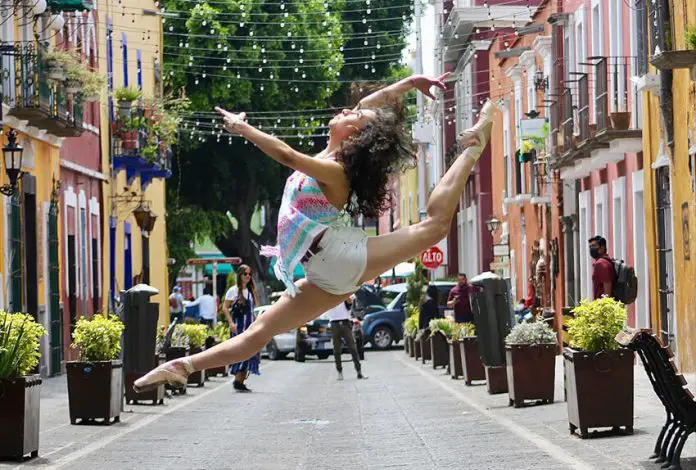
Marifer De Regil, a Puebla Classical Ballet Company dancer, in Callejón de los Sapos, Puebla.
Marifer De Regil, a Puebla Classical Ballet Company dancer, in Callejón de los Sapos, Puebla. Bardo Cardona / Compañía de Ballet Clásico Puebla

The first edition of an international ballet festival will come to Puebla city next month.

The Puebla International Festival of Classical Ballet (Festival Internacional de Ballet Clásico de Puebla) will see Mexican ballerinas perform alongside others from the United States, Japan, Cuba and Chile. The dancers will exhibit their talents in the city’s Teatro Principal from July 11-16.

The festival is being run by the Puebla Classical Ballet Company (Compañía de Ballet Clásico de Puebla) and will include free events, conferences and master classes. The classes will be taught from 10 a.m. to 4 p.m. during each day of the festival and will include classical ballet, physical conditioning, classical repertoire, contemporary dance and jazz, among other dance styles.

There will be five conferences on the themes of nutrition, injury prevention, sport psychology, business administration for dance and a conference on “How to avoid self-sabotage.”

A free performance will take place at the Teatro Principal on July 15 at 8:30 p.m. and the closing gala will be on July 16 at 6 p.m. The gala will feature international dancers including Cuban-born American Rolando Sarabia, who won the coveted Benois de la Danse prize in 2011.

Five scholarships will be awarded to young ballet dancers to continue their training in the United States and Europe and 10 scholarships will be given to budding ballerinas to attend national congresses and competitions.

Tickets for the closing gala start at 316 pesos (US $16) and can be purchased here.

With reports from E-Consulta and Milenio

At patron saints’ festivals in northern Jalisco, narcos demand half the proceeds: bishop

0
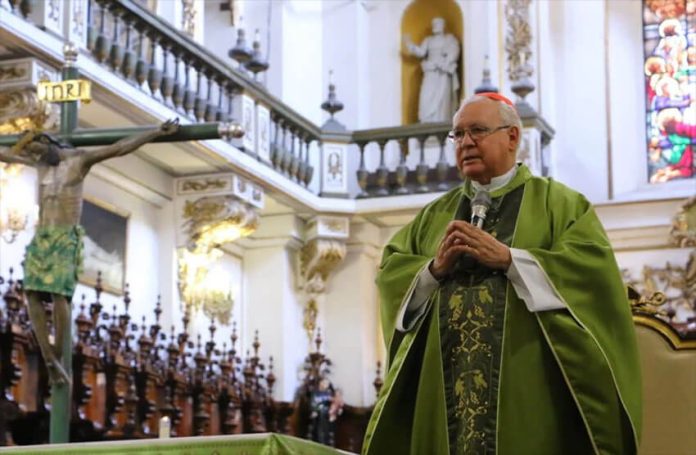
Guadalajara Archbishop José Francisco Robles Ortega.
Guadalajara Archbishop José Francisco Robles Ortega urged greater security for residents of the region. Facebook

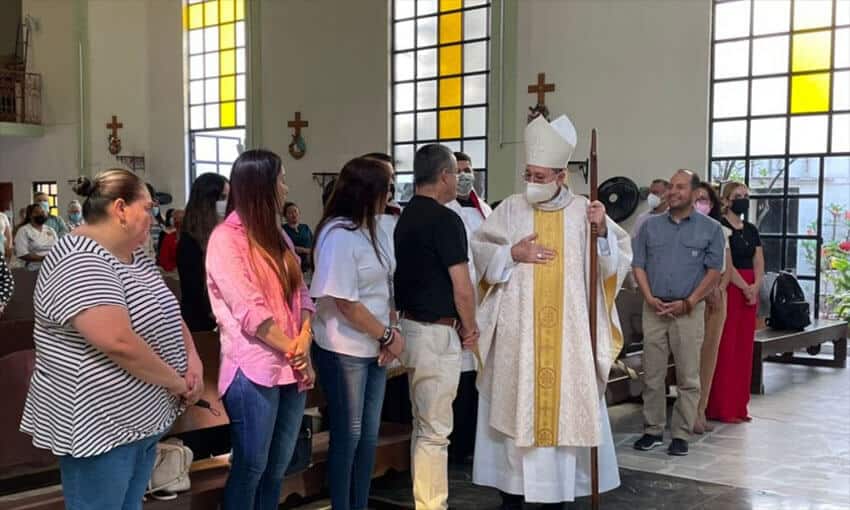
Crime bosses in northern Jalisco only allow patron saints’ festivals to go ahead if parish priests agree to give them half the proceeds, according to the archbishop of Guadalajara.

“In order to celebrate the patronal festival – the town fair in other words – all the parishes in the area have to obtain the permission of the plaza chief. The plaza chief authorizes the priest to hold the patronal festival but he has to … [hand over] 50% of the festival revenue,” Cardinal José Francisco Robles Ortega said.

The archbishop, a cardinal since 2007, also revealed that he was stopped and interrogated by criminals last week.

“I went to the north of the state, to the border area with Zacatecas precisely, and I was stoped at two roadblocks, and they’re obviously organized crime roadblocks,” Robles said. “They demand you say where you’re coming from, where you’re going, what your job is, what you’re doing,” he said.

Zacatecas Bishop Sigifredo Noriega Barceló speaks with worshipers.
Zacatecas Bishop Sigifredo Noriega Barceló speaks with worshipers. NTR Zacatecas

Robles noted that Zacatecas Bishop Sigifredo Noriega Barceló had the same experience while in northern Jalisco last week. While such occurrences are common in that part of Jalisco – the home state of the powerful Jalisco New Generation Cartel (CJNG) – they are not incidents “we should grow accustomed to,” the archbishop said.

Noriega told reporters he was stopped by armed men last Thursday while on his way to visit communities in Jalisco that are part of his diocese.

“We were going from Huejuquilla to Tenzompa,” he said. “… What struck me was that it wasn’t the National Guard or the army [who stopped us]. They were people from one of the crime groups,” Noriega said.

He added that it was the first time he had encountered an organized crime checkpoint, an experience that frightened him.

“Of course fear is present. We take the [safety] measures that everyone takes [but] there’s no special protection [for bishops],” Noriega said, speaking just days after two priests were murdered in the Sierra Tarahumara region of Chihuahua.

His daunting experience occurred in the municipality of Huejuquilla El Alto – where eight state police officers were detained by armed civilians last November – while the organized crime roadblocks Robles encountered were in Totatiche and Villa Guerrero. All three municipalities border Zacatecas, one of Mexico’s most violent states.

“What I say is why?” said the cardinal. “With what authority does an organized crime group block you, stop you and investigate you?”

Echoing a call from the Jalisco State Human Rights Commission (CEDHJ), Robles urged authorities to provide greater security to the residents of northern Jalisco. The CEDJH last week called on all three levels of government to ramp up security due to the presence of rival criminal groups, namely the CJNG and the Sinaloa Cartel.

With reports from El Universal, Aristegui Noticias and Reforma 

At Michoacán orphanage, kids get not a waystation but a home

0
Hogar Irekani orphanage
As director of Morelia, Michoacán’s Hogar Irekani orphanage, Sandra Martínez is always looking for opportunities and experiences for her 26 young charges.

Children end up in Sandra Martínez Mendoza’s care for a variety of reasons.

As director of Hogar Irekani orphanage in Morelia, Michoacán, she’s seen kids that have experienced abuse, neglect, poverty and their caregivers’ deaths.

The stories are as endless as they are heartbreaking: the three young children found tied all night at the orphanage door when the staff opened it to get the daily bread; the young girl abandoned by her parents because of her disfigured face; the baby rescued from her mother by the DIF family agency because the mother was suffering both mental illness and abuse from her husband.

Children who arrive at Hogar Irekani are rarely adopted, although Martínez told me about one 12-year-old boy who was adopted a year ago by an older childless couple with great success.

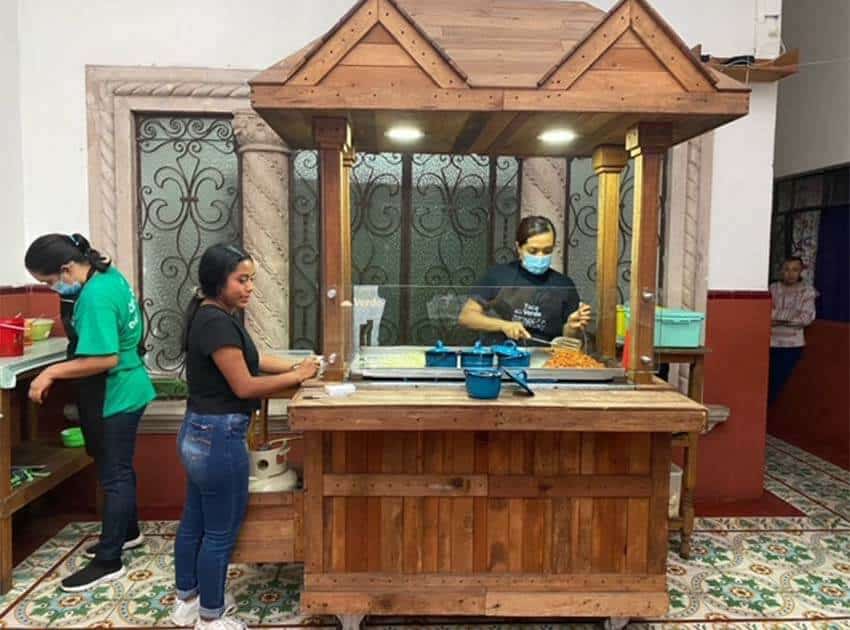
Taco Verde
Older children learn work skills by staffing the orphanage’s new Taco Verde restaurant.

But for a pair of brothers in her care, the process hasn’t been successful: both were adopted and returned twice from their adoptive homes. Not surprisingly, Martínez says, the double trauma of being rejected twice has taken its toll.

Martínez began her childcare career 20 years ago, first as a worker in another orphanage in Morelia. She worked her way up the ladder to become its administrator.

Although she left there when the new director’s style differed from hers, Martínez knew that working with children was her destiny.

“It was through the children that I found my God,” she says.

Her search for a purposeful life led her to open Hogar Irekani. “Irekani” in Purépecha means “to live.”

Martínez began with 12 children nearly nine years ago, several of whom were children from her previous orphanage who were expelled for various reasons. She also took in kids from Morelia and Zihuatanejo.

Today, the orphanage has swelled to capacity, with 26 children whose ages range from 14 months to 26 years,

As the numbers have grown, so have the challenges.

“It takes 60,000 pesos to run the orphanage every month, of which US $2,000 [about 40,000 pesos] come from the El Buen Pastor Fund in Washington D.C.,” Martínez explains. The fund provides recipients with basic needs like nutrition, clothing and shoes and medical and dental care, plus school uniforms and enrichment opportunities.

But although the donations help, it is still not enough to provide for the children. And so, after she had a chance to visit a vegan restaurant in another city where she tasted this food for the first time, Martínez got an idea and opened a vegan taco stand at the orphanage on the weekends.

Taco Verde, which opened in April, has been so successful that it’s expanded to a full-service restaurant that operates from Monday through Saturday.

A professional cook and Martínez oversee the restaurant, which the children run, giving them training in many life skills such as handling money, budgeting, serving customers and making wise purchases. They also learn many practical life skills such as cleaning and cooking.

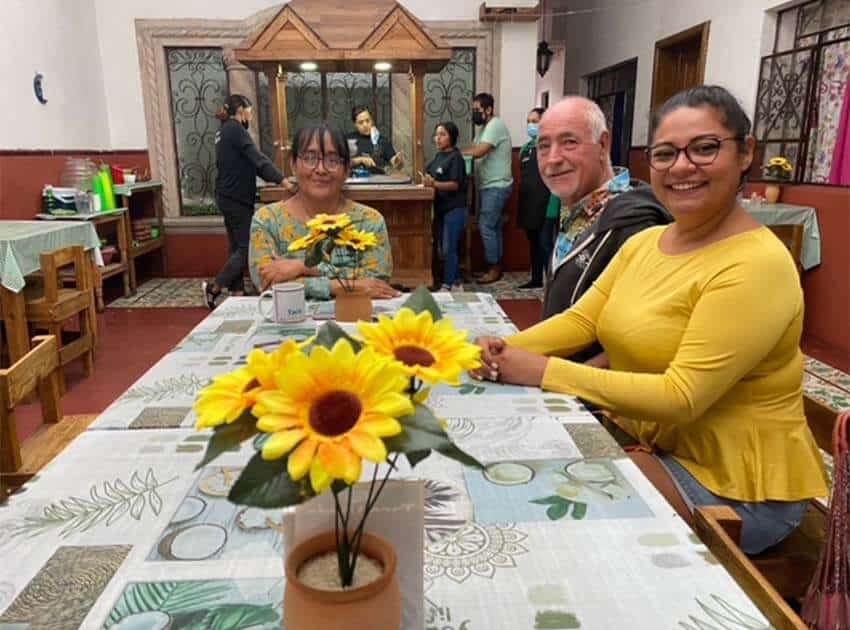
Taco Verde restaurant in Morelia
Having a good time while waiting for a meal at the orphanage’s vegan restaurant, Taco Verde.

The restaurant has also inspired some of the young residents: three of them were inspired to start their own smoothie business within the restaurant, buying all the ingredients and keeping whatever profits they make.

The venture’s been successful enough that Martínez decided it was time to open a second location for the orphanage and keep the old building for their blossoming business.

The new orphanage, located about five minutes away, is lovely and bright, with two dormitories for the girls, arranged according to age, and one for the boys.

The new site’s kitchen is a cook’s dream come true, and the dining rooms can serve all occupants simultaneously, although food is sometimes doled out in shifts due to school schedules. There’s a well-stocked library with a study area, a cozy TV room and a space in the courtyard to play.

Despite these sorts of challenges, there are precious moments and memories to be made at Hogar Irekani, thanks to Martínez’s inventiveness and the generosity of people like donor Jim Conahan. Each year, Conahan and other owners of the BayView Grande Resort in Ixtapa gift the use of their condos for a full week in July so that all 28 residents can go on a vacation together, all expenses paid.

Other experiences that Martínez has arranged include a recent “princess” event in Morelia, where girls got to dress up in style and attend a special dinner with escorts.

Martínez is always looking for opportunities like these to enrich the children’s lives or to make the orphanage more viable. Her future ideas include a possible bed and breakfast or hostel in the old building, where the restaurant is currently located.

Martínez also wants to build a two-story dormitory for boys. which would cost at least 200,000 pesos. The site is already running out of space and has had to turn boys away.

The restaurant venture will hopefully help the orphanage cover expenses, but raising funds and sponsors is a priority now, Mendoza says, as needs continue to arise.

  • To donate to Hogar Irekani and receive a charitable tax receipt, contact the El Buen Pastor Fund at help@elbuenpastorfund.org or send a check to El Buen Pastor Fund, P.S. Box 6, Custer WA 98240. You can also call Sandra Martínez at 443-688-4106 or 443-166-5807, email her or visit the orphanage at Amado Nervo #260, Colonia Otera, Morelia, Michoacán.

The writer divides her time between Canada and Zihuatanejo.

Maya Train’s section 5 deemed ‘environmentally feasible,’ wins approval

0
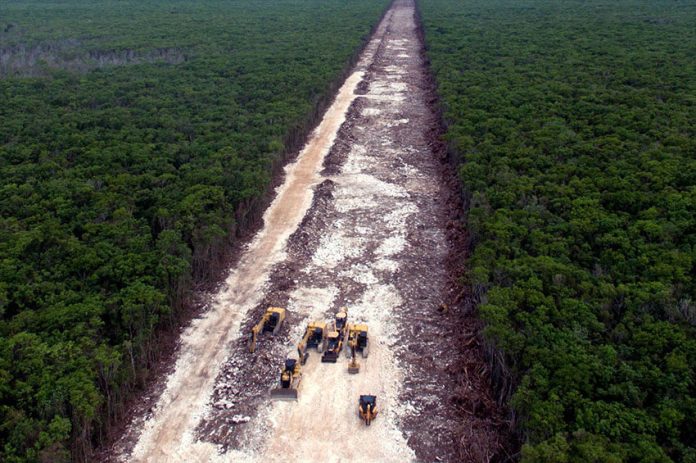
Land cleared for the Maya train near Playa del Carmen, in April.
Land cleared for the Maya Train near Playa del Carmen.

The federal Environment Ministry (Semarnat) has approved the environmental impact statement (EIS) for the southern section of the Quintana Roo stretch of the Maya Train railroad, determining that the project is “environmentally feasible.”

Conditional approval of the more than 6,000-page EIS for the controversial Playa del Carmen-Tulum section (Tramo 5 Sur) was granted in just 36 days after being submitted to Semarnat by the National Tourism Promotion Fund (Fonatur) in mid-May.

A federal judge last month issued a definitive suspension order against construction of the 67.6-kilometer section — part of the longer Cancún-Tulum stretch — due to the absence of an authorized EIS, but that ruling now looks set to be overturned. Fonatur, which is managing the US $10 billion, 1,500-kilometer Maya Train project, has already applied for the revocation of the definitive suspension order, but the resumption of work on Tramo 5 Sur — stalled since mid-May — could still be delayed by four provisional suspension orders.

There is considerable opposition to the Playa del Carmen-Tulum section because it will run through jungle and over subterranean rivers and cenotes (natural sinkholes). The definitive suspension decision followed the granting of a provisional suspension order due to the “imminent risk” of “irreversible damage” to the Mayan jungle, caves, subterranean rivers and cenotes, and the absence of environmental studies and permits.

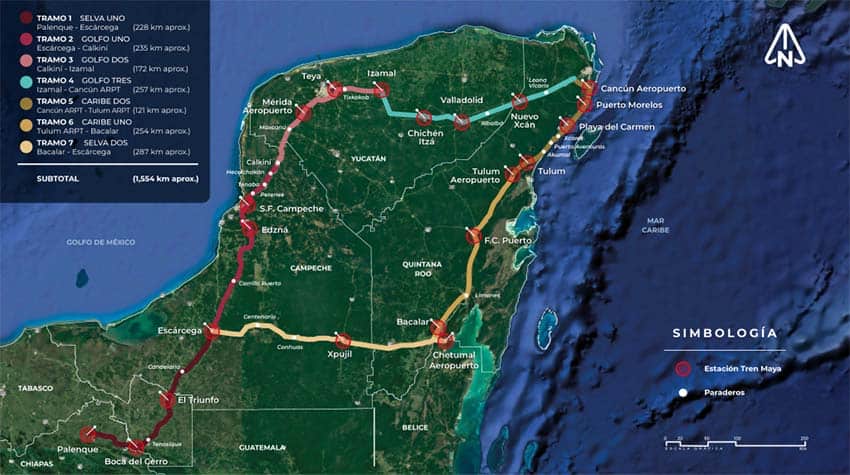
Route map of Mexico's planned Maya Train
There are seven sections of the planned railroad, which stretches from the state of Chiapas to Quintana Roo and the state of Yucatán.

While Semarnat’s approval of the EIS is conditional, the conditions or restrictions imposed on the construction of Tramo 5 Sur — to be built by a subsidiary of the Grupo México conglomerate — have not been made public.

The EIS acknowledged that 485 hectares of jungle and land covered by secondary vegetation will be affected and described the impact as “critical.” It also envisaged “severe adverse” impacts to the habitat, the scenic quality of the landscape and natural sites and monuments. However, the negative impacts identified are “remediable,” the EIS said.

In a document submitted to Semarnat earlier this month, Greenpeace and the Center for Biological Diversity asserted that the EIS was invalid because it was published after work on Tramo 5 Sur began. The environmental organizations also said that the EIS had “a great number of omissions [and] imprecisions” and even “false information” about the limestone soils in Quintana Roo.

Its rapid approval is no surprise given that the Maya Train is one of the pet projects of President López Obrador, who asserts that the railroad will spur social and economic development in what he describes as Mexico’s long-neglected southeast.

Environment Minister María Luisa Albores acknowledged early last month that four sections of the train — including section 5 — didn’t have definitive environmental approval, but explained that their construction had been able to proceed thanks to a presidential decree issued in November.

López Obrador in late May claimed that the Mérida-based judge who issued the definitive suspension order against Tramo 5 Sur had failed to take into account that the decree, which established the government’s infrastructure projects as matters of public interest and national security, allowed them to proceed with only provisional approval.

The president has pledged that the railroad — on which tourist, commuter and freight trains will run through Tabasco, Campeche, Yucatán, Quintana Roo and Chiapas — will begin operations in 2023, but two people working on the ambitious project claimed earlier this month that the it won’t be finished while the current federal government is in office, if at all.

With reports from Reforma, El Economista and Proceso

On the business end of art: stories of foreign-owned galleries in Mexico

0
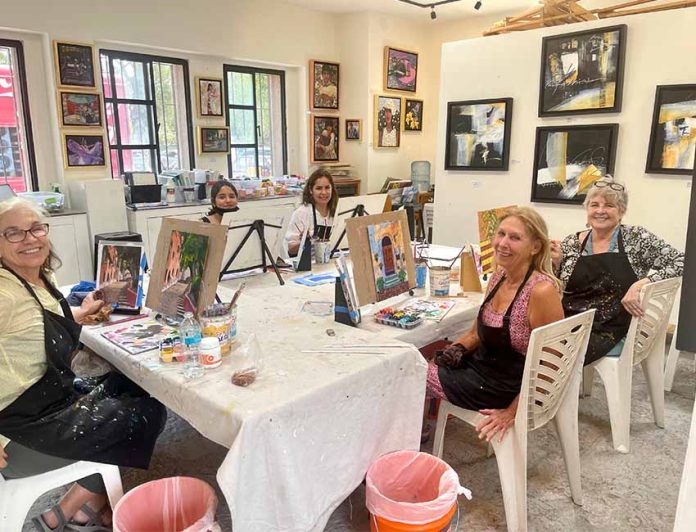
Galeria San Francisco gallery, San Miguel de Allende
Expat Susan Santiago's Galería San Francisco art gallery in San Miguel de Allende, Guanajuato, both sells art and gives community art classes.

What is it about Mexico that brings out talent and appreciation for art? For the last 100 years, foreigners have flocked here to develop a latent appreciation for art or even find one to begin with. 

Art galleries abound in Mexico. The number-one art market, unsurprisingly, is Mexico City, but in second place is San Miguel de Allende, Guanajuato, powered by its expat population and tourism. Often these galleries speak English, a plus if your Spanish is not up to the specialized art vocabulary.

Some foreigners have decided to indulge their passion for art by starting art galleries. Their organization and business strategies can vary quite a bit, but they all have one thing in common: they are enthralled by the artists they have found here, sometimes including themselves. 

If there is such a thing as a “classic” art gallery for foreigners in Mexico, Susan Santiago’s Galeria San Francisco in San Miguel de Allende might be it. 

art by Mulege artist Fernando Uriel Ortiz
Acrylic painting by local Mulegé artist Fernando Uriel Ortíz, supported by Richard Carr.

Santiago was an art teacher for 30 years before coming to San Miguel in 2011. Retirement allowed her to shift her time not only to painting but to starting an art gallery. 

Her gallery is in the Fabrica Aurora, a major commercial and cultural hub in the city where several art galleries are located. This allows her to offer classes and more.

Her gallery is “foreign” in two senses — most of her artists are foreign-born and so are most of her buyers. Most of the works are figurative, even folkloric, which appeals to foreign buyers more so than Mexican ones, who tend to prefer more modern and abstract work.

Growing expat populations in other locations have encouraged more folks to take a chance on opening a gallery. Carl Boudreaux and his wife Paula decided to do just that in the port of Progreso, Yucatán, which had no such gallery before they created the House of Bourdeaux.

Carl hopes to sell some of his own work, of course, but his main inspiration is the abundance of undiscovered talent on the peninsula, along with the growing number of people who come here to live, winter and even visit on cruise ships.

Mexico City supports more specialized and avant-garde work. Mexican gallery owners are indeed international and cultured, but foreign entrepreneurs can find niches here as well. 

After a couple of false starts, Michael Swank came in 2017 to live in the capital permanently. Since then, he has gotten creative to make this decision work economically, starting with renting rooms on Airbnb, then by providing specialized support for artists looking to reside in Mexico temporarily. 

He has hit his stride with the founding of PRPG, an art community incubator that supports Mexican and international artists, especially LGBT+ ones with exhibitions, residencies, specialized feedback and cultural events. 

Mexico City art incubator owner Michael Swank
Michael Swank came in 2017 to Mexico and opened PRPG, an art community incubator in Mexico City.

Swank takes advantage of both technology and his knowledge of the market in the United States, partnering with  ARTSY and Dab Art Co., online businesses that connect artists, galleries and collectors. Much of Swank’s work is related to the LGBT+ community but is not exclusive to it. His work has attracted the attention of the Mexico City Culture Ministry and others.

Almost by definition, working artists are entrepreneurs, in that they cannot wait around for someone to discover and market them. One obvious answer is to create a gallery that focuses on one’s own work, but this is the most difficult to make successful. But artist and designer Kiki Suárez manages to do this by adding a unique twist at KikiMundo

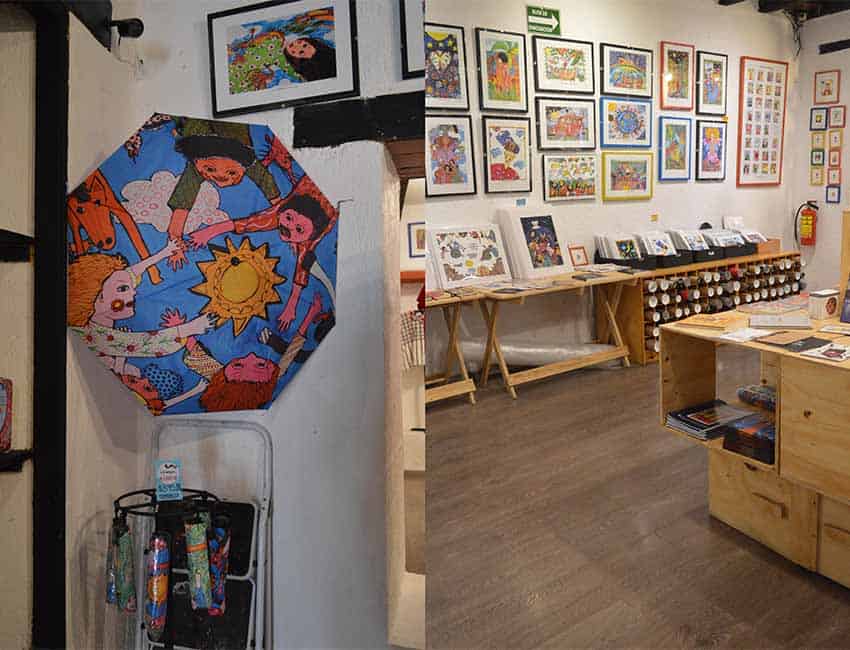
Her highly stylized, colorful drawings lend themselves well to everyday items and small collectibles. Her store in the tourist zone of San Cristóbal, Chiapas, has been a thriving business for some time, getting a boost from the establishment of a cafe and restaurant next door. 

“Gallery” does not always mean a sophisticated building in an upscale neighborhood. Richard Carr’s Artistas de Mulege is a community-driven effort in Mulegé, Baja California Sur. 

It began in 2017 to provide monthly sales opportunities for both local artists and artisans, whose work includes painting, recycled tire sculpture, glasswork and various crafts. Most of its work is done monthly under the Highway 1 bridge, which may seem strange until you realize that large quantities of shade are important in the desert, so the location is actually a popular community gathering place. 

They have since negotiated using the ample wall space at the KM 128 Road Café in town to display works for sale. But their dedication to “the bridge” is shown by community murals the organization painted on five of the bridge’s supporting columns in 2021.

Even by narrowing the focus to foreign-owned galleries, there are far more out there than can be covered here. One of the better ways to find good art galleries in your corner of Mexico is through social media. 

The group Talk Baja on Facebook, for example, was particularly helpful for finding galleries in San José del Cabo. Here are two of a number of suggestions I got for where to look. 

KikiMundo gallery in San Cristóbal de las Casas. Chiapas
KikiMundo gallery in San Cristóbal de las Casas, Chiapas.

One is the Ida Victoria Gallery, located in the historic district.

It also has an in-house custom framing studio. The Pez Gordo Gallery is the brainchild of Dana Lieb, as is the popular art walk now held in downtown San José de Cabo.

Leigh Thelmadatter arrived in Mexico 18 years ago and fell in love with the land and the culture in particular its handcrafts and art. She is the author of Mexican Cartonería: Paper, Paste and Fiesta (Schiffer 2019). Her culture column appears regularly on Mexico News Daily.

Dress fancy and avoid the clowns: a primer on attending parties in Mexico

0
baptism party ideas
Even for a baby's baptism, this is the level of party Mexicans often aspire to if they can afford it.

Y’all ever been to a big party here in Mexico? They are no joke.

For officially planned parties for things like birthdays and weddings, people tend to go all out, but even smallish informal get-togethers are usually what I’d consider kind of a big deal. The music is loud, the drinks flow freely and there’s typically no official end-time unless you’ve rented a salón de fiestas (event hall), in which case the party may simply move to a new place once the clock’s run out.

Kids and babies are often in tow, and if there were official invitations sent out, you can expect to see some spectacularly high heels and skintight fancy clothes. There are even party favors!

This past weekend, I attended a large (to me) party for a family member’s first birthday/baptismal party. It occurred to me that I haven’t really written about the full-blown Mexican institution of parties (one-year-old birthday parties could be their own category, actually). So I decided that there’s no time like the present!

Without further ado, here are some things to expect if you’ve been invited to (or just happened to be walking past and get last-minute invited to) a party.

The kind of extravagance you’re likely only used to seeing at weddings is routinely employed for baby and kid parties. First birthday parties, which are also often baptism parties as well since babies tend to be baptized around their first birthday, are especially a Very Big Deal. While in my own country the “party” usually consists of the exhausted parents, a few family members and a cake at home, it’s not uncommon in Mexico to have 50 to 100 or more guests at a catered event in a rented space. Tables and chairs will be decorated in the party colors and feature elaborate centerpieces (which will typically be offered to guests to take home at the end of the night), food and drinks will be served, and there will be a well-decorated mesa de dulces (literally “candy table”) with treats for snacking.

Even if the salón itself is a bit shabby, the decorations will always be on point. The party I went to this past weekend had a Batman theme. This might not sound fancy, but it was: there were black and yellow sequins everywhere and some of the fanciest balloon sculptures I’ve ever seen!

Most parties have a set structure. Initially, a couple of hours pass while the first guests arrive. The ones who went to the church beforehand — typically just family and close friends — are there first. During this period, there are drinks and music (admittedly almost always too loud for my grumpy taste). Platters of snacks are often put on each table for guests to munch on if they want to wait until more people arrive to begin eating.

If it’s a kid’s party, there will almost always be at least a bouncy house or trampoline to ensure that all the children are thoroughly sweaty and dirty by the time they come back to the table. As people finish their meals, the entertainment (often a clown for a kid’s party, perhaps a DJ for an adult’s … more on that in a moment) will begin their performance, which usually involves a lot of audience participation (don’t say I didn’t warn you).

Then, it’s piñata time! I’m not sure why, but I’ve noticed a trend over the past few years of at least two — and up to five — piñatas being brought out. If you’ve got entertainment, they’ll help out with the piñata song before you’re hoarse after singing it 50 times.

After the piñata, there will be pictures in front of the mesa de dulces, the Las Mañanitas birthday song will be sung and then cake will be passed around (pro tip: if the cake is what most excites you about parties, you’ll be waiting for it for, like, four to five hours — at least). After the cake, people will usually start filtering out, party favors in hand.

Party favors! The drinks, the food, the piñata candy — it’s a lot, but it’s not all! In addition to an extra bag of sweets for the children (called an aguinaldo), you may get some extra little goodies as well!

At the party I attended this past weekend, we walked away with two coffee cups, a paper towel dispenser (with a roll of paper towel already in it!), a candle, and (my personal favorite) a lighter, all Batman-themed with the name of the adorable party boy on it. We were also offered the table centerpiece, but the car we would travel back home in was already too full for a giant batman balloon!

Beware of clowns. If you’re at a kid’s party, the entertainment will probably be a clown, and if there aren’t very many kids — because one-year-olds don’t actually have friends — then the clown will focus on the adults.

It’s not that I’m afraid of clowns. But if you’re obviously a foreigner, zeroing in on you can become an important part of their bit throughout the evening, which is something I dread. That said, they’re usually brilliant comics and masters of improv and do provide pretty quality entertainment. But they talk fast, use a lot of wordplay and are often on mics that have about the same level of quality as drive-through menu speakers.

Gifts. Most people bring gifts (often in Liverpool gift bags), but it’s not the biggest faux-pax in the world if you don’t. They’ll be placed on a special table (usually by the mesa de dulces) and are almost always taken home still wrapped up; there’s rarely a “gift-unwrapping” portion of the evening.

I used to think this was strange, but now I appreciate the dynamic of being able to take them home and let my kid open and examine them tranquilamente without me having to profusely thank everyone (and get my kid to do the same during such an overstimulating event) in the moment. And at least for kid parties, thank-you notes shouldn’t be expected; many people don’t even put gift tags or even write “from ____” on the bag!

In case you haven’t figured this out yet: Mexicans are fancy. People, if you don’t want to stick out like a sore thumb, dress up for these things. Men can usually get away with slacks and a button-down shirt with dress shoes, but women are in full hair and makeup, fancy dresses (often tight, short ones) and high heels. So, if you want to look like you belong there at least a little, do not show up in jeans and flip-flops (the exception are the hosts, who often end up changing into “team T-shirts” made especially for the party).

Bedtime? What’s a bedtime? One thing I love about Mexico is that children are always included. “No kids allowed” spaces are few and far between, and getting one’s children home by a certain time isn’t something that most parents worry about.

That is very different from bedtime in the United States, where — at least in my family — it was sacred. Here, the view seems to be that kids will rest when they need rest, and they can always catch up on sleep later.

Extra note on piñatas. Every time I witness a piñata breaking, I feel nervous and often ask myself how many people get sent to the hospital annually after a whack on the head with the stick. As soon as even one piece of candy spills out, adults and children alike nosedive for it, and it becomes a kind of frenzy. There’s often an overlap of this happening while the other person is still swinging, and competition is fierce; if someone isn’t fast enough, then they just don’t get candy — at least not until the party favors are passed out.

So there you have it, folks! There’s a lot to love about parties down here and about a culture that values celebration so much. The world or the country or your relationship may be falling apart, but Mexicans know that celebration is good for the soul, full stop.

I personally believe that the fact that Mexico honors that truth is one of the things that’s making this country — despite some occasional scary stuff — one of the top destinations in the world for tourists these days.

There’s always time and always reasons to be sad. Just be sure to kick your feet up once in a while too!

Sarah DeVries is a writer and translator based in Xalapa, Veracruz. She can be reached through her website, sdevrieswritingandtranslating.com and her Patreon page.