A 26-year-old Guadalajara native has become the first Mexican woman to travel to space, joining a passenger flight Saturday on a rocket built by Blue Origin, an aerospace company founded by Amazon founder Jeff Bezos.
Katya Echazarreta, an electrical and computer engineer and online science educator who was born in the Jalisco capital but moved to the United States at the age of seven, was selected from more than 7,000 applicants in over 100 countries as Space for Humanity’s first ever citizen astronaut ambassador, allowing her to travel to space without forking out a fortune.
Space for Humanity is a United States-based non-profit organization that is dedicated to broadening access to space travel.
Blue Origin’s New Shepherd rocket blasted off from the company’s west Texas launch facility Saturday morning and transported Echazarreta and five other passengers about 100 kilometers above the Earth’s surface into an area considered the boundary of outer space.
The rocket spent just over 10 minutes outside the Earth’s atmosphere, time that Echazarreta used to study the overview effect, a cognitive change in consciousness reported by some astronauts during spaceflight. The young space traveler, a former NASA employee who took a Mexican flag and photos of her family with her on her voyage, told CNN Business that she experienced the overview effect in her “own way.”
“Looking down and seeing how everyone is down there, all of our past, all of our mistakes, all of our obstacles, everything — everything is there,” she said.
“And the only thing I could think of when I came back down was that I need people to see this. I need Latinas to see this. And I think that it just completely reinforced my mission to continue getting primarily women and people of color up to space and doing whatever it is they want to do,” said Echazarreta, who became the second Mexican to enter space after Rodolfo Neri Vela, a scientist and astronaut who was part of a NASA mission in 1985.
In addition to becoming the first Mexican woman to travel to space, the dual Mexican-United States citizen became the youngest American woman to leave the Earth’s atmosphere. The journey was the culmination of a long-held dream.
“Visiting space is a dream I’ve had for as long as I can remember,” Echazarreta said last month.
“I am honored to be representing not just Space for Humanity in this mission, but also all of the little girls and women out there who are dreaming of achieving something bigger, those that maybe just need an extra nudge or an example of someone who looks or sounds like them to help encourage them to take the next step towards their dream.”
Echazarreta, who is currently pursuing a master’s degree in engineering at Johns Hopkins University, told the Associated Press that she was advised to give up her dream of traveling to space when she was a young girl.
“Everyone around me – family, friends, teachers – I just kept hearing the same thing: That’s not for you,” she said.
Now, as a young adult, she is one of only about 600 people who have traveled into space since cosmonaut Yuri Gagarin’s pioneering space mission in 1961. Among that number, fewer than 80 have been women and fewer than 40 have been Black, indigenous, or Latino, AP said.
Mexican parents with young daughters interested in traveling to space will no longer be able to tell them their dream is unobtainable, Echazarreta said. Instead, they’ll have to tell them, “you can do it, too,” she said.
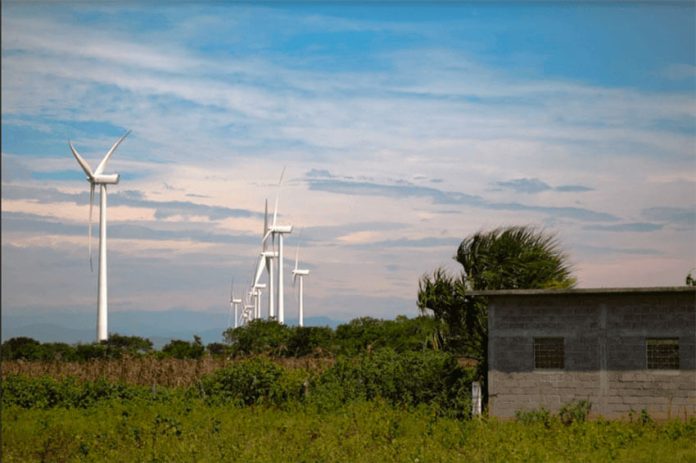
An indigenous community in Oaxaca has won a five-year battle against the construction of a wind farm in the Isthmus of Tehuantepec region.
The Federal Electricity Commission (CFE) canceled contracts that would have allowed the French firm Électricité de France (EDF) to supply it with electricity generated at the Gunaa Sicarú wind park in the municipality of Unión Hidalgo.
The cancelation makes the project unviable because private and foreign companies need a partnership with the CFE to get their power onto the national grid.
It is the first time in 15 years that the federal government has canceled a wind project in the Isthmus of Tehuntepec following a legal challenge from a local indigenous community. ProDESC, a non-profit human rights defense association that provided legal assistance and representation to the community, acknowledged the decision in a statement.
“On Thursday, and after five long years defending their rights to land, territory and natural resources, the Zapotec community of Unión Hidalgo … announced that the … [CFE] had definitively canceled the energy supply contracts with French corporation EDF,” it said.
“With this, the wind park megaproject ‘Gunaa Sicarú’ has been definitively canceled,” the statement added.
“The decision was announced … at Oaxaca’s First District Court, where ProDESC has carried out … litigation regarding the wind park. Related to this litigation, [the federal Energy Ministry] SENER informed about CFE’s decision to cancel the energy supply contracts with EDF, as well as the corresponding electrical inter-connection contract,” ProDESC said.
“These cancellations show, according to SENER, that the wind park ‘Gunaa Sicarú’ is technically unfeasible “since this [wind park] is directly linked to the cancelled contracts,” it said.
The organization said the successful challenge to the project was “a milestone in the defense of land, territory and natural resources for agrarian and indigenous communities” and a “clear example” of how business accountability can be achieved not just in Mexico but across Latin America.
“’Gunaa Sicarú’ was a wind park project that would have been illegally built on communal lands, and it would have had 115 wind turbines with a total energy capacity of 300 MW. This would have made ‘Gunaa Sicarú’ one of the biggest wind parks in Latin America,” ProDESC said.
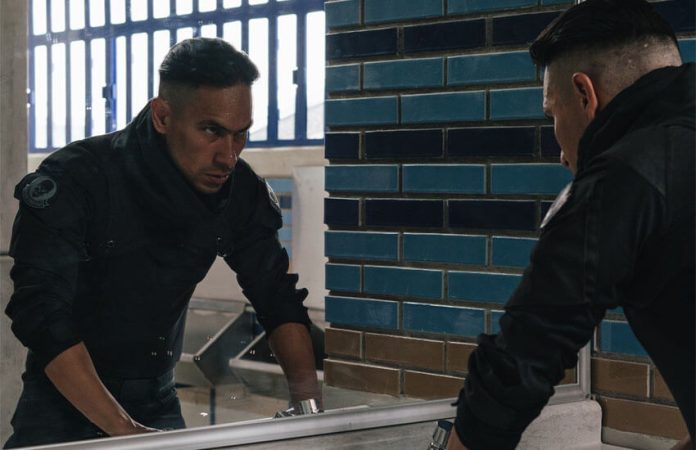
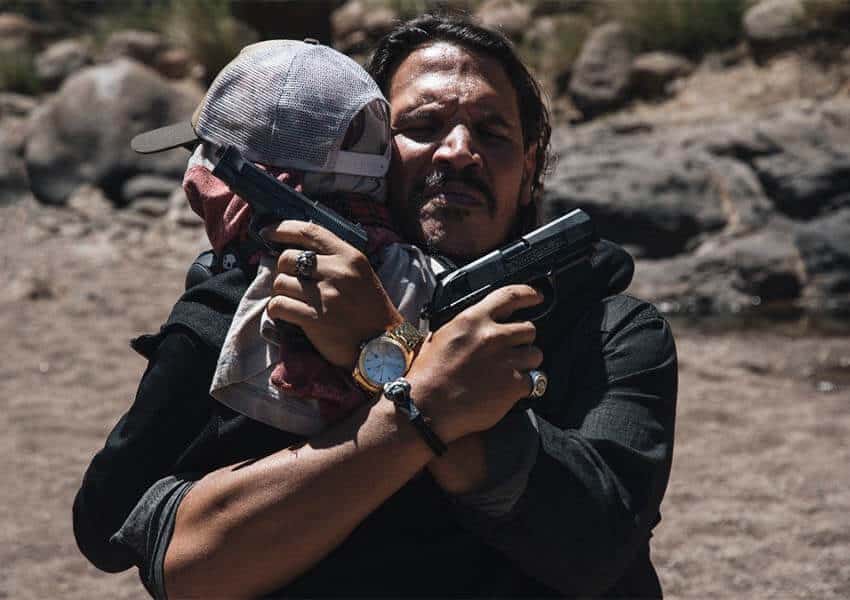
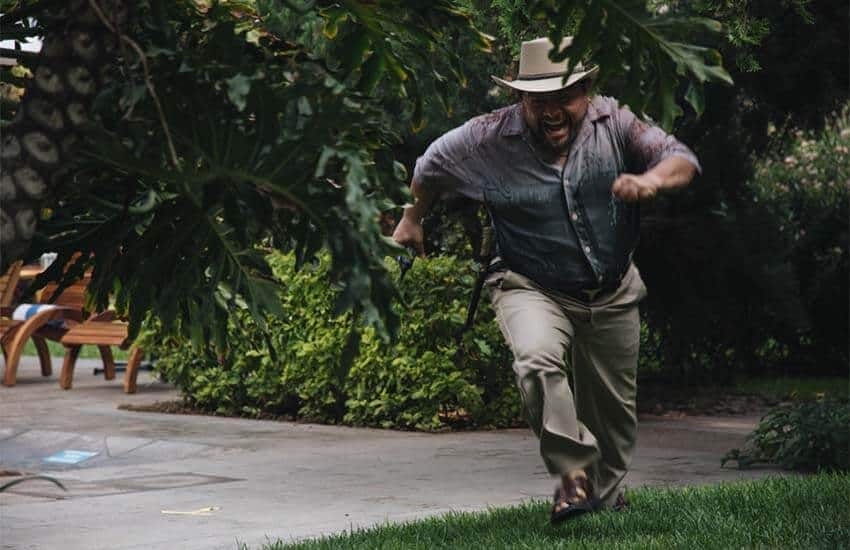
A still from the Amazon Prime TV series "Soldados o Zombies," created by Nicolas Entel and Miguel Tejada-Flores. Photos courtesy of Nicolas Entel
Lucas, the nine-year-old son of a Mexican cartel leader, is convinced there’s a shred of humanity remaining in one of his father’s subordinates, “El Perro.” Once, El Perro was Lucas’ designated babysitter. Now he has mysteriously become a growling, inhuman menace who needs to be restrained.
The youth begs him to remember their bygone days of playing with a toy walkie-talkie, but there’s a reason why Lucas’ pleas go unheeded: El Perro has become a zombie.
This is a scene from the surprise hit Amazon Prime TV series Soldados o Zombies, created by Nicolas Entel and Miguel Tejada-Flores. Released last year, it not only landed in the top five new releases on the streaming service in the United States, it was the only non-English-language series to do so.
Its audience reviews on Amazon Prime reflect its popularity.
The show’s explanation for the existence of zombies is rooted in a U.S. military supersoldier experiment with pigs gone horribly wrong.
“Over half loved it,” Tejada-Flores said in a Zoom interview. “They did not think it was going to be good. They want to see a sequel. They gave it the highest possible rating.”
He described the show as “a kick-ass zombie series” with a bit of everything.
“Politics, a jailbreak, narcos, government corruption, evil researchers, a whole lot of [stuff],” Tejada-Flores said. “It’s complex; it’s not your average Walking Dead.”
Soldados o Zombies — also known as S.O.Z. or Narcos vs. Zombies — reflects the increasing flexibility of the zombie genre.
“Soldados o Zombies” creators Nicolas Entel, left, and Miguel Tejada-Flores, right.
Since the 21st century’s start, the living dead have appeared in formats as diverse as a global outbreak thriller in World War Z, a 16th-century Korean period piece in Kingdom and a teen drama in South Korea’s All of Us are Dead.
Now they’ve made it to the U.S.-Mexico border: in one scene, a zombie pushes through the border wall in what might be Donald Trump’s worst nightmare.
“Many in the Mexican press get the joke,” Entel said. “They appreciate the fact that there are political consequences hidden under this — in a way — very silly show we’re trying to do. People were taken by the idea of America creating a government experiment where all the consequences of the American military are being paid by the Mexicans.”
“Obviously, it’s not a show for everybody,” Entel noted. “It’s a mix of genres. It’s very relevant, irreverent and politically incorrect.”
The lead role of drug kingpin Alonso Marroquín is played by Mexican stage actor Sergio Peris-Mencheta.
The drama begins on both sides of the border. In Hidalgo County, Texas, United States Army scientist Agustus Snowman is working to create zombie pigs as a first step toward genetically engineering the perfect soldier. Meanwhile, in Chihuahua’s Lomas Altas prison, Lucas’ father Alonso Marroquín plots a jailbreak.
Escaping through tunnels beneath the border wall, Marroquín and his subordinates reach their safe house in the U.S. – a drug rehab center called Paradiso. The Mexican SWAT unit pursuing them is not so lucky, encountering the zombie pigs, with disastrous results.
Others eventually fall prey to the zombies created by this incident – including members of Marroquín’s cartel, such as El Perro.
El Perro is played by veteran actor Silverio Palacios, whose credits include Y tu mamá también and The Legend of Zorro. Up-and-coming child actor Nery Arredondo plays Lucas.
Mexican actress Fátima Molina as reporter Lilia Acal Prado.
The abovementioned scene involving Lucas and El Perro at the end of episode seven prompted a standing ovation from the cast and crew.
The show has its roots in a conversation Entel — who has written, directed and produced documentaries for Amazon, Netflix and HBO — had with the son of Colombian drug kingpin Pablo Escobar. While Entel interviewed Escobar’s son for the 2009 documentary Sins of My Father, the younger Escobar remembered how while hiding out with his parents in the Colombian jungle, one of his parents entertained him with a spooky story and a Ouija board.
Entel’s creative juices started flowing. He enlisted the initially reluctant Tejada-Flores, who has an extensive screenwriting background in horror, including the film Screamers.
“He said, ‘Miguel, the title is Narcos vs. Zombies,’” Tejada-Flores recalled. “I go … ‘listo, I’m ready!’ The rest is history.”
Although the series has a premise based on zombies being created by a zoonotic virus, no connection to the COVID-19 pandemic was intended, says Entel.
Tejada-Flores praised Sergio Peris-Mencheta’s performance as Marroquín.
“He’s a Mexican native and a phenomenal international actor who does theater … You don’t see him in horror or on the horror scene. It’s part of the reason [Marroquín] is a complex character.”
As Tejada-Flores explained, “You can watch Narcos — it’s a good series — but all the real-life narcos are all stereotypes. We wanted to create a character who’s the opposite of a stereotype.”
Although he is a drug dealer, Marroquín is also a loving father who wants to dissuade Lucas from following his violent path. He also gives a heartfelt plea to God while escaping from prison.
Creator Miguel Tejada-Flores said of his show, Soldados o Zombies, “it’s not your average ‘Walking Dead,’” referring to the popular U.S. zombie TV series.
“Describing him as a drug dealer is like describing Han Solo as somebody who moves merchandise illegally,” Entel said. “Star Wars is not about that. The character is not about that. You need to know that about him because he smuggles Princess Leia home.”
“In the context of Mexico, [Marroquín] is outside the law, he’s tough, he can use a gun — of course he needs to be a drug dealer,” Entel said, adding that he is not trying to “glamorize drug dealers. I suspect people [watching the show] are smarter than that.”
The series addresses key issues in Mexican society: narco violence, immigration, government corruption and freedom of the press — with the latter personified by the character of TV journalist Lilia Acal Prado (Fátima Molina), who pursues an interview with Marroquín at the cost of losing her job.
American characters like Snowman (Toby Schmitz) and DEA agent Joel Taft (Steve Wilcox) are described by Entel as more two-dimensional than their Mexican counterparts — for a reason.
S.O.Z. Soldados o Zombies (2021) | Official Trailer | Amazon Prime Video
Trailer for the Amazon Prime Video series Soldados o Zombies.
“We wanted the Mexicans to be more multidimensional,” Entel said. “We wanted the Americans to be a little more flat and stereotypical … You [usually] see a Mexican guy [portrayed as] very two-dimensional in an American movie.”
The zombies, however, are anything but stereotypical: they share commonalities with insects — the army ants Snowman uses in his experiments. Their speech is based on Náhuatl. Two of them rekindle a romance that began back when they were still human.
In Soldados o Zombies, the zombie infection spreads from pigs to humans, which might make many think of COVID-19 and the idea that the coronavirus spread from animals to humans. However, the show was conceived pre-pandemic. “I wish I could say we saw it coming, [that] we actually anticipated it,” Entel said. “We didn’t.”
Asked about the show’s future, the creators said there are no current plans for a second season. The first season, however, burst expectations like a zombie breaking through the border wall.
“It did much better than anyone expected,” Tejada-Flores said.
Rich Tenorio is a frequent contributor to Mexico News Daily.
Mexico’s opposition is on track to lose four state governorships to the ruling party after elections on Sunday, slowing its recent momentum against the country’s populist president and complicating its path to victory in major elections in 2024.
After defeating Morena’s radical energy reform in the lower house earlier this year, some political analysts believed the unified opposition could continue to gather momentum. But Sunday’s preliminary results serve as a bellwether of public opinion and show the group of formerly rival parties is struggling to convert congressional gains into electoral results.
“This strengthens Morena’s narrative . . . that they are powerful,” said Francisco Abundis of polling group Parametria, who noted that quick counts showed Morena likely won by more than 30 percentage points in two states. “[The opposition] should be worried, not just because they lost the governorships as expected but because of the margins.”
The ballots are the last broad electoral test before 2024, when the country will hold elections at all levels of government, including the presidency. The president is limited to one term but Morena’s dominance at the state level will give it advantages in terms of resources and visibility to help López Obrador’s chosen successor win.
Morena’s enduring electoral strength despite weak economic growth is partly down to voter identification with the president, who has approval ratings of almost 60%. His idiosyncratic agenda has married extreme fiscal austerity with combative anti-business rhetoric and regulatory decisions that benefit state companies.
Supporters laud his personal displays of austerity and believe he is standing up for the country’s poorest, while his critics say he has attacked fragile institutions and poses a risk to Mexico’s relatively young democracy.
The shift in power highlighted by Morena’s election victory in 2018 has transformed Mexican politics and significantly weakened the Institutional Revolutionary party (PRI), which had ruled uninterrupted for 70 years until 2000. Hidalgo state, which Morena also won on Sunday, was governed by the PRI and its predecessors since the party’s founding in 1929.
It now holds just a handful of the 32 governorships, two of which are due for elections next year.
Morena has managed to recreate some of the PRI’s dominance but with the key difference that the current elections are democratic, said Arturo Sánchez Gutiérrez, a politics professor at Tec de Monterrey university and former board member of the electoral authority.
“We have a map that looks much like the political system Mexico had before its transition to democracy,” he said, highlighting Morena’s strong majority. “That’s the democratic challenge the country has.”
Both the ruling and opposition coalitions will need to maintain unity in their campaigns to win in two years’ time, analysts said. Foreign minister Marcelo Ebrard and Mexico City Mayor Claudia Sheinbaum, Morena’s leading candidates, are already touring the country seeking votes. Senate leader and fellow Morena hopeful Ricardo Monreal has warned that the process for choosing the next candidate must be transparent.
Among the three-party opposition, a clear leader or potential candidate has not yet emerged. In another blow, the center-left Citizens Movement said on Sunday it would not join the alliance for state governorship votes in 2023.
“The opposition hasn’t managed to build an alternative narrative, much less position its candidates,” Sánchez said. “That’s maybe the biggest challenge they will have in the next two years.”
Public transportation, tortillerías and other businesses and services are opening back up this week.
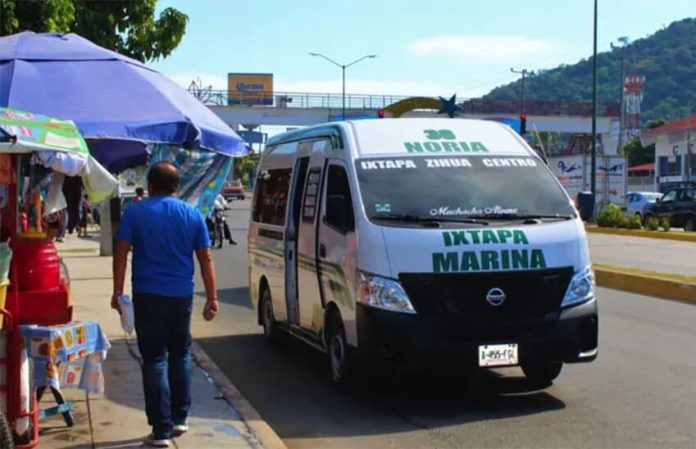
Tortilla shops and schools have reopened in Zihuatanejo, Guerrero, after closing last week due to arson attacks and threats from organized crime.
Tortillerías – most of which closed last Thursday after receiving calls and messages demanding payments in exchange for not setting their businesses on fire – reopened Saturday, while students returned to classes on Monday. Tortilla shop owners also received death threats, the newspaper Reforma reported.
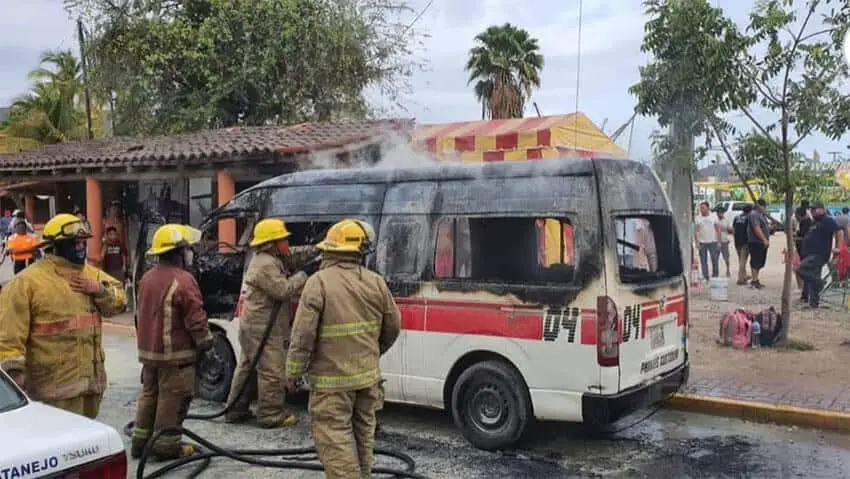
A Zihuatanejo hotelier told Reforma that public transit services – which partially shut down last week after two vehicles were torched – are also returning to normal.
State and federal security forces have ramped up their presence in the Pacific coast resort town amid calls from residents and politicians for more to be done to combat criminals, who also set a Zihuatanejo beer store on fire last Thursday.
Two public transport vehicles were burned in the wave of violence that swept the city last week. Twitter / @General_Beltran
Federal Deputy Ivonne Ortega said that a new security strategy is needed in Zihuatanejo and other parts of the country because President López Obrador’s so-called “hugs, not bullets” approach – which favors addressing the root causes of violence over combating it with force – is not working.
“It’s clear that the ‘hugs, not bullets’ thing has no validity for [organized] crime and only provides impunity to the criminals to harass and attack citizens,” the Citizens Movement party lawmaker said.
“More and more regions of the country are at the mercy of those who violate the law. A real security strategy is urgently needed, not just propaganda,” Ortega said.
Manuel Añorve, an Institutional Revolutionary Party (PRI) senator and president of the upper house’s justice committee, said it was regrettable that organized crime had partially shut down Zihuatanejo and declared that federal security forces “must strengthen their presence” in the popular tourism destination.
The National Guard, the army and the navy patrolled the city’s streets over the weekend alongside state police.
Añorve said that the federal forces must maintain a permanent presence in order to ensure security in a destination that “generates thousands of jobs for Guerrero.”
Zihuatanejo, a municipality that includes the resort town of Ixtapa, is the southern state’s second most popular coastal destination after Acapulco, located 250 kilometers to the south. It is currently governed by PRI Mayor Jorge Sánchez Allec, while the Morena party, founded by López Obrador, has been in power in Guerrero since October.
President López Obrador said he will mention his concerns regarding American continental unity when he meets with U.S. President Joe Biden in July. Presidencia de la República
President López Obrador announced Monday that he won’t attend this week’s Summit of the Americas because all nations of the region weren’t invited, making good on a threat he made last month.
The United States government, which is hosting the June 6-10 regional meeting, decided against inviting Cuba, Venezuela and Nicaragua due to the lack of democracy and respect for human rights in those countries, according to U.S. sources who spoke with the Bloomberg news agency.
López Obrador said in early May that he wouldn’t attend the Los Angeles summit if any nation was excluded, declaring that “even with our differences, we have to have dialogue” and that countries must treat each other in a “brotherly” way.
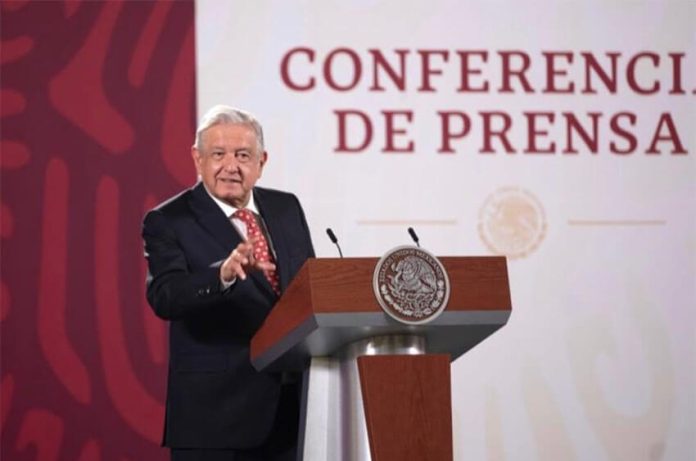
He confirmed his decision at his regular news conference on Monday morning. “About the summit, you can now inform Mexico that I’m not going to attend,” López Obrador told reporters.
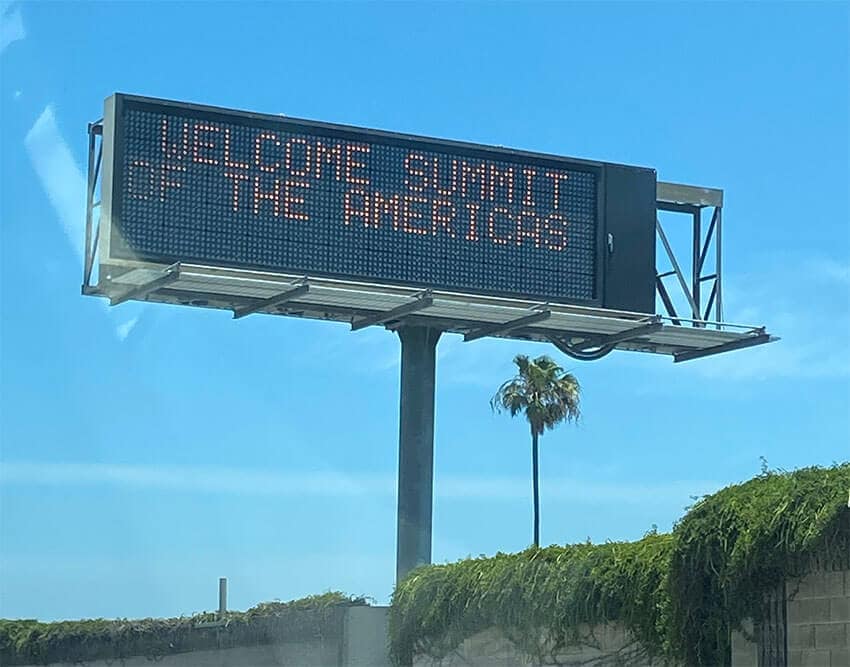
A Los Angeles highway billboard welcomes attendees to the Summit of the Americas, which started Monday without President López Obrador in attendance. Twitter / @WHAAsstSecty
“… I’m not going to the summit because all the countries of America aren’t invited,” he said.
The president said that Foreign Affairs Minister Marcelo Ebrard would represent him at the event before revealing that he would meet with United States President Joe Biden in July.
“I’m going to go and see him at the White House and I want to talk with him about the issue of the integration of all of America,” he said.
López Obrador reiterated his proposal for all Western Hemisphere nations to band together in a European Union-style bloc.
“But this will mean a change in politics, leaving confrontation, hate, threats, blockades and interference behind and choosing fraternity, a good neighbors policy,” he said.
López Obrador claimed that the United States’ decision not to invite the governments of Cuba, Venezuela and Nicaragua to the ninth Summit of the Americas was part of an “old policy of interventionism.”
“I believe in the need to change the policy that has been imposed for centuries – exclusion, wanting to dominate without any reason, not respecting the sovereignty of countries, the independence of each country,” he said.
“There can’t be a Summit of the Americas if all the countries of the American continent don’t participate, or there can be but we believe that [hosting a meeting without all Western Hemisphere nations] is to continue with the old policy of interventionism, of lack of respect for nations and their people,” López Obrador said.
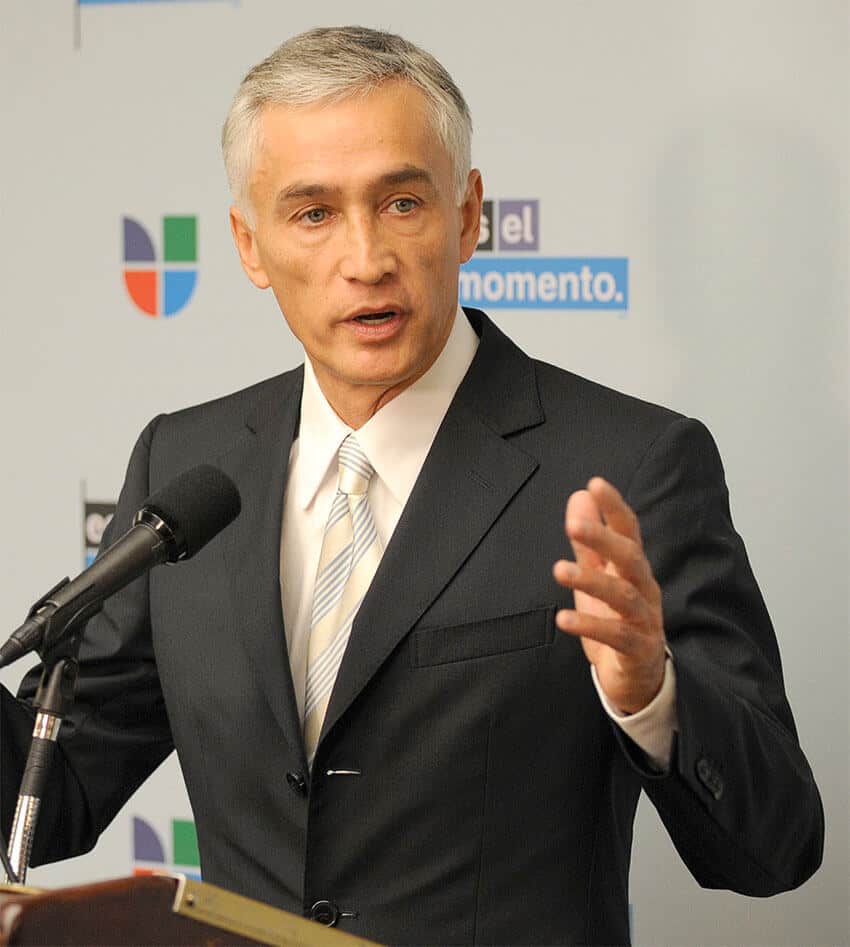
Jorge Ramos, a prominent Spanish-language television anchor and journalist in the U.S., was critical of AMLO’s decision. Public domain / Bill Ingalls
“I really regret this situation. … I don’t accept anyone positioning themselves above [other] countries. I don’t accept hegemonies from China, Russia or the United States. All countries, as small as they may be, are free and independent,” he said.
Writing in the newspaper Reforma, United States-based Mexican journalist Jorge Ramos renewed his criticism of López Obrador for expressing support for the “dictators” in Cuba, Venezuela and Nicaragua, who he charged are “at the front of machineries created to murder, torture and do everything possible to remain in power.”
“… Cozying up to and speaking for the dictators of Cuba, Nicaragua and Venezuela – as the president of Mexico has done – is a mistake; it’s to turn … [his] back on the thousands of victims of those dictatorships. AMLO had the option to choose the dictators or their people. And he preferred the tyrants,” he wrote.
“… The Summit of the Americas is the meeting of a club of democracies. Cuba, Nicaragua and Venezuela aren’t democracies. There’s no reason to give their dictators the same recognition as legitimately elected presidents,” Ramos asserted.
“… There is nothing more shameful than sticking up for tyrants. … I don’t understand why López Obrador is doing the dirty work for the continent’s worst leaders. He chose the wrong side of history,” he wrote.
Several typical Mexican salsas and their ingredients. (Deposit Photos)
Mexico has the seventh best cuisine in the world, according to a 50-nation ranking compiled by the international food guide website TasteAtlas.
Mexico was the only Latin American country in the top 10 of the June update of the culinary ranking released by TasteAtlas. The list was dominated by Europe: Italy, Greece, Spain, Romania and France made up the top five, while Croatia and Portugal were djudged eighth and ninth.
Meanwhile, representing Asia were Japan in sixth place and India in 10th.
The other Latin American countries on the list were Brazil (12th), El Salvador (27th), Chile (30th), Peru (32nd), Argentina (33rd), Venezuela (39th), Bolivia (48th) and Uruguay (49th).
Each country’s rating is obtained by the users average rating of the 30 best dishes, beverages and food products in that country. Countries that are not on the list do not have enough items rated. pic.twitter.com/iRunTiy1Oo
However, as could be expected, the citizens of some countries were in strong disagreement with the list. “Peru and Argentina in 32nd and 33rd in gastronomy?” one Twitter user queried, referring to two countries famed for the high quality of their food and drink.
“United States in 13th place? They all voted wrong,” another Twitter user wrote, referring to a nation less often recognized for its culinary delights.
Some countries weren’t involved in the ranking due to the website’s methodology, which only included cuisines that have 30 or more dishes, beverages or food products rated on the platform. The score for each country included was taken from the average score of their top 30 culinary offerings.
Mexico’s most popular dishes on TasteAtlas are tacos, tortillas, nachos, tamales and burritos. The country’s most popular drinks are tequila, margaritas, mezcal, licuados (smoothies) and aguas frescas (flavored waters).
TasteAtlas is an online encyclopedia of 10,000 dishes and drinks, presented as a world map, where users can browse local cuisines and search for restaurants. The website also offers extensive recipes.
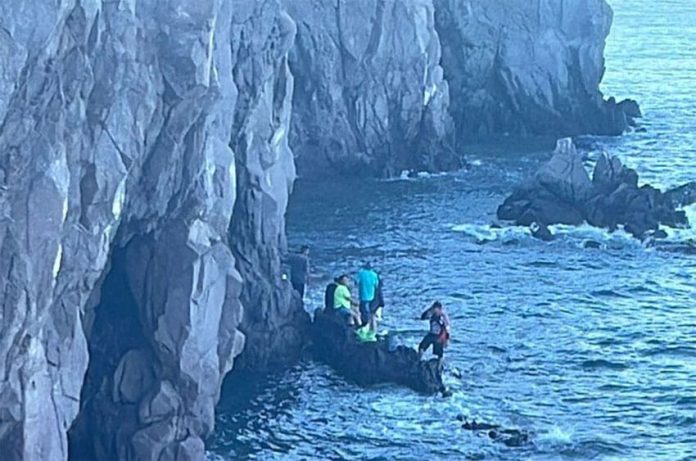
Scene of Sunday's boating accident. Facebook / Protección Civil Sonora
A birthday celebration became a tragic occasion in Sonora on Sunday when an overcrowded boat capsized and eight people drowned, including at least two children.
Nineteen people boarded a small fishboat with capacity for six passengers in Guaymas, 130 kilometers south of Hermosillo.
The 6-meter-long, 3-meter-wide panga departed without informing authorities and without radio communication, lifejackets or sufficient seating on board. It was taken without permission by the son of the owner, the newspaper El Universal reported.
The boat tipped over near the San Vicente Arch, a rock formation and tourist attraction southeast of the city.
Eight people were killed, including a one-year-old baby and another child. Eleven people were rescued.
The group appears to have been a family from the nearby city of Empalme celebrating a quinceañera, a coming of age ceremony common in Mexico for girls’ 15th birthday parties.
Authorities said human error and irresponsible behavior had caused the accident. Civil Protection agents worked alongside navy marines and firefighters in the rescue effort which included two search and rescue boats and a helicopter.
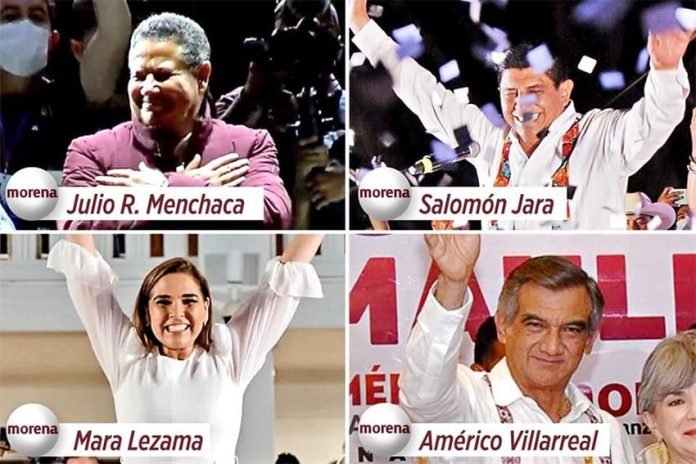
Morena's winning gubernatorial candidates were Julio Menchaca in Hidalgo, Salomón Jara in Oaxaca, Américo Villarreal in Tamaulipas and Mara Lezama in Quintana Roo.
The Morena party won four of six gubernatorial elections held Sunday, preliminary results showed, increasing the number of federal entities controlled by the ruling party to 20.
The National Electoral Institute’s fast count results showed that Morena candidates triumphed in Hidalgo, Oaxaca, Quintana Roo and Tamaulipas, an outcome predicted by polls.
Candidates representing an alliance made up of the main opposition parties – the National Action Party (PAN), the Institutional Revolutionary Party (PRI) and the Democratic Revolution Party (PRD) – won in Aguascalientes and Durango.
Morena, whose candidates ran on tickets supported by minor parties such as Labor and the Green Party (PVEM), easily won the elections in Hidalgo, Oaxaca and Quintana Roo, while the fast count results showed a much closer race in Tamaulipas.
Julio Menchaca, a former federal senator and judge, is set to become the next governor of Hidalgo, securing between 60% and 63% of the vote, about double that of PAN-PRI-PRD contender Carolina Viggiano, a former federal deputy. The result will bring PRI’s long-held control of Hidalgo to an end.
Salomón Jara, a former federal senator and state agriculture minister, achieved a similarly thumping victory in Oaxaca, attracting support from 58% to 61% of voters, over double that garnered by PRI-PRD candidate Alejandro Avilés, a state deputy.
Former Benito Juárez (Cancún) mayor Mara Lezama will be sworn in as Quintana Roo’s first female governor later this year after winning between 55% and 58% of the vote in the Caribbean coast state. PAN-PRD candidate Laura Fernández, a former federal deputy and state tourism minister, was a distant second with support in the range of 15% to 18%.
Américo Villareal, Morena’s candidate in Tamaulipas, triumphed over the opposition’s César Verástegui, who served as government secretary in the current PAN administration led by Francisco García Cabeza de Vaca. Fast count results showed Villareal, a medical doctor and former federal senator, with between 49% and 53% of the vote compared to a range of 42% to 45% for Verástegui.
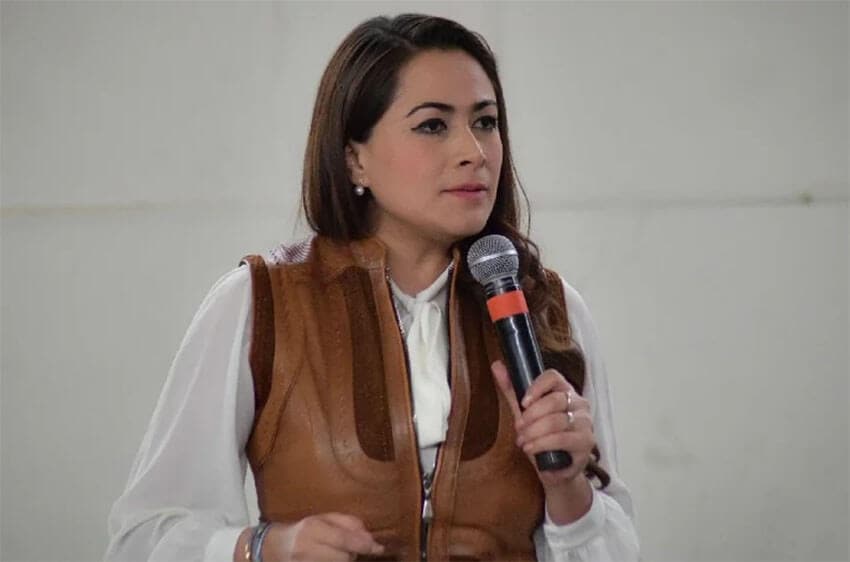
PAN-PRI-PRD candidate Teresa Jiménez is set to become the first female governor of Aguascalientes. Twitter / @TereJimenezE
While Morena was the big winner on Sunday, the opposition took heart from its victories in Aguascalientes and Durango.
PAN-PRI-PRD candidate Teresa Jiménez, a former federal deputy and mayor of Aguascalientes city, attracted between 51% and 55% of the vote, putting her well ahead of Morena contender Nora Ruvalcaba, who was supported by about one-third of voters. Jímenez will be the first female governor of Aguascalientes, Mexico’s third smallest state by area.
In Durango, PAN-PRI-PRD candidate Esteban Villegas, a former state health minister and mayor of Durango city, attracted between 52% and 55% of the vote, fast track results showed, while support for Morena aspirant Marina Vitela was about 40%.
Once the new governors take office, Morena will govern 20 of Mexico’s 32 federal entities. Governors representing parties allied with Morena – Cuauhtémoc Blanco of Morelos (Social Encounter Party) and Ricardo Gallardo of San Luis Potosí (PVEM) – are in office in two other states.
Esteban Villegas celebrates winning the Durango governorship on the ticket of Va por México, the PAN-PRI-PRD opposition alliance. Twitter / @EVillegasV
President López Obrador asserted Monday that the opposition’s “classism” was a factor in its poor results in the states won by Morena, a party he founded.
“I shouldn’t be giving advice … but they should carry out a review of their strategy, it affects them a lot, … their classism, their racism” he told reporters at his morning news conference. “… They show disdain for people, they have no love for people,” claimed López Obrador, who continues to enjoy a high approval rating 3 1/2 years after taking office.
In addition to highlighting Morena’s favorable results, the president emphasized that Sunday’s elections were peaceful, although there were reports of armed men stealing ballot boxes in Tamaulipas.
“Although passions are inflamed during elections there were no deaths, there wasn’t any violence. The citizens, as always, rose to the occasion. My congratulations to all those who participated yesterday …” he said.
Meanwhile, the national leaders of PAN, PRI and the PRD all contended that the results showed that the opposition alliance – called Va por México – will be competitive at the 2024 federal election, at which voters will elect a new president and renew both houses of Congress.
“National Electoral Institute data shows that Va por México represents a [political] force with 40% [support] at a national level,” PRI chief Alejandro Moreno tweeted Monday.
“That’s why … [Morena] wants to divide the opposition because they know that if we make a complete coalition we’ll win the presidency,” he wrote.
However, a recent poll suggests that Morena will easily win the 2024 presidential election if it nominates either Mexico City Mayor Claudia Sheinbaum or Foreign Affairs Minister Marcelo Ebrard as its candidate.
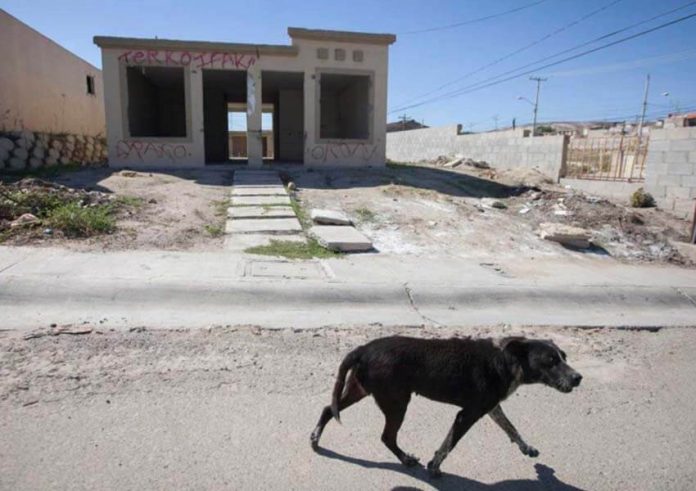
In 2020, it was reported that 600,000 government-built affordable homes across Mexico lay abandoned because they were not accessible to any services.
I just took a trip!
It was just a short trip to Mexico City to get my daughter’s passport renewed but, oh, what a breath of fresh air to get out of one’s own city once in a while. And now, after two and a half long years, we are finally going to be able to travel home to Texas for a couple weeks this summer.
We made sure to stay close to the U.S. Embassy so that we could be there on time for our 8 a.m. appointment. (By the way — for those of you with appointments soon — you do need an appointment, but once you get there you have to line up outside and it’s first come first serve, so go early!) in the beautiful Roma neighborhood, which to me is an urban utopia.
The streets and sidewalks were wide and well-kept, the buildings were beautiful, and there were trees and plants everywhere. Properties were, for the most part, well taken care of, and crosswalk lights clearly indicated where to go.
To my delight, there were several breweries in the area (I had a delicious blonde ale with avocado leaf and a stout that was essentially layered chocolate cake, if you must know), as well as coffee shops and convenience stores, many with cute little patio coverings for sidewalk lounging and dining. Murals seemed to be everywhere.
As we hung out with my daughter at one of the giant public playgrounds and listened to all the different languages being spoken, I found myself thinking what I always think when I’m in this kind of neighborhood: why can’t all places be this nice?
I know the litany of obvious answers. Mostly it’s money and investment.
But bringing money and investment to a place doesn’t necessarily fix any problems without creating new ones, and that’s what makes me despair. What I want to know is this: is there a difference between gentrification and the real, tangible improvement of a place? Is it possible to make a place beautiful, accessible and safe without making it economically inaccessible to those who already live there?
Surely there is a way, though it’s not something I’ve figured out yet. And you all know (well, you do if you’ve been reading my column for a while) that I deeply value good design and intentional physical beauty in the communities that we humans create for ourselves.
In fact, I’d say that one of my most sacred beliefs is that everyone deserves to have physical surroundings that are safe, functional and pleasing.
Safe and functional seem straightforward, but even that can be tricky. Safe for whom? People? Cars? Bikes? Animals? Functional for which members of the community? You simply can’t just plop a bunch of “improvements” in the middle of nowhere without asking people what they actually need and want. And even when you do, not everyone everywhere is going to be happy with the changes.
“Pleasing” is even more difficult. The jury’s always out on that, and I can certainly accept that not everyone out there possesses my own hippie-bougie aesthetic ideals.
So it’s not that I think that all of urban Mexico should look exactly like the upscale Roma and Condesa neighborhoods. I just think that everyone in urban Mexico deserves that level of care put into the designs of their communities.
Mexico City – at least the places I passed on the bus – does seem to be getting the hang of it fairly well. Murals were everywhere in the city, as were playgrounds with exercise equipment and tracks wrapping around them. Public transportation had expanded since the last time I went.
So, surely there are a few things that we can agree on: walkable sidewalks, drivable streets, bike lanes for people who ride bikes.
Plants and paint, as well, go a very long way, and they’re relatively cheap.
But how to prevent gentrification?
I think the key is community involvement in revitalizing what’s there: letting those who actually live in those spaces decide how those resources will be displayed in the neighborhoods where they live.
Having them participate in what’s produced would mean some important steps in ownership and pride, similar to what the Mar de Jade Hotel has provided for young people where it’s building.
Can this get everyone their own versions of Roma … ones that they actually get to stay in?
Time (and politics) will tell. But I stand firm in one basic belief: everyone deserves to live in a place like that.