Home Blog Page 987

One Good Thing: how to make the best garlic shrimp

0
garlic shrimp
Using just a few basic ingredients, garlic shrimp is easy and quick to make.

In Mexico, you can find garlic shrimp — camarones al ajillo — on menus everywhere; it’s a ubiquitous dish served in seafood restaurants coast to coast (and in between). 

It’s simple to make, but like most recipes with just a few ingredients, it can easily go wrong. 

Cooked shrimp
A perfectly cooked camaron is a work of art.

Arguably, the most common mistake is overcooking the shrimp, resulting in tough, leathery, flavorless lumps no one wants to eat. No matter their size, shrimp cook in minutes (or less!). The flesh will turn from grey to white that’s tipped with pink, which means that they’re done and need to be removed from the heat. 

The other challenge with this dish is cleaning the raw shrimp — always kind of a hassle. At some of the fish markets where I live, the shrimp vendors will clean the shrimp for you, but usually what you’re going to find are bags of flash-frozen shrimp with the heads off, which makes the process a little easier.

Purists will prefer them that way because as soon as the shrimp begins to die, the head releases enzymes that make the flesh mushy. That said, if the heads are still on, cut or break them off; same with the legs.

The shell can be peeled off in one piece and discarded, although in this recipe, we’ll be keeping them to infuse the oil with extra flavor. (They’re also great for making stock; seal them in a freezer bag and save for future use.) Tails can be kept on or twisted off, as you like. 

deveining shrimp
Once the veins are removed, pass the shrimp under running water. You’ll be glad you did.

Now for the gross part: deveining. Hold the shrimp in your left hand with the back side up. With a small, sharp knife, make a slit from end to end, about 1/8-inch deep.

It will split open, and you’ll see a dark blue or black “vein” (actually the digestive tract). Pull that out with the knife and discard. If you’re lucky, it will come out in one piece. I like to do this under running water. 

Once the veins are removed, rinse the shrimp well under running water, discarding any veiny bits that may surface. If you’re not using them right away, set the shrimp in a bowl of cold ice water until you’re ready. 

Another method is to use a fork to slit the back and pull out the vein with one smooth move. That’s never worked for me, but feel free to give it a try.

For more info about buying, cleaning and cooking with shrimp, go here. 

I always try to time making shrimp dishes with garbage night so I can get rid of the shells quickly. Otherwise, I wrap them tightly in two plastic bags before putting them in the trash; in the hot summer, I sometimes put the wrapped shells in the freezer until they can go out in the trash.

What makes this dish stand out? Not the amount of garlic, although that’s certainly part of the flavor profile. What takes this dish to the next level is that you’re going to infuse the oil with a rich shrimp essence you don’t get by just sautéing the camarones in the oil for the few minutes required to cook them. It’s a small additional step that’s well worth the little bit of extra time it takes.

knife mincing garlic
Freshly mincing garlic releases all of its flavorful oils into whatever dish you’re making.

The Best Garlic Shrimp 

  • 12 cloves garlic
  • 1 lb. large shrimp, peeled and cleaned, shells reserved
  • ½ cup extra-virgin olive oil
  • Salt (Kosher if you have it)
  • ¼ tsp. baking soda
  • Pinch red pepper flakes, or a 1-inch piece dried guajillo chili
  • 1½ tsp. sherry vinegar OR red wine vinegar and a pinch of sugar
  • 2 Tbsp. chopped fresh parsley 

Finely mince four garlic cloves and place in a large bowl. Smash four more of the cloves under the flat side of a knife and place in a large skillet. Thinly slice the remaining four cloves and set aside.

In the bowl with the minced garlic, add shrimp, 3 Tbsp. olive oil, ¾ tsp. salt and baking soda. Toss to combine thoroughly. Set aside at room temperature.

Add shrimp shells, remaining olive oil and pepper flakes to skillet with smashed garlic. Set over low to medium-low heat and cook, stirring occasionally, until the shells are deep ruby-red, the garlic is pale golden brown and the oil is intensely aromatic, about 10 minutes. The oil should be gently bubbling the whole time, but don’t let the garlic burn.

When ready, strain through a fine mesh strainer into a small bowl, tossing and pressing the shrimp shells to extract as much oil as possible. Discard shells and garlic.

Return flavored oil to skillet and heat over medium-high until shimmering. Add sliced garlic and cook, stirring constantly, until garlic turns a pale golden brown, barely 1 minute. Stir in shrimp, tossing and stirring constantly until barely cooked through, about 2 minutes.

Add vinegar and parsley and toss to combine. Season to taste with salt. Serve immediately over rice, or use as a filling in tacos, quesadillas or burritos.

Janet Blaser is the author of the best-selling book, Why We Left: An Anthology of American Women Expats, featured on CNBC and MarketWatch. She has lived in Mexico since 2006. You can find her on Facebook.

Why did Mexico so love Chabelo, a man dressed as a boy?

0
Mexican performer Xavier Lopez Chabelo posing on his variety show En Familia Con Chabelo with Mexican band Sonora Dinamita de Lucho Argain
Xavier López, better known as "Chabelo," was a beloved performer best known to generations of Mexicans for his kid-friendly variety show "En Familia Con Chabelo" (Family Time With Chabelo). He died on March 25 at age 88. (En Familia Con Chabelo/Facebook)

Maybe I have been in Mexico too long. I was at the market when I looked up at a television set to find out that performer Xavier López, a.k.a. Chabelo, had died. My response was “no manches!” (You’re kidding!)

Understanding the character known as “the friend of all children” is one key to understanding 20th-century Mexico.

Mexican-American performer Xavier Lopez, known as "Chabelo"
López doing a presentation in character during a Day of the Child event at the Auditorio Nacional in Mexico City in 2007. (Fernando Acevez/Cuartoscuro)

López died at age 88 in Mexico City on March 25, and Mexican newspapers are still writing up homages to him. But they don’t explain why he was/is so important to Mexicans, likely because “everybody knows.”

With a career spanning over six decades, López essentially wound up as a “little boy” with the face of an old man. While he did some other work, including in film and theater — he had a voice role in the movie “Coco”  in 2017 — just about his entire career was based on the playing of a single character, Chabelo.

The character was readily identifiable through the voice López affected for the part, his body movements, and his wearing of shorts/cargo pants. It emerged early in his career, appearing in movies, radio and television. But López’s mark on Mexican culture was made with the show “En Familia Con Chabelo” (Family Time With Chabelo), which appeared every Sunday morning for more than 2,400 episodes from 1967 to 2015, according to its broadcaster, Televisa.

That longevity means that Mexican families have two, even three, generations of viewers. Parents who grew up watching him watched him again with their own children. The show was part of a Sunday ritual which included breakfast and, often, Mass.

Mexican performer Xavier Lopez Chabelo on his legendary TV show En Familia con Chabelo
“En Famila Con Chabelo.” missed only seven broadcasts during its continuous run from 1967 to 2015. According to its broadcaster, Televisa, the show produced 2,459 episodes.

Artisan José Guadaluupe Urbán notes that until relatively recently, Mexican homes had only one television set, so during those hours of the day, having family-friendly entertainment was important. My Mexican husband has fond memories watching the show with his brothers on their parents’ bed, as the family’s only set was in their room. 

“En Familia” was a variety and game show for kids and featured celebrity guests — often comedians or musicians performing. Like game shows in the U.S., seeing normal people winning and losing was part of the excitement.

Professional dollmaker Ana Karen Allende appeared on the show once and won, interestingly enough, a doll.

“I can still remember her smell and her blonde hair,” she says.

En Familia con Chabelo | Último Programa

This 2015 ad for the last episode of “En Familia Con Chabelo” gives an idea of the show’s format. 


The show’s most famous element was the part of the show called La Catafixia. López made up this word to refer to a gamble that offered contestants the chance to keep a prize they had just won in the game show for an unknown — possibly better, possibly worse — hidden prize on the stage (“The Price is Right” game show does something similar.).

Actress Itatí Cantoral remembers that she was “always nervous” when she saw the Catafixia part of the show.

“I would yell, ‘No, please! Don’t do the Catafixia!'”

Catafixiar has since entered Mexican Spanish, meaning to take a risk with no idea if the result will be better or worse. 

Mexican actor Xavier Lopez Chabelo, right, with Mexican actor Mario Moreno, known as Cantinflas, left, in 1962 film "El Extra"
In his younger days, López appeared with legendary comedic actor Mario Moreno, left, a.k.a Cantinflas, in the 1962 Mexican film “El Extra.”

The show’s sponsors, such as the candy Paletas Payaso (find them at supermarket checkouts) and the furniture company Muebles Troncoso became famous in Mexico, not only for the plugs that Chabelo did during the show but also for their products appearing as prizes. Many Mexican children’s lists for Santa and/or the Reyes Magos (the Three Wise Men, who give out Christmas holiday gifts to children in Mexico) were based on products they saw on the show.

But the fun and games had a serious side: López promoted values such as teamwork, trust, confidence and even being a good parent, says Jessica Alcántara of the Mexico City media company BBmundo.

The comedy on the show was “white humor,” meaning no satire, sarcasm or innuendo. Although Mexico has another famous “old man dressed as a child,” “El Chavo del 8,” the two shows were distinct — the latter a sitcom, sometimes with a darker edge.

The last episode of “En Familia Con Chabelo” in 2015 was still drawing child viewers almost three generations later after it premiered in 1967. (Armando Monroy/Cuartoscuro)

“En Familia” cut across Mexico’s rather strong class divisions, as it appealed to what Mexicans have in common, especially the appeal to family unity. 

“There is not one Mexican person who doesn’t know Chabelo,” journalist Laura Martínez told the BBC. 

A 2019 Alliant International University dissertation notes that relating to Chabelo (and other pop culture icons) is something that can separate Mexican immigrants from Mexican-Americans. Mexican Tik-Toker celebrity @jezzzini was embarrassed in London because when he was asked about idols similar to Queen Elizabeth (who had recently died) Chabelo came to mind.

Xavier "Chabelo" Lopez celebrating 150th performance of Spanish language Broadway musical, "Young Frankenstein"
Although he was a legend for his Chabelo persona, Xavier López was far from a one-trick pony: in 2016, he celebrated his 150th performance of a Spanish-language version of the Broadway musical, “Young Frankenstein” at Mexico City’s Teatro Aldama. (Antonio Cruz/Cuartoscuro)

English-language sources about López tend to call him “Mexican-American” or the like because he was born in Chicago, but neither he, and definitely not his fans, would consider him such. His U.S. birth was simply a matter of where his mother was when he was born. He was raised in Mexico and always identified as such. 

The show on every level was about family, which López called “…the most beautiful in human life and should be fundamental in television” but lamented that much modern programming is “trash.” He also commented that “The world has changed and therefore the children. It’s not that they have lost their innocence; what has happened is that they live more hurriedly [to grow up].”

One way that the world has changed is that Mexican audiences do not seem to be as forgiving about actors who do not look the age of their parts. Chabelo got a pass until the end, but others from the same era have been recently ridiculed in social media for continuing to play their characters. 

After retirement, Chabelo’s fame got a second wind thanks to the same internet… and this is how I know him best. Like Queen Elizabeth, Betty White and others, it seemed that Chabelo/López would live forever.

Internet memes about his longevity are legion, with more appearing after some elderly Mexican celebrity died, implying that Chabelo had outlived yet another contemporary.

Some memes have since appeared since his death, as a kind of homage.

So, yet another person I thought (jokingly) would outlive my relatively young self is now gone, and I have to wonder, “Does this mean Keith Richards will really someday die?”

Leigh Thelmadatter arrived in Mexico over 20 years ago and fell in love with the land and the culture in particular its handcrafts and art. She is the author of Mexican Cartonería: Paper, Paste and Fiesta (Schiffer 2019). Her culture column appears regularly on Mexico News Daily.

US citizens living abroad still must pay the IRS taxes. Is that fair?

0
Illustration about how US citizens living abroad owe US taxes on worldwide income
If you're an American citizen living and earning an income in Mexico (or any other country outside the U.S.), you still might owe the IRS some tax on that income. (Illustration: Angy Márquez)

April is here! For many, this means the sprouting of spring: perhaps some nice, warm rain, maybe picking some wildflowers, or maybe even getting to see a few cute baby animals.

For those of us either from the U.S. — or who happen to have dual citizenship through a U.S. parent, it also means that tax season is once again upon us.

For U.S. citizens, April (or June if you’re out of the country, though you still must pay by April) is the time to file and very likely pay wherever you might happen to be in the world. If you’ve been an immigrant to another country for 50 years, there are, officially, IRS filing requirements.

If you’ve never really stepped foot in the United States but are a citizen by birth — for example, if you were born in the U.S. to parents who left the country shortly thereafter — there are, officially, IRS filing requirements.

The United States is the only country in the world still holding on to citizenship-based taxation (save a small Eastern African country, Eritrea, who asks its own citizens residing outside of the country to pay them a flat 2% tax on their earnings). That grip, unfortunately for those of us trying to build sensible financial lives in our homes outside of the United States, has only strengthened of late.

And with the extraterritorial law FATCA (Foreign Account Tax Compliance Act), there’s no playing dumb or being “dumb” for that matter: foreign banks are required to report U.S.  citizens’ local accounts to the IRS; those banks that refuse to do such reporting simply do not serve anyone with U.S. citizenship.

And for all U.S. citizens, failing to file one’s financials in another country through the FBAR (Report of Foreign Bank and Financial Accounts) can mean extremely heavy fines.

Meant to catch the uber-wealthy and U.S. corporations from stashing cash tax-free oversees, these rules have quite a big negative impact on those of us “regular folk” who live outside of the U.S.

In Mexico — as well as for U.S. expats living around the world — it means that we must deal with two different tax systems: contrary to popular belief, filing and paying taxes to your host country doesn’t mean that you’re off the hook with the U.S.

U.S. tax law does allow some expat taxpayers to take the foreign income exclusion, but not if you’re not a full-time, bona fide resident of Mexico; and if you’re self-employed in Mexico, you can qualify for the exclusion, but the excluded amount will only reduce your regular income tax, not your self-employment tax.

What’s a gringo to do?

According to Fabien Lehagre, president of Association of Accidental Americans and Keith Redmond, founder of American Expatriates for Residency Based Taxation and cofounder of Stop Extraterritorial American Taxation, there’s only one answer that makes sense: stop citizenship-based taxation.

Mr. Lehagre, for his part, is an “accidental American:” though he was born in the US, he has never lived there nor had ties to the country. He and many like him, he says, were not even aware that they were required to file with (and much less pay) the IRS until FATCA came along.

“Imagine the surprise of having to declare your income to the IRS when you have no connection with the United States or even though you left the United States a very long time ago…For accidental Americans, it’s even more Kafkaesque because beyond the fact that many do not even speak English, most did not even know that they had American nationality.”

Examples of this unpleasant situation abound. Says Lehagre: “A business owner, a French citizen born in the United States of two French parents, having left the United States when he was 15 days old and having no connection with the United States, had to, for professional reasons in accordance with the IRS, renounce U.S. citizenship. It cost him over $130,000 in attorney fees and taxes.”

As more and more U.S. citizens move their families to Mexico, it’s easy to see the implications of this for our own children should they decide to stay in Mexico as money-earning adults.

So why is it like this in the first place?

Reasons, of course, are numerous. Lehagre points to the Civil War as a starting point: the US decided that all citizens would need to be taxed to support the war effort, and CBT (citizenship-based taxation) never went away after that.

Redmond adds: “It’s a multidimensional reason…the real question is, why doesn’t the US change to RBT (residency-based taxation) the rest of the world practices?”

For citizens residing outside of the U.S., the consequences of it are quite punitive. Intentionally or not, there are numerous ways in which it restricts many U.S. citizens from accessing financial products to help them save for retirement or invest in both the U.S. (many products are restricted to residents) as well as in their countries of residence.

Another particularly difficult example: the Transition Tax, part of the Tax Cut & Jobs Act (TCJA), a retroactive tax “adversely and ruinously affecting Americans overseas with small to medium sized businesses” who are in the U.S. tax system.

Among those reasons, too, are political ones: “Americans overseas are not a strong voting block, as their votes are diluted across 50 states and territories. Plus, no candidates acknowledge the plight of Americans overseas,” says Redmond. Taxation without representation, indeed.

And who among us immigrants to Mexico haven’t been met with a “that’s what you get” attitude from our fellow citizens? “It is an unusual cultural phenomenon that if one is an American not living in ‘the greatest country in all of mankind,’ one must be hiding money and/or committing some type of nefarious activity,” points out Redmond.

So, what options do U.S. citizens abroad have? As Redmond points out, there are pluses and minuses to any one of them, none of them as perfect as the United States simply ending CBT. These range from “deal with two tax systems and good luck” to renouncing one’s U.S. citizenship or simply choosing to move to the U.S. (whether you’ve lived there before or not).

If you’re like me, none of the choices sound quite fair, which is why lawsuits are currently in the making to fight for residency-based taxation like the rest of the world has (see the link above for the GoFundMe campaign started by Lehagre).

American emigrants face two types of damage, says Redmond. First, there’s the actual damage in terms of financial gains being lost to the U.S. tax system through extraterritorial taxation. Then, there are the opportunities for financial growth that are lost as a result of being outside of the country.

For the growing number of US citizens now permanently living in Mexico, the damage can add up quickly.

Sarah DeVries is a writer and translator based in Xalapa, Veracruz. She can be reached through her website, sarahedevries.substack.com

Hiking Lake Chapala’s hills: a new trail guidebook makes it easier

0
El Chante glider launch point
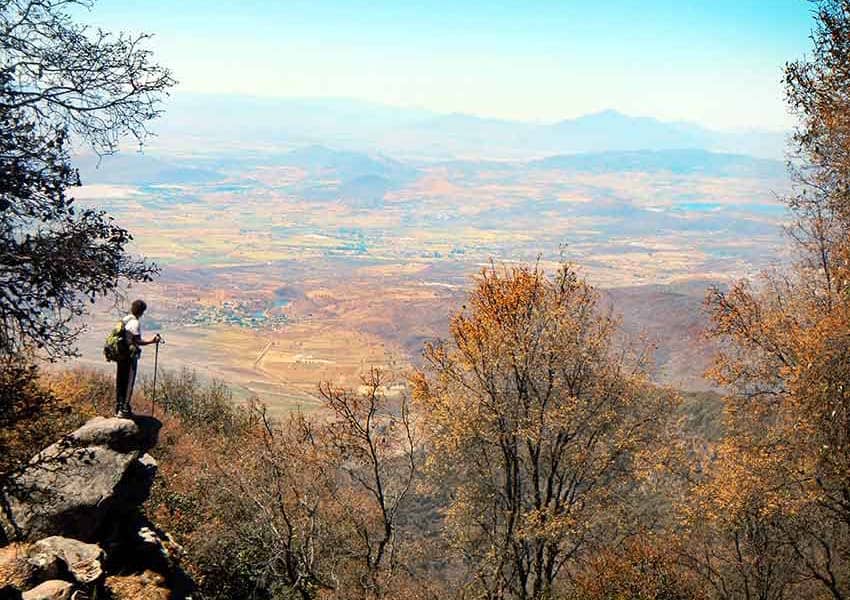
Want to see views like this? Senderos de México can show you how.

The northern shore of Lake Chapala has been called a paradise because of its ideal climate and beautiful environment, but for those of its inhabitants who enjoy hiking, this area is paradise twice over. 

Why? You jump out of bed, walk a few blocks uphill and there you are at a trail head which takes you straight into a network of footpaths both easy and difficult, eventually leading to peaks offering spectacular views of the lake that those on the shoreline never see.

Cerro Viejo, Jalisco
View from the top of Cerro Viejo, 2,970 meters above sea level, the third highest peak in Jalisco.

Many kilometers of those trails have been laboriously traced, described and mapped by a nonprofit organization called Senderos de Mexico (Trails of Mexico) which is dedicated not only to cataloguing Mexico’s hiking trails but also to signposting and maintaining them.

After years of on-trail research, Senderos de Mexico has published the 144-page book, “Trail Guide for Chapala, Ajijic, Jocotepec, and Ixlahuácan de los Membrillos.” 

This guide comes in both a Spanish and an English edition and contains 100 color photos as well as 26 maps featuring contour lines, hiking time estimates and levels of difficulty. Loose versions of all the maps are also included in a pocket inside the book.

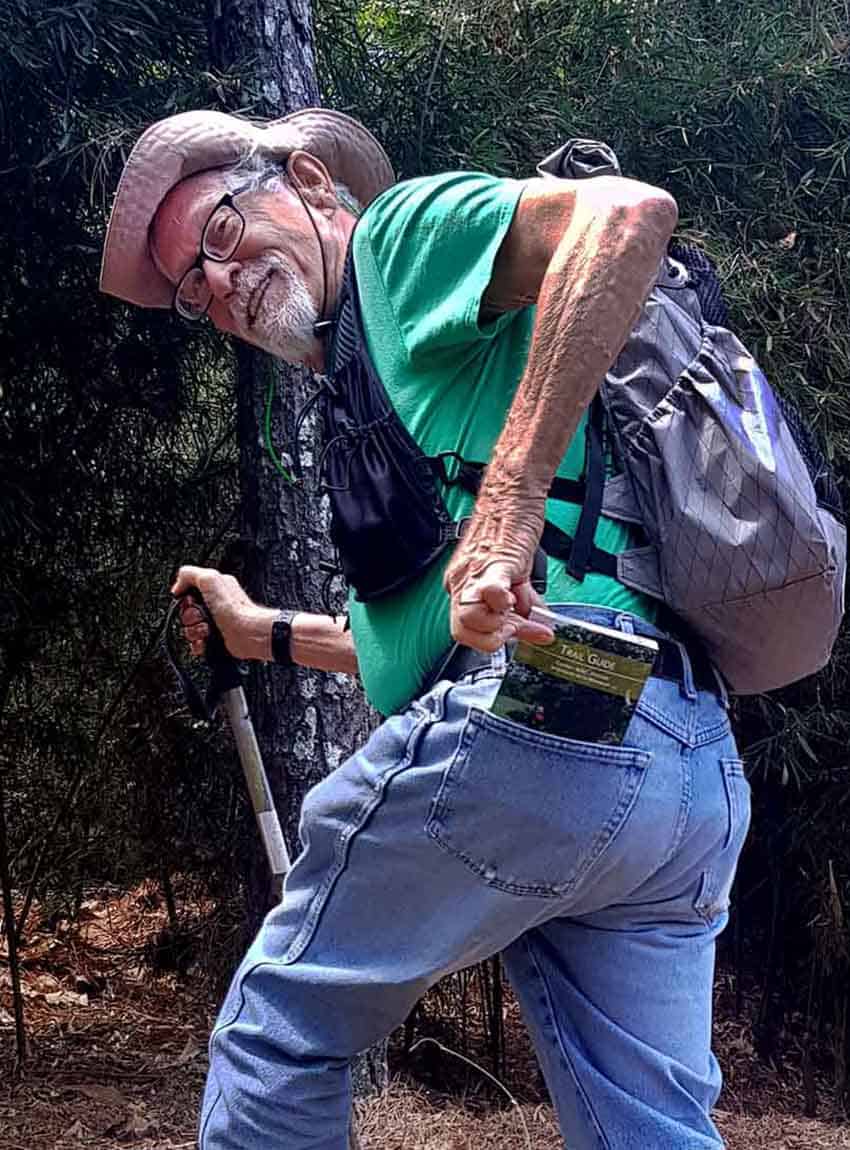
The Trail Guide measures 12 by 17 centimeters (less than 5 by7 inches) and weighs only 142 grams, (5 ounces), small enough to slip into your back pocket, yet packed with useful features like how to find the trail head, GPS coordinates, as well as a detailed description of the trail and where to make crucial turns. 

Outdoor writer John Pint
The writer with his trusty Senderos de México guide in his pocket.

To me this trail guide is gold, and this opinion was confirmed when I showed it to experienced lakeside hiker Kriss Gang. He flipped through the book.

“Ah yes, here’s El Chante Trail, and this is La Christina and…” he began. Suddenly his eyes sparkled. “Wait a minute — what’s this? Here’s a trail I’ve never been on! Mmm, very interesting… Say, can I buy a copy of this?”

I received my own copy of this extraordinary little book from Jose Luis Cortés, Senderos’ executive director.

“Next week, I’m going on one of the hikes described in our book. Want to join me?” he asked.

José Luis Cortés, Executive Director of Senderos de México.

I jumped at the chance. even though I already knew that Cortés is one of those people who automatically rise at 5 a.m. every morning, ready to start their day.

I was lucky enough to be able to sleep until 5:45 a.m., and then it was off to Lake Chapala.

When Cortés parked along a dirt road not far from the Tecnológico de Chapala, I knew exactly which trail we would be following.

“I’ve only done this hike once,” I told him, “but it instantly became one of my very favorites.”

trail to the Mesa de Ocote, Lake Chapala hills
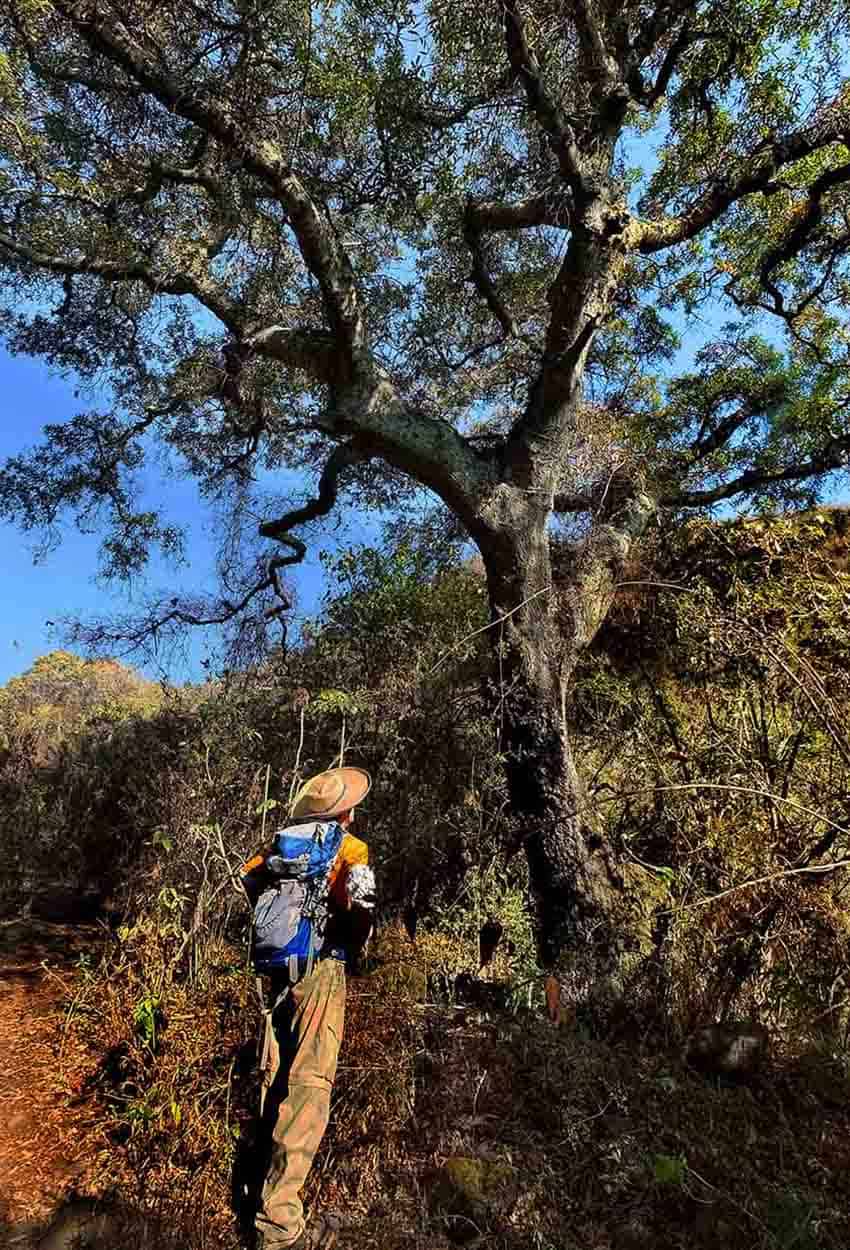
A venerable old fig tree along the trail to the Mesa de Ocote.

In the Trail Guide this is route number 23: “El Caracol to the Mesa Del Ocote.” Thirteen years ago, I did it during the rainy season.

You start off walking for a long time through what feels just like a tunnel through a jungle. On all sides, you hear the songs of birds, and if you are lucky, one of them will be the melodious warble of the clarín jilguero (brown-backed solitaire), which to me resembles three flutes being played all at once.

In the tunnel, you brush past wild sage and maidenhair ferns, and when you come to an occasional gap in this gallery of green, you may catch a glimpse of a huge fig tree towering overhead.

You start out at 1,838 meters altitude, and every 15 minutes, you seem to enter a new ecosystem presenting you with new plants. At 2,114 meters for example, the agaves appear — at first, at a normal size, but the higher you go the bigger they get. 

Senderos de México bike repair workshop in Jalisco
Senderos de México isn’t just about giving hikers a piece of utopia, they’re also a nonprofit doing a variety of good works, as these hardworking participants in a Senderos de México-sponsored bicycle-repair workshop for kids found out.

Then at 2,418 meters comes the big surprise. Somehow, it seems you have left Mexico and entered Canada!

All the green is gone. You are now in an oak forest with a canopy of leaves overhead and a carpet of leaves underfoot, but not a plant or bush to be seen in between.

Passing through this stark but enticing woods, you arrive at a mirador or lookout point, that offers a gorgeous view of Lake Chapala, a view those couch potatoes down at the shore have never seen. It’s one of those special moments when you experience the joy of hiking.

For me this 3.7-km trail symbolizes the inclusion of Mexico’s five ecosystems within what I call “The Magic Circle” around the city of Guadalajara. In the space of a short hike, you can experience a diversity of flora, fauna and climate which, elsewhere in the world, might require days of travel. 

Hiking Lake Chapala's hills
Proceeds from the sale of the books go towards the maintenance of trails that need it, like this one. (Photo courtesy of Brett Shinn)

The Senderos de Mexico Chapala Trail Guide is available at Diane Pearl Gallery in Riberas del Pilar, Jalisco, and via the Senderos de Mexico Facebook page. The price is 400 pesos (US $20). Money received from book sales goes for trail signs, trail maintenance and programs that Senderos carries out in indigenous communities, training people in everything from how to fix a bicycle to how to become a trail guide — the live kind, of course.

The writer has lived near Guadalajara, Jalisco, since 1985. His most recent book is Outdoors in Western Mexico, Volume Three. More of his writing can be found on his blog.

Chamber of Deputies resorts to lottery to elect new INE chief

0
Mexico Deputy Santiago Creel at INE president selection process
Mexico Deputy Santiago Creel holds up the randomly drawn ballot that would give the INE president position to Guadalupe Taddei. She's the INE's first woman leader. (Mario Jasso/Cuartoscuro)(Chamber of Deputies)

A Sonora woman with links to the ruling Morena Party government has been elected as the new president of the National Electoral Institute (INE). 

While she is the first woman to be chosen as leader of the autonomous elections oversight body, what perhaps makes Guadalupe Taddei Zavala’s election most memorable is the way in which she was selected.

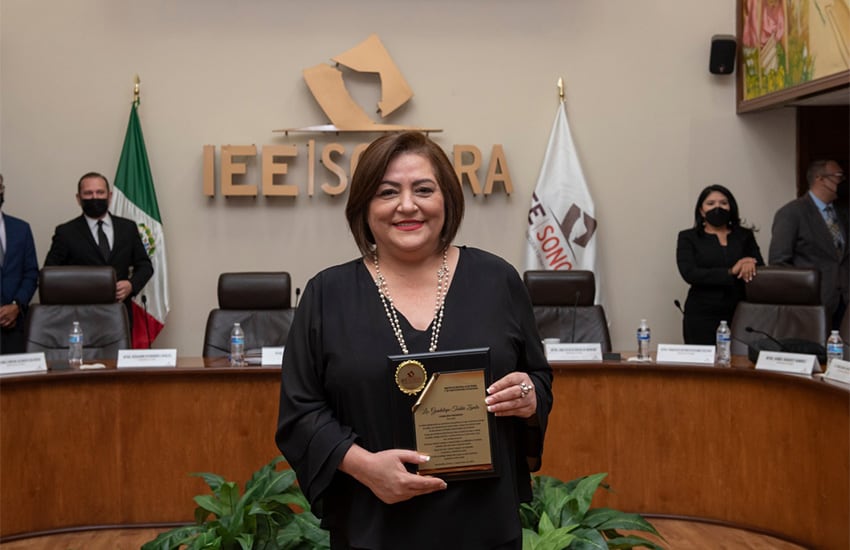
Guadalupe Taddei
When Taddei was head of the Sonora Electoral Institute, the National Action Party accused her of favoring Morena and its allies in 2021’s state electoral process. On Friday, PAN president Marko Cortés acknowledged her electoral experience but said the way she was chosen was a “severe blow to our democracy.” (IEE Sonora)

Taddei will replace Lorenzo Córdova at the helm of Mexico’s electoral agency next week after her name was drawn out of a transparent lottery box in the Chamber of Deputies in the early hours of Friday morning. 

If that sounds like an unusual way to appoint the country’s electoral chief, that’s because it is. 

Party leaders decided to use sortition – also known as selection by lottery and selection by lot – to elect the new INE president and three new electoral councilors since none of the candidates had the support of the required two-thirds of lawmakers in the lower house of Congress. 

An agreement between the parties that would have allowed that level of support for four consensus candidates never materialized. As a result, sortition was used to elect an INE president and councilors for the first time.  

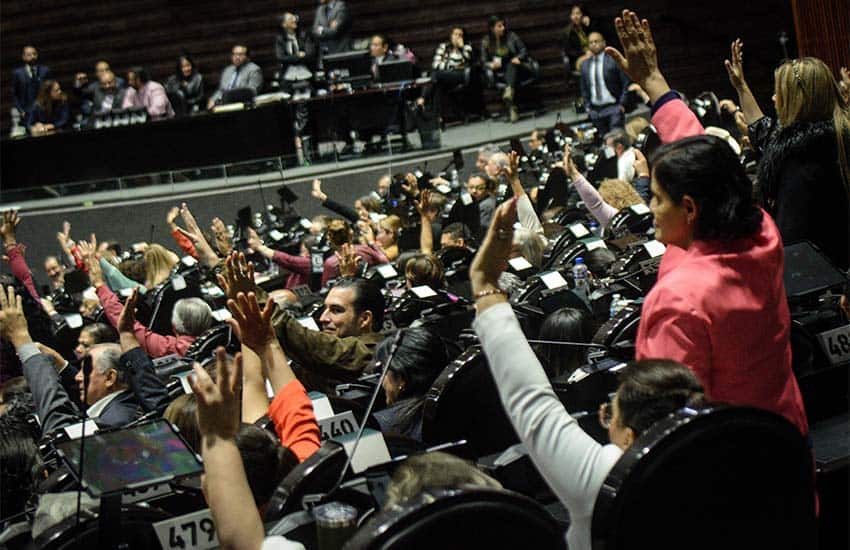
Chamber of Deputies in Mexico
After they were unable to reach a two-thirds majority for any candidates for the open positions, the Chamber of Deputies voted to use sortition, i.e., a lottery, to fill the slots. (Mario Jasso/Cuartoscuro)

The Morena party, which along with its allies has a simple majority in the Chamber of Deputies, were likely happy to resort to drawing lots because the majority of the 20 candidates for the four positions – all of whom were nominated by a “technical committee” earlier this month – are close to their party, the newspaper El País reported.  

Taddei, an experienced electoral official who formerly headed up the Sonora Electoral Institute, will begin her nine-year term next Tuesday. The fact that she is the first woman to head up the INE complies with a recent Federal Electoral Tribunal gender parity ruling.

President López Obrador, an outspoken critic of Córdova, expressed his approval of her election at his regular news conference on Friday morning. 

“She’s an experienced woman. … She’s professional, honest, incapable of acting like the outgoing [INE] president,” he said. 

Chamber of Deputies Mexico
National Action Party federal deputies documenting the state of the lottery box (tómbola) used to randomize the drawing of candidates. (Mario Jasso/Cuartoscuro)

Taddei’s election as electoral chief comes five weeks after Congress approved a major electoral reform package that critics say will significantly weaken the INE and one week after the Supreme Court suspended the application of the reforms in question.   

López Obrador, who put forward the so-called “Plan B” electoral reform package after more ambitious legislation was rejected, has been accused of attempting to seize control of the INE or make it more favorable to the ruling Morena party in the lead up to next year’s presidential and congressional elections. 

That perception is likely to grow due to the fact that Taddei has family links to both the government and Morena. 

A cousin of the soon-to-be INE chief is the government’s super delegate, or social programs chief in Sonora, a nephew was last year named head of the new state-owned lithium company, and a niece is a Morena deputy in the Sonora Congress. 

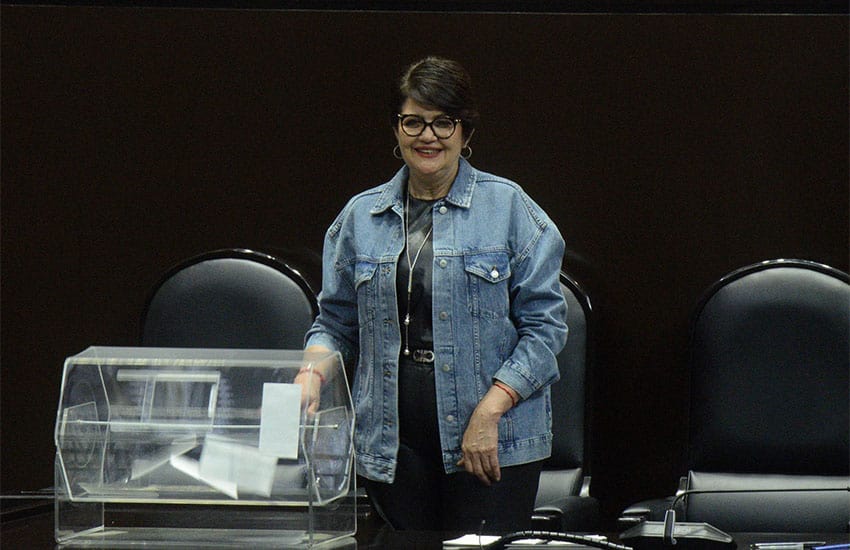
Labor Party Deputy Magdalena del Socorro in Chamber of Deputies choosing INE leader by lottery
Labor Party (PT) Deputy Magdalena del Socorro supervises the lottery box containing lots representing each candidate for INE chief and INE ministers. (Mario Jasso/Cuartoscuro)

While serving as president of the Sonora Electoral Institute, Guadalupe Taddei faced accusations from the opposition National Action Party (PAN) that she favored Morena and its allies during the 2021 electoral process in the state. She has denied claims of political partiality.

The three new electoral councilors elected by sortition early Friday are Jorge Montaño Ventura, Arturo Castillo Loza and Rita Bell López Vences.  

Montaño, an electoral crimes prosecutor in Tabasco, has expressed support for the federal government’s electoral reform, while Castillo, a sociology teacher, said in an interview during the candidate selection process that he was in favor of austerity at the INE, a position in line with López Obrador’s support for cuts to the electoral authority’s budget. 

López Vences, who has a master’s degree in constitutional law, has served as an electoral councilor in her home state of Oaxaca. 

Mexico Deputy Santiago Creel
Federal deputy Santiago Creel about to open Taddei’s sealed ballot.(Mario Jasso/Cuartoscuro)

PAN national president Marko Cortés said on Twitter that the election of the new INE officials by sortition was “a severe blow to our democracy.”

The party said in a statement that it would challenge the appointment of Taddei and Montaño due to what Cortés described as their “clear links” to Morena. 

“We acknowledge that Guadalupe Taddei Zavala … has electoral experience, but we also point out that it’s completely unacceptable that the person who seeks to preside over our electoral umpire is clearly linked to Morena,” the PAN said.  

With reports from El Economista, El País, El Financiero and Reforma

5 detained in connection with deadly Ciudad Juárez fire

0
Posters outside Ciudad Juárez detention center
Protesters hang posters outside a Ciudad Juarez detention center where 39 migrants were killed in a fire on Monday. (Photo by Graciela Lopez Herrera/Cuartoscuro.com)

Five people detained in connection with the deaths of 39 migrants in a fire in a Ciudad Juárez detention center have been placed in custody.  

A judge ruled that the five suspects – three immigration agents, a security guard employed by a private company, and a Venezuelan migrant accused of starting the blaze – must remain in preventive detention as they await trial. The accused face charges of homicide and causing injury.

An additional security guard suspected by authorities has not yet been detained. 

Emergency responders outside immigration detention center
According to reports, migrants set fire to mattresses after being informed they would be deported. (Photo by Juan Ortega/Cuartoscuro.com)

The arrests came after a fire broke out late Monday at a provisional detention center run by Mexico’s National Immigration Institute (INM). The 39 men killed were migrants from Guatemala, El Salvador, Honduras, Colombia, and Venezuela. 

The detained Venezuelan citizen, identified as Jason “N,” is accused of setting mattresses alight after he and other migrants learned they were going to be deported or moved to another INM facility. Jason “N” was not seriously injured in the fire, federal security minister Rosa Icela Rodríguez said Thursday.

A video posted to social media showed that the male migrants being held in Ciudad Juárez were left in a locked section of the detention center while the fire raged. A security guard and an INM agent appear to evacuate the building without unlocking the door to the section where the migrants were detained.

In addition to the 39 deaths, around 30 other migrants were injured in the blaze. 

The five suspects – four men and a female INM agent – are being held in a state prison in Ciudad Juárez and will face another preliminary hearing next week. 

President López Obrador asked Attorney General Alejandro Gertz Manero to personally attend to the case and pledged that those responsible for the tragedy won’t go unpunished. 

With reports from Milenio, El Heraldo de Juárez and Reporte Indigo.

Unemployment in Mexico reaches historic low

0
Vendors in Mexico City
Informal workers, like street vendors, make up over half of the labor force in Mexico. ( Moisés Pablo Nava / Cuartoscuro.com)

Mexico’s unemployment rate hit a historic low of 2.7% in February, according to figures published today by the National Institute of Statistics and Geography (INEGI).

The INEGI’s National Employment and Occupation Survey (ENOE) shows that unemployment in February was a full percentage point lower than the same month in 2022, and 0.1% lower than in January this year.

A strong peso and low unemployment rate are positive signs in Mexico’s post-pandemic rebound (Depositphotos/Photo by kmiragaya)

Underemployment – the number of people who do not work enough hours – was also down to 7.4% in February, compared to 9.2% in February 2022.

These figures are despite the fact that Mexico’s economically active population (of working age) grew by 1.7 million people over the previous year. It reached 60 million people in February 2023, of whom 58.3 million were actively employed.

Mexico’s unemployment rate has been steadily declining after spiking at the beginning of the Coronavirus pandemic. 

However, employment in the informal economy remains strong.

Informal labor made up 55.5% of total employment in February 2023, a 0.9% increase from February 2022. Notably, the proportion of men in informal employment dropped slightly during this period, while the proportion of women in informal employment jumped, from 53.7% to 56.4%.

Of those who found formal work in the previous year, 60% did so in the services sector. (Depositphotos/Photo by Kasto)

Although these informal figures include those working in subsistence agriculture, a similar trend was observed in non-agricultural informal employment, which rose from 28.5% to 29% overall, and from 28.1% to 29.7% for women.

Of the 2.29 million people who started new jobs since February 2022, only 23% entered the formal economy. This is concerning given that those employed in the informal economy are more economically vulnerable and generally lack social security. 

Of those who found formal work, 60% did so in the services sector, particularly in trade. 35.6% entered the industrial sector, mostly in manufacturing, and the remainder took up work in the primary sector.

Overall, Mexico’s economy has maintained a steady recovery from the pandemic. 

With reports from El Financiero

Free public high-speed WiFi coming to Riviera Maya hotspots

0
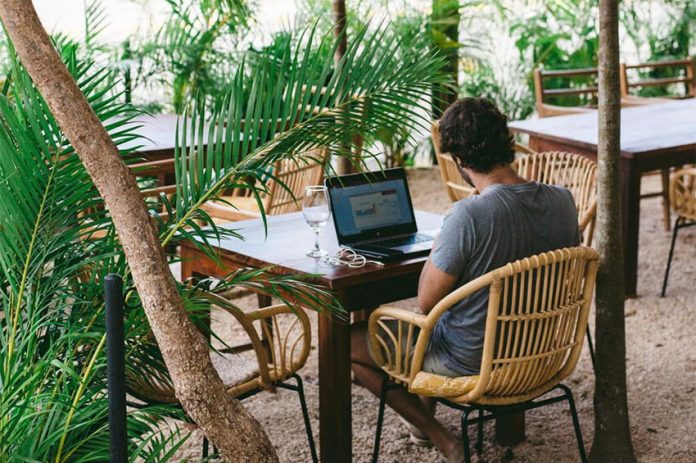
Since the pandemic started, more workers than ever have been able, or been required, to work remotely.
Free high-speed internet on the beach? Quintana Roo's government and provider GigNet have signed an agreement to implement this in parts of Cancún, Tulum, Puerto Morelos and Playa del Carmen. (Tulum Circle)

GigNet, a Wi-Fi provider with a regional broadband network from Costa Mujeres to Tulum, has partnered with the State of Quintana Roo to bring high-speed wireless internet to some of the state’s most popular tourism hotspots.

Signed by Quintana Roo Tourism Minister Bernardo Cueto Riestra and President of GigNet Mexico, Mark Carney, during Mexico’s national tourism fair this week, the agreement seeks to promote technological development in the tourism industry across the Mexican Caribbean.

Cancun International Airport
Cancún International Airport recorded traffic of over 30 million passengers last year. (Arkadiusz Warguła/iStock)

In the first phase of the agreement, GigNet will install public high-speed Wi-Fi zones in the Cancún hotel zone, Playa del Carmen’s 5th Avenue, Puerto Morelos city hall and Tulum’s coastal area, eventually covering additional tourist areas of the Mexican Caribbean. According to reporting in the Cancun Sun, the project could be operational as soon as next month.

According to the Quintana Roo Tourism Promotion Council, 64% of tourists who visit the Mexican Caribbean are under 39 years of age, and technology plays an important role in attracting younger demographics.

Using their phones to look for routes, restaurants, shops and activities during their travels, this new generation of tourists wants to stay connected during their trip. This is also true of digital nomads moving to the area who require high-speed access to the internet for their work.

At a press conference in Cancún, Carney said that GigNet “truly believes the quality of life of the Mexican Caribbean has all the elements to attract investment, businesses, and now – with access to GigNet high-speed internet – tech entrepreneurs and established technology companies seeking to relocate to this attractive business environment.”  

GigNet believes that the Riviera Maya could become the Silicon Valley of Latin America, and lure big companies like Amazon or Google to establish operations in the region. 

“One of the most important elements in making this vision possible is access to reliable high-speed internet, which, until recently, was the only missing piece,” Carney said.

The company’s says it is also going to promote social benefits like online learning, improved medical services, remote work opportunities, a diversified economy and access to public services.

Digital nomads have helped boost digitalization in other parts of the country – as in Mexico City, which in 2021 won a Guinness World Record for being the most connected city in the world. 

With reports from The Cancun Sun, Business Wire and La Jornada Maya

Fibra Monterrey buys industrial real estate portfolio for US $662M

0
property from Zeus industrial real estate portfolio bought by Fibra Monterrey
The properties included in the industrial real estate portfolio are located in 11 states. (Courtesy)

Real estate investment firm Fibra Monterrey signed a purchase agreement with real estate developer Finsa and Walton Street Capital México to buy Zeus, a 46-property industrial portfolio in northern Mexico. The properties are located in 11 states and comprise 822,000 square meters of construction plus 882,000 square meters of land for development.

The agreement, worth US $662 million, is the second largest industrial real estate transaction made in Mexico, after Fibra Uno purchased a 74-unit industrial real estate portfolio for US $841 million in 2019.

Finsa head Sergio Argüelles González, left, and Fibra Monterrey Director of Operations and Acquisitions Javier Llaca García
Finsa head Sergio Argüelles González, left, and Fibra Monterrey Director of Operations and Acquisitions Javier Llaca García marked their deal at an event on Wednesday. (Courtesy)

Twenty-seven developers and investment trusts participated in the selection process. Sixty percent were national companies, with the remaining 40% coming from abroad. According to the newspaper El Economista, a key factor was Fibra Monterrey’s reputation in the market. 

The Zeus portfolio was developed and acquired with funds from Development Capital Certificates (CKD), a structured private equity security that’s traded on the Mexican Stock Exchange (BMV).

Developed by Mexico in 2009, they are designed to raise sources of capital for Mexican companies and projects involved in sectors such as infrastructure, real estate, business and mining, among others.

“For a second time, we have achieved a successful sale with CKD capital. We are excited about the good results that we have attained during a key moment for Mexico, when nearshoring is so relevant for the country,” Sergio Argüelles González, president of Finsa, said. 

He stressed that this agreement proves the “good performance and liquidity of the Mexican real estate market,” and said that with the sale, “the three stages of this type of vehicle conclude: investment, stabilization and divestment.”

Last week, Fibra Monterrey reported it signed a syndicated loan for up to US $300 million and a revolving credit line that would allow it to complete the acquisition of the Zeus portfolio. 

Finsa now seeks to take advantage of the nearshoring wave to develop a new fund that will boost the company’s growth in Mexico over the next few years.

With reports from El Financiero and El Economista

51,000 turn out for Billie Eilish in Mexico City

0
Billie Eilish on stage
The artist performed a show to tens of thousands of fans at Foro Sol, Mexico City. (@Biltracking/Twitter)

Pop sensation Billie Eilish gave an electrifying performance at her rescheduled Mexico City concert in Foro Sol stadium on Thursday.

The 21-year-old was forced to postpone her concert on Wednesday after a severe rain and hail storm in the city, although she and her brother Finneas provided an intimate 20-minute acoustic set to thank fans who braved the weather.  

Billie Eilish in the rain at Foro Sol
Billie Eilish and her brother Finneas entertained the crowd after the cancellation of the concert on Wednesday night. (@CesarTheSecond/Twitter)

The Mexico City date of her “Happier Than Ever” world tour was canceled as a precautionary measure. 

Some fans to the general admission show had reportedly camped outside the entrance to the circuit for up to 48 hours to ensure that they would be in the front row.

The 51,000 people who packed into the stadium Thursday night for the rescheduled show were treated to Eilish’s signature whispers and ethereal vocals that made her the first 21st-century artist to score a No. 1 single.

Draped in a Mexican flag, the Californian said she was exhausted from the rigors of touring but felt happy to be back performing in Mexico. 

“I feel familiar. I’ve only been here once, but I feel like I know them, that we’re old friends and we’ve met again,” she told the crowd.

As is tradition, she ended her set with her multi-platinum selling hit “Bad Guy”.

Eilish will appear at the Pa’l Norte festival in Monterrey later Friday before heading to Arena VFG, Guadalajara on April 2.

With reports from Reforma