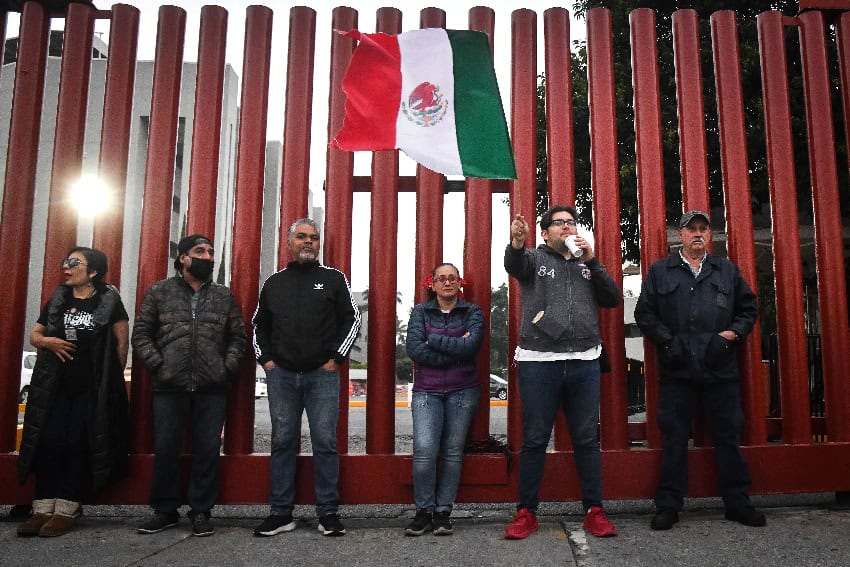
Hundreds of court workers blocked access to the lower house of federal Congress on Tuesday morning as they seek to prevent lawmakers from discussing the government’s judicial reform proposal.
Some 600-700 judicial employees formed human chains outside the Chamber of Deputies in Mexico City, according to reports.
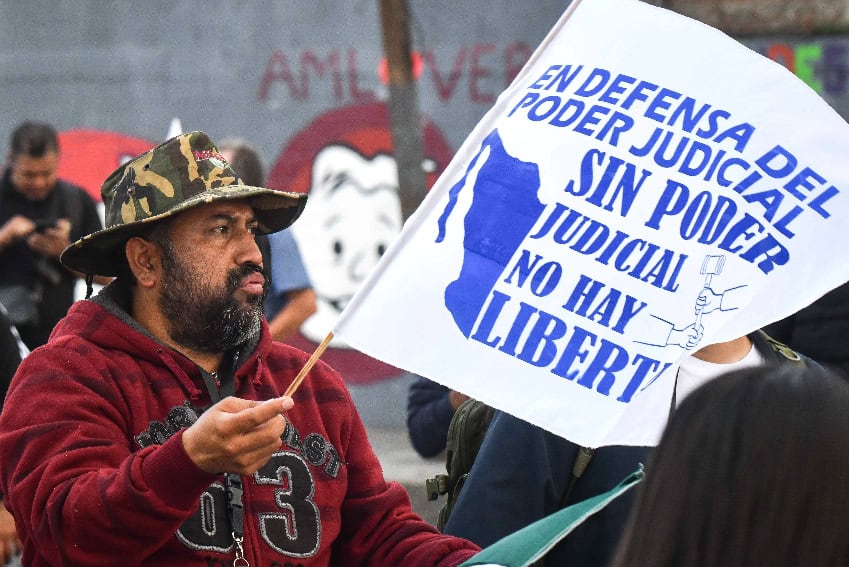
A debate on the controversial judicial reform proposal — which would allow citizens to directly elect Supreme Court justices and other judges — was scheduled to commence in the lower house at 10 a.m.
Patricia Aguayo, a spokesperson for the court workers, told the Reforma newspaper that she was aware that some lawmakers with the ruling Morena party had stayed overnight at the Chamber of Deputies, but protesters were intent on not allowing other deputies into the legislature.
“We’re forming blockades so that no one enters the Chamber of Deputies,” she said.
Aguayo said she had heard of Morena’s plan to hold Tuesday’s legislative session in an alternative venue.
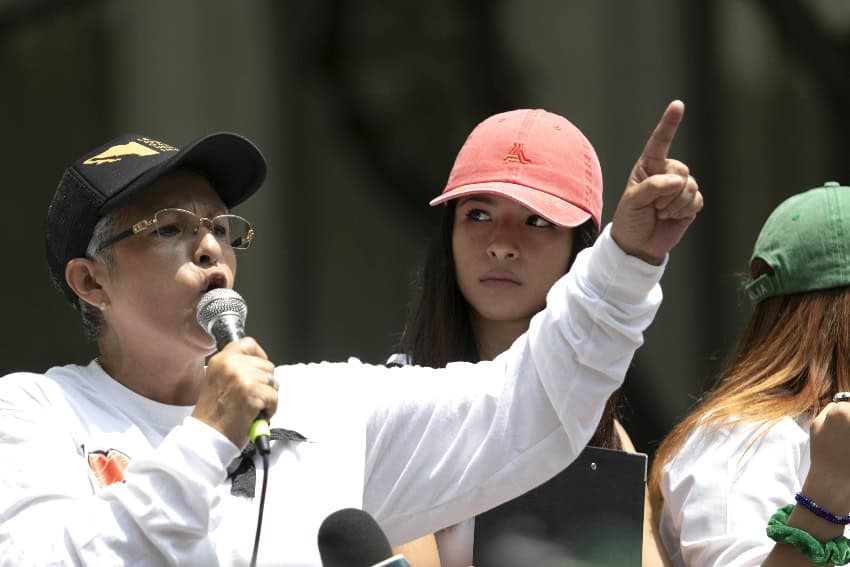
“They can go to hell to hold their session, but here in the Chamber of Deputies they won’t convene today or tomorrow,” she said.

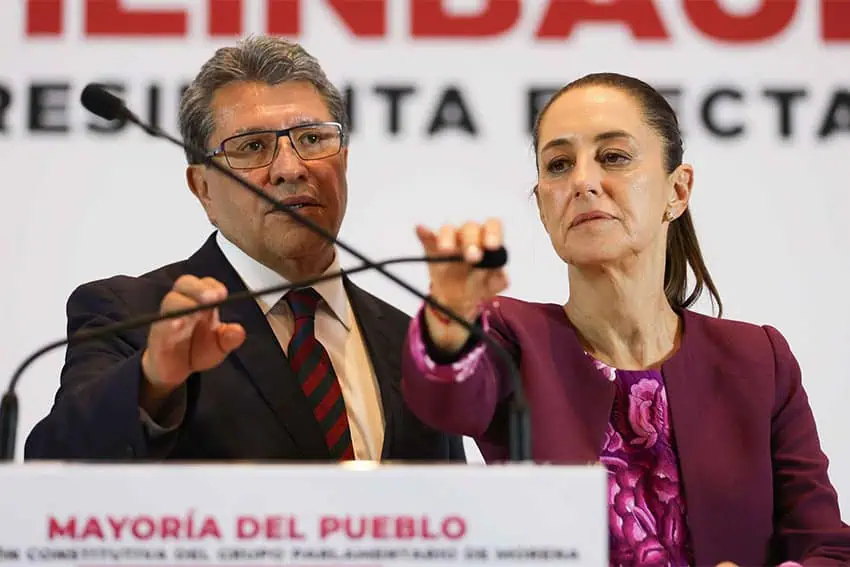
Morena’s leader in the lower house, Ricardo Monreal, said there are various places where lawmakers could convene to consider the reform bill sent to Congress by President Andrés Manuel López Obrador in February.
“On other occasions we moved to [the business district of] Santa Fe, where there are two alternative venues, or we could even convene in a central hotel or somewhere else near the city, we have no problem [doing that]. We don’t want to cause a confrontation, it’s not worth it,” he said in a video message posted to X.
“I’ve asked my colleagues, the deputies, to not try to enter [the Chamber of Deputies],” Monreal added.
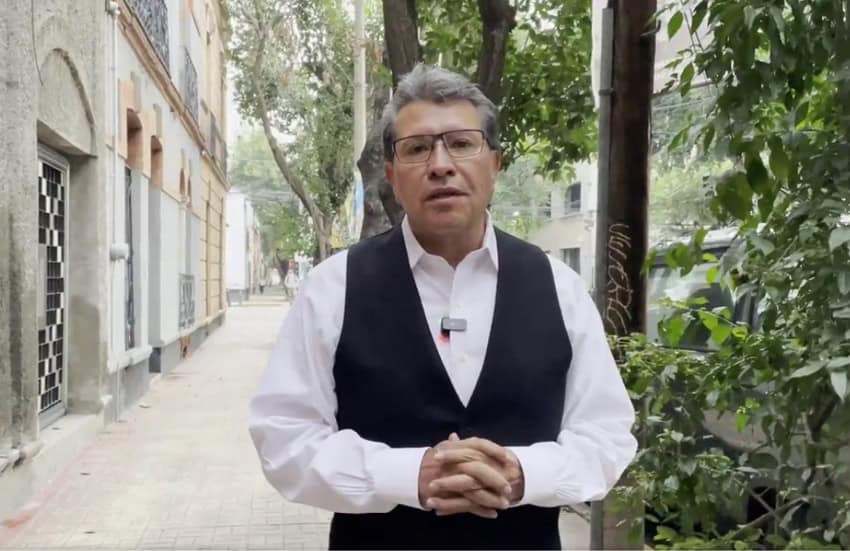
The lawmaker posted another video to his X account later on Tuesday morning announcing that the legislative session will be held in the Magdalena Mixhuca community recreational center in the Iztacalco borough.
As of Sept. 1, Morena and its allies have a supermajority in the lower house, allowing them to approve constitutional reform proposals without the support of opposition lawmakers.
Critics of the judicial reform proposal assert that its approval would undermine the independence of the judiciary.
If the bill is approved — which appears likely as Morena and its allies are very close to a supermajority in the Senate — thousands of judges including all Supreme Court justices would be elected next year. Candidates would be nominated by the president, the Congress and the judiciary itself.
President-elect Claudia Sheinbaum, who will take office on Oct. 1, supports the reform proposal, which was modified last month.
She has asserted that the sitting president will have less of a say in the appointment of Supreme Court justices, not more, as critics of the bill argue.
“The president will no longer have a hand in appointing justices,” she said last month.
“… It’s a very complete process,” Sheinbaum said, referring to both candidate selection and judicial elections.
“It’s new, but it has nothing to do with this idea … that [judges] are now going to be more aligned to the president. … It’s a complete proposal that guarantees autonomy [for the judiciary],” she said.
United States Ambassador to Mexico Ken Salazar said in a Aug. 22 statement that the “popular direct election of judges is a major risk to the functioning of Mexico’s democracy.”
With reports from El Financiero, Reforma and El Universal