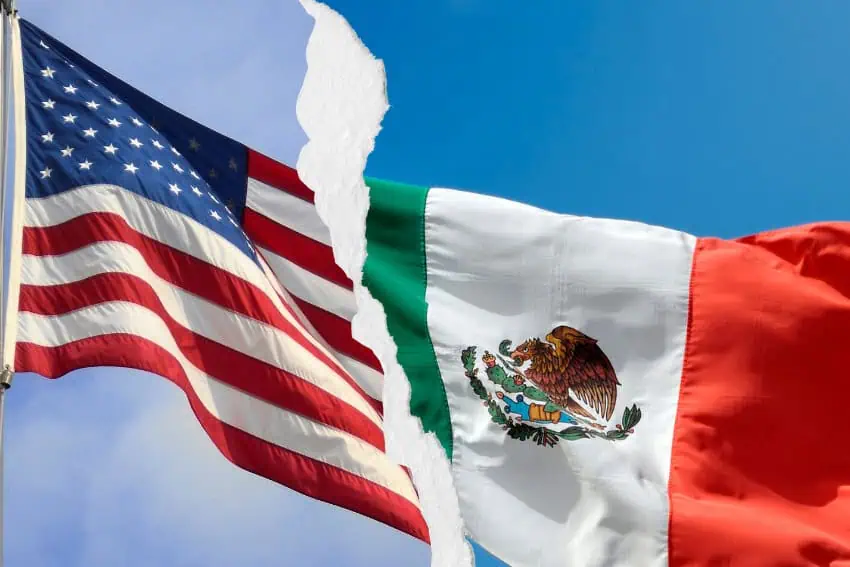
The Belgium-based think tank International Crisis Group named a potential Mexico-United States clash one of its 10 Global Conflicts to Watch in 2025.
Joining Syria, Israel-Palestine, Ukraine and European security, Mexico and the U.S. could see serious conflict in 2025 over issues ranging from immigration, tariffs and drug cartels, according to the think tank.
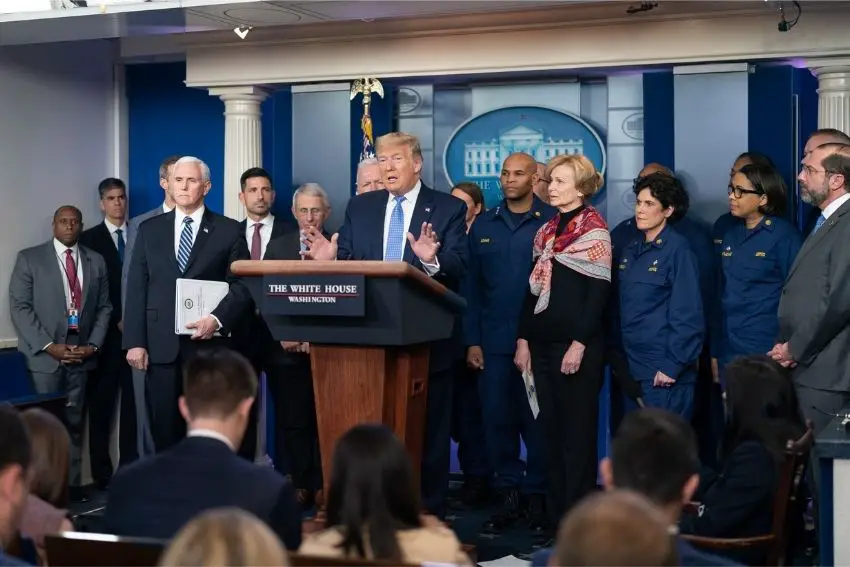
Although President Claudia Sheinbaum has assured Mexicans that bilateral relations with the United States will remain strong, several policy proposals made by U.S. President-elect Donald Trump — who takes office on Jan. 20 — could significantly roil the relationship this year.
The issue that the Crisis Group has identified as the biggest potential source of conflict is the cross-border production and trafficking of the drug fentanyl, which is now the leading cause of death in the United States for people ages 18-45.
In December, Trump floated the idea of designating Mexico’s drug cartels as terrorist organizations, which could legally permit the United States to send its military into Mexico.
The incoming president’s candidate for national security advisor, Mike Waltz, previously supported legislation authorizing the use of force against these criminal organizations, saying “It’s time to go on offense. Not only are these paramilitary transnational criminal organizations responsible for killing an unprecedented number of Americans, but are actively undermining our sovereignty by destabilizing our border and waging war against U.S. law enforcement and the Mexican military.”

The Crisis Group also cites growing support among members of the U.S. Republican party, which maintains a slim majority in both houses of Congress, “for unilateral military action — whether through airstrikes on fentanyl labs or special forces operations — to kill [cartel] leaders.”

It says that unilateral military action against cartels would almost certainly backfire, likely setting off turf wars. Instead of eliminating the cartels, fragmentation would occur, new leaders would emerge, and drug production would continue because fentanyl labs are low-tech and easily rebuilt.
Among other sources of conflict is a mass deportation program proposed by Trump that, if carried out, could see four million undocumented Mexicans returned to their home country. The Crisis Group says “This could trigger upheaval in parts of Mexico as poorer states struggle to assimilate returns.”
Trump has also threatened to levy 25% tariffs on Mexican goods shipped to the United States if the flow of migrants and drugs is not stopped, a policy that would likely result in retaliatory tariffs from Sheinbaum.

Such a trade war could become an economic disaster and “[tank] relations between two countries interconnected by trade, investment and family ties,” the Crisis Group says, spelling disaster for both countries.
If the bilateral relationship becomes adversarial, “expect a bumpy ride,” the Crisis Group writes.
With reports from The International Crisis Group, Forbes and Foreign Policy