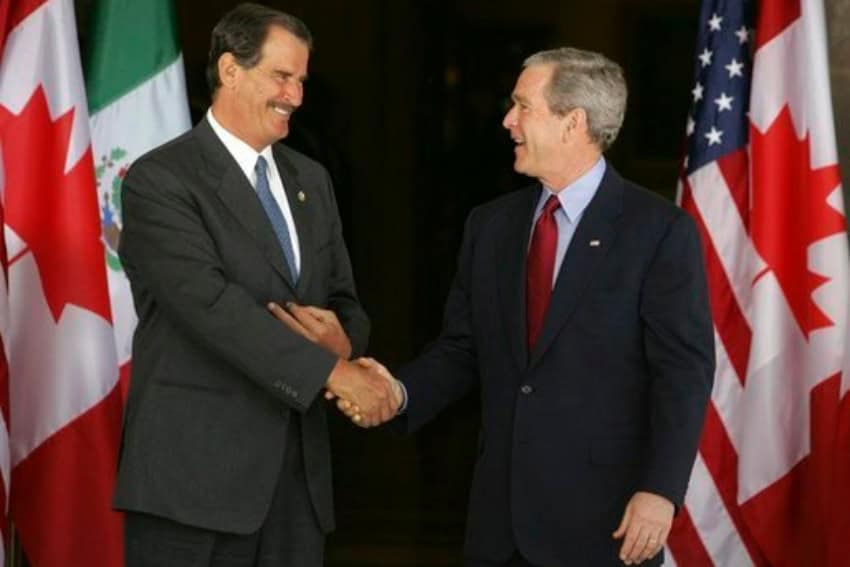
In 2000, Mexicans did something they hadn’t done in 71 years: they voted the PRI (Partido Revolucionario Institucional) out of power. The man they chose to replace them was a former Coca-Cola executive who campaigned in cowboy boots — a charming quirk until he wore a patent-leather pair to a gala dinner in Madrid hosted by King Juan Carlos and Queen Sofía — and had the unnerving habit of saying exactly what he was thinking. While that was the appeal, it was also, occasionally, the problem.
From the moment Vicente Fox settled into Los Pinos, Mexicans braced themselves for what would become a cherished national genre: the foxada. Also known as a foxismo, gazapo, desatino, resbalón or plain old metida de pata, these were the gaffes, blunders and baffling musings that punctuated six years of an otherwise genuinely historic presidency.
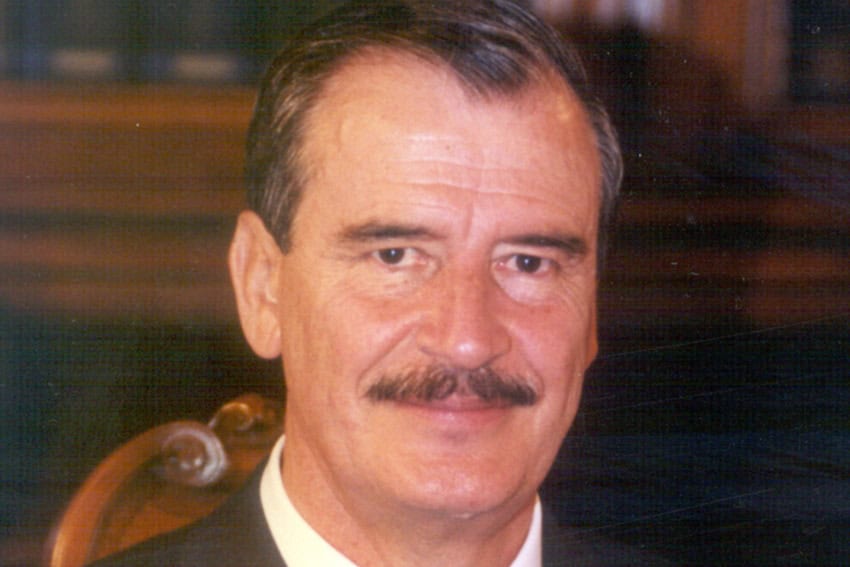
Fox had delivered Mexico its first democratic transition in decades. But within what seemed like minutes, the gaffes began.
Fox and Borges
While speaking at an international congress on the Spanish language in Valladolid, Fox rattled off a list of literary greats. “From Miguel Cervantes to Octavio Paz, from Sor Juana Inés de la Cruz to Gabriela Mistral, from Simón Bolívar to José Luis Borgues” sounds good in theory — except the Argentine writer who penned classics like “Ficciones” and “El Aleph” was named Jorge Luis Borges. Perhaps thankfully, Borges had already died in Geneva in 1986.
Lesser gaffes have been forgotten — but Fox wasn’t done with Borges yet. When Peruvian novelist Mario Vargas Llosa won the Nobel Prize in Literature in 2010, Fox took to Twitter to celebrate: “FELICIDADES MARIO, LA HICISTE! YA SON TRES BORGES, PAZ Y TU,” he wrote with the caps lock firmly on.
This time, he got the name right. But Borges never won the Nobel Prize.
‘Comes y te vas’
“Eat and go” isn’t the literal transcript of the embarrassing exchange between Fox and Fidel Castro, but it’s enough to sum it up. Before a 2002 United Nations conference on Financing for Development in Monterrey, Fox called Castro — the famous foe of then-President George W. Bush — on a private line. The relationship between the US and Cuba was a tense one, and Fox, intent on presenting Mexico as a balancing act between the two countries, wanted to avoid any interaction between the two leaders. His solution: ask Castro to attend, to speak (but not about Mexico-Cuba relations), join him for lunch and leave before Bush showed up.

Castro’s response — “and from there I obey your orders” — was a warning Fox didn’t heed. The Cuban leader did, indeed, attend the summit and depart abruptly before Bush’s arrival.
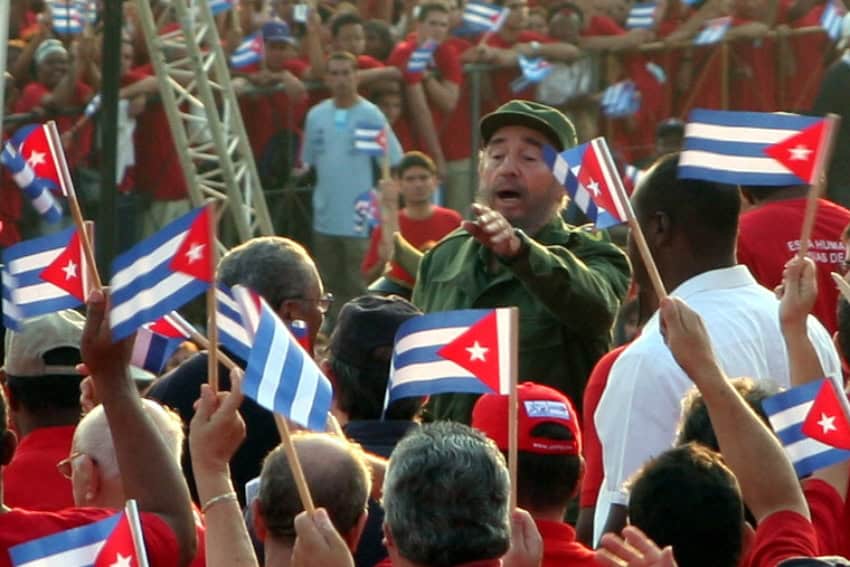
A month later, the feisty Castro released the recording to a group of journalists at a press conference in Havana.
That’s not my problem — or is it?
In late December 2002, a group of masked, armed men linked to TV Azteca stormed the transmission facilities of independent station CNI–Canal 40 on Chiquihuite hill in Mexico City. They overpowered and threatened workers on site, seized control of the antenna, and began broadcasting Azteca’s signal on Canal 40’s frequency. The episode, known as “El Chiquihuitazo,” was widely condemned as a private, quasi-paramilitary assault on a media outlet and a blatant violation of the rule of law.
When a reporter asked President Fox whether he would intervene — guaranteeing the rule of law being a nominal part of his job — he responded in a few words that would, for many, define his presidency: “¿Y yo por qué?“
Loosely translated: “That’s not my problem.”
It was, of course, very much his problem. After ten days, the Fox administration brokered a deal — one that left TV Azteca in control of the signal. CNI eventually collapsed, leaving critics to argue that Fox’s resolution wasn’t a resolution at all, but rather a reward for the aggressor.
A washing machine with two legs
Women weren’t safe from Fox’s unfiltered commentary. In February 2006, during a visit to Sinaloa, the president boasted that roughly 75% of Mexican households owned a washing machine — then clarified, helpfully, that he meant “not one with two legs, but a metallic one.”

The joke landed exactly as well as one might expect. In the Chamber of Deputies, PRI and PRD members of the Comisión de Equidad y Género called the comments vulgar, crude and misogynistic, and demanded a formal apology.
Within days, Fox appeared on TV Azteca to walk it back — insisting there was “no offense” intended, but adding: “If anyone interpreted it that way, any woman watching me right now, I offer my most ample, most ample apologies, on the matter of the washing machines.” A non-apology apology, delivered with characteristic Fox flair.
It was not an isolated lapse in judgment. Seventeen years later, Fox took to social media to refer to Mariana Rodríguez — wife of Nuevo León governor Samuel García — as a dama de compañía, a phrase widely interpreted as likening her to an escort or sex worker. Movimiento Ciudadano filed a complaint for gender-based political violence, and within hours, Fox’s account was suspended.
Now I can say whatever I want
Fox couldn’t leave office without a parting foxada.
When Felipe Calderón was elected to the presidency in 2006, Fox told Spanish news agency EFE: “Now I speak freely; I say any nonsense, it doesn’t matter anymore. That’s it. After all, I’m leaving.”
He was true to his word.
Fox vs. AMLO: The Twitter years
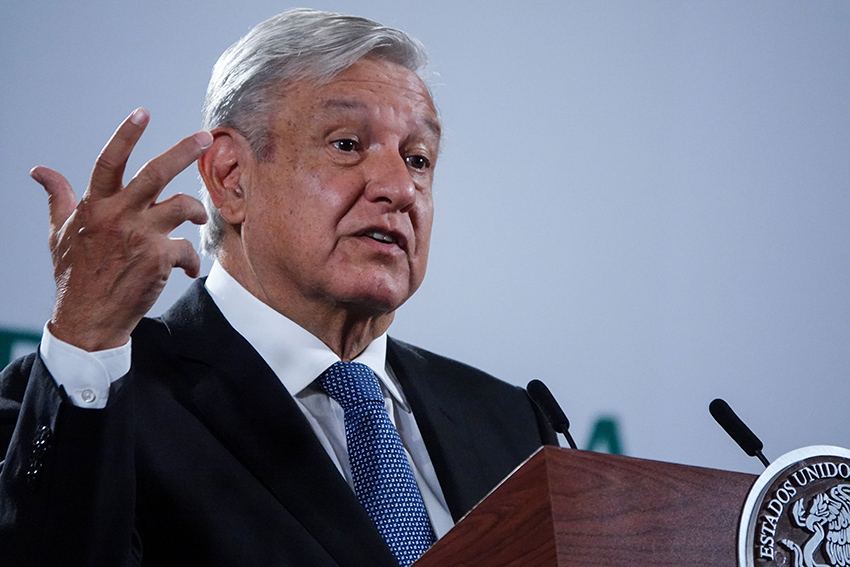
Leaving office did nothing to quiet Vicente Fox. If anything, it freed him. With no protocol to observe and no advisors to ignore, Fox took to Twitter and pointed himself squarely at Andrés Manuel López Obrador (AMLO), a more recent president.
In 2018, as AMLO mounted his third presidential campaign, Fox mocked his ambitions and declared that “70% of Mexicans” supported PAN candidate Ricardo Anaya. When AMLO won by a landslide, Fox pivoted without missing a beat — posting that the new president was steering Mexico toward “authoritarianism” and signing off with “lástima por México” (“too bad for Mexico”). After an armed intrusion at his home, he held López Obrador “directly responsible for the security of myself, my family and my belongings.”
Fox has openly labeled AMLO as terco (stubborn), a machito (little macho man), a chachalaca tabasqueña (a reference to a squawking bird from Tabasco) and a dictadorzuelo (little dictator), among other noteworthy barbs.
Where is Vicente Fox today?
Vicente Fox, who will turn 84 on July 2, has since returned to León, Guanajuato, to be closer to medical care.
Rancho San Cristóbal, his former home, is now Centro Fox: a presidential library and leadership foundation with horse shows, a children’s mini-farm and an event complex that includes La Velaria, a venue that can hold up to 10,000 people and has hosted, per the state tourism site, “grandes personalidades del mundo.”
It is, in other words, a fully operational monument to himself.
As for social media, Fox is active under his newest handle @VicenteFoxQue and hosting “El show de la verdad con Vicente Fox” on the YouTube channel “Líderes de la Verdad” — where he dispenses his opinions on current Mexican politics — Fox remains stubbornly, entertainingly present.
Bethany Platanella is a travel planner and lifestyle writer based in Mexico City. She lives for the dopamine hit that comes directly after booking a plane ticket, exploring local markets, practicing yoga and munching on fresh tortillas. Sign up to receive her Sunday Love Letters to your inbox, peruse her blog, or follow her on Instagram.