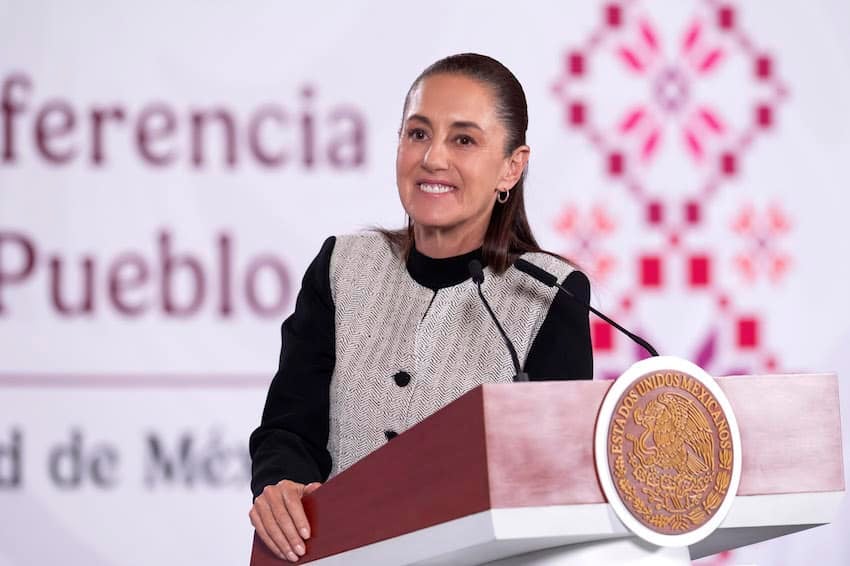
Sheinbaum’s mañanera in 60 seconds
- 📺 Canal Once occupation ends: Education Minister Mario Delgado said that Canal Once workers peacefully retook the station’s facilities on Sunday, more than two months after IPN students began occupying them, forcing out six protesters; he said the station’s audiovisual archive appears damaged, with material “broken and disorganized on the floor.”
- 💰 Sheinbaum alleges paid protest: The president asserted that the protesting students had been paid to occupy Canal Once, saying investigations have not yet determined who made the payments, and called it illogical for a student movement focused on IPN improvements to seize the TV station for so long.
- 📱 Social media debate explained: Sheinbaum said the government opened a public debate on children’s use of social media because studies show excessive use — particularly infinite scrolling and short videos — creates addiction, though she stressed technology also has “extraordinary uses” like global communication and virtual museum visits.
- 🧠 Haidt warns of “digital pacifier”: U.S. psychologist Jonathan Haidt addressed the mañanera, calling children’s social media and touchscreen use a “public health problem” and urging parents not to give kids access to phones until at least age four to six, citing damage to cognitive development.
Why today’s mañanera matters
President Claudia Sheinbaum’s Monday morning press conference came two weeks after the federal government announced three regional forums to canvass views on children’s use of social media and artificial intelligence tools and platforms ahead of drafting a legislative proposal to regulate these technologies.
At today’s mañanera, Sheinbaum explained why the government initiated a public debate on young people’s use of social media. Two weeks ago, she said that a consultation process with experts, parents, teachers, young people and others should lead to “some scheme of regulation” on the use of social media by minors.
It is not yet known whether the government will seek to ban young people under a certain age from using social media as part of a legislative proposal that could be submitted to Congress later this year. However, Education Minister Mario Delgado, who was at today’s mañanera, said earlier this year that the Mexican government was exploring the possibility of imposing age restrictions.
Also of note at today’s mañanera were the remarks made by both Sheinbaum and Delgado about a lengthy student takeover of the public television station Canal Once.
Student takeover of Canal Once ends
A reporter noted that workers with Canal Once, a public television network owned by the National Polytechnic Institute (IPN), returned to their workplace on Sunday more than two months after a group of IPN students began occupying the TV station’s facilities as part of a protest against alleged financial mismanagement at the university, among other alleged problems.
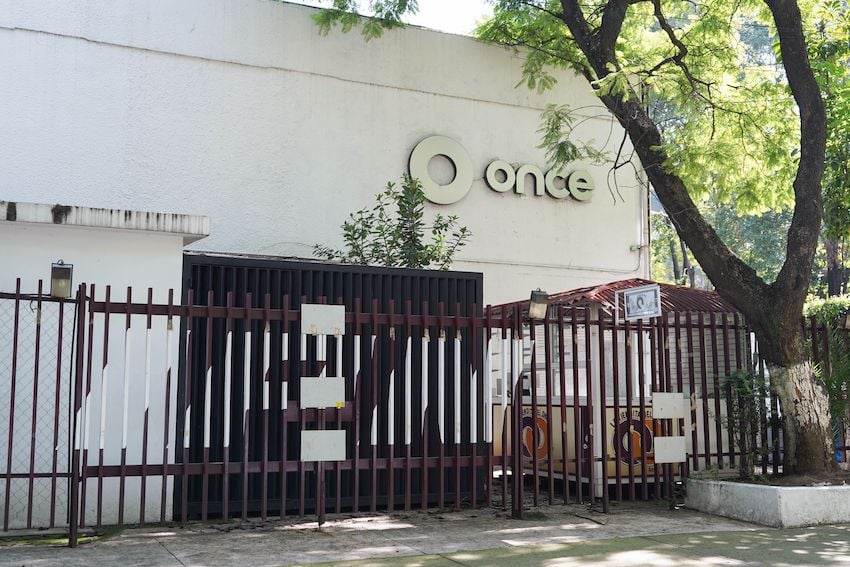
Protesting students allege that they were violently forced out of Canal Once’s Mexico City facilities on Sunday.
Asked her opinion about the situation, Sheinbaum referred the question to her education minister.

Delgado said that “a group of young people” from IPN decided to occupy the Canal Once facilities on May 20.
“We made many attempts to establish dialogue with them,” he said before highlighting that discussions took place and asserting that none of the students’ demands were related to Canal Once.
Consequently, Delgado said that authorities asked the protesting students to leave Canal Once — which has an extensive audiovisual archive — but they repeatedly refused to do so.
He said that Canal Once workers on Sunday “decided to organize themselves” to “peacefully” retake the television station’s facilities. They achieved their goal, forcing six remaining student protesters out of Canal Once.
“Unfortunately, at first glance, there is damage to the archive,” Delgado said.
“There is material broken and disorganized on the floor,” he said.
“But we’re going to wait to see how serious this damage is. And we said to the young people that we’re going to continue with the roundtable discussions, but it’s not possible for a TV station that belongs to the people of Mexico to remain seized,” Delgado said.
He didn’t say whether the protesting students would face criminal charges for occupying Canal Once and allegedly damaging its archive.
Sheinbaum asserted that the protesting students had been paid to occupy Canal Once.
“On one occasion we presented here about how these students received resources, money,” she said, adding that investigations had not yet determined who made the alleged payments.
“It’s not logical that a student movement that is asking for improvements in the Polytechnic [Institute] occupies Canal Once for so long,” Sheinbaum said.
“… Fortunately, Canal Once never stopped broadcasting,” she said, explaining that the Ministry of Public Education lent equipment and studios to the public television station.
Sheinbaum: Technology has ‘extraordinary uses’ but social media is problematic
After presentations from experts on the impact of screen time and social media on children and adolescents, a reporter asked Sheinbaum her opinion about technology that can assist young people’s learning.
“What we’re seeing here are different studies that show that the excessive use of social media, particularly use linked to infinite scrolling … or [watching] short videos, creates addiction,” the president said.
She went on to say that no one can deny that technology has “extraordinary uses,” citing the ability to communicate with people on the other side of the world and virtually visit “the world’s best museums” as examples.
“The issue is that certain mechanisms of [social media] platforms are creating learning problems, cognitive development problems and addiction,” Sheinbaum said.
“… Mexicans can’t say ‘it’s OK.’ It’s something that we have to review for our daughters and sons, our granddaughters and grandsons,” she said.
“… That’s why we opened the debate,” Sheinbaum said.
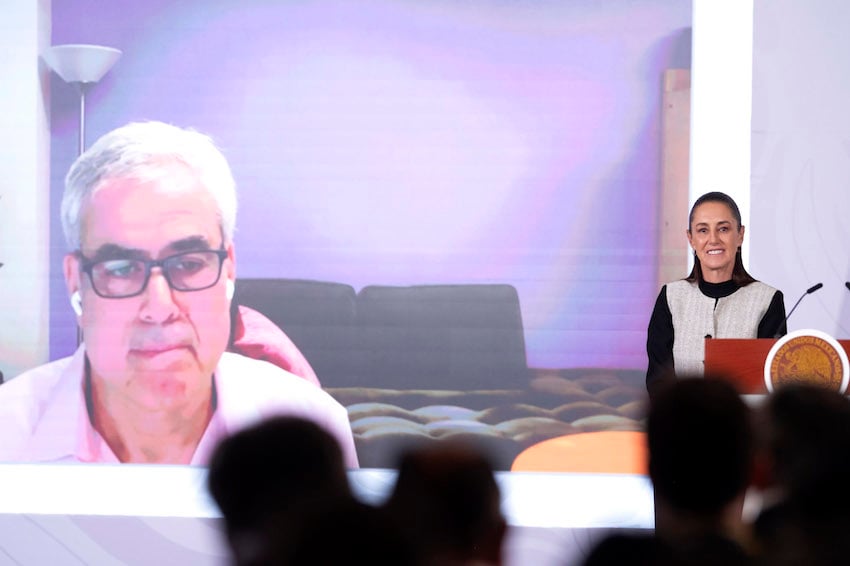
Her remarks came after U.S. psychologist Jonathan Haidt — author of the 2024 book “The Anxious Generation: How the Great Rewiring of Childhood Is Causing an Epidemic of Mental Illness” — addressed the mañanera.
Among his remarks, Haidt said that “now we know that it’s terrible to give a young child a touchscreen because they learn to get quick dopamine just by touching, touching, touching.”
“… That means that when they don’t have the phone, they now are very upset,” he said.
“… In the United States, 40% of two-year-olds have their own iPad or iPhone and this is a terrible thing which we now know is damaging their development when they arrive at school. What I’m recommending whenever I’m able to speak to governments around the world is treat this as a public health problem,” Haidt said.
“… This is a public health problem and it is important to educate new mothers, new parents, that they should not use a digital pacifier. They should not give … [their children] access to any phones until they’re at least four, five, six,” he said.
By Mexico News Daily chief staff writer Peter Davies (peter.davies@mexiconewsdaily.com)