Sheinbaum’s mañanera in 60 seconds
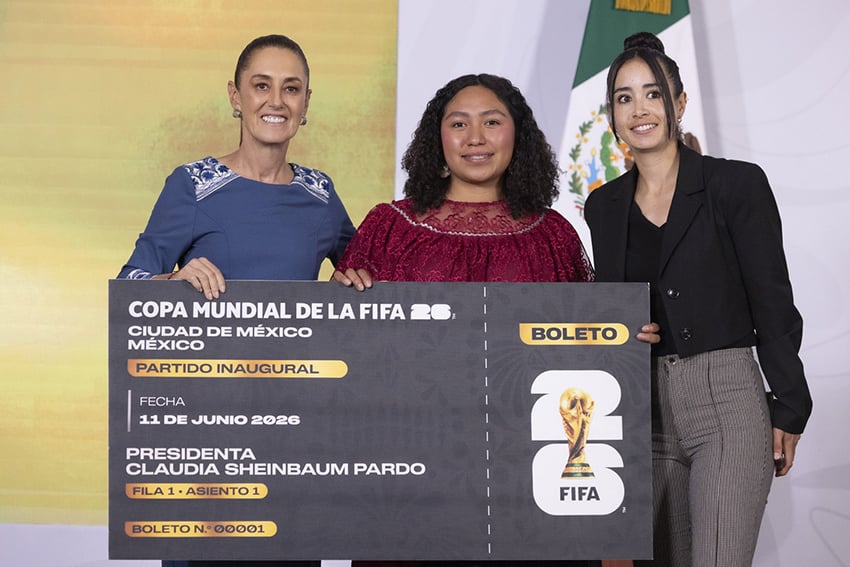
Sheinbaum’s World Cup ticket goes to …
Football referee Katia Itzel García, one of the judges of the soccer ball juggling competition, announced that the winner of Sheinbaum’s ticket was Yolett Cervantes Cuaquehua, a 21-year-old woman from the Gulf coast state of Veracruz.
García said that Cervantes — an Indigenous woman from the municipality of Tlaquilpa — is a “clear example that Mexico has talent in every corner of the country,” and an example of “the cultural diversity that makes us feel proud of being Mexican.”
“Her technique with the ball, her ability to control it, her life story and the passion she conveys to us when we see her show us that our Mexico is great, brave and talented,” she said.

After a hug with Sheinbaum, Cervantes, García and the president posed for a photo, with the No. 00001 ticket on prominent display.
Cervantes to Sheinbaum: ‘Thank you for taking us into account’
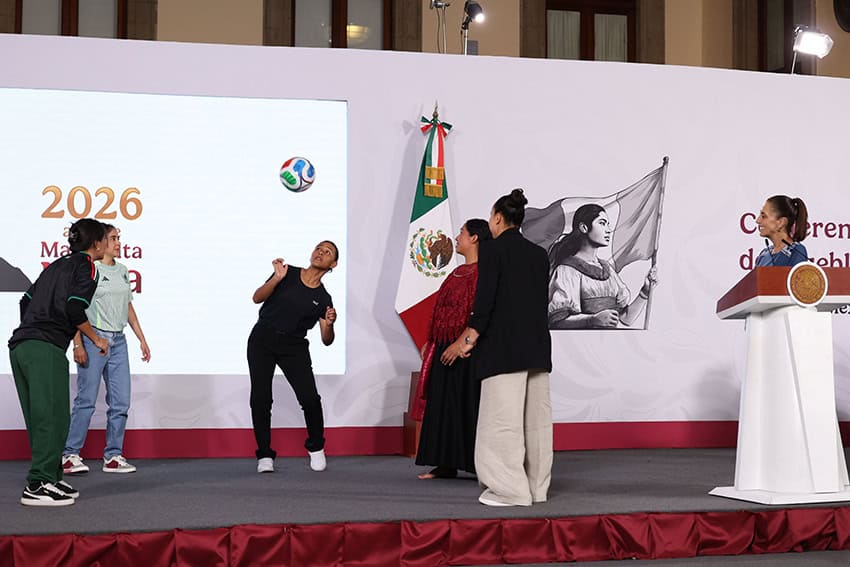
After showing off their impressive juggling skills, including with bare feet in the case of Cervantes, each of the four contest winners made brief remarks.
“Esteemed President Claudia Sheinbaum Pardo, thank you very much for taking us into account and for [giving me the opportunity] to be at a very important event such as the World Cup,” Cervantes said.
“I admire you and I respect you a lot for being the first woman president of our beautiful country,” she added.
“I don’t think there are words right now to say how I feel. I’m very excited. Thank you for taking us into account. Let’s keep promoting women’s football because all women have their own talents and qualities,” Cervantes said.
🔴Claudia Sheinbaum encabezó la entrega de boletos para el Mundial de Futbol a ganadoras de Guadalajara, Monterrey y Ciudad de México.
Entre ellas, Yolett Cervantes Cuaquehua obtuvo el pase inaugural que correspondía a la presidenta.pic.twitter.com/riv5Ku7pwd
— Azucena Uresti (@azucenau) May 29, 2026
The winners of the other World Cup tickets were Karla Itzel Peña Vilchis of Gustavo A. Madero, Mexico City; Briana Ameli Medina Cortés of Iztapalapa, Mexico City; and Daira Yaretzi Díaz García of San Pedro Mixtepec (Puerto Escondido), Oaxaca.
Sheinbaum described the four women as “the pride of Mexico.”
“They’re not going to represent the president or the mayor, they’re going to represent Mexico,” she said.
“… Thank you very much for your effort, for your discipline, for the love of what you do,” Sheinbaum told the contest winners.
Brugada: ‘Football has no gender’
Mayor Brugada began her mañanera remarks with a declaration.
“Football has no gender, no owner,” she said.
“It has no borders, it belongs to the people and girls and women,” Brugada said.
Later in her address, the mayor noted that Mexico City will have 18 “football festival” sites during the World Cup, spaces where people will be able to watch the matches live and take part in cultural and sports activities. An official FIFA Fan Festival site is currently being set up in the Zócalo, Mexico City’s main square.
El futbol no tiene sexo, ni dueños, ni fronteras, es del pueblo y también de las niñas y mujeres.
Gracias a la iniciativa de nuestra querida Presidenta @Claudiashein entregamos a las ganadoras del concurso “Representa a México en la inauguración del Mundial” los boletos para… pic.twitter.com/qqPCbhnz6R
— Clara Brugada Molina (@ClaraBrugadaM) May 29, 2026
Brugada invited people to join the attempt to break the Guinness World Record for the largest wave (or Mexican wave). The attempt at setting a new record will take place on Saturday, June 6, on Paseo de la Reforma, the boulevard that leads into Mexico City’s historic center.
Brugada highlighted that a lot of work has gone into preparing the capital to host five World Cup matches, including the opener.
“We’re receiving this World Cup with over 2,000 projects that we’re working on here in the city,” said the mayor, who has faced criticism for the extensive use of the image of ajolotes (axolotls) in the city, and for the beautification of public infrastructure in the capital, such as pedestrian bridges, by painting it purple.
“In the coming days we’re going to have the inauguration of the elevated park,” Brugada said, referring to a park situated above Calzada de Tlalpan — a major north-south route in Mexico City.
She also said that the renovation of 20 Metro stations will be completed in the coming days.
By Mexico News Daily chief staff writer Peter Davies (peter.davies@mexiconewsdaily.com)