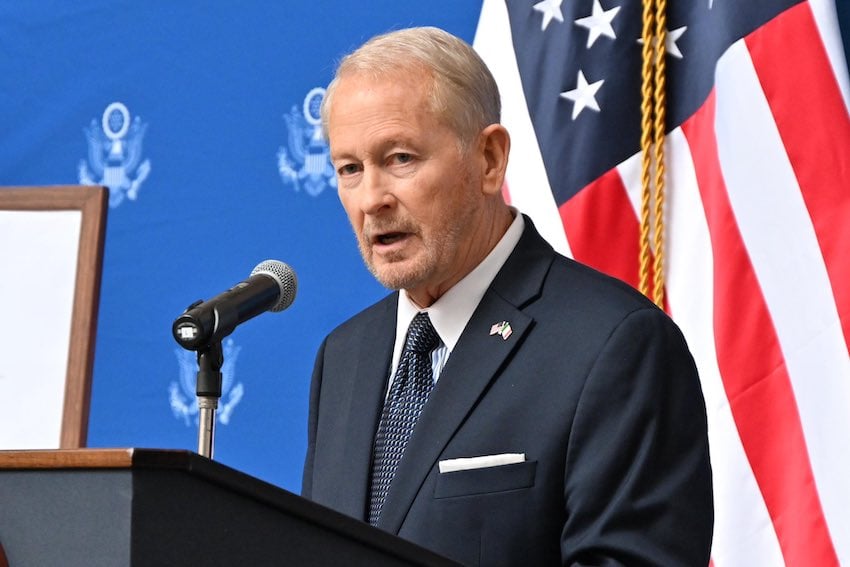
U.S. Ambassador to Mexico Ronald Johnson said Monday that the United States has transferred 313 wanted criminals to Mexico to face justice during President Donald Trump’s second administration.
His announcement on social media came almost a month after the Mexican government said that the United States hadn’t sent to Mexico any of the 269 people whose extradition it requested between January 2018 and May 2026.
On the X social media site, Johnson wrote:
“U.S. Border Patrol agents in the Rio Grande Valley (@USBPChief & @USBPChiefRGV) captured and sent back a Mexican national wanted in Mexico for the prostitution of a minor and sexual assault. Under President Trump’s Administration, the United States has transferred 313 wanted criminals to Mexico to face justice. This case represents another example of the strong U.S.-Mexico cooperation being advanced by @POTUS @realDonaldTrump and President @Claudiashein. Together, we are bringing criminals to justice and making our nations safer.”
It was unclear whether the Mexican Ministry of Foreign Affairs had submitted a formal extradition request for any of the 313 “wanted criminals” that Johnson said have been sent to Mexico since early 2025.
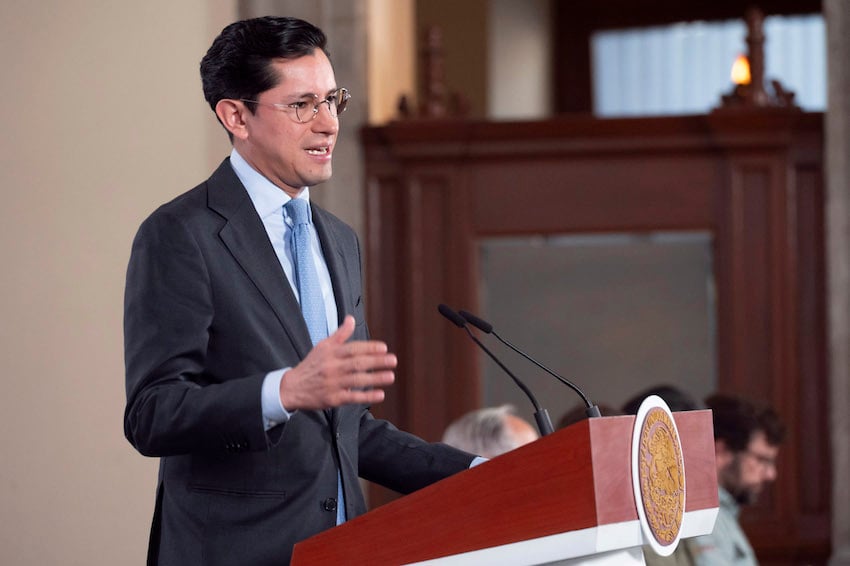
On May 19, Foreign Affairs Minister Roberto Velasco said that 36 extradition requests submitted by Mexico to the U.S. between Jan. 1, 2018 and May 13, 2026 were denied, while 233 were “still pending completion.”
President Claudia Sheinbaum said at the time that Mexico had requested the extradition of people in connection with “extremely serious cases.”

“Why haven’t they handed anyone over?” asked Sheinbaum, whose government has sent over 90 organized crime figures to the U.S. in three large transfers that took place in January 2026, August 2025 and February 2025.
The government’s assertion last month that the U.S. hadn’t fulfilled any of Mexico’s extradition requests came as it faced pressure to arrest and extradite Sinaloa Governor Rubén Rocha Moya and other Sinaloa-based current and former officials accused by U.S. prosecutors of drug trafficking in league with the Sinaloa Cartel. Mexican authorities have said that the U.S. hasn’t provided sufficient proof to warrant the arrest of the defendants for the purpose of extradition.
However, two of the accused officials — both former ministers in the Sinaloa state government — turned themselves in to U.S. authorities last month.
While various U.S. officials have touted close security cooperation with Mexico, the bilateral security relationship has recently been strained due to the CIA’s alleged participation in a drug lab raid alongside Chihuahua state police without the knowledge or authorization of the Mexican government, and U.S. prosecutors’ drug trafficking accusations against Rocha Moya — an ally of Sheinbaum — and other officials, various of whom are affiliated with the ruling Morena party.
With reports from El Financiero