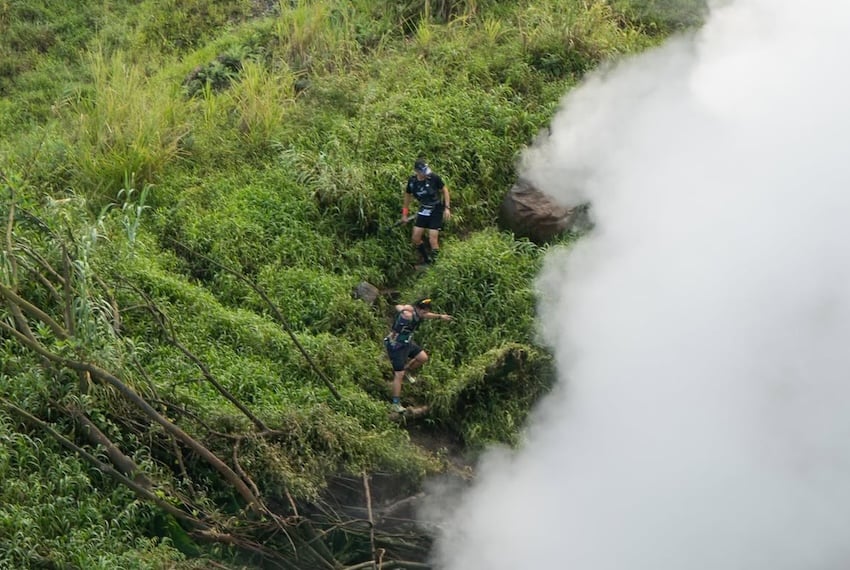
A delegation of high-performance Mexican athletes will travel to El Salvador to participate in next month’s Cordillera Challenge, a 130-kilometer mountain race with over 6,300 meters of positive elevation gain.
The participation of the four runners is part of a government-sponsored agenda seeking to strengthen sporting and cultural ties between both countries.
María Lorena Ramírez Hernández, an Indigenous ultramarathon runner originally from the Sierra Tarahumara in the state of Chihuahua, will lead the delegation.
The 31-year-old Ramírez, a 2025 National Sports Award recipient, gained international recognition after winning the UltraTrail Cerro Rojo in 2017, an ultra-distance race of 80 kilometers (50 miles), while wearing huaraches, a type of traditional sandal. She finished with a time of 7 hours, 20 minutes.
The Cordillera Challenge — a 130-kilometer, multi-day endurance race taking place from Nov. 6-8 — will traverse some of El Salvador’s most stunning natural landscapes, including Lago de Coatepeque (a 115-meter-deep crater lake), the Izalco and Ataco volcanoes and the coastal sandbar known as Barra de Santiago.
Mirna Beatriz de la Cruz, leader of México Imparable, a government initiative that links sport and cultural identity to promote athletic talent and give visibility to Mexico’s Indigenous peoples, will also attend the 3-day event.

Upon establishing México Imparable in August 2025, President Claudia Sheinbaum described the initiative as “a symbolic action that represents the strength and resilience of all the Mexican people, particularly the indigenous communities.”
México Imparable’s agenda in El Salvador includes the photo exhibition “Mexico, Land of Champions,” which will be inaugurated on Nov. 3 at the National Library in San Salvador.
The exhibition — sponsored by the Mexican Embassy — includes images of daily life, traditions and the rich cultural heritage of the Sierra Tarahumara’s Indigenous communities.
Through portraits of its inhabitants, their customs, their relationship with the land and their connection to sport, the exhibit seeks to introduce the Salvadoran public to the cultural diversity of the Rarámuri and highlight their contribution to Mexico’s heritage.
With reports from El Mundo and Diario Latino