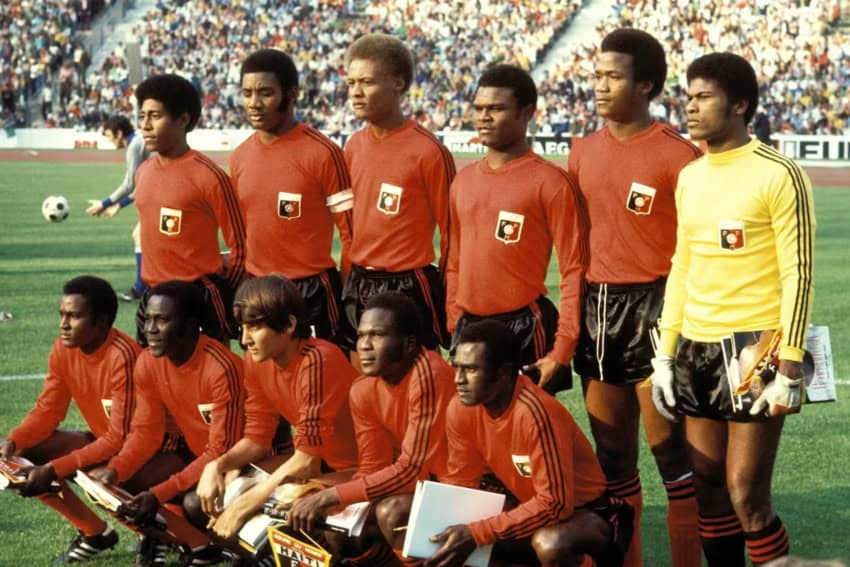
The Mexican football team entered the 1970s on a wave of optimism, having just staged a successful World Cup tournament. The team had done well in front of the home fans, reaching the quarter-finals for the first time. There was further reason to celebrate the following year when Mexico won the regional CONCACAF Nations Cup in Trinidad. Mexico’s victory was not unexpected; they were the regional soccer superpower, and the real surprise had been the solid performance of Haiti. Like Mexico, the Haitians went unbeaten through their five games, but draws against Mexico, Costa Rica and Cuba cost them the title.
Jean-Claude “Baby Doc” Duvalier had recently taken over the country on the death of his father, and his anti-Communist stance saw the island’s economy being subsidized by the U.S. There was optimism that better days lay ahead, and even the tourist industry had started to pick up. Thus, there was little hesitation in awarding the 1973 CONCACAF tournament to Haiti. This would be a particularly important competition because, for the first time, the regional championship would double as a World Cup qualifying group.
World Cup qualifications for Mexico
At the time, Mexican football was being dominated by Cruz Azul, champions in 1972, 1973 and 1974. The man behind this success was Raúl Cárdenas, who had guided Mexico to the 1970 World Cup quarterfinals. The other great manager of this generation, Ignacio Trelles, was plying his trade at Club Puebla, and the man in charge of the national team was Javier de la Torre. He was a Guadalajara man in his heart and soul, both as a player and three times manager. Indeed, he was still managing Guadalajara while looking after the national team as a secondary job. This Mexican team had some talented players, including Enrique Borja, who was already a veteran of two World Cup tournaments, Horacio López Salgado, who would win 50 caps, and Octavio Muciño, who had been at the heart of Cruz Azul’s recent success.
Mexico’s World Cup campaign started well, and they saw off Canada and the U.S. in the preliminary round to qualify for Haiti and the finals of the CONCACAF tournament. The team was then inactive for nearly six months as the Mexican championship wound through its bloated program of regular-season games and playoffs. From September, the national team started to prepare for their trip to Haiti with a hectic schedule of matches. Many fixtures were against local sides, including a 0-2 defeat to a team consisting of the best foreign players in the Mexican league. It had not been a particularly impressive warmup, but World Cup qualification was considered a foregone conclusion, and no alarm bells were ringing.
The 1973 CONCACAF Championship in Haiti
Six teams had qualified for the regional championships in Haiti, only one of which would win a ticket to Germany for the World Cup finals. There was only one stadium grand enough for the occasion, the Stade Sylvio Cator. The need to play games before darkness, but after the worst of the heat, meant there would only be one game a day. The pattern would be a round of three games, a day of rest, and then start again.
Honduras, considered the team most likely to challenge Mexico, started by beating Trinidad, while Mexico had a disappointing draw with Guatemala. Haiti, as expected, won its opening game against minnows Netherlands Antilles. In the second round, Mexico struggled against Honduras, trailing 0-1 for much of the game before a goal from Horacio López Salgado salvaged a point. It had not been an impressive start, and they trailed both Haiti and Honduras. The team was not gelling, and the first doubts were starting to fester in the squad. Could Mexico actually miss out on a World Cup place?

One of the most corrupt games ever played
It was Dec. 4, the day after Mexico’s draw with Honduras, that would go into history as one of the most corrupt games ever played. It did not involve Mexico directly, but would have a major impact on its chances of qualifying. Trinidad and Tobago would be playing the home side, a game they entered with some optimism. They had a group of players who had learned football the old “street way,” with endless pick-up games on the Queen’s Park Savannah, and for the first time, the squad would be strengthened by a handful of professionals who were plying their trade in the newly formed North American Soccer League (NASL).
It was a good team, and they tore Haiti apart, getting the ball into the net five times. However, on four occasions, celebrations were halted by a late whistle as the referee indicated an infringement nobody else had seen. In the end, Trinidad and Tobago lost 1-2. Had the referee been bribed, or just intimidated by the passionate 30,000-strong crowd? Or, as rumours suggested, had the Haitian team been taken into the hills to go through a voodoo ceremony?
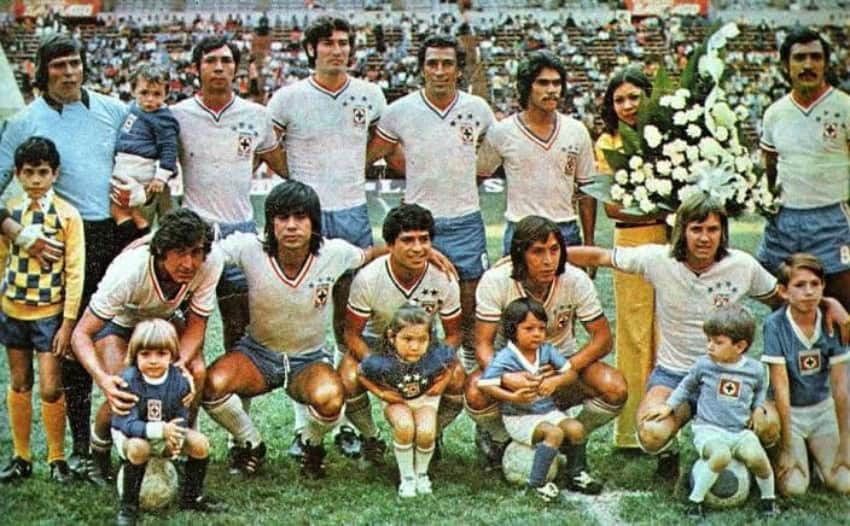
Mexico’s loss to Trinidad and Tobago scuttles World Cup chances
Before then, however, Mexico faced Trinidad and Tobago. Kevin Verity, the latter’s coach, brought his team to watch the Mexicans train, which overawed some of his younger players. Verity, however, felt he had seen a weakness in the Mexicans and adjusted his tactics. Trinidad would strengthen their midfield, let the Mexicans push forward, and launch quick counterattacks.
These tactics worked, with quick attacks down the wing and long throws into the penalty area from left back Winston Phillips causing trouble for the Mexicans. When New York Cosmos star Everald “Gally” Cummings scored after 35 minutes, Mexico had no choice but to push forward, and this left them even more exposed to counterattacks. Trinidad went on to win 4-0, which made the result of the final round of games immaterial. Although Mexico recovered to beat Haiti, the team would miss out on the World Cup for the first time in 25 years.
What went wrong?
What had gone wrong? Coach Javier de la Torre was a Guadalajara man in his heart and soul, both as a player and a three-time manager. Indeed, he was still managing Guadalajara while looking after the national team as a secondary job. He had never played for Mexico and did not have the feel for international football that Ignacio Trelles had built up, or which seemed to come naturally to Raúl Cárdenas. There might also have been some deeper problems within Mexican football.
The season was long and exhausting, and the players had looked off the boil in Haiti. They would win the ball only to give it away; there was little sign of the ticker-tac passing of Mexican football at its best. This was perhaps most notable with striker Enrique Borja, on whom so much was dependent. Like many natural goal scorers who prowl the opponents’ penalty area looking for a ball that bounces loose or a defender who hesitates, spells of prolific scoring could be followed by drought, and Borja went through a lean spell in Haiti.
More reasons for failure in Haiti
Mexican clubs had also fallen into the habit of buying players from South America, which was proving cheaper than investing in training programs that might develop the next generation of talented Mexican players. In addition, while the first African teams to enjoy some success at the World Cup, Cameroon and Algeria, were strengthened by a core of players with European experience, Mexican players tended to stay at home. Previously, such factors had not mattered, but regional standards were rising with Honduras, Costa Rica and, at this point, Haiti closing the gap. There was also, above all, the decision to play all the games in one venue. In previous tournaments, and in those in the future, Mexico would benefit from playing home games at altitude and in front of passionate home crowds. In the end, it was surrendering the staging of the qualifying tournament to Haiti that proved a fatal decision.
Despite the fuss over the qualifying tournament, Haiti had a reasonable side that year. Their players tended to be big, physical and fit. They also had that “uncoached” quality that allowed them to be unpredictable, with dramatic clearances from their own penalty area, and long, ambitious shots at goal. Francois Duvalier had made sure there was plenty of government support, with improved training facilities and good food for the squad. He took a personal interest in their preparation, sometimes turning up at practice sessions and even phoning the senior players to see how they were. This flattered some and scared others.
The road back to relevance
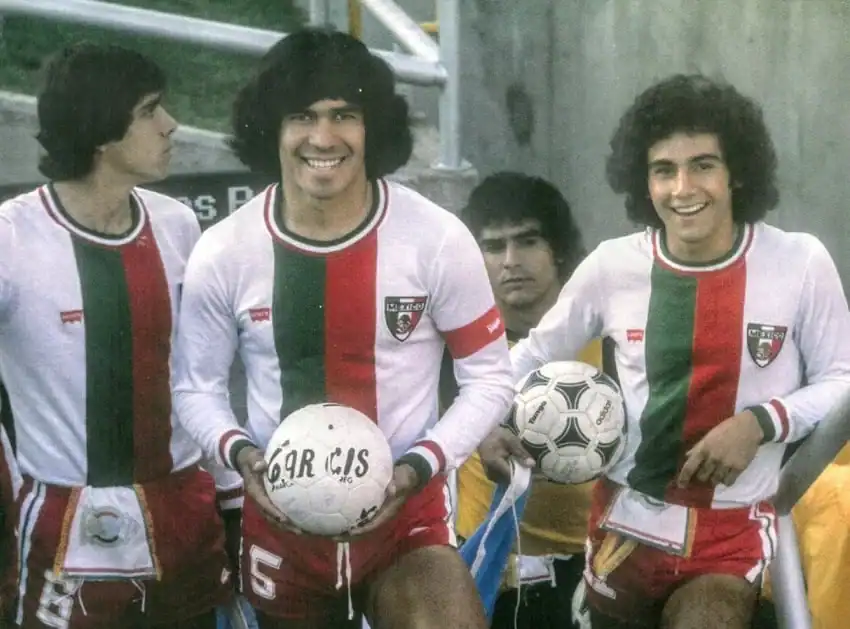
The failure to qualify in Haiti was to be the start of a dismal period for the Mexican team, which would also fail to qualify for both the 1974 and the 1982 World Cup tournaments. In between, their 1978 appearance in Argentina is best forgotten, with Mexico losing to Tunisia and being thrashed 6-0 by West Germany.
Despite this poor international record, many players from the 1973 team had distinguished careers in the sport, none more so than Manuel Lapuente Díaz, who became one of the most successful managers in Mexican football. In a managerial career that lasted 35 years, he would win five Primera División championships with three different clubs. Others would not be so lucky. Muciño, the four-goal hero against Netherlands Antilles, was killed the following year after being shot in a restaurant car park following an altercation with a local football fan, while Fernando Bustos died in a car accident on the road to Qurétaro in 1979.
The return of the World Cup to Mexico
As for the national team, it would be 1986, when the world’s greatest sporting event returned to Mexico, before the decline started to be reversed. Staging the World Cup that year led to renovated stadiums, sponsorship and improved television coverage. Clubs, led by Necaxa, became better run and invested in facilities and youth teams. Hugo Sánchez left Mexico to become a superstar in Madrid and, in doing so, paved the way for other Mexican players to follow the path to Europe. They returned with experience of the wider soccer world and helped bring in a successful era of Mexican football during which the team became ever more competitive on the world stage.
Bob Pateman lived in Mexico for six years. He is a librarian and teacher with a Master’s Degree in History.