Yucatán state is a rare place where two great civilizations meet — and you can feel both of them in a single day. History lovers will be in their element here, whether they’re drawn to the mysteries of the ancient Maya or the grandeur of Spanish colonial ambition. Sure, you’ve heard of Chichén Itzá — and the crowds that come with it. But just south of Mérida, a quieter and equally rewarding route awaits.
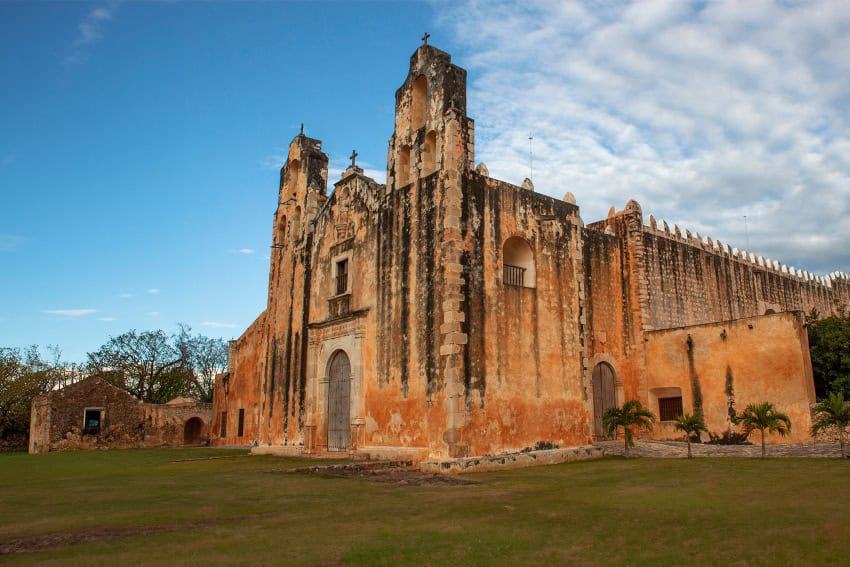
The Maya had already been thriving in this region for more than a millennium before the Spanish arrived in the early 16th century. The archaeological sites they left behind are a testament to a remarkably advanced civilization. Then the colonizers came, and with them came stone churches and convents that still stand today, many built directly on top of sacred Maya ground. That layered history is exactly what makes the Convent Route so compelling.
Think of it as Yucatán’s back road — a journey through small towns, crumbling facades and living culture that most visitors simply drive past on their way to the big-ticket sites.
What is the Convent Route?
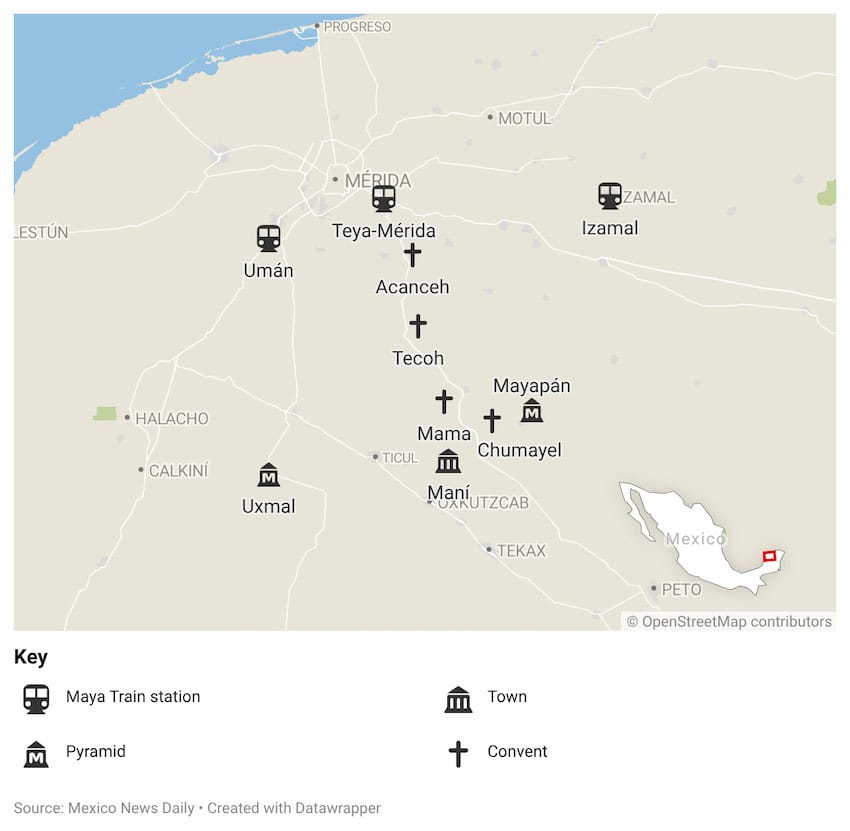
This circuit takes you through several towns with colonial churches, convents and even ancient Maya sites. A popular option is to travel from Mérida to Maní, which is doable in a day. Some definitions of the Convent Route include the yellow city of Izamal and other towns, but you might need more time to cover all that ground.
We’ve put together this guide to help you visit some of the main attractions on or near the Convent Route. It’s best to use your own transport and start your day early. With the opening of the Maya Train, there are also several nearby stations that travelers can use to get as close as possible before hiring a car.
Acancéh

Acancéh sits about 25 kilometers from Mérida via highways 180 and 184, and it packs a surprising amount of history into one modest town square. The Maya were here as far back as 700 B.C., and the evidence is impossible to miss — a pyramid rises right in the center of town, its walls lined with magnificent stucco masks believed to depict the sun god Kinich Ahau. Buy your ticket from the INAH post across the road, then climb the stairs for a close look at those weathered faces.
While you’re there, ask the INAH official to unlock the Palace of Stuccos on Calle 18. Inside, a remarkable 13-meter stucco frieze stretches across the wall, filled with anthropomorphic figures that have survived centuries remarkably intact.
Just across from the pyramid, a brightly painted 16th-century church dedicated to Our Lady of the Nativity makes for a worthy stop — a vivid reminder of how thoroughly the Spanish built their world on top of the Maya one. The convent and church of Our Lady of Guadalupe are close by as well.
If time allows, the cenotes around Cuzamá and Homún are only 25 to 30 minutes away. That said, they deserve an unhurried visit of their own — plan a separate trip so you can linger and soak in their beauty without one eye on the clock.
Tecoh
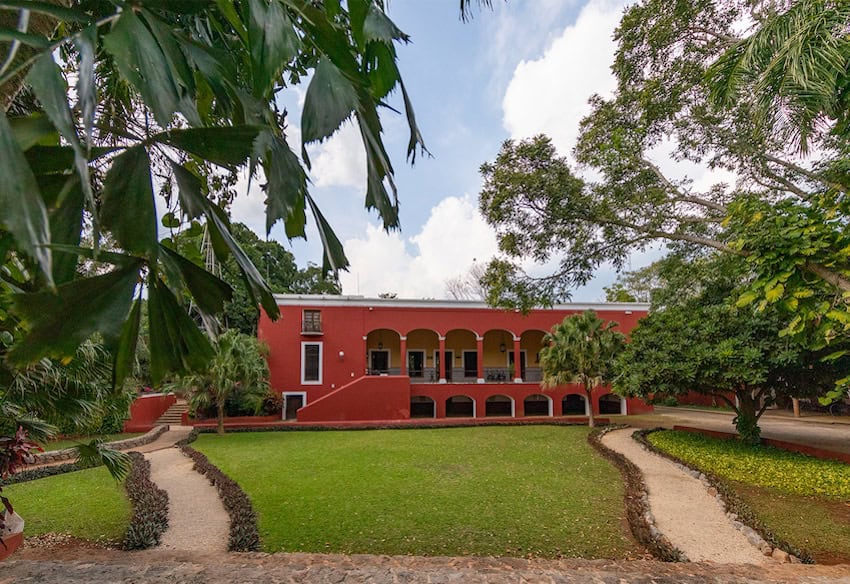
From Acancéh, head south about 10 kilometers to Tecoh, where the church of Our Lady of the Assumption is worth a brief stop. Look closely at its base — like so many colonial churches in this region, it appears to have been built directly atop an ancient Maya pyramid. Step inside to see the altar, which makes the detour worthwhile on its own.
Just under 20 minutes away, Hacienda Sotuta de Peón offers a window into the region’s once-booming henequen industry — the so-called “green gold” that made Yucatán fabulously wealthy in the late 19th and early 20th centuries. The tours run a few hours, so consider saving this for a separate day if you’re pushing through to Maní. The hacienda also has accommodation and a cenote, making it a fine base if you want to slow down and settle in.
Telchaquillo and Mayapán
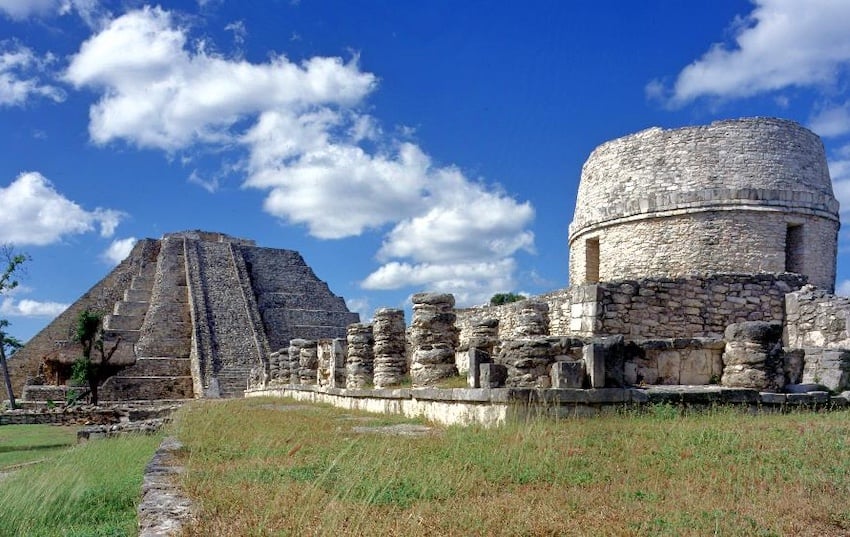
About 13 kilometers from Tecoh via Highway 184, the small town of Telchaquillo has a church and a nearby cenote worth a quick look if you’re not pressed for time. Otherwise, keep going — five minutes down the road is the archaeological site of Mayapán, and it’s one of the highlights of the route.
First settled around 300 B.C., Mayapán rose to regional dominance between the 13th and 15th centuries. Today it sees a fraction of the visitors that flock to Chichén Itzá, and that’s precisely its charm. Come early to beat the afternoon heat, then take your time wandering the grounds. The main pyramid — the 18-meter Castle of Kukulcán — is a solid climb, but the views from the top make it more than worth the effort. The site has been closed to tourists since 2024 as ongoing disputes continue over land ownership — but hopefully 2026 will be the year that this magical site reopens.
The surrounding area has several cenotes. Noh Mozon, hidden in the wilderness about 10 kilometers from Telchaquillo, is a gem, but rough roads mean you’ll burn close to an hour getting there and back. Save it for another day when you can give it the time it deserves.
Tekit, Mama, Chumayel and Teabo
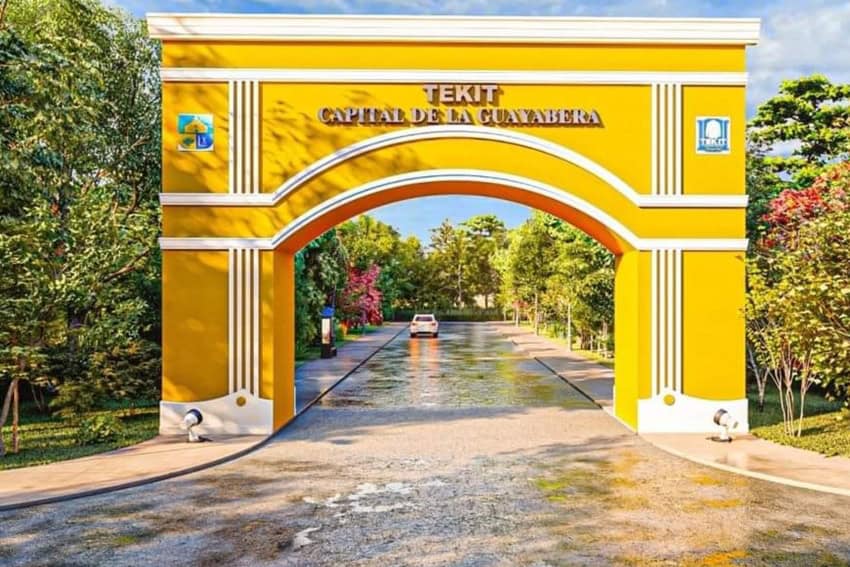
About 18 kilometers down Highway 184 lies Tekit, the self-proclaimed guayabera capital of Yucatán. If your energy holds, it’s a fine place to browse for one of these classic pleated shirts — a genuinely useful souvenir. The town’s 16th-century church dedicated to Saint Anthony of Padua is beautiful and worth a look while you’re there.
From Tekit, continue to Mama — a town whose name, locals will tell you, is simply the Yucatec Maya word for “no” said twice. (“Ma” means no. So: no-no. The name has stuck.) The Church of the Ascension here is a standout, crowned with an unusual bell-shaped dome. A former Franciscan convent and a chapel round out the town’s modest but rewarding historic center.
If you want to squeeze in a couple more stops before the finale, head to Chumayel, about nine kilometers from Mama. This is where the famous Chilam Balam of Chumayel originated — one of several handwritten Maya manuscripts, named for the towns where they were kept, that preserve ancient knowledge of rituals, medicine and astronomy. The town also has a 16th-century church, the Temple of the Immaculate Conception. Less than 10 minutes further, Teabo has its own handsome former convent and parish worth a brief stop.
Maní
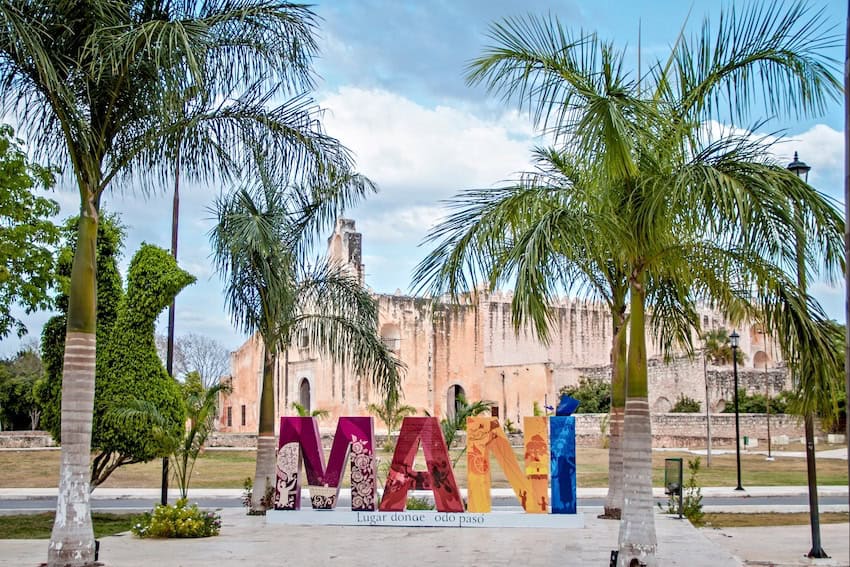
Maní earns its Pueblo Mágico designation with colorful buildings, a lively market and a pace that invites you to slow down. But this cheerful town carries a heavy past. In 1562, a tribunal of the Spanish Inquisition led by Franciscan friar Diego de Landa burned dozens of irreplaceable Maya codices here in what became known as the auto-da-fé of Maní — an act of cultural destruction whose full weight is still felt today.
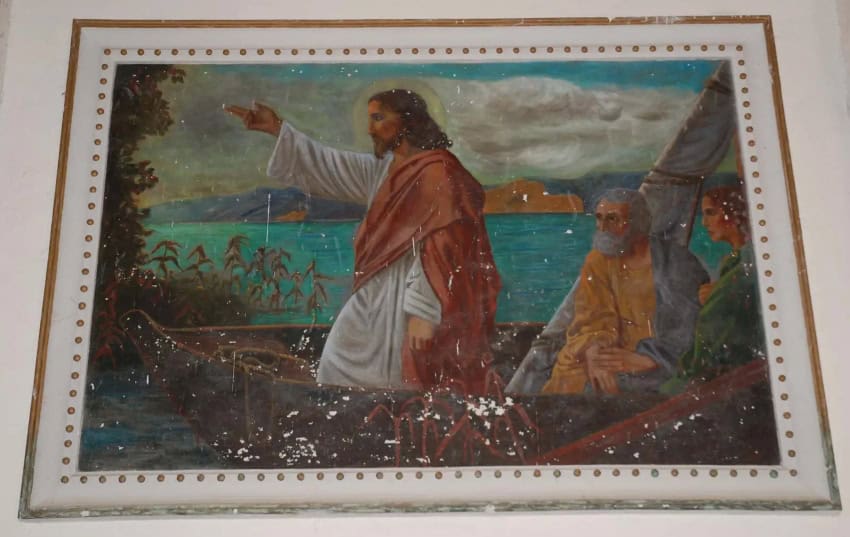
The former convent of San Miguel Arcángel anchors the main square, its large atrium and open chapel giving way to an interior with surviving altarpieces and fragments of old murals. Take your time here. Then wander the plaza and market, where vendors sell honey products, clothing and local crafts. Maní is also a center of Melipona beekeeping — the ancient practice of raising stingless Maya bees — and a visit to a meliponario such as U Naajil Yuum K’iin or Meliponario Lool-Há is a memorable detour.
End your day with a late lunch or early dinner. Maní is famous for Poc Chuc — pork marinated in citrus and grilled over an open flame — and El Príncipe Tutul Xiu is the place to try it.
Before heading back to Mérida, note that Maní also connects to the Ruta Puuc, a string of lesser-known Maya archaeological sites that makes for a rewarding day trip in its own right.
This article was first published in 2024. It has been updated for 2026.
Thilini Wijesinhe, a financial professional turned writer and entrepreneur, moved to Mexico in 2019 from Australia. She writes from Mérida, Yucatán. Her website can be found at thilini.me.