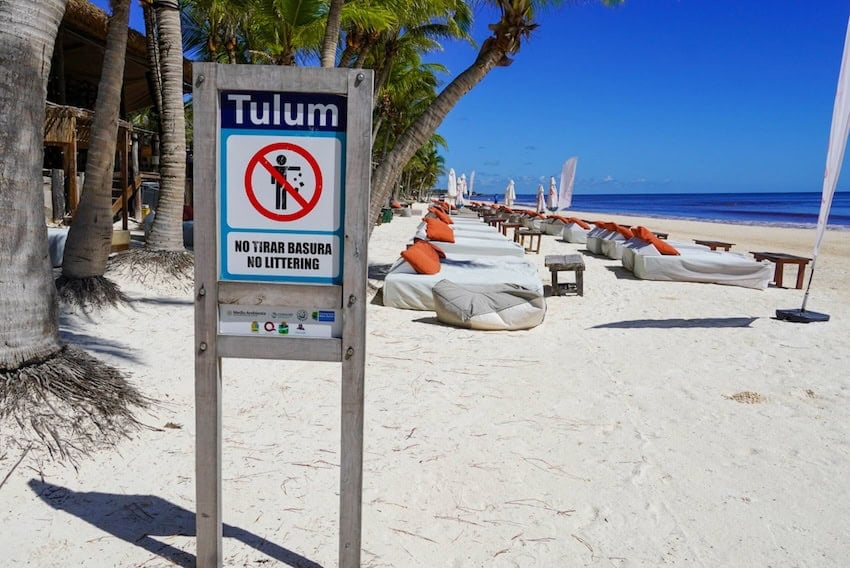
Less than three weeks after the mayor of the Caribbean resort city of Tulum imposed restrictions on access to public beaches, the federal government forged an agreement re-establishing free access for tourists and residents.
On Oct. 12, Mayor Diego Castañón had announced new rules for visitors wishing to sunbathe on the city’s beaches, only two weeks after he said a free-access agreement had been hammered out.
(Elizabeth Ruiz/Cuartoscuro.com)
While insisting he was not suppressing the “free beach access” policy, his new rules prohibited prospective visitors to Tulum’s turquoise waters from bringing food, drinks, coolers and umbrellas. Tourists were also “encouraged” to make purchases at the local businesses.
Castañón insisted his goal was to boost the city’s sagging economy, exacerbated by a sharp drop in hotel occupancy, and not to monetize the beaches. However, the measures effectively gave beachside hotels and restaurants control over who was granted access.
The reaction was swift. Visitors complained about the added costs and the inconvenience. The outrage voiced on social media garnered significant attention.
Even President Claudia Sheinbaum waded into the fray, saying on Oct. 16 that Mexico’s beaches “should not be limited to those with economic resources.”
Oddly enough, little attention was drawn to the fact that just over five years ago, a bill guaranteeing free access to all Mexican beaches was signed into law.

Hotel owners were even cautioned by the government that not only do they risk fines of up to 1 million pesos (US $53,700), but their properties also could be closed and demolished for restricting access to public beaches.
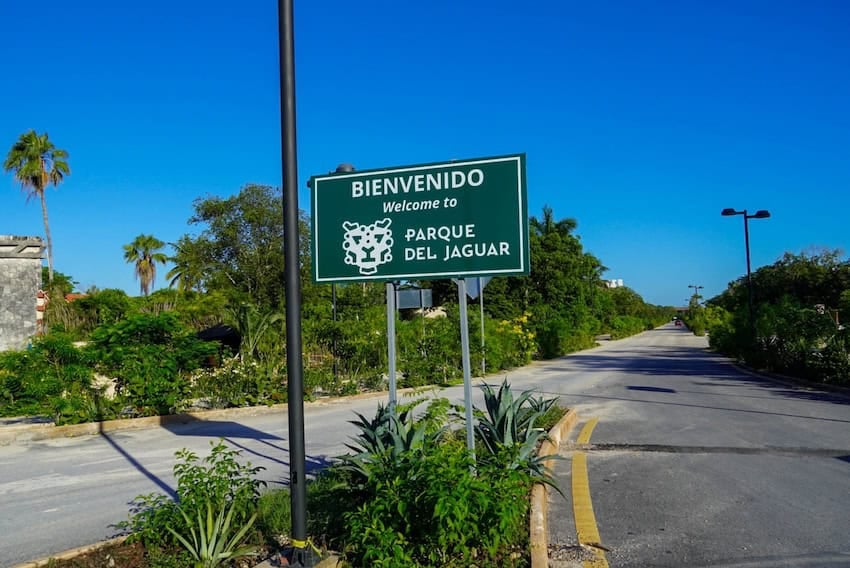
A few days after Castañón’s Oct. 12 announcement, the federal Tourism Ministry (Sectur) convened a Strategic Actions Coordination Committee for Tulum to address the situation which has been complicated by the recent opening of Jaguar National Park.
In addition to lookout towers, forest trails and a museum full of Maya artifacts, the newly created natural reserve encompasses protected beaches, reducing the amount of coveted beach-front property in Tulum.
The committee — composed of local, state and federal officials as well as tourism providers — met in Mexico City but also toured local sites in Tulum and carried out surveys.
On Tuesday, Tourism Minister Josefina Rodríguez said the objective to guarantee free access to Tulum’s beaches for Mexicans and foreigners year-round had been achieved.
One access point was opened Wednesday and two new public access points have been established in the Hotel Zone. Additionally, Rodríguez said, public access points will be created within Jaguar National Park.
Finally, a new, unified pricing structure for visitors to Jaguar National Park and the Tulum Archaeological Zone — in effect through December — should provide a boost to Tulum’s economy.
With reports from El Financiero and Riviera Maya News