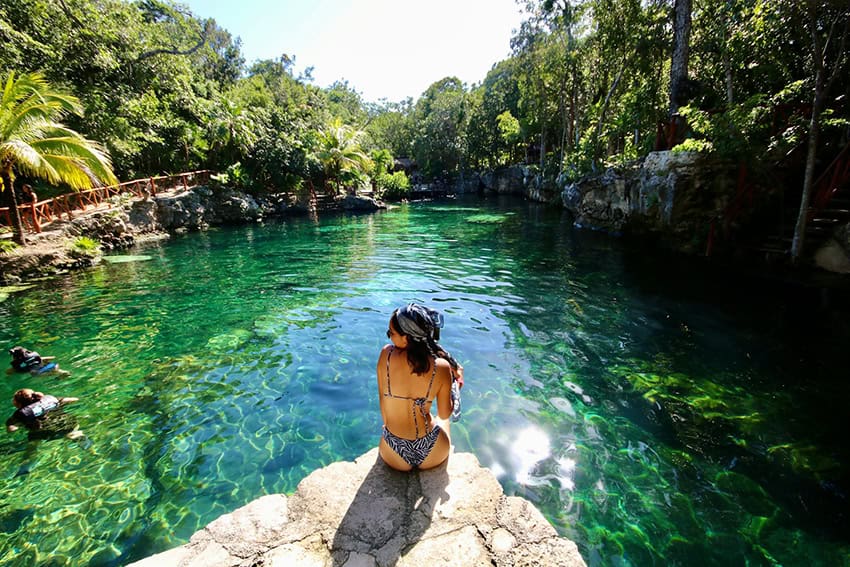
Tulum now has an official roadmap for responsible cenote tourism. On Monday, the Quintana Roo Ministry of Tourism inaugurated the Sustainable Cenote Route (Ruta de los Cenotes Sostenibles), a certified circuit connecting 12 cenotes selected for their natural beauty and conservation potential in the Maya jungle.
The initiative, which has received certification from the Mexican Sustainable Tourism Association, replaces informal and loosely managed access to these sites with a structured framework of marked trails, certified local guides and reusable water filtration systems at each location, according to the state tourism ministry. The filtration systems are designed to reduce potable water consumption while allowing visitors to swim and snorkel without contaminating the surrounding ecosystem.
“The initiative seeks to protect cenote ecosystems while offering an educational experience,” said María López, the regional tourism director. She added that guides have been specifically trained to explain aquifer conservation and the biodiversity that depends on the fragile freshwater systems.
Beyond swimming, visitors can take part in low-impact snorkeling, underwater wildlife photography and art workshops using recycled materials, the ministry said. A community waste collection component sees collected materials transported to regional recycling centers.
For international travelers, the route offers bilingual packages that bundle transportation, certified guides and a certificate of participation in cenote conservation efforts. The program aligns with the Quintana Roo government’s ecological tourism strategy, which has been in development since 2024.
Officials estimate the route could drive a 15% increase in local lodging occupancy during the low season, with conservation funding channeled through community contributions and partnerships with non-governmental organizations.
For a destination where cenotes underpin both ecology and tourism, the launch signals a deliberate shift away from open-access recreation toward a more managed tourism model. Whether the route delivers on its ambitions will depend on enforcement and sustained visitor participation — but Tulum’s cenotes, for now, have a certified path forward.

With reports from Tulum Times