“It is the most significant court case in the entire history of the state.”
Those are the words of Arturo Coral, a lawyer representing Quintana Roo in a territorial dispute with the Caribbean coast state’s two neighbors — Campeche and Yucatán.
“There isn’t, there hasn’t been and there won’t be another case like this,” Coral told the newspaper El País.
He was speaking about a legal case related to a long-running dispute over close to 10,000 square kilometers of land on the Yucatán Peninsula.
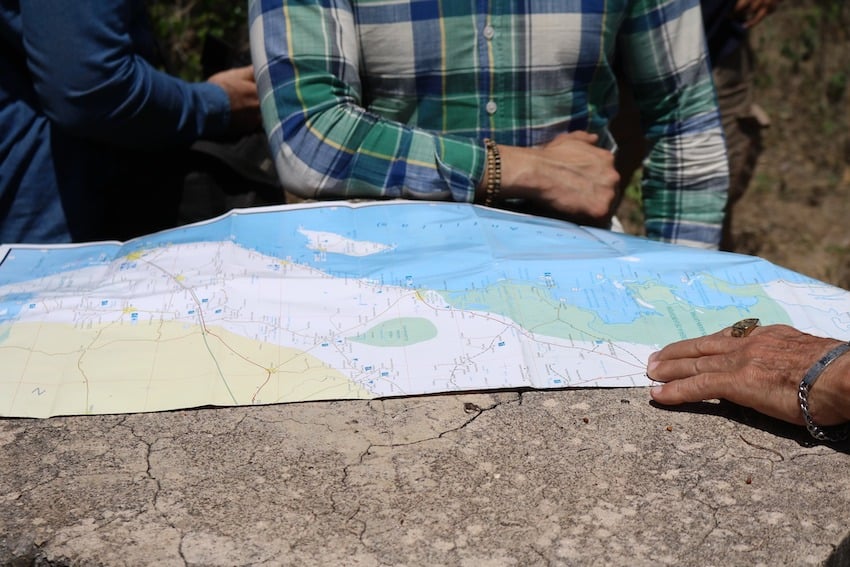
One 5,000 square kilometer parcel of land that is in dispute is located in a kind of no man’s land between Quintana Roo and Campeche. Which state does it belong to?
Another parcel of land with an area of some 4,800 square kilometers and which is located on the border between Quintana Roo and Yucatán is also disputed. Which state does that belong to?
The answer to those two identical questions will come from Mexico’s Supreme Court, which has been tasked with settling the dispute over land extending from Punto Put, a point that is supposed to delineate the borders between Quintana Roo, Campeche and Yucatán.

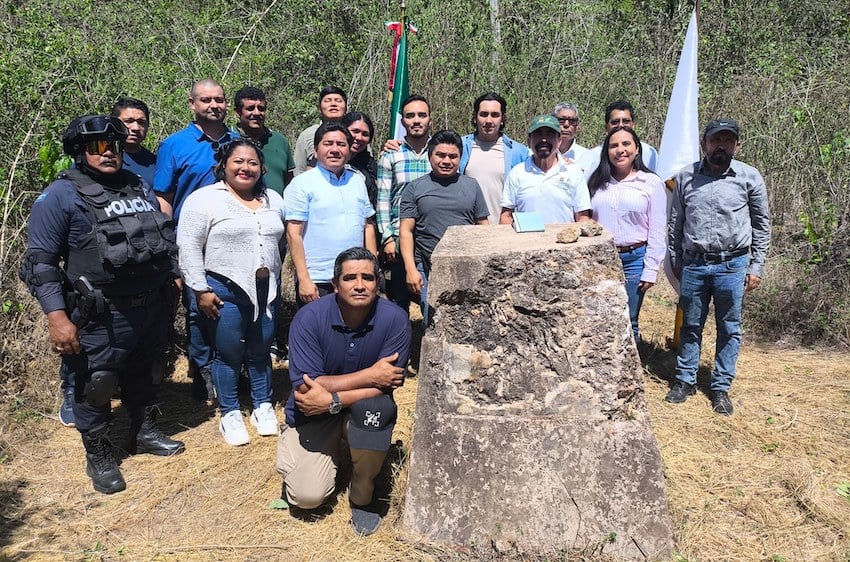
The news outlet Posta reported that “physically,” Punto Put “is a concrete monolith with a pyramidal form” that was “erected in 1922 over the ruins of an old hacienda called Rancho Put.”
A territorial dispute is born
“In the heart of the jungle of the Mexican southeast there is a point that divides more than unites: Punto Put, an area where the borders of Campeche, Yucatán and Quintana Roo are found, and which for more than 100 years has been the cause of a dispute between the three states. It all began in the 19th century, when the old Province of Yucatán fragmented: Campeche became a state in 1863 and Quintana Roo was born as a federal territory in 1902. In that process, the border lines between the three were never well defined, since the peninsula lacks natural features — such as rivers or mountains — that could have served as reference points. That is how the confusion arose over exactly where the three territories meet.”
The passage above comes from a report published by the news outlet Quadratín last October.
The creation of the municipality of Calakmul in Campeche in 1996 intensified the dispute, according to media reports. El País reported that “the dispute reappeared in 2019” when Quintana Roo — which became a state in 1974 — “ratified its territorial coordinates in a constitutional reform.”
Attempts by the federal Senate and courts to resolve the dispute have been to no avail.
The land in dispute is not inconsequential — it represents around 20% of Quintana Roo’s entire territory and is home to around 23,000 people living in more than 300 communities, according to El País. The land disputed by Quintana Roo and Campeche runs southward to Mexico’s border with Belize and Guatemala.
Water supplied by one state, education by another
In an article published this week under the headline “Put, the coordinate in the middle of the jungle that will decide the map of the Yucatán Peninsula,” El País reported that the Punto Put land disputed by Quintana Roo and Campeche is “rich in precious wood but poor in public services.”
“Both [states] claim it as their own, though neither takes full responsibility for those who live there,” the newspaper reported. “Water from here, school from there.”
El País reported that Quintana Roo authorities drilled a well that supplies water to the community of San Antonio Soda, but the Campeche government provides residents with “everything else” — a health center “without a doctor,” schools, paved roads and streetlights.
The newspaper also reported that most of the people who live in the disputed area between Quintana Roo and Campeche are from other states of Mexico who were lured to the region by the availability of farming land.
In the land disputed by Quintana Roo and Yucatán, “each state has informally divided up each community,” wrote an El País journalist who recently reported from the area. Still, arguments over who is responsible for things such as water supply, health care and road maintenance persist.
A recently elected Supreme Court justice is responsible for the Punto Put case
The Supreme Court justice with the chief responsibility for resolving the Punto Put case is María Estela Ríos González, who was elected to Mexico’s highest court at judicial elections held last June. It was unclear when the court might hand down a decision.
The Supreme Court previously considered the dispute in 2013, but didn’t hand down a ruling to resolve it, in large part because the Senate failed to submit a file containing expert reports and evidence, El País reported.
El País spoke to residents of communities within the disputed land that had differing opinions about which state their community should belong to. They will no doubt be waiting with bated breath for the Supreme Court’s decision.
However, El País indicated that other residents are unconcerned about the state in which their community will end up.
“The government is like our husband,” Ana, a 54-year-old San Antonio Soda resident, told El País. “Wherever it takes you, that’s where you’ll stay.”
In Cerro de las Flores, a community near the border with Belize and Campeche, Alejandro Álvarez told El País that political candidates from both Campeche and Quintana Roo visit during election campaigns to try and win votes. He said they pledge to do different things for the community, but don’t deliver after they are elected.
“Neither of the two [states] makes an effort here,” said Álvarez, who was reportedly fed up with the intermittent failures of services such as electricity, internet and public transport.
With reports from El País, Diario de Yucatán and Quadratín