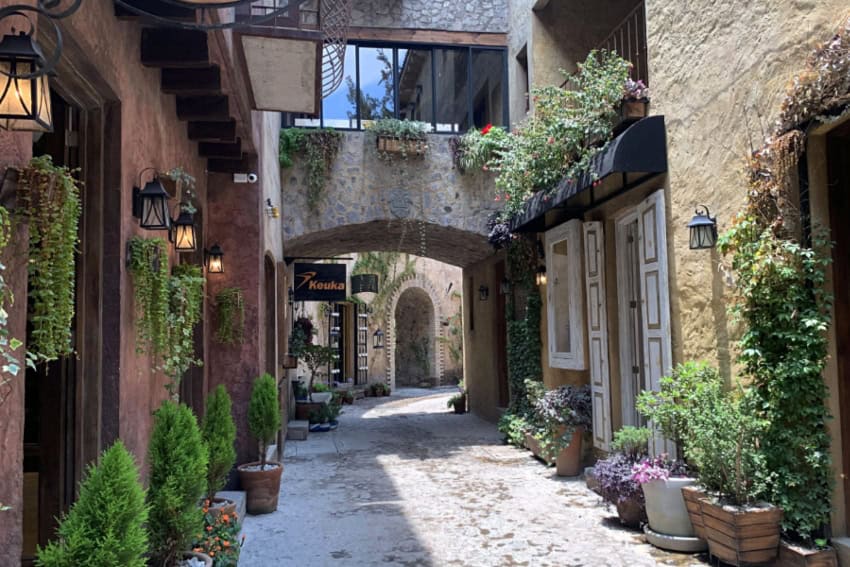
The quaint feel of a faraway Italian village isn’t something most people would visit Mexico for. But in recent years, Tlaxcala’s Val’Quirico — a small, European-style community that began construction in 2014 and opened to the public in 2015 — has become exactly what it set out to be: a magical Tuscan getaway, right in the middle of Mexico’s relatively sleepy countryside.
Over a decade into its existence, Val’Quirico — which became the first designated locale in Mexico’s “Kingdoms of Mexico” program in 2023, awarded to towns that represent an international fusion of architecture, cuisine and culture, while generating an economic boost in their region — is certainly thriving.
When it was announced as part of the “Kingdoms of Mexico” program three years ago, Tourism Minister Miguel Torruco Marqués predicted that the town would “generate revenue of more than 80 million pesos per month (US $4.52 million) … (and) 11,400 jobs — 3,500 direct and 7,990 indirect.” He was right.
In 2026, the charming pueblo — replete with pedestrian-only cobblestoned roads, Spanish wine and tapas bars, Italian pizzerias and much more — is booming. Though relatively expensive to visit in comparison to a typical Mexican pueblo, a weekend stay will quickly win over any guests who are looking to escape Mexico’s often chaotic energy for a tranquil, anachronistic experience in the middle of the country.
Getting to Val’Quirico
Val’Quirico is located under 20 minutes driving from the Puebla International Airport, and approximately two hours away from the center of Mexico City. As such, the destination-worthy town receives a high volume of visitors from outside states and foreign countries.
When arriving, the region’s landscape quickly transforms from a regular Mexican countryside — pueblos, torta stands, stacks of tires and corn fields — into a quirky, if not slightly cheesy medieval town. If you’re on the road from the city of Puebla, your first indication that you’ve time-traveled your way to the right place is when you pass the Gasolinera Valquirico gas station, which has an architectural facade reminiscent of an aged, European chateau. The roads are suddenly paved, and buildings turn into rustic stone.

Val’Quirico itself is, as of this writing, divided into four separate neighborhoods — the central square (where mixed-use commercial spaces and restaurants double as apartment buildings for tourists and full-time residents alike), Barrios Bosques, Laurel and Fresno. The latter three are private, gated areas that are strictly used for residential purposes, but still maintain the feel of a high-end country club in a rustic Italian setting.
How to get around
Since cars are not allowed into the main square — which is sizable, and includes no less than a combined 200 small businesses and eateries, plus ample lodging options — you’ll have to park in a giant lot that is located on the opposite side of the rural highway (50 pesos a night on weekdays; 200 pesos on weekends, holidays and festivals). The lot is attended 24/7 by security, and you can even get your car washed by locals who set up their equipment daily and look after your vehicle (though it is optional of course, and is safe to leave overnight regardless).
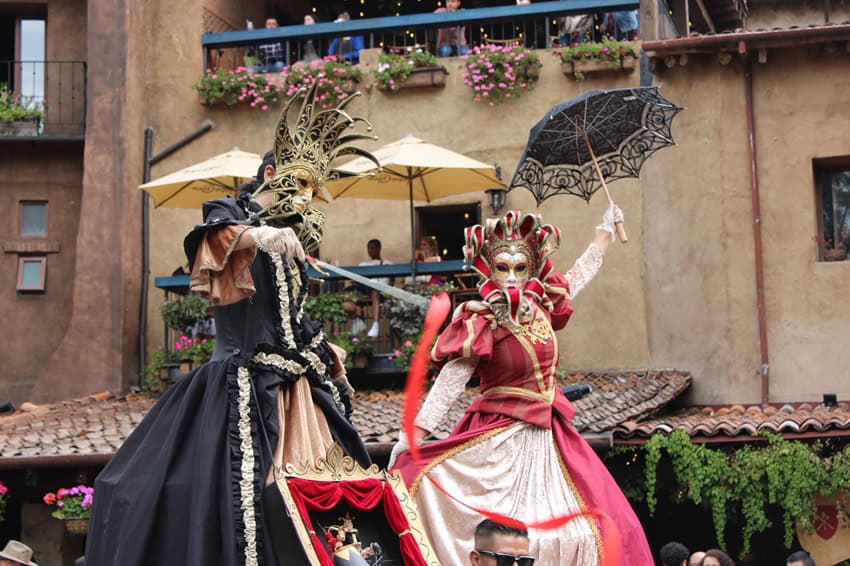
The brief walk from the lot into the heart of town will highlight Val’Quirico’s magic touches: suddenly, you’ll feel like you’ve left Mexico behind. As live music floats through the town, nicely dressed peddle bikers cluster at the entrance and will offer to give you a welcome tour of the zone; they will end by dropping you and your luggage off at the door of your residence (some locations on the other side of the pueblo are more likely to require a lift than others, but everything is within a 10 minute walking distance).
Over 1 million visitors per year — and counting
Once you’ve crossed into the threshold of Val’Quirico, there is only one way in, through a security checkpoint. The entire town is bordered by high stone walls, and in some parts, barbed wire fences, and the perimeter is patrolled around the clock by private security guards. You’ll feel as if you’ve entered a Mexican Disneyland for adults. There is no shortage of international culinary options, bars, dessert shops, coffee stations, souvenir outlets, fashion boutiques — the whole nine. You can snag artisanal chocolates from Yucateco chocolatiers at Ki’Xocolátl, then fill up with a generously-sized bowl of birriaramen at HOFU, all within an alley’s worth of exploration. (Beware of the endless streams of Instagram influencers who seem to wander the town at all hours, stopping at every floral decoration and ornate fountain to pose without much regard for anyone around them.)
According to Lourdes Caciano, the brand director for Kingdoms of Mexico, who spoke exclusively with Mexico News Daily, the town sees upwards of one million annual visitors. Val’Quirico’s influence will likely only continue to grow.
An exponential growth in visitors and development
“The exponential growth in visitors since its founding proves the development’s success, with over 90% of developed properties sold and more than 200 businesses open,” Caciano says. “It received endorsement from the Mexican Ministry of Tourism to expand its development model nationwide, leading to the creation of the Reinos de México (Kingdoms of Mexico) designation. Today, it already has a developing community, Sassi del Valle, in the Valle de Guadalupe, and soon a third community in Coahuila called Vindobona.”
In March, construction to expand both the center of the town and its peripheral communities was visible, though it didn’t disrupt any of the town’s peaceful charm. Soon, a section known as the “Vaults of Raziel” will open, and will add a significantly large commercial area for visitors and residents to explore. Despite the diminutive size of its proverbial kingdom — which physically only takes up a total of 8 hectares, or less than a square mile — it poses a large, otherworldly presence.
The origin of Mexico’s first ‘Kingdoms of Mexico’ destination
Since its founding, the Kingdoms of Mexico program has developed a sister city partnership with other global regions to enhance the authenticity of exchanges between cultures, adding a completely fresh dimension to Mexico’s touristic offerings — particularly for its nationally-bound explorers. So far, everything has paid off for Val’Quirico as Mexico’s flagship Kingdoms of Mexico project, which bodes well for future sites.
“This distinction has helped us open doors to cultural exchange with Europe, allowing us to build developments that promote pride in Hispanic heritage and the fusion of cultures,” Caciano says. “It has also enabled us to be ambassadors for Mexico, showcasing it as a driver of mutually beneficial development destinations.”
Right now, the town has a formal cultural alliance with Tuscany in the central region of Italy. And though there are clearly efforts to provide some semblance of an Italian village, there’s still an array of Mexican experiences to be had: a taqueria, traditional Mexican desayunos al fresco and cervezas on a patio or balcony. Imagine the warm quirks and hospitality of a robust Mexican tourist ecosystem permeating an old-world European alleyway. That’s Val’Quirico, at its best. It’s full of nooks and surprises (on your third day, for instance, you might unexpectedly stumble upon an impressively sized gnome garden that, until then, you hadn’t discovered through a series of alleyways).
The history and evolution of the town
It’s mostly imaginative and fabricated, of course. But there’s also some actual history behind the town. In fact, the area once held a prominent role in Mexico’s industrial production.
“During the Porfiriato era, the former Chautla Hacienda was the most important pasteurization plant in Latin America,” says Caciano. “Today, Val’Quirico is located on part of it.”
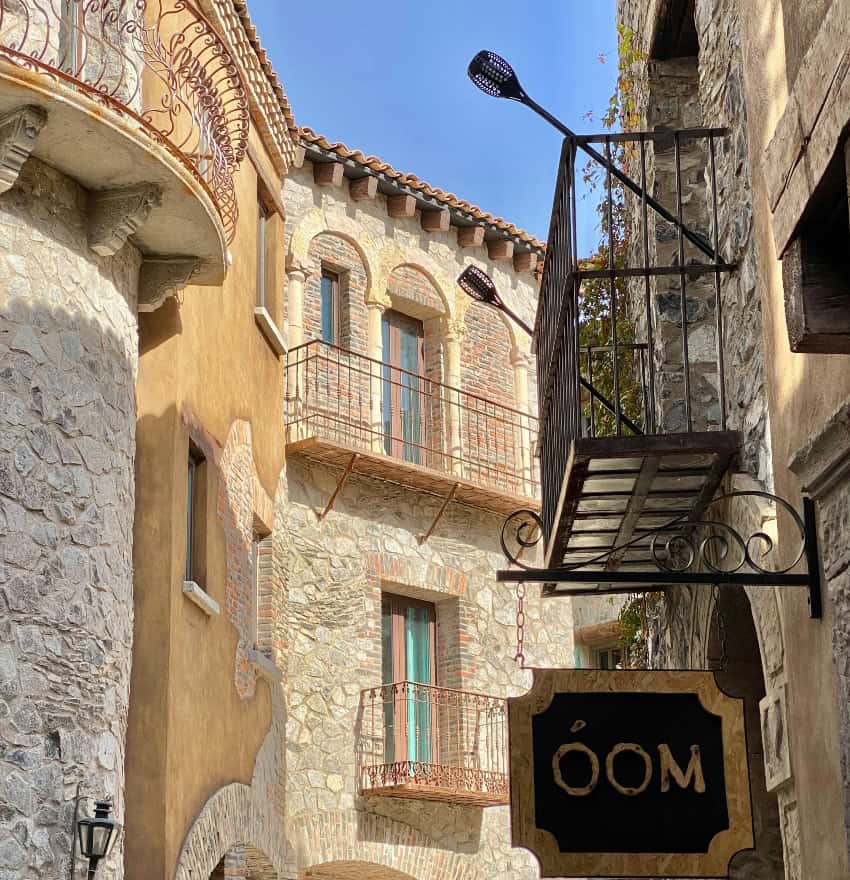
Val’Quirico was founded by a group of entrepreneurs representing Universo aBanza, a construction business that specializes in envisioning, and then building, entire communities from the ground up. You’ll occasionally see a sign advertising how to purchase property, or an official visitor’s office, but otherwise, the entrepreneurial capitalism behind Val’Quirico remains in the background as you roam the uneven paths while descending staircases in the labyrinth-like town.
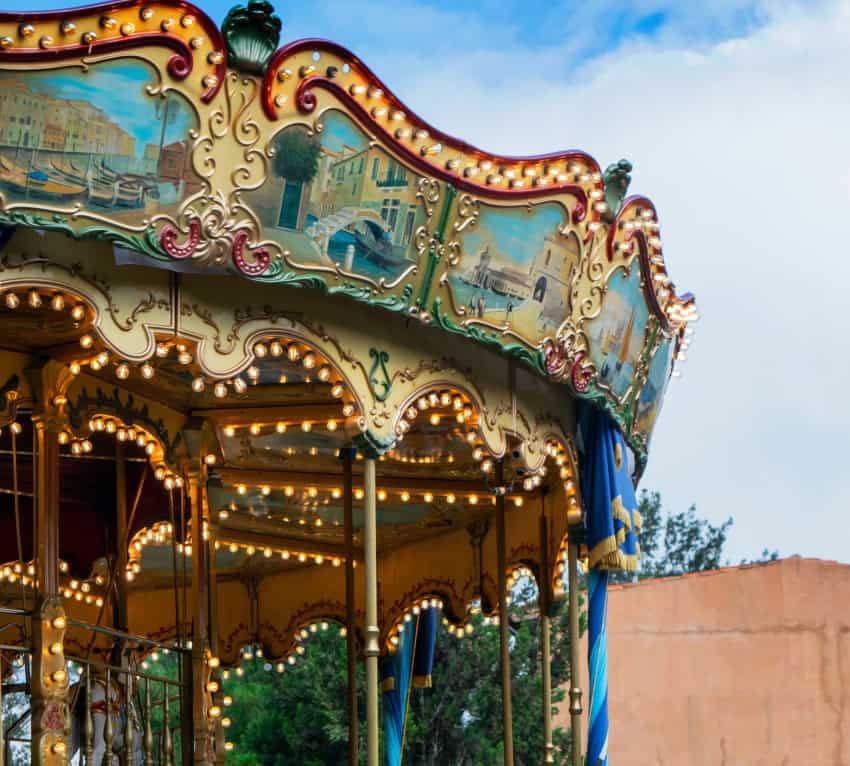
For parents, there are two playgrounds located within the town’s center (though they are apparently open from Friday to Sunday); there’s also a large, rideable carousel, a carnival row of games, a Ferris wheel, and — most enjoyably — the safety and comfort of letting your little ones run freely throughout the whimsical, car-free zone.
What to budget and when to visit
Perhaps the downside of Val’Quirico is that it’s notably pricey, and once you’re there, you’re at the mercy of what’s available — it’s a bit of a mission to lug yourself back to the main lot and leave; there isn’t much to do on the nearby outskirts, anyway. Instead, it’s essentially a European-aspiring staycation. To get the full experience, it’s best to stay put and wander afoot (you’ll find anything from exotic flamingo meat at an African-inspired eatery to Korean corn dogs at a hip Asian market). If you’re looking for a twist on Italian dining, you’ll get that, too: pizza at Arte Sano combines a sourdough base with non-traditional toppings like cochinita pibil, carne al pastor, chilaquiles, carne arabe and fresh strawberries.
Major festivals and celebrations are held a few times a year — the Iberico Festival, Mexican Independence Day, Dia de Muertos and Christmas, to name a few — so expect larger groups, higher prices and congestion during those seasons.
Drop in for a little taste of Europe
Otherwise, drop by whenever you feel like you want to get a partial taste of Europe in an otherwise overlooked fly-over section of Mexico, and relish in Val’Quirico’s pastoral, well-curated environment.
“Val’Quirico works every day in harmony with its community. It is a safe space for residents and visitors, and our goal is to be generators of development opportunities, epicenters of entrepreneurship, and creators of unique experiences,” Caciano says. “We are proud to be the inheritors of two great nations, and that drives us to strive for excellence in this and future Kingdoms of Mexico.”
Alan Chazaro is the author of “These Spaceships Weren’t Built For Us” (Tia Chucha Press, 2026), “Notes from the Eastern Span of the Bay Bridge” (Ghost City Press, 2021), “Piñata Theory” (Black Lawrence Press, 2020), and “This Is Not a Frank Ocean Cover Album” (Black Lawrence Press, 2019). He is a graduate of June Jordan’s Poetry for the People program at UC Berkeley and was selected as a Lawrence Ferlinghetti Poetry Fellow at the University of San Francisco. His work can be found in NPR, The Guardian, SLAM, GQ, L.A. Times, and more. He is currently based in Veracruz.