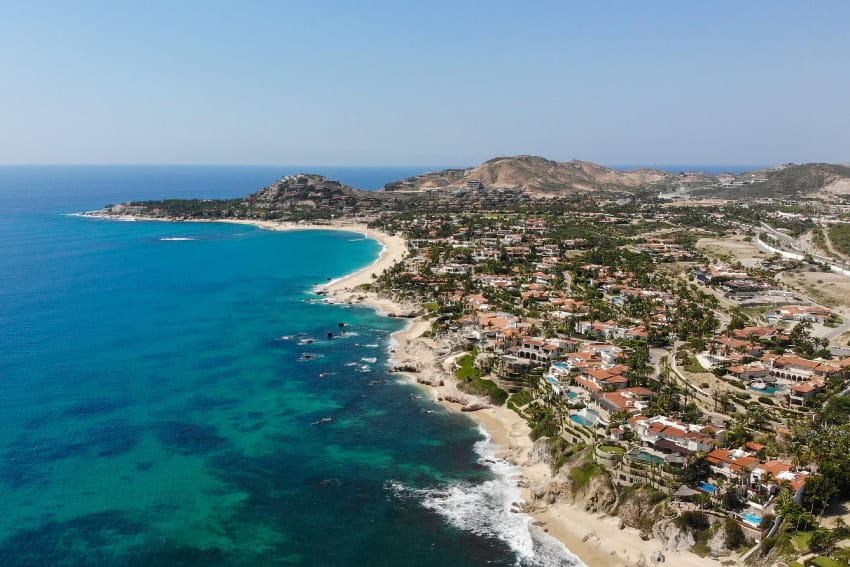
Rodrigo Esponda Cascajares is a tireless promoter of Los Cabos tourism, and a big reason the destination has seen such remarkable growth over the past decade. When I last caught up with the managing director of FITURCA (the Los Cabos Tourism Board) in early November, he was at the World Travel Market in London, a three-day gathering that brought together over 46,500 attendees from 182 countries.
Esponda, the only representative from a Mexican destination in attendance, was trying to raise Los Cabos’ profile in the British market — the source of only a little over 5,000 tourists annually — and to strengthen future connectivity in Europe, a subject addressed in conversations with continental airline companies.
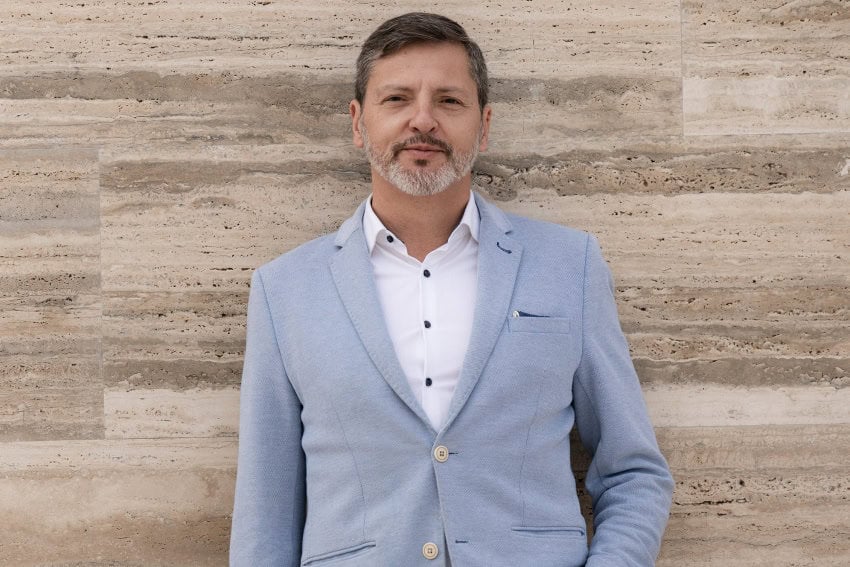
But despite his busy schedule, he still had time to connect via a Microsoft Teams meeting call and discuss what’s next for Los Cabos in 2026.
Is your strategy in 2025 similar to the one for 2026?
Well, it’s been a very interesting year in 2025, because we’ve been growing a little. We believe we will end the year with some growth compared to last year, probably 2.5% overall, which is very good given the context in which the tourism industry is moving forward.
Especially since we’ve been focused on quality, not quantity. That’s something we’ve discussed before. So, in that sense, having travelers stay longer and spend more at the destination is more important than having a lot more passengers.
That loyalty base makes Los Cabos unique. So we believe we need to continue that strategy in 2026. We have some exciting additions in terms of connectivity in the United States and other markets.
This year, we’re growing in some cities we’ve been targeting in the United States, like Nashville, Tennessee, and Kansas City. These are secondary markets in the U.S. for Los Cabos. But they’re important. It’s part of the destination’s evolutionary nature, in the sense that once we gain a solid understanding of the primary markets — Chicago, Los Angeles and New York — then we have to add more secondary markets.

Nashville, Tennessee, is one of them. Ontario, California, is another, which, although close to Los Angeles, is a secondary market that can add some additional travelers to our destination. Indianapolis is another market that’s constantly growing.
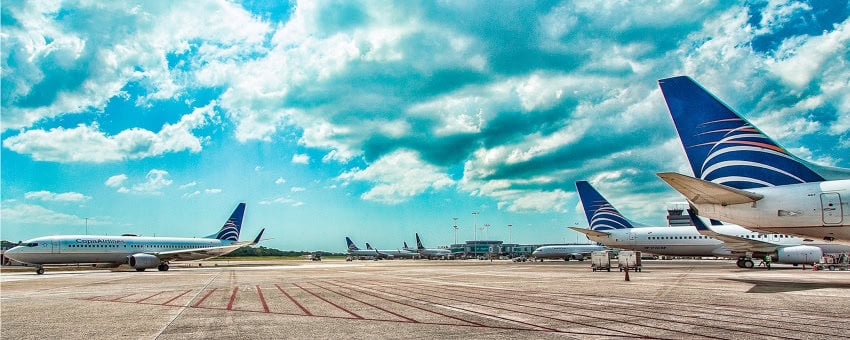
And as you know, we’ve just started our second season of nonstop service to Frankfurt with Condor. And in December, we’ll have Copa Airlines’ flight from Panama with connections to Central and South America. So these markets are an important complement to the mix of travelers arriving at the destination.
And that focus on connectivity will continue in 2026?
We believe that will continue. We have some markets in the United States that we will continue to focus on, such as Boston, which is an affluent market in the Northeast, but it’s a long journey with a six-hour flight. So it’s been a process getting airlines to commit to that, but we believe that by the end of 2026, we’ll be able to have that route added.
And we need to consolidate those two important milestones we have with the Copa and Condor flights in the third season, as the European market is very well advanced. So we know that, for example, some groups are looking at the next season of Condor flights from Europe. So we’ve been working on it.
And we had a couple of interesting conversations with tour operators about that. Our priority for this year is to finalize things, to make sure that everyone in the local industry is aware of the relevance and focuses more on quality and consistency. That, well, you grew a little, but you achieved a lot because you didn’t have to discard a product, you didn’t have to do anything wrong, and you can diversify.
And so, for next year, we believe it will be the same, that in 2026 we will probably close with a little over 3% growth in international visitors. And it’s the same, with some interesting additions in terms of hotels, in terms of the destination, but we need to be more concerned with the visitor experience, rather than just seeking growth, because the nature of the destination isn’t mass tourism.
Last year, Los Cabos topped four million visitors, correct?
We closed last year with 3.7 million visitors. Of those, 2.3 million were international visitors, and the rest were domestic visitors. However, of those domestic visitors, 25% were international visitors connecting through Mexico.
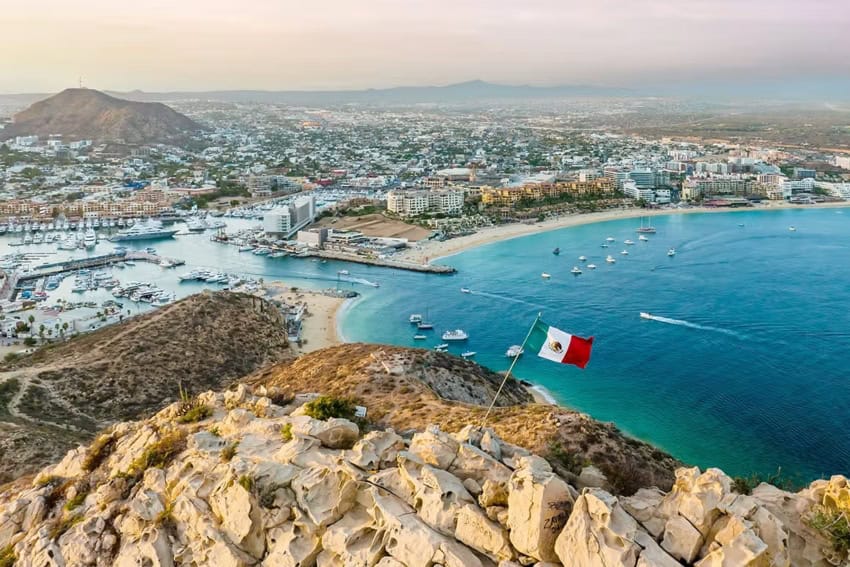
We’ll close with a very similar number this year. Last year it was 3.7 million, so this year we’ll probably get to 3.8 million.
You mentioned Boston. Are there other areas in the U.S. or Canada where you feel you could improve or are trying to increase connectivity?
Well, in Canada, we’re growing by 20% this year. But last year we had 200,000 Canadian travelers. So 40,000, that’s the additional number we’ll have this year in terms of Canada. It’s significant, but it doesn’t make up 10% of the 2.3 million (international visitors). So those additional 40,000 out of the 2.3 million are part of that mix we have.
We’ve been growing in Canada from Toronto, not Vancouver, which is the natural market, but Toronto, which is the most affluent market in Canada. And we’re trying to get a flight from Florida. We have a good number of travelers coming from various Florida cities: Miami, Fort Lauderdale, Orlando and Tampa.
Orlando is interesting because there would be some travelers from Los Cabos who would want to go to Orlando for Disneyland, the parks and the entertainment.
So it wouldn’t just be travelers from Florida, but also some travelers from Los Cabos and La Paz who wanted to go to Orlando. So we’re trying to make it happen. However, we don’t have a very clear path forward with the airlines as to whether it will happen in 2026.
We do in Boston. They mention that they expect to have that nonstop flight by winter 2026. But that’s a key market for us that we’re looking to secure.
Can you tell me a little bit about the resorts and golf courses that might be opening next year and beyond?
This Nov. 16 is the opening of the Park Hyatt. So that will happen this year. And then, in 2026, we have three new resorts that are opening: Amanvari, St. Regis and Soho House. We’ve been meeting with the teams from all three brands. Amanvari is very excited and already has a GM, a sales director, and, as you know, they’re doing a lot of work. St Regis, the same. Soho House will probably be later in 2026.
And then, in 2027, we have the SIRO Palmilla, which is part of Kerzner International. There are also two projects on the Pacific coast. One is connected to a golf resort, which is the Conrad Los Cabos at the Oleada resort. It’s about 10 minutes from Diamante towards Todos Santos. That’s where it’s being developed. I visited it the other day.
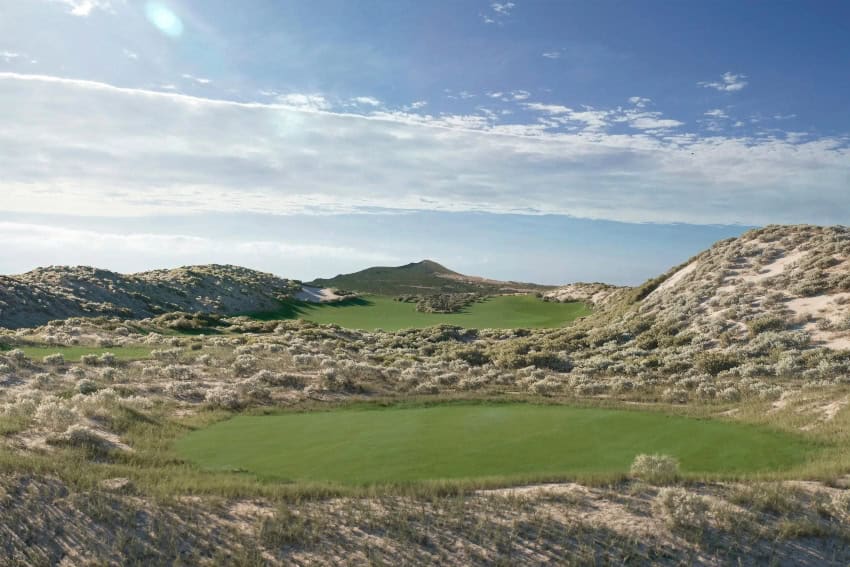
The residential project is further along, but the golf course is still in development. There are three golf courses coming in addition to the one in Oleada. There’s another one in Quivira. That would be an interesting project because it would complement what they already have.
There’s also another one coming at Diamante, which is a Tiger Woods course (Legacy Club). Those three are already under construction. We don’t know if it will be in 2026 or more towards 2027, but the fact that we have three golf courses so far along is very good, and as you know, we’re also hosting the World Wide Technology Championship, the only PGA Tour event in Los Cabos.
It all started today. Michael Phelps (the Olympic swimmer who won a record 23 gold medals) played in the Pro-Am yesterday, and everyone was very happy to be there. He (Phelps) has a house at Diamante.
I should also mention there are two properties, from Raffles and Delano, in development on the East Cape. The Delano was the most recent hotel to be announced. It will probably be a long-term development, like the Amanvari, for example, which has been under construction for six years.
What are you trying to improve for next year?
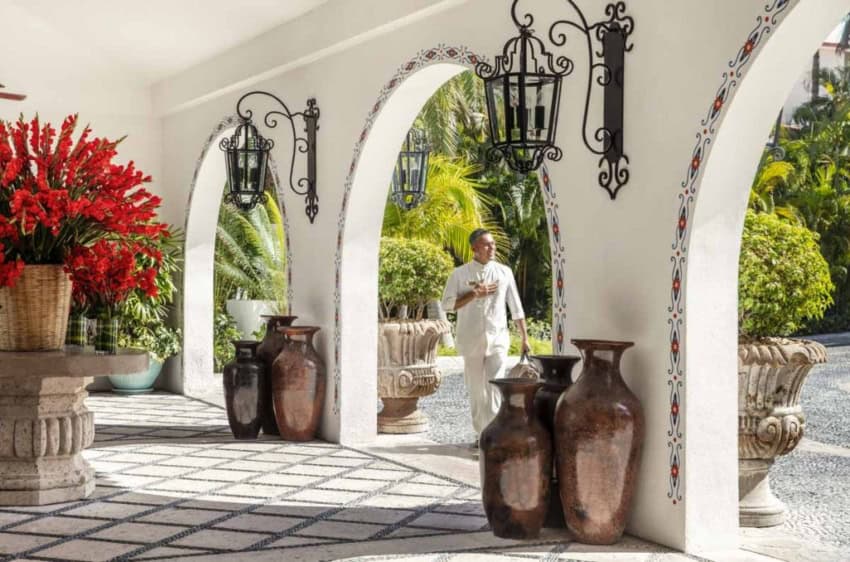
A big concern we have is training in terms of the hospitality standards we need to offer.
We have a partnership with a tour guide specializing in quality and service standards. We just completed a full week of training with them on these standards, and I believe it is crucial that we maintain and manage this level of service. To achieve this, we need to ensure we’re covering various areas.
We need to make sure people understand the importance of service, and that word of mouth remains the number one element for travelers visiting Los Cabos. Let’s put it in the context that everything we do in marketing is about reaching different markets, meeting with colleagues, explaining the destination, doing activations, and all that, and recommending the destination to them. I think that’s incredibly powerful.
The most important thing is how to ensure that when travelers leave the destination, they are completely satisfied.
Is the hotel tax that funds FITURCA also helping to pay for infrastructure projects like the downtown renovation in Cabo San Lucas? How does this work?
Of that 4% hotel tax, which funds FITURCA, 1% is earmarked for the Urban Infrastructure Trust (FOIS), which amounts to approximately 275 million pesos this year. This is directly related to the number of tourists visiting the destination.
And that’s a very strong point. Let’s say we bring in more tourists, and those tourists are staying in hotels or Airbnbs. So, that hotel tax is added to the infrastructure fund. And that’s a very good point because someone might say, “Oh, why not use FITURCA’s financing to pay for roads or build some infrastructure projects?” And we’re already contributing directly to infrastructure projects.
So that 1% is connected because the more tourists we bring, the more funding they (the local government) have, but we don’t participate in that decision-making process. We only contribute to the activities so they have more funding, which is good, but we don’t know the process for how they address infrastructure needs or how they would directly use those 275 million pesos.
Is there anything else you’d like to add for our readers’ benefit?
Yes, I have one final point, which we discussed last time, and that is that tourism is truly providing a very positive source of income and improving conditions for the community in Los Cabos. And I think we need to make sure everyone understands the importance of that and that we’re not just looking to bring tourists; we’re looking to bring the right tourists to the destination.
Chris Sands is the former Cabo San Lucas local expert for the USA Today travel website 10 Best and writer of Fodor’s Los Cabos travel guidebook. He’s also a contributor to numerous websites and publications, including Tasting Table, Marriott Bonvoy Traveler, Forbes Travel Guide, Porthole Cruise, Cabo Living and Mexico News Daily.