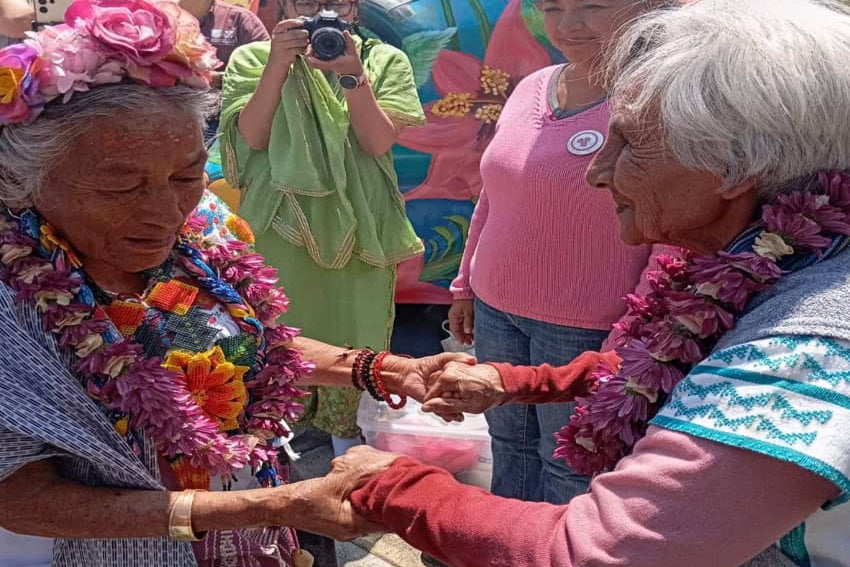
Abuela Amalia carries her 90 years of memories — and more than six decades of resistance — in the baskets of flowers and vegetables she carries through the chinampas of Xochimilco.
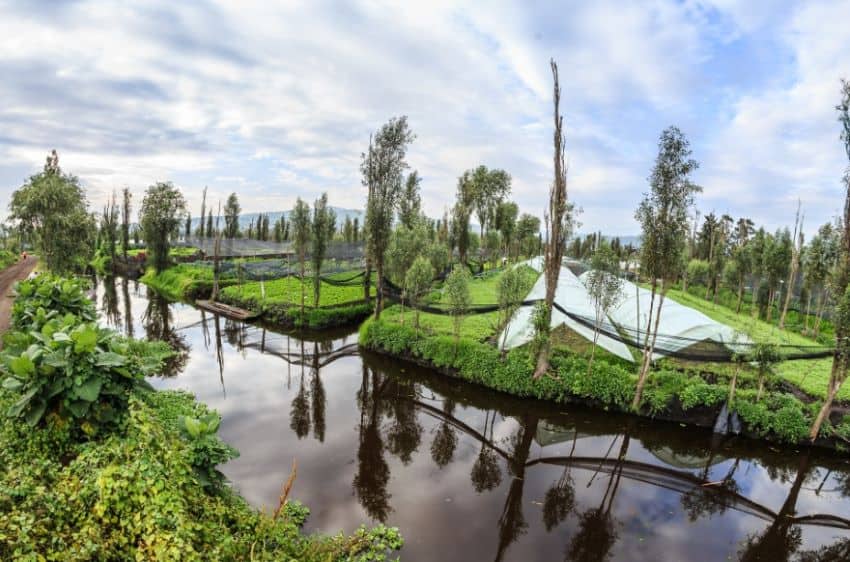
When Amalia Salas Casales was a child, those waters ran clear. She moved through a vast network of canals lined with chinampas — the floating agricultural islands that once fed Mexico City. She learned to cook with native ingredients harvested from the lake system, following recipes passed down through generations — some made with species that have since disappeared. The water was clean enough to drink, the ecosystem abundant with life.
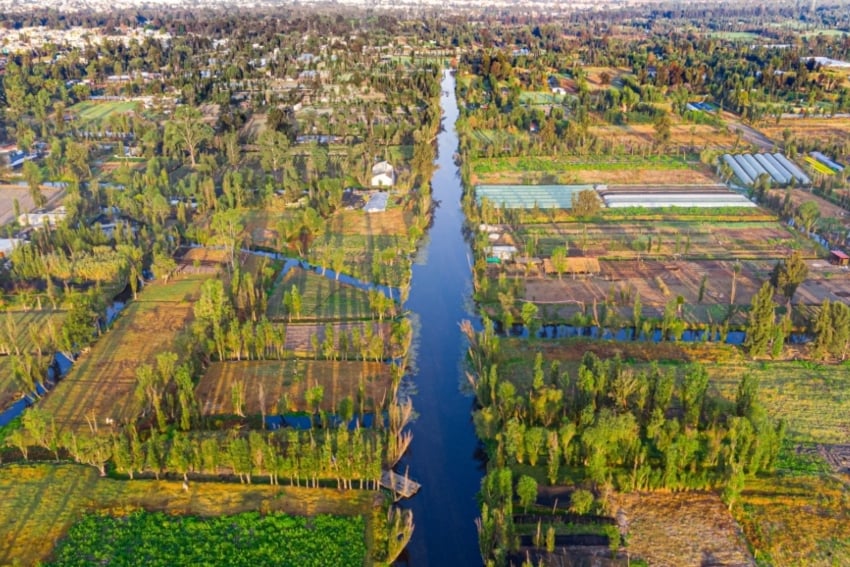
Xochimilco today
Today, much of that system, the last vestige of the Gran Tenochtitlán that Hernán Córtes and his men encountered, is choked with contamination, shrinking under the pressure of urban expansion, tourism and neglect. The axolotl — a small amphibian found only in these waters — has become a global icon, widely featured in games and toys even as it teeters on the edge of extinction in the wild.
For decades, Abuela Amalia, as she is widely known, has fought to defend what remains of the area, declared a UNESCO World Heritage Site in 1987. Now, after watching the slow unraveling of the landscape she grew up in, she is part of a new effort to restore it — one that brings together ancestral knowledge, science, community and law in an ambitious attempt to rethink how the territory is governed.
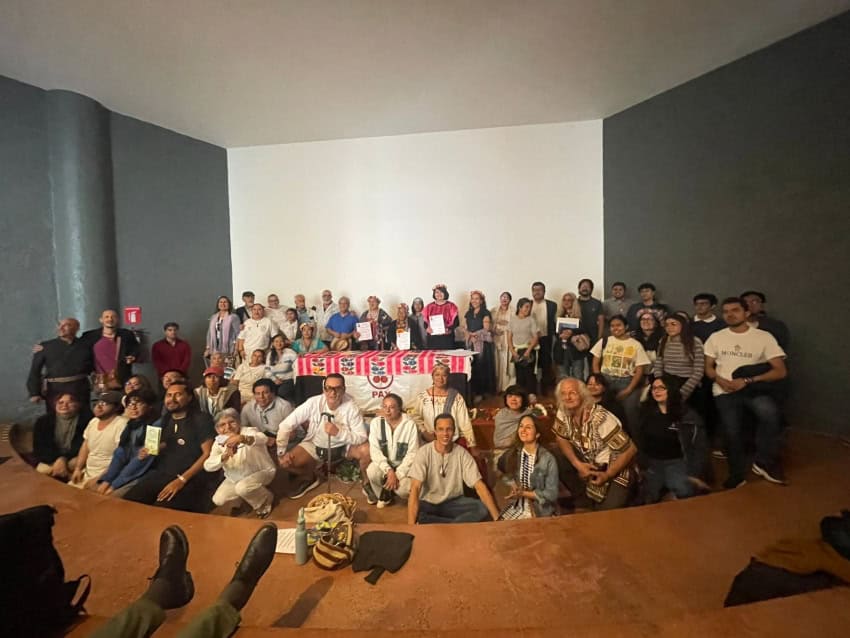
Abuela Amalia’s 60 years of activism reached a high point this month at the Cumbre Internacional Xochimilco Vida y Paz, a four-day summit that brought together around 170 participants from across Mexico and at least five other countries — including Colombia, Argentina, Germany, Chile and the United States — spanning chinamperos — traditional chinampa farmers — Indigenous leaders, scientists, legal experts and policymakers.
The path forward
Held at the spring equinox in Xochimilco’s ecological zone, the summit was designed not only to diagnose the crisis facing the lake system but to propose concrete pathways forward. The Xochimilco summit follows the model of previous gatherings in Palenque, Chiapas and Bacalar, Quintana Roo.
It was Abuela Amalia who traveled to the summit in Bacalar last year, proposing that the gathering be brought to Xochimilco — not as a symbolic gesture, but as a call to defend a living territory under threat. Abuela Amalia traces the turning point back to the early 1990s, when changes to Mexico’s agrarian laws opened communal lands to privatization, accelerating the fragmentation of Xochimilco’s chinampa system. Over the decades, a landscape that once covered an estimated 170 square kilometers has been reduced to a sliver of its original extent — with roughly 2,000 hectares still identifiable today, according to UNESCO.

Rich with symbolism rooted in the region’s Indigenous past, the event also moved beyond ceremony to deliver concrete proposals to reverse Xochimilco’s ecological decline.
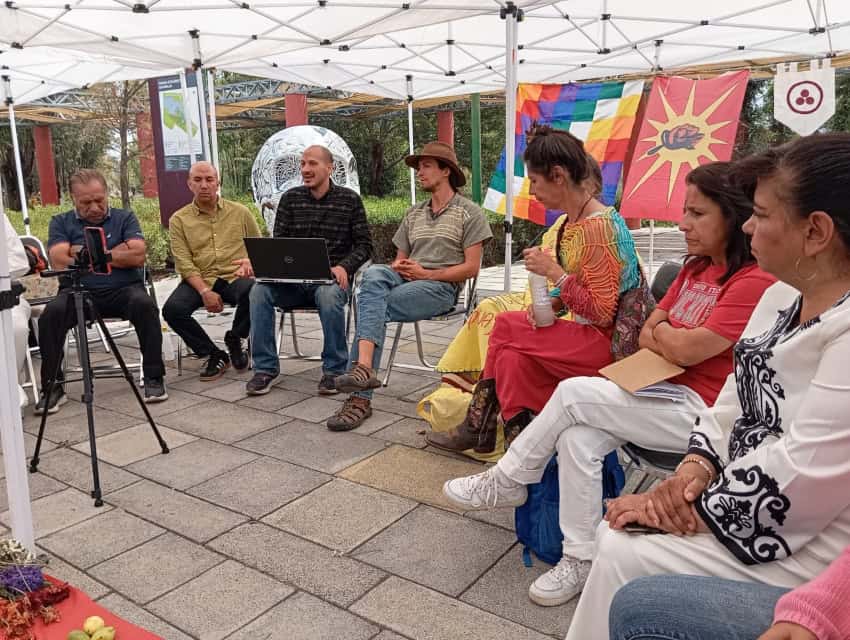
Participants outlined a strategy combining ecological restoration, community-led governance and a legal push to recognize the Xochimilco lake system as a “subject of rights.” The goal: to shift from fragmented conservation efforts toward a coordinated model that treats the ecosystem as a living entity with rights — and gives local communities a central role in its protection.
How the summit worked
For organizer Luis Prekoma, bringing the summit to Xochimilco was both symbolic and urgent — grounding global conversations about ecological crisis in a territory where the stakes are immediate and visible.
“This is not just about Xochimilco,” he said, describing the gathering as part of a broader effort to rethink humanity’s relationship with nature. “It’s about generating models that can be replicated in other territories.”
Over four days, the summit unfolded across multiple spaces, combining ceremonial gatherings, policy discussions and working sessions that brought together actors who rarely share the same table — from chinampa farmers and Indigenous elders to scientists, lawmakers and nonprofit organizations.
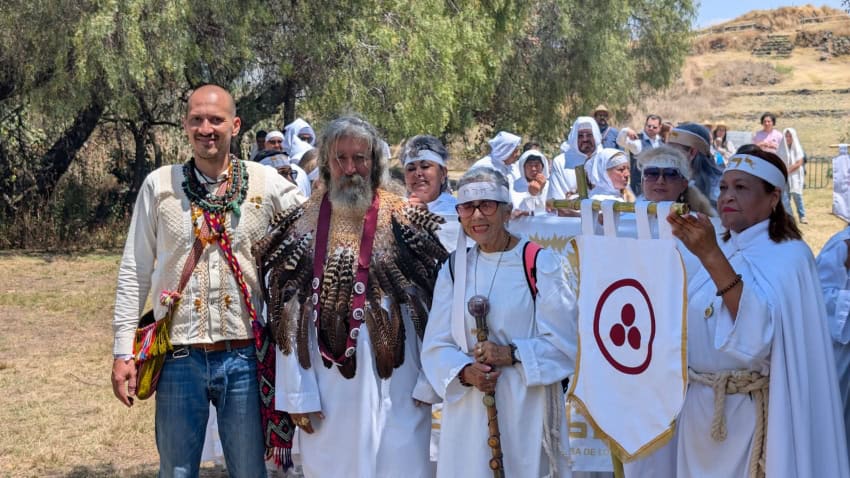
- Day 1 opened with a “condecoration” ceremony in the archaeological site of Cuicuilco, honoring defenders of land and water who have sustained the territory across generations.
- Day 2 focused on the forum, “Xochimilco Ecosystem Subject of Rights,” where participants from diverse fields exchanged knowledge and developed proposals around activating Rights of Nature jurisprudence in the zone.
- Day 3 convened the Community Parliament of Xochimilco, a collective decision-making space where chinamperos and community representatives began shaping concrete pathways for restoration of the ancient agricultural system.
- Day 4 culminated in the declaration of Xochimilco as a “Sanctuary of Life and Peace,” formally recognizing the lake system as a living entity and marking the start of a community-driven effort to secure its legal status as a subject of rights.
Where listening happens
Yuluka Kankura of Colombia, who has participated in similar gatherings across the Americas, described the cumbre as a space where different forms of knowledge could meet on equal footing.
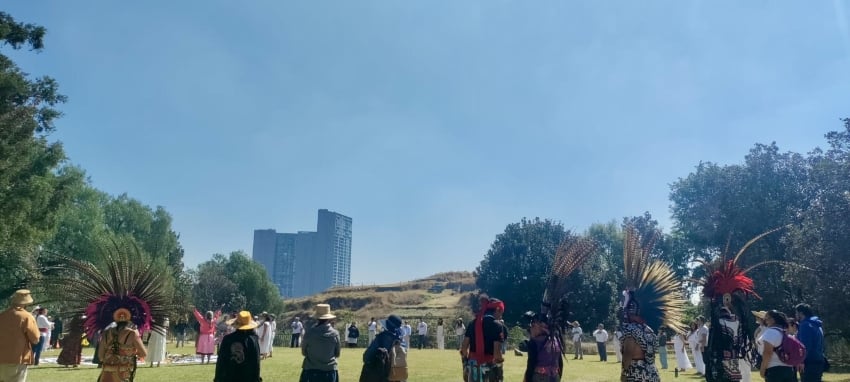
“These are not just meetings,” she said. “They are processes where relationships are built, where listening happens, and where collective paths begin to take shape.”
One of the most important outcomes, she said, was a commitment to meet again annually and conduct an evaluation process. For her, that commitment marks a shift away from one-off gatherings toward something more sustained and accountable.
“It’s a major commitment, because it ensures there will be continuity.”
Culture and cosmovision
If the summit points toward new forms of governance, its foundation lies in something much older.
For Montserrat López, a member of the organizing committee, the gathering was as much about cultural renewal as it was about policy. Through song, dance and ceremony, participants invoked a worldview in which nature is not a resource but a living system to which humans belong.
“We are the new dawn in movement,” she said, describing a moment of collective singing that framed the gathering as part of the birth of a new cycle — what some participants referred to as the Sixth Sun.
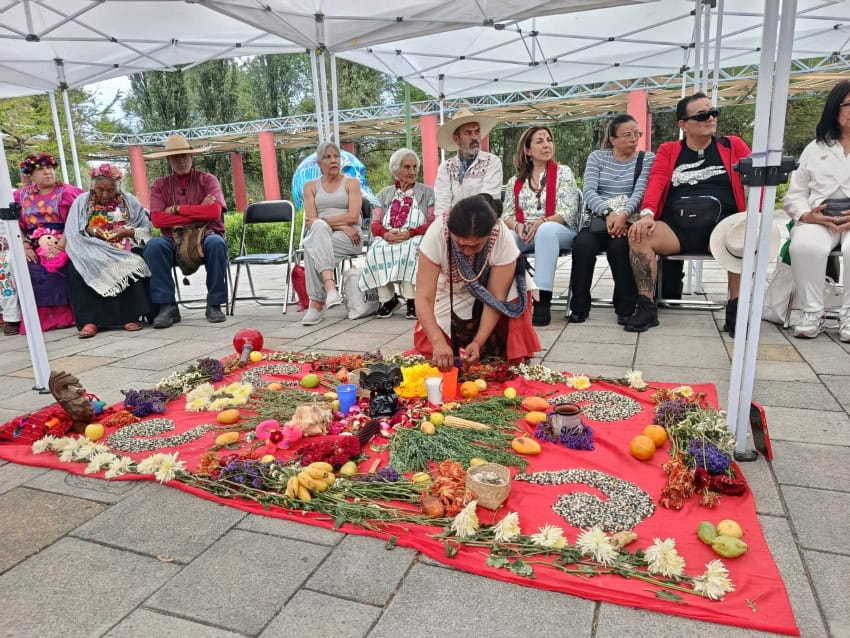
In that space, López said, the lines between disciplines began to dissolve.
“It’s the point where culture and science meet,” she said — not as opposing ways of knowing but as complementary paths toward understanding and caring for the territory.
Solutions: A legal pathway emerges
Norma Amalia Cerón Sánchez, a constitutional and administrative lawyer and granddaughter of a Xochimilco native, framed the summit’s legal ambitions alongside a more immediate reality: Mexico’s environmental laws, she said, are often strong on paper but weak on enforcement.
To address that gap, participants advanced a proposal to recognize the Xochimilco lake system as a “subject of rights,” part of a broader push to establish legal standing for nature at the federal level. The idea draws on emerging legal frameworks in Latin America, where ecosystems are increasingly recognized as living entities with rights that citizens can defend.
“It’s about giving the territory a voice,” Cerón said. “Not just protecting it on paper, but creating mechanisms so those protections can actually be enforced.”
But for Cerón, the urgency goes beyond legislation.
Beyond the legal framework, she pointed to concrete steps already taking shape. She had invited researchers from the Universidad Autónoma Metropolitana Azcapotzalco — including its rector, Dra. Yadira Zavala Osorio and Dr. Fabiola Sosa — to join the effort to rehabilitate Xochimilco, building on their restoration work at Laguna La Piedad.
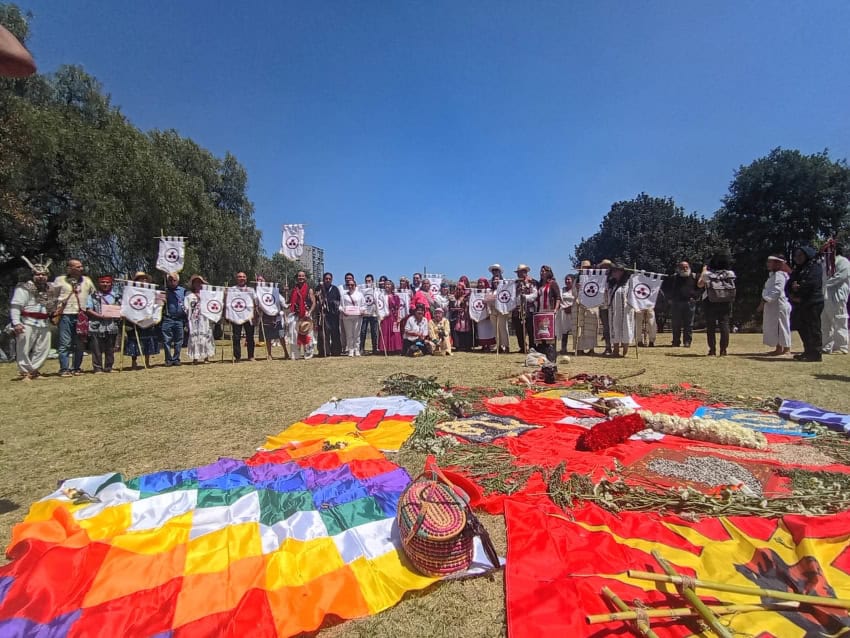
They accepted, she said, and are expected to bring a multidisciplinary team of students and researchers, alongside volunteers, to support restoration efforts on the ground. The goal is to build a bridge between academic knowledge and local practice — with chinamperos themselves helping train incoming teams in ancestral methods, including techniques for restoring canals without harming existing plant and animal life.
Rather than waiting for legal reform, she emphasized, the work is already beginning.
“I don’t know if we’ll achieve the law,” she said. “But what we can achieve are actions.”
A territorial shift
For José Luis Sánchez Campos, one of the forum organizers, the crisis in Xochimilco cannot be understood — or solved — in isolation. What is at stake, he said, is not just the degradation of a single ecosystem, but the unraveling of an entire way of life.
“This is the result of centuries of rupture,” he said, referring to the gradual displacement of Indigenous systems of knowledge and governance by extractive, urban models that treat land and water as commodities.
The chinampa system, he explained, is not simply an agricultural technique but a living expression of that older relationship — one that integrates food production, water management and ecological balance.
“You cannot fix this with the same logic that created the problem,” he said. “We have to return to a way of thinking where the territory is alive.”
That shift, he argued, requires more than technical solutions. It calls for a convergence between scientific knowledge and ancestral practices — not as parallel approaches but as part of a single framework for regeneration.
“It’s time to move from diagnosis to action,” he said. “We already know what needs to be done.”
From vision to action
Beyond the language of rights and regeneration, participants pointed to a series of concrete steps already underway.
At the center is the newly formed Community Parliament of Xochimilco, which will serve as the coordinating body to carry proposals forward. Founding members include 22 chinamperos, and it’s organized into thematic working groups — including ecological restoration, legal strategy, education and communication — designed to translate ideas from the summit into ongoing community-led action.
At the summit’s Rights of Nature forum, students, researchers and chinampa producers began outlining applied proposals — from water monitoring and ecological restoration to governance models designed to support chinampa communities on the ground.
Other initiatives focused on rebuilding the social fabric that sustains the ecosystem. Participants discussed organizing tequios — collective work days rooted in Indigenous tradition — to support chinamperos in restoring canals and agricultural plots. Cultural strategies are also part of the effort: community theater and other forms of storytelling were proposed as ways to reconnect younger generations with the territory and its history.
At the same time, organizers underscored a central issue: enforcement. Existing environmental laws, they said, are widely ignored. Proposals discussed at the summit include new mechanisms to hold institutions accountable for compliance — a shift that could prove as critical as any new legislation.
From proposals to implementation
The summit’s proposals were consolidated in a 17-page report outlining a roadmap for the next five years, with the goal of securing legal recognition of the Xochimilco lake system as a subject of rights by 2030.
The document also calls for the creation of an interdisciplinary legal team to advance rights-of-nature legislation and pursue strategic litigation, alongside partnerships with universities to support research, training and technical capacity-building.
Participants also committed to scaling the model beyond Xochimilco through a network of “Sanctuaries of Life and Peace,” while establishing mechanisms to monitor progress and maintain coordination between communities, institutions and nonprofit organizations.
Together, the agreements mark a shift from a one-time gathering to an ongoing process — one that seeks to institutionalize community-led governance while building the legal and scientific infrastructure needed to sustain it.
Back home in Xochimilco, Abuela Amalia reflected on what it meant to see the summit take root in the place where she has spent her life. At nearly 90, she now measures time differently.
“No, two — just two more years,” she said, when asked what she hopes for. “Two more years to do more for the children and the young people … While I still have life, I will keep fighting.”
For Amalia, the effort is not abstract. It is about protecting a way of life she once knew — and ensuring that those who come after her still have a chance to inherit it.
Tracy L. Barnett is a freelance writer based in Guadalajara. She is the founder of The Esperanza Project, a bilingual magazine covering social change movements in the Americas.