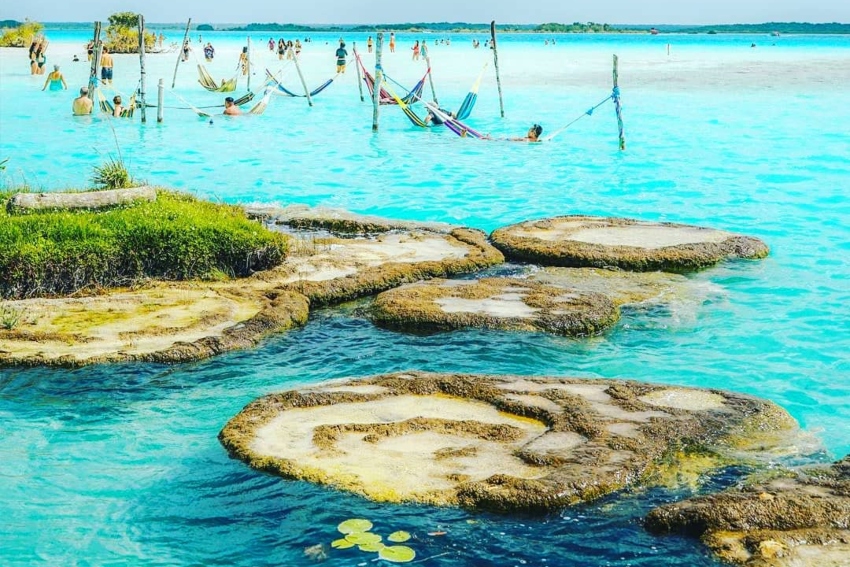
I first came across stromatolites seven years ago during a private sail around Bacalar. Nonchalantly sitting along the shore, I wasn’t sure what I was looking at. Our captain, Darius, said, “See over there? They are the oldest lifeforms on earth,” while pointing at some mangroves near shore.
Looking closer, he shared the fascinating history of these rock-like columnar communities of bacteria. I won’t lie, I found it so fascinating that I jumped in and swam over for a closer look (while keeping a safe distance, as I didn’t want to touch or disturb them.) I mean, they’re billions of years old. Imagine if I broke one? Or worse, killed off some little life forms with my big sausagey human hands! Eeek, not this nature geek.
Living since the Big Bang
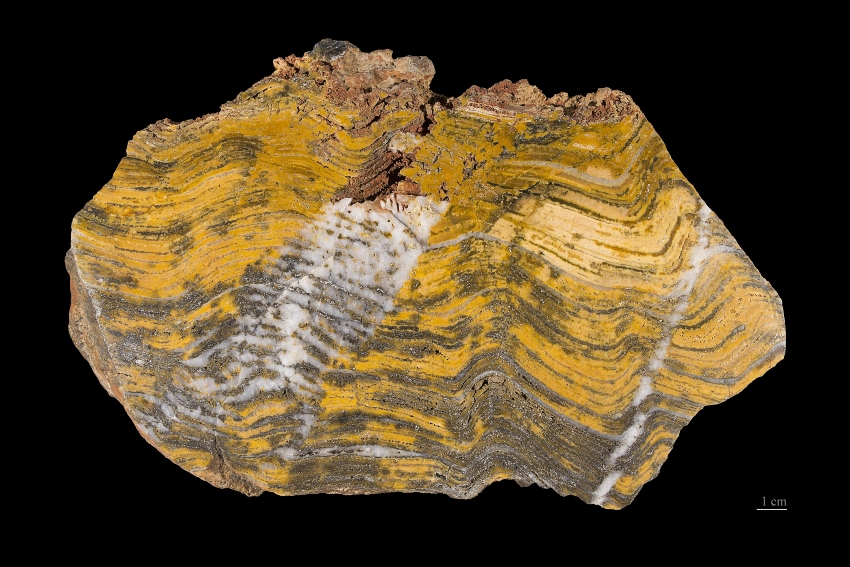
Being the oldest life forms on earth, scientists theorise they’ve been around since the Big Bang. Long before life emerged from the primordial ooze to conquer land and evolve into mammals, then primates, then man.
So, I wanted to know more about these stromatolites, believed to be the first living things on Earth. Tell me you’re not curious about their formation, their history and especially their age.
Only found in a few places on earth, the only other place I know to see these structures is on the other side of the world, in Shark Bay, in my native Australia. So, recently, when a friend flew down to come on an adventure with me, I told her about them. We were doing a trip around southern Mexico on the new Maya Train, which gave us the perfect excuse to stop in Bacalar and check them out.
Where to find stromatolites
Bacalar is stunningly beautiful and one of my favorite places in Mexico. Being able to see these living and fossilized life forms is a rare treat. Not only did we see them, we floated past masses of stromatolites in the rapids about twenty minutes outside of town in crystal clear water.
I adore Bacalar; it’s one of my all-time favorite places in Mexico. Mentioning these, she was as intrigued with the stromatolites as I have always been. So, that was the way we wanted to end our trip. With a few days lakeside to relax, enjoy some amazing food, and swim with stromatolites.

A living history of the Riviera Maya, and the world
How I love exploring the living history of the Riviera Maya. It’s one of the reasons I chose to live here. The rich Mayan ancestry is fascinating of course, but there’s also unique natural history. Like being able to walk through a 5-million-year-old cave system, rated third on National Geographic’s top underground walks of the world. It was magic.
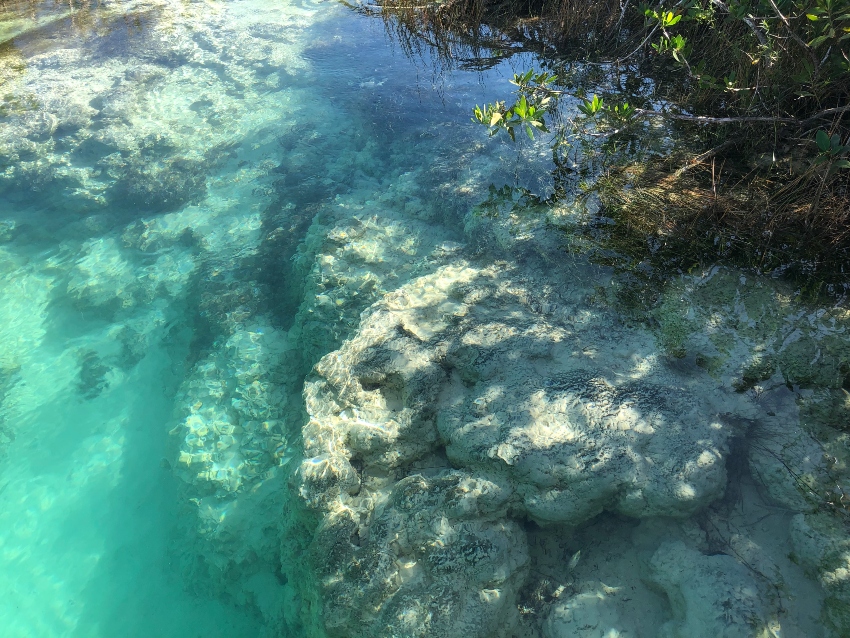
Its extensive formation of stromatolites in the northern end of the lagoon, known as the rapids, is over 10km long (6.2 mi). The living giants are not only rare, but this bed of formations is the largest on Earth. I should say, the largest in size of living freshwater formations. Not only of the microbialites, but of any organism on Earth.
Now, can you see why I geek out on this stuff? What an amazing world we live in, where the existence of the first life on Earth is just down the road. To me, that is pure magic.
Mexico Correspondent for International Living, Bel is an experienced writer, author, photographer and videographer with 500+ articles published both in print and across digital platforms. Living in the Mexican Caribbean for over 7 years now, she’s in love with Mexico and has no plans to go anywhere anytime soon.