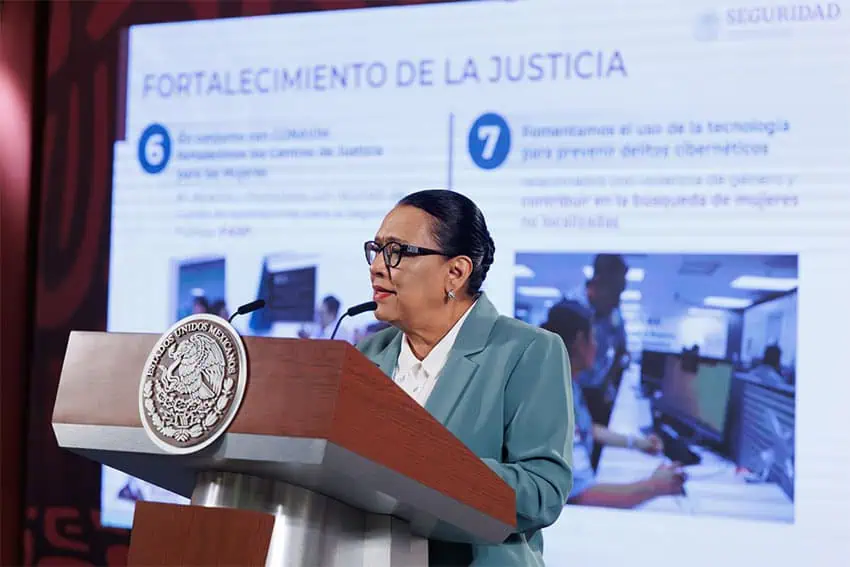
Accused drug trafficker Joaquín Guzmán López turned himself in to United States authorities after reaching an agreement with his imprisoned brother Ovidio Guzmán López to surrender, Security Minister Rosa Icela Rodríguez said Tuesday.
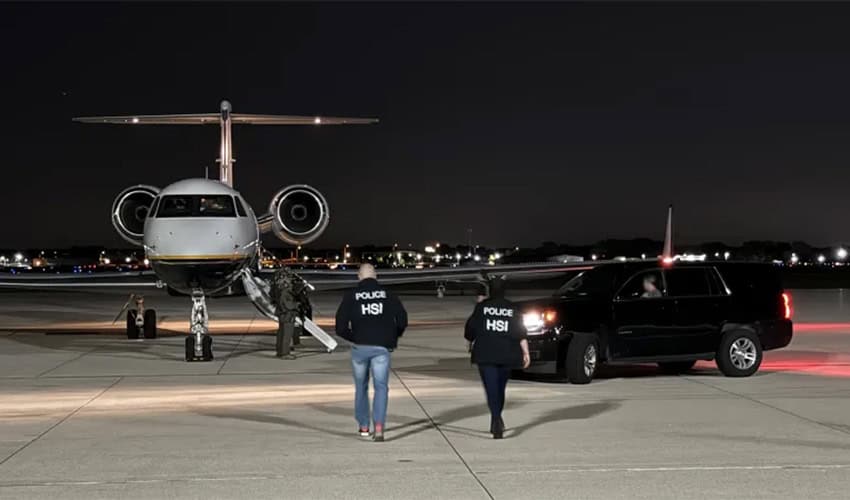
Joaquín Guzmán López, one of the sons of convicted drug lord Joaquín “El Chapo” Guzmán Loera, and alleged Sinaloa Cartel leader Ismael “El Mayo” Zambada García were arrested in the United States on July 25 after arriving at an airport near El Paso, Texas.
Rodríguez told President Andrés Manuel López Obrador’s morning press conference “there was an agreement between the people who are in prison and the people who are free” before Guzmán López arrived in the United States.
“There was an agreement between them for … [their] respective surrender,” she said.
When asked whether she was referring to Joaquín and Ovidio Guzmán, she said she was without making any mention of Zambada or any other person.
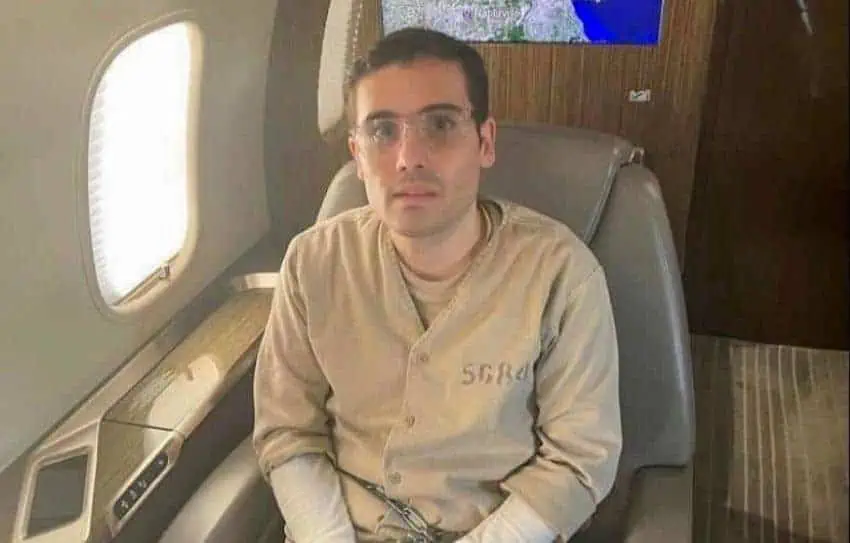
Ovidio Guzmán was captured in Culiacán, Sinaloa, in January 2023 and extradited last September to the United States, where he faces drug trafficking charges.
Rodríguez said last week that the United States government had provided a report to the Mexican government in which it said it was informed on several occasions that Joaquín Guzmán López was considering handing himself in to U.S. authorities. However, Guzmán “had never concretized said intention,” Rodríguez said, indicating that there was no deal between the suspect and the United States.

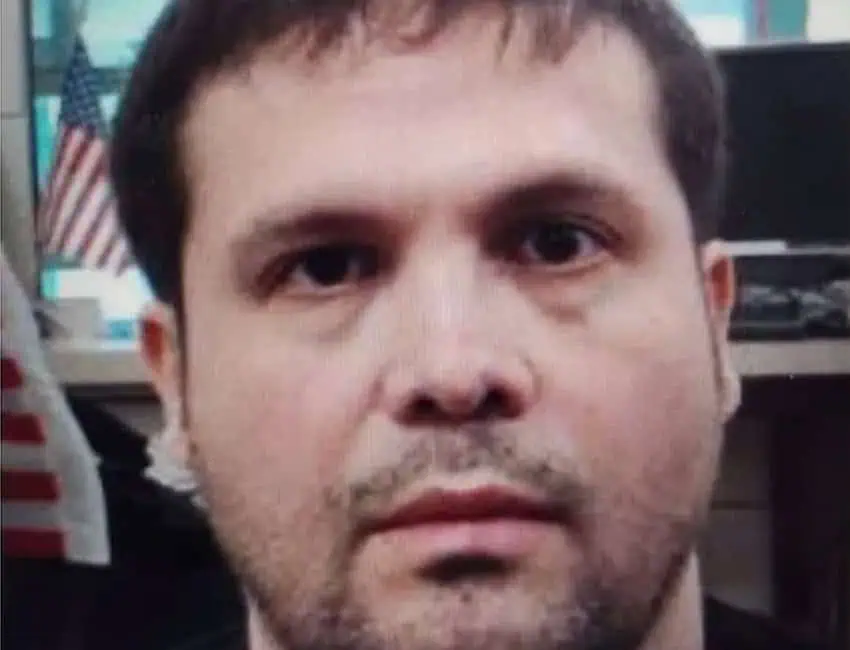
How Joaquín and Ovidio could benefit from an agreement with each other but without the involvement of United States authorities is unclear. López Obrador’s morning press conference ended as reporters sought to extract more information from Rodríguez.
Earlier in the presser, López Obrador said that “the United States government itself has acknowledged that it carried out a negotiation with at least one of the two people.”
He confirmed he was referring to Joaquín Guzmán rather than Zambada.
“That is what they informed us and there hasn’t been more information. We’re waiting for them to tell us [more]. What we’re sure about is that the armed forces of Mexico didn’t intervene,” López Obrador said.
“… Apparently there was an agreement between the authorities of the United States government and these people,” he said without clarifying whether he was referring to Joaquín and Ovidio Guzmán, or Joaquín Guzmán and Zambada.
That remark is at odds with the United States statement to Mexico — as revealed by Rodríguez last week — that Joaquín Guzmán “never concretized” his intention to surrender to U.S. authorities.
It is also contrary to a declaration by Guzmán López’s lawyer, Jeffrey Lichtman, that his client does not have a deal with United States authorities.
“We’ve got no agreement with the government. There has never been an agreement with the government with Joaquín Guzmán López. Period,” Lichtman said after Guzmán López pleaded not guilty to drug trafficking and other charges during an appearance in federal court in Chicago last week.
Zambada, who is said to have founded the Sinaloa Cartel with El Chapo and others in the 1980s, also pleaded not guilty to the charges he faces in the United States, among which are counts of drug trafficking, murder, kidnapping and money laundering.
His lawyer, Frank Perez, alleged that Guzmán López “forcibly kidnapped” Zambada before he was put on a plane bound for the United States.
He also said his client “neither surrendered nor negotiated any terms with the U.S. government.”
The circumstances that led to Zambada’s arrest remain murky, but U.S. officials who spoke to The New York Times supported the version of events put forward by Perez.
#FBI Director Wray highlights how today’s arrest of two alleged cartel leaders by the FBI and DEA is made possible through the strength of our partnerships and shared mission of keeping Americans safe. pic.twitter.com/zHasG6wP25
— FBI (@FBI) July 26, 2024
The FBI and DEA took credit for Guzmán López’s arrest in a July 25 post. Guzmán López’s lawyer Jeffrey Lichtman has said that there was no deal between Guzmán López and the U.S. government in exchange for his surrender.
Rodríguez said Tuesday that the Mexican government expects to receive “a complete report” on the arrests of Guzmán López and Zambada by the end of this week.
“We’ve been working well in collaboration with them. And we don’t want so much information either,” she said, noting that the Mexican government is only seeking details about “the arrival of the flight” in the United States and the subsequent “surrender or capture” of the two alleged cartel operatives.
“That is what we want,” Rodríguez said.
Mexico News Daily