Mexico, Guatemala, El Salvador and Honduras will sign on to a Central American development plan in Mexico City Saturday that seeks to stem migration by tackling its core causes of poverty and violence, the Honduran government said this week.
Honduran Foreign Secretary María Dolores Agüero Lara said the plan will be signed while the respective presidents of the three countries are in Mexico for the swearing-in ceremony of president-elect López Obrador.
The Comprehensive Central American Development Plan will be “aimed at generating opportunities on Mexico’s southern border” and in Central American countries, Agüero said.
In a statement sent to the newspaper El Universal, she added that the United Nations Economic Commission for Latin America and the Caribbean (ECLAC) is supporting the initiative.
“. . . The four countries took the decision to present the plan to the United Nations because it’s the first plan that deals with the origin, transit and destination of migration.”
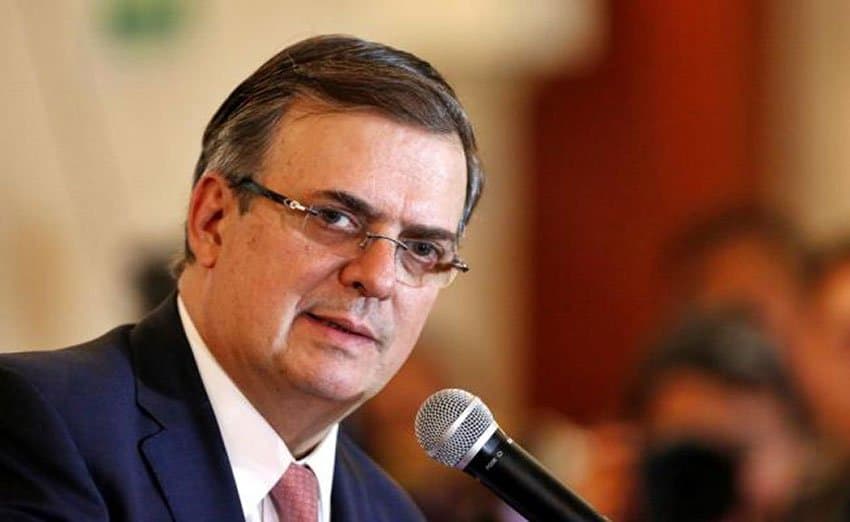
Future foreign affairs secretary Marcelo Ebrard said Tuesday that to contain migration flows originating in Central America, an effort on the scale of the Marshall Plan – which rebuilt Western Europe after World War II – would be needed.
There are currently thousands of Central American migrants in Mexico who have arrived over the past month as part of at least five caravans.

Ebrard told a press conference in Mexico City that the solution to stemming migration might not be similar to the Marshall Plan “but it will be in terms of the scale of the effort that needs to be made.”
He said that estimates were still being prepared to determine how much funding would be needed to develop Central America but suggested that the amount could be similar to the US $20 billion the incoming government intends to invest in southern Mexico.
“. . . Any serious effort undertaken for our brothers in El Salvador, Honduras and Guatemala would need to be a similar sum,” Ebrard said.
The future foreign secretary will meet with United States Secretary of State Mike Pompeo Sunday to discuss the border and migration.
Shortly after his victory in the July 1 election, López Obrador sent a letter to United States President Trump in which he proposed that the migration problem be addressed “in a comprehensive manner through a development plan that includes Central American countries.”
The president-elect proposed that Mexico, the United States and each Central American nation contribute resources according to the size of its economy and that 75% of the collective funds be allocated to finance projects that create jobs and combat poverty, while the other 25% would go to border control and security.
Ebrard said that the aim was for Canada to contribute as well to the investment in Central America, especially the so-called Northern Triangle area of Honduras, El Salvador and Guatemala, which are the largest migrant source countries in the region.
With regard to the Hondurans currently in Mexico, Foreign Secretary Agüero said the government completely rejected any “xenophobic attitude” towards them, adding that “the right to migrate is a human right.”
The arrival en masse of Central Americans in Tijuana triggered an anti-migrant backlash, including from the city’s mayor who has been dubbed Tijuana’s Trump.
United States authorities, led by President Trump, have also made it clear that the migrants are not welcome.
Ebrard said that Mexico was not considering deporting all of the migrants currently stranded on the border as they face a lengthy wait for the opportunity to file an asylum request with U.S. authorities.
“What’s to be done? Get ready to assume that some of them are going to be on Mexican soil and in that area during the next few months,” he said.
Thousands of migrants in Tijuana are set to be relocated from the sports facility because it is no longer big enough to accommodate them all.
Source: El Universal (sp), Reuters (en)