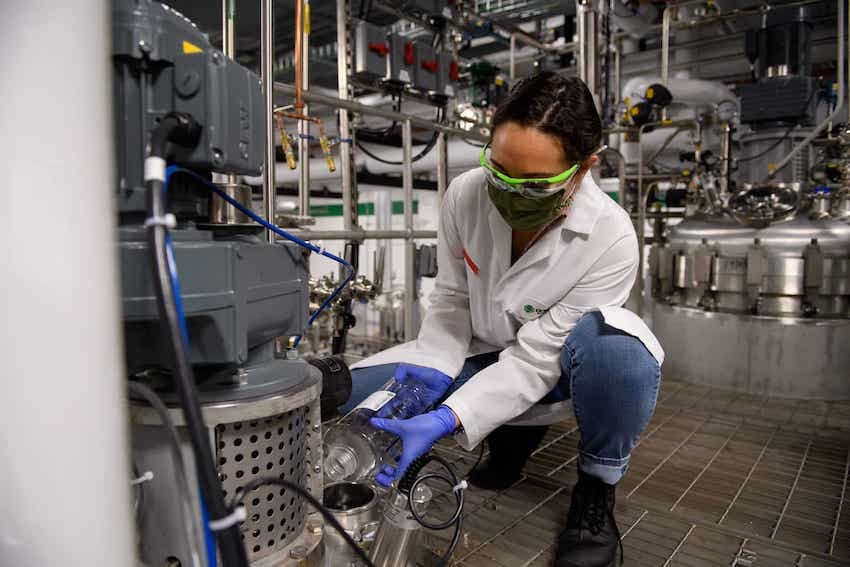
GreenLight Biosciences, founded by Mexican scientist Andrey Zarur, announced on Thursday that it will invest US $100 million to build a biofungicide production plant in the Mexico City metropolitan area.
The firm will use ribonucleic acid (RNA) technology to produce the world’s first RNA biofungicide, which will target specific genes in pests and fungi without harming other organisms or leaving toxic residues in soil, water or crops.
When operational, the completed project will lift Mexico ahead of such markets in the field as the United States, Brazil and the European Union.
“Today, we have set as a goal for our country to create a world-leading biotechnology industry,” said Zarur. Zarur says he sees the project as a major step forward in replacing traditional chemicals and pesticides, many of which are derived from petroleum.
It took over 10 years of research and trials in Mexico and 20 other countries to develop the products to be produced, which were approved by national authorities in a record nine months, according to Zarur.
Economy Minister Marcelo Ebrard said he expects the investment to support the creation of a new value chain in Mexico, centered on knowledge and innovation.

“These ideas, this knowledge, will generate Mexican wealth,” Ebrard said at the investment presentation last week.
The first product developed by GreenLight is an acaricide designed to combat the spider mite, a pest that affects avocados, strawberries and tangerines and causes an estimated 20 billion pesos ($1.17 billion) in damage each year.
Its second product targets a fungus that affects crops such as grapes, strawberries and cucumbers, and causes annual losses of around 10 billion pesos ($587 million). It is already in use on grape crops in Mexico’s well-known wine-producing region of Baja California.
Applying two liters of the product per hectare controls over 99% of the fungus, compared to around 80% using conventional chemical pesticides, according to Zarur.
GreenLight also plans to develop products for strategic non-food crops such as cotton.
The project is expected to support the creation of 500 direct, specialized jobs. With around 11,000 life sciences graduates completing studies in Mexico City each year, the growth of the biotechnology industry will provide these graduates with new job opportunities, according to Arturo Adolfo Palacios Romo, director general of investment attraction at the city’s Economic Development Ministry.
Mexico City is already home to one of the largest clusters of pharmaceutical plants in the region, and the launch of the Tlalpan Innovation District, a US $125-million science and entrepreneurship hub that promotes applied research in health, biotechnology and pharmaceuticals, demonstrates Mexico’s commitment to expanding its biotechnology industry.
With reports from El Economista, La Jornada and México Industry