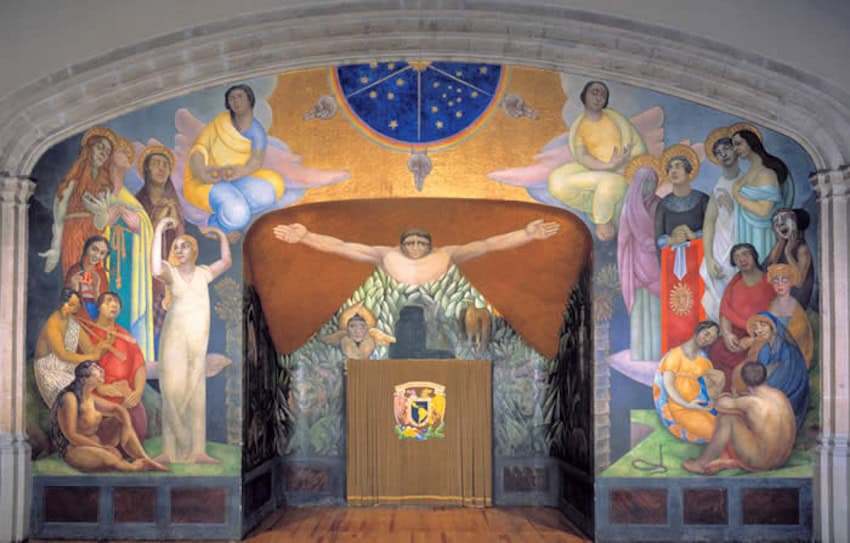
Ten years ago, a team of researchers began investigating the presence of beeswax in Diego Rivera’s famous mural, “La Creación,” alongside other encaustic murals painted in Mexico in the 1920s.
Beeswax was of special interest, as the ingredient was an unusual component in the ancient Greek painting technique that Rivera claimed to have brought back to life.
Now, a decade later, the conclusion is final: There is no wax in “La Creación.”
According to one of the project’s lead researchers, Sandra Zetina Ocaña, the scientific finding is further supported by contemporaneous accounts.
“It’s in the books,” Zetina Ocaña, art historian and conservation scientist specializing in materials and techniques at Instituto de Investigaciones Estéticas, tells me. She points to younger muralists, like Fernando Leal and Ramón Alva de la Canal, who, in the book “Mexican Mural Renaissance,” recalled that Rivera lied about his fresco technique to promote confusion.
But the story of “La Creación” is much larger than some lie Rivera allegedly peddled to the public.
It is a testament to the exploration of the meaning of materials in Mexican muralism and a reminder of how art and science can work together to reveal new dimensions of the creative process.

The controversial beginning of Rivera’s ‘La Creación’
In the early 1920s, Rivera returned to post-revolutionary Mexico after a decade spent living in Paris.
At the time, Mexico’s secretary of public education, José Vasconcelos, was grappling with the high level of illiteracy among the country’s populace. Eager to galvanize the education of the masses, he hired Rivera to paint a mural in the Antiguo Colegio de San Ildefonso.
The mural, “La Creación,” depicts creation as a spiritual enterprise, showing the birth of humankind with Adam and Eve, as told in the Biblical story of “Genesis,” while also paying tribute to ancient Greek mythology. The cardinal and three theological virtues and the nine muses who inspire creativity are all symbolized with Latin American features, hinting at the philosophical interests of Vasconcelos.
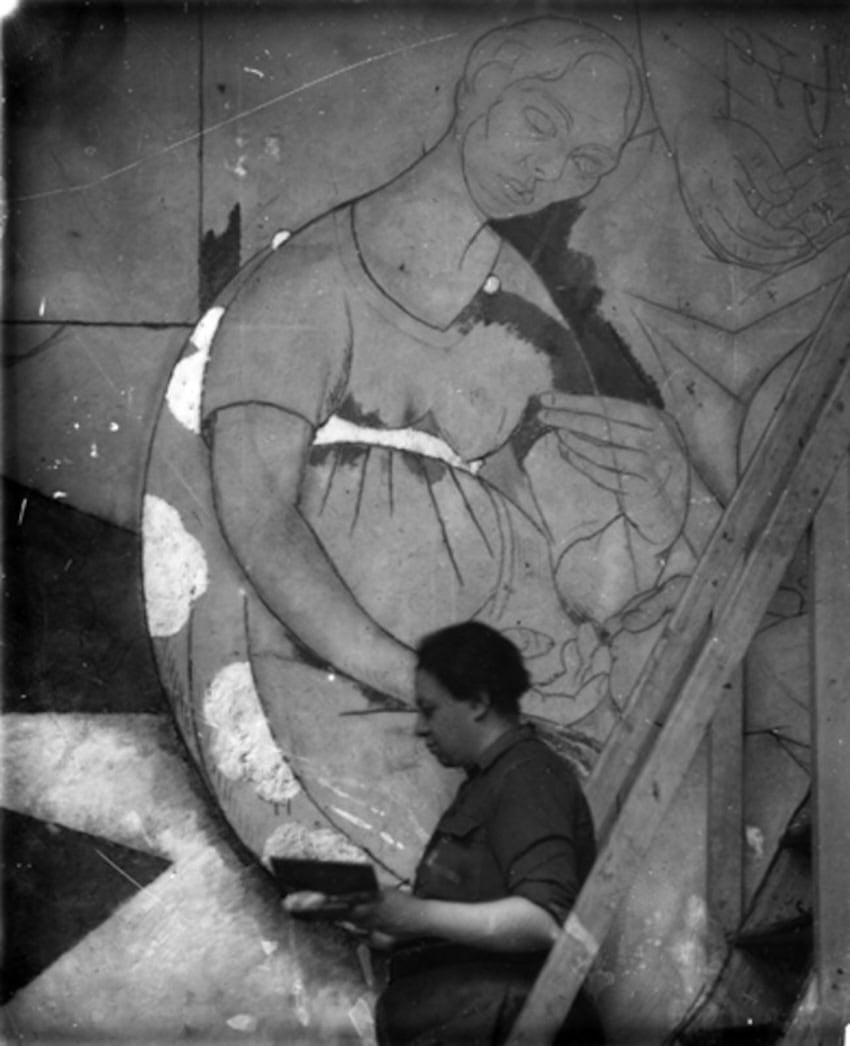
As models for the muses, Rivera used women emancipated during the cultural movement of post-revolutionary Mexico.
“All the women portrayed are fascinating,” Zetina Ocaña says, adding that they “changed what it meant to be a woman.”
Critics at the time praised Rivera’s playful use of proportions, claiming he “revives monumental painting not only in Mexico, but throughout the world.” Jean Charlot, a French painter who later worked in the U.S. and Mexico, said that Rivera successfully bridged Cubism and large-scale mural painting.
Today, “La Creación” is widely considered the starting point of Mexican muralism.
However, despite the positive reviews, Vasconcelos disliked the mural, arguing that Rivera failed to capture the Mexican spirit.
Rivera himself later conceded that, “despite the effort to express genuine Mexican beauty in the characters, it still resists in its execution and even in its internal meaning, because of overly strong European influences.”
Colonial prosperity, architectural grandeur and the future of Mexican art
Occidental influence and encaustic painting
Rivera’s decade-long stay in Europe was not only reflected in the mural’s Byzantine iconography and Cubist style. It extended into his painting technique as well.
Encaustic painting is defined by the cauterization process of a substance that changes when heated, usually with beeswax or other terpenic resins. It was developed by the ancient Greeks and rediscovered during the Renaissance.
Leonardo Da Vinci reportedly tried applying the technique to a wall painting of “The Battle of Anghiari” but ultimately failed and never finished the work.

In a dialogue with his fellow artist Juan O’Gorman, later published by the Colegio Nacional, Rivera discussed his use of encaustic painting in “La Creación.”
“It can truly be said that [with ‘La Creación’] true encaustic painting was restored for the first time since the Greco-Roman period,” Rivera told O’Gorman.
According to Rivera, he had mixed beeswax with elemi and copal resins, added it to solvents and pigments, then cauterized the surface of the mural with a blowtorch to obtain a smooth finish. Going one step further, he claimed that he had innovated an encaustic technique unique to Mexico by incorporating the copal resin as a binding material.
Technique as an inseparable part of the image
For the next century, Rivera’s claims about the use of encaustic painting in “La Creación” went largely unchallenged.
That is, until a group of conservators, art historians and chemists at UNAM decided to look a bit deeper and perform a forensic study of the mural, hoping to identify its material aspect.
To understand why, for more than a decade, a team of researchers under the leadership of UNAM’s Laboratorio Nacional de Ciencias para la Conservación y la Investigación del Patrimonio Cultural (LANCIC), Nuria Esturau Escofet, an analytical chemist at the Instituto de Química, and Zetina Ocaña investigated traces of beeswax in Rivera’s mural, one must understand the importance of materials in the artistic process.
David Alfaro Siqueiros, considered one of the “three greats of muralism,” wrote in “How to Paint a Mural” that “It must not be forgotten that the materials and tools of production in the visual arts have a generative and determining value, both formally and aesthetically.”
Mexico’s muralism movement first changed Mexico, then the world
Zetina Ocaña similarly explained that what she finds so compelling about Mexican art in the early- to mid-20th century is its focus on thematic and material reinvention.
Siqueiros, for example, incorporated nitrocellulose paints, originally an industrial lacquer for cars, into his murals. Besides enabling him to paint dynamic colors quickly, the use of industrial materials carried an ideological meaning as well: breaking with elitist artistic traditions and reflecting the technological progress of the time.
Similarly, Pablo Aguilar-Rodríguez, a chemist at UNAM and collaborator on the forensic investigation of “La Creación,” points to the work of Mexican painter and Rivera’s son-in-law, Rafael Coronel.
According to chemical analysis, Coronel used a type of dental filling as a binding material in his mural “Paisaje Abstracto.”
“It is a material that was completely unrelated to that purpose, and at the time the mural was painted, it represented a major technical innovation,” Aguilar-Rodríguez says. “Understanding it from this chemical perspective tells me that Coronel innovated not only in his content, but also in his materials.”
Aguilar-Rodríguez adds, “Being able to understand art from that perspective seems very, very special to me. I don’t think Coronel’s intention could have been understood without this analysis.”
The forensic analysis: Where is the beeswax?
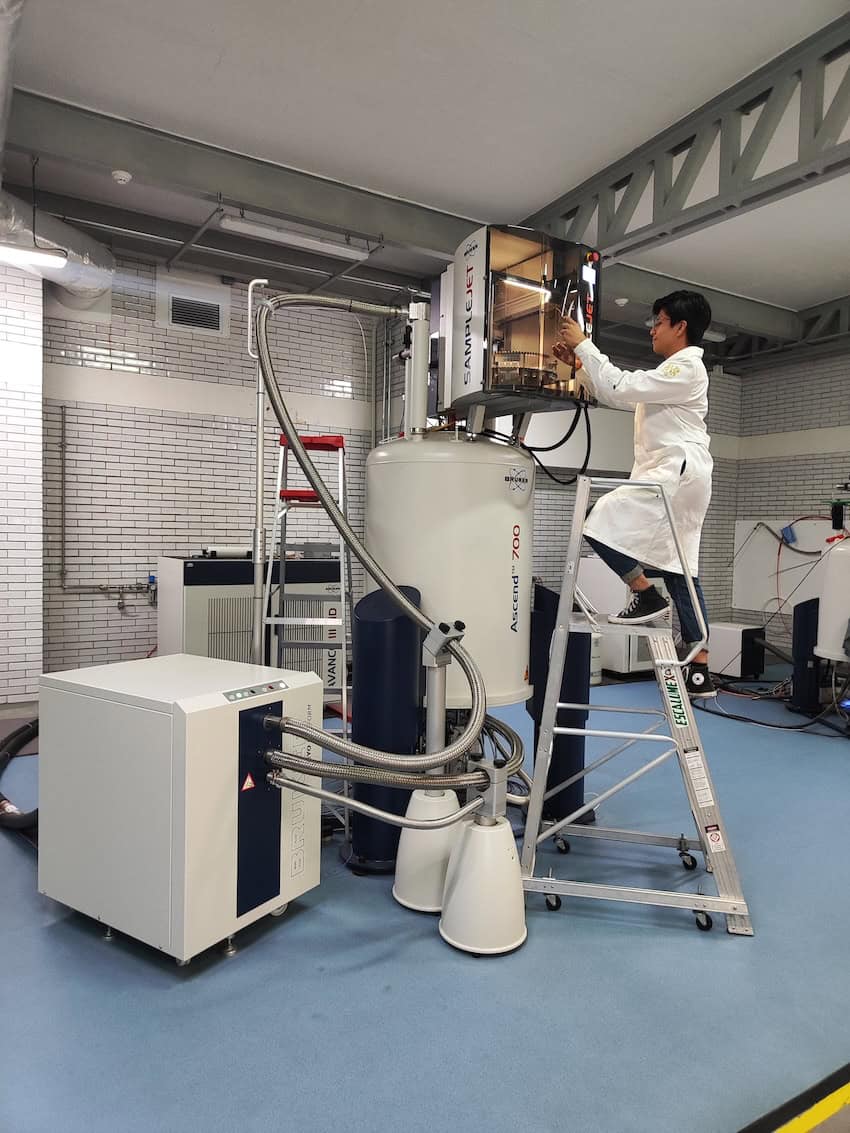
To understand Rivera’s peculiar technical approach and to test his claims about the use of beeswax and copal in his mural, the research team employed an elaborate process.
Zetina Ocaña meticulously examined the mural to determine which areas were best suited for further chemical analysis. Then she went on to study the samples with optical, digital and Scanning Electron Microscopy to characterize pigments and to identify different layers. Chemists then analyzed the samples with micro FTIR, chromatographic analysis and nuclear magnetic resonance spectroscopy to reveal the organic compounds.
Although all the samples showed traces of copal, none revealed the presence of beeswax.
While pursuing his doctorate, Aguilar-Rodríguez had developed a technique in which spectroscopy and microscopy are combined to create chemical maps of paintings, identifying polymers such as acrylics and nitrocellulose or beeswax.
“I was able to identify beeswax very clearly in another work by Diego Rivera, ‘El Matemático,’ so I could use the samples that had already been taken from ‘La Creación’ and analyze them again using this same methodology,” Aguilar-Rodríguez says.
But when analyzing the samples that Zetina Ocaña had sourced from “La Creación,” he, too, failed to back up Rivera’s claims.
‘As an art historian, I could not believe it.’
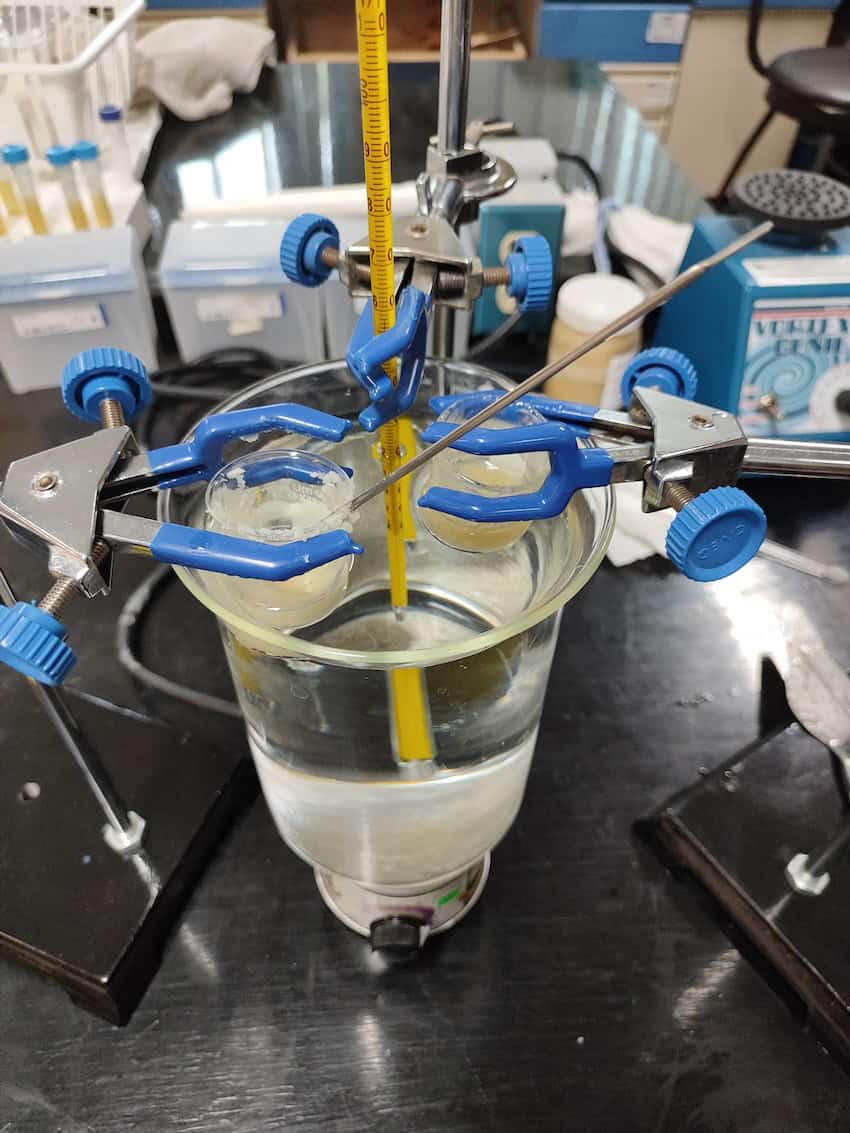
The researchers hypothesized that the application of heat during the encaustic procedure might have eliminated any traces of beeswax. To test this, they burned beeswax and copal mock-ups to different degrees. But no matter how much heat they applied to the material, it was always detected in further testing.
Next, they wanted to determine whether the beeswax had potentially degraded and been lost to time. However, after analyzing samples from other encaustic murals of Rivera’s time, they successfully confirmed the presence of beeswax, leaving little doubt about the truth behind “La Creación.”
“No, there isn’t any beeswax,” Aguilar-Rodríguez says. “There never was. It didn’t degrade. It simply wasn’t added in the first place.”
Zetina Ocaña says that every time she met with her team, she left with a headache.
“They would tell me, ‘There’s no wax.’ And I’d say, ‘Really?’ They would look at me and say, ‘There’s no wax, Sandra,’” Zetina Ocaña says. “As an art historian, I could not believe it.”
Dear President Sheinbaum: You must expropriate and nationalize the Gelman Collection
Beyond the truth: Cultural heritage and the synergy of art and science
The question of whether Rivera used an ancient painting technique goes beyond the question of truth and the meaning of materials in the artistic process.
It is part of a broader dialogue that centers the future of Mexico’s cultural heritage.
Cultural heritage is the conglomerate of artifacts, belief systems and traditions that define a nation’s identity and history. Mexico is particularly rich in its cultural heritage, earning the ninth spot on UNESCO’s World Heritage List.
But time takes its toll on physical artifacts, and their conservation is becoming increasingly important.
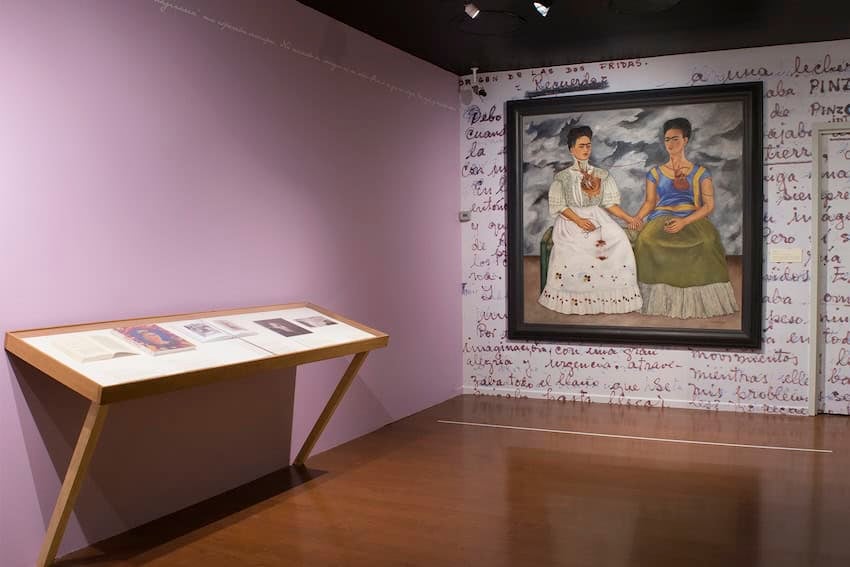
In another study led by the group, Frida Kahlo’s painting “Dos Fridas” was analyzed to understand the inherent degradation process when frequently transporting the artwork for exhibition.
The white regions painted with zinc oxide proved especially concerning, while lactic acid was found to be a significant culprit behind the artwork’s degradation. The researchers also concluded that cleaning the artwork with water might accelerate the chemical breakdown of the organic compounds.
Likewise, to understand the conservation challenges of Coronel’s “Paisaje Abstracto” and develop a proper treatment, his unknown binding material had to be identified. The dental filling material uncovered during forensic analysis paved the way for an effective conservation strategy.
‘A historian’s dream’
Dr. María de las Mercedes Sierra Kehoe, an art historian and postgraduate faculty member at Facultad de Estudios Superiores Cuautitlán at UNAM, highlights the beauty of bridging art and science.
Mercedes Sierra Kehoe has served on multidisciplinary research teams that include art historians, conservation specialists and scientists from LANCIC. She was not involved with the forensic analysis of “La Creación”
She and her colleagues analyzed Rivera’s “Sueño de una tarde dominical en la Alameda Central” using various techniques like X-ray fluorescence, infrared spectroscopy, Raman spectroscopy and reflectance spectroscopy to identify the pigments and materials that make up the mural’s color palette.
“Bringing the humanities and science together has allowed us to discover and recognize elements, processes and projects that would not have been possible to uncover without these instruments,” Mercedes Sierra Kehoe tells me. “It is a historian’s dream.”
Without practical applications, though, scientific discoveries risk losing their salience.
“I always praise the work of my colleagues in conservation,” Mercedes Sierra Kehoe says. “They are heroes without capes, because ultimately they are responsible for ensuring that our historical heritage endures.”
Deliberate deception or something more innocent?
Despite the recent scientific revelations behind “La Creación,” one question remains: Why would Diego Rivera misrepresent the techniques he used in its composition?
“He is a very talented artist, but he is a very erudite artist — an artist who studied a lot, who practiced a lot, who researched a lot,” Zetina Ocaña says. “What is true is that he had painted with wax, because we have a beautiful painting which he presented at an Autumn Salon as an encaustic wax painting.”
According to Zetina Ocaña, Rivera may not have been trying to intentionally dupe the public at all. Rather, it might’ve been a case of timing and the painter merely getting ahead of himself.
“He hadn’t even started painting yet, and they were already publishing an article about him in the newspaper,” Zetina Ocaña explains. “And that’s where he says he’s going to use wax, the encaustic technique.”
Mercedes Sierra Kehoe offers another perspective on Rivera.
“A very important part of Diego Rivera is that we have to understand that he was a great painter who understood the art market — he knew how to sell himself, he knew how to work the media,” she explains. Might he just have wanted to create a buzz about his mural?
Or, maybe, he was simply lying.
Much like a chef who doesn’t want to reveal his secret recipe, or an inventor working on a patent, Zetina Ocaña explains, Rivera was known to have lied about his painting techniques — a deliberate deception to hide his artistic process and “a particular way of making something that is very personal.”
Whatever the reason, Zetina Ocaña says that 10 years on, she’s left with more questions than answers.
“I think that when you ask a research question that is successful as a question, it generates more questions, right?”
She goes on to say, “It became an even greater mystery,” adding, “It is also like a good novel, a good poem — something always remains.”
Zetina Ocaña invokes Argentinian author Jorge Luis Borges, who likened the “aesthetic moment” to being left in a conversation that doesn’t end.
“And that is what I feel with this mural: That it is a conversation that opened up, and that we continue to have, and that I believe will give rise to other conversations.”
Katy Alivraz is a contributor to Mexico News Daily.