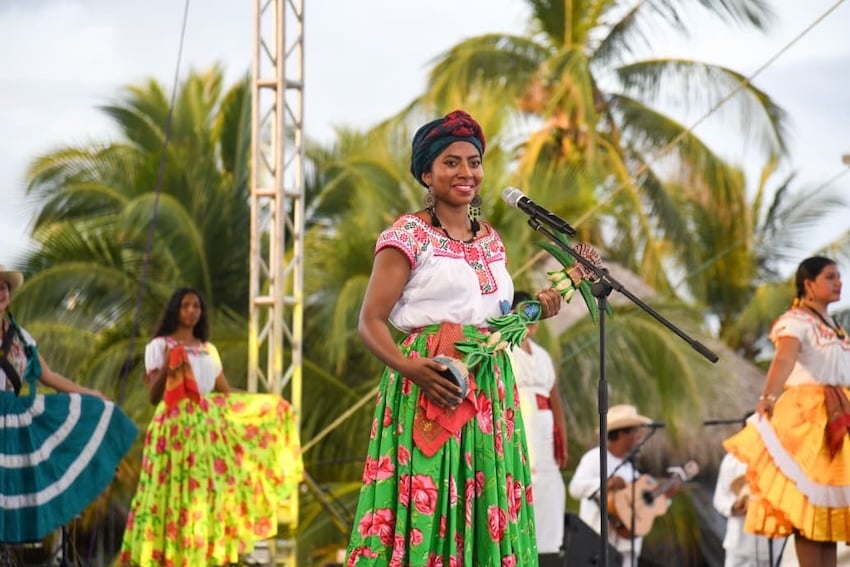
Twelve delegations brought music, masked dancers and coastal traditions to Oaxaca’s first Afro Guelaguetza on Monday, celebrating Afro-Mexican heritage and highlighting communities that officials said had long lacked recognition.
La Rejunjuneada — loosely meaning “the get-together” — took place in Chacahua Isla, a community on Oaxaca’s Pacific coast that has a predominantly Afro-descendant population. It lies in the Costa Chica, a coastal region spanning Oaxaca and Guerrero and a historic heartland of Afro-Mexican culture.
The festival marked Oaxaca’s Afro-Mexican People’s Day, an Oct. 19 observance established in 2013. A procession along the lagoon and through local streets preceded performances on a stage beside Chacahua Lagoon.
Afro-Mexican communities already participate in Oaxaca’s better-known July Guelaguetza, which showcases traditions from across the state. For example, Collantes, an Afro-Mexican town on Oaxaca’s coast, sent its Dance of the Devils delegation to this July’s festival.
The distinction is the focus: La Rejunjuneada gave those Afro-Mexican traditions and others their own dedicated festival rather than only a place in the broader statewide celebration.
Oaxaca Gov. Salomón Jara Cruz said recognizing communities’ histories must also translate into rights, justice and opportunities.

Villa de Tututepec Mayor Eder Muñoz Peña described the municipality’s Chatino, Mixtec and Afro-Mexican roots, saying the celebration represented historical justice as well as cultural pride.
The host delegation opened with the Fandango de Varitas. Another community performed the Turtle Dance, plus there were two interpretations of the Dance of the Devils — a highly representative expression of Afro-Mexican culture, with dancers wearing horned masks stomping and leaping to the music.
Enid Azucena Torres Agustiniano also participated. This summer, she was the first Afro-Mexican woman ever chosen as Goddess Centéotl — the main Guelaguetza’s cultural ambassador.
In Mexico’s 2020 census, 8.6% of Guerrero residents and 4.7% of Oaxaca residents identified as Afro-Mexican or Afro-descendant, compared with 2% nationwide, according to figures from Conapred, the federal anti-discrimination agency.